Mục lục bài viết (9)
- How are 1D and 2D barcode scanners different?
- Criteria for choosing a barcode scanner for supermarkets, warehouses, and health insurance clinics
- Comparison of Zebra DS2208, Honeywell 1900, and Datalogic QuickScan QW2520 barcode scanners
- Wired or wireless barcode scanner: which suits each environment?
- Capability of 2D barcode scanners to scan CCCD and electronic health insurance cards
- Case study: A 15-store mini supermarket chain switches to 2D scanners
- Case study: A 5000m² distribution warehouse using Honeywell wireless scanners
- Case study: A general clinic scans CCCD and health insurance cards with Datalogic QW2520
- Frequently Asked Questions
1D/2D barcode scanners are endpoint devices that use laser or CMOS imaging to read and decode barcode symbols, from traditional linear barcodes (1D) to complex matrix codes (2D). In Vietnam, the need to scan chip-embedded CCCD, electronic health insurance cards, and QR codes on discount coupons has accelerated the shift from pure 1D scanners to versatile 2D models, especially in supermarket chains, distribution warehouses, and clinics.
How are 1D and 2D barcode scanners different?
1D scanners can only read linear barcodes (EAN-13, UPC-A, Code 128) using laser or CCD. 2D scanners use an image sensor (imager) to read both 1D and 2D codes (QR, Data Matrix, PDF417), and can also capture images, recognize signatures, and scan CCCD/health insurance cards. With the requirement to scan chip-embedded CCCD at health insurance pharmacy counters, a 2D scanner is mandatory.
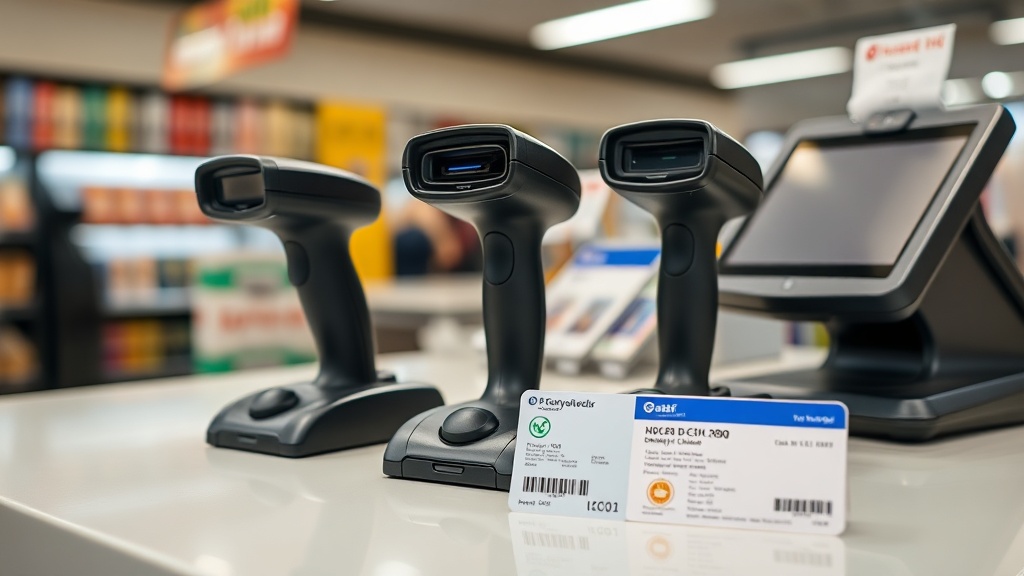
The core difference lies in reading technology: 1D scanners use laser — fast with clear printed codes but cannot read damaged codes or 2D codes. 2D scanners use a camera — slightly slower but much more versatile. In a supermarket environment, 2D scanners can read barcodes on phone screens (vouchers, e-wallets) — something 1D scanners cannot do. In warehouses, Data Matrix codes on electronic components can only be read by 2D scanners.
Criteria for choosing a barcode scanner for supermarkets, warehouses, and health insurance clinics
Three deciding factors: operating environment (dust/moisture/drops), type of code to scan (1D/2D/CCCD), and scanning distance (handheld/presentation/long-range). For supermarkets, prioritize wired scanners, easy to plug into POS, fast 1D reading. For warehouses, long-range wireless scanners (Bluetooth 100m) and 2m drop resistance. For health insurance clinics, the scanner must read chip-embedded CCCD and electronic health insurance cards — a mandatory requirement is a 2D scanner with image capture capability.
Bạn đang tìm sản phẩm cho chủ đề này?
Việt POS phân phối chính hãng — bảo hành 24-36 tháng, hỗ trợ kỹ thuật 24/7.
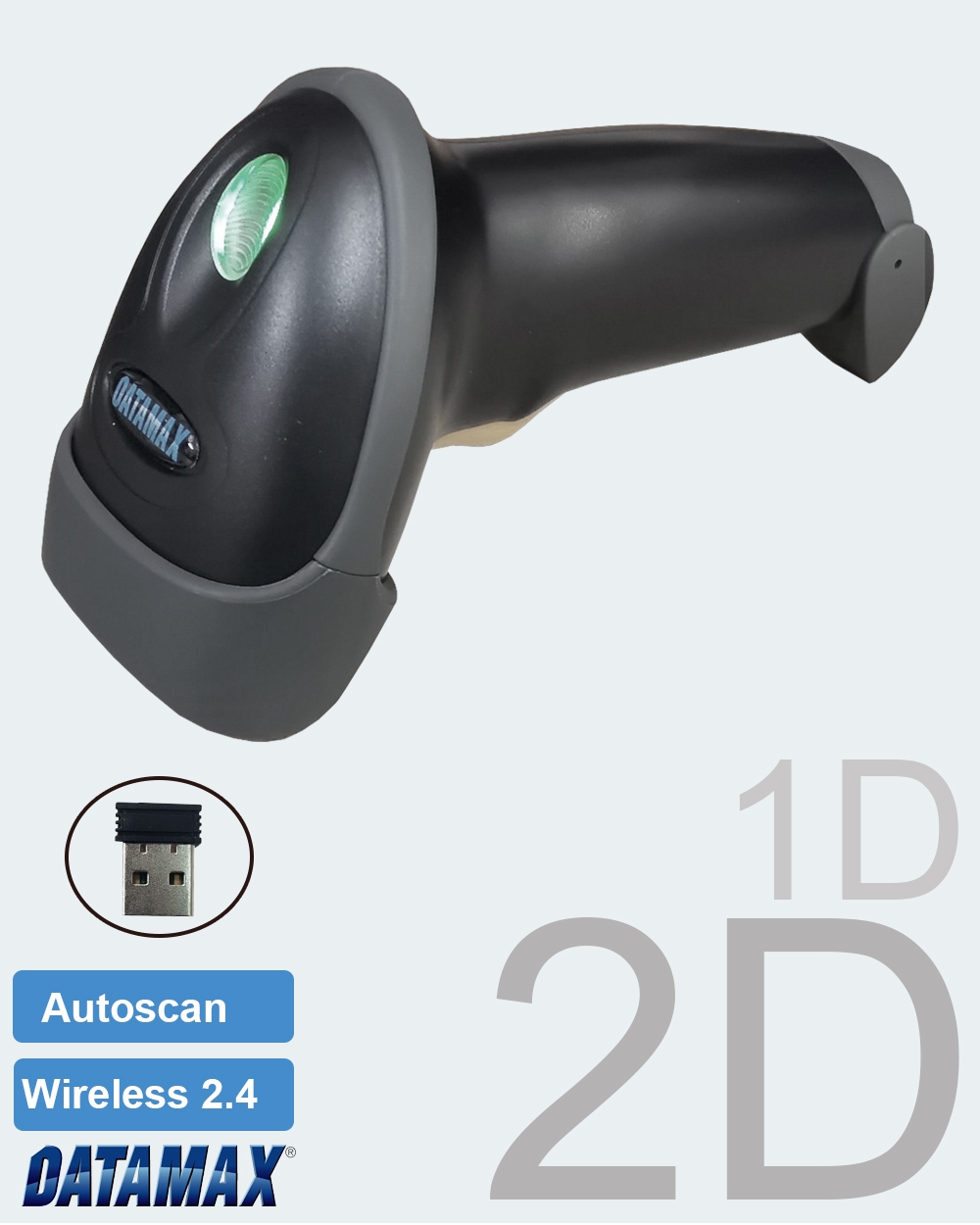
Datamax DT2208W Barcode Scanner – Affordable, Versatile 2D Scanner for All Retail Models
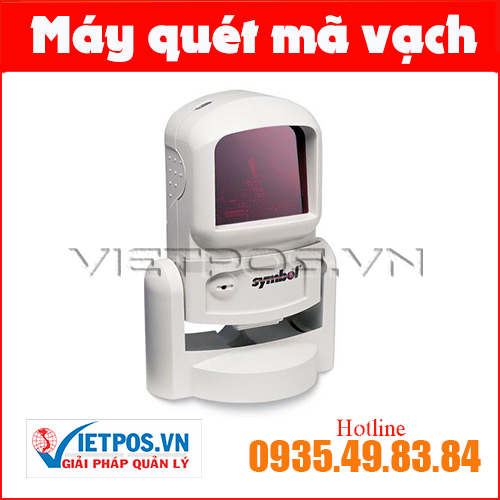
Zebra Symbol-LS9100 Barcode Scanner
SKU: ZEBRA SYMBOL LS9100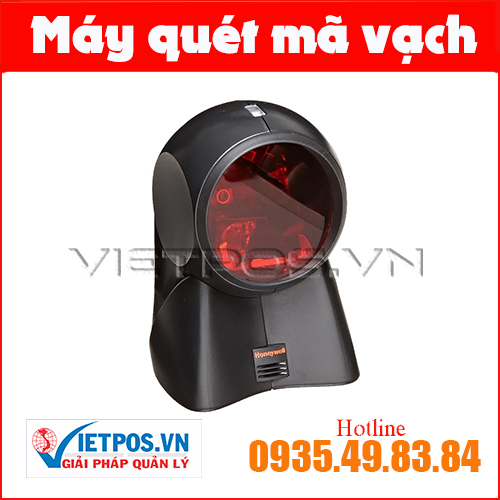
Honeywell MS-7120 Barcode Scanner
SKU: HONEYWELL MS-7120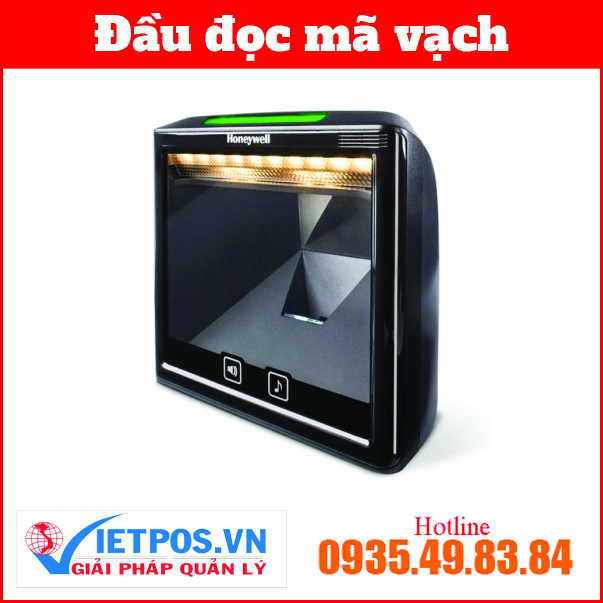
Honeywell Solaris-MS7980 Barcode Scanner
SKU: Solaris-MS7980Additionally, consider: ability to read damaged/faded codes (high-end Zebra and Honeywell scanners excel here), connection interface (USB HID/KBW/COM — compatible with existing POS software), and warranty policy (1-to-1 replacement within 12 months). With a budget under 2 million VND, a wired 2D scanner is the optimal choice for most small shops. With a budget of 3-5 million VND, an industrial wireless scanner is suitable for warehouses.
Comparison of Zebra DS2208, Honeywell 1900, and Datalogic QuickScan QW2520 barcode scanners
All three are the most popular wired 2D scanners on the 2026 market. Zebra DS2208 stands out for its read speed (over 500 scans/second) and ability to read damaged codes. Honeywell 1900 has high durability (50 drops from 1.5m). Datalogic QW2520 is optimized for dusty environments with IP52 rating. Reference prices range from 1.8 to 3.5 million VND depending on model and distributor.
| Criteria | Zebra DS2208 | Honeywell 1900 | Datalogic QW2520 |
|---|---|---|---|
| Technology | Imager 2D | Imager 2D | Imager 2D |
| Read Speed | 500+ scans/sec | 400+ scans/sec | 400+ scans/sec |
| Damaged Code Reading | Excellent | Good | Fair |
| Drop Durability | 1.8m (50 drops) | 1.5m (50 drops) | 1.5m (30 drops) |
| IP Rating | IP42 | IP41 | IP52 |
| Connectivity | USB HID/KBW | USB HID/KBW | USB HID/KBW/RS232 |
| Reference Price (VND) | 2,500,000 - 3,200,000 | 2,800,000 - 3,500,000 | 1,800,000 - 2,500,000 |
Wired or wireless barcode scanner: which suits each environment?
Wired scanners (USB) are stable, no connection loss, cheaper — suitable for fixed checkout counters in supermarkets, convenience stores, pharmacies. Wireless scanners (Bluetooth/WiFi) are flexible, scan up to 30-100m — suitable for warehouses, receiving/shipping counters, large stores requiring mobility. However, wireless scanners need battery charging and have slight connection latency.
Real-world deployment: mini supermarket chains often choose wired scanners for checkout counters (Zebra DS2208) and 1-2 wireless scanners for receiving (Honeywell 1900g). Health insurance clinics prefer wired scanners due to fixed examination counters, but if there is a separate medicine receiving counter, wireless scanners offer more flexible operation. The cost difference between wired and wireless from the same brand is about 1-1.5 million VND.
Capability of 2D barcode scanners to scan CCCD and electronic health insurance cards
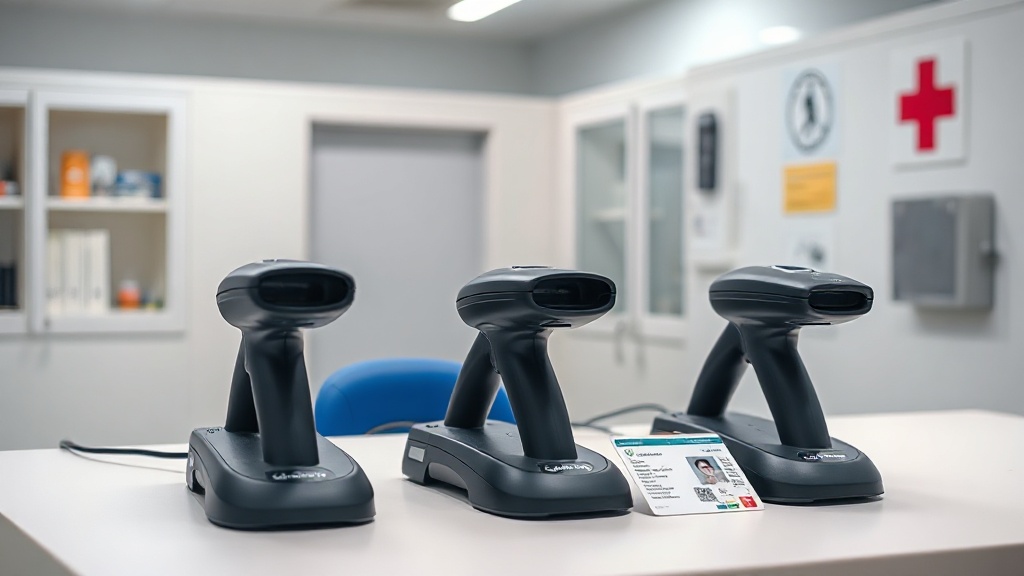
2D scanners can read QR codes on electronic health insurance cards and capture images of chip-embedded CCCD (front side) to extract information. However, not all 2D scanners support this function — a scanner with image capture and PDF417 barcode decoding capability (on old CCCD) is required. The Zebra DS2208 and Honeywell 1900 series both meet this, but appropriate drivers need to be installed.
Some notes on deployment: the scanner must be configured in the correct mode (image capture) to capture CCCD images, not just read barcodes. The clinic or pharmacy management software must support image recognition from the scanner. Average processing time is 1-2 seconds per CCCD scan — 5-10 times faster than manual entry.
Case study: A 15-store mini supermarket chain switches to 2D scanners
A mini supermarket chain in Ho Chi Minh City with 15 stores switched from 1D laser scanners to Zebra DS2208 2D scanners in early 2025. Results after 6 months: checkout speed increased by 25% due to reading damaged codes on crumpled packaging, scan errors due to faded barcodes reduced by 40%. Cashiers no longer needed to scan 2-3 times as before.
Investment cost: each DS2208 scanner about 2.8 million VND, total 42 million for 15 units. ROI: 15% reduction in queue wait time, 8% revenue increase due to faster processing during peak hours. The chain also used the scanners to read QR codes on electronic discount coupons, instead of manual code entry. Automated e-invoice accounting with 3-way match on Việt POS ERP was also integrated to sync scan data with accounting.
Case study: A 5000m² distribution warehouse using Honeywell wireless scanners
A consumer goods distribution warehouse in Binh Duong, area 5000m², deployed 20 Honeywell 1900g wireless scanners for the receiving/shipping team. Long-range Bluetooth 100m allows staff to scan pallet codes from a distance without carrying fixed reading devices. Results: receiving productivity increased by 35%, order errors dropped from 3% to 0.5%.
Warehouse environment is dusty, high temperature (35-40°C) — Honeywell 1900g operates stably thanks to IP41 rating and 1.5m drop resistance. Battery charging time 3 hours for 8 hours of continuous work. Việt POS Digital Office Module: ERP integration, attach order documents was used to sync scan data directly to the warehouse management system.
Case study: A general clinic scans CCCD and health insurance cards with Datalogic QW2520
A general clinic in District 10, Ho Chi Minh City, receiving 150-200 patients/day, switched from manual CCCD entry to scanning with Datalogic QW2520. This 2D scanner reads QR codes on electronic health insurance cards and captures chip-embedded CCCD images in 1-2 seconds. Results: reception time reduced from 3 minutes to 45 seconds per patient, information entry errors reduced by 70%.
Investment cost: 2.2 million VND per scanner, integrated with clinic management software via USB. The clinic also used the scanner to read barcodes on test requisition forms, improving specimen management accuracy. Digital signing of PDF contracts on ERP: Solutions for Vietnamese enterprises was applied to digitize patient records.
Frequently Asked Questions
Can a 1D barcode scanner scan CCCD?
No. Chip-embedded CCCD and electronic health insurance cards use QR codes or PDF417 — both are 2D codes, which 1D laser scanners cannot read. A 2D scanner with imager (image capture) function is required to read these types of codes.
Is the Zebra DS2208 barcode scanner compatible with Vietnamese POS software?
Yes. The DS2208 connects via USB HID (plug-and-play) — most POS software like KiotViet, Sapo, Misa recognize it immediately. Only need to install drivers from Zebra if using the image capture function.
Do wireless scanners have latency?
Yes, average latency is 50-100ms compared to wired scanners. For high-volume scanning operations, this latency is negligible. However, for continuous high-speed scanning (over 500 scans/hour), wired scanners are more stable.
Which barcode scanner brand should I buy for a supermarket?
Zebra DS2208 is the optimal choice for supermarkets due to its fast read speed, ability to read damaged codes, and stable wired connection. If the budget is lower, Datalogic QW2520 is a 30% cheaper option but with lower durability.
Can barcode scanners read barcodes on phone screens?
Only 2D scanners can read barcodes on screens (QR codes, barcodes in e-wallets). 1D laser scanners cannot read them due to light reflection from the screen. The Zebra DS2208 and Honeywell 1900 series both support this well.
What is the annual maintenance cost for a barcode scanner?
Average 200,000-500,000 VND/year for lens cleaning, USB cable replacement (if damaged). Wireless scanners have additional battery replacement costs (800,000-1,500,000 VND after 2-3 years). Official warranty is typically 12-24 months.
How to choose a barcode scanner for a dusty warehouse?
Choose a scanner with a high IP rating (IP52 or higher) like Datalogic QW2520 or Honeywell 1900g. Avoid scanners with large gaps that easily accumulate dust on the lens. Clean periodically once a month with a soft cloth and specialized solution.
Can a 2D barcode scanner read thermal-printed barcodes?
Yes. 2D scanners using image sensors can read thermal-printed barcodes (on receipts, warehouse labels) if the code is still clear. However, thermal-printed codes fade easily after 3-6 months — high-end scanners (Zebra DS2208) can read slightly faded codes, mid-range scanners may struggle.
Need advice on choosing a 1D/2D barcode scanner suitable for your supermarket, warehouse, or health insurance clinic environment? Contact Việt POS via hotline 0935 498 384 for detailed comparison of Zebra, Honeywell, Datalogic models and to receive the best 2026 pricing.
Cần tư vấn thiết bị/giải pháp cụ thể?
Việt POS phản hồi trong 30 phút · Hotline 4 vùng · Khảo sát miễn phí.
Bài viết cùng chủ đề