Mục lục bài viết (8)
- What is a Handheld RFID PDA? Key Features and Applications
- What is a Fixed Mount Reader? When to Use It?
- Comparison Table: Handheld RFID PDA vs. Fixed Mount: Cost, Read Range, Speed, Maintenance
- Advantages and Disadvantages of Each RFID Reader Type
- When to Choose Handheld RFID PDA, When to Choose Fixed Mount?
- Real-world Case Studies: 10-Store Mini-Supermarket Chain and 5000m² Garment Factory
- Deployment Cost and ROI: 3-Year Total Cost of Ownership (TCO) Comparison
- Environmental and Infrastructure Factors Affecting RFID Reading Performance
Handheld RFID PDAs (handheld readers) and Fixed Mount (fixed readers) are the two most common types of UHF RFID tag reading devices in warehouse management, retail, and manufacturing in Vietnam. The core difference lies in mobility versus automation: PDAs allow staff to scan tags while moving, whereas Fixed Mount readers are fixed at gates or conveyor belts for bulk reading without manual operation. This article provides a detailed comparison of these two device types based on cost, read range, speed, maintenance, and practical applications, helping Vietnamese businesses choose the appropriate solution.
What is a Handheld RFID PDA? Key Features and Applications
A handheld RFID PDA is a mobile device integrating a UHF RFID reader, touchscreen, Android operating system, rechargeable battery, and often includes a camera, Bluetooth, and 4G. This device allows staff to carry it, scan RFID tags from 3-8 meters away, perform inventory checks, receive goods, and flexibly verify stock at various locations without requiring fixed infrastructure.
Handheld RFID PDAs are typically used in tasks requiring high mobility: periodic warehouse inventory, goods receiving/shipping at multiple locations, checking merchandise on shelves, and supplementary barcode scanning. This device is suitable for small and medium-sized businesses, warehouses under 2000m², or retail chains needing to check stock across multiple stores. Popular models in the Vietnamese market, such as the iData J20, J17, J15 series, can read UHF tags in low light conditions, feature IP65 durability, and have 5000-8000 mAh batteries for 8-12 hours of operation.
Main applications: supermarket inventory checks, office asset management, tracking tools and equipment in manufacturing workshops, and inspecting import/export goods at ports. An industrial barcode scanner iData J20 Series integrated with UHF RFID can replace 3-5 manual inventory staff, reducing time from 8 hours to 30-45 minutes for a 5000m² warehouse.
What is a Fixed Mount Reader? When to Use It?
A Fixed Mount reader is an RFID device permanently installed at a specific location (warehouse gate, conveyor belt, entrance/exit) connected to external antennas, operating 24/7 without human intervention. This device automatically reads tags as goods pass through the reading zone, suitable for automating inbound/outbound processes, anti-theft, and high-speed goods sorting.
Bạn đang tìm sản phẩm cho chủ đề này?
Việt POS phân phối chính hãng — bảo hành 24-36 tháng, hỗ trợ kỹ thuật 24/7.
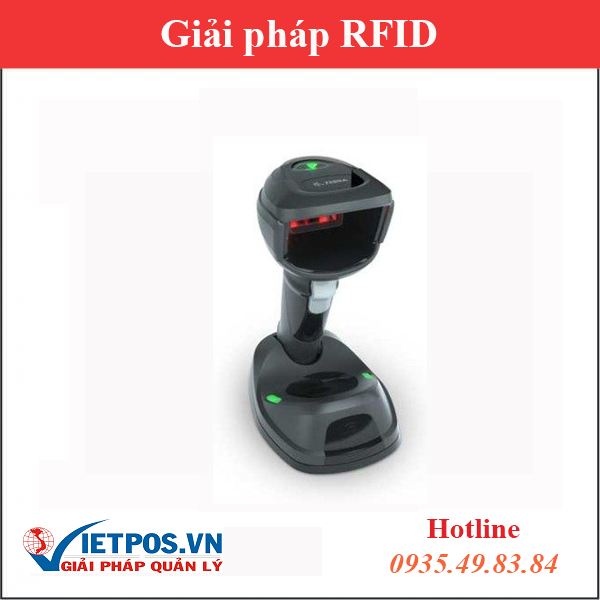
DS9900 handheld RFID reader for retail
SKU: DS9900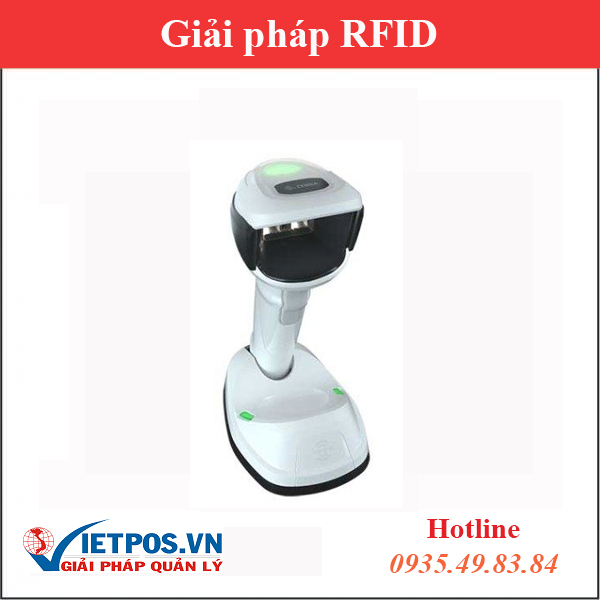
DS9900 Handheld RFID Reader for Laboratory
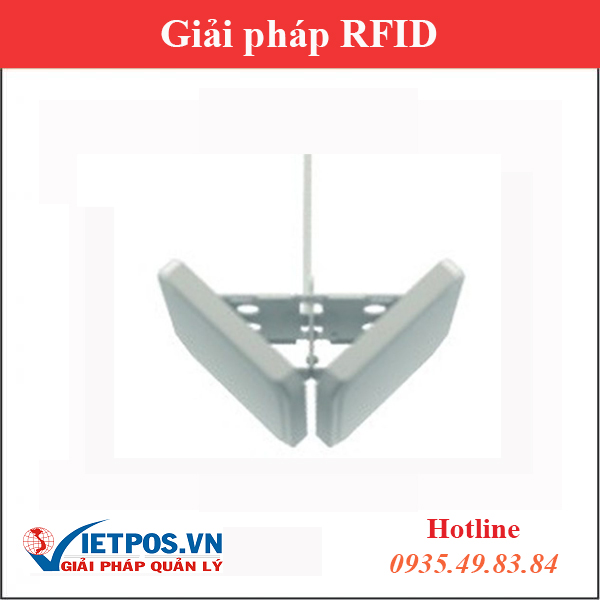
Zebra SR5502 RFID Antenna for Backroom and Warehouse
SKU: SR5502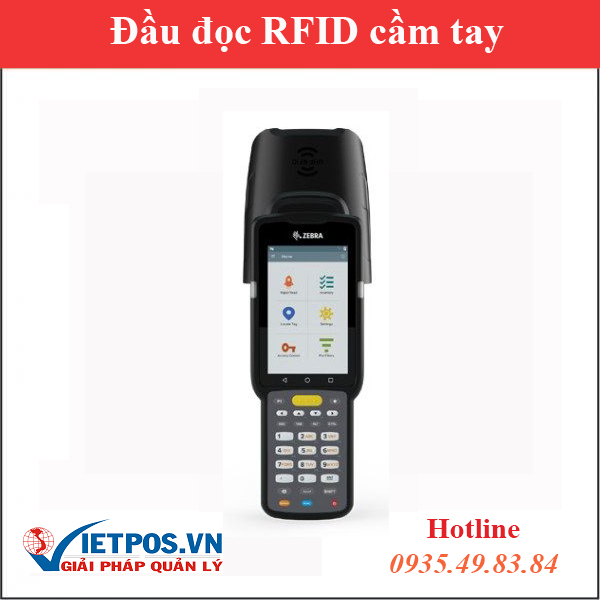
MC3300 Handheld RFID Reader
SKU: MC3300Fixed Mount readers are typically installed at warehouse gates (dock doors), packaging conveyor belts, supermarket entrances/exits, or automated production areas. This device can connect to various antennas (circular, linear, panel) to extend the reading range from 1-15 meters. Models like Zebra FX9600, Impinj Speedway R420 support reading 200-700 tags/second, integrating APIs with ERP, WMS systems. However, initial deployment costs are high due to the need for antenna, cable, power, and control software installation.
Main applications: automated warehouse inbound/outbound gates (no need to stop forklifts), anti-theft for retail stores, sorting cartons on conveyor belts, and managing goods in containers. A Fixed Mount system at a warehouse gate can reduce inbound/outbound errors by 70-80% compared to manual methods, increasing processing speed from 3-5 minutes per instance to under 10 seconds.
Comparison Table: Handheld RFID PDA vs. Fixed Mount: Cost, Read Range, Speed, Maintenance
The table below compares 7 important criteria between handheld RFID PDAs and Fixed Mount readers, based on technical specifications and Vietnamese market prices in 2026. Data is compiled from vendors such as Zebra, Impinj, iData, and practical deployment experience.
| Criteria | Handheld RFID PDA | Fixed Mount Reader |
|---|---|---|
| Device Cost (1 unit) | 15-40 million VND | 25-80 million VND (excluding antenna) |
| Deployment Cost (cables, antenna, installation) | None or Low (0-2 million) | High (5-20 million/gate) |
| Maximum Read Range | 3-8 meters (depending on model + integrated antenna) | 5-15 meters (with external antenna) |
| Read Speed (tags/second) | 30-100 tags/second | 200-700 tags/second |
| Mobility | High (handheld, moving to multiple locations) | Low (fixed at one point) |
| Routine Maintenance | Low (battery charging, sensor cleaning) | Medium (checking antenna, cables, firmware) |
| Battery Life / Power Source | 8-12 hours (Li-ion battery 5000-8000 mAh) | Mains power 24/7 |
Note: Fixed Mount requires investment in network infrastructure (Ethernet or industrial WiFi) and centralized management software, whereas PDAs operate independently with simple inventory software. Businesses need to consider the total cost of ownership (TCO) over 3-5 years.
Advantages and Disadvantages of Each RFID Reader Type
Each reader type has its strengths: handheld PDAs are flexible, low-cost, and easy to deploy; Fixed Mount offers high automation, fast bulk reading, and fewer errors. However, both have limitations regarding read range, scalability, and technical requirements.
Advantages of Handheld RFID PDA
- High mobility: staff carry it, scan tags at various locations without fixed infrastructure.
- Low deployment cost: no need for antenna, cables, power installation; just battery charging.
- Easy scalability: purchase additional devices as needed, not dependent on installation location.
- Multi-functional integration: often includes camera, Bluetooth, 4G, supports supplementary barcode scanning.
Disadvantages of Handheld RFID PDA
- Lower read speed: 30-100 tags/second, not suitable for high-speed conveyor belts.
- Battery dependent: requires charging after 8-12 hours, difficult for 24/7 operation.
- Limited bulk reading capability: narrow reading zone, requires movement to scan the entire area.
- Risk of loss or damage due to impact during frequent movement.
Advantages of Fixed Mount
- Full automation: no human labor required, automatically reads tags as goods pass through.
- Extremely high read speed: 200-700 tags/second, suitable for conveyor belts, inbound/outbound gates.
- Wide reading zone: can be expanded with multiple antennas, covering the entire warehouse gate.
- 24/7 operation: not battery dependent, low maintenance if the environment is stable.
Disadvantages of Fixed Mount
- High initial deployment cost: device + antenna + cables + installation can amount to 100 million/gate.
- Inflexible: fixed at one location, difficult to relocate when warehouse layout changes.
- Network infrastructure requirements: needs Ethernet, industrial WiFi, centralized management software.
- Complex maintenance: antenna, cables, firmware require periodic inspection by technicians.
When to Choose Handheld RFID PDA, When to Choose Fixed Mount?
The decision to choose a reader type depends on warehouse size, inventory frequency, desired automation level, and budget. Below are specific scenarios to help Vietnamese businesses make an informed choice.
Choose a handheld RFID PDA if: the business has 1-3 small warehouses (under 1000m²), inventory frequency is 1-2 times/month, budget is under 50 million, and mobility is needed for checks at multiple locations. Examples: retail store chains, medium-sized manufacturing workshops, office asset management. With a PDA, staff can bring the device to each shelf, scan tags, and update inventory directly on the Android application.
Choose Fixed Mount if: the business has large warehouses (over 2000m²), goods inbound/outbound traffic is 50-200 times/day, and automation of inbound/outbound is needed to reduce errors by 70-80% and increase speed. Examples: distribution centers, logistics warehouses, large supermarkets with anti-theft security gates. Fixed Mount at the warehouse gate allows forklifts to pass through without stopping, and the system automatically reads all pallets in 2-5 seconds.
Combine both: many Vietnamese businesses are implementing a hybrid solution: Fixed Mount at inbound/outbound gates to automate goods flow, combined with handheld PDAs for periodic inventory and spot checks. This solution optimizes cost and efficiency, suitable for warehouses of 1000-5000m² with a budget of 150-300 million.
Real-world Case Studies: 10-Store Mini-Supermarket Chain and 5000m² Garment Factory
The two case studies below illustrate how Vietnamese businesses choose RFID PDA or Fixed Mount based on actual needs. Data was collected from deployment projects in Ho Chi Minh City and Binh Duong in 2025-2026.
Case 1: 10-Store Mini-Supermarket Chain – Handheld PDA Chosen
A mini-supermarket chain (each store 200-400m²) needed weekly inventory checks at 10 different locations. The budget was limited (under 100 million), with no centralized network infrastructure. Solution: invest in 5-7 handheld RFID PDAs (iData J17 Series, 5-meter read range), each PDA costing 25 million. Staff carried devices to each store, scanned tags on shelves, and data synchronized via 4G to the cloud. Results: inventory time reduced from 4 hours/store to 45 minutes, accuracy increased from 85% to 98%. Total cost: 175 million for 7 PDAs, no additional installation needed.
Case 2: 5000m² Garment Factory – Fixed Mount + PDA Chosen
An export garment factory in Binh Duong has 3 outbound gates, with a throughput of 150 pallets/day. Automation of inbound/outbound was needed to prevent errors and increase speed. Solution: install 3 Fixed Mount gates (Zebra FX9600 + panel antenna) at the warehouse doors, each gate costing 70 million (device + antenna + installation). This was combined with 2 handheld PDAs for internal inventory and spot checks. Results: time to ship 1 pallet reduced from 5 minutes to 8 seconds, inbound/outbound errors decreased from 5% to 0.3%. Total cost: 210 million for Fixed Mount + 50 million for PDAs = 260 million. ROI within 12 months due to reduced labor and errors.
Deployment Cost and ROI: 3-Year Total Cost of Ownership (TCO) Comparison
The total cost of ownership (TCO) over 3 years includes equipment, installation, maintenance, software, and operating labor. Below are estimates for two typical scenarios in Vietnam.
| Cost Item | RFID PDA (5 devices) | Fixed Mount (3 gates) | Hybrid (3 gates + 2 PDAs) |
|---|---|---|---|
| Equipment | 125 million (5×25 million) | 210 million (3×70 million) | 260 million |
| Installation + Infrastructure | 0 million | 30 million (cables, antenna, installation) | 30 million |
| Software (3 years) | 30 million (cloud license) | 60 million (server + license) | 60 million |
| Maintenance (3 years) | 15 million (battery, repairs) | 30 million (checking antenna, cables) | 35 million |
| Operating Labor (3 years) | 180 million (1 part-time employee) | 0 million (automation) | 60 million (1 inventory staff) |
| Total 3-Year TCO | 350 million | 330 million | 445 million |
| Estimated RFID Tags | 50,000 tags | 200,000 tags | 200,000 tags |
| Return on Investment (ROI) | 8-12 months | 10-14 months | 10-12 months |
Note: ROI depends on scale and the effectiveness of reducing labor and errors. For businesses with high goods traffic, Fixed Mount provides faster ROI due to automation. PDAs are suitable for small businesses needing flexibility and low investment costs.
Environmental and Infrastructure Factors Affecting RFID Reading Performance
RFID reading performance depends not only on the device but is also significantly affected by the environment: metal, liquids, electromagnetic interference, temperature, and humidity. Both PDAs and Fixed Mount readers need to have their antennas and power configured appropriately for actual conditions.
In warehouses with many metal shelves, UHF RFID tag signals are attenuated by 30-50% if on-metal tags are not used. Fixed Mount readers with external antennas can adjust angle and power to optimize the reading zone, while handheld PDAs require operators to move closer to shelves to ensure accuracy. Humid environments (cold storage, food factories) require devices with IP6
Cần tư vấn thiết bị/giải pháp cụ thể?
Việt POS phản hồi trong 30 phút · Hotline 4 vùng · Khảo sát miễn phí.
Bài viết cùng chủ đề