Table of contents (10)
- What is a cold storage RFID label?
- Criterion 1: Label operating temperature vs. warehouse temperature
- Criterion 2: Adhesive still holds through freezing and thawing
- Criterion 3: Application surface (plastic, carton, metal)
- Label placement: avoid impacts and ice
- Deep-freeze storage beyond the label's limit: a different type is needed and testing is required
- UHF RFID frequency configuration in Vietnam: 918.4-923 MHz
- Glossary and Specifications Summary Table
- Common mistakes when choosing RFID tags for cold storage
- Frequently asked questions

Cold storage RFID labels are UHF RFID tags designed to operate in low-temperature, humid environments with freeze-thaw cycles. Unlike standard labels, cold storage labels must ensure three factors: a suitable operating temperature, adhesive that bonds firmly to cold/humid surfaces, and a placement position that avoids standing water and impacts. In Vietnam, supermarket chains, fresh food distribution warehouses and central kitchens are gradually moving to RFID for fast stocktaking, but choosing the wrong label causes unstable read rates.
Cold storage RFID labels must have an operating temperature below the lowest storage temperature, with a safety margin, adhesive specially designed for cold/humid surfaces, and must be applied in a position with few impacts, avoiding ice and water. The RL8647 label (Impinj MR6-P) handles -25°C to 70°C, suitable for standard storage warehouses; deeper freezer warehouses need a different type and must be tested on real goods.
Table of contents
- What is a cold storage RFID label?
- Criterion 1: Label operating temperature versus storage temperature
- Criterion 2: Adhesive still bonds through freezing and thawing
- Criterion 3: Application surface (plastic, carton, metal)
- Label placement: avoid impacts and ice water
- Freezer warehouses deeper than the label's limit: a different type is needed and must be tested
- RFID UHF frequency configuration in Vietnam: 918.4-923 MHz
- Summary table of terms and specifications
- Common mistakes when choosing cold storage RFID labels
- Frequently asked questions
What is a cold storage RFID label?
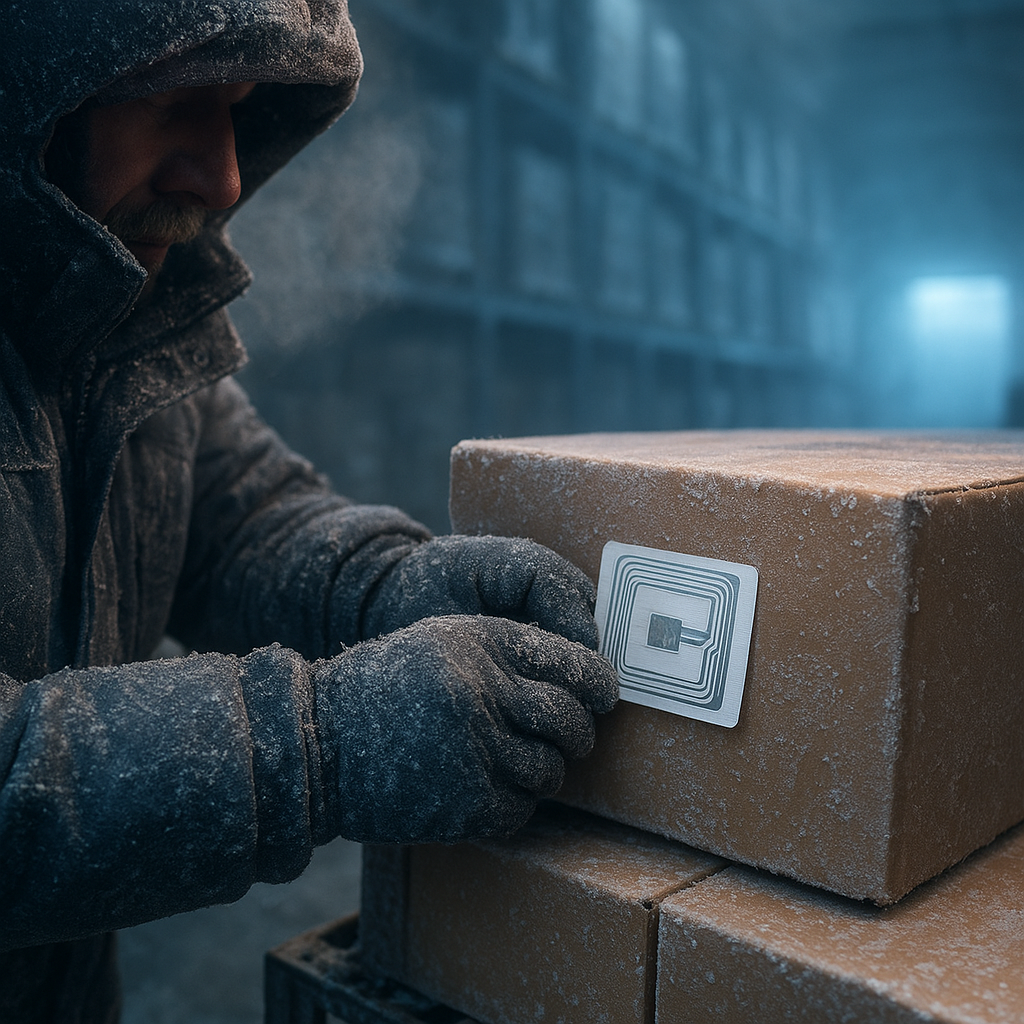
A cold storage RFID label is a type of UHF (ultra-high frequency) RFID tag attached to cartons, pallets or products to track them in cold storage environments. The label consists of an RFID chip, an antenna and an adhesive layer, designed to maintain readability when temperatures drop below zero and humidity is high. According to manufacturer specifications, the RL8647 label is one example: Impinj MR6-P chip, PET substrate, operating temperature -25°C to 70°C, read range 0-6m.
See the deployment approach, devices and phased roadmap on the RFID solution for cold chain and fresh food page.
Criterion 1: Label operating temperature vs. warehouse temperature
Related products


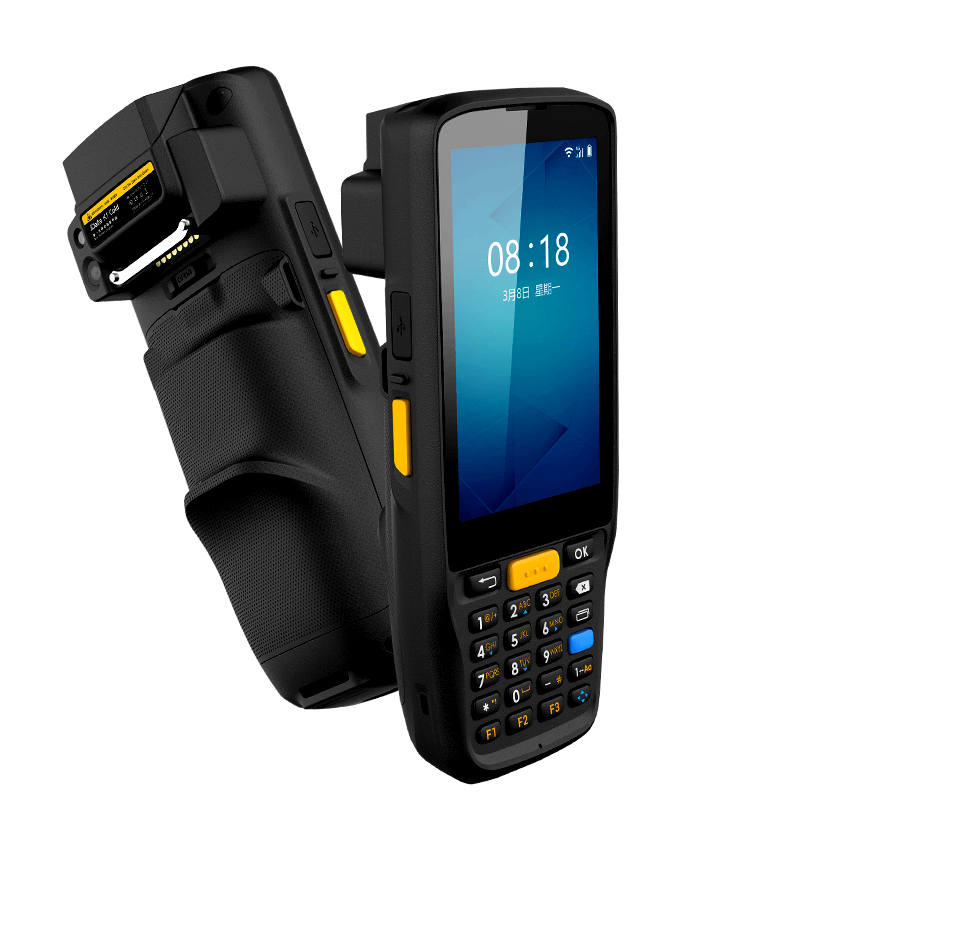
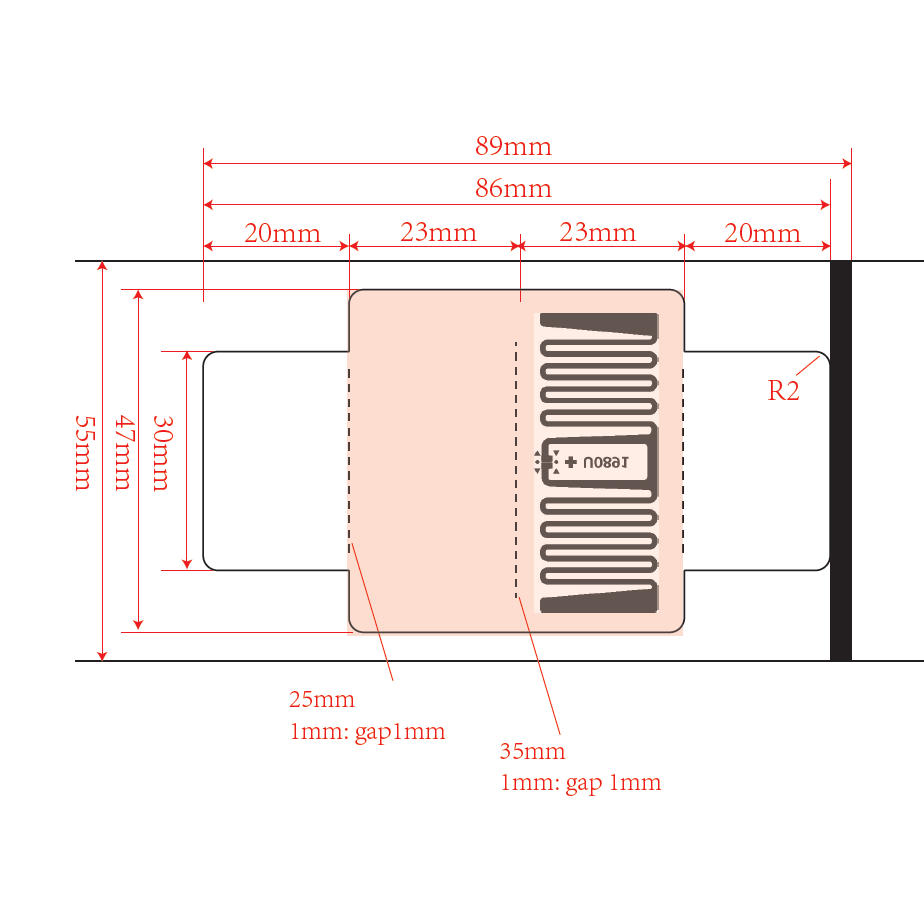
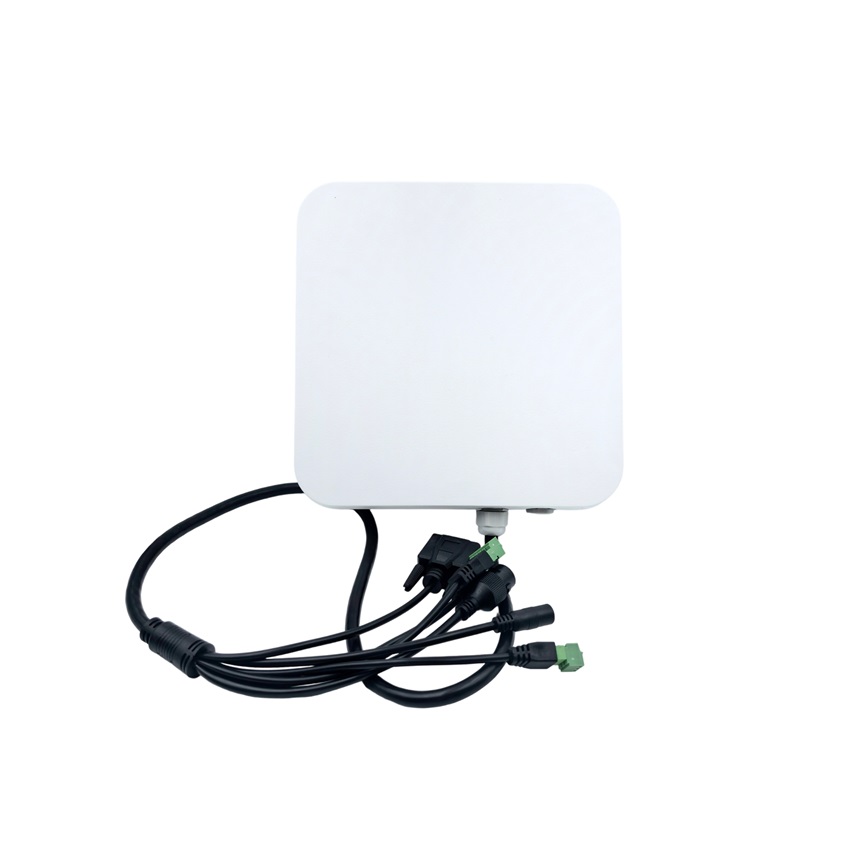
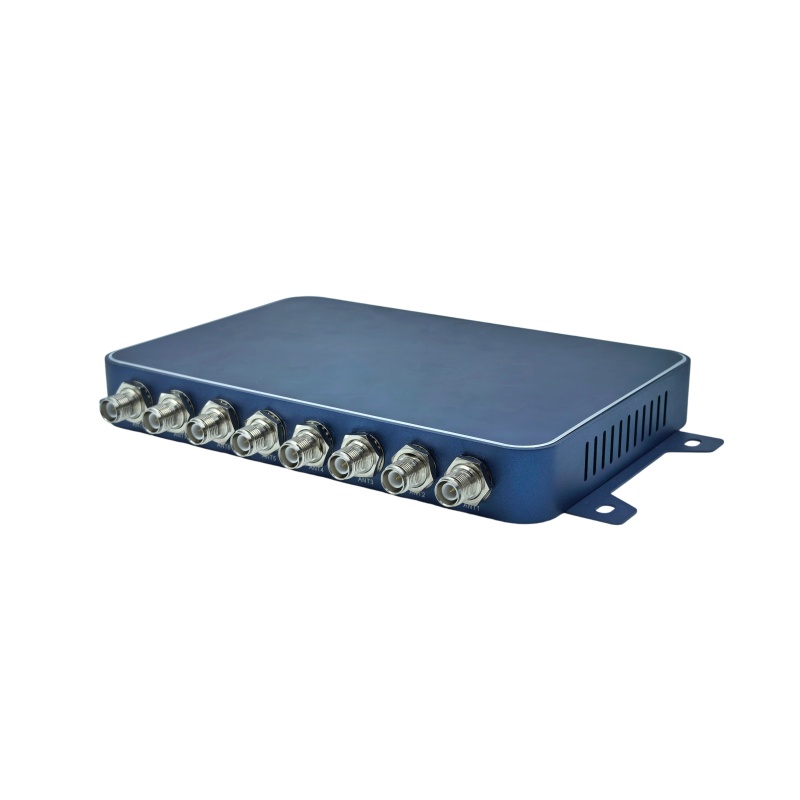
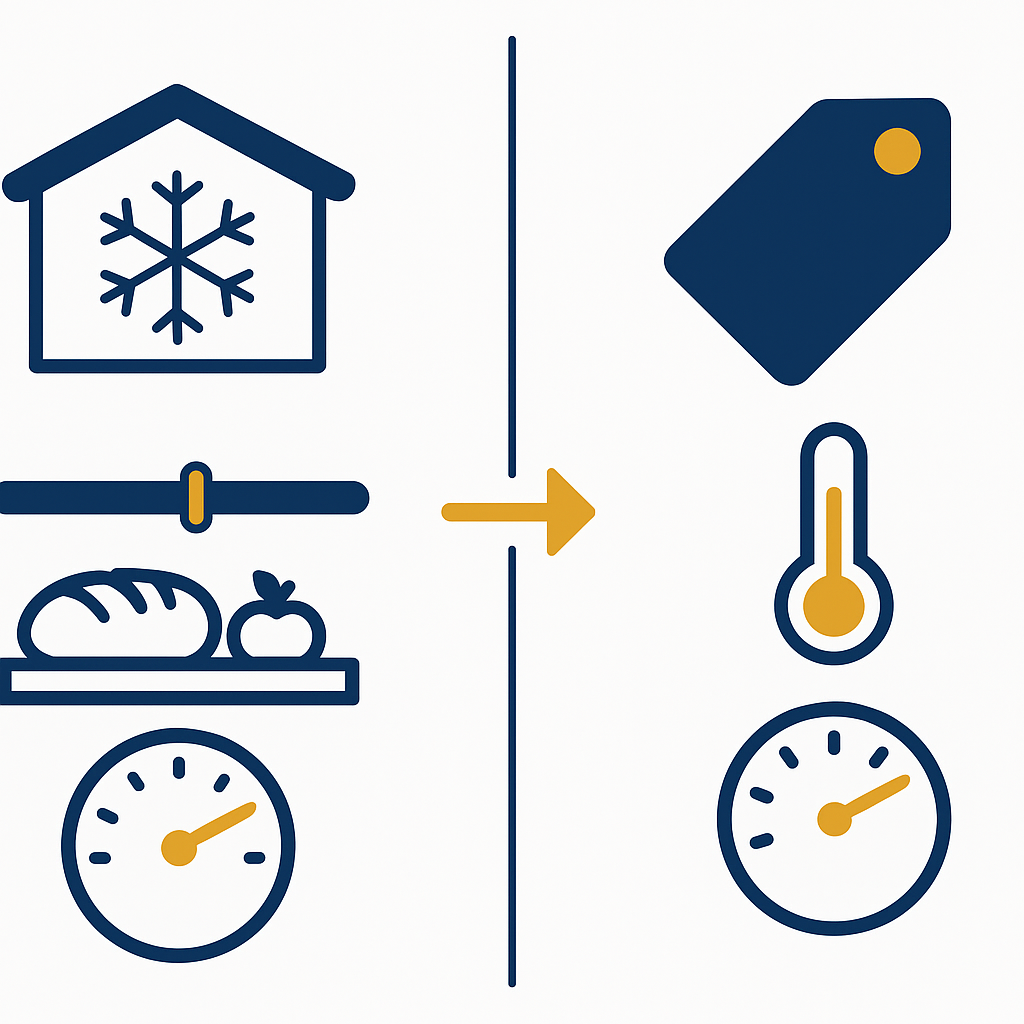
The label operating temperature must be below the lowest warehouse temperature, with a safety margin. For example, a fresh food storage warehouse at -18°C to -20°C can use the RL8647 label with a -25°C limit. However, a blast freezer can drop to -35°C to -40°C, exceeding the limits of standard labels, requiring a more specialized type and actual testing.
According to manufacturer specifications, the RL8647 label has an operating temperature of -25°C to 70°C and a storage temperature of -45°C to 80°C. These figures are suitable for standard cold storage warehouses, not for blast freezing. When selecting a label, it is necessary to compare it against the actual operating temperature of the warehouse, not to use the nominal figures of the refrigeration equipment.
- Fresh food storage warehouse: -18°C to -22°C → the RL8647 label meets the requirement.
- Frozen meat and seafood storage warehouse: -25°C to -30°C → the safety margin must be checked; a label with a lower limit may be used.
- Blast freezer: -35°C to -40°C → standard labels are not guaranteed; testing is required and a specialized type may be used.
Criterion 2: Adhesive still holds through freezing and thawing
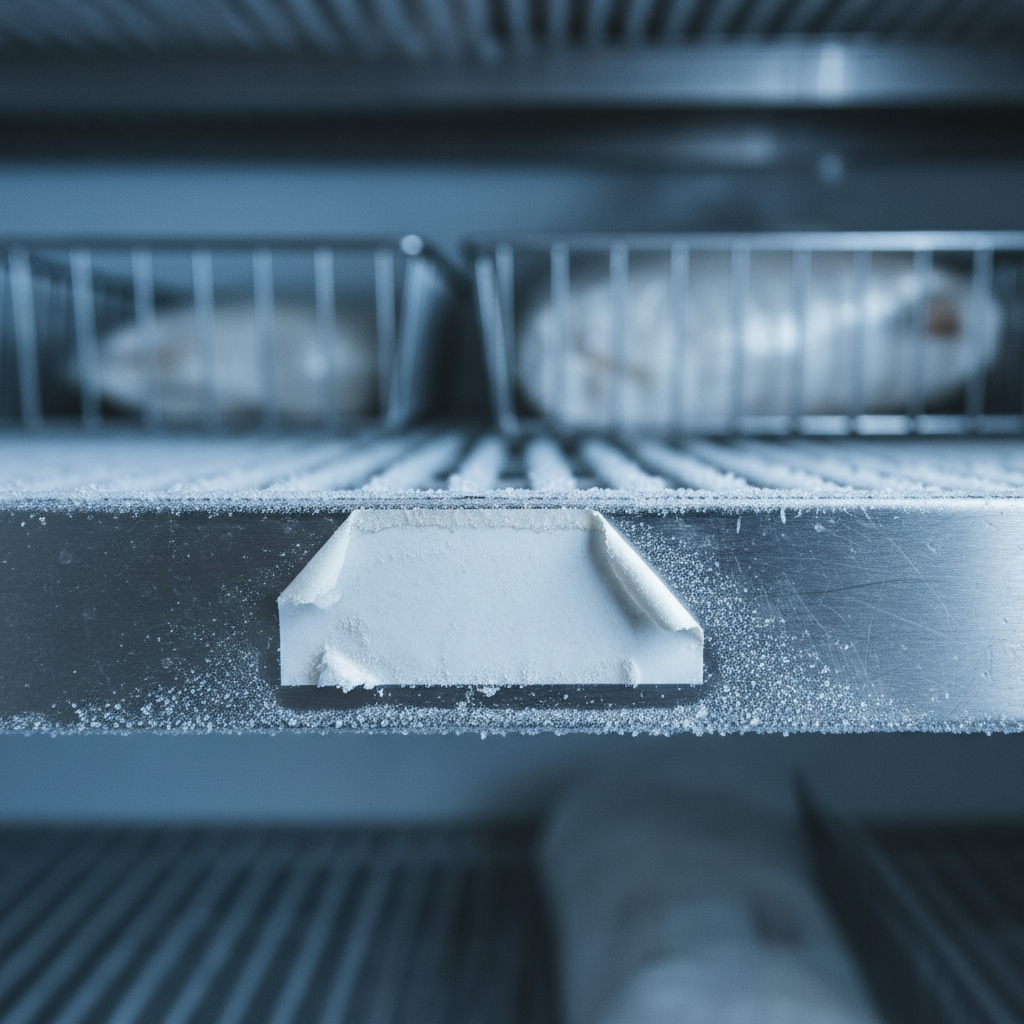
Cold-storage label adhesive must maintain adhesion across multiple freeze-thaw cycles, without slipping or edge lifting. According to manufacturer specifications, the RL8647 label has an anti-condensation coating and an adhesive that withstands freeze-thaw cycles, maintaining 99% read accuracy after 100 cycles. However, this figure is measured under ideal conditions; actual results depend on the application surface and how the label is applied.
Label adhesive often has problems when applied to surfaces with water or ice. The principle: apply labels when the surface is dry and at a temperature close to 0°C to 10°C if possible; if you must apply in a cold storage room, use an adhesive designed for cold surfaces and press firmly, holding for a few seconds so the adhesive bonds.
- Choose labels with acrylic or rubber adhesive designed for low temperatures.
- Avoid applying to surfaces with ice or that are thawing.
- After application, check that the label edges have not lifted after 24 hours.
Criterion 3: Application surface (plastic, carton, metal)
The application surface greatly affects read performance and label adhesion. UHF RFID labels work well on dielectric surfaces such as carton and plastic, but degrade on metal and liquids. For plastic crates or carton in cold storage, the RL8647 label (44x16mm antenna) is suitable. For metal surfaces, use metal-specific labels or a spacer.
In cold storage, goods are usually packed in carton boxes, plastic bags, or on wooden pallets. Carton is the most common surface, and labels applied directly to carton give stable read results. However, when carton is damp or frozen, the adhesive may not bond. Test on actual goods before rolling out at scale.
| Surface | Impact | Recommendation |
|---|---|---|
| Carton | Good read, fair adhesion | Apply directly, avoid folded edges |
| Plastic (PE, PP) | Average read, good adhesion | Apply flat, avoid curves |
| Metal | Strong signal loss | Use specialized labels or a spacer |
| Foam boxes | Good read but poor adhesion | Reinforce with tape |
Label placement: avoid impacts and ice
Label placement directly affects label lifespan and read performance. Apply on a flat surface with little impact, avoiding places where ice accumulates or drips. For carton boxes, apply on the side or lid, 2-3 cm from the edge. Do not apply on the bottom of the box or where it frequently contacts water.
- Apply on a flat surface that is not folded or curved.
- Avoid locations with accumulated ice or drips from the warehouse ceiling.
- Avoid locations that are frequently struck during handling.
- For pallets, apply to the carton rather than the wooden pallet (damp wood causes adhesive to lift).
Deep-freeze storage beyond the label's limit: a different type is needed and testing is required
Blast freezers typically operate at -35°C to -40°C, exceeding the -25°C limit of the RL8647 label. In this case, standard labels should not be used because the adhesive may lose adhesion and the chip may be unstable. Choose a label with a lower operating temperature (for example -40°C) and always test on actual goods before buying in large quantities.
Even if a label has suitable specifications, actual conditions (humidity, freeze-thaw cycles, surface) may differ. The best approach is to apply labels to a number of cartons, put them in the blast freezer, check after 24-48 hours, and measure the read rate. If the read rate is below 95%, adjust the label placement or choose a different label.
UHF RFID frequency configuration in Vietnam: 918.4-923 MHz
In Vietnam, the permitted UHF RFID frequency band is 918.4-923 MHz under regulations of the Ministry of Information and Communications. When buying an RFID reader, choose a device version that supports the 902-928 MHz band and set the correct frequency band during installation. Otherwise, the reader may not work or may cause interference.
Many devices on the market can be configured for frequency, but not every supplier provides clear guidance. When buying, ask clearly: does the device support the 918.4-923 MHz band? Can it be configured via software or commands? Việt POS supports frequency configuration for UHF RFID devices before handover.
- Choose a reader with a 902-928 MHz frequency band.
- Ask the supplier to pre-configure 918.4-923 MHz.
- Recheck after installation by test-reading a label.
Glossary and Specifications Summary Table
Term Definition Example / Specification Operating temperature The temperature range in which the tag operates normally RL8647: -25°C to 70°C Storage temperature The temperature range in which the tag is not damaged when not in use RL8647: -45°C to 80°C Cycle cou
| Term | Definition | Example / Specification |
|---|---|---|
| Operating temperature | The temperature range in which the tag operates normally | RL8647: -25°C to 70°C |
| Storage temperature | The temperature range in which the tag is not damaged when not in use | RL8647: -45°C to 80°C |
| Freeze-thaw cycles | The number of times the tag withstands freezing and thawing while remaining readable | RL8647: 100 cycles, 99% accuracy |
| Vietnam UHF frequency band | The frequency permitted for UHF RFID | 918.4-923 MHz |
| Read range | The maximum distance at which the reader receives a signal | RL8647: 0-6m (depending on environment) |
Common mistakes when choosing RFID tags for cold storage
Looking only at the nominal temperature of the warehouse: The actual temperature may be lower due to positions near the cooling unit.
- Looking only at the nominal temperature of the warehouse: The actual temperature may be lower due to positions near the cooling unit. Measure at the location where goods are placed.
- Applying tags to damp or icy surfaces: The adhesive does not stick, and the tag peels off after a few hours. Always dry the surface before applying.
- Using standard tags for deep-freeze storage: The tag may lose signal or peel off. A specialized type and testing are required.
- Not configuring the frequency according to Vietnamese regulations: The reader may not operate or may cause interference. Require the supplier to configure 918.4-923 MHz.
- Not testing on actual goods: Each type of goods has a different surface. Always measure the read rate before buying in large quantities.
Frequently asked questions
Can the RL8647 RFID tag be used for a -30°C warehouse?
According to the manufacturer's specifications, the RL8647 tag has an operating temperature of -25°C to 70°C. A -30°C warehouse exceeds this limit and should not be used. Choose a tag with a lower limit or test in practice before deciding.
Can the tag adhesive stick to frozen plastic surfaces?
Adhesive specialized for cold storage can stick to frozen plastic if the surface is clean and free of ice. However, it should be applied when the surface is dry or use a special adhesive for damp surfaces. Always check after 24 hours.
Do tags need to be replaced after a period of time?
RFID tags typically have a long lifespan, but in cold storage, the adhesive may degrade after many freeze-thaw cycles. Check periodically and replace tags if the read rate decreases. According to the manufacturer's specifications, the RL8647 tag withstands 100 freeze-thaw cycles.
Which RFID reader is suitable for cold storage?
A fixed or handheld UHF reader with a frequency band of 902-928 MHz, configured to 918.4-923 MHz, is required. Models such as Chainway C61 Cold Storage or iData K1 Cold are designed for cold environments, with cold-resistant batteries and screens. Việt POS provides suitable solutions.
How can I tell whether a tag reads well in cold storage?
The best way is to test on actual goods: apply tags to several cartons, place them in cold storage for 24-48 hours, then measure the read rate with a handheld reader. If the read rate is below 95%, adjust the tag placement or choose a different tag.
Are RFID tags affected by standing water?
Yes. Water and ice block UHF RFID waves, reducing the read range. Therefore, apply tags in positions that avoid standing water and check regularly. Tags with an anti-condensation coating such as the RL8647 help reduce the effect but do not eliminate it entirely.
To choose the right RFID tag for cold storage, contact Việt POS for a survey and read-rate measurement on actual goods. Hotline: 0935 498 384. See our solution for RFID for fresh food cold chains.
Need advice on specific equipment or a solution?
Việt POS replies within 30 minutes · Hotlines in 4 regions · Free site survey.
