Table of contents (11)
- What is a cold storage RFID reader?
- Why is the cold storage door the hardest place to install an RFID reader?
- Which IP water-resistance rating is required for RFID readers at cold storage doors?
- Operating temperature limits of RFID readers and how to arrange them for deep-freeze cold storage
- Choosing 902–928 MHz antennas and configuring the Vietnam frequency band 918.4–923 MHz
- RFID reader placement at warehouse doors: 5 practical principles
- Using GPIO to connect a door sensor and indicator light: how to reduce duplicate reads
- Summary table: specifications of two common fixed reader lines
- Common mistakes when installing RFID readers at cold storage doors
- Frequently asked questions
- Summary and next steps

A cold storage RFID reader is a UHF reading device installed at the doorway or inside the cold room to automatically identify tags attached to pallets, cartons and trolleys. Unlike readers installed in dry warehouses, equipment at cold storage doors faces three pressures at once: condensing humidity, deep sub-zero temperatures and the metal obstruction of insulated doors. According to manufacturer specifications, the two common fixed reader lines in Vietnam are the Symo IR38A (integrated, IP66/IP67 rated) and the Symo FR38A (8 antenna ports, Impinj E710 chip) — each line suits a different type of warehouse door layout.
A cold storage RFID reader must have a minimum IP66/67 water-resistance rating, operate within the temperature limits published by the manufacturer, and for deep cold storage the unit body should be placed outside the door, with only the antenna brought inside. Choose the 902–928 MHz antenna version and then configure it to Vietnam's 918.4–923 MHz band; use the GPIO port to connect a door sensor or indicator light; always measure the read rate on real goods because metal and liquids block the signal.
Table of contents
- What is a cold storage RFID reader?
- Why is the cold storage door the hardest place to install an RFID reader?
- Which IP water-resistance rating is needed for an RFID reader at a cold storage door?
- RFID reader operating temperature limits and how to arrange them for deep cold storage
- Choosing a 902–928 MHz antenna and configuring Vietnam's 918.4–923 MHz band
- RFID reader mounting position at the warehouse door: 5 practical principles
- Using GPIO to connect a door sensor and indicator light: how to reduce duplicate reads
- Summary table: specifications of two common fixed reader lines
- Common mistakes when installing an RFID reader at a cold storage door
- Frequently asked questions
- Summary and next steps
What is a cold storage RFID reader?

A cold storage RFID reader is a device that emits UHF signals to read RFID tags attached to goods in a cold storage environment, usually placed at the warehouse door, the dispatch floor or the stocktaking area. The device must meet water-resistance standards, operating temperature limits and network connectivity to push data to warehouse management software.
In the fresh and frozen food cold chain, the reader at the warehouse door handles three tasks: recording goods in/out by pallet, reconciling quantities against delivery notes and providing data for the traceability system. For warehouses with multiple doors, each door needs its own reader or one multi-antenna-port reader to cover multiple in/out lanes.
The difference from readers installed at retail counters: at cold storage doors, the equipment is regularly exposed to condensing moisture when the door opens, and the surrounding temperature can drop below 0°C. Therefore water-resistance configuration and temperature limits are exclusion criteria, not added-value criteria.
See the deployment approach, equipment and phased roadmap on the RFID solution for the cold chain and fresh food page.
Why is the cold storage door the hardest place to install an RFID reader?
Related products


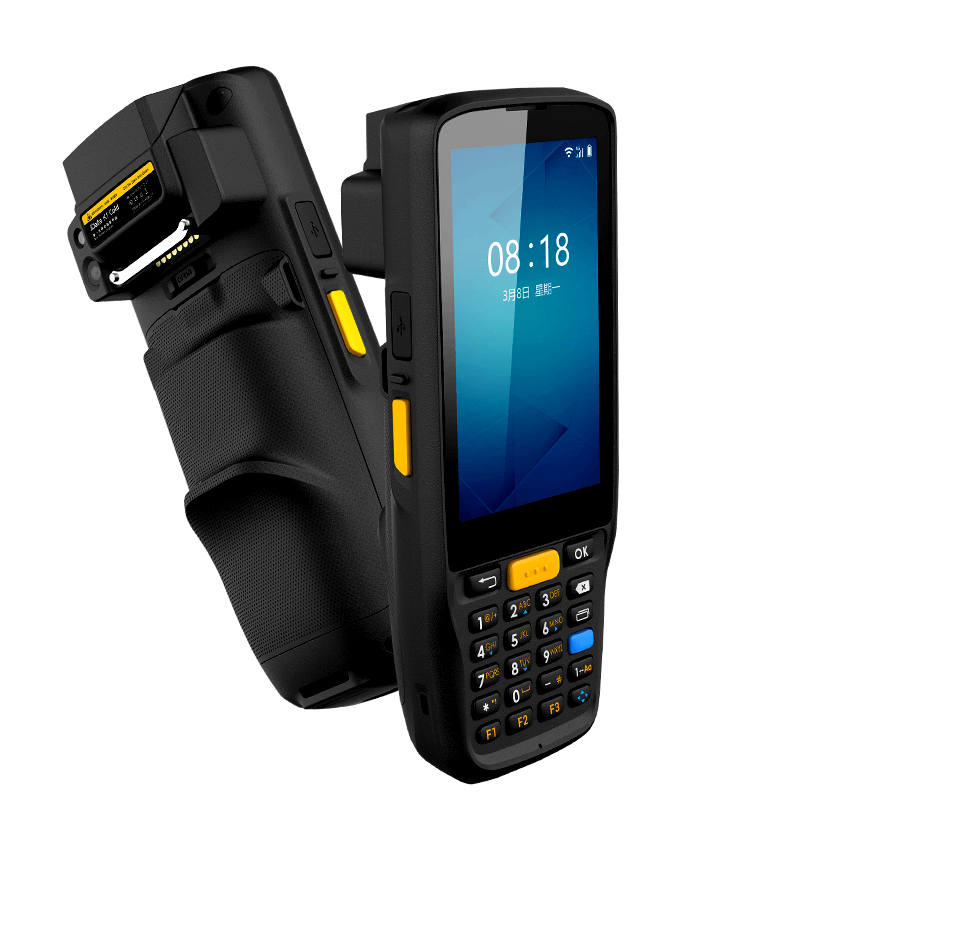
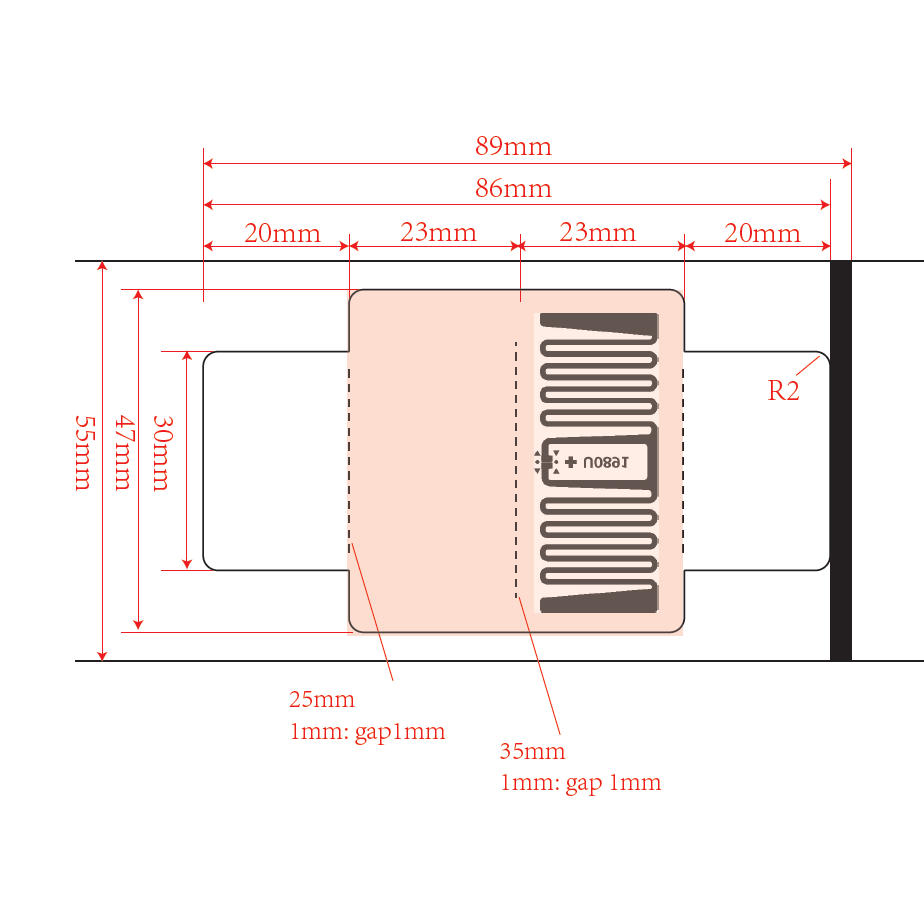
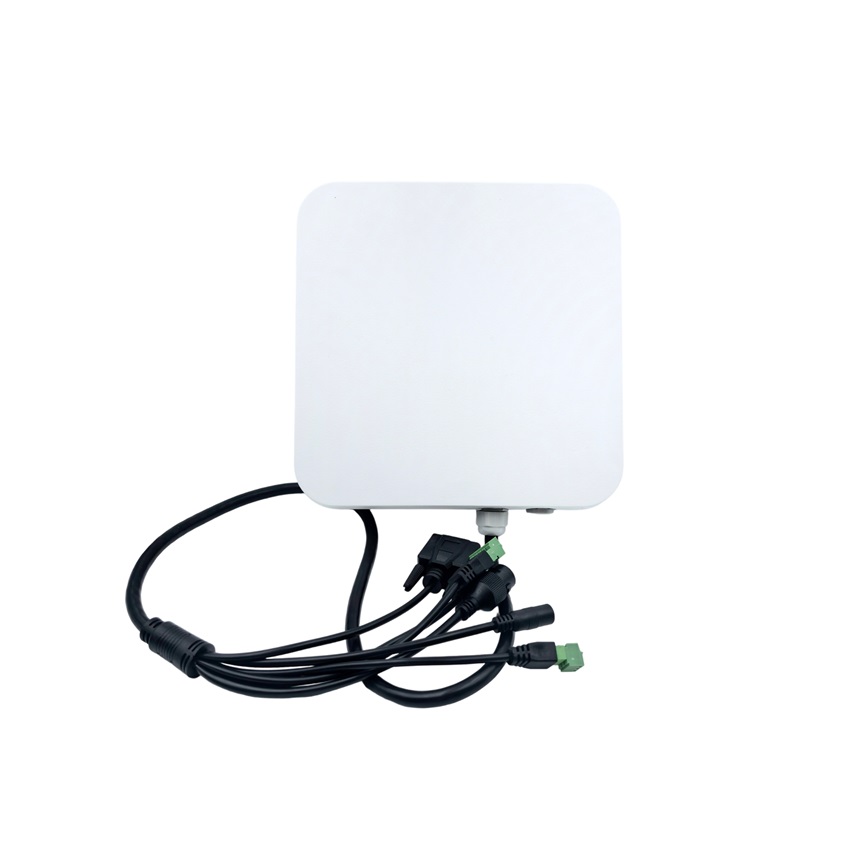
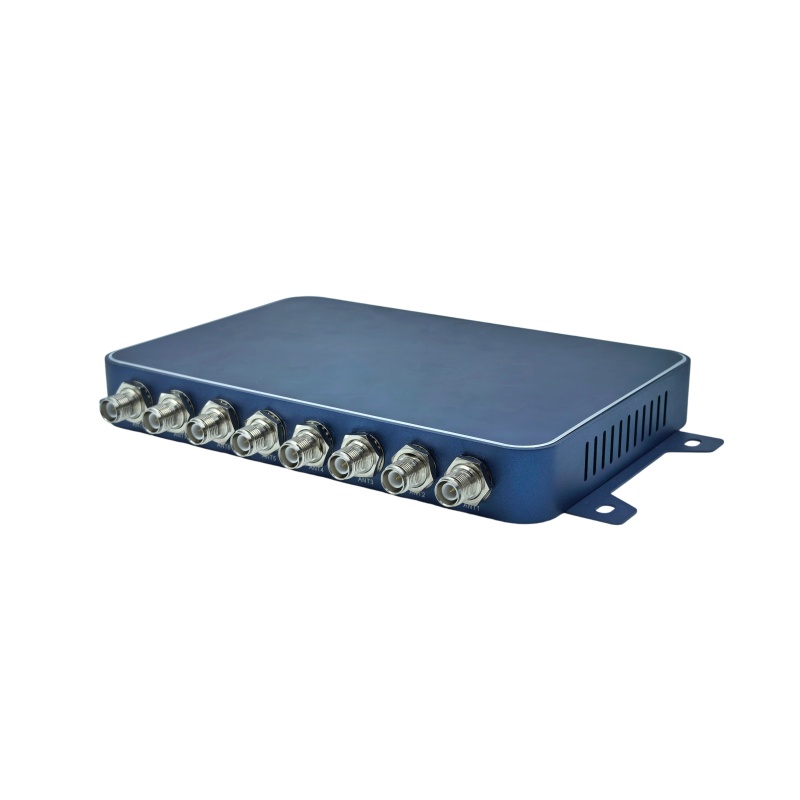

The cold storage door is hard to install because it combines four factors: condensing moisture damages electronic circuits, deep sub-zero temperatures fall outside the operating range of many devices, insulated metal doors reflect and block UHF waves, and continuous vehicle traffic into and out of the door obstructs the antennas. These four factors act simultaneously, so a single mistake causes the read rate to drop immediately.
Actual operations at frozen food distribution warehouses show three recurring groups of problems:
- Moisture failure: the reader is placed close to the door on the inside, and cold air escaping meets warm air, creating condensation on the housing. If the housing does not meet the appropriate IP rating, water enters the circuit board after a few months.
- Missed reads: roll-up doors or thick plastic doors obstruct the antennas, or antennas are placed off the vehicle's axis, so tags at the corners of pallets are not read.
- Wrong frequency band: imported devices use the 865–868 MHz band (Europe) or 902–928 MHz without configuration, leading to intermittent reads or failure to read attached tags.
These three groups of problems can be solved by choosing the right devices and positioning them correctly — the subject of the sections below.
Which IP water-resistance rating is required for RFID readers at cold storage doors?
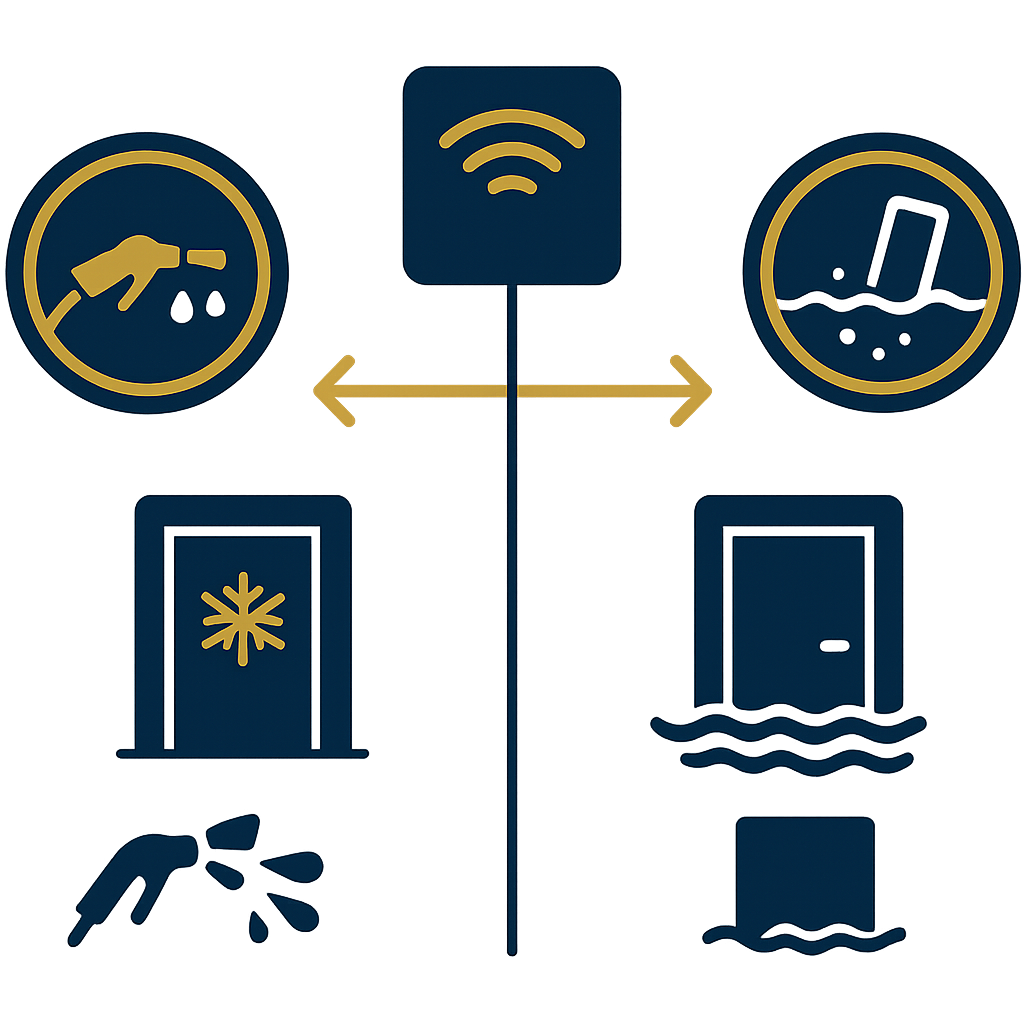
For cold storage doors, the reader needs a minimum of IP66 to withstand water jets and condensing humidity; if it is placed in a washdown area or near a sanitation spray nozzle, choose IP67. According to manufacturer specifications, the Symo IR38A meets IP66/IP67 with an integrated antenna housing, suitable for direct mounting at cold storage doors with high humidity.
The IP rating consists of two digits: the first digit is the dust protection level (6 = completely sealed), the second is the water protection level (6 = withstands strong water jets, 7 = temporary immersion under stated conditions). For cold storage, the second digit matters more because humidity condenses continuously during peak receiving and shipping hours.
Some points to check when verifying the IP rating on a catalogue:
- Require the supplier to state the IP rating explicitly on the quotation, not just say "water-resistant."
- Ask clearly whether the IP rating applies to the entire housing or only the antenna connector — many devices meet IP at the body but are open at the connector.
- If the reader is placed outside the door but facing inward, the surface exposed to cold air still needs to meet IP66 or higher.
- For cart washdown areas or floor sanitation spraying, choose IP67 and add a protective cover for the connector.
Fixed multi-port readers such as the Symo FR38A have an aluminum housing and meet IP5x according to manufacturer specifications — suitable for installation in an electrical cabinet or a technical room outside the cold storage door, not suitable for direct hanging inside a humid cold room.
Operating temperature limits of RFID readers and how to arrange them for deep-freeze cold storage
Each RFID reader has an operating temperature limit published by the manufacturer; equipment not designed for deep-freeze cold storage may stop working or produce errors when the temperature drops below the threshold. For deep-freeze cold storage, the safe arrangement is to place the reader body outside the door and route only the antenna into the cold room.
Arrangement principles by temperature depth:
- Cool storage 0–8°C (fresh food, milk, vegetables): an integrated reader can be placed right at the door if the device has a suitable temperature limit and meets IP66 or higher.
- Freezer storage −18°C to −25°C (meat, seafood, ice cream): place the reader body outside, route the antenna cable through a technical port into the interior; choose an antenna rated for cold room temperatures.
- Deep-freeze storage below −30°C: never place the reader body inside the room; route only the antenna in, and check the temperature limits of both the antenna and the cable.
For handheld devices used in cold rooms, choose the cold storage version. For example, the Chainway C61 Cold Storage industrial handheld has a low-temperature-resistant touchscreen, supports use with gloves and wet hands, and a removable 6400 mAh battery; according to manufacturer specifications, continuous scanning time at −30°C is about 5.5 hours with a 500 ms scan cycle. This figure helps warehouse managers calculate how many devices are needed for a stocktaking shift.
Choosing 902–928 MHz antennas and configuring the Vietnam frequency band 918.4–923 MHz
In Vietnam, UHF RFID equipment must operate within the permitted frequency band of 918.4–923 MHz. When ordering, choose the antenna and reader version that supports the 902–928 MHz band, then configure the specific frequency band during installation; ask the supplier clearly about this configuration capability before signing the contract.
The 902–928 MHz band is a broad band covering many countries, of which Vietnam specifies the permitted band of 918.4–923 MHz. Equipment sold for the European market typically supports only 865–868 MHz — it cannot be used in Vietnam. Therefore the frequency band check should be part of the procurement checklist, on par with the IP rating check.
Configuration steps during installation:
- Confirm that the reader and antenna models support the 902–928 MHz band according to the datasheet.
- In the device configuration interface, select the 918.4–923 MHz frequency band (or manual channel selection mode within this band).
- Set the transmit power within 5–33 dBm depending on distance and obstructions; start low and increase gradually to avoid reading into the adjacent lane.
- Re-check with a sample tag attached to the actual type of goods in the warehouse.
- Record the configuration in the handover minutes so that future device replacements do not require re-testing.
According to manufacturer specifications, the Symo FR38A uses the Impinj E710 chip, has 8 RP-TNC antenna connectors, 5–33 dBm power, and a read range of 0–30 m depending on tag and environment. With 8 ports, one reader can cover multiple door lanes or multiple antenna directions within the same receiving area, reducing the number of devices that must be placed near humid areas.
RFID reader placement at warehouse doors: 5 practical principles
Placement determines the read rate: antennas should be mounted 2–3 m high, angled diagonally down toward the vehicle traffic lane, at least 0.5–1 m from metal doors, avoid mounting directly opposite insulated door panels, and do not run antenna cables parallel to metal door frames. For deep-freeze warehouses, mount the reader body outside and only the antenna inside.
Five placement principles:
- Mount the reader body outside the door for freezer and deep-freeze warehouses; route cables through a sealed technical port to prevent cold air leakage.
- Hang antennas 2–3 m high, tilted down 15–30° to cover the entire pallet face instead of only reading tags on top.
- Keep 0.5–1 m from metal doors or use circularly polarized antennas to reduce reflection effects; avoid mounting antennas close to insulated door panels.
- Mount antennas on both sides of the traffic lane if the door is wider than 2.5 m, with one antenna per side connected to the same multi-port reader.
- Use the GPIO port to connect a door sensor or indicator light so the reader only transmits when the door is open, reducing duplicate reads and saving power.
With the Symo IR38A integrated reader, dimensions 220 × 220 × 40 mm and an integrated 8 dBi circularly polarized antenna help reduce polarization mismatch when pallets rotate orientation. Power of 5–33 dBm allows adjustment to the actual distance of the warehouse door. The IP66/IP67 enclosure allows direct mounting at cool warehouse doors without a protective cabinet.
Using GPIO to connect a door sensor and indicator light: how to reduce duplicate reads
The GPIO port on a fixed reader allows connecting a door sensor, indicator light or push button to control read timing. When the door is closed, the reader pauses transmission; when the door is open, the device reads within the configured time window. This reduces duplicate reads and avoids reading goods placed near the door.
Two commonly used scenarios:
- Door sensor: connect a magnetic switch mounted on the door frame to the GPIO input port. Configure the reader to read only when the door is open, with a read time of 5–15 seconds after the door closes again.
- Indicator light: connect a green/red light to the GPIO output port to signal read results: green when the tag count matches the manifest, red when short. Receiving staff look at the light instead of opening a screen.
For warehouses with multiple shifts and multiple delivery suppliers, the indicator light reduces manual checking. However, a tag-count tolerance threshold must be set for each pallet type to avoid continuous red alerts due to damaged tags or tags placed in the wrong position.
Summary table: specifications of two common fixed reader lines
The table below summarizes manufacturer specifications of two fixed reader lines commonly used at cold warehouse doors: Symo IR38A (integrated, high water resistance) and Symo FR38A (multi-port, mounted outside the door). The "suitable for" column helps quickly select by door type and warehouse temperature depth.
| Criterion | Symo IR38A | Symo FR38A |
|---|---|---|
| Device type | Reader with integrated antenna | Fixed reader with 8 antenna ports |
| Dimensions | 220 × 220 × 40 mm | 210 × 142 × 27 mm |
| Water resistance rating | IP66/IP67 | IP5x |
| Antenna | Integrated 8 dBi, circularly polarized | 8 RP-TNC connectors, external antennas |
| Chip / power | — / 5–33 dBm | Impinj E710 / 5–33 dBm |
| Read range | 0–? m (depending on tag and environment) | 0–30 m (depending on tag and environment) |
| Suitable for | Direct mounting at cool warehouse doors, 0–8°C warehouses | Mounted outside freezer warehouse doors, covering multiple lanes |
Note: actual read range depends on tags, obstructions and environment; measure on real goods before finalizing device quantities.
Common mistakes when installing RFID readers at cold storage doors
The most common mistake is placing the reader body inside the deep-freeze room "to be closer to the goods," which leads to moisture-related failure or the device stopping operation outside its temperature limits. The second group of mistakes is ignoring frequency bands and metal interference, causing the system to read intermittently even with expensive equipment.
- Placing the reader inside the sub-zero room: condensing moisture and temperatures outside the range damage the device; the correct approach is to place the body outside the door and route only the antenna inside.
- Not checking the frequency band: buying 865–868 MHz equipment that cannot be used in Vietnam; you must choose the 902–928 MHz version and configure 918.4–923 MHz.
- Ignoring metal and liquid interference: steel pallets, ice-water containers and thick frozen goods block the signal; you need to choose antenna positions and re-measure on actual goods.
- Not using a door sensor: the reader transmits continuously, causing duplicate reads and lane overlap; connect the GPIO to a door sensor.
- Believing in "100% reads": no configuration guarantees 100% reads in cold storage; you must set tolerance thresholds and a supplementary inspection process.
With these mistakes, the effective way to prevent them is to include a site survey and read-rate measurement on actual goods in the contract before acceptance.
Frequently asked questions
Should an RFID reader be placed inside the cold storage room?
Not for freezer rooms and deep-freeze rooms. The reader body should be placed outside the door, with only the antenna routed into the room. This helps the device avoid condensing moisture and temperatures outside its operating limits. For cool rooms at 0–8°C, an integrated IP66/IP67 reader can be mounted directly at the door if the device's temperature limits are suitable.
Which IP rating is sufficient for an RFID reader at a cold storage door?
A minimum of IP66 for areas with condensing moisture and water jets. If the area has floor washing or cart cleaning, choose IP67. According to manufacturer specifications, the Symo IR38A achieves IP66/IP67; the Symo FR38A achieves IP5x, so it is suitable for placement in an electrical cabinet or a technical room outside the storage door. When purchasing, require the IP rating to be stated explicitly on the quotation.
What UHF RFID frequency band is permitted in Vietnam?
Vietnam permits the 918.4–923 MHz band for UHF RFID. Equipment must support the 902–928 MHz range so that this band can be configured correctly during installation. Equipment that only supports 865–868 MHz (Europe) cannot be used. Ask the supplier clearly about frequency band configuration capability before signing the contract and record the configuration at handover.
What is the read range of a fixed RFID reader?
According to manufacturer specifications, the Symo FR38A has a read range of 0–30 m depending on the tag and environment; the Symo IR38A uses an integrated 8 dBi circularly polarized antenna. Actual read range at cold storage doors is usually shorter due to metal doors, steel pallets and frozen goods blocking the signal. Therefore, you must measure on actual goods before finalizing the number of antennas and transmit power.
Is a separate reader needed for each storage door?
Not necessarily. For a warehouse with multiple doors close together, a multi-port reader such as the Symo FR38A (8 RP-TNC antenna ports) can cover multiple lanes if the distance allows. However, each door needs its own antenna and the read rate must be re-measured per lane. For doors that are far apart or have different temperature conditions, use separate readers to avoid signal loss from long cables.
How can duplicate reads be reduced when vehicles enter and exit continuously?
Use the GPIO port to connect a door sensor so the reader transmits only when the door is open, and set a read time of 5–15 seconds after the door closes. In addition, duplicates can be filtered in software by EPC and time frame. For warehouses with multiple suppliers, set tag-count tolerance thresholds for each pallet type and use indicator lights so receiving staff can see the result right at the door.
Which RFID tags are suitable for cold storage?
Choose tags whose operating temperature range covers the storage temperature and whose adhesive withstands freeze–thaw cycles. For example, RAIN RFID labels for cold chain in smart retail use the Impinj MR6-P chip, 860–960 MHz frequency range, operating temperature −25°C to 70°C according to manufacturer specifications, suitable for frozen goods. For deeper freezer rooms, re-check the tag's temperature range and adhesive before applying in bulk.
Summary and next steps
Three factors determine success when installing RFID readers at cold storage doors: IP66/IP67 water resistance rating, operating temperature limits suited to the storage depth, and mounting the body outside with the antenna inside for deep cold storage.
Three factors determine success when installing RFID readers at cold storage doors: IP66/IP67 water resistance rating, operating temperature limits suited to the storage depth, and mounting the body outside with the antenna inside for deep cold storage. Add two technical factors: choose the 902–928 MHz version and configure the Vietnam frequency band 918.4–923 MHz, along with using GPIO to connect door sensors and indicator lights. For fresh and frozen food cold storage, see the overall solution at RFID solutions for the fresh food cold chain.
To finalize the right configuration for each storage door, an indispensable step is surveying and measuring the read rate on actual goods. Contact Việt POS via hotline 0935 498 384 or email info@vietpos.vn to schedule a survey; technicians will measure directly on your warehouse's actual pallets and propose the number of readers, antennas, and specific mounting positions.
Need advice on installing RFID readers for cold storage doors? Call Việt POS: 0935 498 384 — schedule a survey and measure the read rate on actual goods before deciding to invest.
Need advice on specific equipment or a solution?
Việt POS replies within 30 minutes · Hotlines in 4 regions · Free site survey.
