Table of contents (9)
- Where do returnable plastic crates get lost and why are they hard to control?
- What is RFID-based returnable plastic crate management?
- What does a returnable crate management system include?
- How to implement returnable plastic crate management with RFID: 4 steps
- Reconciling crate counts by store: which reports are needed?
- Summary table of terminology and system components
- RFID vs. manual records: which should you choose?
- Common mistakes when deploying RFID for plastic crates
- Frequently asked questions
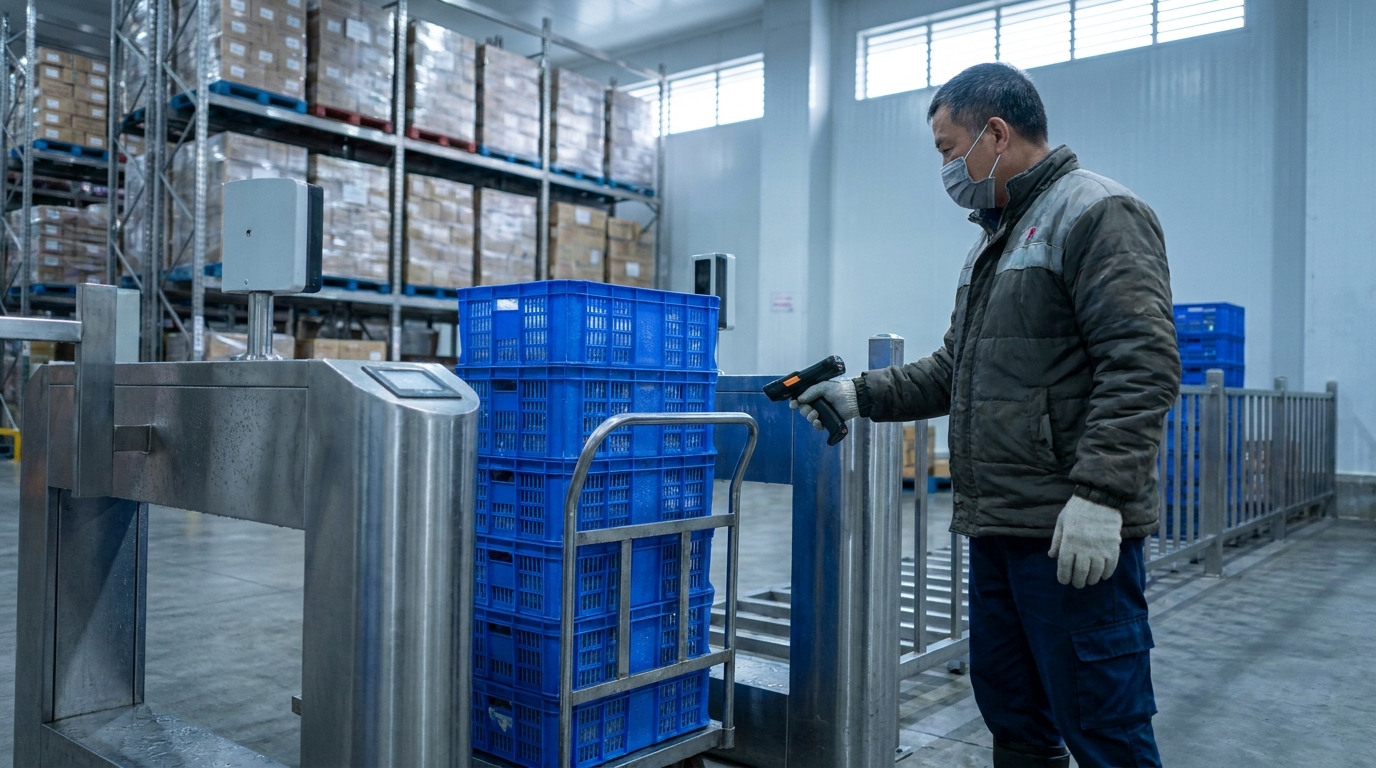
Managing returnable plastic crates with RFID is a method of attaching a durable RFID tag to each crate and using fixed readers at the warehouse dispatch gate and the return receiving gate to record crates going out and coming in by store, enabling quantity reconciliation and reducing loss. In Vietnam, fresh food chains, cold storage facilities and central kitchens are adopting this approach as the number of crates circulating between warehouses and points of sale increases daily.
Managing returnable plastic crates with RFID consists of 3 parts: attaching a durable RFID tag to each crate, installing fixed readers at the warehouse dispatch gate and the return receiving gate, and software that records crates going out and coming in by store for reconciliation. This replaces manual record-keeping and helps you know where crates are and how many remain.
Table of contents
- Where do returnable plastic crates get lost and why are they hard to control?
- What is managing returnable plastic crates with RFID?
- What does a returnable crate management system include?
- How to deploy returnable plastic crate management with RFID: 4 steps
- Reconciling crate counts by store: which reports are needed?
- Summary table of terminology and system components
- RFID vs. manual record-keeping: which should you choose?
- Common mistakes when deploying RFID for plastic crates
- Frequently asked questions
Where do returnable plastic crates get lost and why are they hard to control?

Returnable plastic crates are typically lost at three points: stores keep crates after receiving goods, suppliers have not returned crates to the warehouse, and crates sit mixed in the warehouse with no one counting them. The root cause is the lack of data recording crates going out and coming in by location, so when reconciliation is needed, the only options are manual counting or relying on staff memory.
In fresh food chain operations, plastic crates are assets in continuous circulation: crates leave the storage warehouse, travel by delivery vehicle to stores, and are kept by stores to hold goods or returned to the warehouse on the next delivery. If just a few points of sale keep crates too long or blur the line between their own crates and supplier crates, the total number of available crates in the system gradually declines without anyone noticing.
Three common loss points:
- At the store: crates are used for display, holding goods awaiting processing, or simply stacked in a corner of the warehouse without being recorded as received.
- At the supplier: crates are sent with inbound goods but there is no return record, so when checked, neither party knows the quantity.
- In the warehouse: empty crates and loaded crates are mixed together, and manual stocktaking cannot distinguish which crates belong to which store.
When the number of crates reaches hundreds to thousands, manual counting on every delivery run becomes overwhelming. This is when automated recording is needed, and RFID is a suitable choice because tags can be read without line of sight.
See the deployment approach, devices and phased roadmap on the RFID solution for cold chains and fresh food page.
What is RFID-based returnable plastic crate management?
Related products

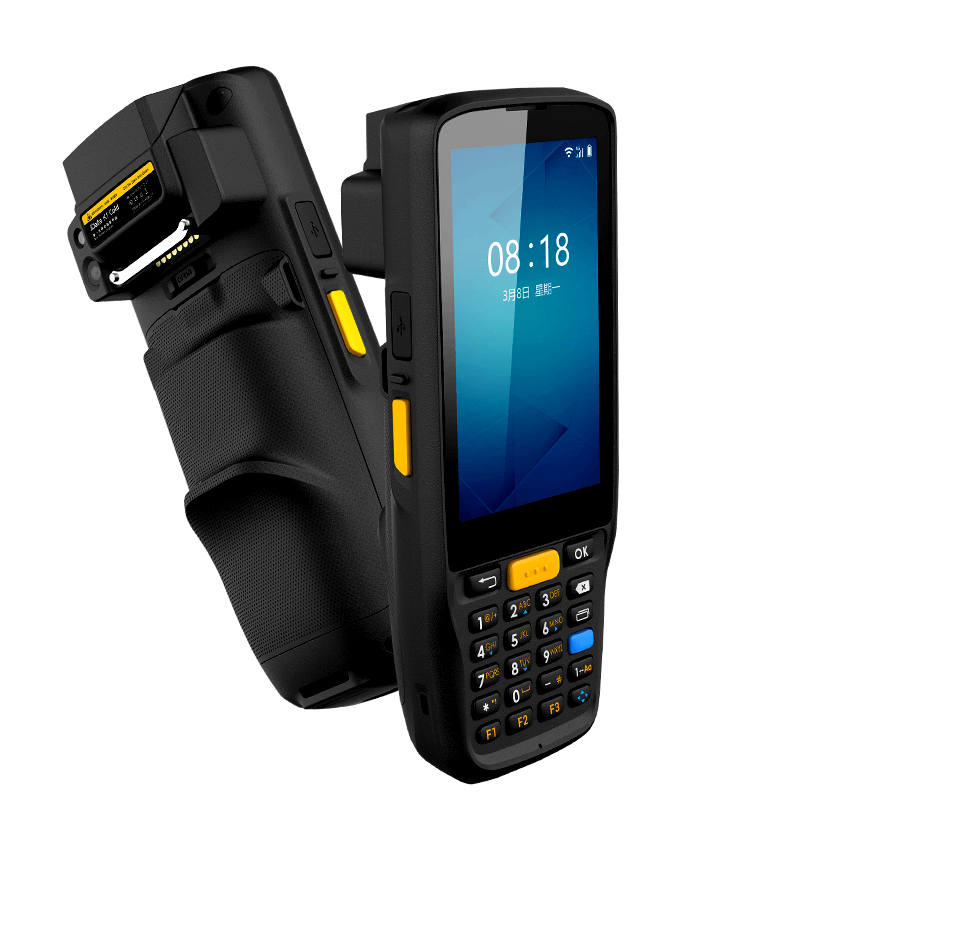
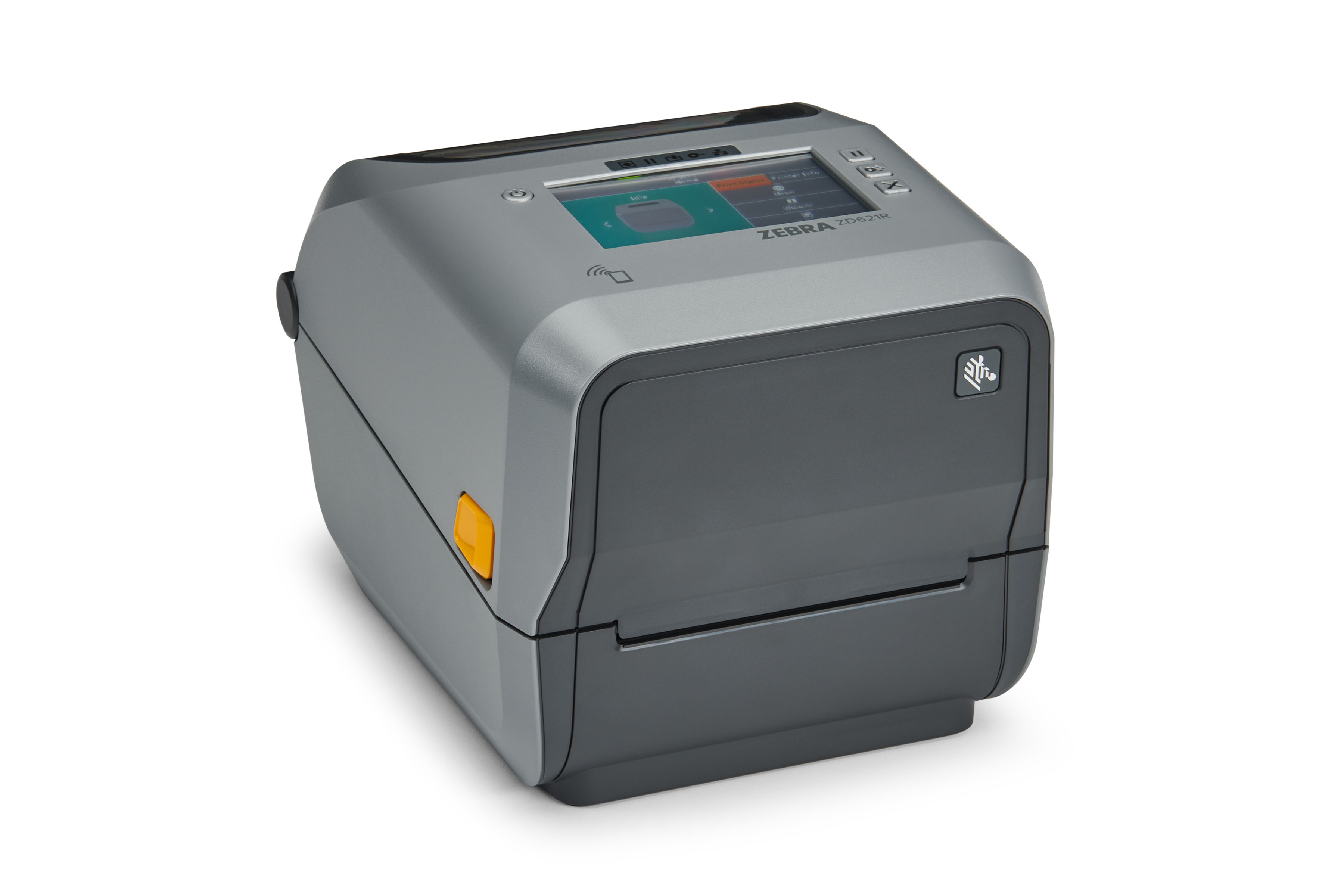
What is RFID-based returnable plastic crate management?
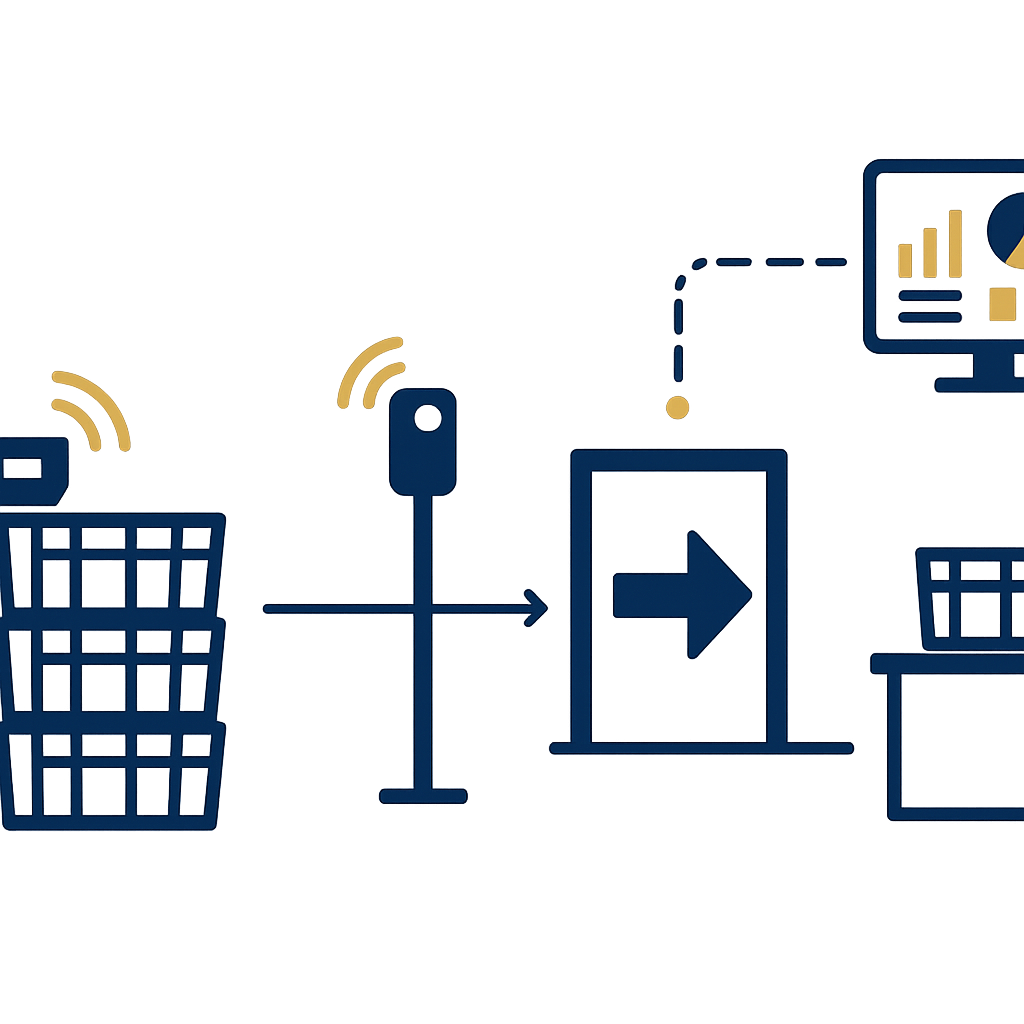
Unlike managing goods for sale, plastic crates are returnable assets: the same crate can pass through warehouse - store - warehouse multiple times in a week. The system must therefore record the entire lifecycle of the crate, not just a single dispatch. Each time a crate passes a reader, the system records the timestamp, read point and crate ID; from there the software builds a movement history for each crate.
The difference compared with barcode labels: RFID tags can be read without line of sight, multiple tags can be read at the same time, and tags can be embedded in the wall of the plastic crate so they do not come off during washing. With returnable plastic crates, reading multiple crates on a single trolley simultaneously reduces handling at the warehouse gate.
What does a returnable crate management system include?
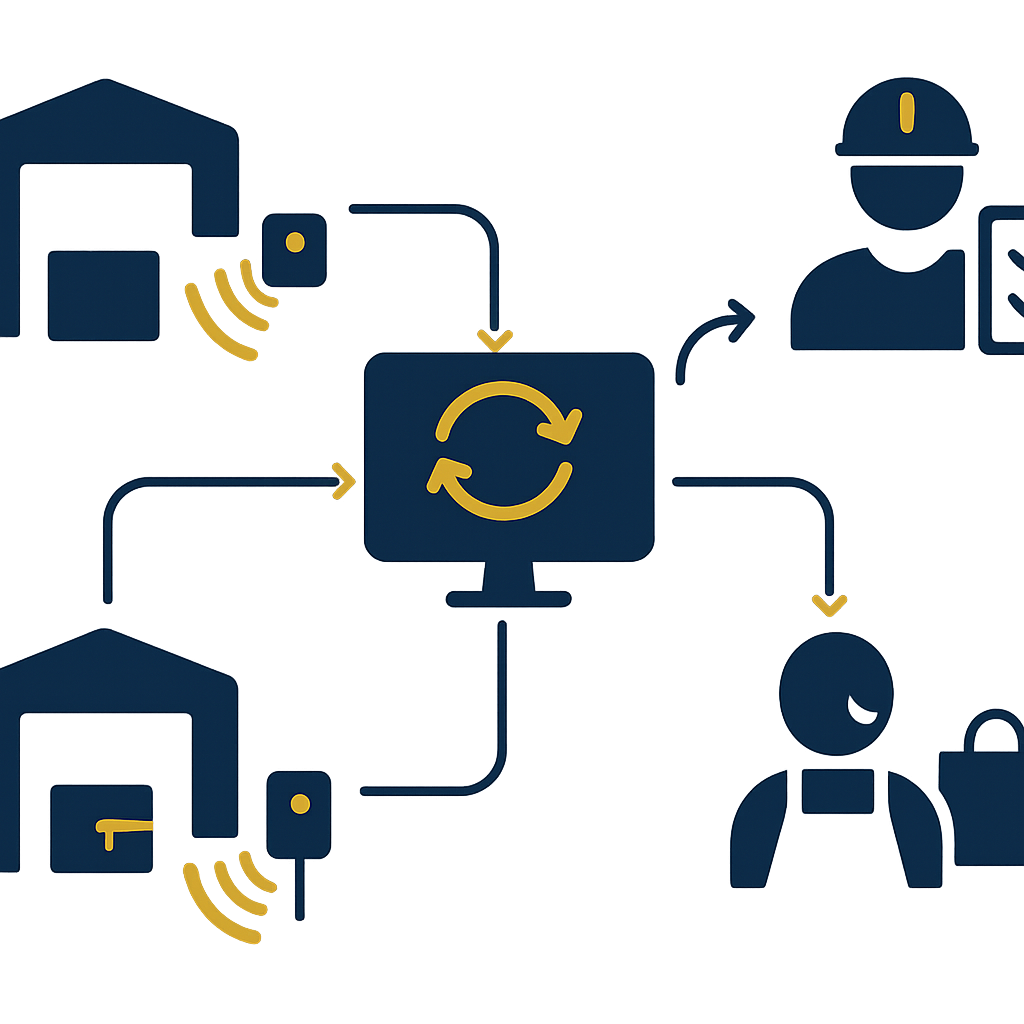
An RFID-based returnable plastic crate management system consists of four layers: durable RFID tags attached to the crates, fixed readers at the warehouse dispatch gate and the return receiving gate, software for recording and reconciliation, and operating procedures for both warehouse and store staff. If one layer is missing, the data will not be closed-loop and reconciliation will still have to be done manually.
1. RFID tags attached to the crates
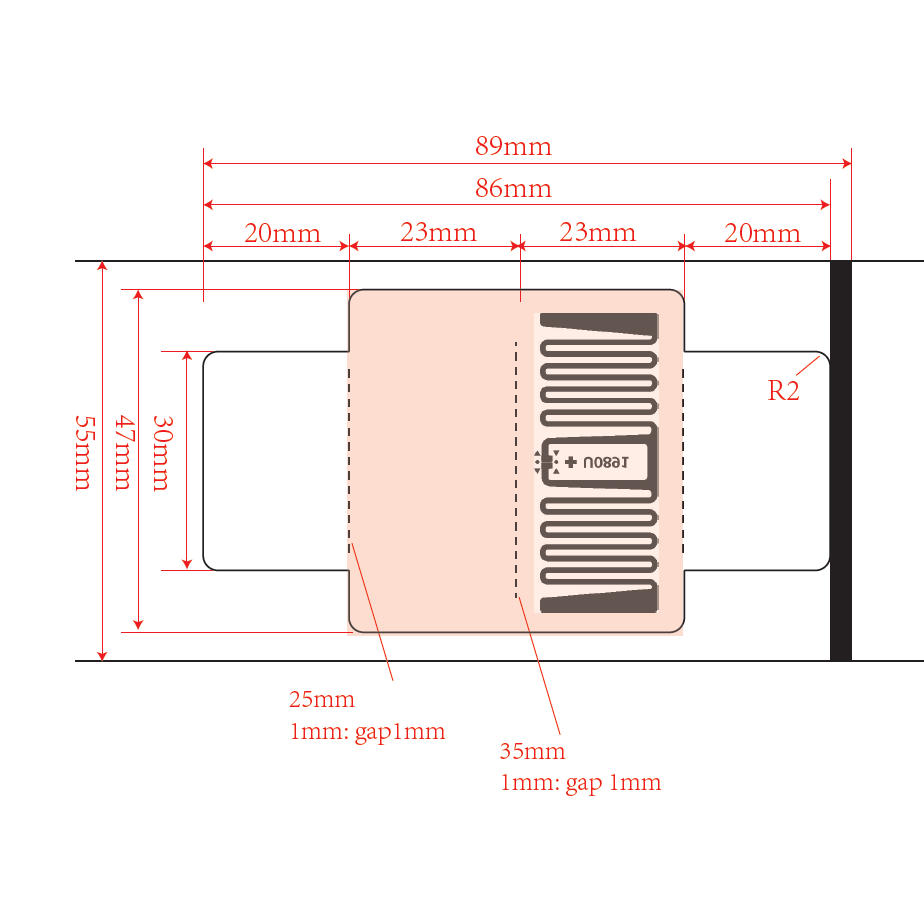
The tags must withstand humid, cold and impact conditions when crates are stacked, washed or transported. For plastic crates used in cold chains, choose tags with a wide operating temperature range and an adhesive layer that withstands freeze-thaw cycles if the crates pass through a freezer warehouse. Either label-type tags or hard plastic tags can be used, as long as they are firmly fixed to the crate wall and are not obscured when crates are stacked.
One practical note: tags attached to plastic crates holding fresh food are frequently exposed to water and cold vapor, so they should be tested on actual crates before buying in large quantities. For frozen goods, you can refer to Impinj's RAIN RFID cold chain label line to better understand the temperature range and adhesion.
2. Fixed readers at the warehouse gate and the return receiving gate
The fixed reader is the heart of the system. Installation locations are typically the warehouse dispatch gate (crates leaving the warehouse) and the return receiving gate at the store (crates coming back). You need to choose a reader with sufficient power, an antenna suited to the gate space, and connectivity to the management software.
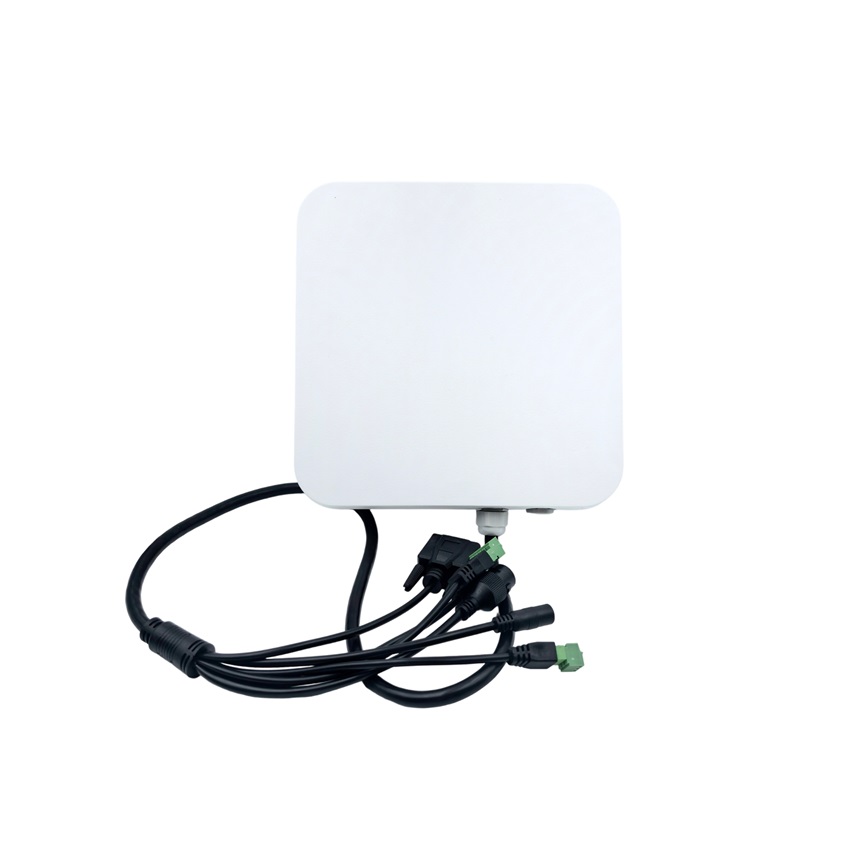
According to the manufacturer's specifications, the Symo IR38A fixed UHF RFID reader measures 220 × 220 × 40 mm, has IP66/IP67 protection, an integrated 8 dBi circularly polarized antenna, 5–33 dBm power, and a read range of 0–... (the article does not state a specific figure because the documentation does not provide it in full; an on-site survey is required). With IP66/IP67, the device is suitable for cold storage areas or high-humidity stores where the reader is frequently exposed to moisture.
A circularly polarized antenna makes reading independent of crate orientation, which is suitable when crates are stacked in multiple layers on carts. The 5–33 dBm power allows adjustment to the gate space: for a narrow gate, reduce power to avoid reading into adjacent areas; for a wide gate, increase it to cover the entire crate flow passing through.
3. Recording and reconciliation software
The software receives data from the reader and records the crate ID, timestamp, read point and direction of movement (out or in). From this data, the software builds reports on the number of crates currently at each store, the number of crates in transit, and the number of crates overdue and not yet returned. This is the layer that helps business owners answer the question "how many crates are left and where are they" without having to call each store.
4. Operating procedures for staff
Even with equipment and software in place, procedures remain the decisive layer. Warehouse staff need to know to pass crates through the reader before loading them onto the truck; store staff need to know to pass crates through the reader when receiving and when returning. If procedures are unclear, data will be incomplete and reconciliation will revert to manual counting.
How to implement returnable plastic crate management with RFID: 4 steps
Implement in 4 steps: survey the actual crate flow and measure the read rate on real crates, attach tags and register crate codes in the software, install readers at the warehouse dispatch gate and the return receiving gate, then run in parallel with the old records for 2–4 weeks before switching fully to automated reconciliation. The survey step is the most easily skipped step but it determines the read rate later on.
Step 1: Survey the crate flow and measure the read rate on real crates
Before buying equipment, map the crate flow: which warehouse the crates leave from, which gate they pass through, which store they go to, and which vehicle they return on. At the same time, test reading tags on real crates under real conditions (loaded crates, stacked crates, damp crates) to determine the read rate. This is the step Việt POS typically does together with the customer: schedule a survey and measure the read rate on real goods before finalizing the configuration.
Step 2: Attach tags and register crate codes
Each crate is fitted with a tag and registered in the software with a unique identifier code. The tag position on the crate must be specified (for example, the front wall, at a fixed distance from the crate rim) so that when crates are stacked, the tag still lies within the read zone. Sample photos of tagged crates should be taken for staff to compare against.
Step 3: Install readers at the warehouse dispatch gate and the return receiving gate
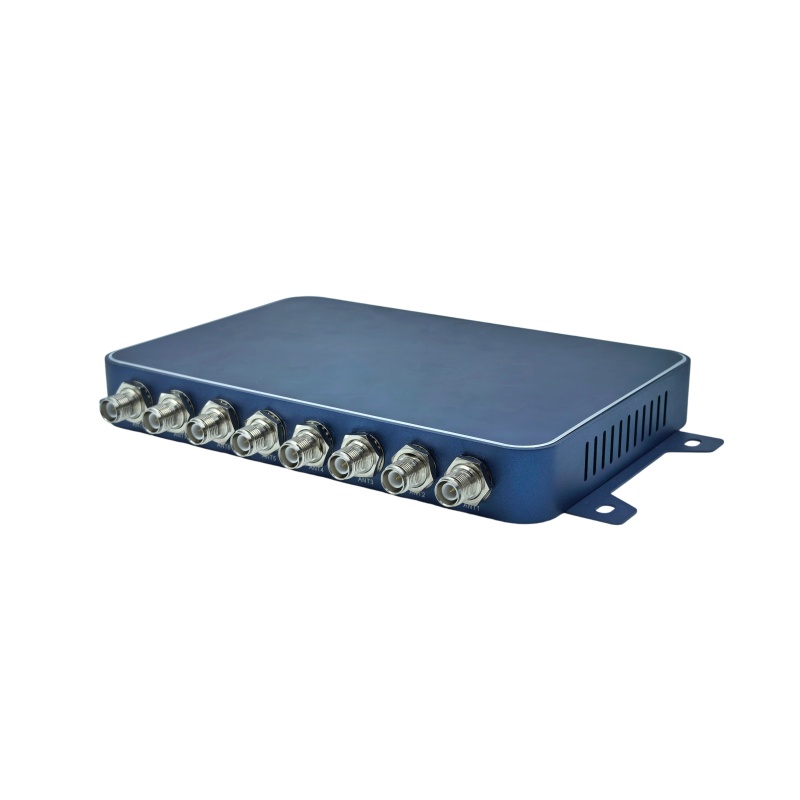
Install fixed readers at the warehouse dispatch gate and at the store's return receiving gate. For small stores, a single reader placed in the receiving area can be used; for large warehouses, multiple readers or multi-port readers are needed to cover the entire crate flow. Antenna power and direction need to be adjusted to avoid reading into adjacent areas, especially when the store has multiple goods flows passing through.
Step 4: Run in parallel and reconcile
For the first 2–4 weeks, run the old records and RFID data in parallel to detect discrepancies. After that, switch fully to automated reconciliation by store. Periodically recheck the read rate and tag condition to detect damaged or detached tags.
Reconciling crate counts by store: which reports are needed?
The reconciliation report needs to answer four questions: how many crates each store is currently holding, which crates are overdue for return, which crates are in transit, and the total number of available crates remaining in the system. These four reports are enough to manage operations without manual counting.
- Crate inventory report by store: the number of crates currently at each location, updated by the most recent read.
- Overdue crate report: crates that have been at the store longer than the specified number of days without being returned, with a list for follow-up.
- Crates in transit report: crates that have left the warehouse but have not been recorded at the store, helping detect losses early.
- Summary report: total crates in the system, number in circulation, number in the warehouse, number needing replacement.
For chains with multiple warehouses and multiple stores, per-store reporting helps compare which locations are holding unusually large numbers of crates. This is the data for working with stores, instead of arguing based on memory.
Summary table of terminology and system components
The table below summarizes the key terms and practical examples so that warehouse and store staff use a common language during implementation.
| Term | Definition | Example |
|---|---|---|
| Returnable crate | A plastic crate circulated multiple times between warehouse and store | A crate of vegetables goes from the cold warehouse to the store, then returns to the warehouse |
| RFID tag | A tag attached to the crate, containing a unique identifier code | A tag affixed to the crate wall, readable when crates are stacked |
| Fixed reader | A device installed at the gate that automatically reads tags as crates pass through | A Symo IR38A reader installed at the warehouse dispatch gate |
| Read point | The reader installation location, which determines the direction of crate movement | The dispatch gate records crates going out; the return receiving gate records crates coming in |
| Reconciliation | Comparing the recorded crate count with the actual crate count at the store | The end-of-day report shows store A is still holding 40 crates |
RFID vs. manual records: which should you choose?
Manual records are suitable when the number of crates is small and the delivery flow is simple, but as the number of crates grows and there are multiple stores, errors and losses increase quickly. RFID is more suitable when you need reconciliation by individual store and want to reduce manual counting steps, but it requires investment in equipment and initial survey time.
| Criterion | Manual records | RFID |
|---|---|---|
| Recording method | Count and record in a ledger or spreadsheet | Reader automatically records when crates pass through |
| Reconciliation by store | Difficult, depends on the person recording | Reports available by individual store |
| Speed at the warehouse gate | Count each crate | Read multiple crates at once |
| Initial investment | Low | Requires equipment and software |
| Suitable when | Few crates, few stores | Large number of crates, many stores, need for reconciliation |
For fresh food chains with many points of sale, moving from manual records to RFID usually comes with process changes. You can also refer to the reusable asset management with RFID solution to understand how it applies to crates, pallets and other circulating assets.
Common mistakes when deploying RFID for plastic crates
Tagging without registering codes: the tag has a code but the software does not know which store each crate belongs to, so the data read back cannot be used for reconciliation.
- Tagging without registering codes: the tag has a code but the software does not know which store each crate belongs to, so the data read back cannot be used for reconciliation.
- Placing the reader in the wrong position: a reader that is too far from the gate or facing the wrong direction causes crates passing through not to be recorded, leading to incomplete reports.
- Not measuring the read rate on actual crates: buying equipment based on theory, only to discover at installation that stacked crates block the tag or water in the crates blocks the signal.
- No process for stores: store staff do not know they must pass crates through the reader when returning them, so input data is missing.
- Expecting 100% reads: metal and liquids block signals, and no RFID system reads with absolute accuracy under all conditions; you need to accept a certain error rate and have an additional check step.
To reduce mistakes, start with one warehouse and a few stores, measure the actual read rate, and only then expand. For cold chains, you can also refer to the RFID for fresh food cold chains solution to understand the temperature and humidity factors that affect tag reading.
Frequently asked questions
How does RFID-based returnable plastic crate management differ from barcode labels?
RFID can read tags without line of sight, reads multiple crates at once, and tags can be embedded in the crate wall. Barcodes require line of sight and scanning one code at a time, so when crates are stacked or wet, the operation is slower. With large volumes of returnable crates, RFID reduces handling at the warehouse door.
Which RFID tag type should be used for plastic crates in the cold chain?
Choose tags with a wide operating temperature range, an adhesive layer that withstands freeze-thaw cycles, and secure mounting on the crate wall. For crates holding fresh or frozen food, test on actual crates to check adhesion and read rate before buying in large quantities. Label-type tags or hard plastic tags both work depending on how crates are stacked.
Is the Symo IR38A reader suitable for installation at cold storage doors?
According to the manufacturer's specifications, the Symo IR38A has an IP66/IP67 protection rating, suitable for damp areas such as cold storage or stores with steam. The integrated 8 dBi circularly polarized antenna helps read regardless of crate orientation. However, an on-site survey is needed because cold storage can affect read range and the 5–33 dBm power needs to be adjusted accordingly.
How do you know how many crates each store is holding?
The software records crates in and out at each read point, from which it builds crate inventory reports by store. When a store receives crates, the reader at the receiving door records crates in; when a store returns crates, the reader records crates out. The difference between the two reads shows the number of crates currently at the store.
Should RFID be read at the store or only at the warehouse?
Read at both ends: the warehouse dispatch door and the receiving door at the store. If you only read at the warehouse, the system knows the crates left the warehouse but not which store received them, so reconciliation by store is not possible. Reading at the store confirms crates have arrived and records when crates are returned.
Can RFID read crates filled with fresh food?
It can read, but the read rate depends on the type of food and how crates are stacked. Liquids and metal block signals, so crates containing a lot of water or wet food may reduce read range. Test on actual crates with actual goods to measure read rate and adjust tag placement and reader power.
What cost items does deployment include?
Costs typically include RFID tags for each crate, fixed readers at the doors, management software, and installation and survey labor. The number of readers depends on the number of doors and the space, so a survey is needed before quoting. This article does not state specific figures because they depend on the scale of each system.
To choose the right configuration for your crate flow, schedule a survey and read-rate measurement on actual crates with Việt POS. Call the hotline 0935 498 384 or email info@vietpos.vn for advice on suitable equipment and processes.
Need advice on specific equipment or a solution?
Việt POS replies within 30 minutes · Hotlines in 4 regions · Free site survey.
