Table of contents (10)
- What are RF magnetic tags, AM magnetic tags and UHF RFID labels?
- How it works: why must the gate use the same technology as the tag?
- Core difference: magnetic tags only indicate yes/no, RFID tags carry a code for each item
- Choosing tag form by goods material: hard tags, soft tags, hang tags, adhesive labels
- Metal goods and liquid bottles: the real limits of UHF RFID
- RFID UHF in Vietnam: configuring the correct 918.4–923 MHz frequency band
- Summary table: which tag for which product group?
- Common mistakes when choosing anti-theft tags
- When should a fashion store choose RFID UHF instead of magnetic tags?
- Frequently asked questions

RF magnetic tags, AM magnetic tags and UHF RFID labels are three common anti-theft labeling technologies in fashion retail, but they do not replace one another arbitrarily. RF magnetic tags operate around 8.2 MHz, AM magnetic tags around 58 kHz, while UHF RFID labels use the 860–960 MHz band. Each type requires a corresponding reader gate and a different level of investment, so the right question is not "which one is best" but "what does the shop need to solve".
RF magnetic tags (8.2 MHz) and AM magnetic tags (58 kHz) only signal yes/no and must match the anti-theft gate technology. UHF RFID labels (860–960 MHz) carry a unique code for each item and are shared across stocktaking, the counter and the gate. Fashion shops should choose UHF RFID if they need inventory management; in Vietnam, devices in the 902–928 MHz range must be configured to the 918.4–923 MHz band.
Table of contents
- What are RF magnetic tags, AM magnetic tags and UHF RFID labels?
- How they work: why must the gate use the same technology as the tag?
- Core difference: magnetic tags only signal yes/no, RFID labels carry a code for each item
- Choosing the tag form by item material: hard tags, soft tags, hang tags, adhesive labels
- Metal goods and liquid bottles: the real limits of UHF RFID
- UHF RFID in Vietnam: correct configuration for the 918.4–923 MHz band
- Summary table: which tag for which product group?
- Common mistakes when choosing anti-theft tags
- When should a fashion shop choose UHF RFID instead of magnetic tags?
- Frequently asked questions
What are RF magnetic tags, AM magnetic tags and UHF RFID labels?
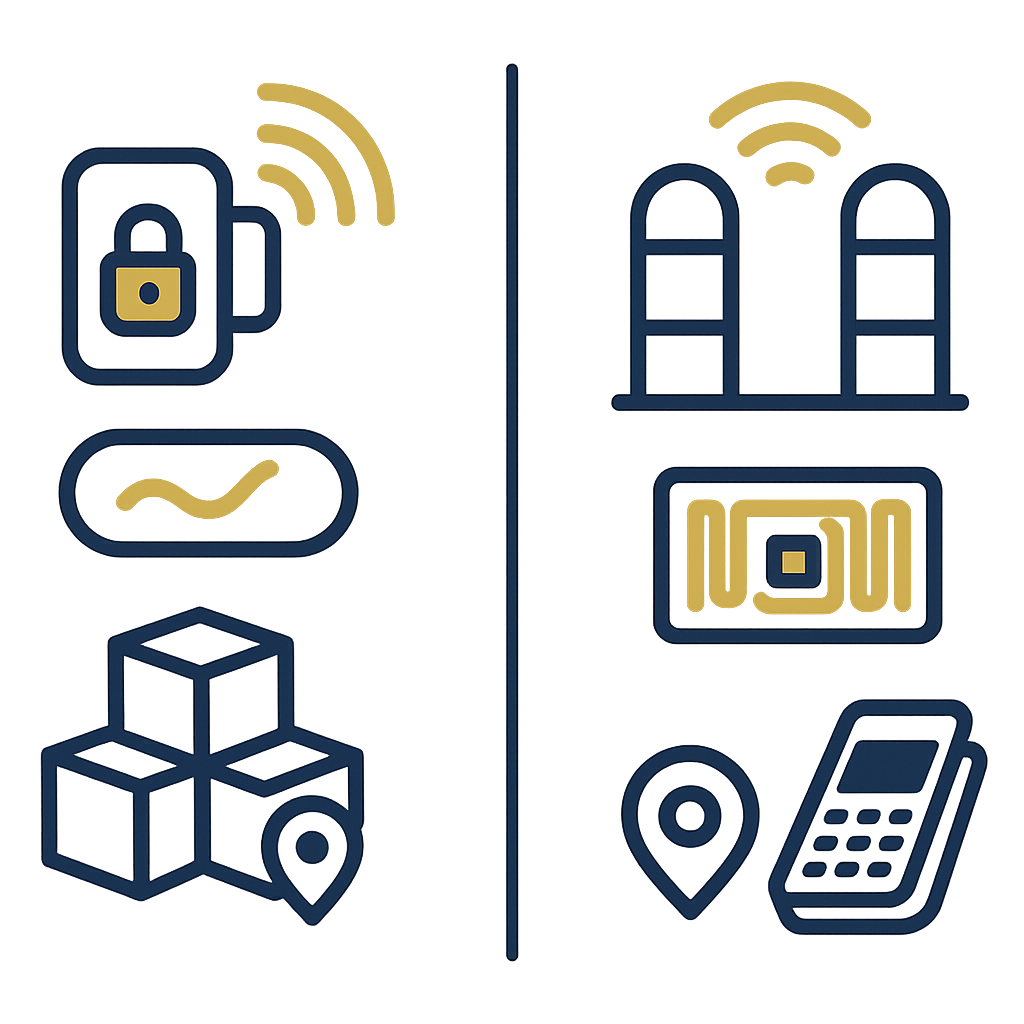
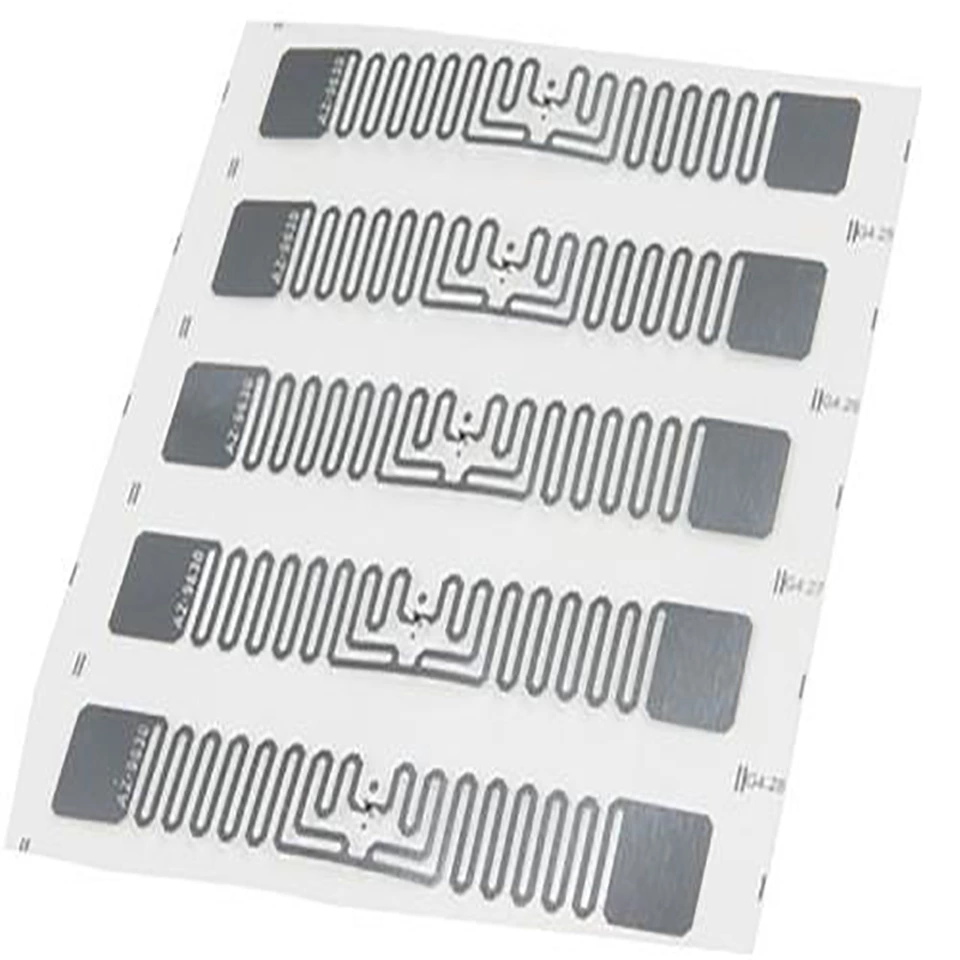
RF magnetic tags and AM magnetic tags are two types of magnetic labels used for EAS anti-theft gates, which only emit a yes/no signal when passing through the gate. UHF RFID labels are radio labels carrying a unique code for each item, readable from a distance for stocktaking, checkout and anti-theft on the same system. All three are attached to products, but their purpose and accompanying infrastructure differ.
See the deployment approach, devices and phased roadmap on the loss prevention solution with RFID + EAS gates page.
How it works: why must the gate use the same technology as the tag?
Related products


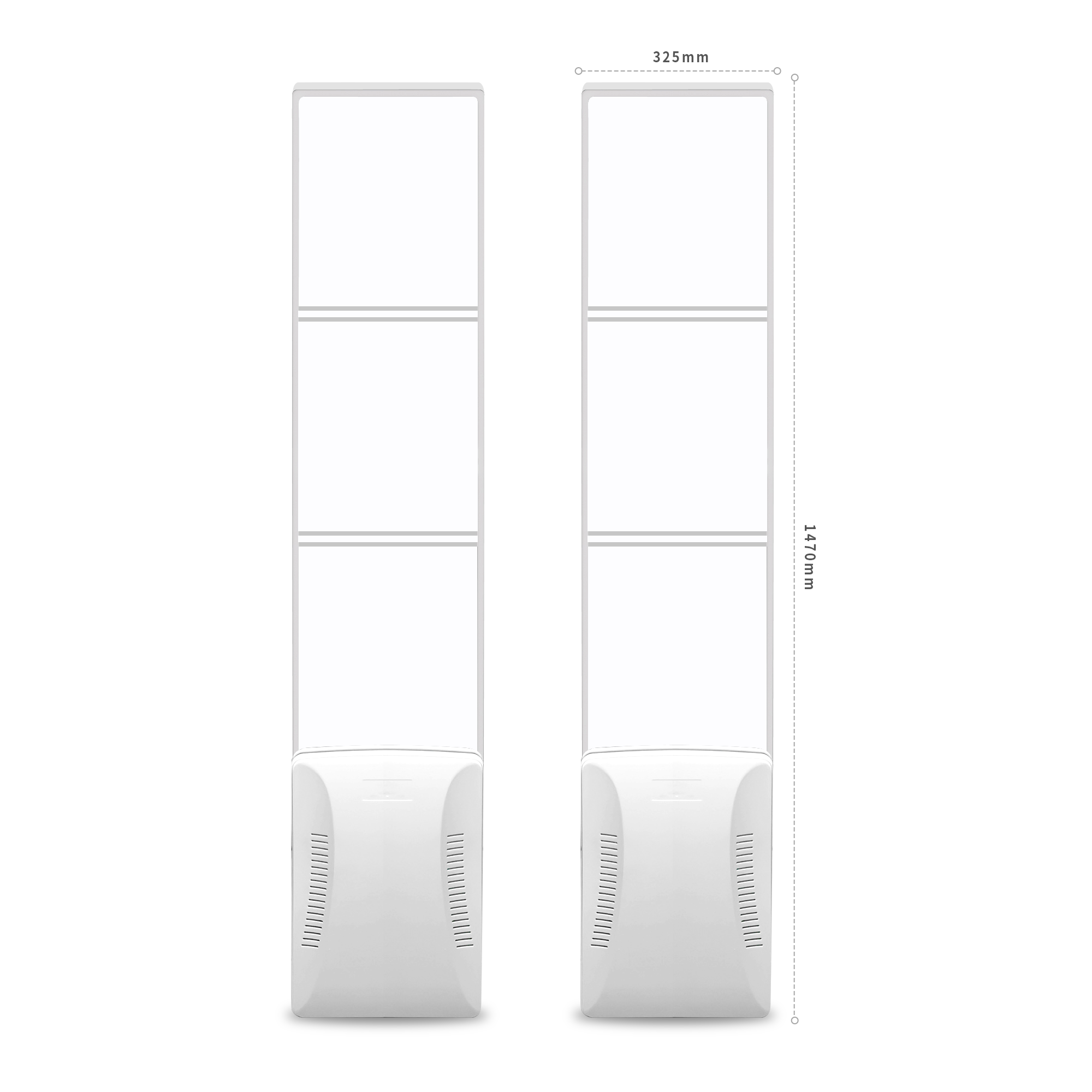
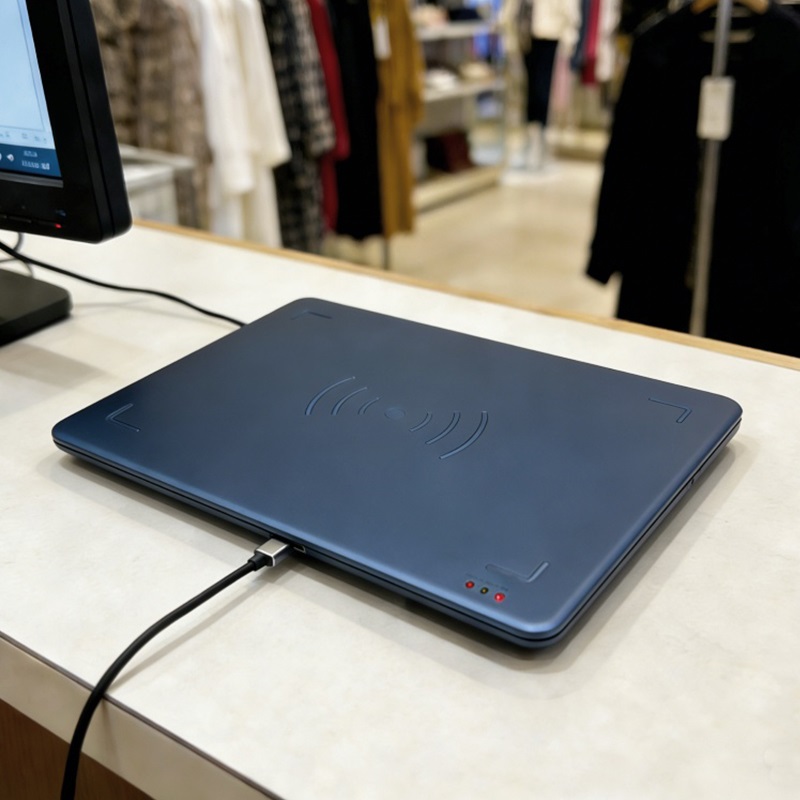
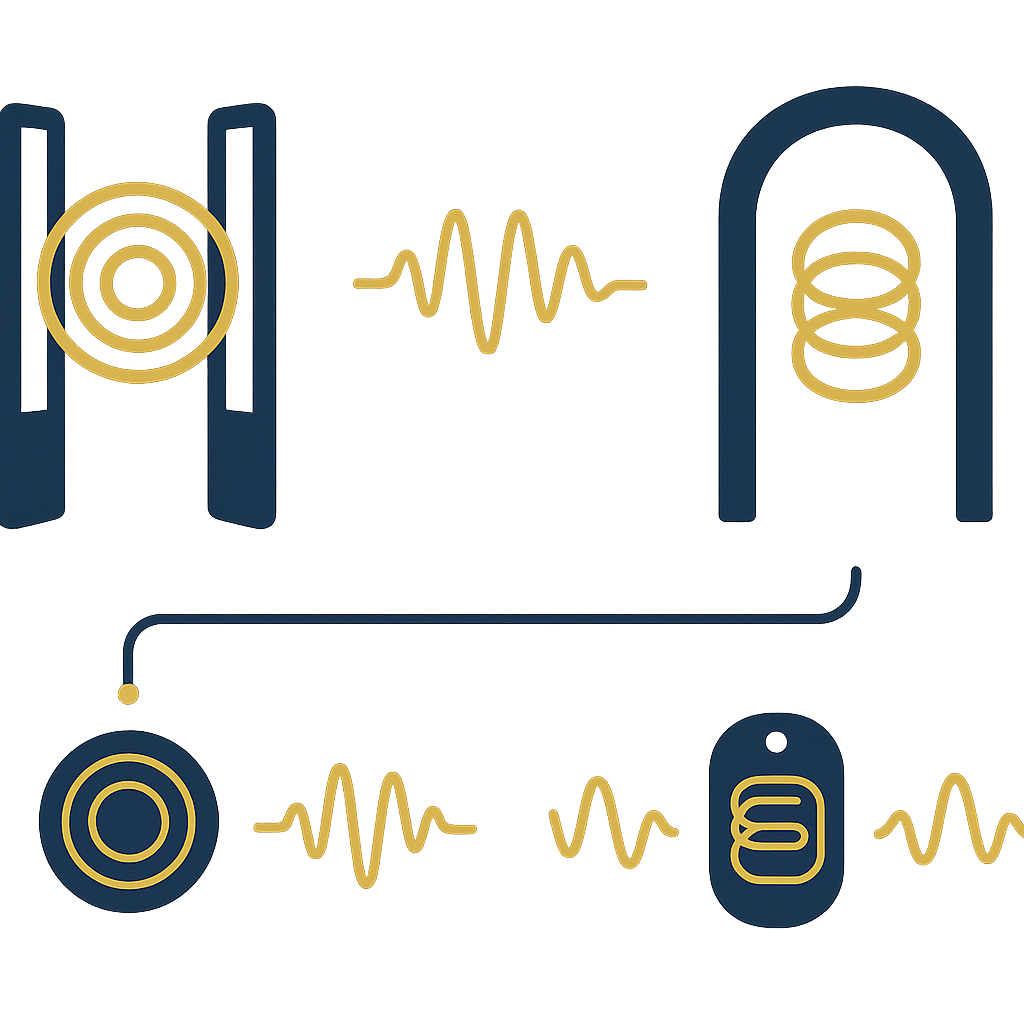
Each tag technology emits its own frequency, and a security gate is designed to receive only that frequency. RF magnetic tags operate around 8.2 MHz, AM magnetic tags around 58 kHz; if you put an RF tag on an AM gate or vice versa, the gate will not trigger. This is the most common mistake that leaves shop owners buying new tags while the old gate does not alarm.
With magnetic tags, the gate emits a magnetic field and the tag resonates at its own frequency. RF magnetic tags resonate around 8.2 MHz, AM magnetic tags resonate around 58 kHz. An AM gate cannot hear an RF tag because the frequency bands are too far apart, and vice versa. With UHF RFID cards, the reader gate emits 860–960 MHz radio waves to receive the EPC code on the chip; this is a data-reading system, not just magnetic detection.
- RF magnetic tag: center frequency around 8.2 MHz, requires a corresponding RF gate.
- AM magnetic tag: frequency around 58 kHz, requires a corresponding AM gate.
- UHF RFID card: 860–960 MHz global band, requires a UHF RFID reader and gate.
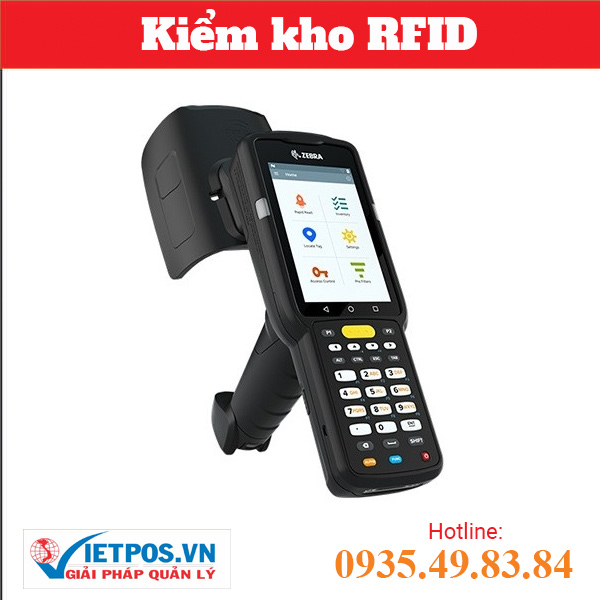
Before buying tags, the first step is to check the label on the existing gate or ask the gate supplier which technology it uses. If the installed gate is a combined RFID & EAS gate, confirm whether the gate supports EAS RF or AM or only reads RFID. Some gate lines such as IntelliGate A8 have optional RF or AM EAS expansion, but the configuration must be ordered at the time of purchase.
Core difference: magnetic tags only indicate yes/no, RFID tags carry a code for each item
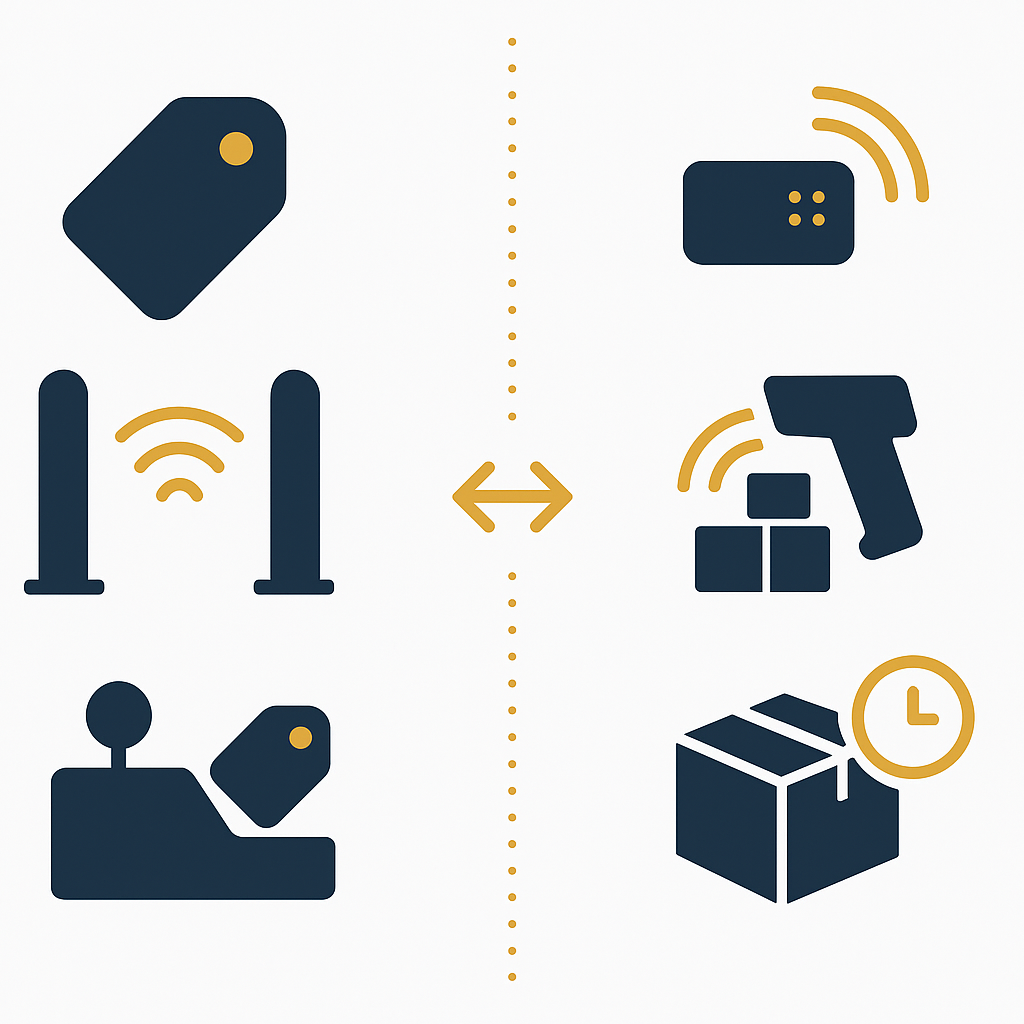
Magnetic tags only answer the question "did this item pass through the gate or not". UHF RFID tags additionally answer "which item, what color, what size, which batch". Therefore RFID tags are shared across stocktaking, checkout counters and anti-theft gates, while magnetic tags only serve anti-theft.
For shops that only need anti-theft, magnetic tags are a cost-saving and simple choice. For shops that need real-time inventory visibility, need fast stocktaking at end of day, or need to reconcile sold goods against goods still on the shelf, UHF RFID tags solve more tasks on the same label.
| Criterion | RF magnetic tag | AM magnetic tag | UHF RFID tag |
|---|---|---|---|
| Frequency | ~8.2 MHz | ~58 kHz | 860–960 MHz |
| Data carried | None (yes/no only) | None (yes/no only) | Unique EPC code per item |
| Bulk reading | No | No | Yes, hundreds of tags per second |
| Used for stocktaking | No | No | Yes |
| Gate requirement | RF gate | AM gate | UHF RFID gate |
Point to note: if the shop already has magnetic gates and wants to upgrade to RFID, it can refer to the direction of upgrading old magnetic gates to RFID gates to reuse existing infrastructure, but must re-measure read performance on real goods before investing in tags.
Choosing tag form by goods material: hard tags, soft tags, hang tags, adhesive labels
The tag form determines whether the tag can attach to the product and whether it is easy to remove. Hard tags with clamps suit handbags, jackets, shoes; soft tags are affixed to labels or bags; RFID hang tags are used for clothing; RFID adhesive labels are used for boxes, accessories. Choosing the wrong tag form increases the tag failure rate and reduces gate effectiveness.
- Hard tags with clamps: used for handbags, jackets, shoes, goods with thick surfaces. Advantages are that they are hard to remove, clearly visible, suitable as EAS. Disadvantages are that they are bulky for thin goods.
- Soft adhesive tags: affixed to labels or paper bags, suitable for light goods, accessories, cosmetics. Need to choose adhesive suited to the surface, avoiding peeling when exposed to moisture.
- RFID hang tags: used for clothing, shirts, dresses. The common form is UHF hang tags 860–960 MHz, which can be programmed with a unique code per item.
- RFID adhesive labels: used for boxes, bags, accessories, packaged goods. The UHF sticker form suits curved and non-metallic surfaces.
For apparel, UHF RFID hang tags are a common choice because they can both hang on the hook and be read remotely. For accessories, UHF RFID adhesive labels in sticker form are usually more convenient. For bulky goods, EAS hard tags remain the most direct anti-theft method.
Metal goods and liquid bottles: the real limits of UHF RFID
Metal and liquids block UHF radio waves, reducing or eliminating tag readability. For metal goods or liquid bottles, specialized tags are needed or UHF RFID should not yet be used. This is a physical limit, not a device fault, so it must be tested on real goods before buying tags in bulk.
Standard UHF RFID tags work well on non-metallic and curved surfaces such as fabric, paper, thin plastic. When affixed to metal boxes, waves are reflected and the chip does not receive enough energy to respond. With liquid bottles, water absorbs UHF energy, and read distance drops noticeably. In this case, RF magnetic tags or AM magnetic tags still work more stably because the magnetic principle is less affected by metal and liquids at close range.
If the shop sells metal accessories, bottled cosmetics or perfume, it needs to state this clearly to the supplier to choose specialized tags or keep magnetic tags for this group of goods. Testing the read rate on real goods is a step that cannot be skipped before ordering tags in bulk.
RFID UHF in Vietnam: configuring the correct 918.4–923 MHz frequency band
RFID UHF devices sold in Vietnam usually come in a 902–928 MHz version, but the permitted frequency band is 918.4–923 MHz. During installation, technicians must set this exact band in the reader and gate configuration. Store owners should ask the supplier specifically about frequency configuration before acceptance.
On manufacturer specifications, many RFID UHF readers and gates list the FCC 902–928 MHz band, ETSI 865–868 MHz, or CMIIT 920–925 MHz. In Vietnam, the 918.4–923 MHz band falls within the 902–928 MHz range, so FCC-version devices can be configured to operate correctly. However, if left at the default 902–928 MHz band, the device may transmit outside the permitted band, causing interference and non-compliance.
- Choose devices with the 902–928 MHz version to have configuration headroom.
- Require technicians to set the 918.4–923 MHz band during installation.
- Recheck the configuration using software or an acceptance record.
- Ask the supplier specifically about frequency hopping mode and installation bandwidth.
This is a small technical step but it affects the stability of the entire system. Stores should include this content in the handover record to avoid disputes later.
Summary table: which tag for which product group?
The table below summarizes tag selection by product group and operational need. General principle: for anti-theft alone, use magnetic tags; for inventory counting and item-level code management, use RFID UHF tags; for metal or liquid goods, keep magnetic tags or use specialized tags.
| Product group / need | Suitable option | Reason |
|---|---|---|
| Clothing, fabric, soft accessories | RFID UHF hang tags or RF magnetic tags | Non-metal surface, good read; RFID for inventory counting |
| Handbags, shoes, jackets | Hard tags with clamp attachment | Difficult to remove, direct anti-theft |
| Boxes, paper bags, small accessories | RFID UHF adhesive labels or soft tags | Can be applied to curved surfaces |
| Metal, liquid bottles | RF/AM magnetic tags or specialized tags | UHF is blocked by interference |
| Anti-theft only, no inventory counting | RF or AM magnetic tags | Low cost, simple |
| Inventory counting + POS + gate | RFID UHF tags | One label serves multiple purposes |
Common mistakes when choosing anti-theft tags
The most common mistake is buying tags before checking the gate technology, resulting in tags that do not trigger the gate. The second mistake is using RFID UHF tags for metal goods without testing. The third mistake is not configuring the 918.4–923 MHz band when installing RFID devices in Vietnam.
- Buying tags that do not match the gate: RF tags installed for an AM gate or vice versa, the gate does not alarm even though the tag is still good.
- Using UHF for metal goods: low read rate, mistaken for device failure but actually a physical limitation.
- Not configuring the frequency band: the device runs at the default 902–928 MHz, not the permitted 918.4–923 MHz band.
- Choosing hard tags for thin goods: tags fall off, break, or tear the product.
- Not testing on real goods: buying in bulk and only then discovering a low read rate.
When should a fashion store choose RFID UHF instead of magnetic tags?
A store should choose RFID UHF when it needs fast inventory counting, real-time stock visibility, or wants to use one label for both the checkout counter and the anti-theft gate. If only anti-theft is needed and there is no inventory counting requirement, RF or AM magnetic tags remain a cost-effective and stable option.
For multi-branch chains, RFID UHF helps synchronize inventory across locations and reduces inventory counting time. For small stores with only one sales location, magnetic tags are usually sufficient. The decision should be based on the number of SKUs, inventory counting frequency, and the ability to invest in reading equipment. If the store is weighing EAS gates versus RFID gates, it can also refer to the comparison of EAS gates and RFID gates to understand the differences clearly before choosing.
For stores that already have magnetic gates and want to add RFID, they can refer to the RFID EAS gate loss prevention solution to understand how to integrate RFID gates with anti-theft operations. Conducting an on-site survey at the store, measuring the read rate on real goods, and configuring the correct frequency band are three steps that cannot be skipped.
Frequently asked questions
This section answers frequently asked questions about RF magnetic tags, AM magnetic tags, and UHF RFID tags for fashion shops, based on manufacturer specifications and operational practice.
Can RF magnetic tags and AM magnetic tags be used interchangeably?
No. RF magnetic tags operate around 8.2 MHz, AM magnetic tags around 58 kHz; a security gate only accepts the exact frequency of the technology it is designed for. Installing an RF tag on an AM gate, or vice versa, means the gate will not trigger. Before buying tags, check the technology of the existing gate or ask the supplier.
Can UHF RFID tags replace magnetic tags in theft prevention?
Yes, if the gate is a UHF RFID gate. UHF RFID tags carry a unique code for each item and can trigger the gate when passing through. However, UHF RFID tags cannot be used with RF or AM magnetic gates. If the shop already has a magnetic gate, the gate needs to be upgraded or magnetic tags used instead of RFID tags.
Can UHF RFID tags be used on metal goods?
Metal blocks UHF waves, reducing or eliminating the ability to read tags. For metal goods, specialized tags are needed, or RF/AM magnetic tags should be kept. The same applies to bottles and liquid containers: water absorbs UHF energy. Testing on actual goods is required before buying tags in bulk.
In Vietnam, what configuration do UHF RFID devices need?
The 918.4–923 MHz frequency band must be configured. Many devices have a 902–928 MHz version, which falls within the FCC band, but during installation the permitted band must be set correctly. Shop owners should ask the supplier clearly and check the acceptance record to ensure the device runs on the correct frequency.
Should a newly opened shop start with magnetic tags or UHF RFID?
A newly opened shop that only needs theft prevention should start with RF or AM magnetic tags to save costs. When there is a need for stocktaking and inventory management, it can upgrade to UHF RFID. The upgrade should be accompanied by a gate survey and testing of the read rate on actual goods.
How can you tell whether the tag in use is RF or AM?
You can check the label on the security gate, ask the gate supplier, or check the technical documentation. RF magnetic tags are usually thin and applied to labels; AM tags are usually thicker and used for goods with large surfaces. The surest way is to compare against the specifications of the installed gate.
Việt POS supplies RF magnetic tags, AM magnetic tags, UHF RFID tags, and security gates for fashion shops, along with on-site surveys and read-rate measurement on actual goods before finalizing the configuration. Call the hotline 0935 498 384 or email info@vietpos.vn to schedule a survey.
Need advice on specific equipment or a solution?
Việt POS replies within 30 minutes · Hotlines in 4 regions · Free site survey.
Related articles