Table of contents (9)
- What is batch traceability for fresh food?
- Why is lot traceability important for the fresh food chain?
- How does the "one step forward – one step back" principle apply?
- 5-step process to know where a batch has been
- Comparing three recording methods: paper logbook, per-carton barcode scanning, fixed reader
- Choosing reading devices for cold storage and gate points
- Batch traceability terminology summary table
- Common mistakes when building lot traceability
- Frequently asked questions
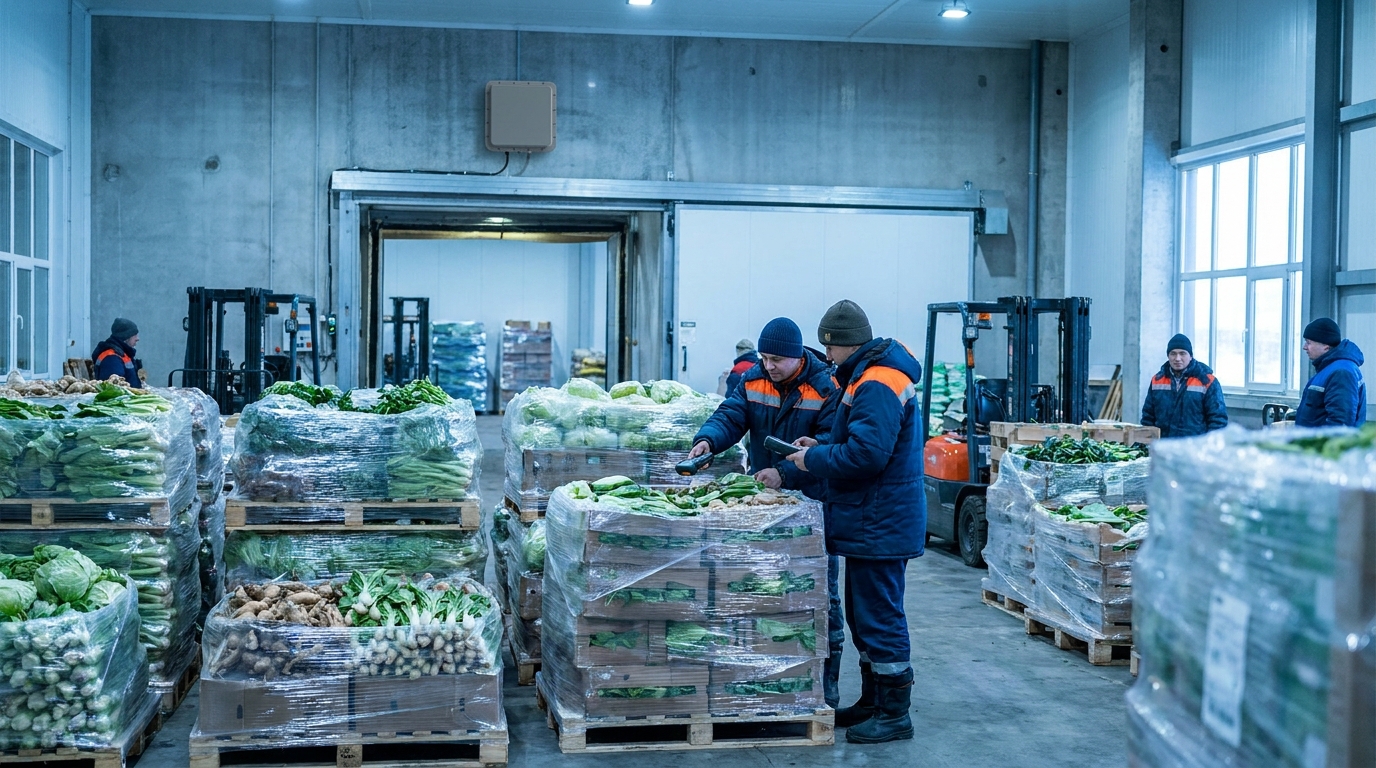
Batch traceability for fresh food is the ability to follow a specific shipment — from receipt at the warehouse dock, through storage areas, to dispatch to each store — based on a single batch code attached to the container and fixed read points along the way. In cold storage and fresh food chain operations in Vietnam, this is an increasingly common requirement because it is directly tied to incident handling, recalls, and accountability to customers.
Batch traceability for fresh food means assigning a unique batch code to each inbound shipment, then automatically recording every time the batch passes through a gate with an RFID reader. When an incident occurs, you look up the batch code to know which warehouse the batch entered, how long it stayed, and where it was dispatched — instead of spending hours cross-checking paper logs or rescanning every crate.
Table of contents
- What is batch traceability for fresh food?
- Why is batch traceability important for the fresh food chain?
- How does the "one step back – one step forward" principle apply?
- 5-step process to know where a batch has been
- Comparison of three recording methods: paper logs, per-crate barcode scanning, fixed readers
- Choosing readers for cold storage and gate points
- Batch traceability terminology summary table
- Common mistakes when building batch traceability
- Frequently asked questions
What is batch traceability for fresh food?
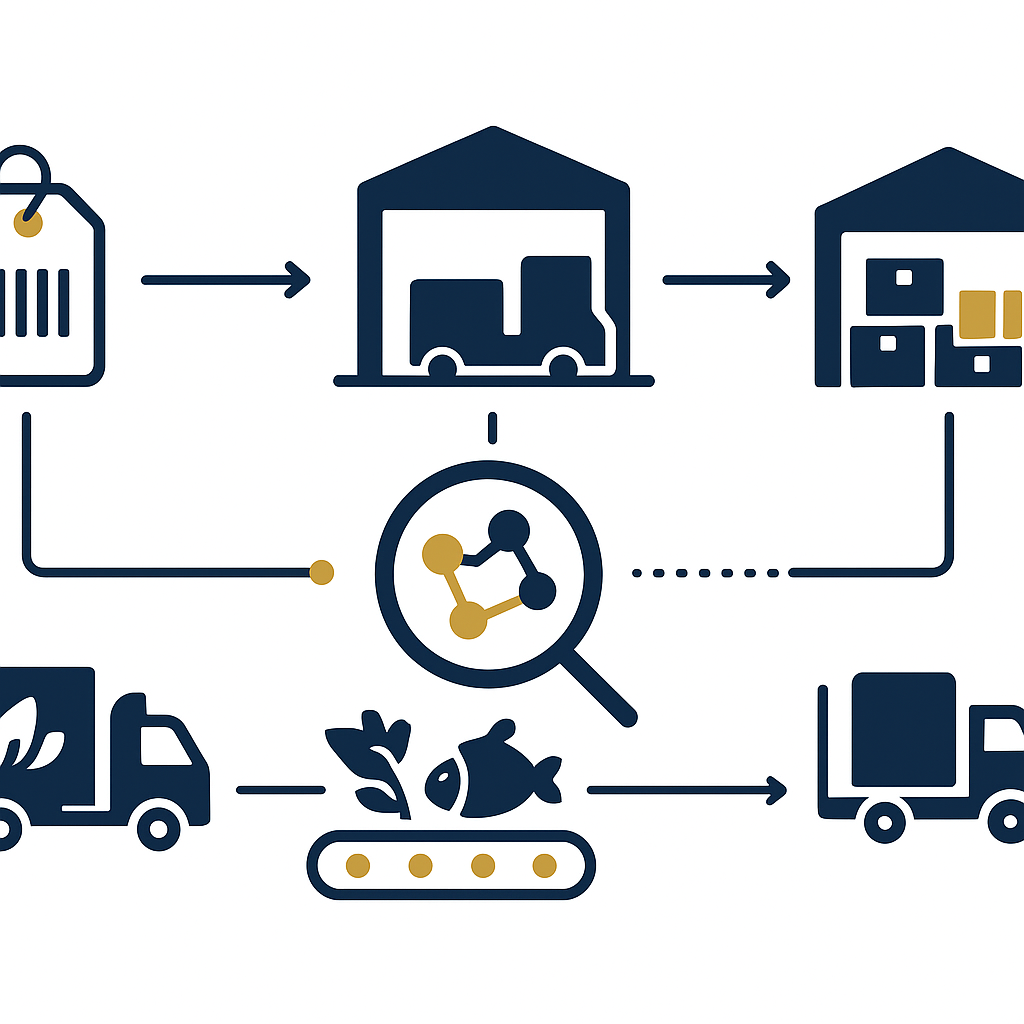
Batch traceability is the practice of assigning an identifier to each inbound shipment (same supplier, same date, same transport conditions), then recording every point the batch passes through: receiving dock, storage warehouse, preparation area, dispatch dock. The goal is to be able to answer three questions when needed: where did this batch enter, how long did it stay, and where did it go next.
In fresh food, the batch code is usually attached to the container: plastic crates, pallets, or vacuum-sealed bags. When a batch is split across multiple containers, the batch code must follow — otherwise traceability breaks right at the split point. This is why many organizations choose to tag containers with RFID instead of labeling each individual package.
See the implementation approach, devices, and phased roadmap on the RFID solution for cold chain and fresh food page.
Why is lot traceability important for the fresh food chain?
Related products


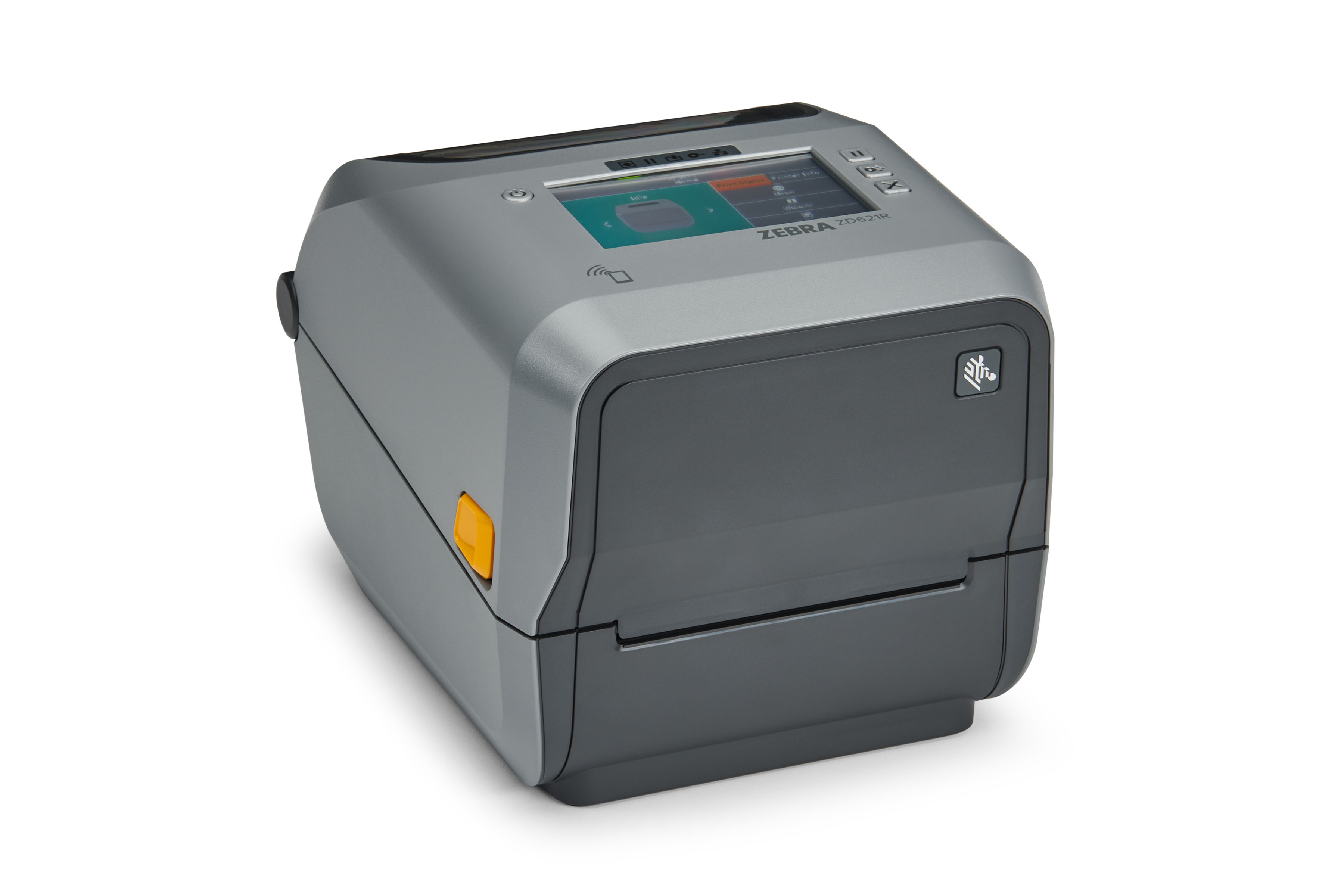
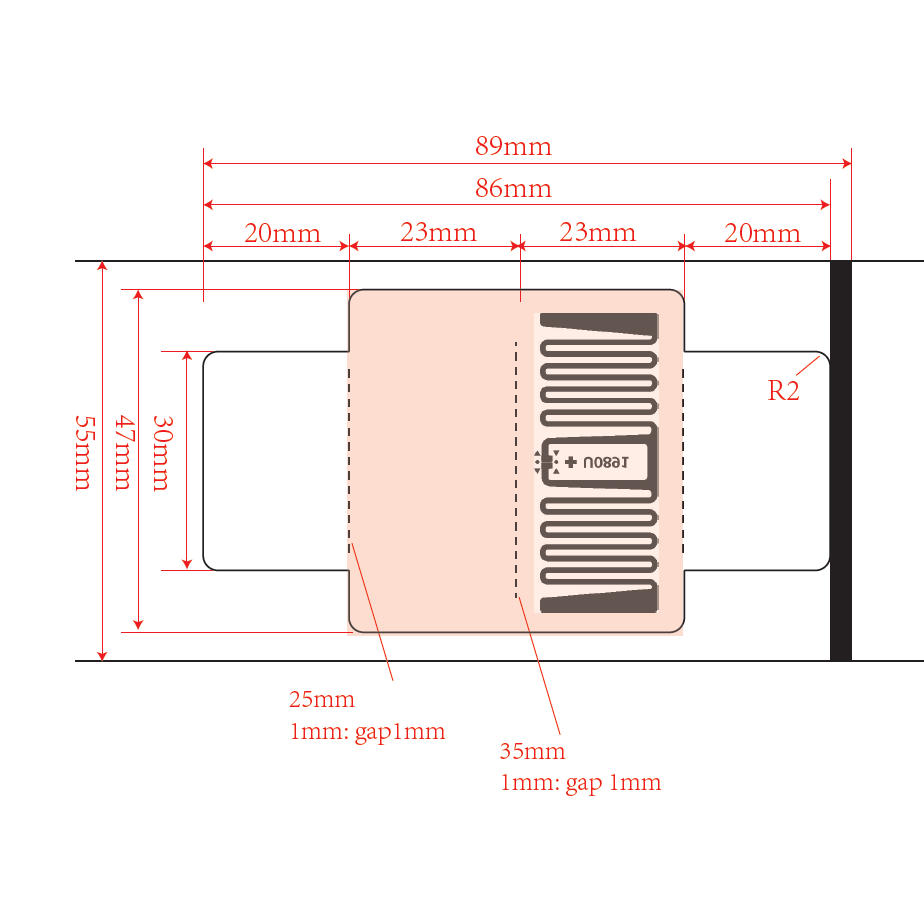
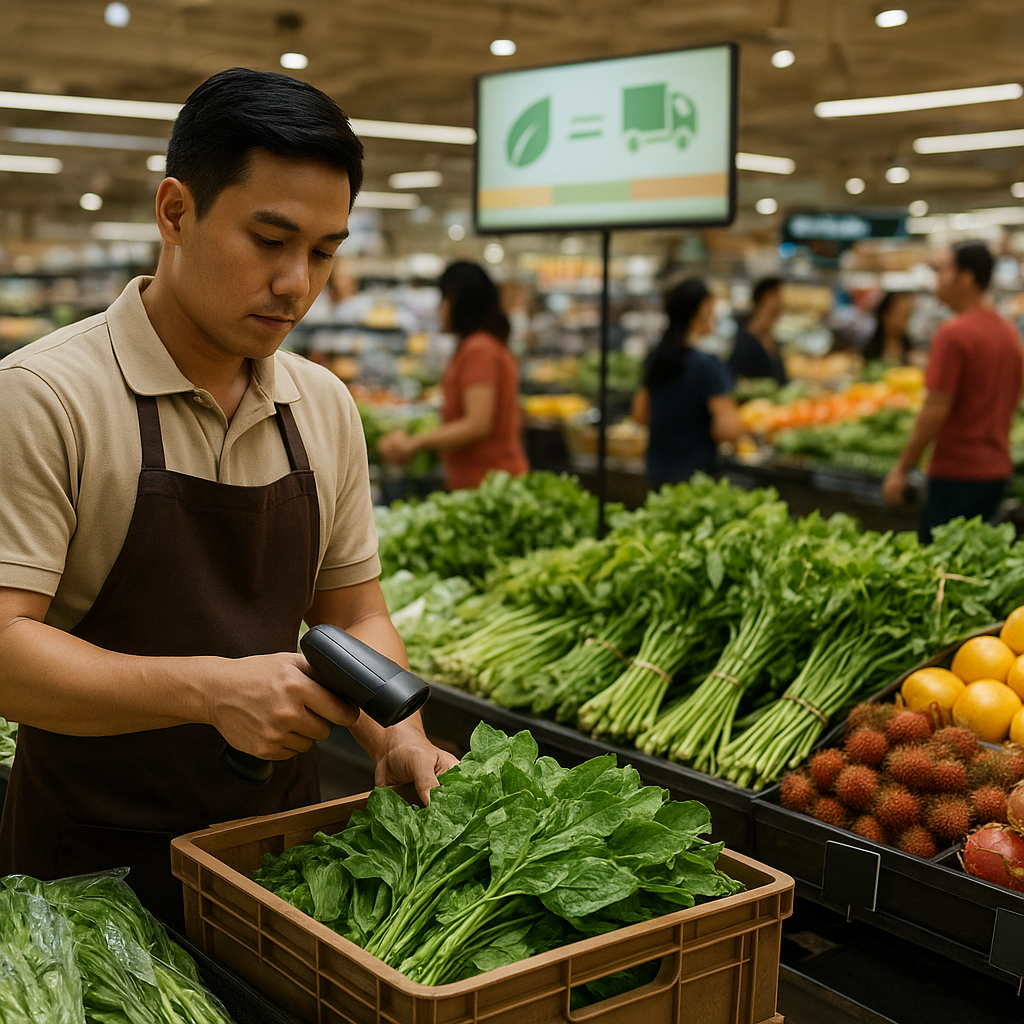
Fresh food has a short shelf life, passes through many transfer points, and is easily affected by temperature deviations. When a lot is flagged, the business needs to isolate exactly that lot instead of suspecting the entire warehouse — this both reduces the volume of goods that must be recalled and shortens response time with customers and regulators.
- Isolate the exact faulty lot: recall only the goods belonging to the flagged lot, without touching goods of the same type received on a different date.
- Respond to customers quickly: when a customer asks about origin, you can immediately look up the supplier, receipt date, and storage-area temperature.
- Control suppliers: lot data helps compare defect rates across suppliers over time.
- Comply with traceability requirements: many retail systems and central kitchens require distributors to provide lot codes on delivery.
For the cold chain, this requirement is even harder because goods pass through many transfer warehouses and reading devices must operate at sub-zero temperatures. You can also see the general guidance in RFID solutions for the fresh food cold chain to grasp the overall picture before going into each step in detail.
How does the "one step forward – one step back" principle apply?
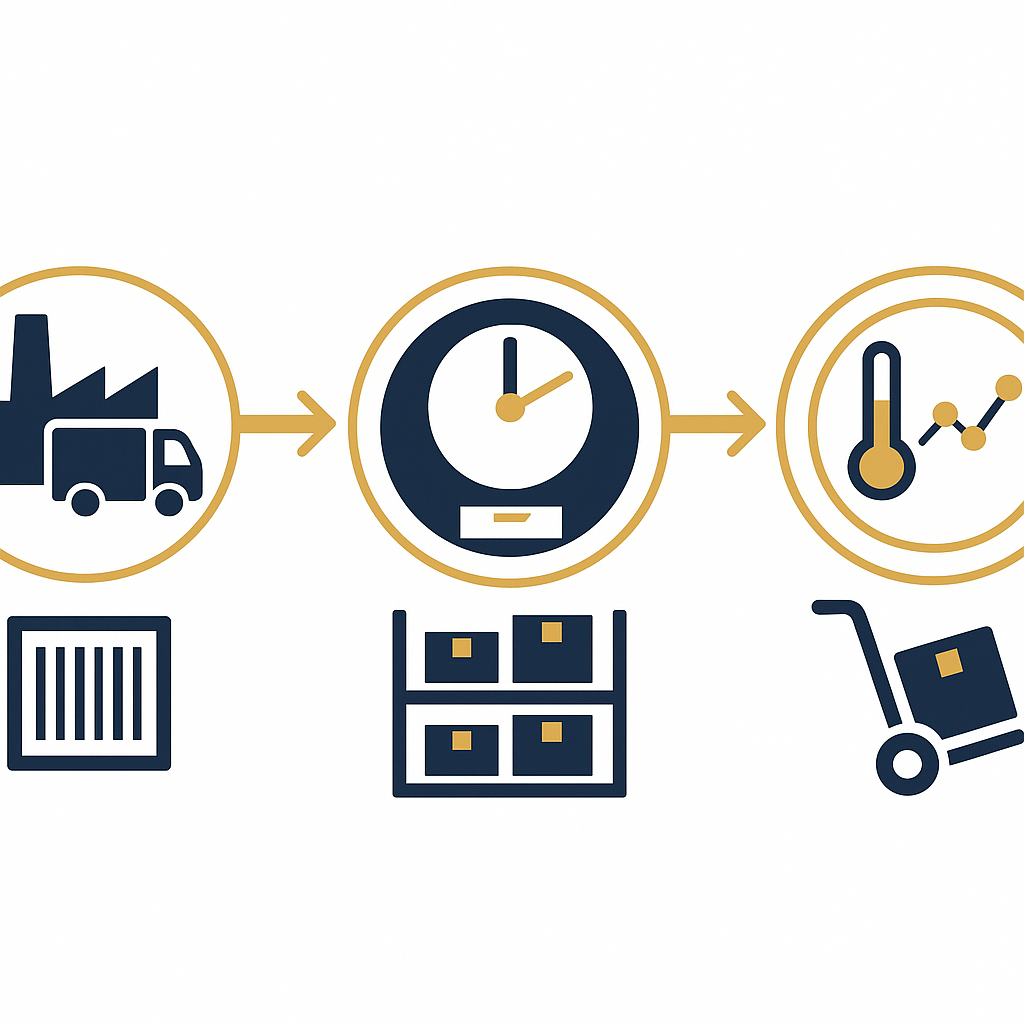
This principle requires each link in the chain to record only two pieces of information: from whom it was received and to whom it was handed over. When every link does this correctly, tracing backward from the finished product to the source and tracing forward from raw materials to the point of sale will match up on their own, without needing a complex central system from the start.
- Receiving step: record the supplier, their batch code, the date and time of receipt, and the temperature of the transport vehicle.
- Storage step: record the storage area, temperature, and the time of entry and removal.
- Internal transfer step: record the destination (preparation area, packing area, store) and the time.
- Handover step to the next unit: record the receiving unit, the transferred batch code, and the quantity.
The key point is that the batch code must remain unchanged or have a clear relationship when split. If a 200kg pallet is split into 20 boxes of 10kg, each box must carry the same original batch code or a sub-code that can be traced back to the original batch.
5-step process to know where a batch has been
The process below focuses on three main recording points: the receiving area, the doors connecting areas within the warehouse, and the dispatch door. Each point uses the same batch code assignment method so that data matches when looked up.
Step 1 — Assign the batch and entry date with the container's tag code at the receiving area
At the receiving area, each pallet or plastic crate is fitted with an RFID tag. On receipt, staff scan the tag and enter or select the batch code corresponding to the delivery. The system records: batch code, supplier, date and time of entry, quantity, and recorded temperature. From this point on, the tag is the batch's "identity card" — every time the tag passes a reader, it is recorded in that batch's history.
Operational note: do not reuse an old tag for a new batch without clearing the link. If a tag is reused, the release of the tag from the old batch must be recorded before assigning it to the new batch, otherwise the history will be mixed.
Step 2 — Each time it passes a door with a reader, the system records where and when
Install fixed readers at key doors: the door from the receiving area into the cold storage, the door from the cold storage to the preparation area, and the dispatch door. When a pallet passes, the reader detects the tag and records: batch code, which door, and at what time. Staff do not need to stop and scan by hand — this is a major difference from scanning barcodes box by box.
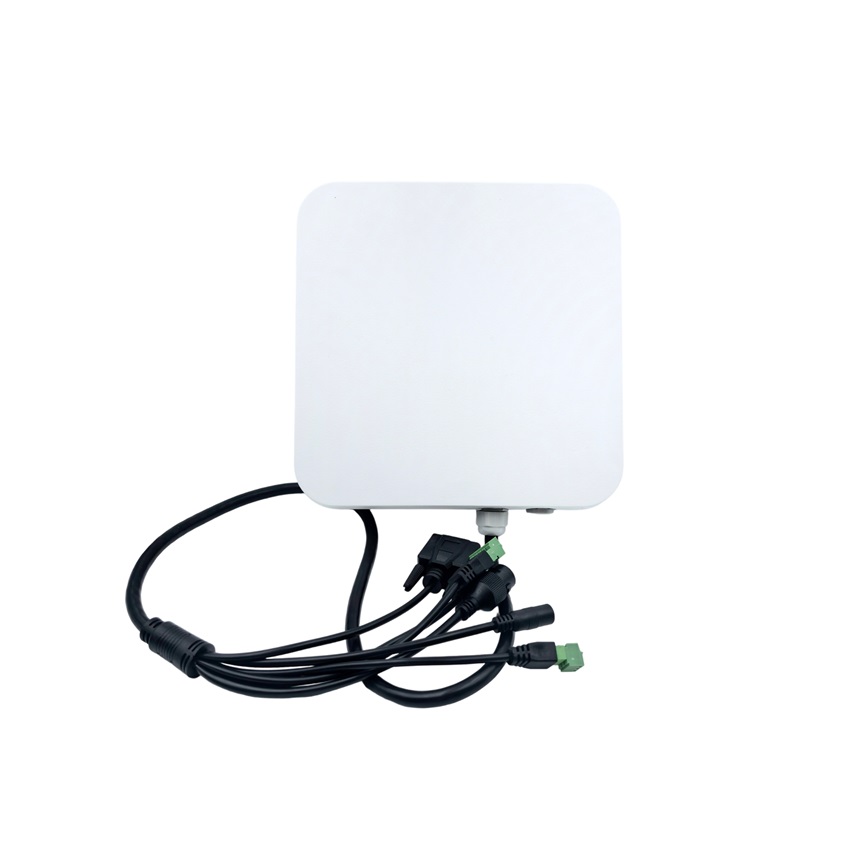
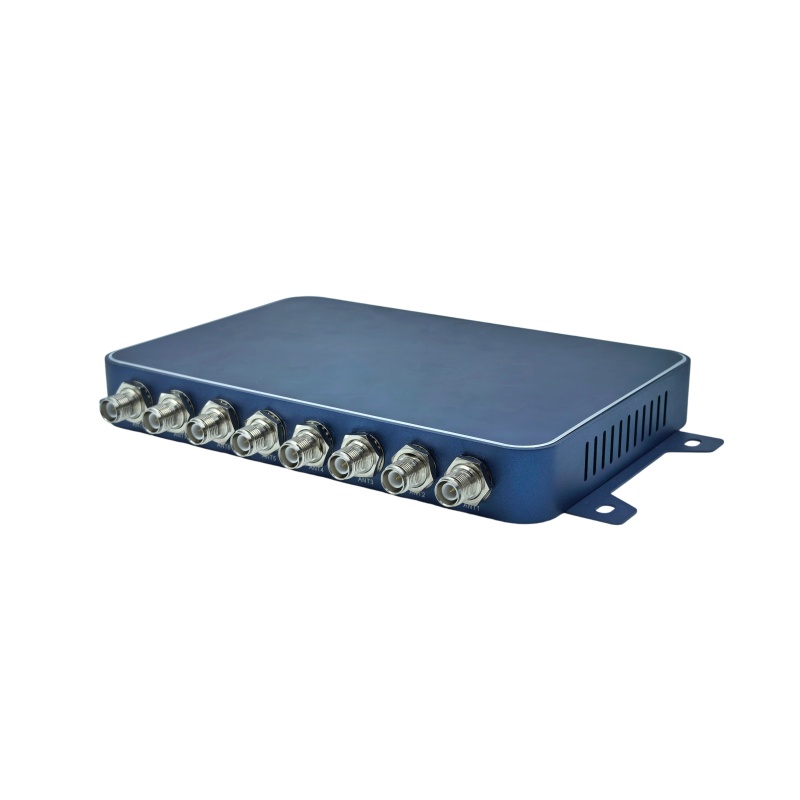
According to the manufacturer's specifications, the Symo FR38A fixed reader uses the Impinj E710 chip, has 8 RP-TNC antenna connectors, 5–33 dBm power, and a read range of 0–30 m depending on the tag and environment. The housing is aluminum alloy, dimensions 210 × 142 × 27 mm, weight approximately 1.0 kg, wall-mounted with the included bracket. With 8 antenna ports, one reader can cover multiple doors or multiple cart lanes in the same area, reducing the number of devices that must be installed.
Step 3 — Record the dwell time in each area
Once door-passage data is available, the system can calculate dwell time as the difference between entry and exit. For fresh food, this is an important metric: a batch that sits too long in the receiving area before entering cold storage may already have deviated in temperature even if it is later stored correctly. Recording dwell time helps identify operational bottlenecks and serves as evidence when an explanation is needed.
Step 4 — Record the dispatch point and receiving unit
At the dispatch door, the reader records the last time the batch leaves the warehouse. The system cross-checks against the dispatch order to confirm the correct batch, the correct quantity, and the correct receiving store. If a batch is split among multiple stores, each portion must have its own dispatch record so that later traceability is not confused.
Step 5 — Look up the batch history when an incident occurs
When an alert occurs, enter the batch code into the system to view the entire history: which warehouses it entered, how long it stayed, where it was dispatched, and how many boxes remain in the warehouse. This is the decisive step — if the data from the previous steps was recorded correctly, this step takes only a few minutes instead of a few hours.
Comparing three recording methods: paper logbook, per-carton barcode scanning, fixed reader
These three methods differ in recording speed, accuracy, and traceback capability. A paper logbook suits very small facilities but is prone to data gaps; per-carton barcode scanning is accurate but time-consuming; a fixed reader records automatically but requires upfront investment and read-rate testing on actual goods.
| Criterion | Paper logbook | Per-carton barcode scanning | Fixed RFID reader |
|---|---|---|---|
| Recording method | Staff record time, sign | Staff hold a scanner to each carton | Automatic when a pallet passes through the gate |
| Recording time per pass | A few minutes, depends on the person recording | Depends on the number of cartons, usually longer | Nearly instantaneous when passing the gate |
| Data gap risk | High (forgotten entries, lost logbook, illegible handwriting) | Medium (missed cartons) | Low if tags are readable |
| Traceback | Must flip through the logbook, cross-check manually | Look up by scanned code | Look up by batch code, with full history |
| Practical limits | Cannot scale as volume grows | Labor-intensive at high volume | Metal and liquids block signals, must be tested on actual goods |
No single method suits every scale. Many organizations start with a paper logbook, move to barcode scanning as volume grows, and only then consider a fixed reader once the number of gate points and recording passes is large enough to make the investment meaningful. In cold storage, temperature is also a factor: handheld devices must withstand the cold, while fixed readers need to be installed in a location suited to the environment.
Choosing reading devices for cold storage and gate points
There are two main device groups: fixed readers mounted at gates for automatic recording, and handheld devices for stocktaking or exception handling. The choice depends on the number of gates to cover, the type of container, the ambient temperature, and recording-time requirements.
For fixed gate points, the Symo FR38A reader is worth considering when multiple lanes need to be covered: 8 antenna ports allow multiple antennas to be arranged around one wide gate or split across several nearby gates. The 0–30 m read range per the manufacturer's specifications is a figure under ideal conditions — in practice it must be re-measured on actual pallets of goods, because cartons, shrink wrap, and humidity all affect it.
For frozen goods, RFID labels must withstand low temperatures. Cold-chain RAIN labels, per the manufacturer's specifications, operate from -25°C to 70°C, have an adhesive that resists freeze-thaw cycles, and maintain read accuracy after multiple cycles. For handheld devices, cold-storage PDA lines such as the Chainway C61 Cold Storage or iData K1 Cold are designed for sub-zero environments, with touchscreens usable while wearing gloves.
One point to note: no device reads correctly 100% of the time under all conditions. Metal (stainless steel trays, carts) and liquids (water cans, ice bags) block signals. Before investing, you should measure the read rate on your own type of goods and containers. You can also refer to the layout guidance in production batch traceability solutions to compare against your own operating model.
Batch traceability terminology summary table
The terms below come up frequently when working with device suppliers and when building internal processes. Understanding them correctly helps you communicate with partners more precisely and avoid buying unsuitable equipment.
| Term | Definition | Example |
|---|---|---|
| Batch code | A character string identifying a specific shipment lot | RAU-20250312-A |
| Traceback | Tracing from finished product back to the raw-material batch and supplier | From a carton of vegetables on the shelf back to the batch received on March 12 |
| Traceforward | Tracing from a raw-material batch to the points that received the goods | From the batch received on March 12 to the 3 stores that received it |
| Read point | The location where a reader is installed to record batches passing through | Cold storage door, outbound door |
| Dwell time | The length of time a batch stays in one area | 6 hours in the receiving area before entering cold storage |
Common mistakes when building lot traceability
Most errors are not in the devices but in how the process is set up. Below are the most common mistakes that cause traceability data to break, making lookups during incidents unreliable.
- Mixing lots when splitting goods: one pallet is split across multiple stores but sub-lot codes are not recorded — when traceability is needed, there is no way to know which portion belongs to which lot.
- Recording only at inbound, not at zone transfers: you know the goods entered the warehouse but not how long they stayed where, losing the ability to detect temperature deviations.
- Reusing tags without releasing the old lot: the tag's history is mixed between two lots, and lookups return incorrect results.
- Trusting the nominal read range: manufacturer specifications are ideal conditions; real goods with shrink film and metal trays may give different results.
- Not rehearsing traceability: only when a real incident occurs do you discover the process is missing steps or the data does not match.
The simplest way to prevent this is to periodically pick a random shipped lot and try tracing its entire history backward. If you can trace it in a few minutes and it matches the documents, the process is sound. If you have to ask multiple people, that is the point to fix before scaling up.
Frequently asked questions
How is lot-based traceability different from putting a QR code on the packaging?
A QR code on the packaging usually only leads to product introduction information, not lot-specific data. Lot-based traceability requires real data about that batch: supplier, inbound date, points it has passed through, dwell time. A QR code can be the display method, but if there is no lot data behind it, it cannot meet traceability requirements during an incident.
Can fixed RFID readers be used in a negative-temperature cold storage?
Yes, but you need to choose a suitable mounting location and check the device's temperature tolerance. Fixed readers are usually installed in transition areas or inside protective enclosures. RFID labels must withstand low temperatures — cold-chain labels per manufacturer specifications operate down to -25°C and have adhesive resistant to freeze-thaw cycles. Measuring the read rate on real goods at operating temperature is mandatory before deciding.
If goods are placed in metal trays, can they still be read?
Metal blocks UHF RFID signals, so stainless steel trays or metal carts can significantly reduce read range. There are two ways to handle this: use labels designed for metal surfaces, or arrange antennas and read points so the tags are not obstructed. In all cases, you must test on the actual tray type and stacking method — do not rely on nominal specifications.
How many readers are needed for a medium-scale cold storage?
The number depends on the number of doors that need to be recorded and the width of each door. A multi-port reader such as the Symo FR38A with 8 antenna connectors can cover multiple lanes or multiple nearby doors, helping reduce the number of devices. The most accurate approach is to survey the floor plan, identify the key door-crossing points, then test with antennas on site before finalizing the configuration.
How do I know my traceability system is working correctly?
Periodically pick a random shipped lot and trace its entire history backward: supplier, inbound time, doors passed through, dwell time, outbound point. Compare it with paper documents or the order. If it matches and can be done in a few minutes, the process is working. If you have to ask multiple people or steps are missing, the process needs fixing before scaling up.
Should I start with RFID right away or use barcodes first?
If volumes are still low and the number of recording points is not yet large, scanning barcodes box by box may be sufficient and easy to deploy. When the number of recording events increases or automatic recording at multiple doors is needed, fixed RFID helps reduce manual recording effort. You should start by standardizing lot codes and the recording process, then choose the technology — because technology cannot fix a process that is missing steps.
Want to know whether an RFID reader can read your exact type of goods and containers? Schedule a survey and read-rate measurement on real goods with Việt POS — hotline 0935 498 384 or email info@vietpos.vn.
Need advice on specific equipment or a solution?
Việt POS replies within 30 minutes · Hotlines in 4 regions · Free site survey.
