Mục lục bài viết (7)
- Why must Vietnamese schools upgrade library software in 2026?
- Three common groups of school library software today
- Detailed comparison of 3 groups by 7 mandatory criteria
- 7 mandatory criteria for evaluating vendors
- Choosing a software group by specific use case
- Pros and cons of each software group
- 12 vendor interview questions before signing a contract
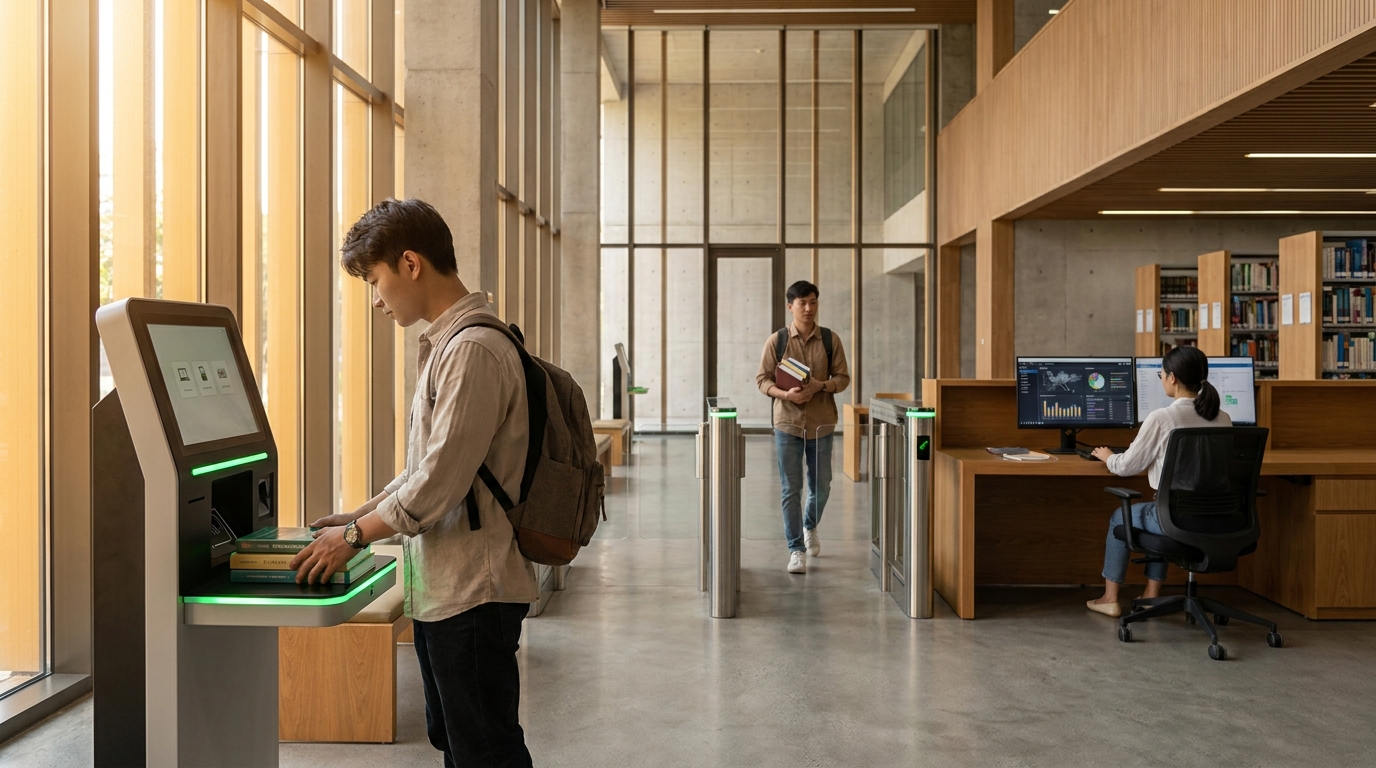
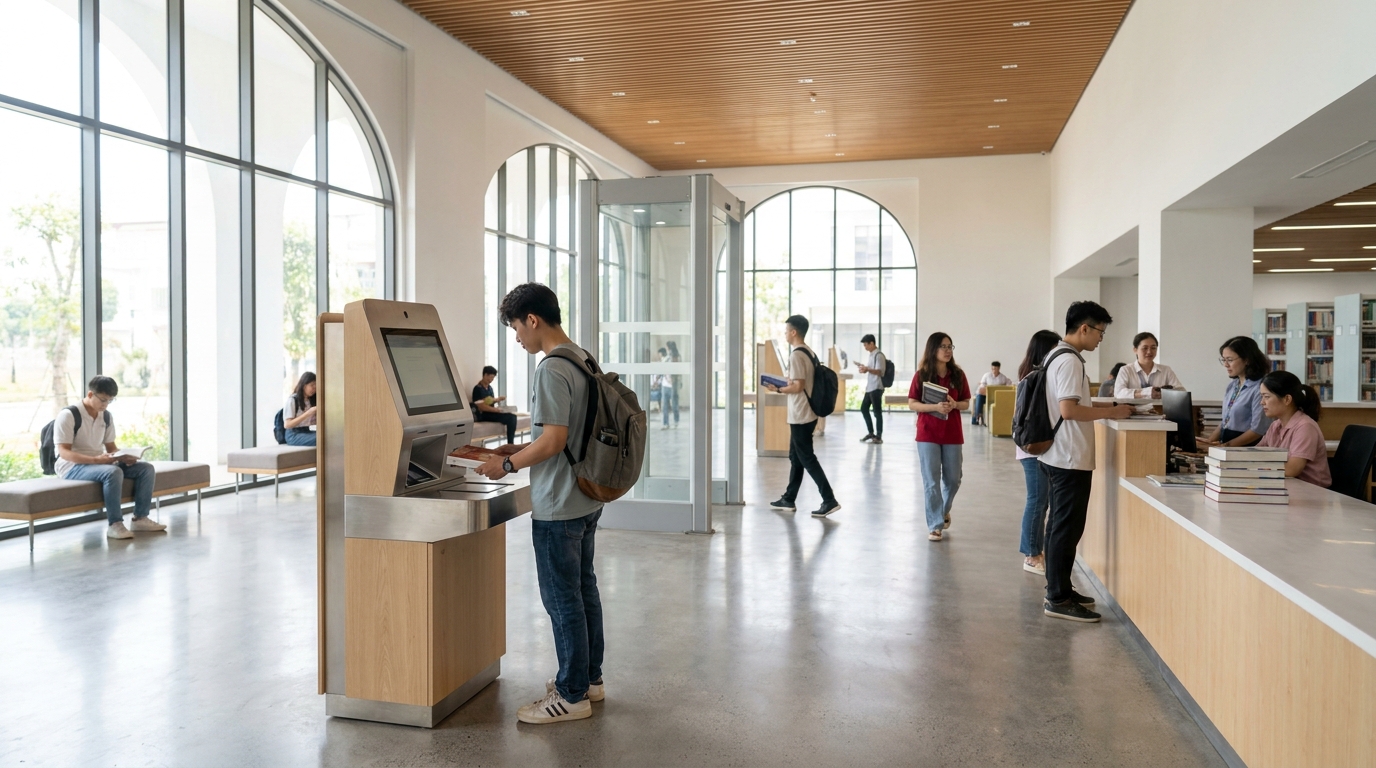
School library software is an integrated library system (ILS) that handles the entire lifecycle of materials — from cataloging, acquisitions, and circulation (borrowing-returning) to OPAC discovery — according to international library professional standards. In Vietnam, high schools, colleges, and universities are moving from simple book management software to ILS systems capable of integrating RFID, self-checkout Kiosks, and security gates. This article compares three common solution groups and provides 7 mandatory criteria for choosing the right vendor in 2026.
School library software meeting 2026 standards needs 7 elements: MARC21/AACR2 cataloging, ISO 2709 and Z39.50 record exchange, SIP2 protocol for self-service, RFID integration, self-checkout Kiosk support, security gate connectivity, and understanding of the Vietnamese academic year calendar. Missing any one of these, the school will have to upgrade or replace within 18-24 months.
Table of contents
- Why must Vietnamese schools upgrade library software in 2026?
- Three common groups of school library software today
- Detailed comparison of 3 groups by 7 mandatory criteria
- 7 mandatory criteria for evaluating vendors
- Choosing a software group by specific use case
- Pros and cons of each software group
- 12 vendor interview questions before signing a contract
- Frequently asked questions
Why must Vietnamese schools upgrade library software in 2026?
Why must Vietnamese schools upgrade library software in 2026?

Old book management software only stores book titles and borrowers — it cannot meet the requirements for digital material inventory, cannot connect to RFID devices, and cannot export MARC21 records for interlibrary linkage with provincial or university libraries. Meanwhile, schools are handling 8,000-25,000 material records, serving 1,200-6,000 readers per academic year, and facing pressure for periodic education quality accreditation reporting under the Ministry of Education and Training's Circulars.
Three main pressures are pushing schools to upgrade in 2026:
- Quality accreditation: self-assessment reports require detailed library data — number of titles, number of copies, borrowings by reader group, active reader rate. Old software cannot export this report.
- Digitization of learning materials: textbooks, theses, and internal reference materials need to be managed in parallel with print copies, without separating the two systems.
- Reader experience: high school students and university students are used to searching on their phones, placing holds remotely, and expect to borrow-return without waiting in line for a librarian.
Three common groups of school library software today
Related products

The Vietnamese market is divided into three distinct groups: (1) international open-source software such as Koha, (2) low-cost packaged domestic software, (3) professional ILS systems with built-in RFID hardware and Kiosks. Each group suits a different school size and budget level — choosing the wrong group will cost 2-3 times more in migration costs within 2 years.
Group 1 — International open-source software (Koha, Evergreen)
Koha is the most popular open-source ILS, fully supporting MARC21, Z39.50, and SIP2. Pros: free license, large community, deep customization capability. Cons for Vietnamese schools: the Vietnamese interface is incomplete, requires an internal IT team or a dedicated deployment partner, and hosting and maintenance costs of VND 15-40 million/year. Suitable for universities with an IT faculty or provincial libraries with a dedicated IT budget.
Group 2 — Low-cost packaged domestic software
These software products typically cost VND 5-25 million, have a Vietnamese interface, and offer hotline support. However, most only meet basic operations: book entry, borrowing-returning, and simple report printing. They do not support full MARC21, have no SIP2 protocol, and cannot connect to industrial RFID devices. Suitable for primary or lower secondary schools with a small scale under 3,000 records.
Group 3 — Professional ILS systems with integrated hardware
This is the group that large high schools, colleges, universities, and multi-branch libraries should target. Characteristics: full MARC21/AACR2 cataloging, ISO 2709 exchange, Z39.50 copy cataloging, SIP2 protocol for self-service, built-in RFID integration (readers, security gates, borrow/return stations), self-checkout Kiosks, and access control gates. Cost is VND 40-150 million depending on scale, but it reduces operational processing time by 60-70% and opens the path for future data interlibrary linkage.
Detailed comparison of 3 groups by 7 mandatory criteria
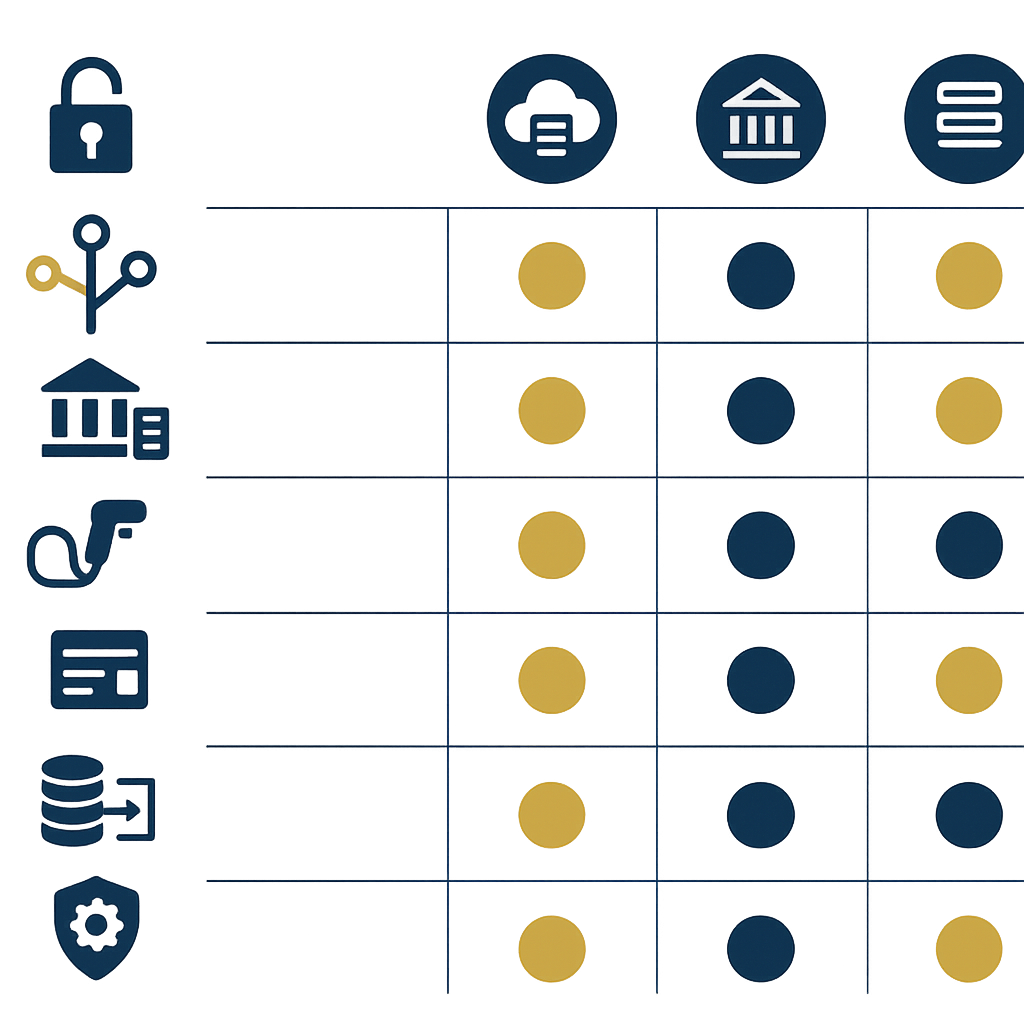
The table below compares the three software groups across the 7 most important criteria when evaluating for the Vietnamese school environment. The "Best" column marks the group that most fully meets each criterion.
| Criterion | Open source (Koha) | Low-cost domestic | ILS with integrated hardware | Best |
|---|---|---|---|---|
| MARC21 / AACR2 cataloging standards | Full | Partial | Full | Integrated ILS |
| ISO 2709 / Z39.50 exchange | Yes | No | Yes | ILS + Koha |
| SIP2 protocol for self-service | Yes | No | Yes | Integrated ILS |
| RFID device integration | Self-configuration required | No | Built-in | Integrated ILS |
| Self-checkout Kiosk for students | Self-build required | No | Available | Integrated ILS |
| Security gate | Separate integration required | No | Available | Integrated ILS |
| Understanding of Vietnamese academic year calendar | Customization required | Yes | Yes | Domestic + ILS |
7 mandatory criteria for evaluating vendors
The seven criteria below are compiled from actual deployments at high schools, colleges, and universities in Vietnam. A vendor meeting 5/7 criteria is acceptable; meeting fewer than 5 should be removed from the shortlist.
Criterion 1 — Compliance with international standards (MARC21, AACR2, ISO 2709, Z39.50)
MARC21 cataloging according to AACR2 is a mandatory condition for school library data to be linked with provincial libraries, universities, or learning resource centers. The ISO 2709 standard allows exporting/importing records between systems, while Z39.50 allows downloading records from the national library or major university libraries — saving 60-80% of initial data entry time. If the vendor cannot name these three standards during the demo, the system almost certainly does not fully support them.
Criterion 2 — Understanding Vietnamese school operations
The software must be configurable according to the Vietnamese academic year (from August to May), respect holiday, Tet, and summer break schedules, and automatically calculate book due dates according to holidays. For high schools, borrowing policies are often by class (one class borrows 40-50 textbooks at once); for universities, borrowing policies are by credit and by reader group (students, lecturers, research fellows). A vendor that does not understand these two models will force librarians to handle things manually at the start of each semester.
Criterion 3 — Readiness to integrate RFID devices
RFID is a productivity leap for school libraries. Instead of scanning barcodes one book at a time during borrowing-returning (taking 15-25 seconds/book), an RFID reader processes 5-15 books simultaneously in 2-3 seconds. Full inventory of 10,000 copies drops from 3-5 days to 4-8 hours. Mandatory condition: the software must support SIP2 protocol or a dedicated API to connect fixed RFID readers, handheld readers, security gates, and automated borrow/return stations. Ask specific questions about device models that have been tested for integration, not just general commitments.
Criterion 4 — Self-checkout Kiosk for students
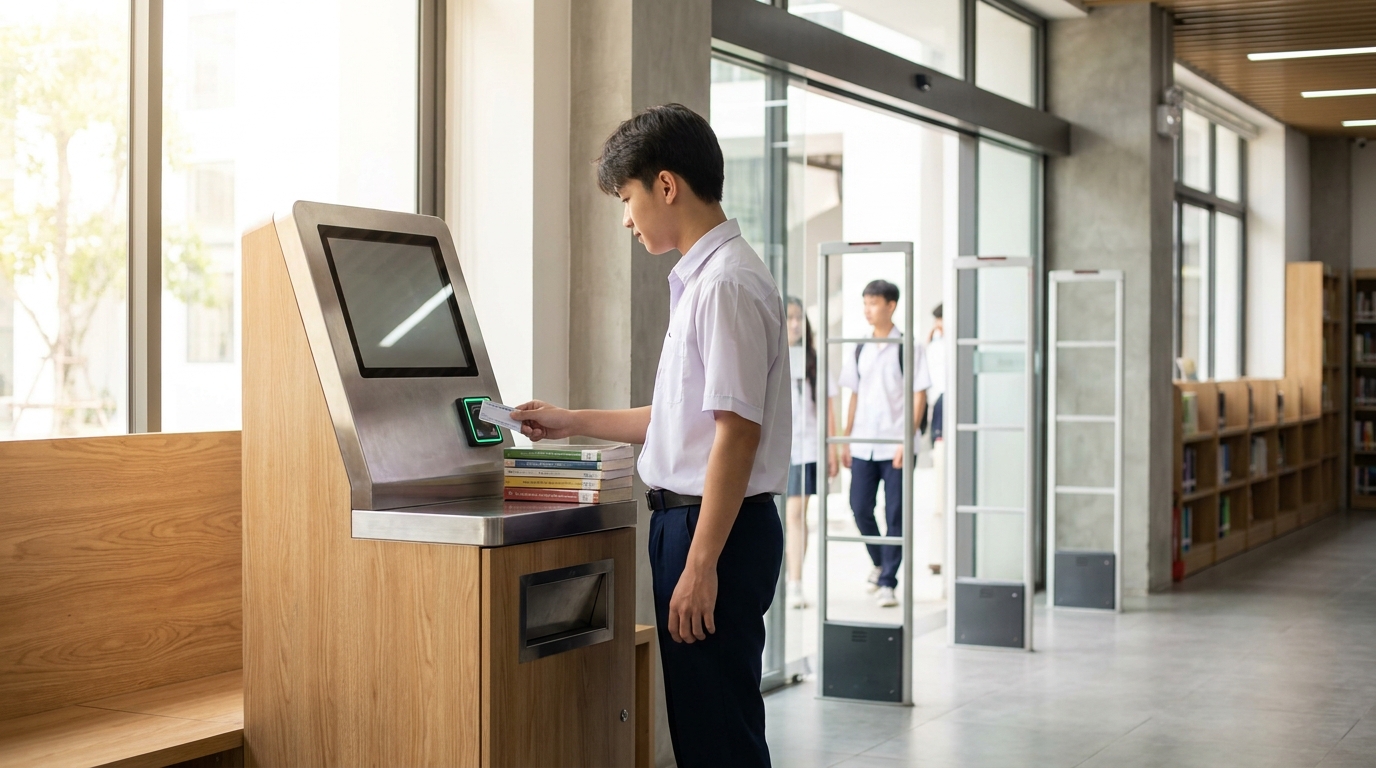
A self-checkout Kiosk is a borrow/return station placed in the library lobby, allowing readers to scan their student card themselves and process borrowing-returning without a librarian. For libraries serving 800-1,500 borrowings per week, the kiosk reduces counter workload by 40-60%, allowing librarians to focus on cataloging and in-depth reference support. The kiosk needs to connect directly to the library software via SIP2, display reader information, the list of borrowed books, and due dates. If the vendor does not have a ready kiosk, rate it lower because integration will be complex and costly to customize.
Criterion 5 — Library security gate
A security gate is an RFID barrier on both sides of the library entrance, detecting materials that have not been processed for borrowing when taken out. For a school library with 10,000-50,000 material copies, the loss rate without a security gate falls between 1-3% per year — equivalent to 100-1,500 copies, or VND 15-250 million in value. The security gate must synchronize with the software to distinguish legally borrowed books from unprocessed ones, and log events for retrieval when needed.
Criterion 6 — Multi-branch, multi-library scalability
For universities with multiple campuses or schools with branch campuses, the software must support multi-tenant or multi-unit architecture: one management point for multiple libraries, sharing common records, but isolating reader and circulation data for each unit. If the system only supports a single library, the school will have to buy additional licenses or build a parallel system — doubling costs and causing data desynchronization.
Criterion 7 — Deployment support and training policy
A good ILS system still fails if deployment is poor. The vendor needs: a data migration plan from the old system, support for initial data cataloging, 2-3 librarian training sessions, Vietnamese documentation, hotline support during office hours, and an SLA with 4-24 hour response. Ask the vendor to provide 2-3 reference customers of the same school type for verification.
Choosing a software group by specific use case
No software group is best for every school. Below are suggestions for 4 common use cases — match the right scale and budget to avoid over- or under-investing.
Use case 1 — Primary/lower secondary school under 3,000 records, budget under VND 20 million: choose packaged domestic software. Prioritize a Vietnamese interface and fast hotline support. RFID or self-checkout Kiosks are not yet needed at this stage.
Use case 2 — High school with 3,000-10,000 records, budget VND 30-70 million: choose an ILS system with basic RFID integration. Prioritize handheld RFID readers + automated borrow/return stations to reduce counter load. Self-checkout Kiosks can be added after 6-12 months.
Use case 3 — College/university with 10,000-30,000 records, budget VND 80-150 million: choose a full professional ILS: MARC21, Z39.50, SIP2, RFID, self-checkout Kiosk, security gate. Require multi-tenant architecture if there are multiple campuses.
Use case 4 — School with a strong IT faculty wanting self-sufficiency: may consider Koha or open source, but must account for hosting costs, operations personnel, and separate RFID integration — typically costing VND 20-50 million/year for the IT team.
Pros and cons of each software group
Each group has its own trade-offs between initial cost, operating cost, and scalability. Read the cons carefully to avoid hidden budget overruns after 12-18 months.
Open source (Koha, Evergreen)
Pros: free license, large community, deep customization, full support for MARC21/Z39.50/SIP2.
Cons: requires an internal IT team or deployment partner, incomplete Vietnamese localization, hosting + maintenance costs of VND 15-40 million/year, deployment time of 3-6 months.
Low-cost domestic
Pros: low initial cost (VND 5-25 million), Vietnamese interface, fast hotline support, deployment in 1-2 weeks.
Cons: no full MARC21 support, no SIP2, no industrial RFID connectivity, difficult data interlibrary linkage, often requiring replacement after 24-36 months when the school expands.
ILS with integrated hardware
Pros: full international standards, built-in RFID + Kiosk + security gate, 60-70% reduction in operational time, opens the path for interlibrary linkage, multi-branch support.
Cons: higher initial cost (VND 40-150 million), requires 4-8 weeks of deployment including data migration and training, dependent on the hardware vendor for expansion.
12 vendor interview questions before signing a contract
The question list below helps school administrators, library staff, and the IT department evaluate vendors in 1-2 demo sessions. Ask the vendor to demo directly on the school's sample data, not just watch slides.
- Does the system fully support MARC21 cataloging according to AACR2? Can it export ISO 2709?
- Does it support Z39.50 to download records from the national library and university libraries?
- Is the SIP2 protocol supported for automated borrow/return stations and self-checkout Kiosks?
Cần tư vấn thiết bị/giải pháp cụ thể?
Việt POS phản hồi trong 30 phút · Hotline 4 vùng · Khảo sát miễn phí.
Bài viết cùng chủ đề