Mục lục bài viết (5)
- Why do warehouses need RFID gates instead of manual barcode scanning?
- How does an RFID gate work at warehouse & container entry points?
- Specific benefits of deploying warehouse & container RFID gates
- Step 1 — Survey current warehouse conditions and vehicle traffic
- Step 2 — Choose optimal antenna placement
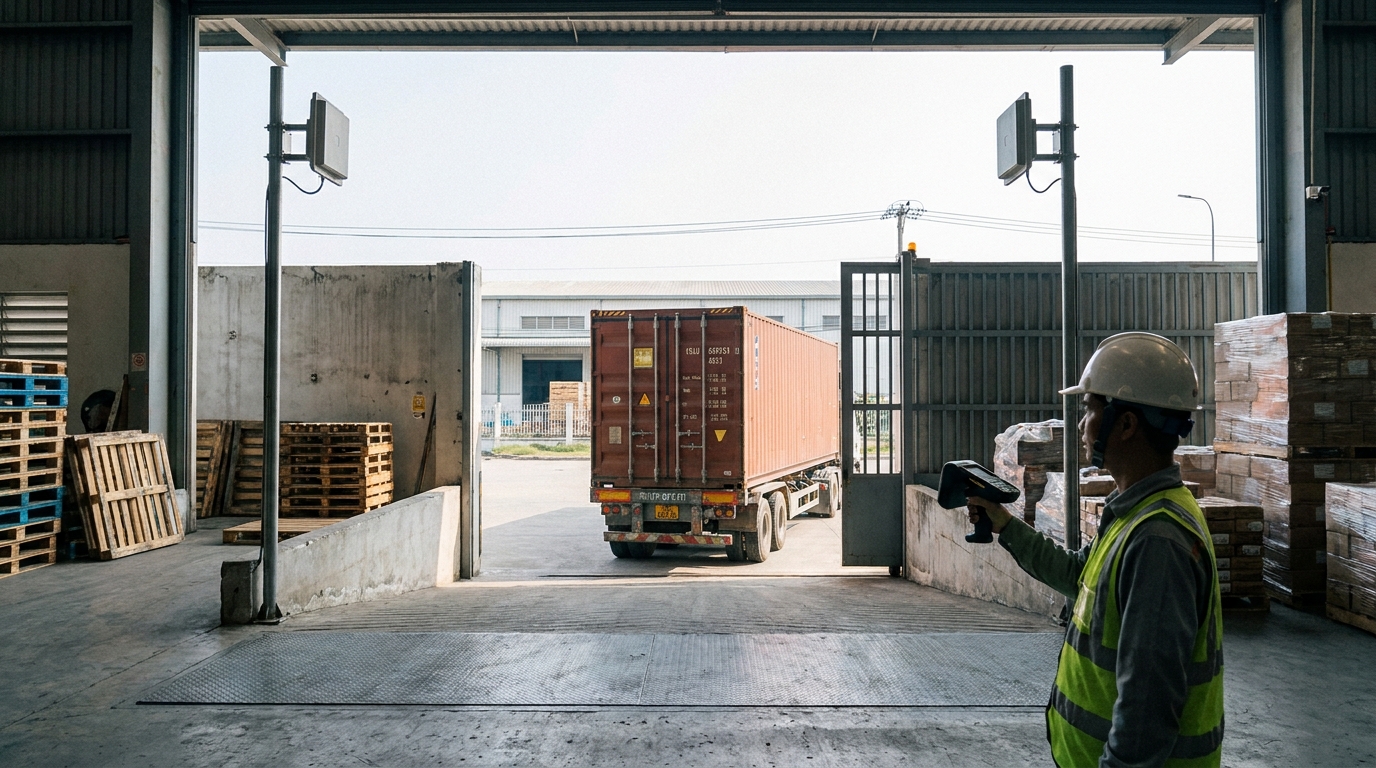
Automatic warehouse & container RFID gates are systems that use fixed readers installed at entry/exit points to automatically identify RFID tags on goods, pallets, or containers as vehicles pass through, without requiring vehicles to stop or individual barcode scanning. In Vietnam, this technology is being widely deployed in distribution centers, manufacturing plants, and logistics hubs to shorten entry/exit processing time and reduce inventory discrepancies.
Deploying warehouse & container RFID gates requires 7 steps: survey, antenna placement, read zone configuration, WMS/TMS integration, load testing, training, and trial operation. Note: UHF waves at 918.4–923 MHz are obstructed by metal/liquids, requiring confirmation before recording. Costs depend on gate scale and equipment.
Table of Contents
- Why do warehouses need RFID gates instead of manual barcode scanning?
- How does an RFID gate work at warehouse & container entry points?
- Specific benefits of deploying warehouse & container RFID gates
- Step 1 — Survey current warehouse conditions and vehicle traffic
- Step 2 — Choose optimal antenna placement
- Step 3 — Configure read zone and transmit power
- Step 4 — Integrate data with WMS/TMS
- Step 5 — Load test under real conditions
- Step 6 — Train staff on operation and troubleshooting
- Step 7 — Trial operation and continuous optimization
- RFID gate applications in consumer goods distribution centers
- RFID gate applications for electronics component manufacturing plants
- What is the investment cost for warehouse & container RFID gates?
- FAQ — Common questions when deploying warehouse RFID gates
- Related articles
Why do warehouses need RFID gates instead of manual barcode scanning?
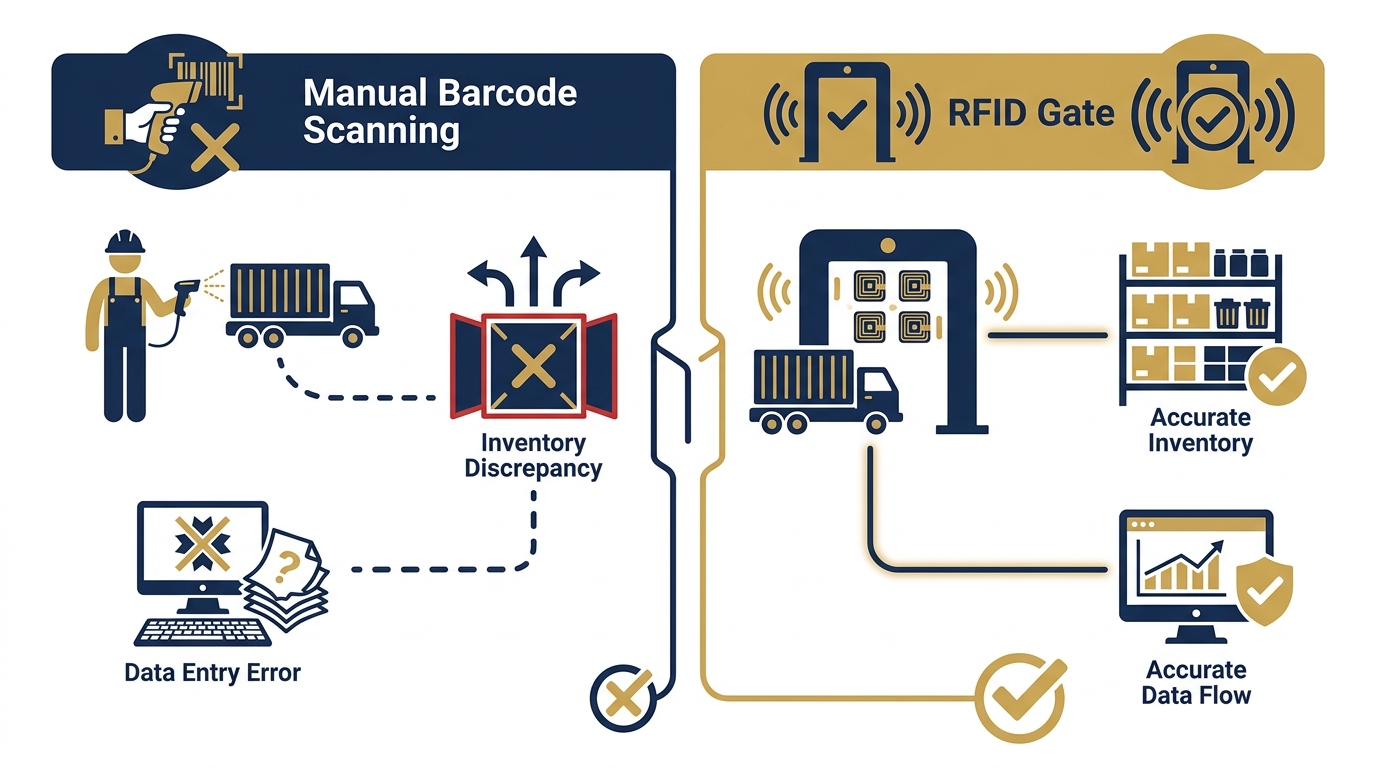
Manual barcode scanning at warehouse gates forces staff to stop vehicles, approach each package, and scan each code — taking 10-15 minutes per entry/exit at scale. RFID gates read 200-500 tags simultaneously in 2-3 seconds as vehicles pass, reducing gate processing time and eliminating data entry errors from manual handling.
Problems warehouses face with manual management:
- ⚠️ Staff must stop vehicles, climb onto containers to scan each code — dangerous and slow
- ⚠️ Inventory discrepancies of 3-5% due to manual data entry, hard to detect in time
- ⚠️ No control over goods passing through the gate when no staff is present
- ⚠️ 30-60 minutes lost daily reconciling documents between warehouse and accounting
- ⚠️ Difficult to trace shipment origins when quality issues arise
How does an RFID gate work at warehouse & container entry points?
Related Products
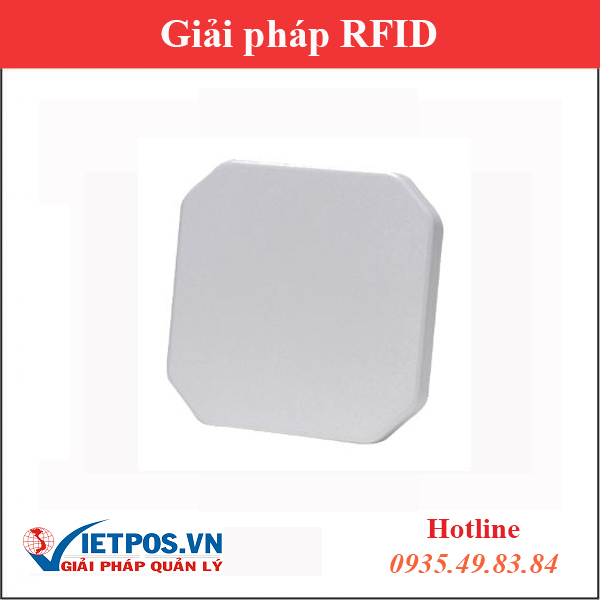
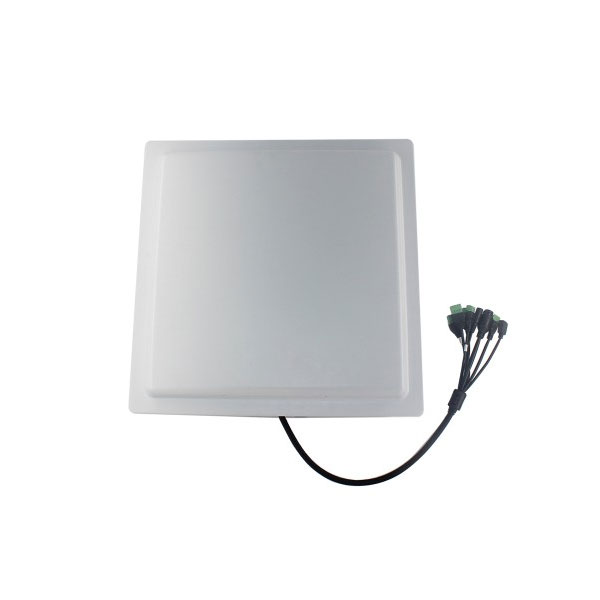
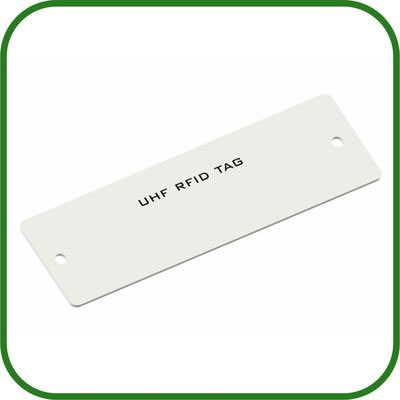


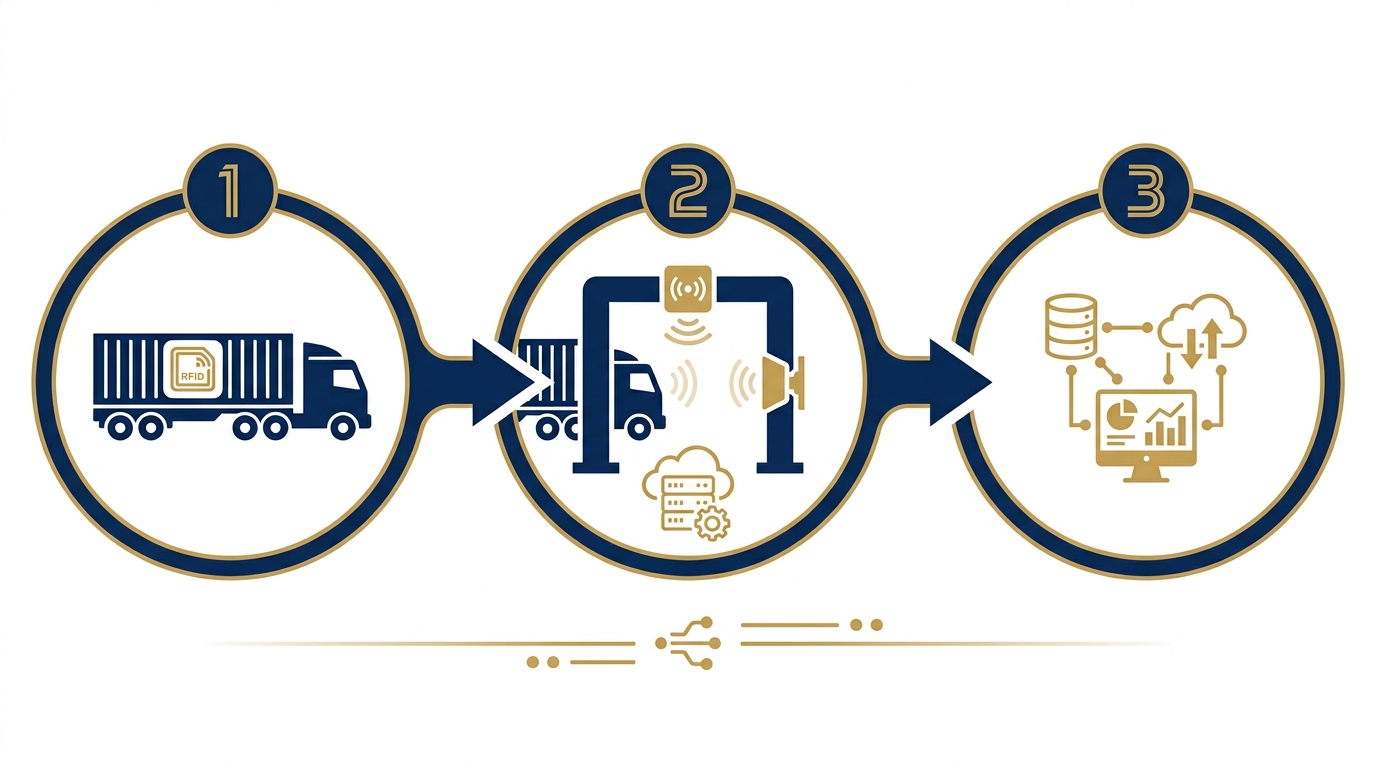
An RFID gate consists of 4 components: RFID tags attached to goods/pallets, a fixed reader, antennas for transmitting/receiving signals, and data processing software. When a container vehicle passes through the read zone, the antenna emits radio waves that activate the tags, the tags respond with unique ID codes, and the reader sends data to the WMS/TMS system to reconcile against entry/exit orders.
- Attach RFID tags — Stick or tie UHF tags onto each package, pallet, or container before entering the warehouse
- Vehicle passes through gate — Container or forklift moves through the read zone at 5-15 km/h
- Antenna emits signal — UHF waves at 918.4-923 MHz activate all tags in the coverage area
- Reader collects data — Simultaneously receives ID codes from 200-500 tags in 2-3 seconds
- Software processes — Reconciles data with entry/exit orders, updates inventory in real time
Specific benefits of deploying warehouse & container RFID gates
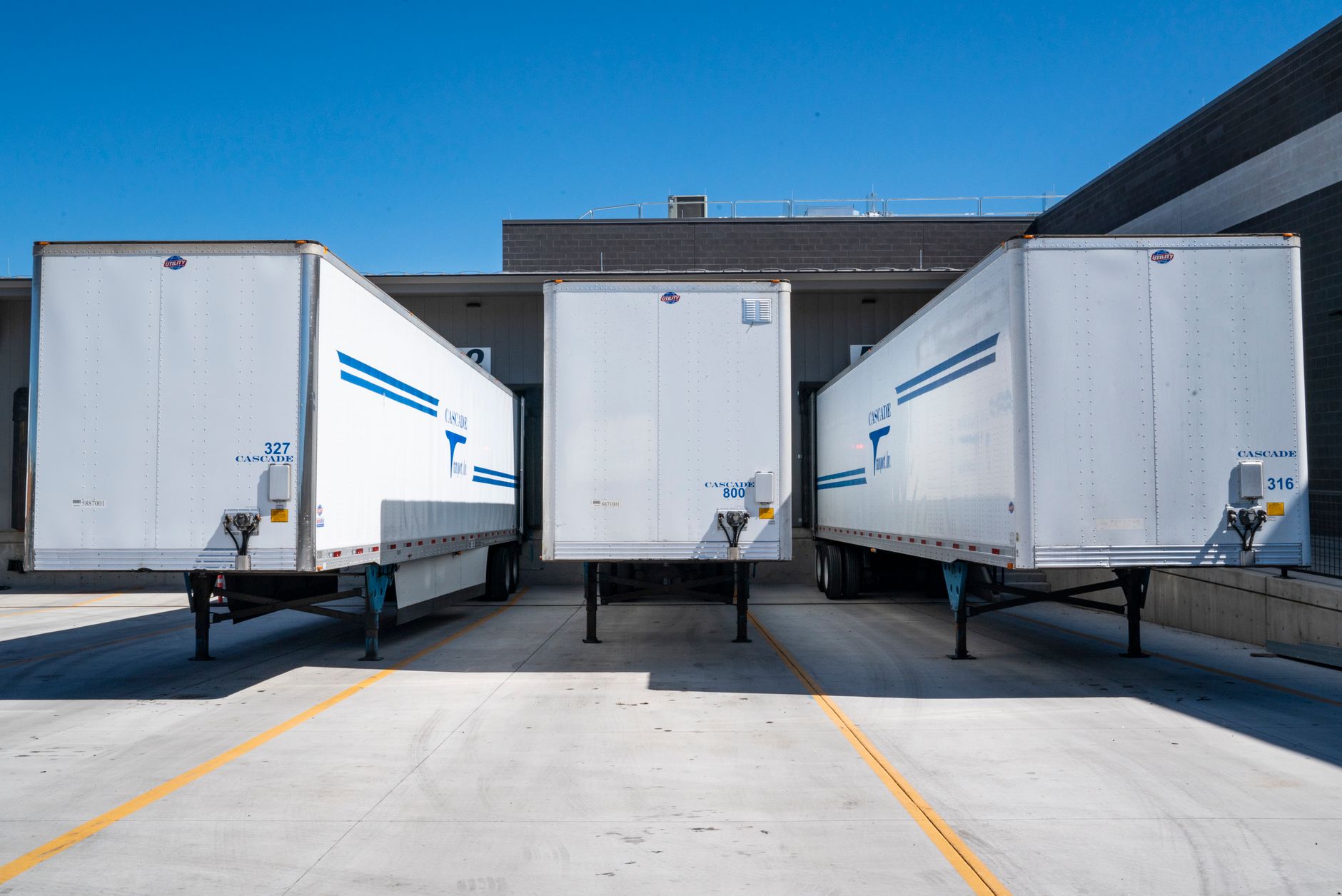
RFID gate systems deliver three measurable benefit groups: reducing gate processing time from 10-15 minutes to 2-3 minutes per vehicle, reducing inventory discrepancies from 3-5% to below 0.5%, and completely eliminating manual scanning operations at entry/exit points.
Process 1 container in 2-3 minutes instead of 10-15 minutes of manual scanning
Reduce inventory discrepancies to below 0.5% through automation
Know exactly which goods have passed the gate without needing staff on site
Locate shipment batches by tag ID within seconds when issues arise
Instantly detect goods passing through the gate without an exit order
Automatically update inventory, saving 30-60 minutes of daily reconciliation
Step 1 — Survey current warehouse conditions and vehicle traffic
The survey is the decisive step for system accuracy. You need to measure gate width, vehicle speed, wall/ceiling materials (metal or concrete), and daily vehicle traffic to select the appropriate number of antennas and transmit power.
During the survey, technicians should record:
- Gate width: 3-6m for trucks, 8-12m for containers
- Vehicle speed: forklifts 5-10 km/h, containers 10-15 km/h
- Surrounding materials: metal walls cause signal reflection, requiring antenna angle adjustments
- Traffic volume: 20-50 vehicles/day or 100+ vehicles/day to calculate system load
Survey results determine the configuration: 1-2 antennas for small gates, 4-6 antennas for wide container gates. Errors at this stage are the main cause of missed tag reads during actual operation.
Step 2 — Choose optimal antenna placement
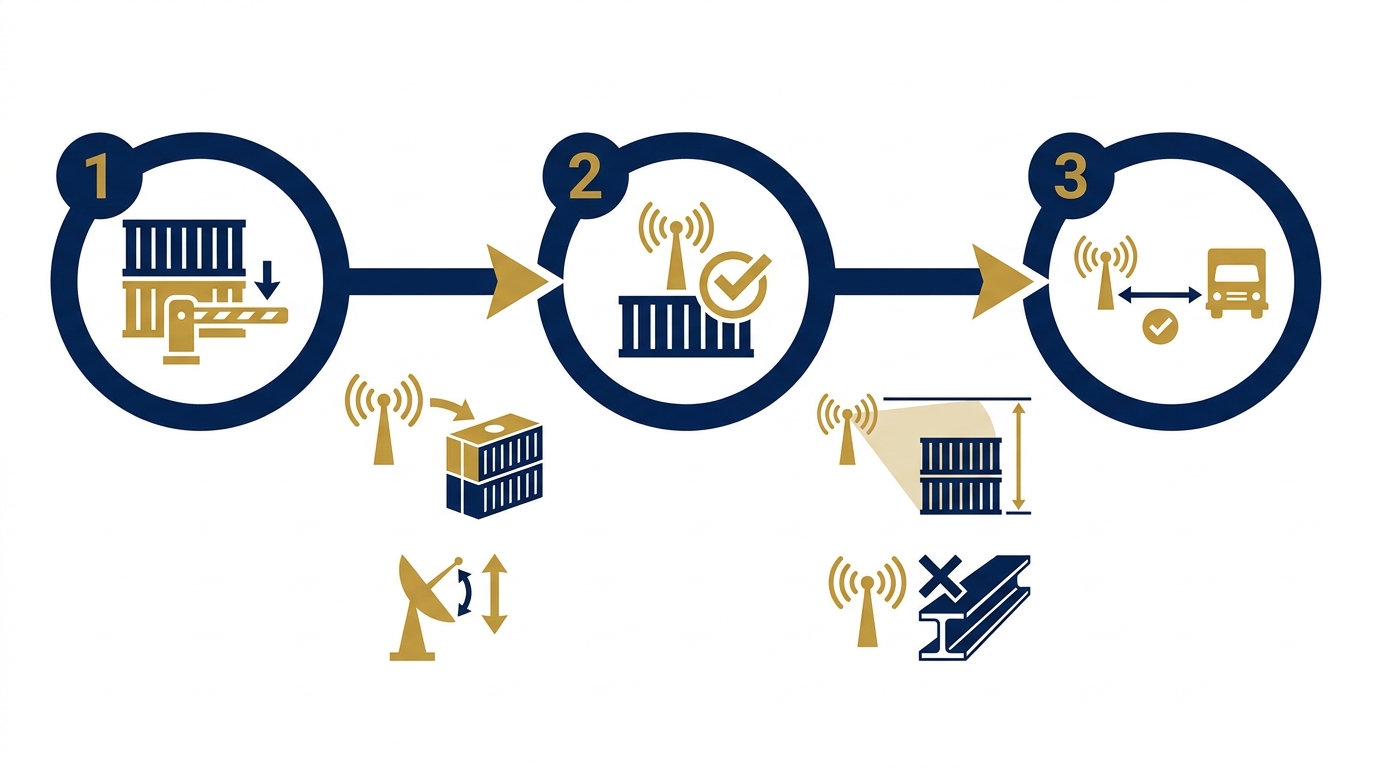
Antenna placement determines signal coverage and tag read accuracy. For container gates, install antennas symmetrically on both sides of the gate, 2.5-3.5m above ground, tilted 30-45 degrees to cover the full container height without interference from metal.
Antenna placement principles for warehouse & container gates:
- Install 2 a
Cần tư vấn thiết bị/giải pháp cụ thể?
Việt POS phản hồi trong 30 phút · Hotline 4 vùng · Khảo sát miễn phí.
