
Mục lục bài viết (10)
- Why do Vietnamese fashion chains need to switch from manual inventory to RFID?
- What steps are involved in the RFID implementation process for a fashion store?
- What are the specific benefits of implementing RFID for a fashion chain?
- How does fashion RFID work in a real store environment?
- Which RFID equipment should be chosen for a fashion store?
- Special technical considerations when implementing RFID for fashion
- How much does RFID investment cost for a fashion store?
- How to integrate RFID with existing POS/WMS systems?
- What frequency and compliance regulations apply to UHF RFID in Vietnam?
- Frequently asked questions about RFID implementation for fashion stores
UHF RFID is an automatic identification solution using radio waves, allowing simultaneous reading of hundreds of tags on clothing racks in 3-5 seconds without scanning each barcode. For Vietnamese fashion retail chains, this technology is being widely deployed to solve the problem of manual inventory that takes 3-5 days per month and stock discrepancies of 8-15%.
Implementing RFID for a fashion store involves 7 steps: site survey, selecting compliant UHF equipment (918.4–923 MHz, ≤500 mW ERP), tagging, software configuration, staff training, pilot run, and scaling. The entire process takes 4-8 weeks, reducing inventory time from 3-5 days to just a few hours and increasing stock accuracy to over 99%.
Table of Contents
- Why do Vietnamese fashion chains need to switch from manual inventory to RFID?
- What steps are involved in the RFID implementation process for a fashion store?
- What are the specific benefits of implementing RFID for a fashion chain?
- How does fashion RFID work in a real store environment?
- Which RFID equipment should be chosen for a fashion store?
- Special technical considerations when implementing RFID for fashion
- How much does RFID investment cost for a fashion store?
- How to integrate RFID with existing POS/WMS systems?
- What frequency and compliance regulations apply to UHF RFID in Vietnam?
- Frequently asked questions about RFID implementation for fashion stores
Why do Vietnamese fashion chains need to switch from manual inventory to RFID?
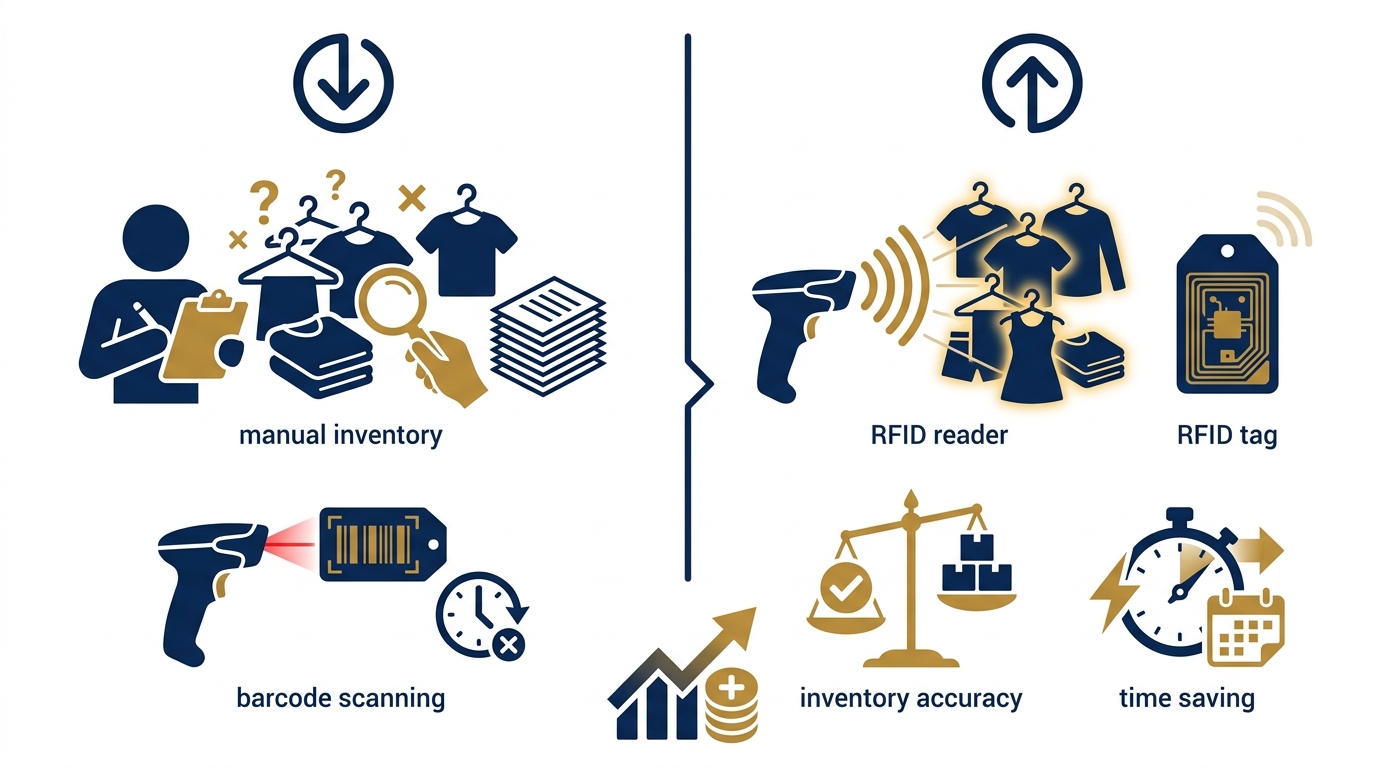
Manual inventory in fashion stores typically takes 3-5 days per cycle, requiring store closures or overtime, while accuracy only reaches 85-92% due to operational errors, loss, or code mix-ups. UHF RFID reads 200-400 tags per second simultaneously, enabling a full inventory of a 100m² store in 30-45 minutes and increasing accuracy to over 99%.
⚠ 4 typical problems that fashion chains are facing:
- ⚠ Manual inventory takes 3-5 days/month: Staff must stop sales, scan each barcode on each product, causing operational disruption and increasing labor costs.
- ⚠ Stock discrepancies of 8-15%: Losses from theft, misplacement, incorrect code entry, or wrong deliveries between branches cause system data to not match reality.
- ⚠ No control over warehouse and floor stock: Difficult to determine which products are in the warehouse and which are on display, leading to out-of-stock sizes and colors without knowing.
- ⚠ Difficult traceability when complaints arise: Cannot identify batch, entry date, or issuing branch when customers report quality issues or when product recalls are needed.
What steps are involved in the RFID implementation process for a fashion store?
Related Products
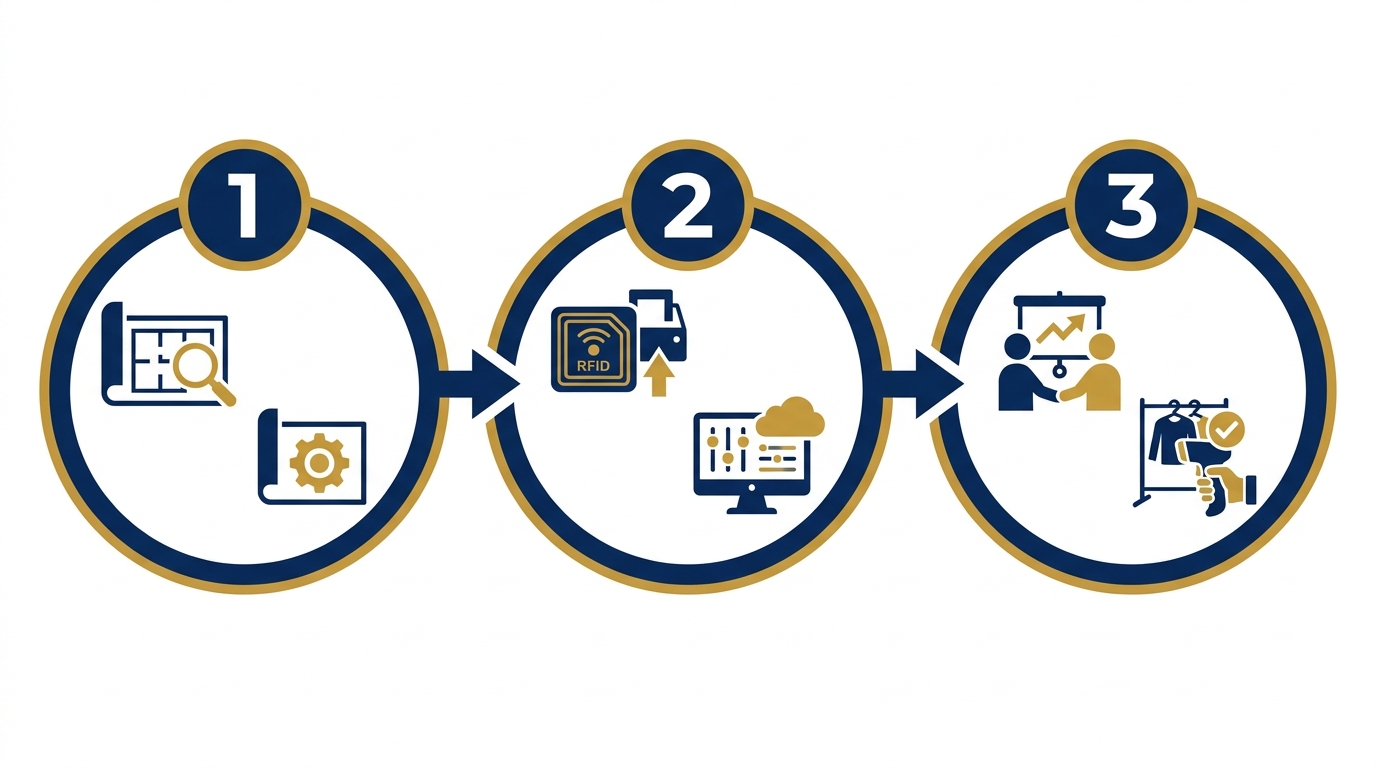
The RFID implementation process for a fashion store consists of 7 steps: site survey, solution design and tag selection, tagging and encoding, software configuration and POS/WMS integration, staff training, pilot operations, and scaling across the chain. The entire process takes 4-8 weeks depending on scale.
- 📋 Step 1 — Site Survey (Week 1): Assess store area, number of SKUs, current inbound-outbound-inventory processes, existing POS/WMS infrastructure, and define specific goals (reducing inventory time, increasing accuracy, theft prevention).
- 🔧 Step 2 — Solution Design and Tag Selection (Week 2): Determine the appropriate tag type (paper tags for labels, hard plastic tags for high-value items), select handheld or fixed readers, antennas, and management software. Ensure equipment complies with the UHF band 918.4–923 MHz, power ≤500 mW ERP per Circular 08/2021 of the Ministry of Information and Communications.
- 🏷️ Step 3 — Tagging and Encoding (Weeks 2-3): Attach tags to each product, encode EPC (Electronic Product Code) containing SKU, size, color, and batch number. Test read rates on 100 tags to ensure over 95% before large-scale deployment.
- 💻 Step 4 — Software Configuration and POS/WMS Integration (Weeks 3-4): Install RFID software, connect readers, integrate data with existing POS/WMS systems. Set up automatic synchronization processes for inbound, sales, and inter-branch transfers.
- 👥 Step 5 — Staff Training (Week 4): Conduct 2-3 training sessions for store managers and cashiers on handheld reader inventory operations, read error handling, and confirmation procedures before recording.
- 🧪 Step 6 — Pilot Operations (Weeks 5-6): Run a pilot at 1-2 representative stores for 2 weeks, measuring inventory time, read rates, and before-after stock discrepancies. Adjust antenna placement or tag types if needed.
- 📈 Step 7 — Scaling (Weeks 7-8): Deploy across the entire chain, establish standard operating procedures (SOPs), periodic inventory schedules, and evaluate effectiveness after 1-2 months.
What are the specific benefits of implementing RFID for a fashion chain?

RFID delivers 5 key benefits: reducing inventory time from 3-5 days to 30-45 minutes per store, increasing stock accuracy to over 99%, reducing phantom inventory, improving shopping experience by always having sizes/colors in stock, and supporting theft prevention through integrated EAS gates.
Inventory of a 100m² store takes only 30-45 minutes instead of 3-5 days, without closing the store or overtime.
Simultaneous reading eliminates manual errors, ensuring stock data matches reality.
Early detection of lost, stolen, or mislabeled items reduces over-ordering costs.
Always have sizes and colors on the shelf; staff can accurately advise on available stock.
Integrate RFID EAS gates at entrances/exits, alerting immediately when unpaid items pass through.
How does fashion RFID work in a real store environment?
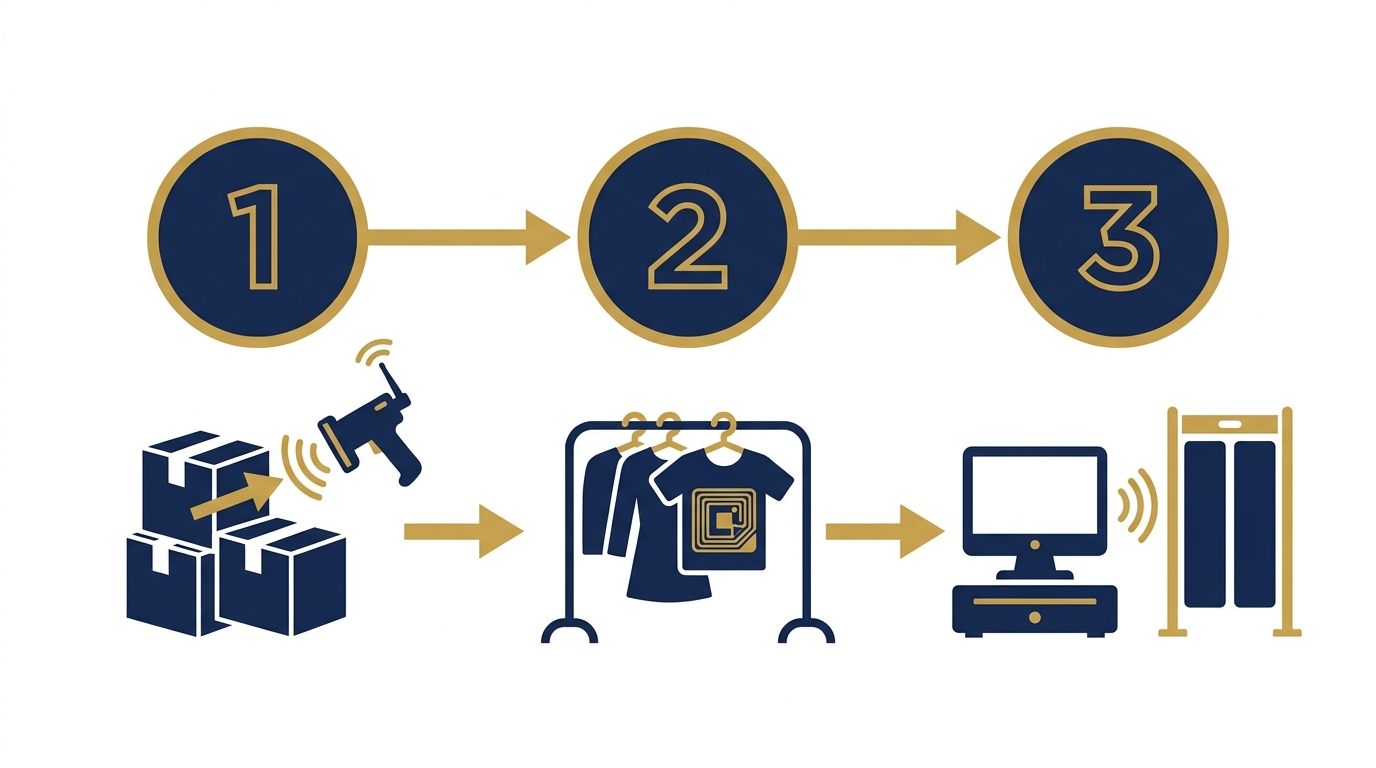
When goods arrive at the store, staff use a handheld reader to quickly scan and automatically receive inventory. When a customer purchases, the POS system records the sale and deactivates the tag. Periodic inventory only requires walking around the store with the reader; all products are read within minutes.
- 📥 Inbound: When goods arrive, staff scan the entire shipment with a handheld reader in 1-2 minutes, automatically updating inventory without manual counting. The system compares against the delivery note and flags discrepancies immediately.
- 🛒 Sales: At the checkout counter, the RFID reader automatically reads all tags in the basket, the POS displays the items, and the cashier confirms. The system deactivates the tags to prevent EAS gate alarms.
- 📋 Inventory: Staff walk through the store with a handheld reader; all items on racks and shelves are read in 30-45 minutes. The system compares against system data and generates a discrepancy report.
- 🔄 Transfers: When transferring goods between branches, staff scan the items, the system updates both branches' inventory automatically, eliminating paperwork and manual entry errors.
- 🔍 Search: When a customer asks for a specific size/color, staff use the reader to locate the item on the sales floor or in the back room within seconds, instead of manually searching.
Which RFID equipment should be chosen for a fashion store?

For a fashion store, the essential equipment includes: UHF RFID tags (paper tags for labels, hard tags for high-value items), a handheld reader for inventory and search, a fixed reader with antenna for EAS gates, and an RFID printer for on-site tag encoding. All devices must comply with Vietnamese UHF regulations.
| Equipment | Recommended Model | Key Specifications | Use Case |
|---|---|---|---|
| Handheld Reader | Zebra MC3390R | Read range up to 10m, IP65, Android | Inventory, search, inbound/outbound |
| Fixed Reader | Zebra FX9600 | 4 ports, up to 600 tags/s | EAS gates, conveyor reading |
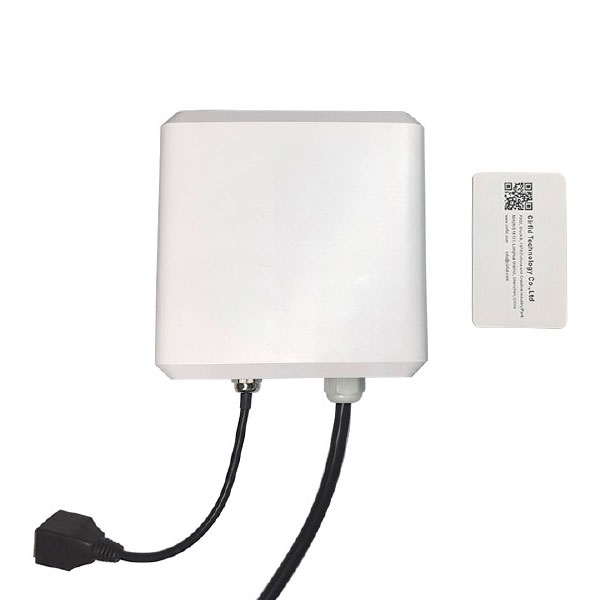
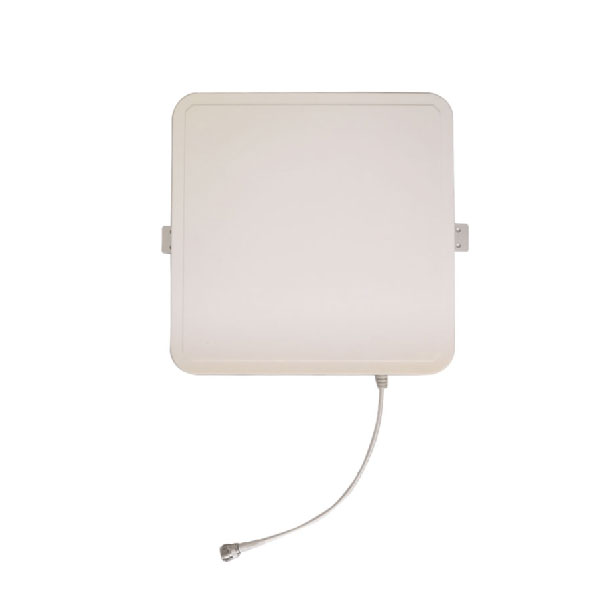
| Antenna | VP-A909 | 9dBi, IP67, 902-928 MHz | EAS gates, dock door reading |
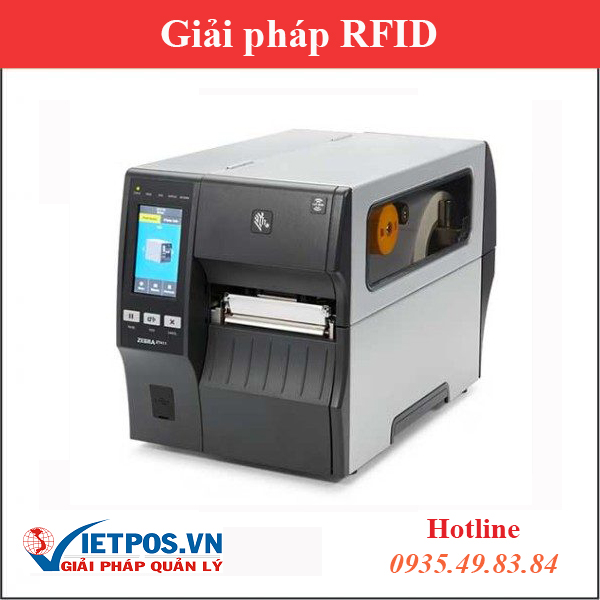
| RFID Printer | Zebra ZT411 | 203 dpi, 356 mm/s, supports RFID encoding | On-site tag printing and encoding |
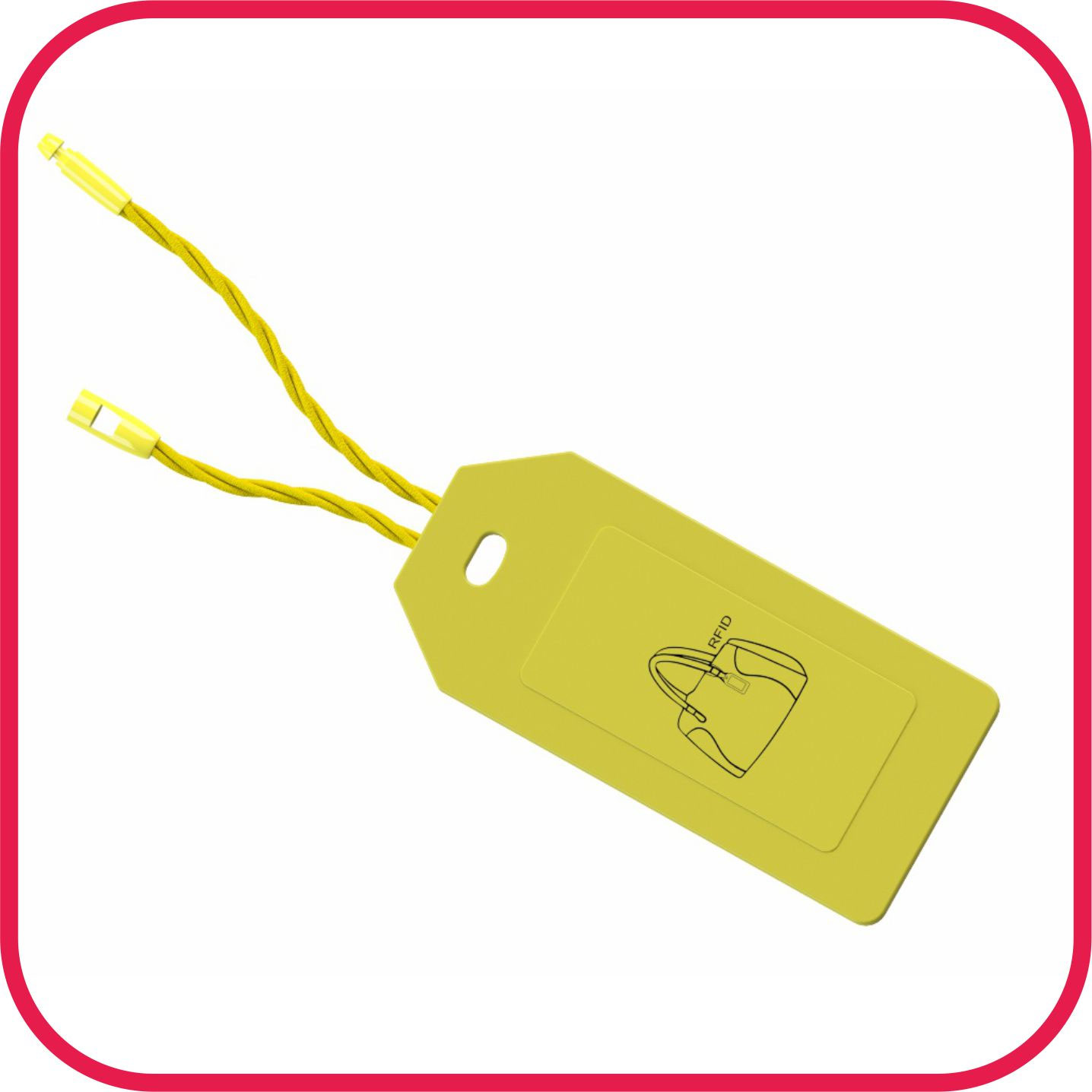
| Paper Tag | VP-RI947 | 860-960 MHz, 0.3mm thick | Attach to garment labels |
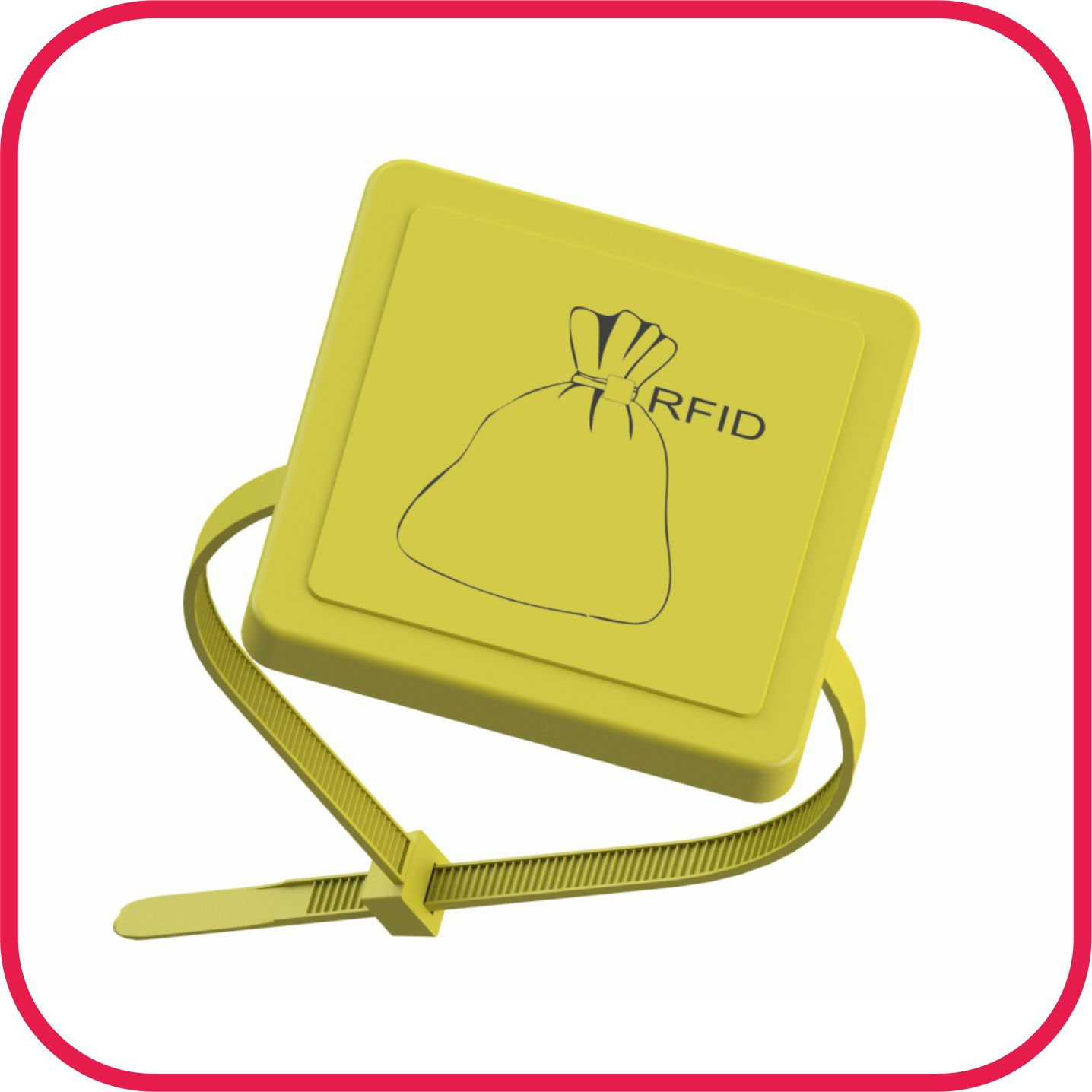
| Hard Tag | RCT-05/03 | Reusable, tamper-proof | High-value items, anti-theft |
Special technical considerations when implementing RFID for fashion

Fashion stores face unique challenges: metal hangers and racks reflect RF waves, liquids (perfume, fabric softener) absorb signals, and dense stacking reduces read rates. Solutions include using specialized tags for metal, adjusting antenna placement, and testing read rates in real conditions.
⚠ 4 technical limitations to watch out for:
- ⚠ Metal interference: Metal hangers, racks, and foil packaging reflect RF waves, reducing read range and accuracy. Use foam spacers or specialized on-metal tags.
- ⚠ Liquid absorption: Liquids (perfume, cosmetics, fabric softener) absorb RF energy, weakening signals. Test read rates on products with liquid components.
- ⚠ Dense stacking: When garments are stacked tightly, read rates drop. Maintain spacing or use shelf antennas for better coverage.
- ⚠ Tag placement: Tags placed near metal buttons or zippers may fail. Position tags away from metal components.
How much does RFID investment cost for a fashion store?

For a 100m² fashion store with 5,000 SKUs, the initial investment ranges from 150-300 million VND, including handheld readers, fixed readers for EAS gates, antennas, tags, and software. Tag costs range from 2,000-5,000 VND per tag depending on type and volume.
| Cost Item | Estimated Cost (VND) | Notes |
|---|---|---|
| Handheld Reader (2 units) | 40-80 million | Zebra MC3390R or equivalent |
| Fixed Reader + Antennas (EAS gate) | 30-60 million | Zebra FX9600 + 2 antennas |
| RFID Printer | 30-50 million | Zebra ZT411 or equivalent |
| Tags (5,000 units) | 10-25 million | Paper tags 2,000-5,000 VND/unit |
| Software license + integration | 20-50 million | Includes POS/WMS integration |
| Installation, training, support | 10-20 million | Site survey, setup, staff training |
| Total | 140-285 million | Varies by scale and brand |
How to integrate RFID with existing POS/WMS systems?

Integration is done via API or file-based exchange. If the POS/WMS has an API, real-time two-way synchronization is set up: RFID reads update inventory, and POS sales deactivate tags. If no API, CSV/Excel files are imported/exported periodically.
- 🔌 API Integration: For POS/WMS with API, VietPOS develops a middleware that connects RFID readers to the system. Inventory counts, sales, and transfers are updated in real-time.
- 📁 File-based Integration: For systems without API, RFID software exports inventory counts as CSV/Excel files, which are then imported into the POS/WMS. This is simpler but requires manual steps.
- 🔄 Data Mapping: Ensure SKU codes, sizes, colors, and batch numbers in the RFID system match the POS/WMS data structure. This is critical for accurate synchronization.
- 🧪 Testing: Run parallel tests for 1-2 weeks to verify data accuracy before going live.
What frequency and compliance regulations apply to UHF RFID in Vietnam?

In Vietnam, UHF RFID devices must operate in the 918.4–923 MHz band with maximum power of 500 mW ERP, as per Circular 08/2021 of the Ministry of Information and Communications. Devices must have type approval (hợp quy) and be declared for conformity before use.
📌 Key regulatory points:
- Frequency band: 918.4–923 MHz (UHF)
- Maximum power: ≤500 mW ERP
- Regulation: Circular 08/2021/TT-BTTTT
- Compliance: Type approval (hợp quy) and conformity declaration required
- Import: Devices must be certified before importation
Frequently asked questions about RFID implementation for fashion stores
Can RFID read through stacked clothing in the warehouse?
Yes, UHF RFID can read through fabric, even when clothes are stacked or densely hung. However, read rates decrease as the number of fabric layers increases. Real-world tests show that with 20-30 stacked items, read rates still reach 90-95%. For optimal performance, hang products on racks rather than stacking them in closed boxes.
Do RFID tags attached to clothing affect product quality?
Thin paper tags (0.3-0.5mm thick) attached to pre-printed labels or with specialized adhesive do not affect fabric quality. For high-end products, use hard plastic tags attached with plastic ties or pin fasteners, which can be removed at purchase. Common attachment points are neck labels, side seams, or inner stitching — areas that do not come into direct contact with skin.
Do staff need special skills to use RFID equipment?
No. Modern RFID devices are designed to be as simple as smartphones. Staff only need 2-3 training sessions (1-2 hours each) to become familiar with scanning, reading results, and basic error handling. Standard operating procedures (SOPs) provide step-by-step guidance, making it easy for new employees to follow.
Can RFID be used if the current POS system does not support it?
Absolutely. The RFID system operates independently of the POS; inventory data is exported as CSV/Excel files and imported into the POS. If the POS has an API, VietPOS will support automatic two-way integration. If the POS has no API, staff simply import the inventory file — a 5-10 minute operation each time, still a significant saving compared to 3-5 days of manual counting.
How long does RFID implementation take for a fashion store?
For a single store of 50-200m², the entire process from survey to official operation takes 4-6 weeks. Specifically: survey 3-5 days, design and tag selection 1 week, tagging and encoding 3-5 days (depending on product volume), software configuration and POS integration 1-2 weeks, staff training 1 week, pilot run 2 weeks. For a chain of 5-10 stores, the timeline extends to 8-12 weeks due to scaling and training at each branch.
Does RFID completely replace barcodes in fashion stores?
Not entirely. RFID supplements and upgrades inventory, inbound, and outbound processes, but barcodes are still needed for certain operations such as printing invoices, scanning at the cashier for single-item purchases, or when the POS system does not support RFID. In practice, businesses still print barcodes on sales invoices as required by tax regulations, while RFID handles internal inventory management.
How to handle RFID tags when customers purchase products?
When a customer pays, staff scan the tag using an RFID reader at the checkout counter. The system automatically deactivates the tag to prevent EAS gate alarms when the customer leaves. If the product is exchanged or returned, staff reactivate the tag and update inventory. For paper tags attached to labels, they can be removed at purchase — however, this option is more labor-intensive and does not leverage the anti-theft feature.
What is the annual maintenance cost for an RFID system?
Maintenance costs typically account for 8-12% of equipment value per year, including hardware maintenance (readers, EAS gates, antennas), software updates, remote and on-site technical support. Disposable RFID tags incur no maintenance costs. Additionally, budget for 5-10% tag loss or damage during operations, especially when products are washed or ironed at high temperatures.
Cần tư vấn thiết bị/giải pháp cụ thể?
Việt POS phản hồi trong 30 phút · Hotline 4 vùng · Khảo sát miễn phí.
