Mục lục bài viết (10)
- Why are wayfinding kiosks an untapped in-building advertising channel?
- Model 1: Leasing display slots by time slot — The most stable revenue source
- Model 2: Selling monthly content packages — Optimized for in-building businesses
- Model 3: Strategic partner collaboration — Selling annual packages
- Model 4: Integrating ads into interactive maps — The most natural experience
- Model 5: Revenue sharing with brands — No risk, no sales pressure
- How to price kiosk advertising based on actual data
- Technical considerations for running ads on wayfinding kiosks
- Related Articles
- FAQs about monetizing in-building wayfinding displays
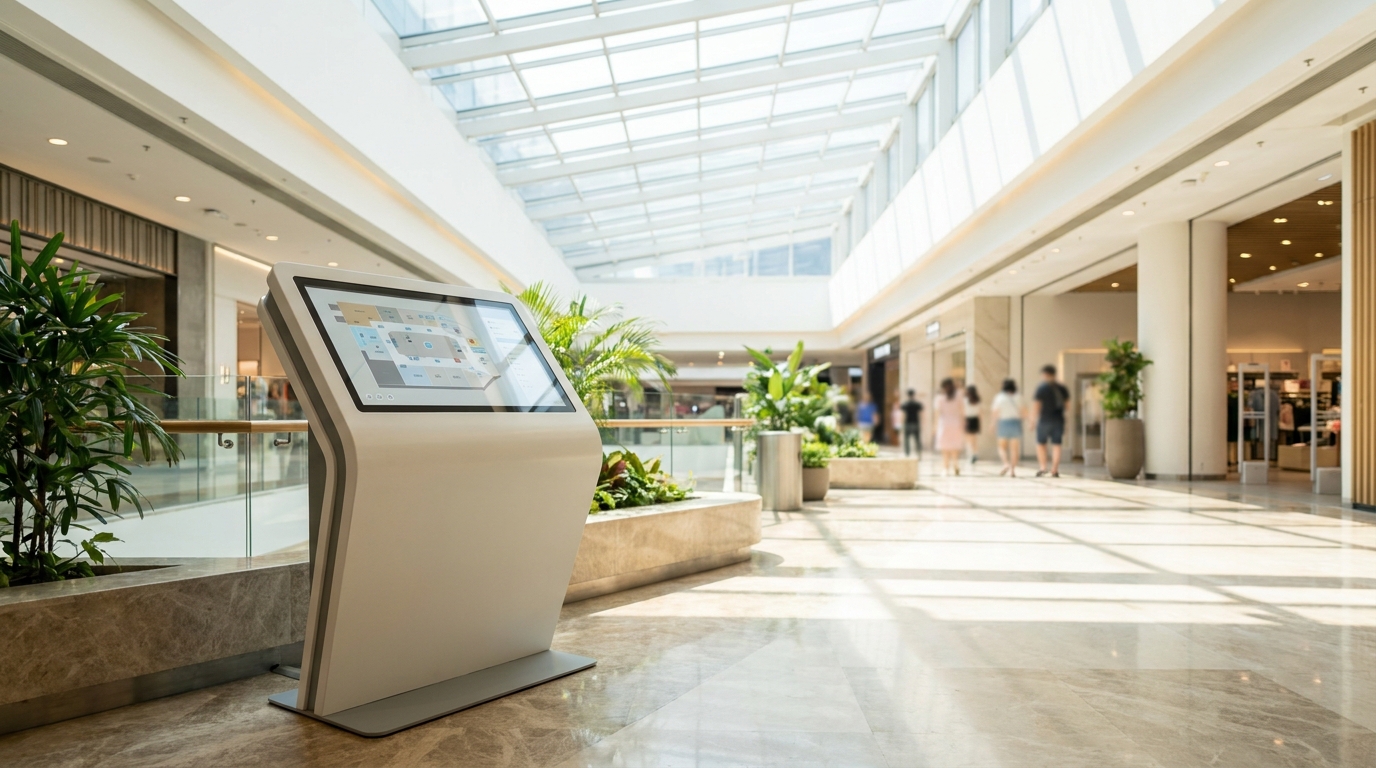
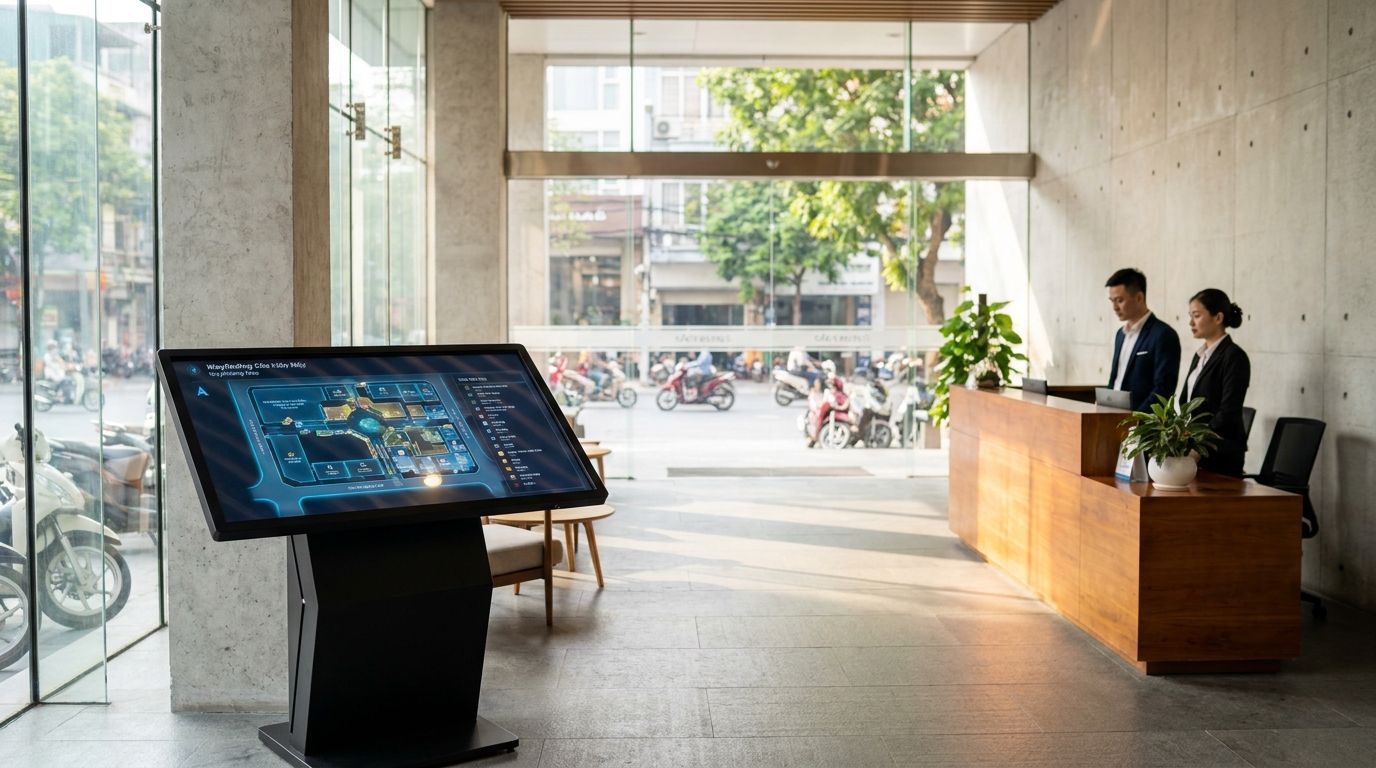
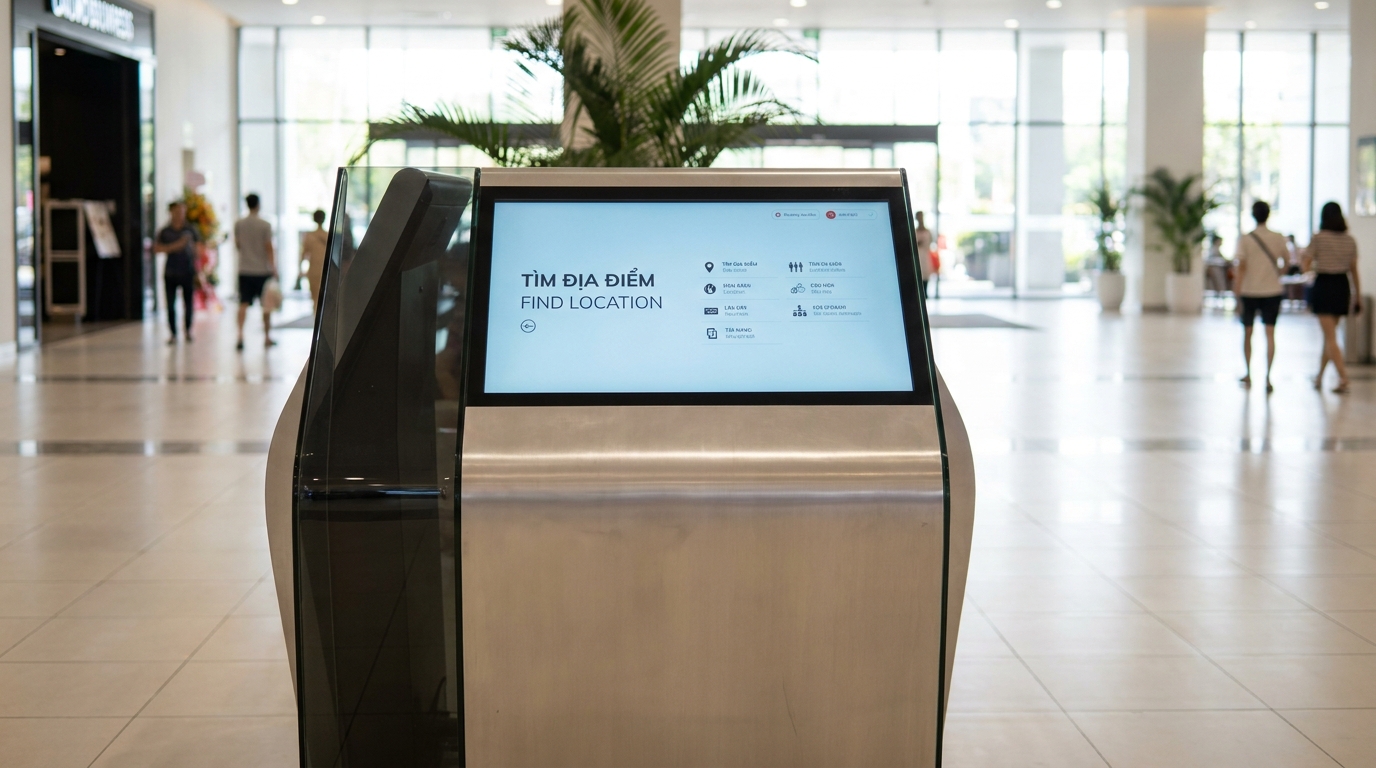
Wayfinding kiosks are solutions that integrate touchscreens, digital map software, and network infrastructure, deployed in building lobbies and shopping malls to help visitors navigate. In Vietnam, these systems are increasingly installed in Grade A office buildings, private hospitals, and shopping malls — but most are limited to wayfinding functions, leaving the potential of in-building advertising revenue untapped.
Turning wayfinding displays into an in-building advertising channel is a strategy that helps building management recover kiosk investment in 12-18 months. The 5 revenue models include: hourly display slot leasing, monthly content packages, strategic partner collaborations, integrating ads into interactive maps, and revenue sharing with brands. Pricing is based on actual impressions from sensors, not subjective judgment.
Table of Contents
- Why are wayfinding kiosks an untapped in-building advertising channel?
- Model 1: Leasing display slots by time slot — The most stable revenue source
- Model 2: Selling monthly content packages — Optimized for in-building businesses
- Model 3: Strategic partner collaboration — Selling annual packages
- Model 4: Integrating ads into interactive maps — The most natural experience
- Model 5: Revenue sharing with brands — No risk, no sales pressure
- How to price kiosk advertising based on actual data
- Technical considerations for running ads on wayfinding kiosks
- Related Articles
- FAQs about monetizing in-building wayfinding displays
Why are wayfinding kiosks an untapped in-building advertising channel?
Why are wayfinding kiosks an untapped in-building advertising channel?
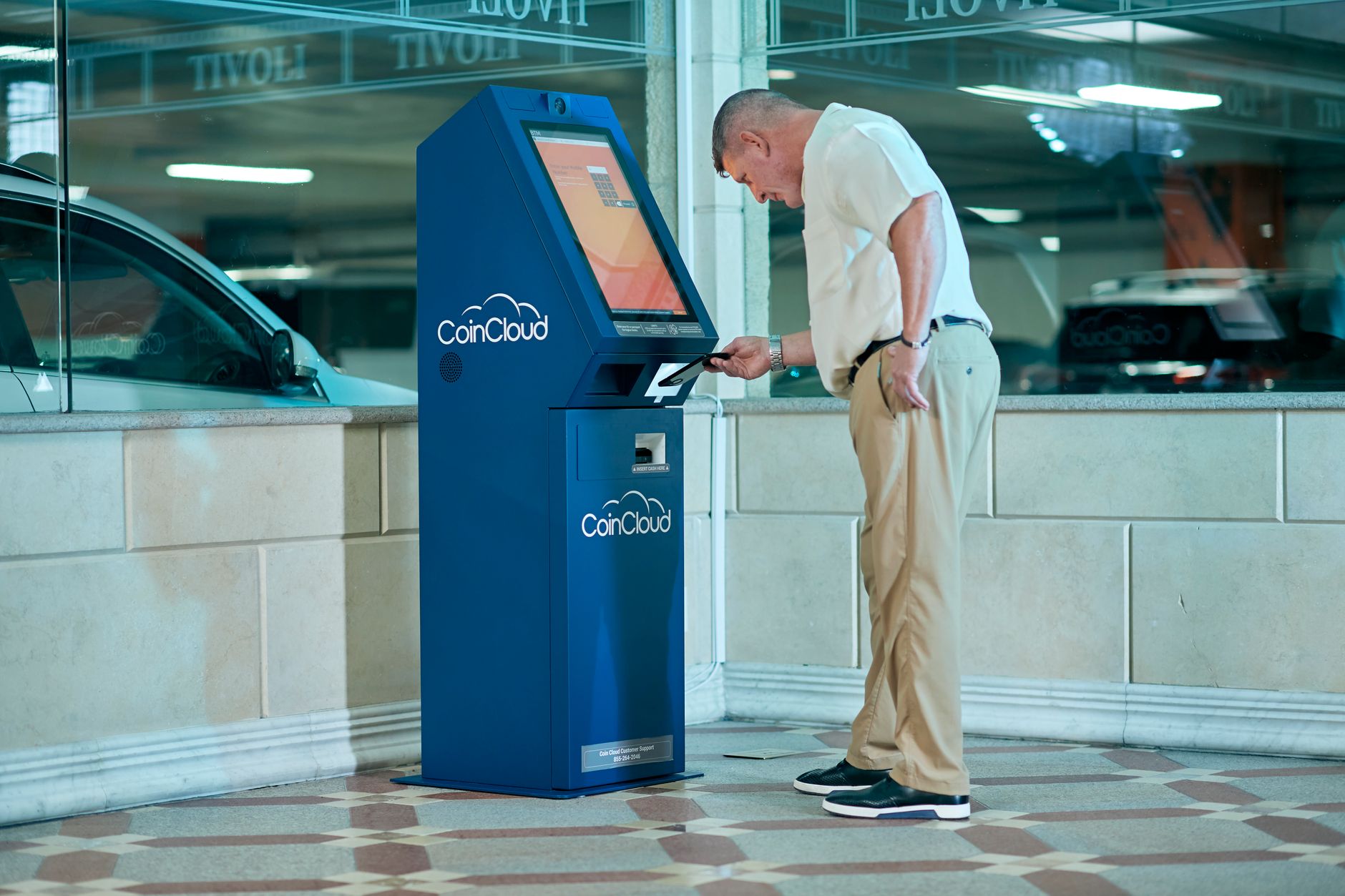
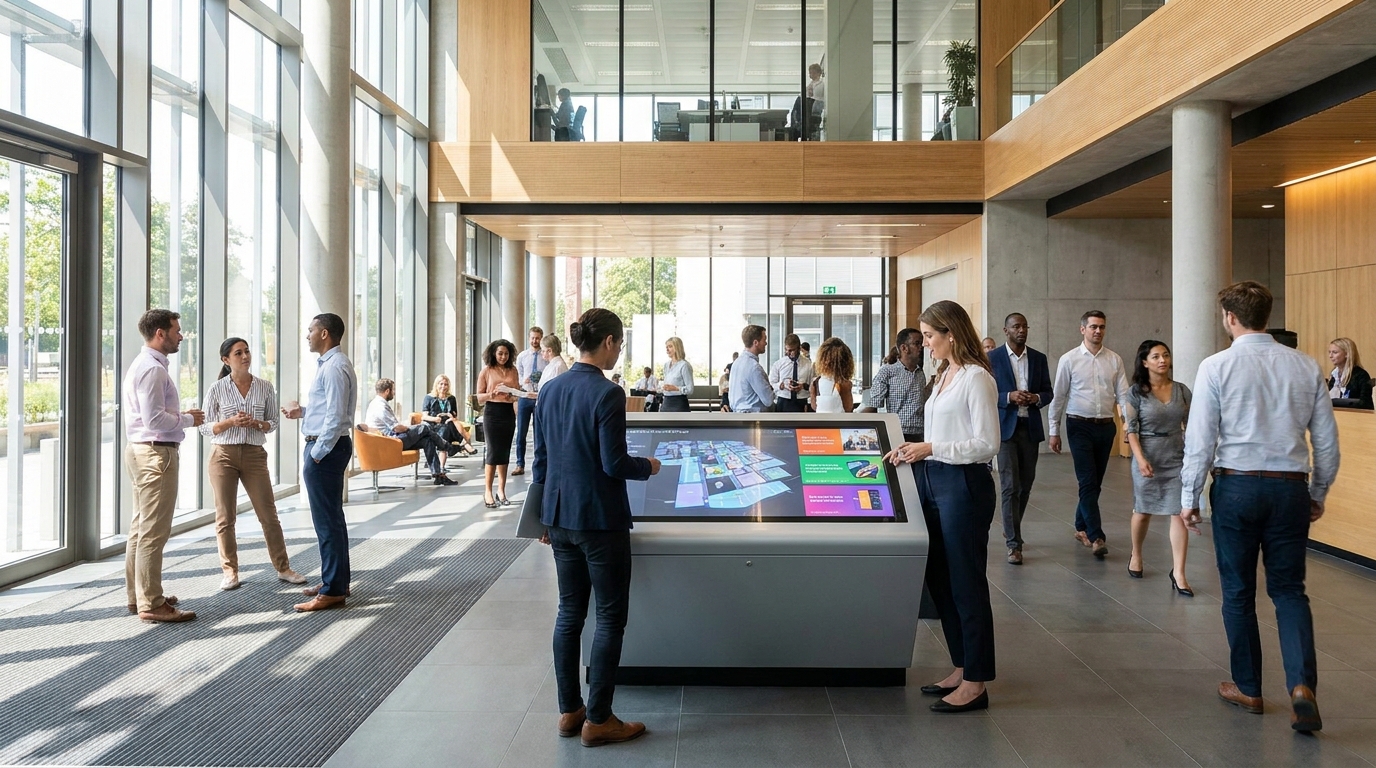
Wayfinding kiosks are placed in high-traffic areas such as main lobbies and elevator zones — where visitors must stop and interact to find their way. This is a rare advertising touchpoint that viewers actively approach, unlike static signage that is often ignored.
Unlike static printed signage, kiosk screens have three clear competitive advantages:
- Measurable impressions: Sensors or analytics software on the kiosk record interaction counts and dwell time — this data provides a transparent basis for ad pricing.
- Content updates without reprinting: Changing floor maps, store information, or ad banners is done remotely via centralized management software, saving printing costs each quarter.
- Stable operation during network outages: Offline kiosk systems allow ad content to continue displaying according to pre-programmed schedules when internet connectivity fails.
A Grade B office building in Ho Chi Minh City with 3,000-5,000 daily visitors can generate 90,000-150,000 impressions per month from 1-2 kiosks placed in the lobby — numbers compelling enough for brands to invest.
Model 1: Leasing display slots by time slot — The most stable revenue source
Related Products
Model 1: Leasing display slots by time slot — The most stable revenue source This is the simplest and most common model: building management leases part or all of the kiosk screen to brands during specific time slots.
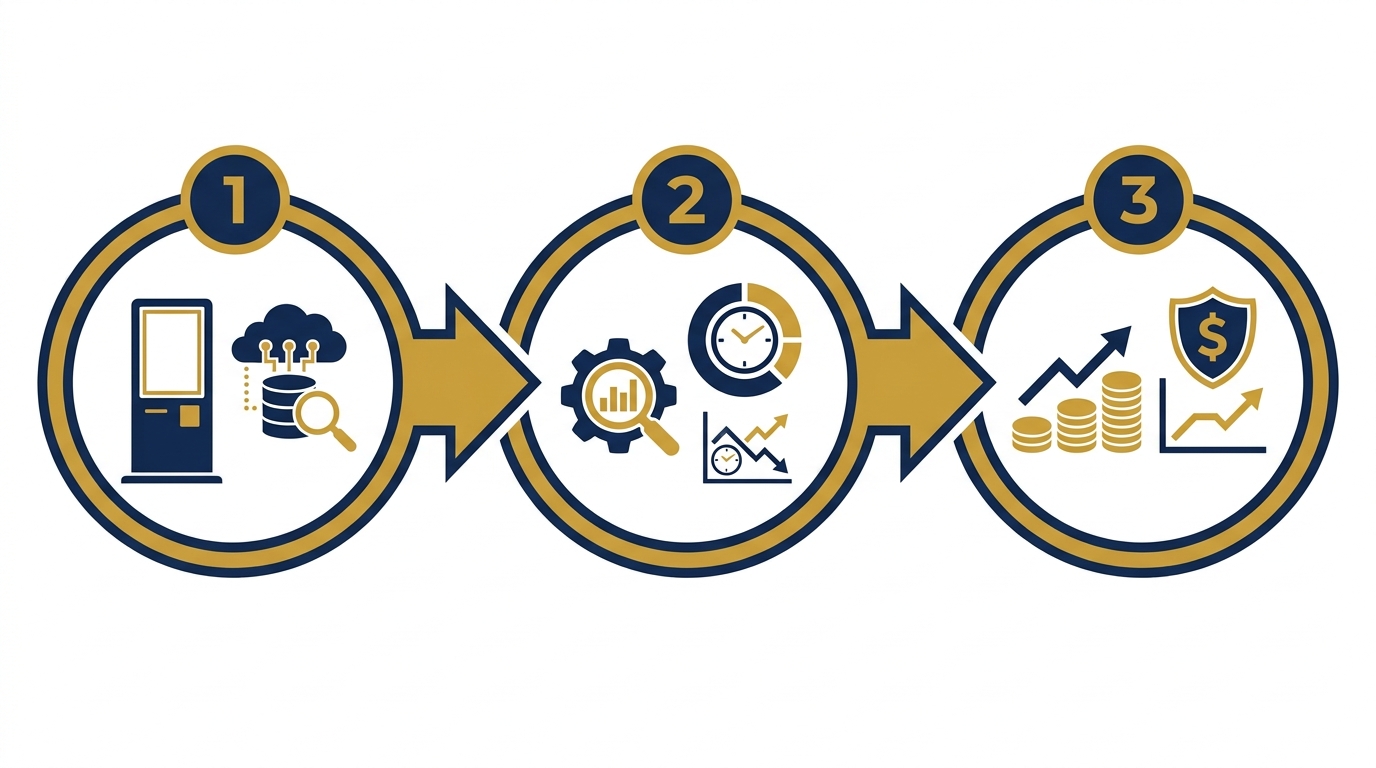
This is the simplest and most common model: building management leases part or all of the kiosk screen to brands during specific time slots. Pricing is based on impressions or time slots, depending on the agreement.
Implementation process for the display slot leasing model:
- Survey impression data: Run the kiosk for 2-4 weeks, collecting actual interaction data from analytics software.
- Segment time slots: Divide the day into 3-4 slots: morning peak (7am-9am), business hours (9am-5pm), evening rush (5pm-8pm).
- Build pricing table: Peak slot prices are typically 2-3 times higher than off-peak slots due to higher viewer density.
- Sign quarterly contracts: Short-term contracts of 3-6 months allow flexible price adjustments based on actual data.
- Remote content management: Operations staff push each brand's ad content to the correct time slots via centralized management software.
This model suits banks, insurance companies, and English centers — organizations with quarterly marketing budgets that need to reach high-income customers within the building.
Model 2: Selling monthly content packages — Optimized for in-building businesses
Model 2: Selling monthly content packages — Optimized for in-building businesses Unlike the slot leasing model, monthly content packages allow small businesses within the building — such as coffee shops, restaurants, and laundromats — to rent a fixed display slot, rotating throughout the month at a lower cost.

Unlike the slot leasing model, monthly content packages allow small businesses within the building — such as coffee shops, restaurants, and laundromats — to rent a fixed display slot, rotating throughout the month at a lower cost.
The primary targets of this model are in-building businesses: convenience stores, gyms, spas, and restaurants within the building. They need to promote offers and introduce new services to the very residents or office workers using the kiosk.
How to implement effective content packages:
- Divide the screen into 4-6 rotating slots, each displaying for 10-15 seconds per rotation.
- Charge monthly fees: 2-5 million VND/slot/month depending on kiosk location and foot traffic.
- Combo discounts: businesses committing to 3 consecutive months receive a 10-15% discount.
- Include simple static banner design services to increase contract closing rates.
This model generates steady monthly revenue, helping management easily forecast cash flow and quickly fill the screen's display capacity.
Model 3: Strategic partner collaboration — Selling annual packages
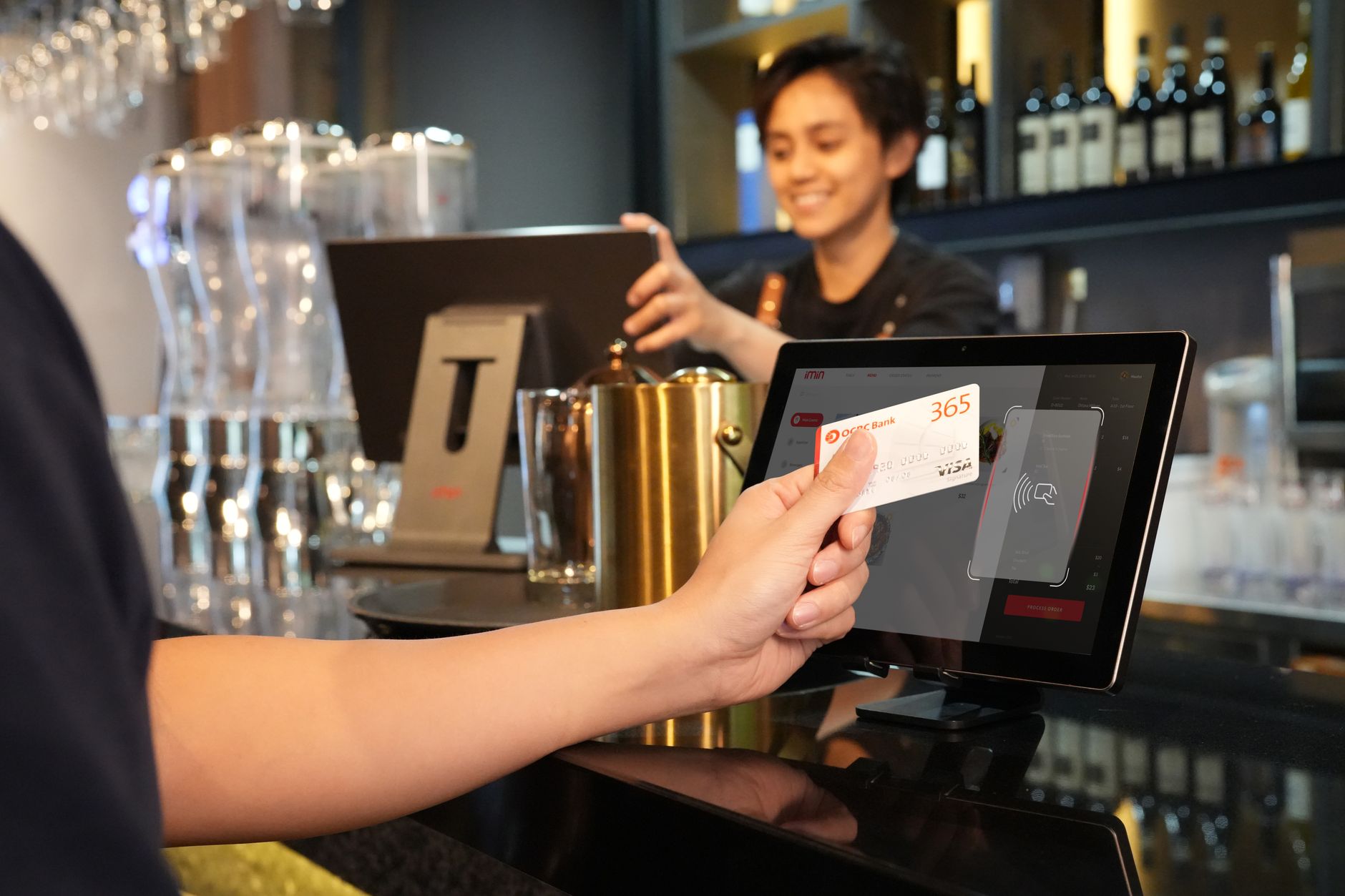
For large brands with substantial marketing budgets, the strategic partnership model offers annual packages with premium placement and additional benefits.
This model goes beyond simple ad slots, offering:
- Priority placement in high-visibility positions on the kiosk interface.
- Integration of brand content into wayfinding features, such as sponsored destination icons.
- Data reports on impressions and engagement for the brand's campaign analysis.
- Co-branding opportunities for special events or promotions within the building.
Annual packages provide stable, predictable revenue for the building and build long-term relationships with major advertisers.
Model 4: Integrating ads into interactive maps — The most natural experience
Integrating ads into interactive maps is the most natural advertising model, as it seamlessly blends promotional content with the wayfinding experience.

This model involves placing sponsored pins, branded icons, or promotional pop-ups within the interactive map interface. When users search for a category (e.g., "coffee"), sponsored results appear at the top with a subtle brand indicator.
Benefits of this model:
- High engagement: Users actively interact with the map, making ads more likely to be noticed.
- Contextual relevance: Ads are shown based on user intent, increasing conversion potential.
- Non-intrusive: Ads feel like part of the experience, not disruptive interruptions.
Pricing can be based on clicks, impressions, or a flat monthly fee for sponsored placement.
Model 5: Revenue sharing with brands — No risk, no sales pressure
Revenue sharing is a low-risk model where the building earns a percentage of sales or leads generated from kiosk-driven promotions.

In this model, the building partners with brands to run promotions (e.g., discount codes, loyalty sign-ups) and earns a commission on each conversion. This aligns incentives and reduces upfront costs for advertisers.
Implementation steps:
- Identify brands with products or services relevant to building occupants.
- Set up tracking mechanisms (e.g., QR codes, promo codes) to attribute conversions.
- Agree on commission rates (typically 10-20% of sales).
- Monitor performance and adjust campaigns based on data.
This model is ideal for buildings with high foot traffic and a clear understanding of their audience's needs.
How to price kiosk advertising based on actual data
Pricing kiosk advertising should be based on actual impression data, not guesswork. Here's a step-by-step approach:
- Collect baseline data: Run the kiosk for 2-4 weeks to gather average daily impressions and interaction rates.
- Calculate CPM: Determine a cost per 1,000 impressions (CPM) based on your target revenue and market rates (typically 50,000-150,000 VND CPM for in-building ads).
- Set slot prices: Multiply CPM by expected impressions for each time slot to set a base price.
- Adjust for premium placement: Charge 20-50% more for high-traffic kiosks or prime positions.
- Offer package discounts: Provide 10-15% discounts for long-term commitments (quarterly or annual).
Regularly review pricing based on performance data and market demand.
Technical considerations for running ads on wayfinding kiosks
Running ads on wayfinding kiosks requires careful technical planning to ensure smooth operation and a positive user experience.
- Content management system: Use a centralized CMS to schedule and deploy ads across multiple kiosks.
- Bandwidth management: Ensure sufficient network bandwidth for content updates without affecting wayfinding performance.
- Display scheduling: Set rules to avoid ads interfering with wayfinding during peak usage times.
- Hardware durability: Choose industrial-grade displays rated for 24/7 operation.
- Analytics integration: Integrate ad tracking with kiosk analytics to measure impressions and engagement.
Proper technical setup ensures reliable ad delivery and accurate reporting.
Related Articles
FAQs about monetizing in-building wayfinding displays
What is the investment cost for a wayfinding kiosk system with advertising?
The investment cost for a 43-55 inch touchscreen wayfinding kiosk in Vietnam ranges from 25-60 million VND per unit, depending on hardware configuration and content management software. A turnkey package including hardware, software, and installation typically costs 40-80 million VND per kiosk. With advertising revenue of 3-10 million VND per kiosk per month, the expected payback period is 12-24 months.
How can I accurately measure ad impressions on kiosks?
Kiosk management software records interaction counts (touch events), session duration, and display counts for each ad banner. Some systems integrate proximity sensors to count people stopping in front of the screen. This data is reported daily/weekly/monthly, providing a basis for pricing and reconciliation with brands.
Can kiosks run ads even without internet?
Yes. Offline kiosk systems store ad content and playlists locally on the device. When internet connectivity is lost, the kiosk continues displaying content according to the pre-programmed schedule, ensuring ad revenue is not interrupted. When the network returns, the system automatically syncs new content from the central server.
What is the ad content approval process before going live?
The standard process includes 3 steps: (1) The brand submits banner design files in the required size and format; (2) Operations staff check image quality, content, and display duration; (3) An administrator approves and schedules playback via the centralized management software. The entire process is done remotely, no on-site visit needed.
How can I convince brands to spend on in-building kiosk ads?
The key is providing real data. Before pitching, run the kiosk for 2-4 weeks to collect impressions and interaction time. Build a pricing table based on CPM (cost per 1,000 impressions) rather than fixed prices. Offer a 1-month trial package at a discounted rate with a guaranteed minimum number of impressions.
Does updating floor maps when new stores open incur printing costs?
No. This is the biggest advantage of digital kiosks over static signage. When a new store opens, changes location, or renames, operations staff simply update the centralized management software, and the new content automatically syncs to all kiosks in the building within minutes. No printing costs, no need to send staff on-site to replace signs.
Cần tư vấn thiết bị/giải pháp cụ thể?
Việt POS phản hồi trong 30 phút · Hotline 4 vùng · Khảo sát miễn phí.
Bài viết cùng chủ đề