
Mục lục bài viết (5)
- Problems with manual raw material warehouses
- How does the RFID raw material warehouse solution work?
- When to invest in RFID for raw material warehouses? 3 deciding criteria
- ROI calculation formula for RFID raw material warehouse investment
- Cost comparison: Manual inventory vs RFID for raw material warehouse
RFID for raw material warehouses is an automation solution for controlling inbound, outbound, and inventory via radio waves, eliminating manual data entry and data discrepancies. For Vietnamese manufacturing enterprises, the question is not "whether to use RFID" but "when to invest to achieve the best ROI" — the answer lies in warehouse scale, labor count, and current discrepancy levels.
Investing in RFID for raw material warehouses is worthwhile when the warehouse has over 500 pallets, a team of 3 or more warehouse keepers, or inventory discrepancies exceeding 5%. ROI formula: (labor costs + discrepancy value + FIFO violation costs) annually compared to total investment costs. Break-even threshold is typically 18-24 months. UHF equipment must comply with 918.4-923 MHz per Circular 08/2021.
Table of Contents
- Problems with manual raw material warehouses
- How does the RFID raw material warehouse solution work?
- When to invest in RFID for raw material warehouses? 3 deciding criteria
- ROI calculation formula for RFID raw material warehouse investment
- Cost comparison: Manual inventory vs RFID for raw material warehouse
- Specific benefits of implementing RFID for raw material warehouses
- RFID applications in raw material warehouses for each manufacturing industry
- RFID raw material warehouse limitations: metals, liquids, frequency compliance
- Frequently asked questions about RFID raw material warehouse investment
Problems with manual raw material warehouses

Manually managed raw material warehouses face 4 main problem groups: inventory discrepancies of 8-15%, FIFO violations causing raw material expiration, low inventory counting productivity, and lack of realtime data for production planning. These costs silently eat into profit margins without being clearly recorded in the books.
⚠️ Inventory discrepancies of 8-15% — manual counting misses items, records wrong codes, or mixes up locations, leading to book data far from reality, causing raw material shortages for production or over-purchasing.
⚠️ FIFO violations causing raw material expiration — staff pick goods that expire before earlier batches, long-stored inventory gets discarded, these costs can account for 3-7% of raw material value each year.
⚠️ Low inventory counting productivity — a 500-pallet warehouse requires 2-3 days for a full count, during which staff cannot do other work, disrupting production rhythm.
⚠️ Lack of realtime data — purchasing and line-side transfer decisions are based on data that is 2-3 days old, leading to over-purchasing or delayed issuance.
How does the RFID raw material warehouse solution work?
Related Products
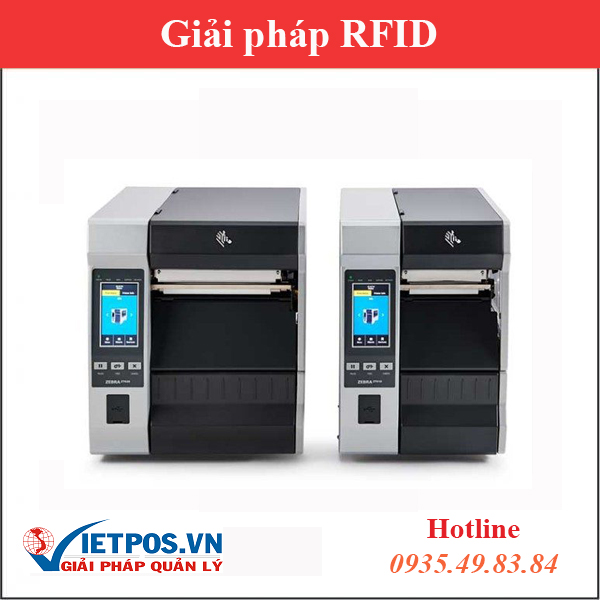
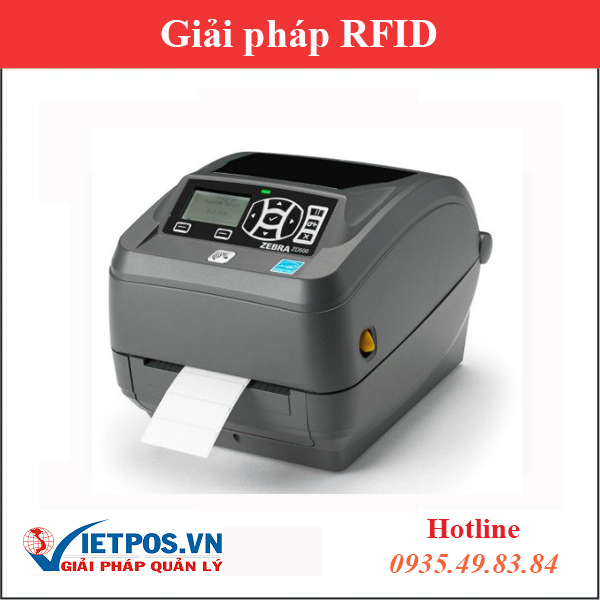
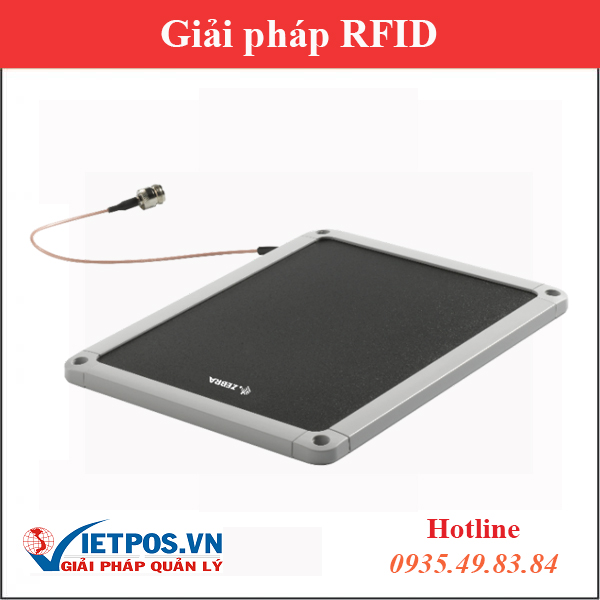



The RFID raw material warehouse system includes: UHF RFID tags attached to pallets/containers of raw materials, fixed read gates at inbound-outbound doors, handheld readers for inventory, and central management software. The operation process automates 5 basic steps, reducing manual operations to a minimum.
- Tag raw materials with RFID — each pallet/container is attached with a UHF tag containing a unique identifier, linked to system data (raw material code, inbound date, batch number, expiry date).
- Automatic inbound — forklifts pass through the fixed read gate, the system automatically records all pallet codes within 1-2 seconds, no need to stop and scan each code.
- Line-side issuance per FIFO — staff use handheld readers to confirm the raw material batch before issuing, the system prioritizes earlier inbound batches and warns if the wrong batch is selected.
- Fast inventory counting — walk through the warehouse area with a handheld reader, reading 200-400 tags/minute, a full 500-pallet warehouse is completed in 1-2 hours.
- Realtime data synchronization — every inbound, outbound, and inventory transaction updates instantly to the software, production planning always sees actual stock levels.
When to invest in RFID for raw material warehouses? 3 deciding criteria

Not every warehouse needs RFID immediately. The three most important criteria: warehouse scale over 500 pallets, a team of 3 or more warehouse keepers, and inventory discrepancies exceeding 5%. Meeting 2/3 criteria means you should start calculating specific ROI.
Criteria 1: Warehouse scale over 500 pallets
For warehouses under 200 pallets, the investment cost of fixed read gates may not be proportional to the benefits. From 500 pallets upward, manual inventory counting time increases exponentially, while RFID mainly costs only the tags.
Criteria 2: Team of 3 or more warehouse keepers
3 warehouse keepers with an average salary of 8-12 million VND/month create labor costs of 300-430 million VND/year. RFID reduces 30-50% of data entry operations, freeing 1-1.5 staff for higher-value work.
Criteria 3: Inventory discrepancies over 5%
A 5% discrepancy on a raw material warehouse valued at 10 billion VND is equivalent to 500 million VND per year. This is a large enough figure to justify an RFID investment of 150-400 million VND.
ROI calculation formula for RFID raw material warehouse investment

Basic ROI formula: (Total annual cost savings ÷ Total investment cost) × 100%. Three main savings sources: labor costs, inventory discrepancy value, and FIFO violation costs.
| Savings source | Calculation method | Example for 800-pallet warehouse |
|---|---|---|
| Labor costs | Hours of inventory/data entry saved × hourly wage | 1.5 staff × 120 million VND/year = 180 million VND |
| Inventory discrepancies | Raw material inventory value × reduced discrepancy rate | 10 billion VND × 4% = 400 million VND |
| FIFO violations | Annual value of expired raw materials that must be discarded | 10 billion VND × 2% = 200 million VND |
Total savings: 180 + 400 + 200 = 780 million VND/year. With an investment cost of 250-350 million VND, the break-even time is only 4-5 months — one of the fastest ROI investments in warehouse operations.
Cost comparison: Manual inventory vs RFID for raw material warehouse
The comparison table below is based on an 800-pallet warehouse, 4 warehouse keepers, operating 26 days/month. The figures reflect hidden costs that manual methods often overlook when calculating.
| Criteria | Manual | RFID |
|---|---|---|
| Full warehouse inventory time | 2-3 days | 1-2 hours |
Cần tư vấn thiết bị/giải pháp cụ thể?
Việt POS phản hồi trong 30 phút · Hotline 4 vùng · Khảo sát miễn phí.
