
Mục lục bài viết (8)
- What is library & archive RFID and how does it work?
- When should you invest in library & archive RFID? Operational signs to recognize
- ROI calculation formula for public sector units: step-by-step guide
- Cost comparison table: manual vs RFID for an 80,000-document library
- Factors affecting ROI: tag costs, readers, and SIP2 software
- Technical limitations of library RFID to know before investing
- RFID deployment roadmap for small and medium-sized libraries
- Frequently Asked Questions
Library & archive RFID is a system that uses radio waves to identify and manage documents, replacing manual barcode scanning. For public sector units such as provincial libraries and national archive centers, the investment decision should not be based on trends but on a specific cost-benefit analysis.
Investing in library & archive RFID reaches break-even when the document collection is 50,000 items or more, inventory frequency is 2 times/year or higher, or manual inventory labor costs exceed 200 million VND/year. Typical payback period is 2-4 years. Formula: ROI = (Labor cost saved + Operational time saved) / Total investment cost. Note: UHF devices must use the 918.4-923 MHz frequency band per Circular 08/2021.
Table of Contents
- What is library & archive RFID and how does it work?
- When should you invest in library & archive RFID? Operational signs to recognize
- ROI calculation formula for public sector units: step-by-step guide
- Cost comparison table: manual vs RFID for an 80,000-document library
- Factors affecting ROI: tag costs, readers, and SIP2 software
- Technical limitations of library RFID to know before investing
- RFID deployment roadmap for small and medium-sized libraries
- Frequently Asked Questions
What is library & archive RFID and how does it work?

RFID (Radio Frequency Identification) uses tags attached to documents, and readers emit radio waves to identify them simultaneously without needing to bring each item close. Library systems typically use the HF 13.56 MHz standard compliant with ISO 28560-2 or UHF 918.4-923 MHz for large archive warehouses, enabling shelf reading and fast inventory.
Unlike barcodes that require scanning each item individually, a single RFID reader can identify 100-300 tags in 2-3 seconds. This fundamentally changes inventory processes, batch check-in/check-out, and security control at entry/exit points.
When should you invest in library & archive RFID? Operational signs to recognize
Related Products
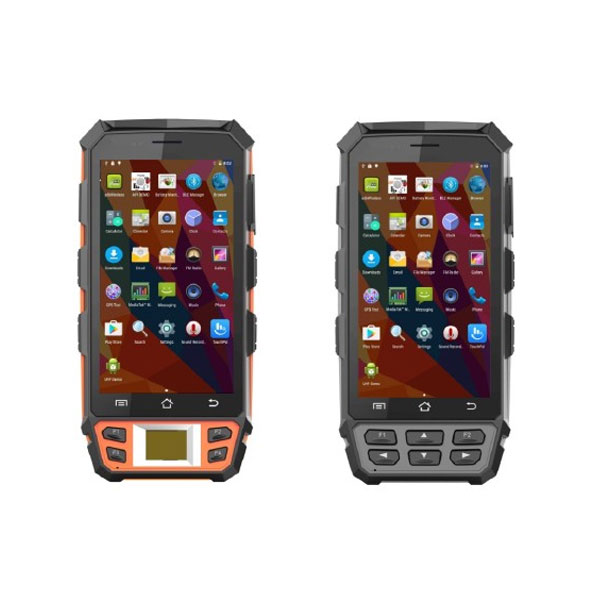
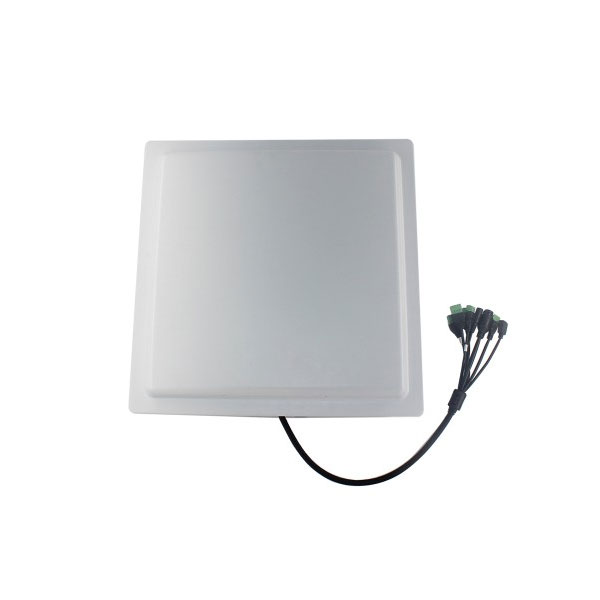



You should consider investing in RFID when you encounter at least 3 of 5 signs: document collection over 50,000 items, manual inventory taking more than 3 days, location errors over 5%, labor costs for inventory over 200 million VND/year, or high check-in/check-out frequency overwhelming the manual counter.
- Document collection of 50,000 items or more: at this scale, each manual inventory takes 3-5 days, while RFID reduces it to 4-6 hours for the entire warehouse.
- Inventory frequency of 2 times/year or more: units that must reconcile books quarterly or semi-annually will recover capital faster.
- Document location discrepancy over 5%: patrons cannot find books even though the system says "in stock"—this is a significant invisible loss.
- Inventory labor costs exceeding 200 million VND/year: including salaries, allowances, and time when patron services are suspended.
- Manual circulation counter overloaded: average wait time over 10 minutes per transaction during peak hours.
ROI calculation formula for public sector units: step-by-step guide

ROI = (Labor cost saved + Error cost reduced + Operational time converted to money) / Total investment cost. For an 80,000-document library, total investment is approximately 250-400 million VND, labor savings of 150-200 million VND/year, payback period of 1.5-2.5 years.
- Step 1 — Determine current labor costs: record the number of staff hours spent on inventory, shelving, and searching for lost documents over 12 months. Multiply by the hourly wage rate (including allowances).
- Step 2 — Measure error costs: count the number of misplaced documents, patron complaints, and handling time. Each misplaced document is estimated to cost 15-30 minutes of labor to locate.
- Step 3 — Estimate investment costs: including tags (5,000-15,000 VND/tag depending on type), fixed readers (25-60 million VND/gate), handheld readers (15-35 million VND/device), software, and deployment costs.
- Step 4 — Calculate payback period: divide total investment by annual cost savings. If the result is under 3 years, the project is worth considering.
- Step 5 — Add non-financial benefits: increased patron satisfaction, reduced staff workload, and transparent operational data for reporting.
Cost comparison table: manual vs RFID for an 80,000-document library
The table below compares 3-year operational costs between manual methods and RFID for a library with 80,000 documents, based on reference data from implementation projects in Vietnam during 2023-2025.
| Item | Manual method | RFID system | 3-year difference |
|---|---|---|---|
| Inventory labor (2 times/year) | 160 million VND/year | 40 million VND/year | 360 million VND |
| Inventory time per session | 4-5 days | 5-6 hours | ~4 days/session |
| Document location discrepancy | 5-8% | <1% | Reduced ~90% |
| Initial investment cost | 0 | 250-400 million VND | — |
| Maintenance cost/year | 0 | 15-25 million VND | 45-75 million VND |
Factors affecting ROI: tag costs, readers, and SIP2 software

Three factors account for 80-90% of total investment cost: tags (40-50%), fixed and handheld readers (30-35%), and software and deployment (15-20%). Choosing the right standard and supplier determines the speed of payback.
Tag cost is the largest variable: HF 13.56 MHz tags compliant with ISO 28560-2 for libraries cost 5,000-10,000 VND/tag when purchased in bulk, while UHF 918.4-923 MHz tags for archive warehouses cost 8,000-15,000 VND/tag. With 80,000 documents, the tag cost alone ranges from 400 million to 1.2 billion VND, significantly impacting ROI calculations. Additionally, fixed readers at security gates or circulation desks typically cost 25-60 million VND per unit, and handheld readers for inventory range from 15-35 million VND each. SIP2 software integration and deployment services add another 50-100 million VND, depending on the complexity of the existing library system.
Technical limitations of library RFID to know before investing

RFID is not a silver bullet: it has limitations including interference from metal and liquids, higher cost per tag compared to barcodes, and the need for frequency compliance. Understanding these constraints helps set realistic expectations and avoid deployment failures.
- Interference from metal and liquids: tags attached to books with metallic spines or near liquid containers may fail to read. Specialized tags are required for such items, increasing costs.
- Read range limitations: passive UHF tags typically have a read range of 3-8 meters, but this can be reduced in dense shelving environments. Proper antenna placement is critical.
- Tag collision: when many tags are in the reader's field, the reader may not identify all tags simultaneously. Advanced anti-collision algorithms are needed for large batches.
- Frequency compliance: in Vietnam, UHF RFID devices must operate within 918.4-923 MHz with a maximum power of 500 mW ERP, per Circular 08/2021/TT-BTTTT. Imported devices must be reconfigured and certified.
- Data security: RFID tags can be read by unauthorized devices if not encrypted. Implementing security protocols is essential for sensitive archive materials.
RFID deployment roadmap for small and medium-sized libraries

A phased deployment approach is recommended for small and medium-sized libraries: start with a pilot in a specific section, measure results, then scale up. This minimizes risk and allows for adjustments based on real-world performance.
- Phase 1 — Pilot (1-3 months): select a high-traffic section (e.g., new arrivals or popular fiction), tag 5,000-10,000 items, install one fixed reader at the circulation desk, and train staff. Measure time savings and error rates.
- Phase 2 — Evaluation (1 month): analyze pilot data, compare against baseline metrics, and identify any issues with tag placement or reader configuration. Adjust the plan accordingly.
- Phase 3 — Full deployment (3-6 months): tag the remaining collection, install additional readers at security gates and self-checkout stations, and integrate with the SIP2 system. Conduct staff training and user awareness campaigns.
- Phase 4 — Optimization (ongoing): monitor system performance, conduct regular maintenance, and update software as needed. Use data analytics to improve inventory scheduling and resource allocation.
Frequently Asked Questions
Is library RFID significantly more expensive than barcodes?
The initial investment for RFID is 3-5 times higher than barcodes: for a 50,000-document library, RFID costs approximately 250-500 million VND while barcodes cost 50-100 million VND. However, RFID saves 60-70% of inventory time and significantly reduces long-term labor costs. If your unit only inventories once a year and has fewer than 30,000 documents, barcodes remain the more economical choice.
What is the typical payback period for library RFID?
For libraries with 50,000-100,000 documents, the typical payback period is 2-4 years. This is based on inventory labor savings of 100-200 million VND/year against a total investment of 250-500 million VND. Libraries with high inventory frequency (3-4 times/year) or high labor costs can achieve payback in 1.5-2 years.
Can the RFID system integrate with existing library software?
Most library RFID systems support the SIP2 (Standard Interchange Protocol) or NCIP standard, enabling connection with popular library management software such as Koha, Libol, or internal systems. It is advisable to confirm integration capabilities with the software vendor before signing a contract to avoid additional development costs.
Do RFID tags affect old or rare documents?
RFID tags are thin (0.3-0.5 mm) and typically do not damage regular documents. However, for rare books, ancient manuscripts, or documents with metallic spines, specialized tags should be used, or alternative solutions like barcodes combined with manual control should be considered. Always consult conservation experts before attaching tags to historically valuable materials.
Does RFID investment actually reduce labor costs?
Yes, but expectations should be managed. RFID reduces 40-60% of staff time spent on inventory, shelving, and searching for lost documents. However, staff are still needed for patron support, batch check-in/check-out, and system maintenance. The biggest benefit is reallocating human resources from manual tasks to higher-value services, not headcount reduction.
Do imported RFID devices require compliance certification in Vietnam?
Yes. According to Circular 08/2021/TT-BTTTT, UHF RFID devices must operate in the 918.4-923 MHz frequency band with a maximum power of ≤500 mW ERP. Imported devices need to be reconfigured to the appropriate frequency and undergo compliance procedures before use. Việt POS provides devices pre-configured for the Vietnamese market, but units should work with specialized management agencies for specific legal requirements.
Cần tư vấn thiết bị/giải pháp cụ thể?
Việt POS phản hồi trong 30 phút · Hotline 4 vùng · Khảo sát miễn phí.
