Mục lục bài viết (6)
- What is an inventory data collector? Definition and operating principle
- Classification of popular inventory data collectors on the market
- Criteria for choosing the right inventory data collector for businesses
- Comparison table of popular inventory data collector models
- Common mistakes when implementing inventory data collectors
- Frequently asked questions about inventory data collectors
An inventory data collector is a handheld device integrating barcode or RFID scanning capabilities, helping businesses perform inventory counts 3-5 times faster than manual methods, while reducing errors to less than 0.5%. In Vietnam, the demand for fast and accurate inventory is rapidly increasing in retail chains, warehouses, and manufacturing plants.
What is an inventory data collector? Definition and operating principle
An inventory data collector is a specialized mobile device, often a PDA (Personal Digital Assistant) or a handheld barcode scanner, that allows warehouse staff to scan product codes and synchronize data directly with a Warehouse Management System (WMS) or ERP software. The device operates based on laser or CCD scanning technology to read 1D/2D barcodes, or an RFID reader to read tags within a radius of up to 10 meters.
Inventory data collectors automate the inventory process, completely eliminating manual record-keeping on paper. Scanned data is stored in the device's memory or transmitted directly via Wi-Fi/4G to a central server. Some high-end models also integrate cameras, GPS, and fingerprint sensors to enhance security and traceability.
Classification of popular inventory data collectors on the market
Currently, there are two main types of inventory data collectors on the market: specialized handheld barcode scanners and industrial handheld computers (PDAs). Each type has its own advantages and disadvantages, suitable for different scales and industries.
Bạn đang tìm sản phẩm cho chủ đề này?
Việt POS phân phối chính hãng — bảo hành 24-36 tháng, hỗ trợ kỹ thuật 24/7.

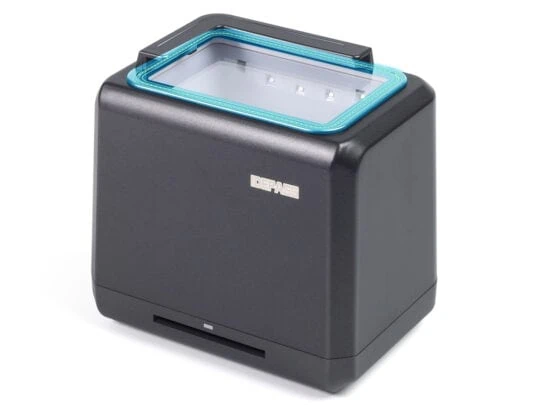
Z-1160 Inventory Data Collector
SKU: Z-1160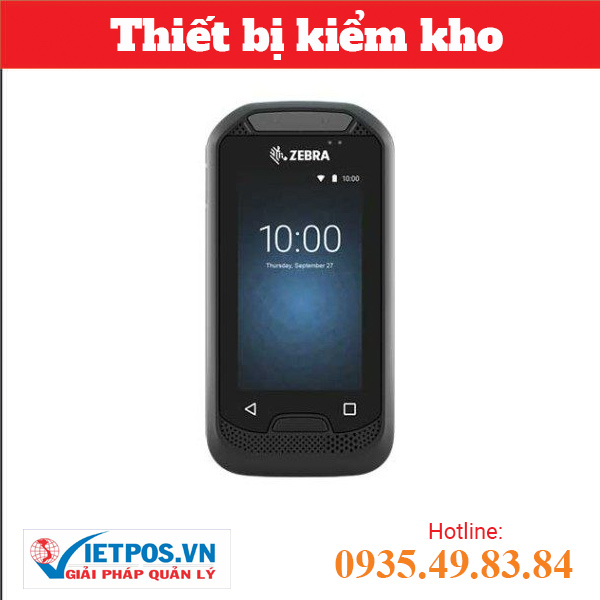
Zebra EC30 - Handheld Inventory
SKU: EC30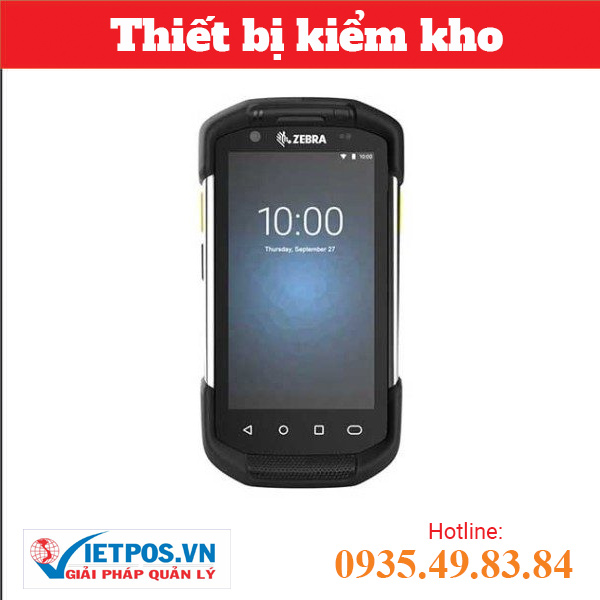
Zebra TC72/ TC77 - Handheld Inventory Scanner
SKU: TC72/ TC77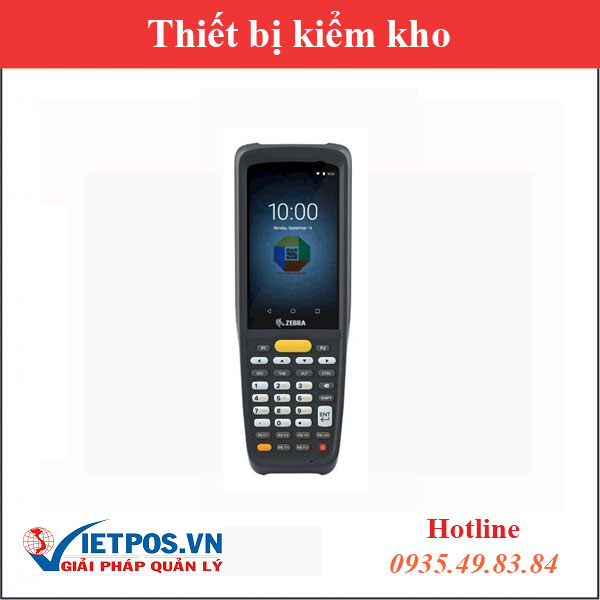
Zebra MC2200/MC2700 - Inventory Device
SKU: MC2200/MC2700Specialized handheld barcode scanners
These are basic devices, with only barcode scanning and temporary storage functions. They have a low cost (3-8 million VND), suitable for small stores or businesses just starting to digitize their inventory. The disadvantage is that they do not have an operating system and cannot run complex applications.
Industrial handheld computers (PDAs)
PDAs are higher-end inventory data collectors, running Android or Windows operating systems, capable of installing specialized warehouse management software. Models like Chainway C90 or Chainway MC62 have shock resistance, IP67 water resistance, and large battery capacity for 8-12 hour shifts. Prices range from 8-25 million VND.
Criteria for choosing the right inventory data collector for businesses
When choosing an inventory data collector, businesses need to evaluate based on 5 criteria: type of barcode to be scanned, working environment, battery life, connectivity, and investment budget.
- Barcode type: If the warehouse uses 1D barcodes (UPC, EAN), a basic laser scanner is sufficient. If QR codes or DataMatrix need to be scanned, choose a 2D scanner (CCD).
- Working environment: Cold storage (-20°C to -30°C) requires specialized devices like Chainway C63 Cold Storage. Regular warehouses should choose devices with IP54 or higher.
- Battery life: An 8-hour shift requires a battery ≥ 5000mAh. Removable batteries allow for quick replacement when depleted.
- Connectivity: 5GHz Wi-Fi for high synchronization speed. 4G/LTE for outdoor warehouses or areas without Wi-Fi.
- Budget: Invest in a good device from the start to avoid upgrading after 1-2 years. Maintenance and software costs also need to be considered.
Comparison table of popular inventory data collector models
| Model | Key Features | Estimated Price (VND) |
|---|---|---|
| Basic barcode scanner | Scans only 1D codes, internal memory storage, no operating system | 3,000,000 – 8,000,000 |
| Mid-range Android PDA | Android 11/13, 1D/2D scanning, Wi-Fi/4G, 5000mAh battery | 8,000,000 – 15,000,000 |
| High-end Android PDA | Android 14, UHF RFID scanning, IP67 water resistance, 8000mAh battery | 15,000,000 – 25,000,000 |
| RFID inventory data collector | Reads UHF RFID tags within a 10m radius, inventories 500 tags/minute | 20,000,000 – 40,000,000 |
Common mistakes when implementing inventory data collectors
- Choosing incompatible software: Purchasing a barcode scanner without checking if the driver/API can connect to the existing WMS.
- Neglecting employee training: Warehouse staff are accustomed to manual record-keeping and are not trained to use the device, leading to resistance or errors.
- Buying cheap, non-durable devices: Cheap devices are prone to damage in dusty, impact-prone environments and need to be replaced after 6-12 months.
- Not investing in warehouse management software: The device is only hardware; without data synchronization software, inventory efficiency will not be high.
- Forgetting warranty and technical support: Buying devices from a vendor without a warranty center in Vietnam results in long repair times when damaged.
Frequently asked questions about inventory data collectors
Below are the most common questions business owners ask when learning about inventory data collectors.
What types of barcodes can an inventory data collector read?
Modern inventory data collectors can read most common barcode types: 1D barcodes like UPC, EAN, Code 39, Code 128 (often found on consumer products), and 2D barcodes like QR Code, DataMatrix, PDF417 (commonly used in logistics, healthcare). High-end models also support reading UHF RFID tags, enabling bulk inventory without scanning each product individually.
What warehouse management software can an inventory data collector connect to?
Most Android-based inventory data collectors can connect to popular Warehouse Management Systems (WMS) via API or SDK. Software like SAP, Oracle, Odoo, or local Vietnamese solutions all support integration. Devices can also export data in CSV/Excel format for manual import into older systems.
How much can inventory time be reduced by using an inventory data collector?
According to actual surveys in small and medium-sized enterprises, inventory data collectors reduce inventory time by 3-5 times compared to manual methods. For example, a warehouse with 5000 SKUs, which takes 2-3 days for manual inventory, can be completed in just 4-6 hours with a barcode scanner. If an RFID reader is used, the time can be reduced to 1-2 hours.
Can an inventory data collector operate in a cold storage environment?
Yes, but a specialized model for cold storage is required. Models like the Chainway C63 Cold Storage are designed to operate stably at temperatures down to -30°C. These devices typically feature anti-condensation casings, cold-resistant batteries, and touchscreens that can be used with thick gloves.
What is the investment cost for an inventory data collector for a small business?
For small businesses (under 1000 SKUs), the initial investment cost ranges from 8-15 million VND for 1-2 mid-range Android PDAs with basic warehouse management software. If only simple barcode scanning is needed, a handheld scanner priced at 3-5 million VND can suffice. Costs can be recovered within 3-6 months due to reduced errors and increased labor productivity.
For detailed consultation on inventory data collector solutions suitable for your business's scale and industry, please contact Việt Đức Trí Group via hotline 0935 498 384 or email info@vietductri.com. Our technical team is ready to support free site surveys and device demos.
Cần tư vấn thiết bị/giải pháp cụ thể?
Việt POS phản hồi trong 30 phút · Hotline 4 vùng · Khảo sát miễn phí.
Bài viết cùng chủ đề