Table of contents (11)
- What is RFID in the cold chain?
- Why tag crates, cartons, and pallets instead of individual fresh items?
- How does a reader at the cold storage door work?
- Which devices are suitable for cold storage — manufacturer specifications
- Summary table of key terms and specifications
- Practical limitations when using RFID in cold storage
- RFID UHF Frequency Band Configuration in Vietnam
- Common Mistakes When Deploying RFID in the Cold Chain
- Step-by-Step Deployment Process for Cold Storage
- Frequently Asked Questions
- Conclusion and next steps
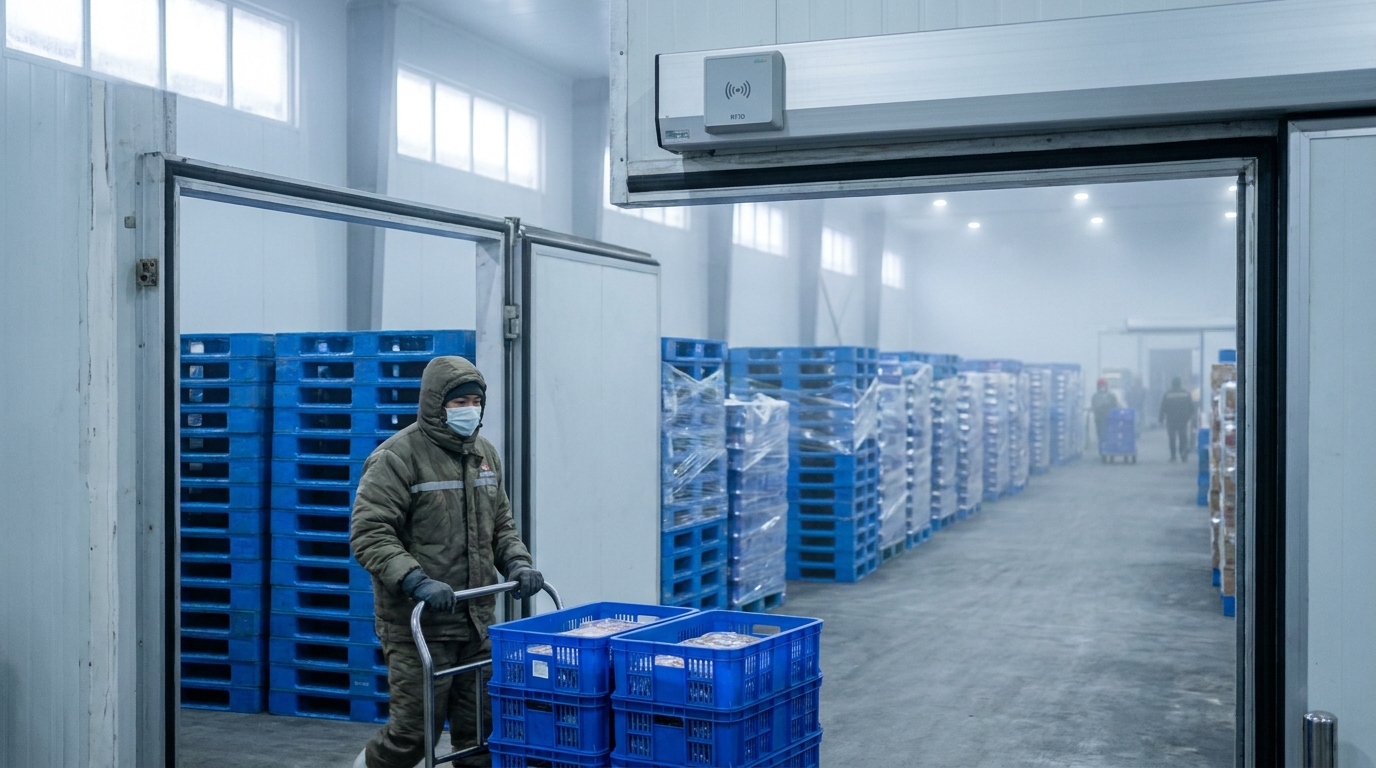
RFID in the cold chain is a solution that uses UHF radio waves to identify and record containers — crates, boxes, pallets, trolleys — as they pass through cold storage doors, instead of having to scan each fresh item. In Vietnam, this model is drawing interest from fresh food supermarket chains, central kitchens, and frozen distributors because it helps reduce handling in sub-zero temperatures and improves lot traceability.
Managing cold storage with ledgers or Excel usually starts to get messy when the number of crates and pallets circulating between warehouses and stores increases.
Table of contents
- What is RFID in the cold chain?
- Why tag crates, boxes, and pallets instead of each fresh item?
- How does a reader at the cold storage door work?
- Which equipment suits cold storage — manufacturer specifications
- Summary table of terms and specifications to know
- Practical limitations when using RFID in cold storage
- RFID UHF frequency band configuration in Vietnam
- Common mistakes when deploying RFID in the cold chain
- Step-by-step deployment process for cold storage
- Frequently asked questions
- Conclusion and next steps
What is RFID in the cold chain?
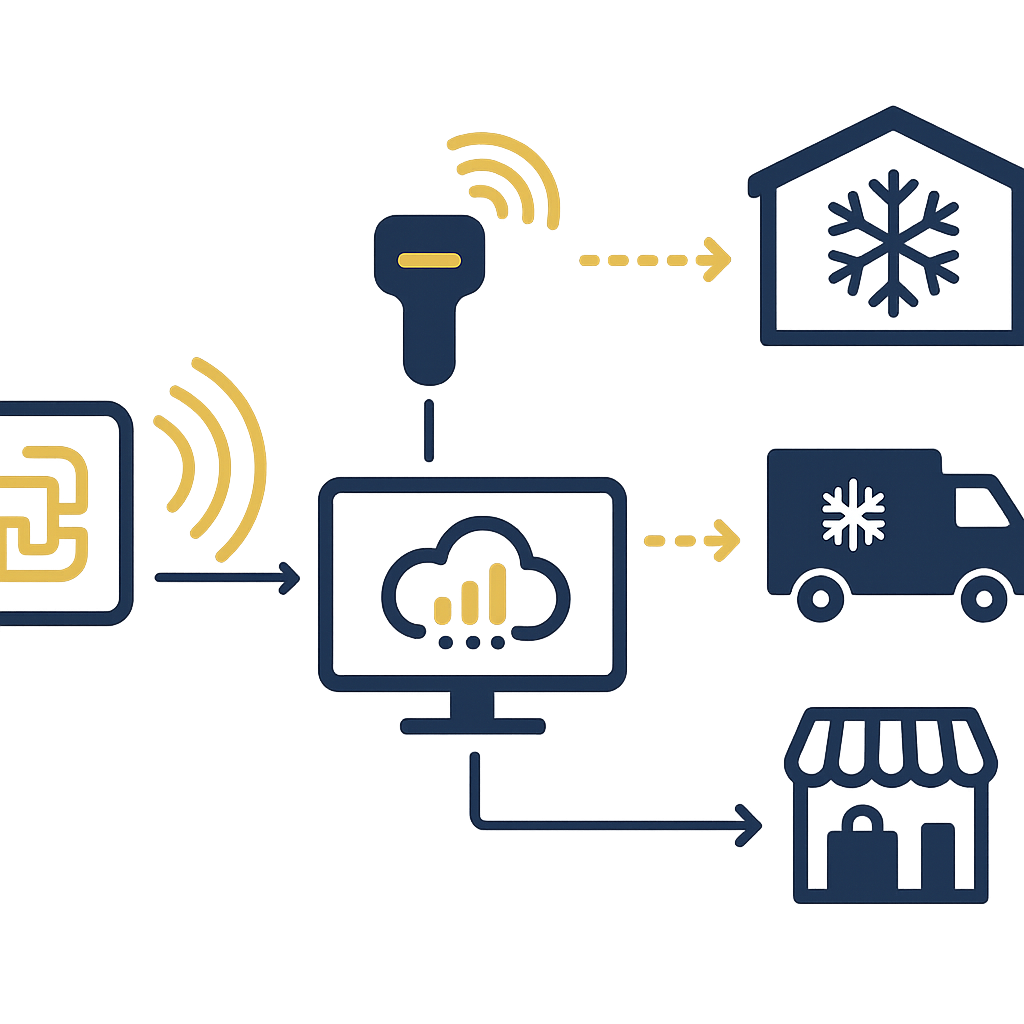
RFID in the cold chain is the application of radio frequency identification (RFID) technology to track containers or goods passing through the checkpoints of the cold chain — storage warehouses, transport vehicles, stores. Unlike barcodes, which require a direct line of sight, UHF RFID allows a reader to receive signals from multiple tags at once within a range of a few meters, even when tags are partially obscured.
See the deployment approach, equipment, and phased roadmap on the RFID solution for the cold chain and fresh food page.
Why tag crates, cartons, and pallets instead of individual fresh items?
Related products


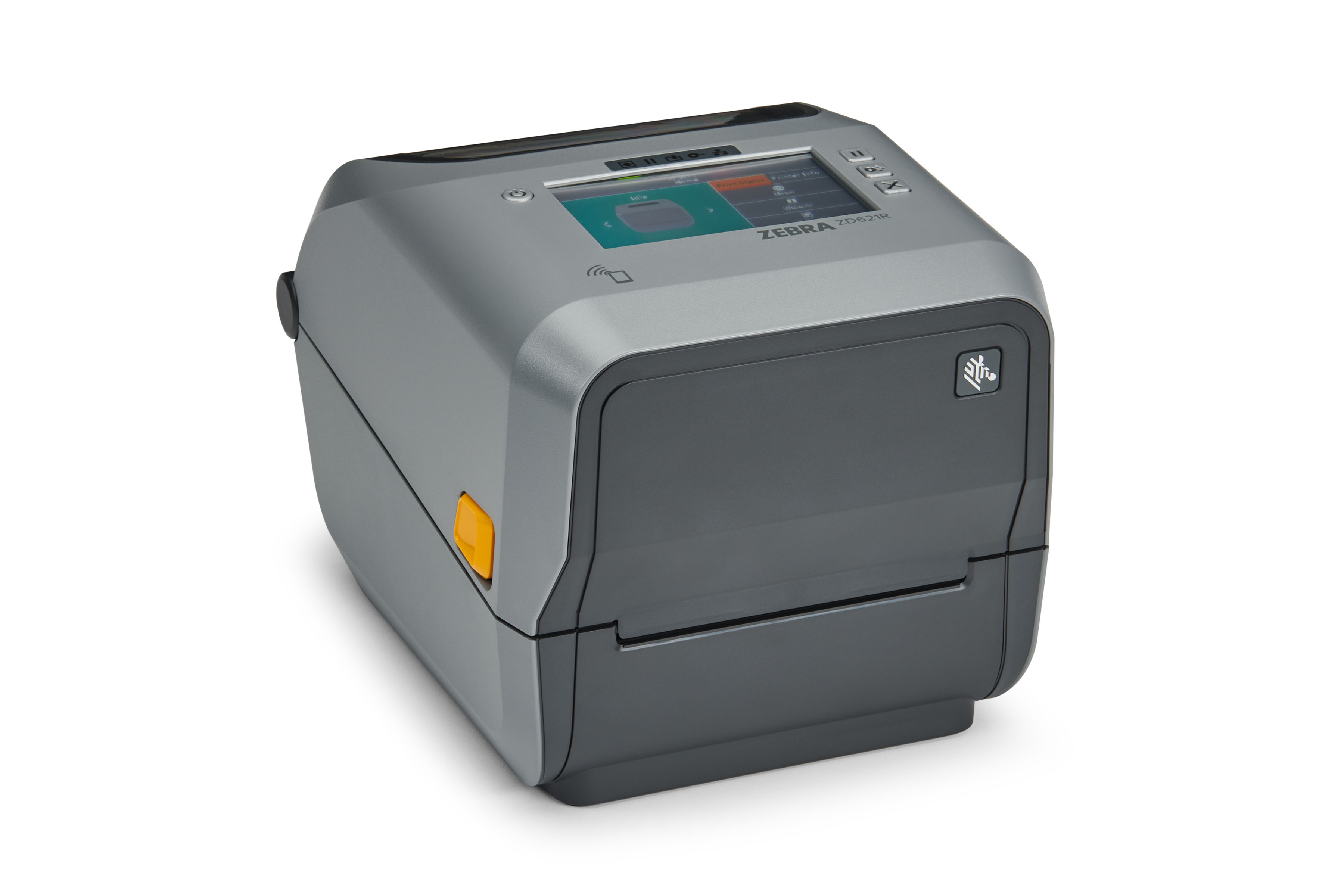
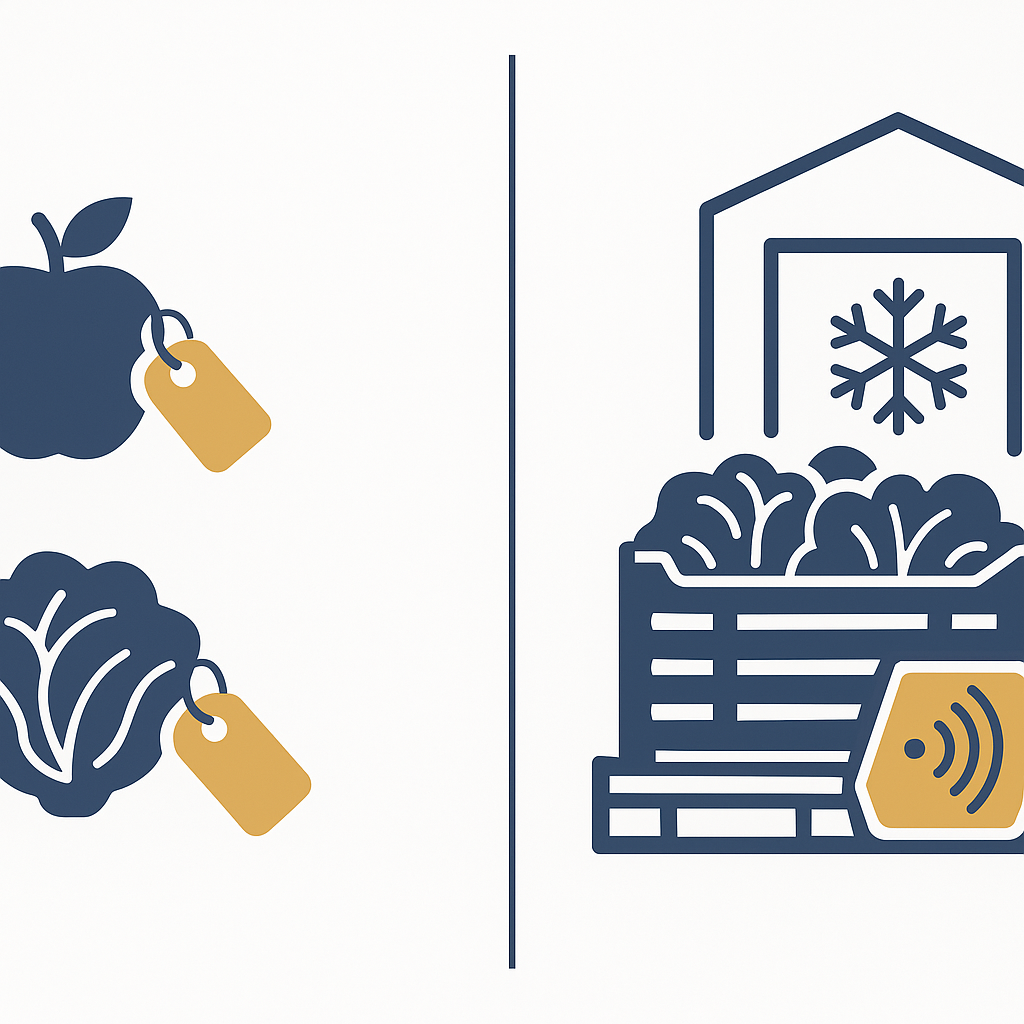
Fresh goods have damp surfaces, inconsistent packaging, and short storage times, so tagging each individual item is both labor-intensive and prone to detachment. Tagging the container lets a single tag represent the entire batch inside, reduces the number of tags needed, reduces handling in the cold room, and fits the actual operating practices of food warehouses.
- Less handling in the cold: staff only need to push the cart through the door, without opening each carton to scan.
- More durable tags: plastic crates and wooden or plastic pallets have flat surfaces that are less damp than the surfaces of fresh food.
- Reusability: a tag attached to a pallet can be used across multiple circulation cycles; only the data link needs to be changed when a new load is packed.
- Suited to batch traceability: when traceability is needed, you only need to look up the container code to know which checkpoints the batch passed through.
How does a reader at the cold storage door work?
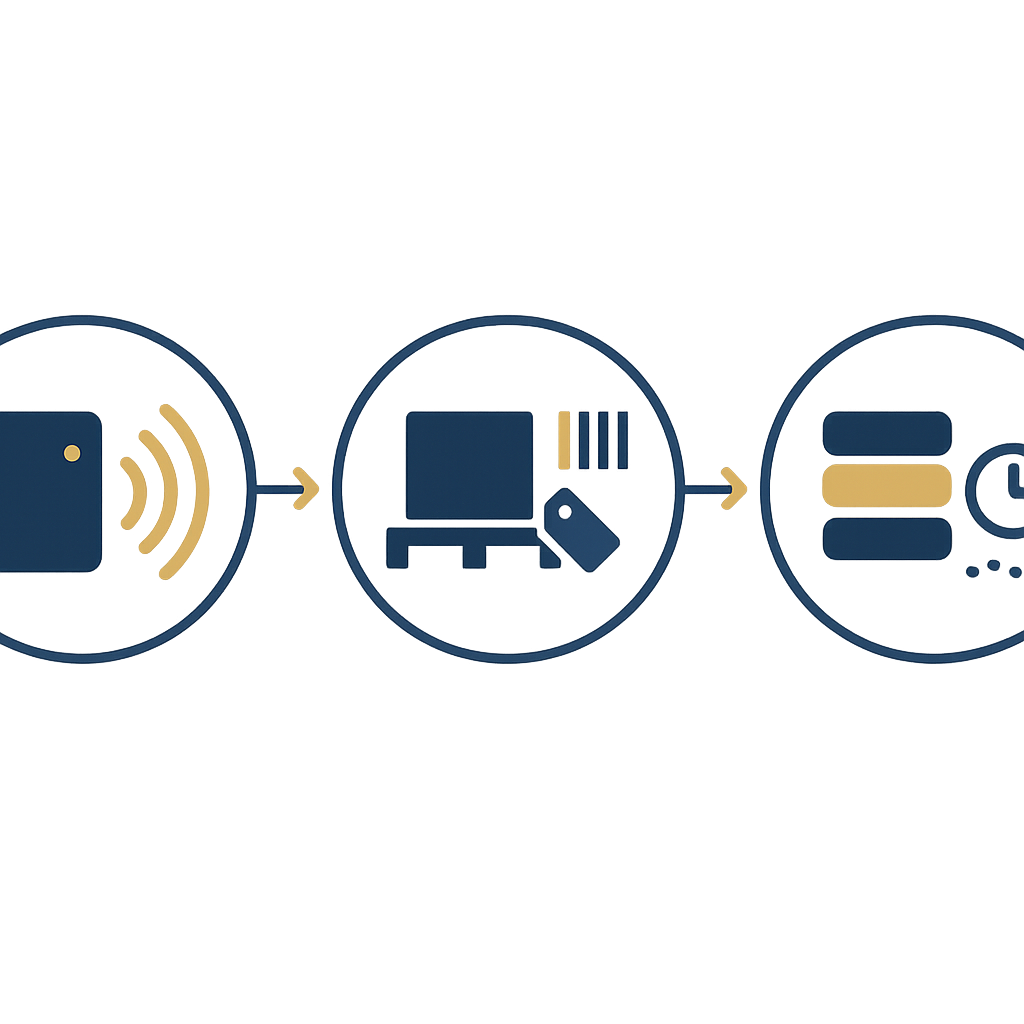
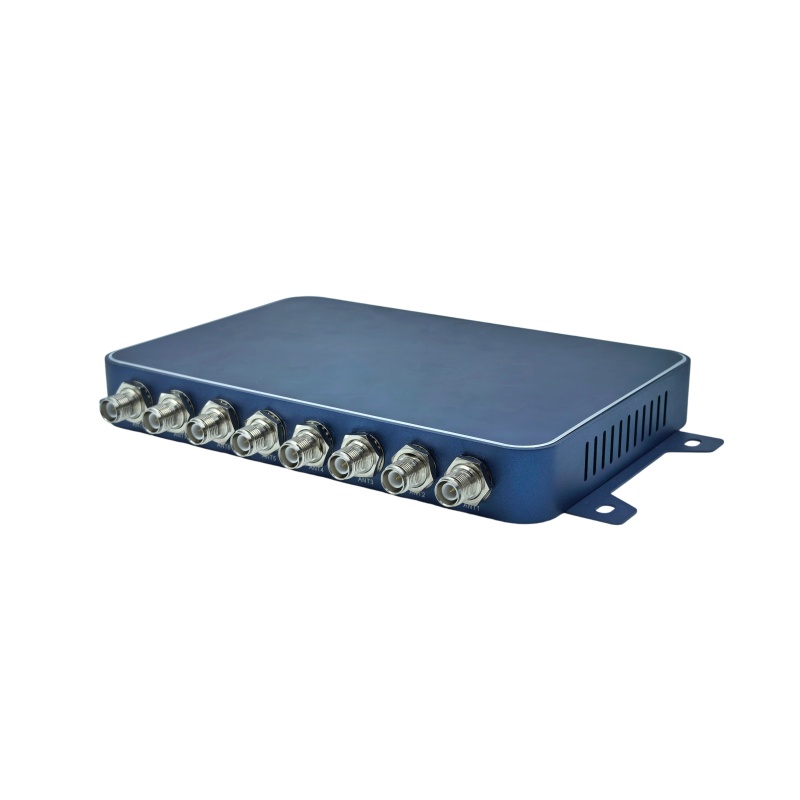
A fixed UHF RFID reader is installed at the warehouse door or on the door frame, connected to antennas that cover the read zone. When a vehicle carrying tagged crates or pallets passes through, the reader captures the tag EPC, cross-checks it against the shipment data and records the entry/exit event with a timestamp. The entire process is automatic; there is no need to open containers or stop the vehicle.
- Step 1 — Tagging: tags are affixed or permanently attached to crates, boxes or pallets, and the EPC code is linked to the shipment code in the software.
- Step 2 — Read zone configuration: antennas are positioned to cover exactly the vehicle's path, avoiding stray reads into adjacent areas.
- Step 3 — Event capture: when a tag passes through, the reader sends data to the software, which records the timestamp, direction of movement and the corresponding gate.
- Step 4 — Reconciliation: at the end of a shift or the end of the day, the software reconciles the number of containers in the warehouse against the number shipped out and detects discrepancies.
Which devices are suitable for cold storage — manufacturer specifications
For a cold storage environment, devices need to meet two requirements: withstanding sub-zero temperatures and having a stable read configuration under high humidity. The Symo IR38A fixed reader and the RL8647 cold chain label are two commonly considered options, based on published manufacturer specifications.
Symo IR38A fixed UHF RFID reader
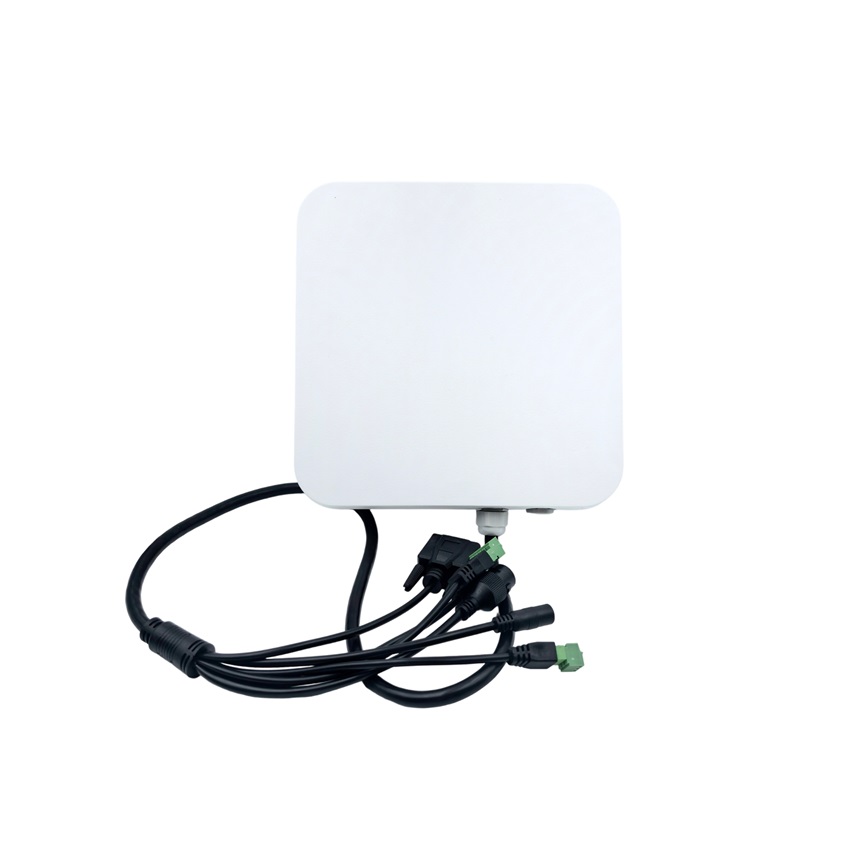
According to manufacturer specifications, the Symo IR38A measures 220 × 220 × 40 mm, has IP66/IP67 protection, an integrated 8 dBi circularly polarized antenna and 5–33 dBm transmit power. The housing is designed for industrial environments, suitable for installation at cold storage doors or in high-humidity areas. The circularly polarized antenna reduces dependence on tag orientation, which suits situations where crates and pallets are stacked unevenly.
RL8647 cold chain RFID label
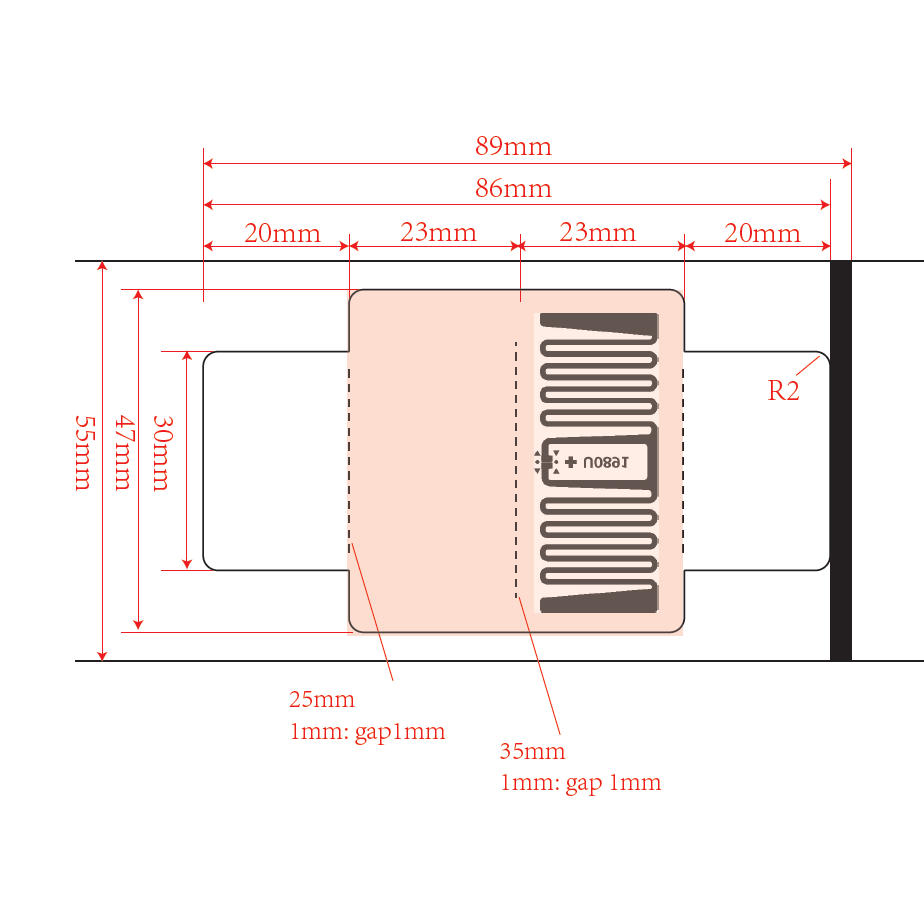
According to manufacturer specifications, the RL8647 uses the Impinj MR6-P chip, a PET substrate, a label size of 86 × 47 mm, a 44 × 16 mm antenna, an operating temperature of -25 °C to 70 °C, a read range of 0–6 m and a write range of 0–3 m. The label is designed for cold chain environments and can be applied to plastic crate surfaces or carton boxes before entering the warehouse.
Summary table of key terms and specifications
The table below summarizes the key terms and specifications commonly encountered when deploying RFID in the cold chain, helping operations and technical teams share a common language when evaluating solutions.
| Term / Specification | Short definition | Example / Value |
|---|---|---|
| RFID UHF | Radio frequency identification technology using ultra-high frequency | 860–960 MHz band depending on region |
| Container | The object tagged to represent a shipment | Plastic crates, carton boxes, pallets, trolleys |
| EPC | Unique electronic code written on the tag | 128/96 bit depending on tag type |
| Fixed reader | Device installed at the door, reading tags as they pass | Symo IR38A, IP66/IP67 |
| Cold chain label | RFID tag designed to withstand low temperatures | RL8647, operating -25 °C to 70 °C |
| Permitted frequency band | Frequency range licensed for use in Vietnam | 918.4–923 MHz |
Practical limitations when using RFID in cold storage
RFID is not an absolute read solution under all conditions. Passive tags generally cannot measure temperature, condensation and metal surfaces reduce read rates, and actual read distances may be lower than manufacturer specifications. Implementers need to test on real goods before scaling up.
- Passive tags do not measure temperature: most passive UHF tags only return an identifier and have no temperature sensor. To monitor temperature, dedicated sensor tags or separate logger devices must be used.
- Condensation reduces read rates: damp surfaces or condensation on tags can absorb wave energy, causing the reader to miss tags.
- Metal blocks waves: metal pallets or racks can reflect waves, causing interference in the read zone. Antenna placement must be tested and suitable tag positions selected.
- Actual read distance is lower than published: the 0–6 m specification of the RL8647 label is under ideal conditions; in cold storage it may be shorter depending on the environment.
RFID UHF Frequency Band Configuration in Vietnam
In Vietnam, RFID UHF devices must be configured to the correct permitted frequency band of 918.4–923 MHz. When purchasing devices, choose a version that supports the 902–928 MHz band and set the specific frequency band during installation. Ask the supplier clearly about this configuration capability to avoid devices operating out of compliance.
Incorrect frequency band configuration can make devices unauthorized for use or cause interference with other devices. Before signing a contract, ask the supplier to confirm in writing that the device can be set to the 918.4–923 MHz band and that there is a clear configuration process during installation. For projects with multiple warehouse doors, agree on a common configuration to avoid discrepancies between locations.
Common Mistakes When Deploying RFID in the Cold Chain
Most problems when deploying RFID in cold storage come from choosing the wrong tagging target, incorrect antenna placement, or skipping the actual measurement step. Below are common mistakes and how to avoid them.
- Tagging each fresh item: wastes tags, tags easily detach, and is not suitable for cold storage operations. Tag the container instead.
- Not measuring read rate on actual goods: manufacturer specifications are under ideal conditions. Measure with the actual baskets, pallets, and stacking arrangements.
- Incorrect antenna orientation: antennas covering diagonally into other areas cause misreads or missed reads. Simulate the movement flow before installation.
- Skipping frequency band configuration: devices defaulting to a different frequency band may not comply with Vietnamese regulations.
- Expecting tags to measure temperature: passive tags typically have no temperature sensor; separate devices are needed to monitor temperature.
Step-by-Step Deployment Process for Cold Storage
A proper deployment process should start with selecting containers, testing on a small scale, and only then expanding. Testing helps identify issues with condensation, metal, and antenna placement early before full investment.
- Survey the current state: determine the number of baskets, pallets, movement flows, and warehouse doors where readers need to be installed.
- Select containers for tagging: prioritize plastic baskets, plastic pallets, or cardboard boxes with flat, low-moisture surfaces.
- Select tags and readers: cold-resistant tags such as RL8647, fixed readers such as Symo IR38A; check the 902–928 MHz band.
- Install a trial door: measure read rate with actual goods, adjust antenna position and transmit power.
- Expand and train: once stable, replicate to the remaining doors and train staff on the reconciliation process.
Frequently Asked Questions
Can RFID in the cold chain read through boxes?
RFID UHF can read through some materials such as cardboard and thin plastic, but cannot read through metal and is significantly degraded by water. In cold storage, the ability to read through boxes depends on the thickness and moisture of the box and the tag placement position. Actual measurement on the type of box in use is needed before drawing conclusions.
Can passive RFID tags measure cold storage temperature?
Most passive RFID tags only return an identifier and have no temperature sensor. To monitor temperature, dedicated tags with sensors or independent logger devices are needed. Therefore, RFID in the cold chain typically focuses on tracking containers and circulation, and does not fully replace temperature monitoring devices.
How many readers should be used for one cold storage facility?
The number of readers depends on the number of warehouse doors and movement flows. For a small warehouse with 1–2 doors, 1–2 fixed readers can be used. For large warehouses or those with multiple flows, a survey and additional antennas are needed. Start with one door, measure the read rate, and then expand.
How is the RFID UHF frequency band configured in Vietnam?
Devices must be set to the 918.4–923 MHz band per Vietnamese regulations. When purchasing, choose a version that supports 902–928 MHz and ask the supplier to configure the correct frequency band during installation. Confirm in writing to avoid devices operating out of compliance.
Is the RL8647 tag suitable for -25 °C storage?
According to manufacturer specifications, the RL8647 has an operating temperature of -25 °C to 70 °C, suitable for many food cold storage facilities. However, the tag's operating temperature does not mean stable reading under all humidity conditions. Test on actual goods and check adhesion on basket and box surfaces.
How to reduce the impact of condensation and metal?
Choose tag placement positions that avoid water accumulation, dry the surface before applying, and position antennas to avoid facing directly toward metal shelving. For metal pallets, try applying tags on the top surface or using plastic holders. Measuring read rate on actual goods is a step that cannot be skipped.
Conclusion and next steps
RFID in the cold chain is most effective when tags are attached to containers rather than to individual fresh items, combined with fixed readers at warehouse doors to automatically record entries and exits. To implement it correctly, you need to select equipment suited to the cold environment, configure the 918.4–923 MHz frequency band, and measure the read rate on actual goods before scaling up. Việt POS supports site surveys and actual read-rate measurement for cold storage, helping you evaluate before investing.
Schedule a site survey and read-rate measurement on actual goods with Việt POS — hotline 0935 498 384 or email info@vietpos.vn. See more solutions at RFID for the fresh food cold chain.
Need advice on specific equipment or a solution?
Việt POS replies within 30 minutes · Hotlines in 4 regions · Free site survey.
