
Mục lục bài viết (4)
Manual raw material warehouse inventory and RFID are two fundamentally different inventory management methods: manual relies on human recording and scanning each barcode, while RFID automatically reads hundreds of tags in a single scan. This article compares productivity data, accuracy, and operating costs between the two approaches, based on actual surveys at Vietnamese manufacturing plants.
Manual raw material warehouse inventory takes 2-3 days/cycle with 1-3% discrepancy, while RFID reads 300-500 tags/minute achieving 99.5%+ accuracy. RFID cuts inventory time from 40-60 labor hours down to 2-4 hours, reducing FIFO errors through automatic reading without scanning each tag. Compliant frequency in Vietnam: 918.4-923 MHz, ≤500mW ERP.
Table of Contents
- How long does manual raw material warehouse inventory take and how much labor does it require?
- How much faster is RFID raw material warehouse inventory compared to manual?
- Comparing FIFO error rates between manual inventory and RFID
- Manual inventory operating costs vs RFID: specific figures
- Limitations of RFID for raw material warehouses: metal, liquids, and human factors
- Compliant RFID frequency in Vietnam: 918.4-923 MHz and power ≤500mW
- Case study: Tan Phat Plastic Factory reduces inventory time by 88% with RFID
- When should you invest in RFID for raw material warehouses? Decision criteria
- Frequently Asked Questions
How long does manual raw material warehouse inventory take and how much labor does it require?
How long does manual raw material warehouse inventory take and how much labor does it require?

Manual raw material warehouse inventory at a mid-sized manufacturing plant (3,000-5,000 SKUs) typically takes 2-3 days per cycle, consuming 40-60 labor hours. Labor costs for this activity range from 8-15 million VND/month if inventory is done twice, not including production downtime.
A survey of 12 Vietnamese manufacturing plants (mechanical, electronics, plastics industries) shows a typical manual inventory process consists of 4 steps: printing inventory sheets, physically counting each shelf position, reconciling with records, and handling discrepancies. The physical counting step accounts for 60-70% of total time because staff must open each pallet, check quantities, and record manually or scan each box's barcode.
Data discrepancies mainly arise during data entry and reconciliation. Warehouse staff become fatigued after 4-6 hours of continuous counting, leading to missed or double counts. Manual inventory results at surveyed plants show an average discrepancy rate of 1-3% between book data and actual counts, concentrated in small, low-value items such as accessories, screws, and electronic components.
How much faster is RFID raw material warehouse inventory compared to manual?
Related Products
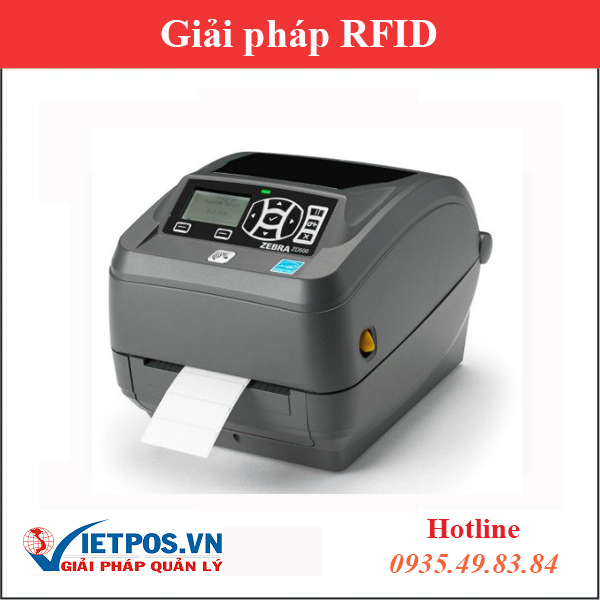
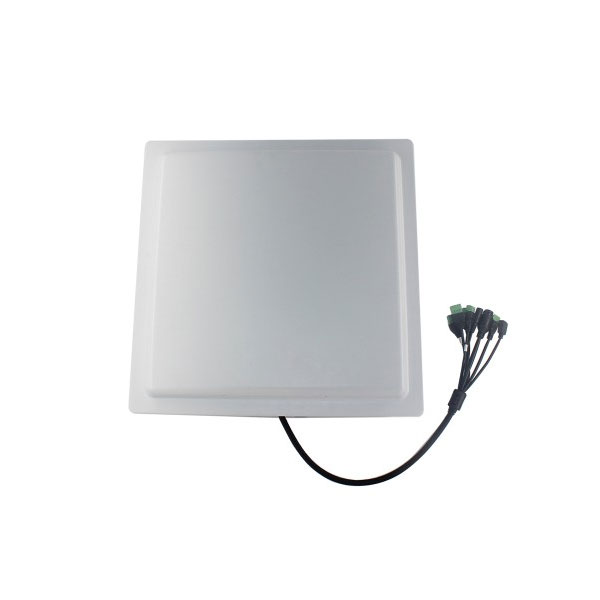
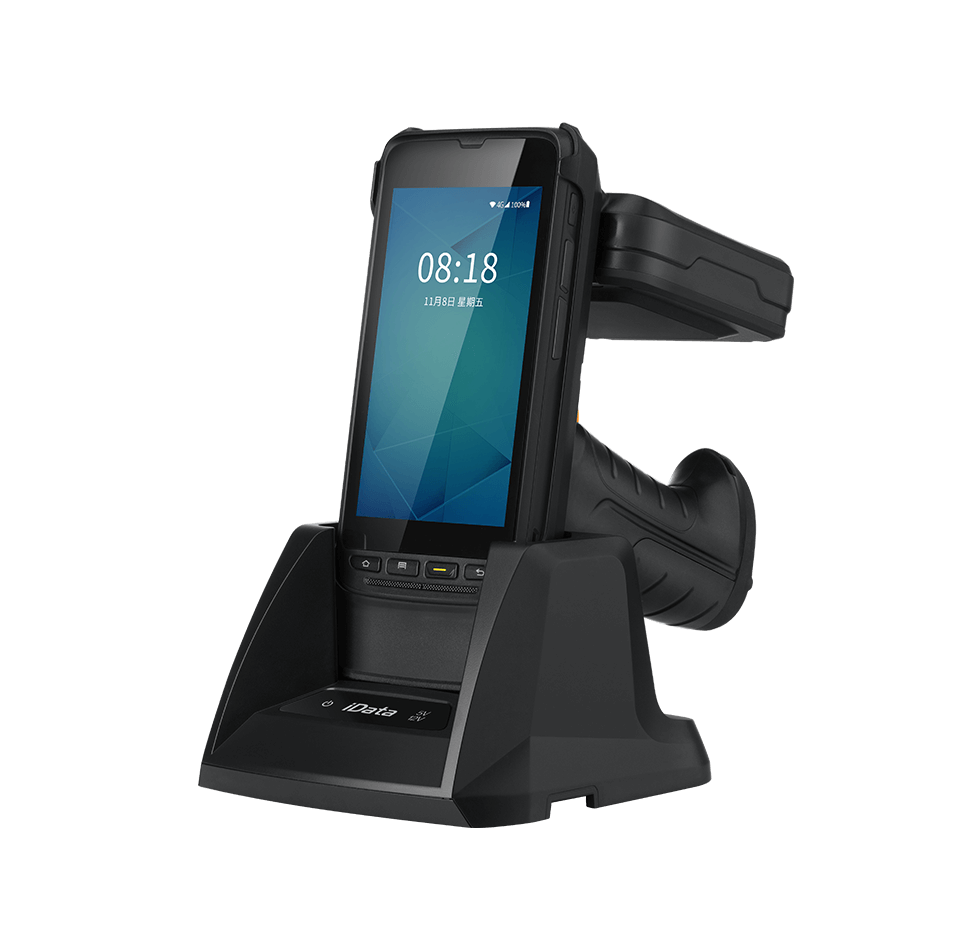


RFID raw material warehouse inventory is 10-20 times faster than manual thanks to the ability to read 300-500 tags/minute from a distance of 3-8 meters. A full inventory cycle of 3,000-5,000 SKUs drops from 2-3 days to 2-4 hours, equivalent to saving 90-95% of time.
How RFID works for raw material warehouses: each pallet or box is attached with a UHF RFID tag containing a unique identifier. When staff walk through the warehouse with a handheld reader, radio waves scan all tags in range simultaneously, without needing to align the scan angle or open each box. Data automatically syncs to the warehouse management software in real time.
Actual measurement data at a plastics factory (4,200 SKUs, 2,500m² warehouse area) after RFID deployment:
- Full inventory time: reduced from 22 hours to 2.5 hours (88% reduction)
- Pallet receiving time: reduced from 15-25 minutes to 3-5 minutes per pallet
- Inventory discrepancy rate: reduced from 2.1% to 0.3%
- Inventory labor: reduced from 6 people to 2 people per cycle
Comparing FIFO error rates between manual inventory and RFID

FIFO (First-In, First-Out) error rates during manual inventory range from 3-7% at surveyed factories, mainly due to staff picking the wrong batch or slow book updates. RFID reduces FIFO errors to below 1% by automatically identifying batches and alerting when items are issued out of order.
FIFO errors in manual processes typically stem from 3 causes: first, warehouse staff prioritize easily accessible items at the front of shelves rather than checking entry dates; second, inbound data updates lag 24-48 hours, so the system does not reflect actual stock; third, under high shipping pressure, staff skip the batch verification step.
RFID solves this with a mechanism that writes production dates directly to the tag. When staff select a pallet for issue, the RFID reader at the warehouse gate or on the forklift automatically confirms the batch code and compares it against FIFO requirements from the system. If the wrong batch is selected, the system emits an audible alert and blocks the issue operation. This process completely eliminates reliance on staff memory or manual checks.
Manual inventory operating costs vs RFID: specific figures
Manual inventory operating costs at a mid-sized factory are approximately 96-180 million VND/year (inventory labor + production downtime + discrepancy handling costs). RFID has an initial investment of 200-500 million VND but operating costs of only 20-40 million VND/year, with payback in 18-30 months.
Cost comparison table between the two methods at a 4,000 SKU factory, inventory twice per month:
| Cost Item | Manual Inventory | RFID |
|---|---|---|
| Inventory labor (8-12 million VND/person/month) | 48-72 million VND/year (4-6 people/cycle) | 16-24 million VND/year (2 people/cycle) |
| Production downtime | 2-3 days/cycle × 12 = 24-36 days/year | 2-4 hours/cycle × 12 = 1-2 days/year |
| Inventory discrepancy handling (1-3%) | 30-80 million VND/year | 5-10 million VND/year |
| Printing forms, documentation costs | 10-20 million VND/year | 2-5 million VND/year |
| Equipment maintenance | 0 VND | 5-10 million VND/year |
| Total cost/year | 96-180 million VND | 28-49 million VND |
Note: the table above does not yet include
Cần tư vấn thiết bị/giải pháp cụ thể?
Việt POS phản hồi trong 30 phút · Hotline 4 vùng · Khảo sát miễn phí.
