
Mục lục bài viết (6)
Manual inventory and RFID for fashion are two inventory management methods that differ completely in productivity, accuracy, and operating costs. This article provides a direct comparison of both across 6 criteria — time, accuracy, labor costs, errors, scalability, and hidden costs — to help you choose the method that fits your retail chain's scale.
Manual inventory suits stores under 500 SKUs with low frequency. RFID for fashion reduces inventory time from 2-3 days to 2-3 hours, accuracy from 85-95% to 99%, but initial investment costs are high. Switch when the store exceeds 1000 SKUs or conducts monthly inventory.
Table of Contents
- What is manual inventory and who is using it?
- What is RFID for fashion and how does it work?
- Detailed comparison of manual inventory vs RFID for fashion
- Inventory productivity: How many times faster is RFID?
- Accuracy: Why is manual always 5-15% off?
- RFID for fashion investment cost: What is reasonable?
- When should you switch from manual to RFID?
- Pros and cons of each method
- Hidden costs of manual inventory that few calculate
- Frequently Asked Questions
What is manual inventory and who is using it?

Manual inventory is the process of counting and recording inventory quantities by hand — staff count each product, write it down on paper or a tablet, then enter the data into the system. This method suits stores under 500 SKUs with an inventory frequency of 1-2 times per month.
For a 1000 SKU store, one staff member needs 2-3 days to complete a manual inventory, not including data entry and reconciliation time. The process is as follows:
- Print inventory sheets or use an Excel file
- Count each product on shelves and in the warehouse
- Record the actual quantity on the sheet
- Re-enter into the management software
- Reconcile discrepancies between records and actual counts
This method remains popular in small retail stores because the initial investment cost is nearly zero. However, RFID applications for raw material warehouse management: FIFO control and line-side supply solutions shows that the larger the business, the higher the hidden costs of manual inventory.
What is RFID for fashion and how does it work?
Related Products
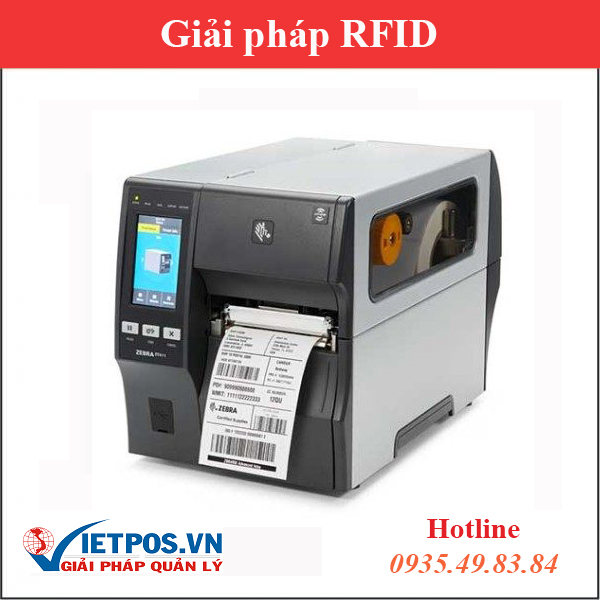
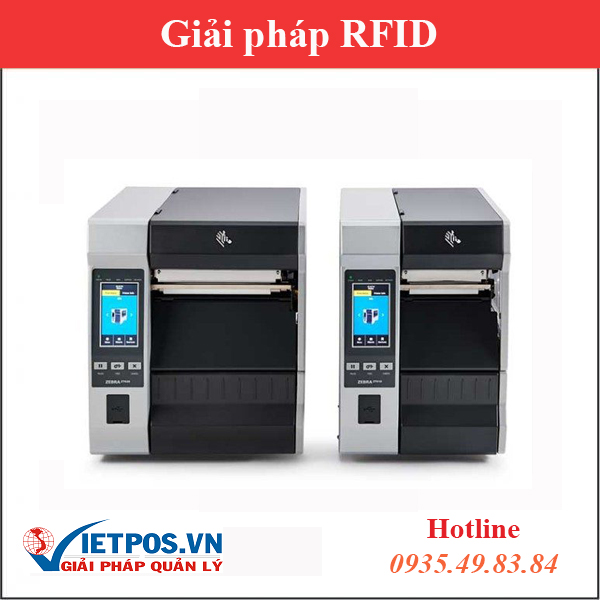
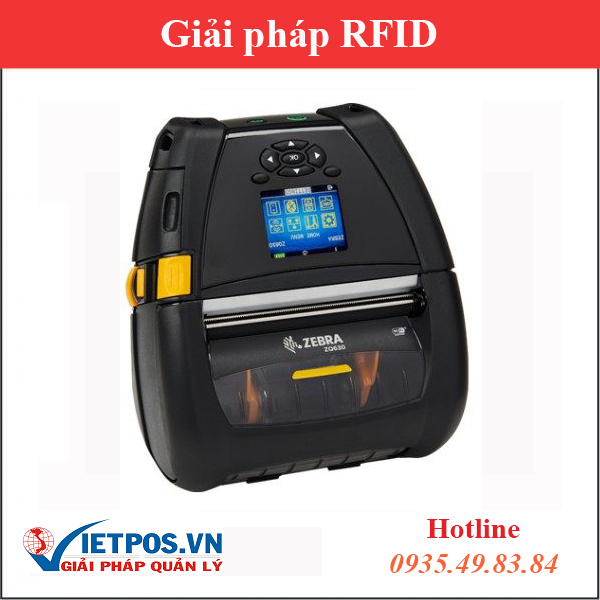
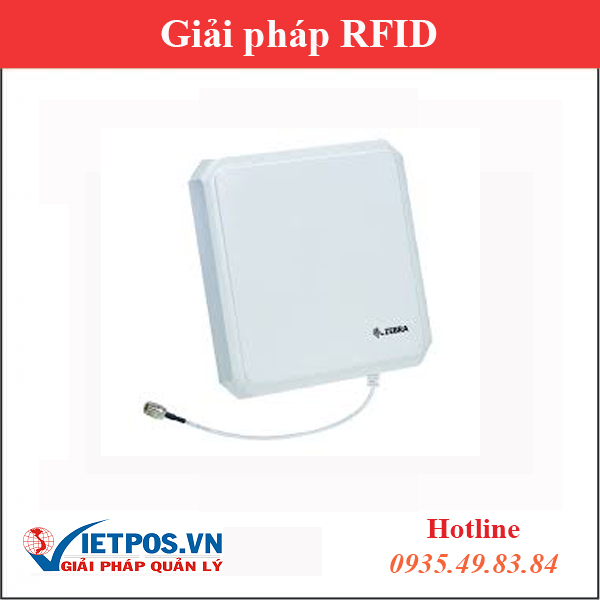



RFID (Radio Frequency Identification) uses radio waves to read tags attached to each product without scanning them one by one. A handheld reader can scan 300-500 products in 1-2 minutes, reducing inventory time from 2-3 days to just 2-3 hours.
An RFID for fashion system consists of 4 components:
- UHF RFID tags — attached to each product, storing SKU, color, size
- RFID tag printer — prints codes and writes data to tags
- Handheld reader — batch scans during inventory
- Management software — processes data, reconciles with the system
In Vietnam, UHF RFID equipment operates in the 918.4-923 MHz frequency band, with a maximum transmit power of 500 mW ERP, and must comply with Circular 08/2021 of the Ministry of Information and Communications. VietPOS provides infrastructure and equipment, not legal compliance consulting.
Detailed comparison of manual inventory vs RFID for fashion
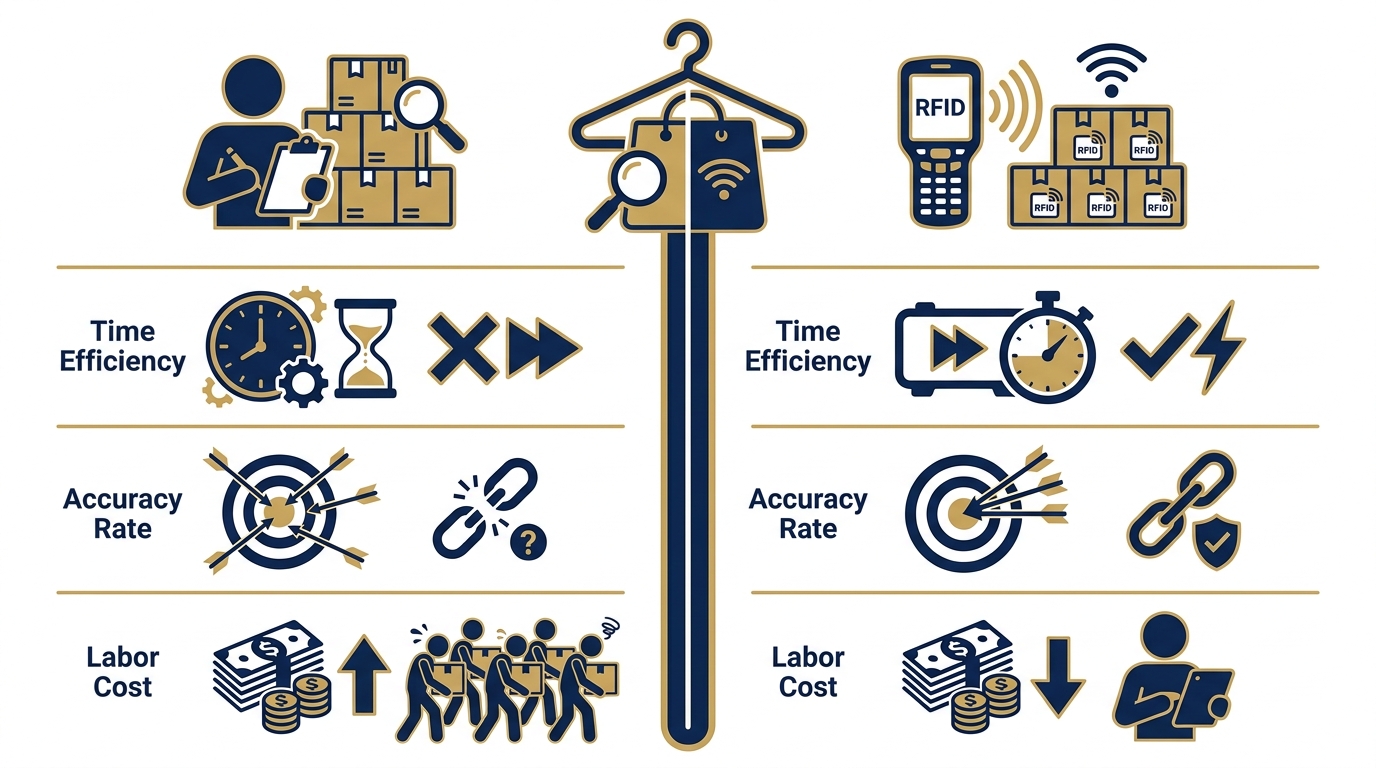
The table below compares 6 key criteria between the two methods. RFID excels in productivity and accuracy, but the initial investment cost is significantly higher than the manual method.
| Criterion | Manual Inventory | RFID for Fashion |
|---|---|---|
| Time (1000 SKUs) | 2-3 days | 2-3 hours |
| Accuracy | 85-95% | 99%+ |
| Labor cost | 2-4 staff, 2-3 days | 1 staff, a few hours |
| Errors | Miscounting, recording errors, data entry errors | Very low, requires confirmation before recording |
| Scalability | Poor — time increases linearly with SKUs | Good — batch scanning does not increase time much |
| Hidden costs | High — inventory discrepancies, undetected shrinkage | Low — early detection of discrepancies |
Note: RFID has physical limitations. Metal and liquids block radio waves, reducing read capability. For products with metal accessories (buckles, chains), use the VP-T902 passive on-metal RFID tag to ensure accuracy.
Inventory productivity: How many times faster is RFID?
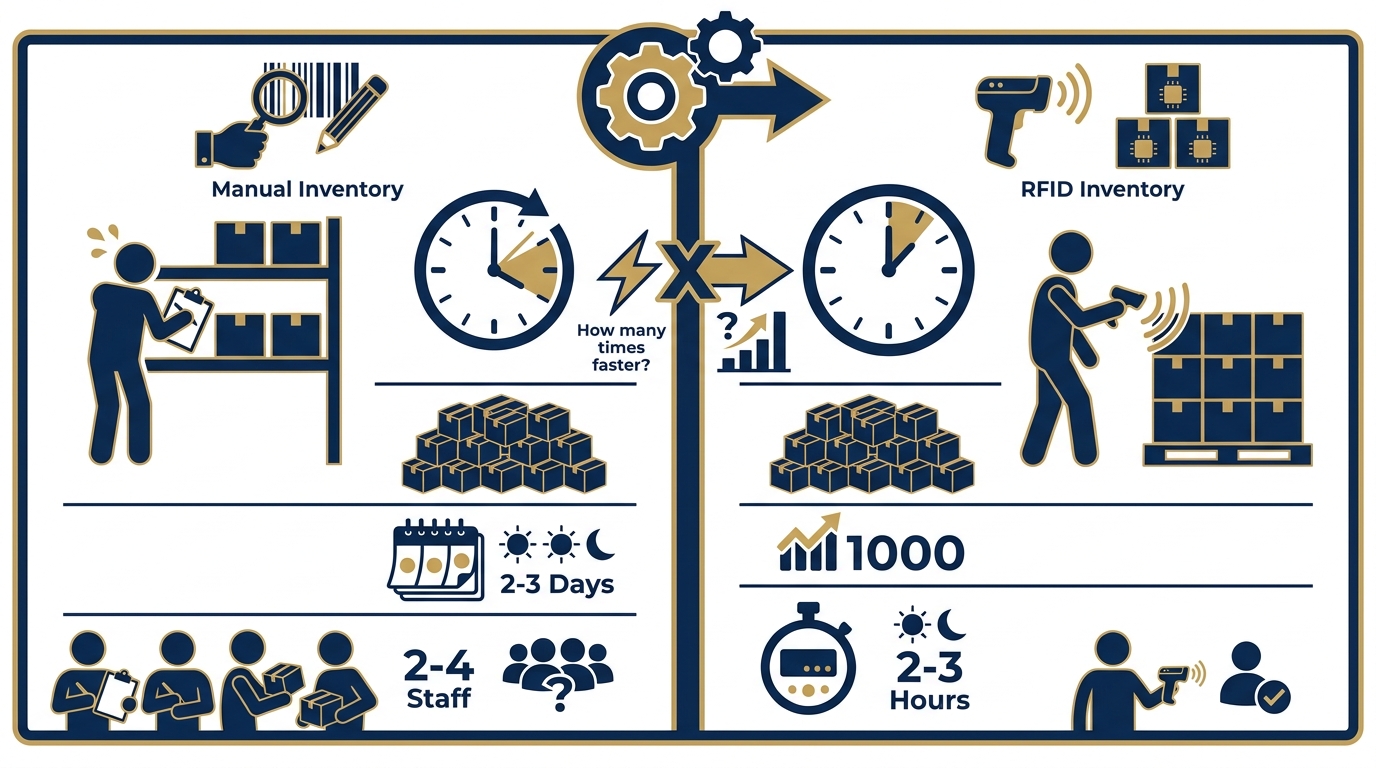
For a 1000 SKU store, manual inventory takes 2-3 days with 2-4 staff. RFID reduces this to 2-3 hours with 1 staff member — 8-12 times faster. The average read speed of a handheld reader is 300-500 products per minute.
This figure varies based on product density and store layout. On densely packed hanging racks, the reader needs to scan from multiple angles to capture all tags. In warehouses with lots of metal, read speed drops 20-30% due to wave reflection.
Increased productivity leads to reduced labor costs. One staff member doing manual inventory 3 days per month with a salary of 8-10 million VND — annual inventory labor costs are approximately 30-40 million VND for counting activities alone, not including data entry and reconciliation time.
Accuracy: Why is manual always 5-15% off?

Manual inventory has 85-95% accuracy due to 3 main error sources: miscounting when products look similar, recording incorrect figures on sheets, and data entry errors from paper to the system. RFID achieves 99%+ because data is automatically transmitted from tags to the software, without intermediate steps.
A 5-15% discrepancy on total inventory value creates significant hidden costs:
- Undetected shrinkage — lost or damaged goods without knowledge
- Phantom inventory — system shows stock but it is actually out, losing orders
- Dead stock — unsold inventory tying up capital
- Wrong decisions — purchasing based on inaccurate data
For a 10-store chain, each store with 1 billion VND in inventory, a 10% discrepancy equals 100 million VND per store being managed blindly. This is why many chains switch to RFID despite the high initial investment cost.
RFID for fashion investment cost: What is reasonable?
Cần tư vấn thiết bị/giải pháp cụ thể?
Việt POS phản hồi trong 30 phút · Hotline 4 vùng · Khảo sát miễn phí.
