
Mục lục bài viết (10)
- What is manual outbound control? Process and who is it suitable for?
- What is RFID-based outbound control? How it works and who is it suitable for?
- Comparing manual and RFID outbound control across 7 criteria
- Pros and cons of manual outbound control
- Pros and cons of RFID-based outbound control
- Which method should you choose based on real-world use cases?
- Case study: Transitioning from manual to RFID at a distribution warehouse
- What is the investment cost for RFID in finished goods and outbound warehouses?
- Steps to deploy RFID for outbound control at the warehouse
- FAQ — Frequently asked questions about comparing manual and RFID outbound control
Outbound control is a common operational bottleneck at distribution warehouses in Vietnam. This article provides a direct comparison of two methods — manual (scanning each barcode, handwritten records) and RFID (batch, contactless scanning) — across 7 quantitative criteria. You will have sufficient basis to decide which method fits your warehouse scale, budget, and traceability requirements.
RFID-based outbound control is 5-10 times faster than manual methods thanks to batch, contactless scanning, eliminating data entry errors and reducing counting time by 60-80%. However, RFID has limitations in metal/liquid environments and requires staff confirmation before posting to the ledger. Manual methods suit small warehouses; RFID suits warehouses of 500m² or larger or those with traceability requirements.
Table of Contents
- What is manual outbound control? Process and who is it suitable for?
- What is RFID-based outbound control? How it works and who is it suitable for?
- Comparing manual and RFID outbound control across 7 criteria
- Pros and cons of manual outbound control
- Pros and cons of RFID-based outbound control
- Which method should you choose based on real-world use cases?
- Case study: Transitioning from manual to RFID at a distribution warehouse
- What is the investment cost for RFID in finished goods and outbound warehouses?
- Steps to deploy RFID for outbound control at the warehouse
- FAQ — Frequently asked questions about comparing manual and RFID outbound control
What is manual outbound control? Process and who is it suitable for?

Manual outbound control is a process of confirming goods leaving the warehouse based on paper or computer lists, where staff scan each barcode or count by hand and then reconcile. This method suits warehouses under 300m², with outbound volume under 50 orders/day, and low traceability requirements.
For small warehouses, the manual process runs reliably. Staff receive the outbound slip, go to each shelf position, check the item code, scan the barcode or count quantities, then confirm in the system. The entire cycle takes 15-25 minutes for an order of 20-30 lines, not including search time when items are misplaced.
Weaknesses begin to appear as order volume increases. Errors from misreading codes, undercounting quantities, or shipping incorrect item types account for 2-5% of total outbound orders at manually operated warehouses. The cost of handling errors includes returns, redelivery, and loss of customer trust — often far exceeding the cost of technology investment.
What is RFID-based outbound control? How it works and who is it suitable for?
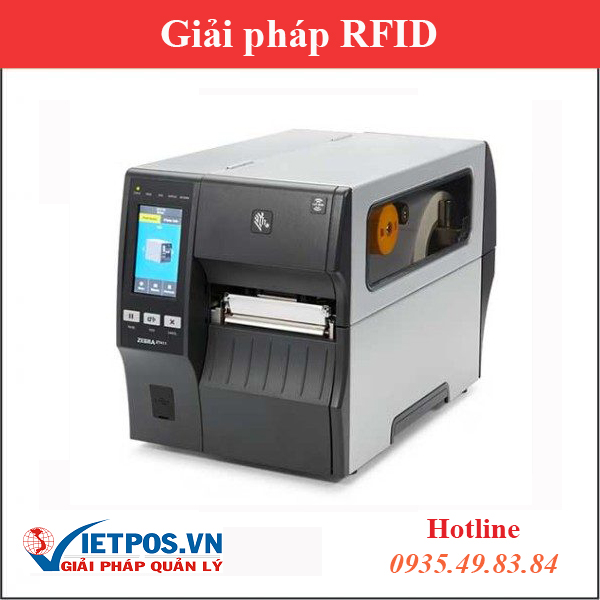
Related Products
![SpeedFace V5L [TD] Time Attendance & Access Control](https://vietpos.sgp1.digitaloceanspaces.com/cms/vietpos-vn/2026/05/2bc87f95-speedface-v5l-td-cham-cong-kiem-soat-truy-cap-1.png)
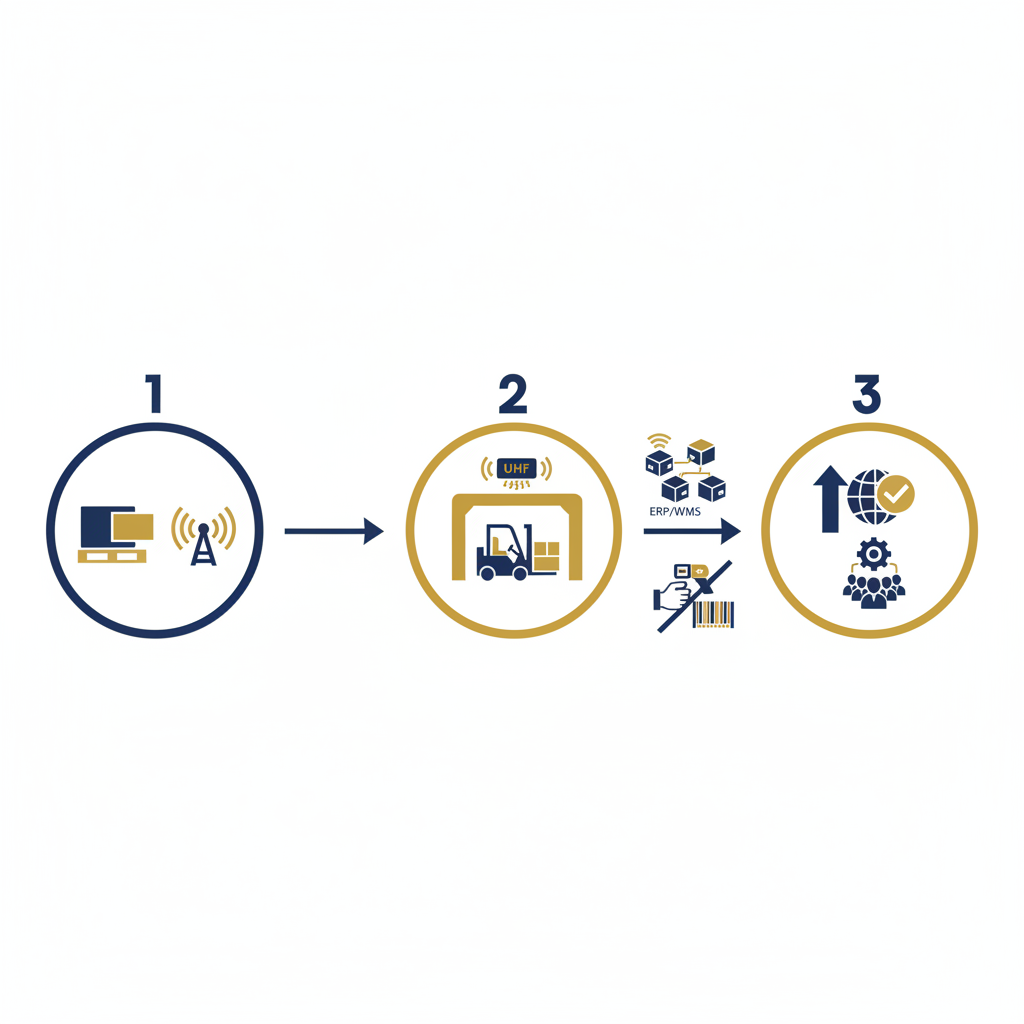
RFID-based outbound control uses electronic tags attached to pallets/cartons, with UHF readers scanning 200-500 tags simultaneously in 3-5 seconds as goods pass through the portal. It suits warehouses of 500m² or larger, outbound volume over 100 orders/day, or businesses needing traceability.
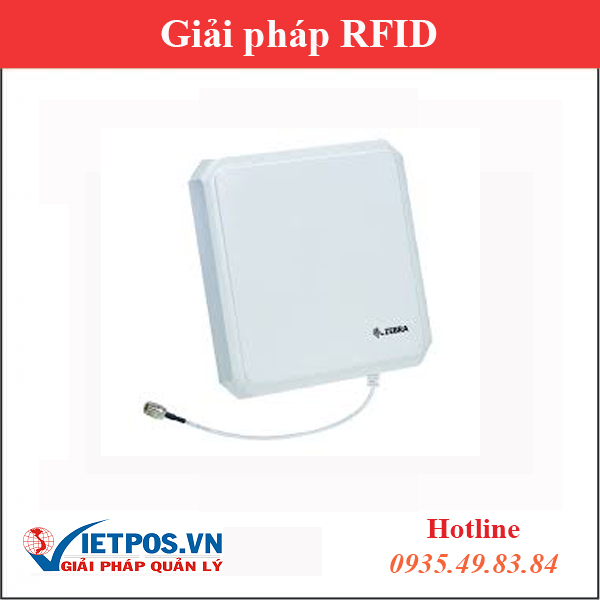
The finished goods warehouse RFID system includes: RFID tags on pallets/cartons, fixed readers at outbound portals, antennas, and software connecting to ERP/WMS. When a forklift or goods pass through the portal, the reader automatically identifies all tags within a 3-6 meter range without stopping or scanning each unit.
UHF RFID in Vietnam operates in the 918.4–923 MHz band with power ≤500 mW ERP per conformity regulations (Circular 08/2021/BTTTT — source: Radio Frequency Department). Việt POS provides device infrastructure meeting this standard; businesses should review current legal regulations before deployment.
Comparing manual and RFID outbound control across 7 criteria

The comparison table below summarizes 7 criteria for evaluating the effectiveness of the two methods. RFID excels in speed, accuracy, traceability, and scalability; manual only wins in initial investment cost and immediate flexibility.
| Criteria | Manual (hand scanning) | UHF RFID | Winner |
|---|---|---|---|
| Processing speed | 15-25 min/order of 20 lines | 3-5 sec/pallet, no stop | RFID — Best |
| Accuracy | 95-98% (2-5% error) | 99-99.5% (batch read) | RFID — Best |
| Operational cost | High labor, frequent returns | Reduces counting labor by 40-60% | RFID — Best |
| Traceability | Manual, slow, paper-dependent | Real-time, trace by lot/serial number | RFID — Best |
| Data entry errors | High (misreads, undercounts) | Eliminates manual entry | RFID — Best |
| Labor | Needs 2-3 people/large order | 1 supervisor, forklift passes through | RFID — Best |
| Scalability | Difficult, proportional to labor | Non-linear scaling, add read portals | RFID — Best |
Pros and cons of manual outbound control
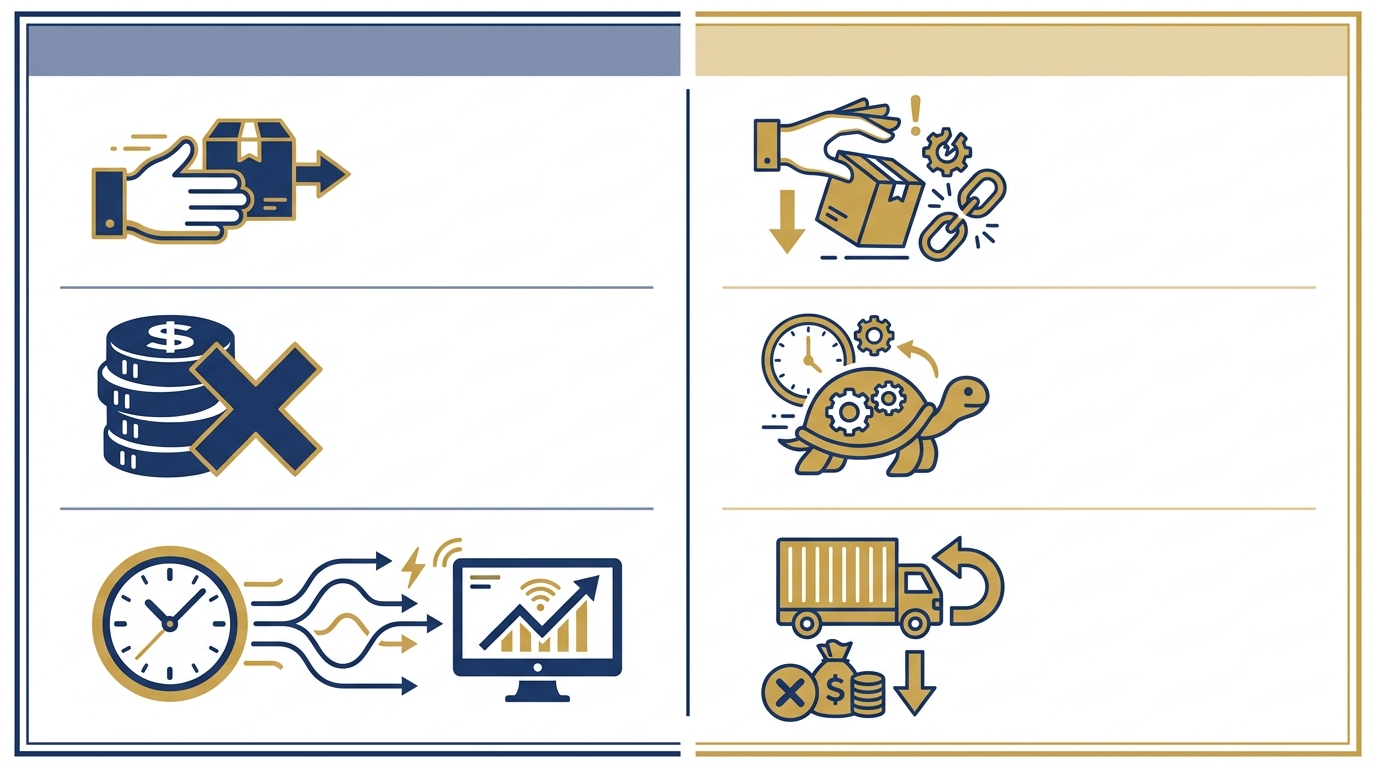
The manual method suits the startup phase but shows clear limitations as scale increases. Its biggest advantage is near-zero investment cost; its disadvantages are complete dependence on people, susceptibility to errors, and inability to provide fast traceability.
Advantages
- No initial hardware investment required
- Staff familiar with the process, no training needed
- Flexible with special goods
- Suitable for warehouses under 300m² with few orders
Disadvantages
- 2-5% error rate, high return costs
- Slow, bottlenecks at outbound gates during peak hours
- No real-time traceability
- Requires 2-3 workers for large orders
Pros and cons of RFID-based outbound control

RFID delivers superior speed and accuracy but has physical limitations to be aware of: metal and liquids block UHF signals, staff confirmation is required before posting to the ledger, and initial investment costs are significant.
Advantages
- Batch scanning of 200-500 tags in 3-5 seconds
- Accuracy up to 99.5%, eliminates manual entry errors
- Real-time traceability by lot/serial
- Reduces counting labor by 40-60%
Disadvantages
- Higher initial investment cost
- Signal interference from metal and liquids
- Requires staff confirmation before posting
- Needs technical expertise for setup and maintenance
Which method should you choose based on real-world use cases?

The choice depends on warehouse scale, order volume, and traceability needs. Manual suits warehouses under 300m² with under 50 orders/day; RFID suits warehouses of 500m² or larger with over 100 orders/day or traceability requirements.
- Warehouse under 300m², outbound under 50 orders/day
- No traceability requirements
- Budget constraints, no immediate ROI
- Goods are mostly metal/liquid, hard to tag
- Warehouse 500m² or larger, outbound over 100 orders/day
- Error rate above 2%, high return costs
- Need real-time traceability for compliance or customers
- Peak-hour bottlenecks at outbound gates
Case study: Transitioning from manual to RFID at a distribution warehouse

A distribution warehouse in Binh Duong with 800m², 150 orders/day, and a 3% error rate transitioned to RFID. After deployment, outbound processing time dropped from 20 minutes to 4 minutes per order, errors fell to 0.5%, and labor was reduced from 6 to 3 staff.
The warehouse used UHF RFID with 2 fixed readers at outbound portals, 10,000 reusable pallet tags, and integration with their existing ERP. The investment was recouped in 14 months through reduced return costs and labor savings.
"Before RFID, we had 3-4 return orders per day due to mis-shipments. Now, the system catches errors before goods leave the gate. The ROI was faster than we expected."
— Warehouse Manager, distribution company in Binh DuongWhat is the investment cost for RFID in finished goods and outbound warehouses?

Cost depends on warehouse size, number of read portals, tag type, and software integration. A 500-1,000m² warehouse with 1-2 outbound portals and reusable pallet tags typically requires a budget from tens to hundreds of millions VND. Contact Việt POS for a survey and quote.
Steps to deploy RFID for outbound control at the warehouse

Deployment follows 5 steps: site survey, system design, pilot testing, full installation, and staff training. Each step requires coordination between the warehouse team and technology provider to ensure smooth integration with existing WMS/ERP.
- Site survey: Assess warehouse layout, outbound flow, and environmental factors (metal, liquids) that affect RFID performance.
- System design: Determine number of portals, antenna placement, tag types, and software integration requirements.
- Pilot testing: Run a small-scale test with 100-200 tags to validate read rates and adjust settings.
- Full installation: Deploy readers, antennas, and tags across the warehouse; integrate with ERP/WMS.
- Staff training: Train operators on exception handling, system monitoring, and maintenance procedures.
FAQ — Frequently asked questions about comparing manual and RFID outbound control
Does RFID completely replace counting staff?
No. RFID automates identification and quantity counting, but staff still need to confirm on screen before posting to the outbound ledger. The human role shifts from manual recording to control, supervision, and handling exceptions like damaged goods, missing tags, or misplaced items.
What frequency does UHF RFID operate at in Vietnam?
UHF RFID in Vietnam operates in the 918.4–923 MHz band with transmit power ≤500 mW ERP, per conformity regulations in Circular 08/2021/TT-BTTTT (source: Radio Frequency Department). Imported equipment must have conformity certification checked before installation.
How much does RFID investment cost for finished goods and outbound warehouses?
Cost depends on warehouse size, number of read portals, tag type, and software integration. A 500-1,000m² warehouse with 1-2 outbound portals and reusable pallet tags typically requires a budget from tens to hundreds of millions VND. Contact Việt POS via hotline 0935 498 384 for a survey and quote.
When should I switch from manual to RFID outbound control?
Switch when outbound exceeds 100 orders/day, error rate is above 2%, or real-time traceability is needed. Warehouses under 300m² with under 50 orders/day can keep manual and optimize processes. Analyze ROI before investing to choose the right timing.
Does RFID work well with metal or liquid goods?
Metal reflects waves and liquids absorb UHF waves, reducing read rates. Specialized on-metal tags or adjusted antenna placement are needed. A site survey before investment is mandatory to avoid budget waste.
How many times faster is RFID compared to barcode scanning for outbound control?
RFID scans 200-500 tags simultaneously in 3-5 seconds as goods pass through the portal, while barcode scanning requires each unit, taking 15-25 minutes for a 20-line order. It is 5-10 times faster, eliminating the need to stop and orient tags toward the reader.
Cần tư vấn thiết bị/giải pháp cụ thể?
Việt POS phản hồi trong 30 phút · Hotline 4 vùng · Khảo sát miễn phí.
