
Mục lục bài viết (9)
- What is the RFID frequency 918.4–923 MHz and why is it important for fashion?
- What compliance regulations apply to RFID frequencies in Vietnam?
- How does the UHF band affect read/write performance on fabric?
- How do metal and liquids block RFID signals in fashion environments?
- What are the criteria for selecting RFID tags for fashion products?
- Summary table of key RFID frequency terms
- Common mistakes when choosing RFID frequency and tags for fashion
- What should be noted in the RFID deployment process for fashion supply chains?
- Frequently Asked Questions
The RFID frequency 918.4–923 MHz is the only UHF band licensed for RFID applications in Vietnam, according to Circular 08/2021/TT-BTTTT. For the fashion industry, this band directly determines read/write performance on fabric, metal, and liquids — a key factor when deploying supply chain management systems.
The UHF band 918.4–923 MHz is the only compliant standard for RFID in Vietnam under Circular 08/2021/TT-BTTTT, with power ≤500mW ERP. For the fashion industry, this band performs well on fabric but degrades on metal and liquids. Specialized on-metal tags are needed for metal accessories, and real-world testing is required before deployment.
Table of Contents
- What is the RFID frequency 918.4–923 MHz and why is it important for fashion?
- What compliance regulations apply to RFID frequencies in Vietnam?
- How does the UHF band affect read/write performance on fabric?
- How do metal and liquids block RFID signals in fashion environments?
- What are the criteria for selecting RFID tags for fashion products?
- Summary table of key RFID frequency terms
- Common mistakes when choosing RFID frequency and tags for fashion
- What should be noted in the RFID deployment process for fashion supply chains?
- Frequently Asked Questions
What is the RFID frequency 918.4–923 MHz and why is it important for fashion?
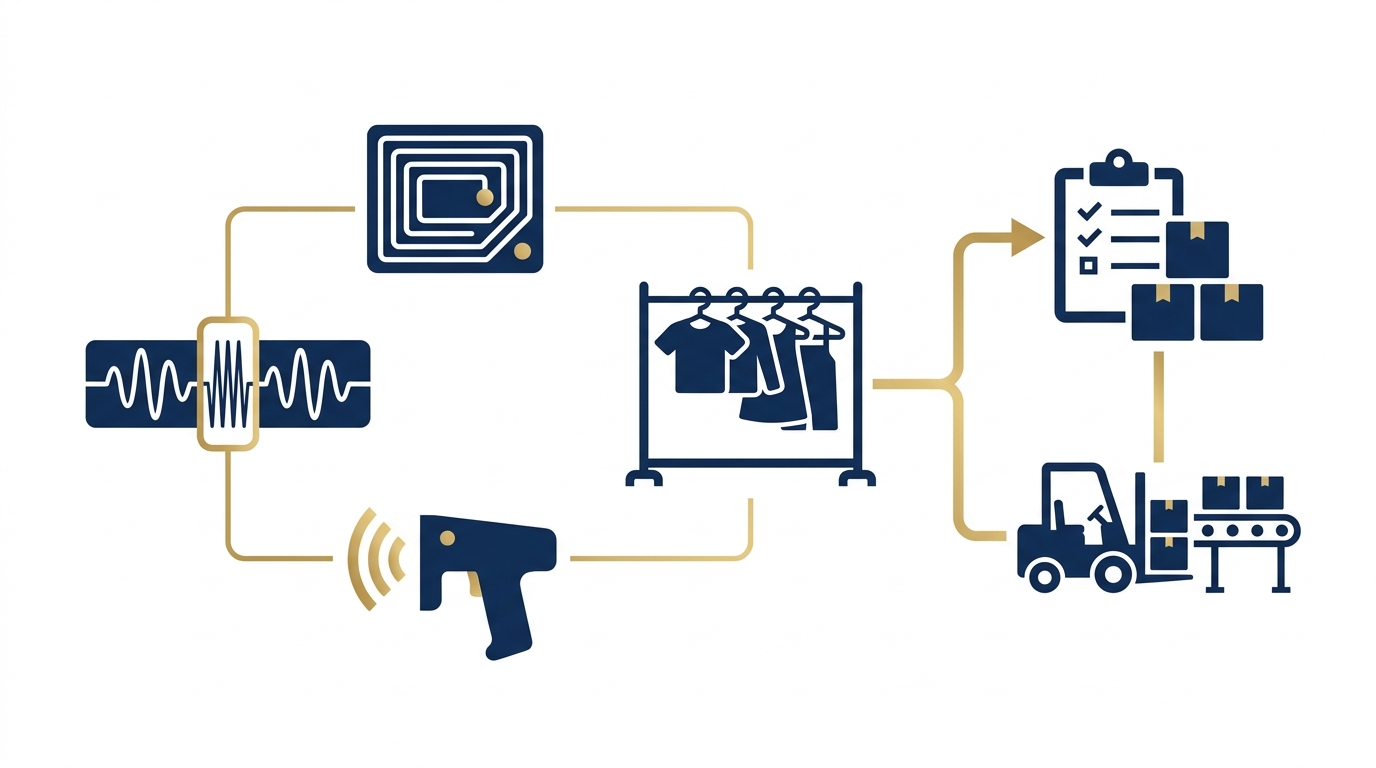
This is the UHF (Ultra High Frequency) band from 918.4 MHz to 923 MHz, licensed by the Ministry of Information and Communications for RFID devices in Vietnam. Compared to lower frequencies (LF/HF), the UHF band allows reading at longer distances (3-8 meters), faster read speeds, and supports reading multiple tags simultaneously — suitable for inventory, warehouse inbound/outbound, and merchandise management in fashion supply chains.
In the fashion industry, each SKU (stock keeping unit) often has multiple color and size variants. UHF RFID allows reading an entire clothing rack in 3-5 seconds, instead of scanning each barcode which takes 15-20 minutes. The compliant frequency ensures stable device operation, avoids interference with other telecommunications systems, and is legally recognized.
What compliance regulations apply to RFID frequencies in Vietnam?
Related Products
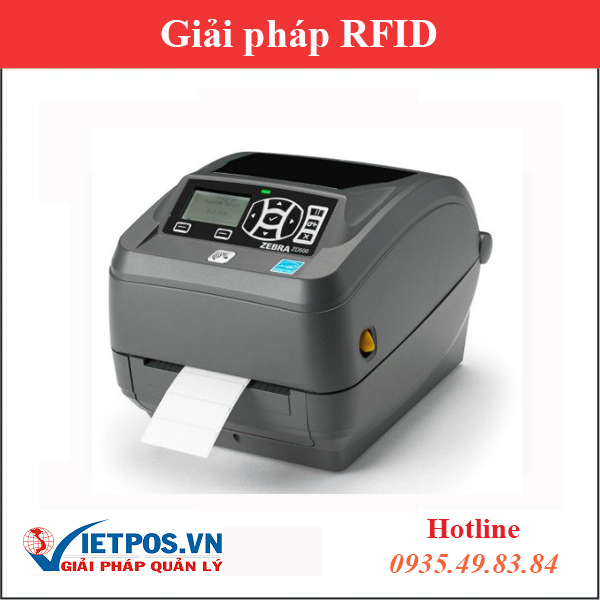
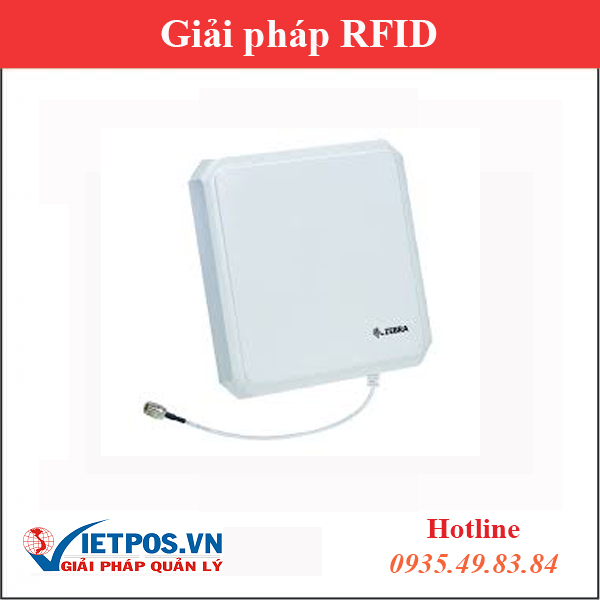



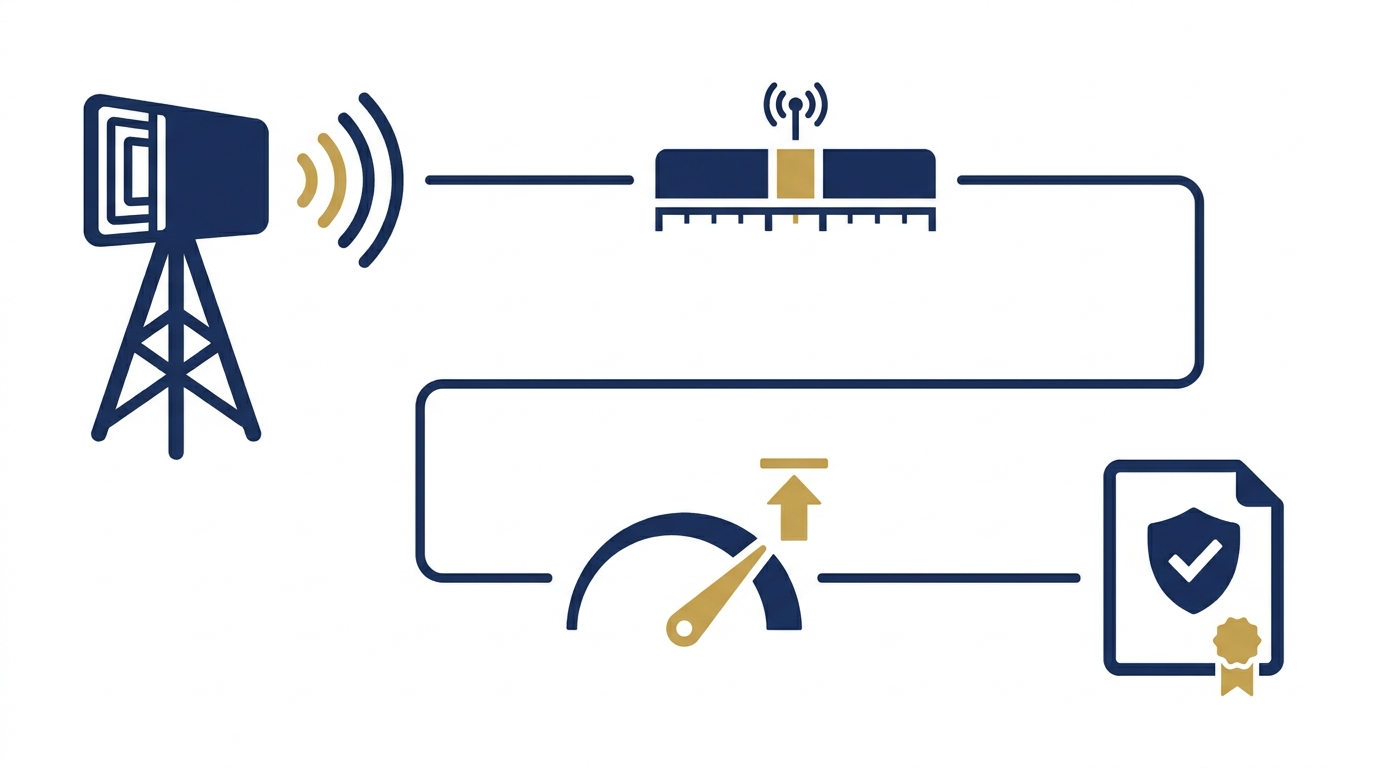
Circular 08/2021/TT-BTTTT of the Ministry of Information and Communications stipulates that the 918.4–923 MHz band is permitted for RFID devices, with a maximum transmit power of 500mW ERP. Imported devices must have a conformity certification before being circulated. VietPOS provides infrastructure and equipment that complies with this regulation — businesses should seek separate legal advice for each case.
Key points of the regulation:
- Permitted frequency band: 918.4 – 923 MHz (UHF band)
- Maximum transmit power: 500mW ERP (Effective Radiated Power)
- Conformity certification required for imported devices
- Must not cause harmful interference to other radio services
International standard RFID equipment (e.g., UHF EPC Gen2 tags) typically operates in the 860–960 MHz range. In Vietnam, devices need to be configured to the 918.4–923 MHz band for optimal performance and legal compliance. Zebra, Impinj readers, and common UHF tags all support configuration for this region.
How does the UHF band affect read/write performance on fabric?

Cotton, polyester, and linen fabrics have low dielectric constants and absorb little radio wave energy, so UHF RFID tags perform well on regular clothing. Read distances reach 4-7 meters with passive tags, sufficient for warehouse or store inventory. However, fabrics containing metal fibers (technical fabrics, protective clothing) or carbon coatings will cause signal interference.
Fabric moisture also affects performance: damp fabric (after washing, in high-humidity environments) absorbs wave energy, reducing read distance by 20-40%. In real-world operations like industrial laundry or coastal warehouses, tag performance should be tested under actual humidity conditions. For regular garments (dry, no metal coating), the 918.4–923 MHz band achieves good performance.
How do metal and liquids block RFID signals in fashion environments?
How do metal and liquids block RFID signals in fashion environments?

Metal reflects radio waves, liquids absorb energy — both severely degrade UHF RFID signals. For fashion accessories (metal buckles, watches, jewelry, shoes with metal soles), standard RFID tags can see read distances drop by 80-90%, or even fail to read. The solution is to use specialized on-metal tags with an anti-interference spacer layer.
Common challenging scenarios:
- Clothing with metal zippers: if the tag is placed near the zipper, performance degrades noticeably
- Footwear: rubber/leather soles have little effect, but shoes with metal lining require on-metal tags
- Bags with metal frames: tags should be placed away from the frame
- Liquids (perfume, cosmetics): absorb waves, reducing read distance to 1-2 meters
Practical solution: test tags at multiple positions on the product (seams, labels, inner pockets) before mass printing. For products with significant metal content, use on-metal tags (with ferrite anti-interference layer) or larger tags to maintain sensitivity.
What are the criteria for selecting RFID tags for fashion products?
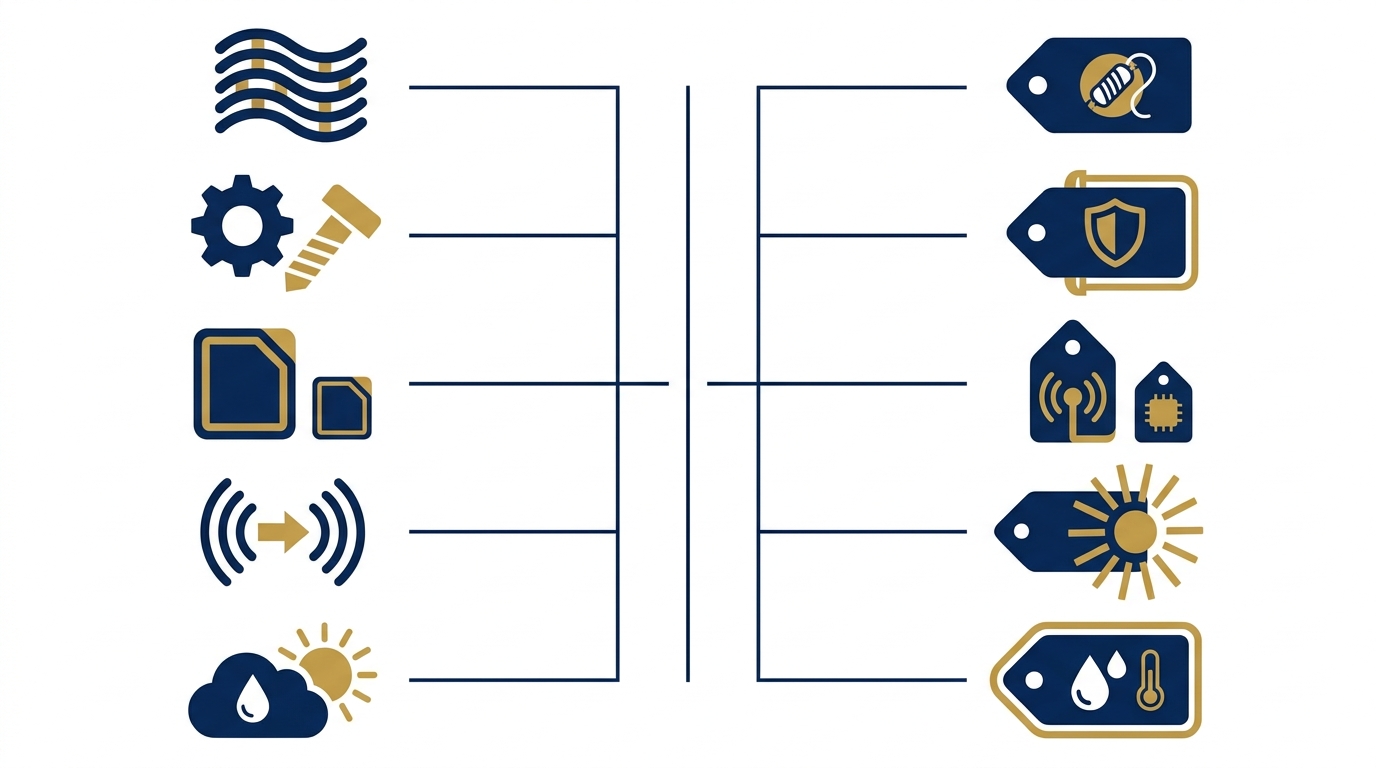
Selecting RFID tags for fashion requires considering 4 criteria: surface type (fabric or metal), tag size relative to the product, read distance requirements, and environmental conditions (humidity, temperature, washing). For regular garments, UHF inlay tags sized 70x15mm or 50x50mm work well. For metal accessories, use specialized on-metal tags.
Comparison table of common tag types:
| Tag type | Suitable surface | Read distance | Application example |
|---|---|---|---|
| UHF inlay tag (wet/dry) | Fabric, paper, plastic | 4-7 meters | Shirts, jeans |
Summary table of key RFID frequency terms
This table summarizes important terms related to RFID frequency, helping businesses understand technical concepts and communicate effectively with suppliers.
| Term | Definition |
|---|---|
| UHF (Ultra High Frequency) | Frequency band from 300 MHz to 3 GHz, used for RFID with long read range |
| ERP (Effective Radiated Power) | Actual radiated power of the device, used to measure transmit power |
| EPC Gen2 | Global standard for UHF RFID tags, ensuring interoperability between devices |
| Passive tag | Tag without internal battery, powered by reader signal |
| On-metal tag | Specialized tag with anti-interference layer, designed for metal surfaces |
| Read range | Maximum distance at which the reader can read the tag |
| RSSI (Received Signal Strength Indicator) | Signal strength measurement, used to assess tag performance |
Common mistakes when choosing RFID frequency and tags for fashion
Common mistakes include choosing tags not compliant with Vietnam's frequency band, using standard tags on metal surfaces, ignoring environmental factors, and not testing before mass deployment. These errors lead to poor performance, wasted costs, and project delays.
- Buying tags optimized for other markets: Some tags are optimized for EU (865-868 MHz) or US (902-928 MHz) bands, which may not perform well in Vietnam's 918.4–923 MHz band.
- Using standard tags on metal: Read distance drops sharply, or tags fail completely.
- Ignoring moisture: In humid environments or after washing, performance degrades significantly.
- Not testing before mass printing: Skipping pilot tests leads to costly rework.
What should be noted in the RFID deployment process for fashion supply chains?
The deployment process includes: assessing needs, selecting tags and readers, pilot testing, system integration, and staff training. Key considerations include ensuring frequency compliance, testing on real products, and planning for scalability.
- Assess needs: Define inventory frequency, product types, and environmental conditions.
- Select tags and readers: Choose tags suitable for the surface and readers that support Vietnam's frequency band.
- Pilot test: Test tags on actual products in real conditions to verify performance.
- System integration: Connect RFID readers to existing POS or inventory management systems.
- Staff training: Train staff on using readers and interpreting data.
Frequently Asked Questions
Is the 918.4–923 MHz frequency compatible with RFID tags imported from China?
Most UHF EPC Gen2 tags from China operate in the 860–960 MHz range, covering the 918.4–923 MHz band, so they are compatible. However, some manufacturers optimize for the EU (865-868 MHz) or US (902-928 MHz) markets. You should ask the supplier to confirm the full operating frequency range before placing large orders.
Do RFID devices require a frequency usage license?
According to Circular 08/2021/TT-BTTTT, RFID devices using the 918.4–923 MHz band with power ≤500mW ERP are exempt from frequency usage licenses. However, imported devices must have conformity certification before being circulated in Vietnam. Businesses should request this certification from suppliers.
Can UHF RFID read through carton boxes containing clothing?
Yes, UHF waves penetrate cardboard and thin plastic films. Read distance through boxes decreases by 20-40% compared to direct reading, remaining about 3-5 meters with standard fabric tags. If the box contains multiple tagged products, the reader can read all of them simultaneously in 1-2 seconds — a major advantage over barcodes that require scanning each item individually.
What is the investment cost for RFID in a small fashion store (under 100m²)?
Costs include: 1 handheld reader (15-30 million VND), 1 RFID label printer (30-60 million VND), RFID tags (800-2,500 VND/tag), and POS integration software. Total initial investment is approximately 50-100 million VND for a basic system. With annual output under 5,000 products, start with warehouse inventory first to assess ROI.
Does RFID completely replace barcodes in the fashion industry?
Not completely. RFID excels in bulk reading speed and fast inventory, but barcodes are still needed for invoice printing, price tags displayed to customers, and compatibility with traditional retail systems. A common solution is a combined tag: one side printed with a barcode, the inside with an RFID chip — costing only 15-25% more than standard tags.
How to check if an RFID tag works correctly at the 918.4–923 MHz frequency?
The simple way: use an RFID reader configured for Vietnam's frequency band, place the tag 1-2 meters away, and check readability. If it reads reliably, the tag is compatible. For more detailed testing, use specialized software (e.g., Zebra RFID Test) to measure response power (RSSI) and center frequency. VietPOS supports testing sample tags before ordering.
Cần tư vấn thiết bị/giải pháp cụ thể?
Việt POS phản hồi trong 30 phút · Hotline 4 vùng · Khảo sát miễn phí.
