Mục lục bài viết (8)
- What is the 918.4–923 MHz frequency and why is it mandatory for warehouse gates in Vietnam?
- How to verify that imported RFID equipment is compliant for warehouse gates?
- How does the 918.4–923 MHz band affect read range when container trucks move?
- Common mistakes when selecting RFID equipment for warehouse gates
- Summary table: Technical criteria for compliant warehouse gate RFID equipment
- Practical testing procedure before deploying a warehouse gate RFID system
- Advice when selecting a warehouse gate RFID solution from a supplier
- Frequently Asked Questions
The 918.4–923 MHz RFID frequency is the only compliant band for UHF RFID equipment in Vietnam, as stipulated in Circular 08/2021/TT-BTTTT. For warehouse gate applications with automatic container reading, understanding this regulation and the impact of frequency on read range is decisive for selecting appropriate equipment and ensuring stable system operation.
In Vietnam, UHF RFID equipment for warehouse gates must operate in the 918.4–923 MHz band with power ≤500 mW ERP per Circular 08/2021/BTTTT. When selecting equipment, check the compliance label, conformity certificate, and operating frequency range. This band allows tag reading at distances of 8-12 meters when container trucks pass through the gate.
Table of Contents
- What is the 918.4–923 MHz frequency and why is it mandatory for warehouse gates in Vietnam?
- How to verify that imported RFID equipment is compliant for warehouse gates?
- How does the 918.4–923 MHz band affect read range when container trucks move?
- Common mistakes when selecting RFID equipment for warehouse gates
- Summary table: Technical criteria for compliant warehouse gate RFID equipment
- Practical testing procedure before deploying a warehouse gate RFID system
- Advice when selecting a warehouse gate RFID solution from a supplier
- Frequently Asked Questions
What is the 918.4–923 MHz frequency and why is it mandatory for warehouse gates in Vietnam?
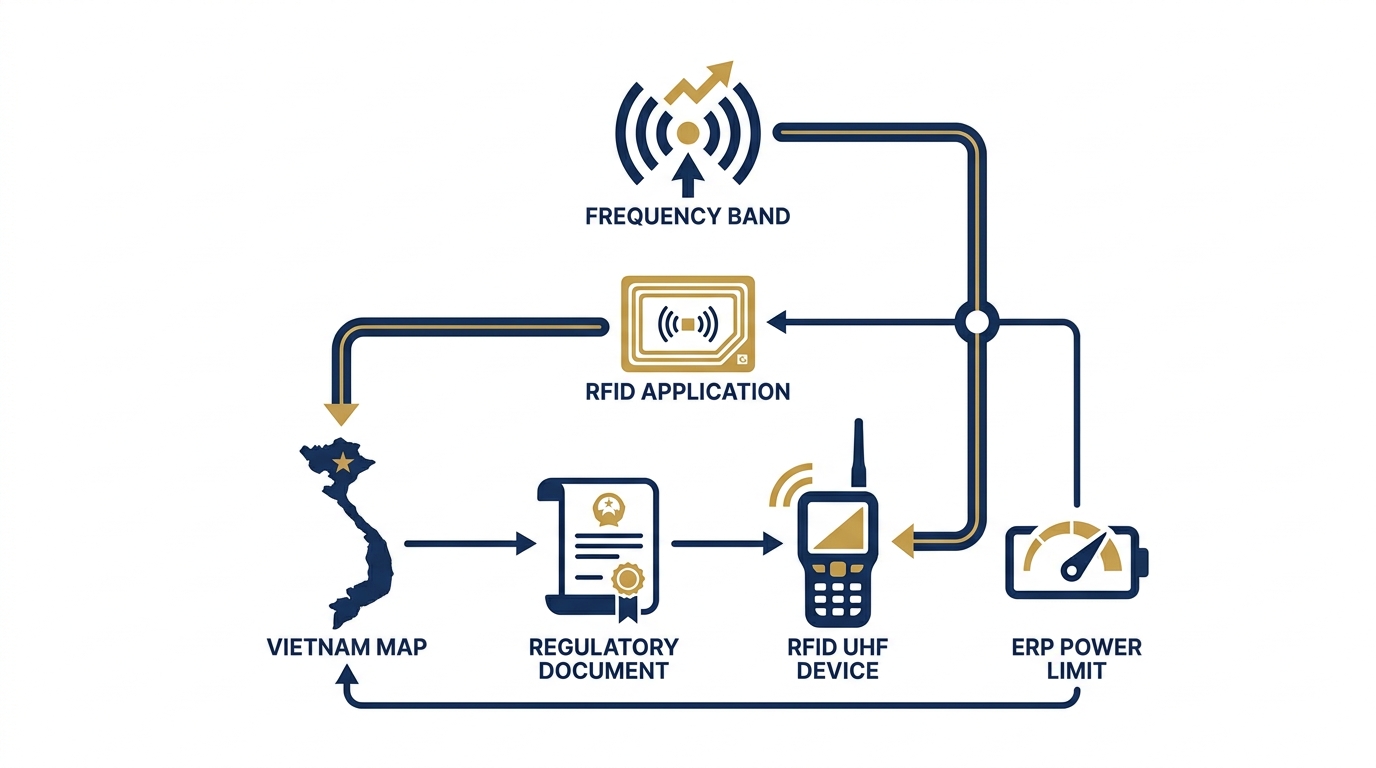
The 918.4–923 MHz band belongs to the UHF (Ultra High Frequency) range, designated specifically for RFID applications in Vietnam under Circular 08/2021/TT-BTTTT. This is the mandatory frequency band for legally imported and used UHF RFID equipment in Vietnam, with a maximum emission power of 500 mW ERP.
Circular 08/2021/TT-BTTTT (issued on May 31, 2021) specifies the application of technical standards and regulations for radio transmitting equipment. Accordingly, UHF RFID equipment must operate in the 918.4–923 MHz band with an effective radiated power (ERP) not exceeding 500 mW. This regulation applies to all UHF RFID equipment, including fixed readers for warehouse gates, handheld readers, and accompanying antennas.
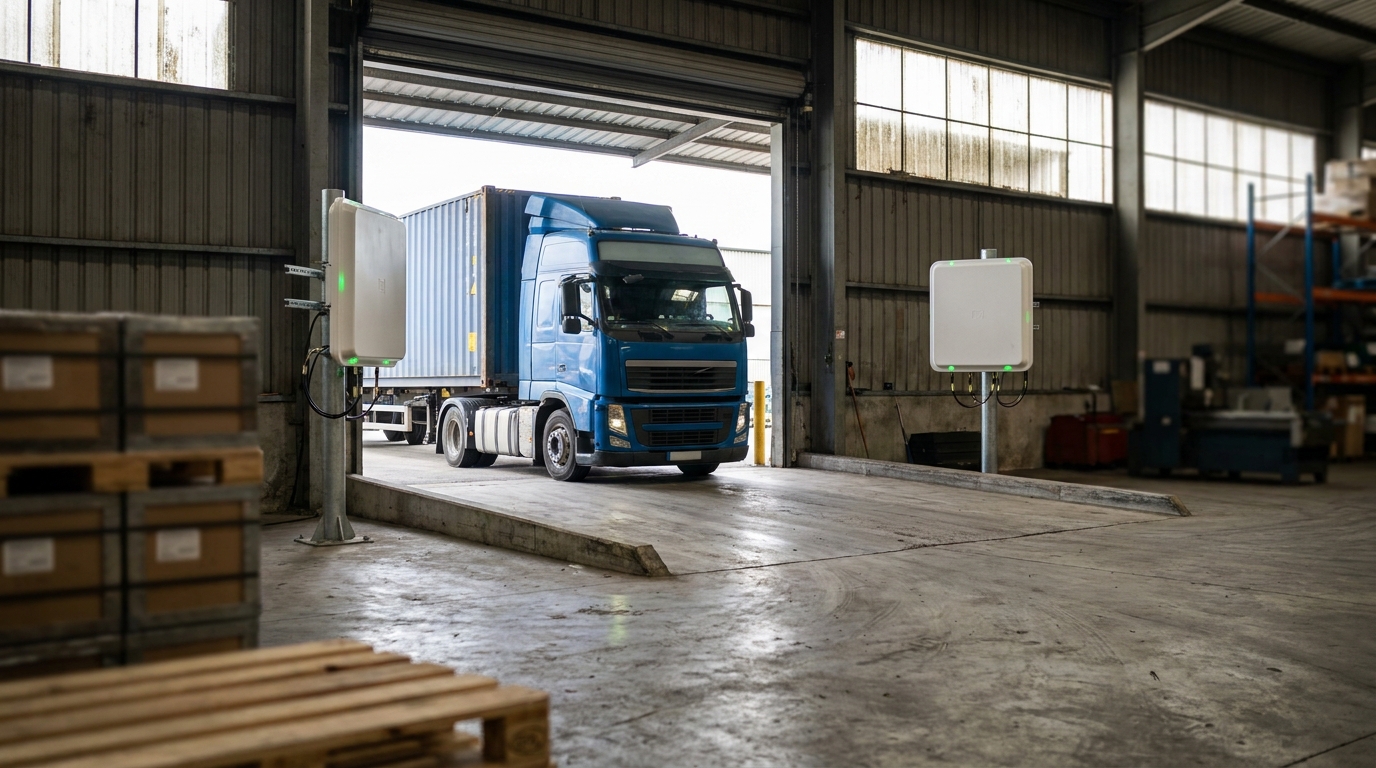
For warehouse gate applications reading container trucks, the UHF band is chosen for its long-range reading capability (3 to 12 meters depending on configuration) and the ability to read multiple tags simultaneously. UHF RFID tags attached to containers or pallets can be read automatically as trucks pass through the gate at speeds of 10-15 km/h, without requiring the vehicle to stop. This reduces processing time from 3-5 minutes per truck (manual) to 15-30 seconds per truck (automatic).
How to verify that imported RFID equipment is compliant for warehouse gates?
Related Products
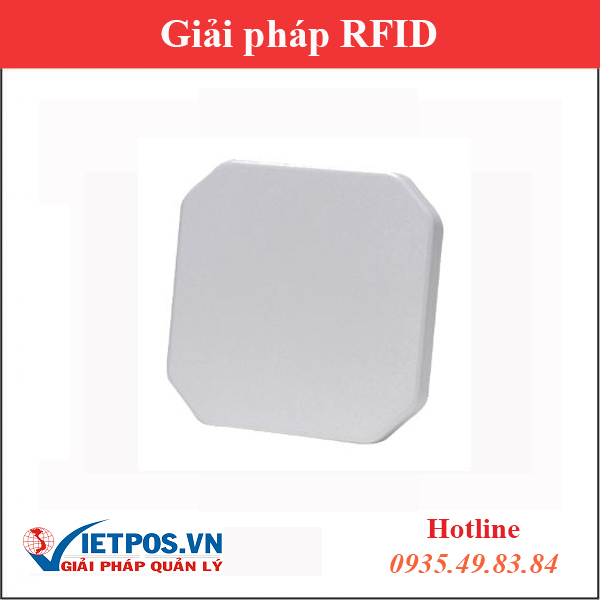
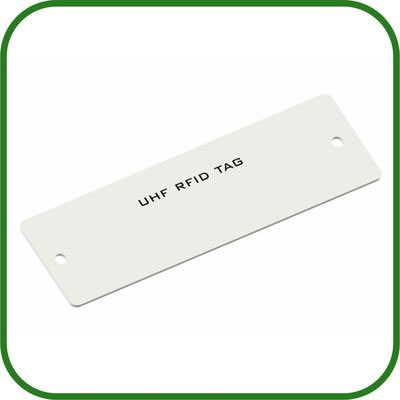


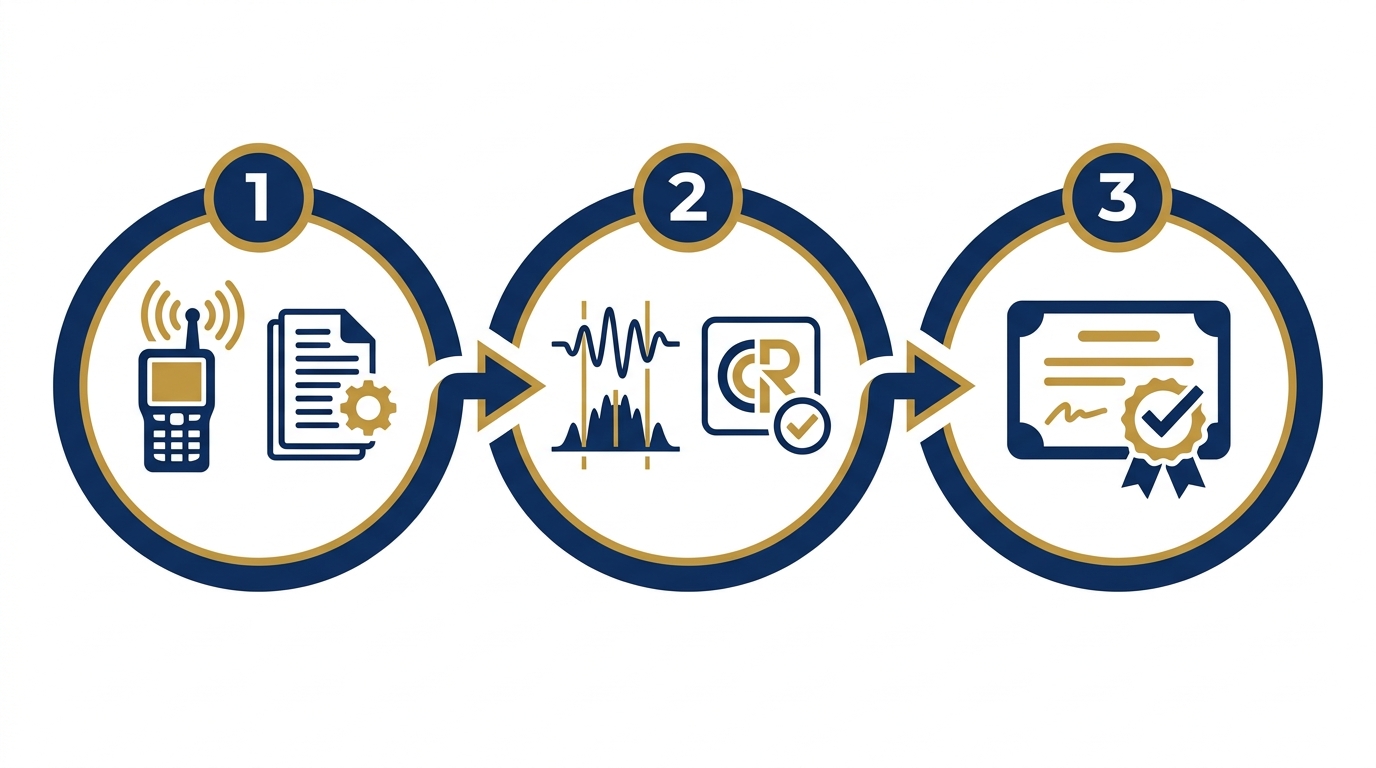
To verify that imported UHF RFID equipment is compliant, check three factors: the conformity mark (CR mark) on the device, the conformity certificate issued by a designated assessment organization, and the operating frequency range in the technical documentation, which must be within 918.4–923 MHz.
The verification process for imported RFID equipment includes the following steps:
- Check the conformity mark (CR mark): The device must have the CR (Conformity to Regulations) mark on the device body or packaging. This mark confirms the device has been certified to meet the national technical regulation QCVN 54:2020/BTTTT.
- Verify the conformity certificate: Request the supplier to provide a copy of the conformity certificate issued by an assessment organization designated by the Ministry of Information and Communications. This certificate specifies the operating frequency range and emission power.
- Check the operating frequency range: In the device's technical documentation (datasheet), the operating frequency range must state 918.4–923 MHz. Devices imported from Europe typically have a frequency range of 865–868 MHz, and from the US 902–928 MHz — neither is compliant in Vietnam.
- Check emission power: The effective radiated power (ERP) must not exceed 500 mW. This parameter is usually stated in the datasheet or on the device label.
- Request written commitment from the supplier: For imported equipment, request the supplier to commit that the device has been declared for conformity at the Radio Frequency Department or the local Department of Information and Communications.
Note: If the equipment is not compliant, the using enterprise may be subject to administrative penalties under Decree 119/2020/NĐ-CP, with fines from 10-20 million VND for using transmitting equipment without a license or without conformity.
How does the 918.4–923 MHz band affect read range when container trucks move?
How does the 918.4–923 MHz band affect read range when container trucks move?
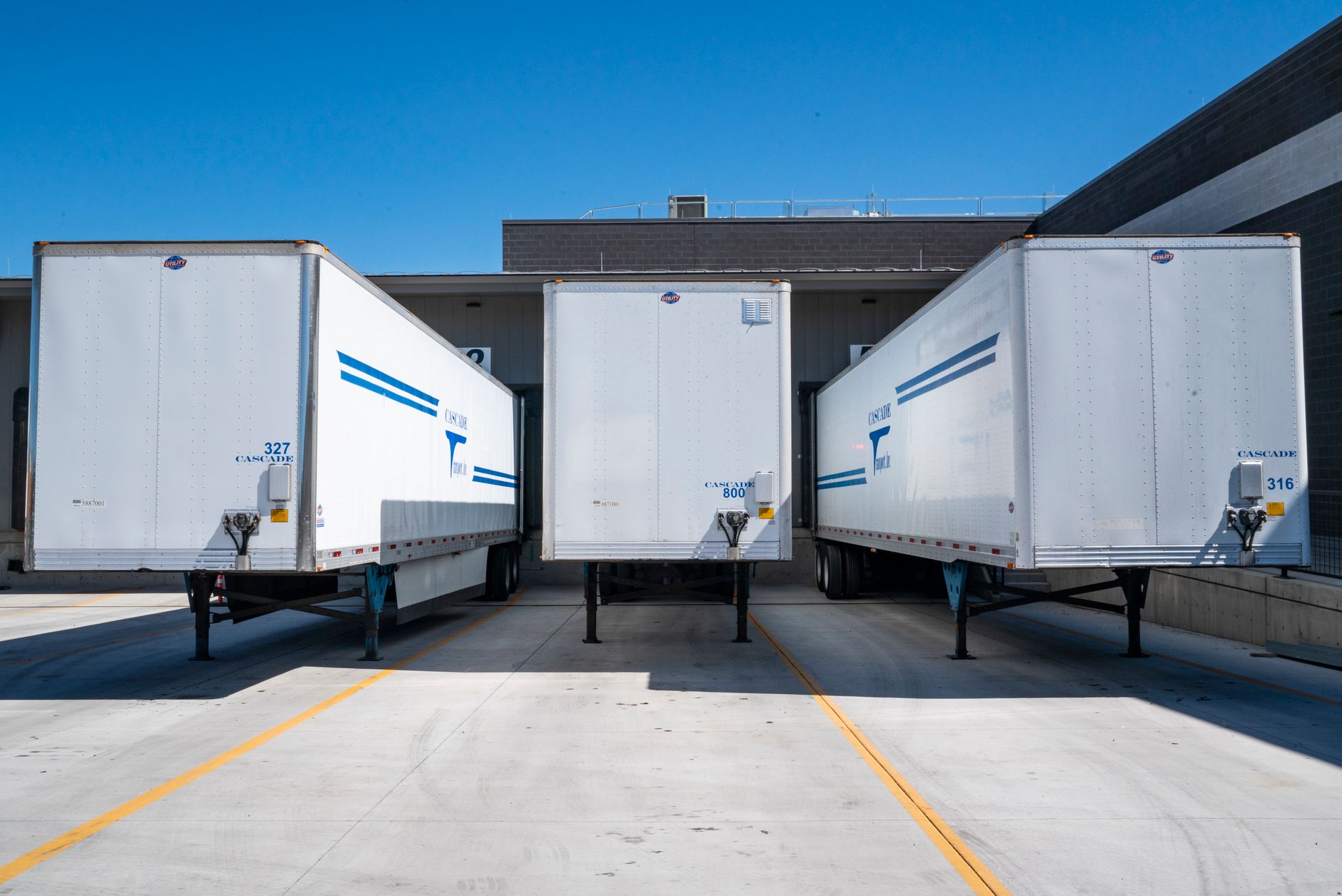
The 918.4–923 MHz band allows RFID tag reading at distances of 8-12 meters with a fixed reader at 500 mW ERP. When container trucks pass through the gate at speeds of 10-15 km/h, the system still reads tags thanks to fast signal processing, but appropriate coverage area must be calculated.
The actual read range of a UHF RFID system in the 918.4–923 MHz band depends on several factors:
- Emission power: With the 500 mW ERP limit, the maximum read range with passive tags is 8-12 meters under ideal conditions (open space, no interference). In warehouse gate environments with metal and container trucks, the actual range drops to 3-7 meters.
- Tag placement: Tags attached to containers should be placed where they are not shielded by metal frames. The best read range is achieved when the tag is 0.5-2 meters above the ground, directly facing the antenna.
- Vehicle speed: At speeds of 10-15 km/h (approximately 3-4 m/s), the time the truck spends in the coverage area (3-4 meters wide) is 1-1.5 seconds. The reader needs to perform 3-5 reads during this time to confirm the tag is valid.
- Number of antennas: Using 2 or more antennas (one on each side of the gate) increases coverage and ensures tag reading from all angles as the truck moves.
- Signal-blocking materials: Metal and liquids absorb and reflect RF waves. Metal containers, goods containing liquids, or trucks with metal bodies will significantly reduce read range. A site survey is necessary before installation.
Practical example: A warehouse gate 4 meters wide, with container trucks passing at 10 km/h. Using a fixed reader at 500 mW ERP and 2 antennas (one on each side of the gate), the coverage area reaches 3-4 meters in width. The time the truck is in the coverage area is about 1.4 seconds, enough for the reader to perform 4-6 reads — ensuring reliability above 95%.
Common mistakes when selecting RFID equipment for warehouse gates
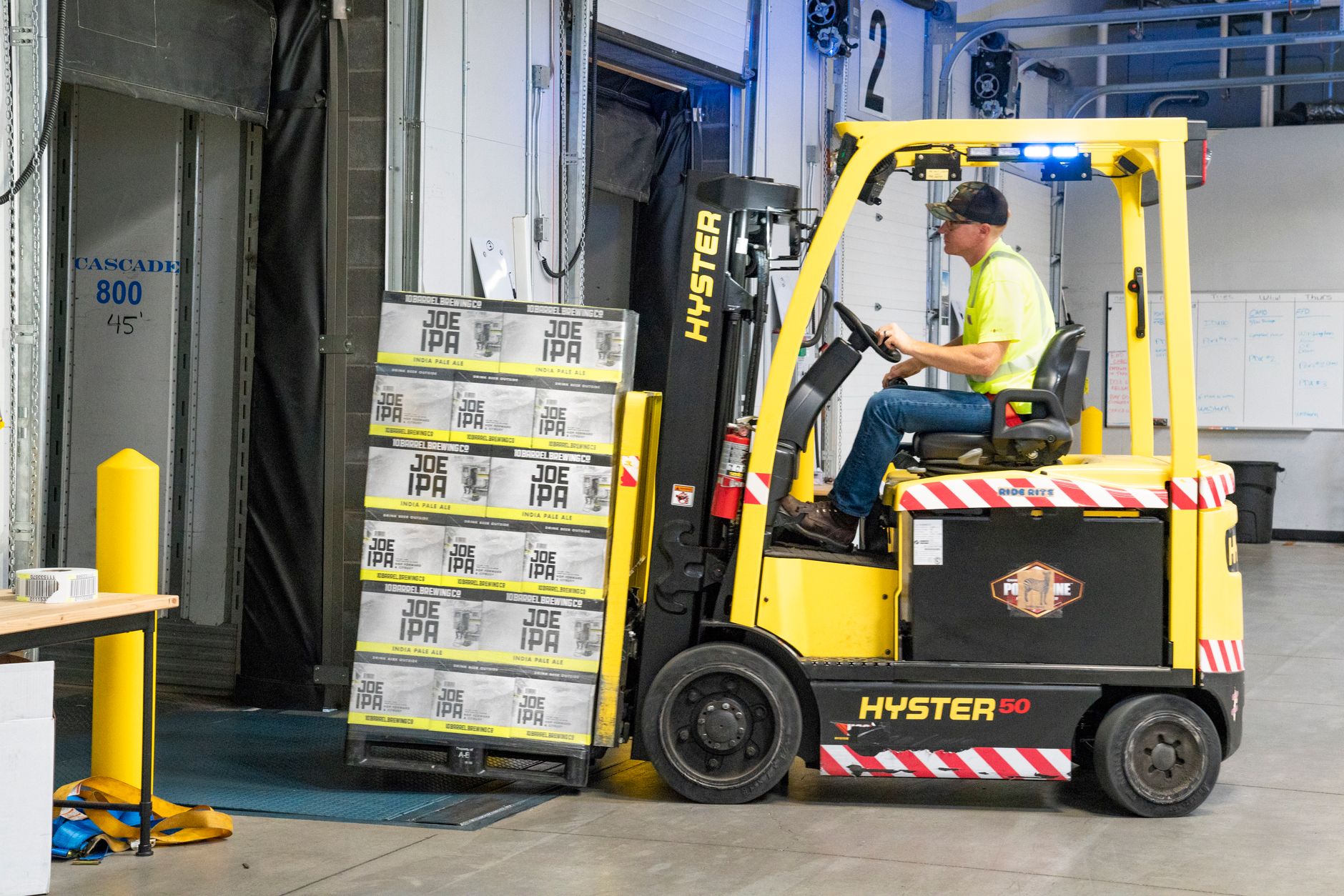
Common mistakes when selecting RFID equipment for warehouse gates include choosing devices with non-compliant frequency bands, ignoring power limits, using standard tags on metal surfaces, and neglecting to test the actual environment. These errors lead to system failure or legal issues.
Based on real deployment experience, here are the most common mistakes:
- Choosing devices with non-compliant frequency bands: Many enterprises import UHF RFID readers from Europe (865–868 MHz) or the US (902–928 MHz) without checking the frequency band. These devices cannot be legally used in Vietnam and may cause interference.
- Ignoring the 500 mW ERP power limit: Some high-power readers (up to 1-4 W) are configured for export markets. Using them in Vietnam violates regulations and may affect other radio services.
- Using standard tags on metal surfaces: Standard UHF RFID tags lose up to 80% of their performance when attached directly to metal. For containers and metal pallets, use specialized on-metal tags.
- Not testing the actual environment: Read range is significantly affected by metal structures, liquids, and interference. Deploying without a site survey leads to unreliable reading.
- Choosing a reader with insufficient antenna ports: For a gate 4-6 meters wide, at least 2 antennas are needed. Some readers have only 1-2 ports, limiting coverage.
Summary table: Technical criteria for compliant warehouse gate RFID equipment
| Component | Technical Criteria | Notes |
|---|---|---|
| Fixed reader | Frequency 918.4–923 MHz; Power ≤500 mW ERP; ≥4 antenna ports; Support EPC Gen2 (ISO 18000-63) | Choose a reader with adjustable power to optimize coverage |
| Antenna | Frequency range covering 918.4–923 MHz; Gain 6-9 dBi; Polarization circular or linear | Circular polarization is suitable for moving vehicles |
| Tag | UHF passive; On-metal type for containers; Read range ≥5 meters | Test on actual surface before bulk purchase |
| Cable & connectors | Low-loss coaxial cable (e.g., LMR-400); Length ≤10 meters | Long cables reduce signal strength |
Practical testing procedure before deploying a warehouse gate RFID system
Before deploying a warehouse gate RFID system, conduct a practical test with the actual vehicle, tag placement, and gate environment. Measure read rate at different speeds and angles to ensure reliability above 95% before full deployment.
- Prepare test equipment: Use the actual reader, antennas, and tags planned for deployment. Ensure all equipment is compliant with the 918.4–923 MHz band.
- Set up the test environment: Install antennas at the gate in the planned positions. Connect the reader and configure power to 500 mW ERP.
- Attach test tags: Place tags on the container or pallet at the recommended positions (0.5-2 meters above ground, facing the antennas).
- Run the test: Drive the vehicle through the gate at the expected speed (10-15 km/h). Record the number of successful reads out of total attempts.
- Evaluate results: If the read rate is below 95%, adjust antenna angles, increase the number of antennas, or change tag placement. Repeat the test until the desired reliability is achieved.
Advice when selecting a warehouse gate RFID solution from a supplier
When selecting a warehouse gate RFID solution from a supplier, verify their experience with similar deployments, request references, and ensure they provide on-site testing and after-sales support. A reliable supplier will help you avoid costly mistakes.
- Check supplier experience: Ask for case studies of warehouse gate RFID deployments, especially with container trucks. Experienced suppliers can anticipate challenges.
- Request a site survey: A professional supplier will conduct a site survey to assess environmental factors (metal, interference) before proposing a solution.
- Demand compliance documentation: Ensure the supplier provides conformity certificates and CR marks for all equipment.
- Ask for a pilot test: Before committing, request a pilot test at your facility with your actual vehicles and tags.
- Consider after-sales support: Choose a supplier that offers training, maintenance, and fast technical support.
Frequently Asked Questions
Can UHF RFID equipment imported from Europe be used in Vietnam?
No. UHF RFID equipment imported from Europe typically operates in the 865–868 MHz band, which is not within the compliant 918.4–923 MHz band in Vietnam. Using such equipment violates regulations and may cause interference. You should request the supplier to reconfigure the frequency band or choose equipment with the 918.4–923 MHz band before import.
Is the 500 mW ERP power of RFID equipment sufficient to read container trucks?
Yes. With 500 mW ERP, a fixed reader can read UHF RFID tags at distances of 8-12 meters under ideal conditions. In warehouse gate environments with metal container trucks, the actual range is 3-7 meters — sufficient for gates 3-5 meters wide. If wider coverage is needed, use 2 antennas or choose a reader with multiple antenna ports.
How do I know if RFID equipment is compliant in Vietnam?
Check three factors: (1) the CR mark on the device body, (2) the conformity certificate issued by an assessment organization designated by the Ministry of Information and Communications, and (3) the operating frequency range in the datasheet is 918.4–923 MHz. Request the supplier to provide copies of these documents before signing the contract.
Which UHF RFID tag is suitable for mounting on metal containers?
Use specialized on-metal UHF RFID tags. These tags have an isolation layer between the antenna chip and the metal surface, maintaining read performance. Standard UHF RFID tags (non-on-metal) will lose up to 80% of their performance when attached directly to metal surfaces.
Can a warehouse gate RFID system read multiple tags simultaneously?
Yes. UHF RFID readers compliant with ISO 18000-63 (EPC Gen2) support simultaneous reading of 300-600 tags per second thanks to anti-collision mechanisms. With a container truck carrying 30-40 pallets, each with one tag, the system can read all tags in 1-2 seconds as the truck passes through the gate. However, ensure tags are not completely shielded by metal goods or liquids.
Do I need a frequency license to deploy a warehouse gate RFID system?
Under current regulations, UHF RFID equipment is in the category of radio equipment applications that do not require a frequency license if the equipment has been certified compliant under Circular 08/2021/TT-BTTTT. However, enterprises must ensure imported equipment has been declared and has a conformity certificate.
Cần tư vấn thiết bị/giải pháp cụ thể?
Việt POS phản hồi trong 30 phút · Hotline 4 vùng · Khảo sát miễn phí.
