
Mục lục bài viết (4)
The RFID frequency 918.4–923 MHz is the UHF band licensed by the Ministry of Information and Communications of Vietnam for radio frequency identification devices. For manufacturing enterprises that need to track WIP (Work In Progress) by process stage, this band provides accurate reading of materials and semi-finished products through fixed read points without direct contact.
The 918.4–923 MHz frequency is the compliant UHF band for RFID in Vietnam, with power ≤500 mW ERP under Circular 08/2021/BTTTT. This band is optimal for WIP by process stage because it can read through cardboard layers, with a range of 3-7m, suitable for fixed read points. VietPOS provides equipment infrastructure, not legal advice.
Table of Contents
- What is the RFID frequency 918.4–923 MHz and why is it suitable for WIP?
- What are the RFID compliance regulations in Vietnam under Circular 08/2021?
- What is the import procedure for UHF RFID equipment for factories in Vietnam?
- How to avoid RFID frequency interference in manufacturing factories?
- Summary table of technical specifications and regulations for UHF RFID WIP
- Common mistakes when deploying RFID WIP in Vietnam
- What is the investment cost for UHF RFID infrastructure for WIP?
- Deployment process for WIP RFID by process stage at factories in Vietnam
- Limitations of UHF RFID in WIP environments to note
- Frequently asked questions about the RFID frequency 918.4–923 MHz for WIP
What is the RFID frequency 918.4–923 MHz and why is it suitable for WIP?

The RFID frequency 918.4–923 MHz belongs to the UHF (Ultra High Frequency) band, which Vietnam has allocated specifically for fixed and mobile RFID devices. This band allows reading tags from a distance of 3-7 meters, through cardboard layers, enabling WIP tracking by process stage without stopping the production line.
Unlike low-frequency (125 kHz) or high-frequency (13.56 MHz) RFID, which can only be read within a few centimeters, UHF 918.4–923 MHz can read multiple tags simultaneously (up to 200-500 tags/second with the Zebra FX9600 reader). This is important when a pallet or tray containing many WIP components needs to be recorded simultaneously as it passes through a read point between process stages.
According to the national radio frequency allocation plan, Vietnam uses the 918–923 MHz band for RFID applications, with a maximum transmit power of 500 mW ERP. This band falls within the 918.4–923 MHz range supported by commercial UHF devices (Zebra, Impinj, Alien), so enterprises can import and deploy without hardware customization.
What are the RFID compliance regulations in Vietnam under Circular 08/2021?
Related Products



Circular 08/2021/TT-BTTTT issued the national technical regulation QCVN 117:2021/BTTTT on RFID equipment. Accordingly, devices operating in the 918.4–923 MHz band must have power ≤500 mW ERP and must undergo conformity certification and declaration before being put into circulation.
The compliance process consists of 3 main steps:
- Conformity testing: Equipment (readers, antennas) is sent to designated testing laboratories (e.g., VNPT, Viettel, Quatest) to measure frequency, transmit power, and bandwidth parameters.
- Conformity certification: After passing the tests, the certification body issues a Conformity Certificate (form 8).
- Conformity declaration: The importing or manufacturing enterprise submits the declaration dossier to the Department of Information and Communications or the Radio Frequency Directorate.
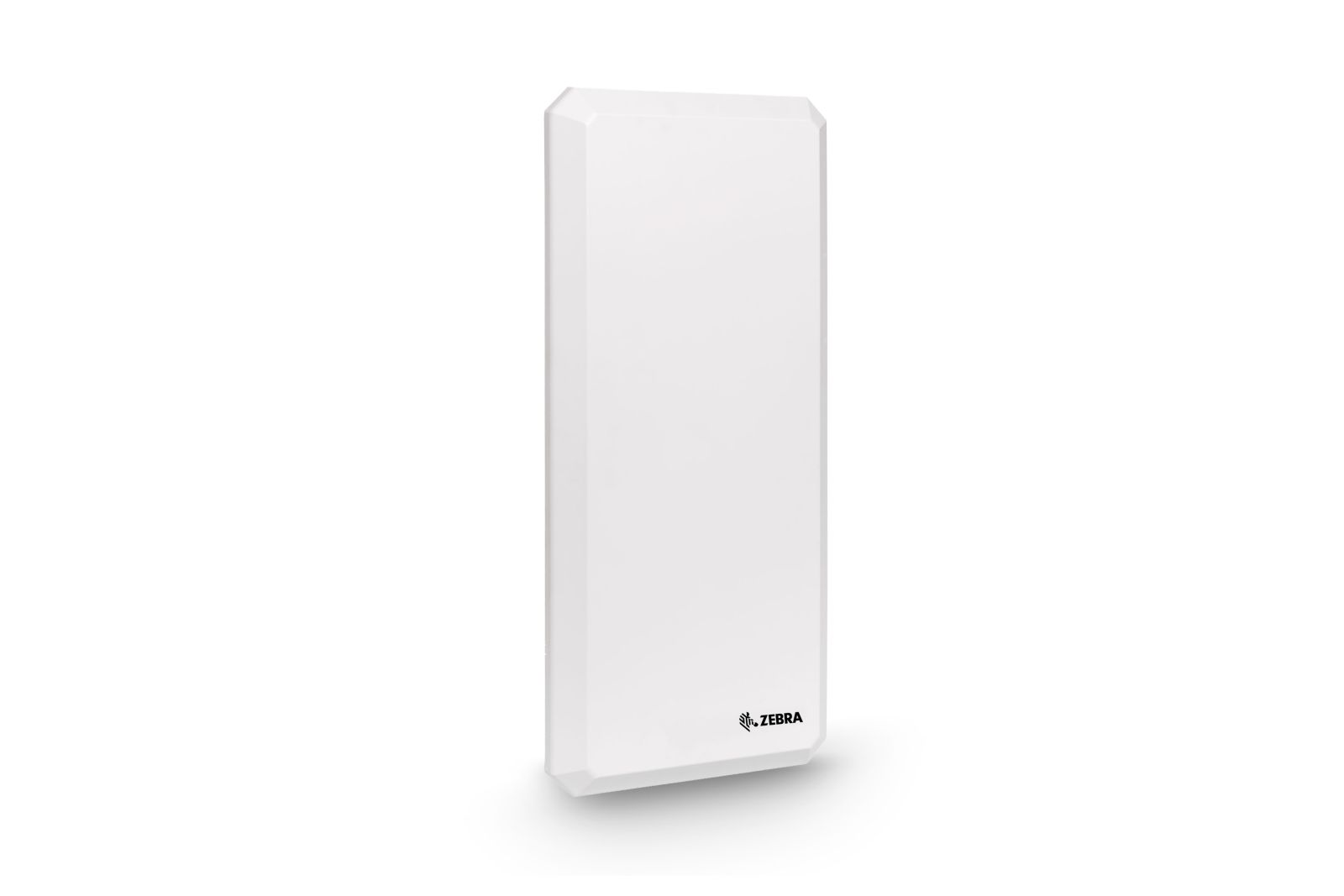
For manufacturing enterprises wanting to deploy WIP RFID, note: passive RFID tags are not subject to conformity certification; only transmitting devices (readers, antennas) require it. VietPOS provides UHF reader lines that are already compliant, such as the Zebra FX9600 and Zebra AN480 antenna, helping enterprises reduce import procedures.
What is the import procedure for UHF RFID equipment for factories in Vietnam?

UHF RFID equipment falls under group 2 according to Decree 30/2011/ND-CP, requiring an import license or confirmation of not being subject to import prohibition from the Radio Frequency Directorate. The license application time is usually 5-7 working days.
Import procedure for UHF RFID equipment:
- Obtain import license: Submit the dossier to the Radio Frequency Directorate (Ministry of Information and Communications), including technical documentation of the equipment and a commitment to operate within the 918.4–923 MHz band.
- Customs declaration: The HS code is typically 8517.62 (transceiver equipment); the import license must be submitted during customs procedures.
- Conformity certification: After customs clearance, the enterprise conducts testing and certification within 30-60 days.
In practice, deployments at textile and electronics factories in Binh Duong and Dong Nai take about 8-12 weeks from ordering to the official operation of the WIP RFID system, with 2-3 weeks dedicated to legal procedures. VietPOS assists customers in preparing technical dossiers and coordinates with certification bodies to streamline the process.
How to avoid RFID frequency interference in manufacturing factories?
RFID interference in factories is mainly caused by wave reflection from metal surfaces, interference from electric motors, welding machines, and conflicts between nearby readers. Solutions include: surveying antenna installation positions, configuring appropriate power levels, and using metal-mount tags.
Three common interference sources and how to handle them:
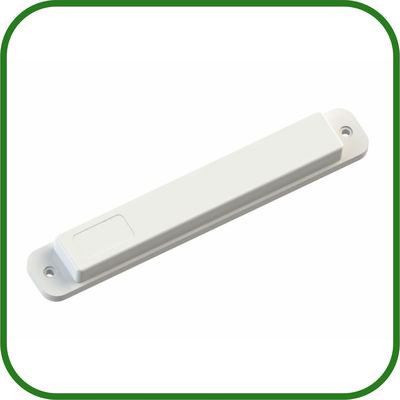
- Wave reflection from metal: Steel racks and steel tables in the production line cause wave reflection, leading to misreads. Solution: use VP-T902 metal-mount passive RFID tags with an anti-interference spacer, or adjust the antenna angle 15-30 degrees relative to the metal surface.
- Interference from high-power electrical equipment: Variable frequency drives and spot welders emit electromagnetic radiation in the 900 MHz band. Solution: place the reader at least 2-3 meters away from the interference source, and use shielded cables.
- Conflict between readers: When two read points are less than 10 meters apart, signals overlap. Solution: configure different frequency channels (the 918.4–923 MHz band is divided into 4 channels of 200 kHz), and reduce transmit power to 250-400 mW ERP.
A real case study: A mechanical factory in Thai Nguyen Industrial Park installed 3 RFID portals in a 2000 m² workshop. In the first month, the misread rate was up to 12% due to antennas facing each other. After re-surveying and arranging antennas in a staggered layout, the accurate read rate reached 99.2%.
Cần tư vấn thiết bị/giải pháp cụ thể?
Việt POS phản hồi trong 30 phút · Hotline 4 vùng · Khảo sát miễn phí.
