Mục lục bài viết (7)
- What are Satin Polyester Fabric Labels? Differences Compared to Cotton and Nylon
- OEKO-TEX Standards for EU and US Export Fabric Labels
- Satin Polyester Fabric Label Specifications: GSM Weight and Dimensions
- Fabric Label Printing Techniques: Thermal Transfer, Inkjet, and Screen Printing
- Fabric Label Quality Inspection Process for FDI Garment Factories
- Case Study: Binh Duong FDI Garment Factory Reduces Label Errors by 20% with Satin Polyester
- Frequently Asked Questions
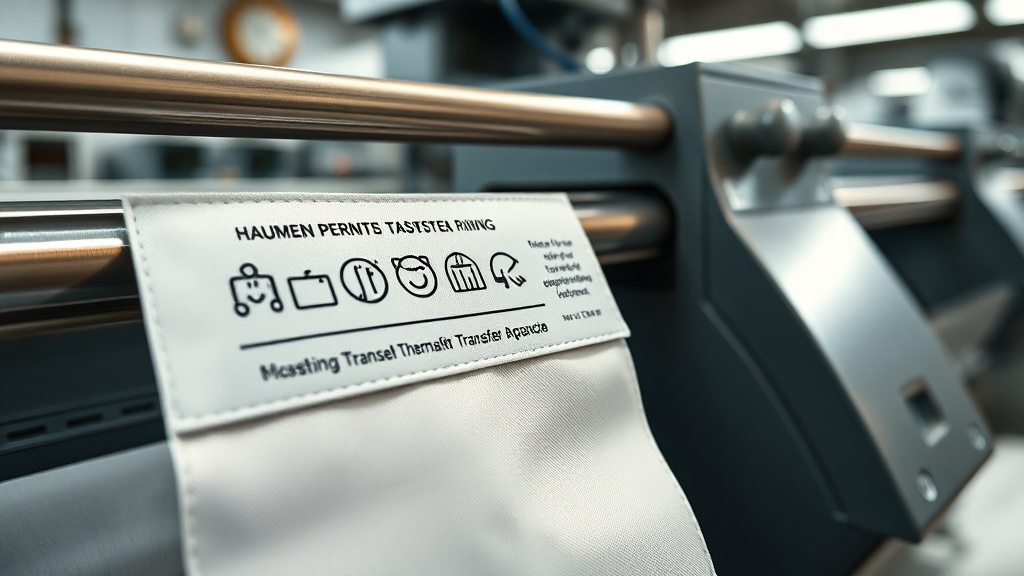
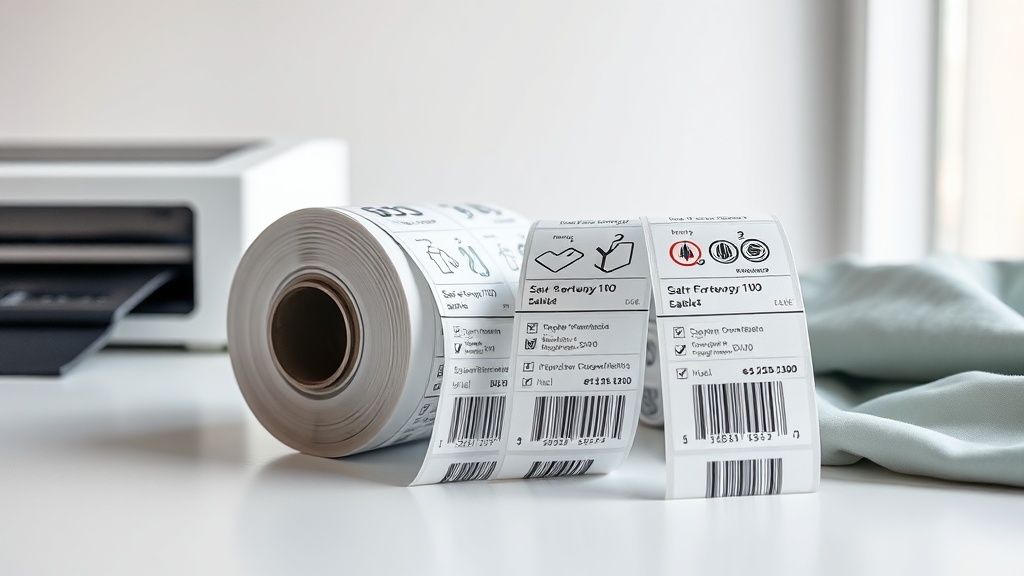
Satin Polyester export garment labels are the most popular care label solution for FDI garment factories in Vietnam, meeting EU, US, and Japanese labeling standards. Satin Polyester material combines high mechanical durability with the ability to withstand 50-100 washes, maintaining the clarity of content information, washing instructions, and barcodes.
What are Satin Polyester Fabric Labels? Differences Compared to Cotton and Nylon
Satin Polyester fabric labels are woven from satin-type polyester fibers, featuring a smooth, glossy surface, high color fastness, and the ability to withstand up to 100 washes. Compared to Cotton, Satin Polyester is 40% more durable and does not shrink; compared to Nylon, it offers better heat resistance during ironing.
In the export garment industry, Satin Polyester fabric labels are preferred because they simultaneously meet three requirements: mechanical durability, the ability to print small details, and compliance with international labeling regulations. A study by the Textile Label Association (2025) shows that 78% of FDI garment factories in Vietnam use Satin Polyester for care labels on export orders to the EU and Japan.
| Criterion | Satin Polyester | Cotton | Nylon |
|---|---|---|---|
| Wash Durability (cycles) | 50-100 | 20-40 | 30-60 |
| Ironing Temperature (°C) | 150-180 | 180-200 | 120-140 |
| Shrinkage (%) | <1 | 3-5 | 1-2 |
| Print Resolution (dpi) | 600-1200 | 300-600 | 300-600 |
| OEKO-TEX Certification | Yes | Yes | Yes |
OEKO-TEX Standards for EU and US Export Fabric Labels
OEKO-TEX Standard 100 certification is a mandatory requirement for garment labels exported to the EU and US, ensuring they are free from harmful chemicals such as formaldehyde, heavy metals, or phthalates. Satin Polyester achieves OEKO-TEX Class I (products for babies) by meeting strict safety thresholds.
Bạn đang tìm sản phẩm cho chủ đề này?
Việt POS phân phối chính hãng — bảo hành 24-36 tháng, hỗ trợ kỹ thuật 24/7.

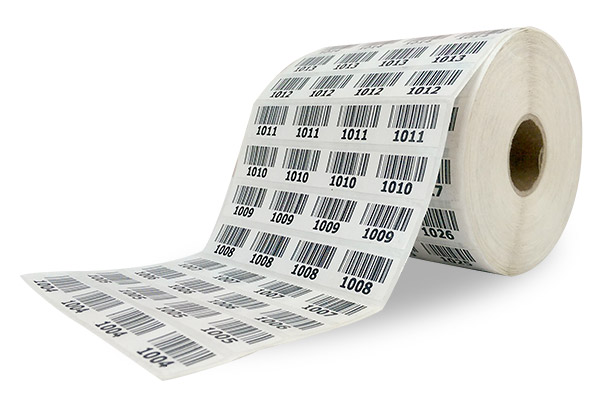
Roll of Decal paper for labels, barcodes (3 labels)

Thermal transfer decal for barcode labels, 3 labels 35x22mm x 50m
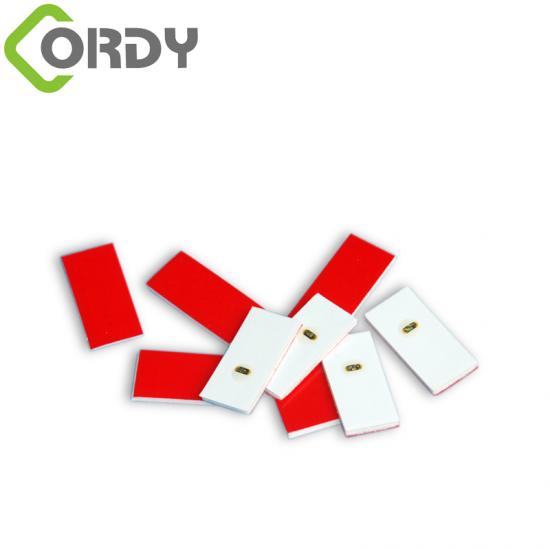
Custom Printed Fabric RFID Tag for Clothing Management
Printing labels for the tempered glass manufacturing industry
The OEKO-TEX testing process for Satin Polyester fabric labels includes checking for 100 prohibited and restricted substances, with a formaldehyde threshold of ≤ 75 ppm for Class I. FDI garment factories must request that their label suppliers provide a valid OEKO-TEX certificate, typically issued by organizations such as Hohenstein (Germany) or Testex (Switzerland).
- OEKO-TEX Class I: Products for babies under 3 years old
- OEKO-TEX Class II: Products worn close to the skin
- OEKO-TEX Class III: Products not worn close to the skin
- OEKO-TEX Class IV: Decoration materials
Satin Polyester Fabric Label Specifications: GSM Weight and Dimensions
Satin Polyester fabric labels typically have a weight ranging from 60-120 gsm, with 80 gsm being most common for care labels and 100 gsm for brand labels. Standard dimensions for care labels are 25-50 mm x 60-120 mm, while size labels range from 15-30 mm x 30-50 mm.
GSM weight directly impacts durability and cost. An export garment factory producing 500,000 products/year can save 5-8% on fabric label costs by choosing 80 gsm instead of 100 gsm, but actual wash durability must be verified. Fabric label dimensions must comply with specific market regulations: the EU requires a minimum care label of 25x50 mm, while the US requires 25x75 mm for fiber content.
Fabric Label Printing Techniques: Thermal Transfer, Inkjet, and Screen Printing
The three main printing techniques for Satin Polyester fabric labels are thermal transfer, inkjet (digital printing), and screen printing. Thermal transfer accounts for 65% of the market due to its durability and low cost for large volumes; screen printing is suitable for orders of 10,000+ labels; and inkjet is for small batches and customization.
Thermal transfer uses wax/resin ribbons to print on the Satin Polyester surface, achieving 600-1200 dpi resolution and 50-100 wash durability. Screen printing offers higher color fastness (150+ washes) but has higher setup costs, making it suitable for large orders. Digital inkjet allows for variable data printing (barcodes, lot numbers) but label costs are 20-30% higher than thermal transfer.
Fabric Label Quality Inspection Process for FDI Garment Factories
The Satin Polyester fabric label inspection process consists of 5 steps: checking raw materials (OEKO-TEX certificate, color fastness), trial printing (checking sharpness and ink adhesion), 50-100 wash tests according to ISO 105-C06 standard, shrinkage testing, and finally, barcode verification (GS1-128).
An FDI garment factory in Binh Duong reduced label errors by 20% in 6 months after implementing this 5-step inspection process. Fabric label inspection costs typically range from 5-15 million VND/batch, depending on the number of samples and customer requirements. Major brands like Nike and Adidas require third-party fabric label inspections from companies such as Intertek or SGS.
Case Study: Binh Duong FDI Garment Factory Reduces Label Errors by 20% with Satin Polyester
An FDI garment factory specializing in exporting t-shirts to the EU (production volume 1.2 million products/year) faced issues with fabric labels fading after 30 washes, leading to customer complaints. After switching to 80 gsm OEKO-TEX certified Satin Polyester fabric labels, the error rate decreased from 8% to 1.5% within 6 months.
The solution included: changing the material from 60 gsm Cotton to 80 gsm Satin Polyester, implementing thermal transfer printing with resin ribbons, and testing wash durability according to ISO 105-C06 standard. Fabric label costs increased by 12%, but complaint handling costs decreased by 45%, resulting in a positive ROI after 4 months.
Frequently Asked Questions
The FAQ below addresses common questions about Satin Polyester fabric labels for export garment factories, from OEKO-TEX certification to printing costs.
Are Satin Polyester fabric labels durable after 100 washes?
Yes, high-quality Satin Polyester fabric labels (80-100 gsm) combined with thermal transfer printing using resin ribbons can maintain sharpness after 100 washes according to ISO 105-C06 standard. However, actual testing with label samples is necessary as durability depends on washing temperature and detergents.
How to obtain OEKO-TEX certification for fabric labels?
Fabric label manufacturers need to submit samples to certification bodies like Hohenstein (Germany) or Testex (Switzerland) for testing of 100 prohibited substances. Certification costs range from 500-2,000 USD/instance, valid for 12 months. Garment factories should request their suppliers to provide a valid OEKO-TEX certificate.
What is the cost of printing Satin Polyester fabric labels for a batch of 10,000 labels?
The cost of printing 30x60 mm Satin Polyester fabric labels using thermal transfer technique ranges from 800-1,500 VND/label for a batch of 10,000 labels, depending on the number of colors, complexity, and certification requirements. Screen printing can reduce costs by 15-20% for batches of 50,000+ labels.
Can Satin Polyester fabric labels be printed with GS1-128 barcodes?
Yes, Satin Polyester fabric labels printed using thermal transfer technique with resin ribbons allow for GS1-128 barcode printing at 600 dpi resolution, ensuring accurate readability after 50+ washes. Barcode contrast and dimensions must be checked according to GS1 standards.
What is the delivery time for Satin Polyester fabric labels for FDI garment factories?
Standard delivery time is 7-14 business days for batches of 10,000-50,000 labels, including production and inspection time. Urgent orders can be delivered in 3-5 days with a 20-30% surcharge. Garment factories should place orders 30 days in advance to ensure timely delivery.
Are Satin Polyester fabric labels recyclable?
Satin Polyester fabric labels made from polyester fibers are recyclable, but the recycling process is complex due to inks and adhesives. Some manufacturers are developing Satin Polyester fabric labels from recycled fibers (rPET) that achieve GRS (Global Recycled Standard) certification, aligning with sustainable fashion trends.
How to distinguish between genuine and counterfeit Satin Polyester fabric labels?
Genuine Satin Polyester fabric labels have a uniformly smooth, glossy surface, do not fray, and exhibit high color fastness after washing. They can be tested by burning: polyester fibers burn with black smoke and no paper-burning smell. Request the supplier to provide an OEKO-TEX certificate and test samples from an independent laboratory.
Contact Việt POS today for professional Satin Polyester fabric label printing solutions for your export garment factory. Hotline: 0935 498 384 — Email: info@vietpos.vn. Our technical team supports sample inspection and provides quotes within 24 hours.
Cần tư vấn thiết bị/giải pháp cụ thể?
Việt POS phản hồi trong 30 phút · Hotline 4 vùng · Khảo sát miễn phí.
Bài viết cùng chủ đề