Mục lục bài viết (3)
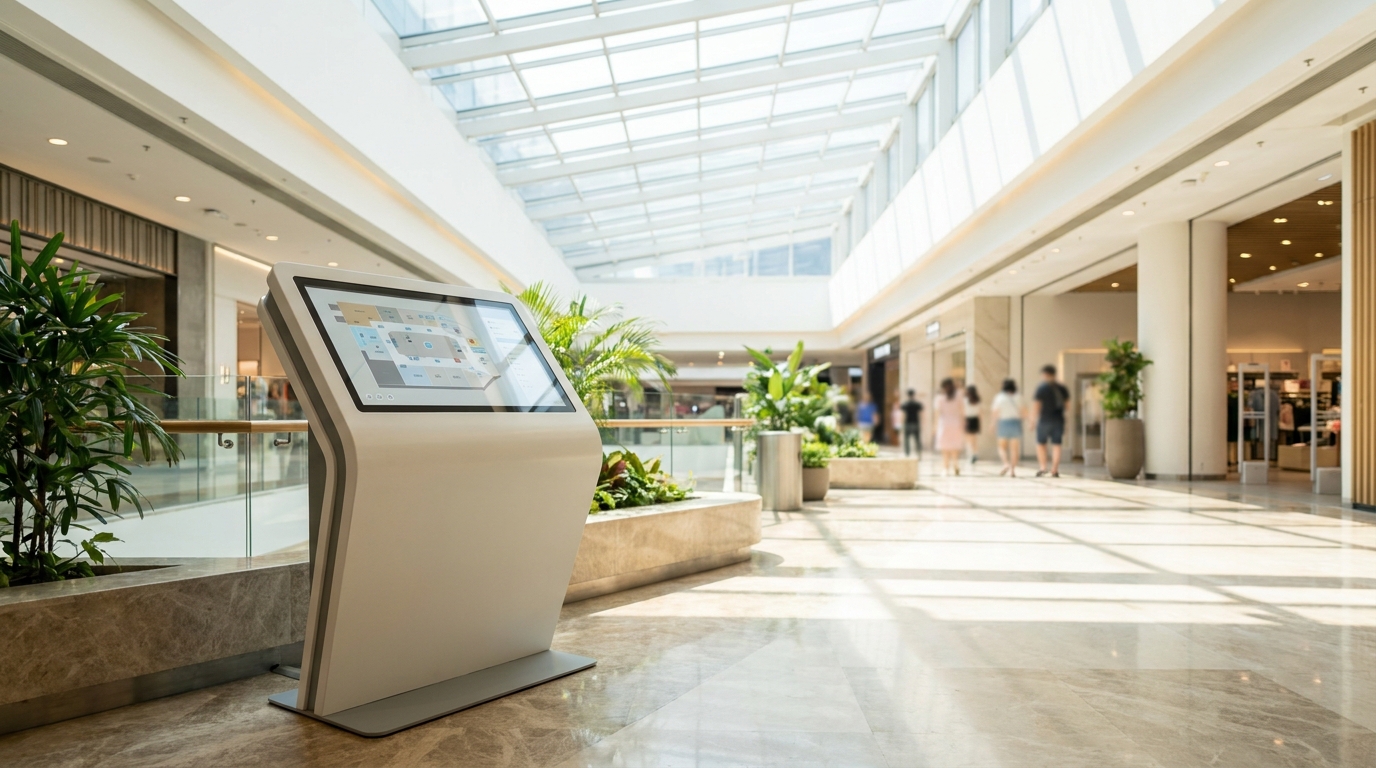
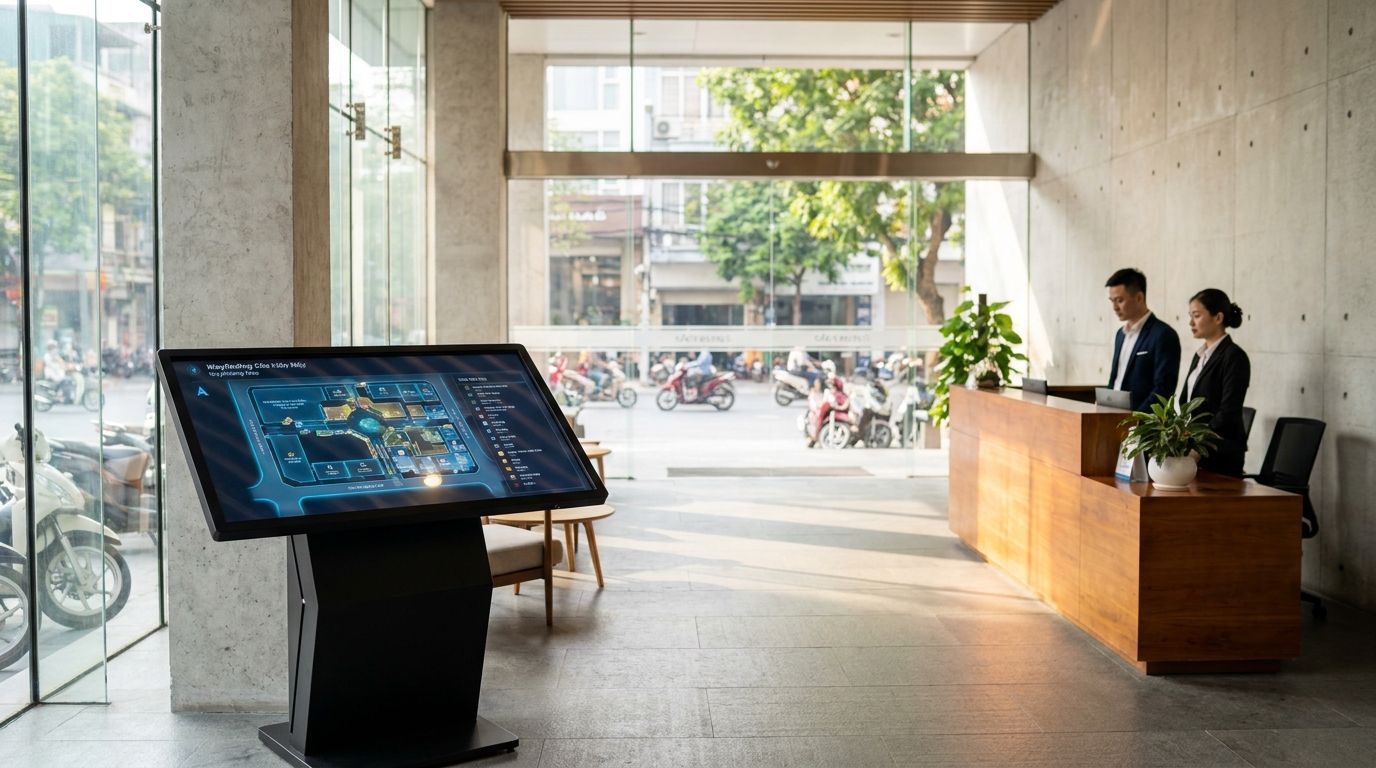
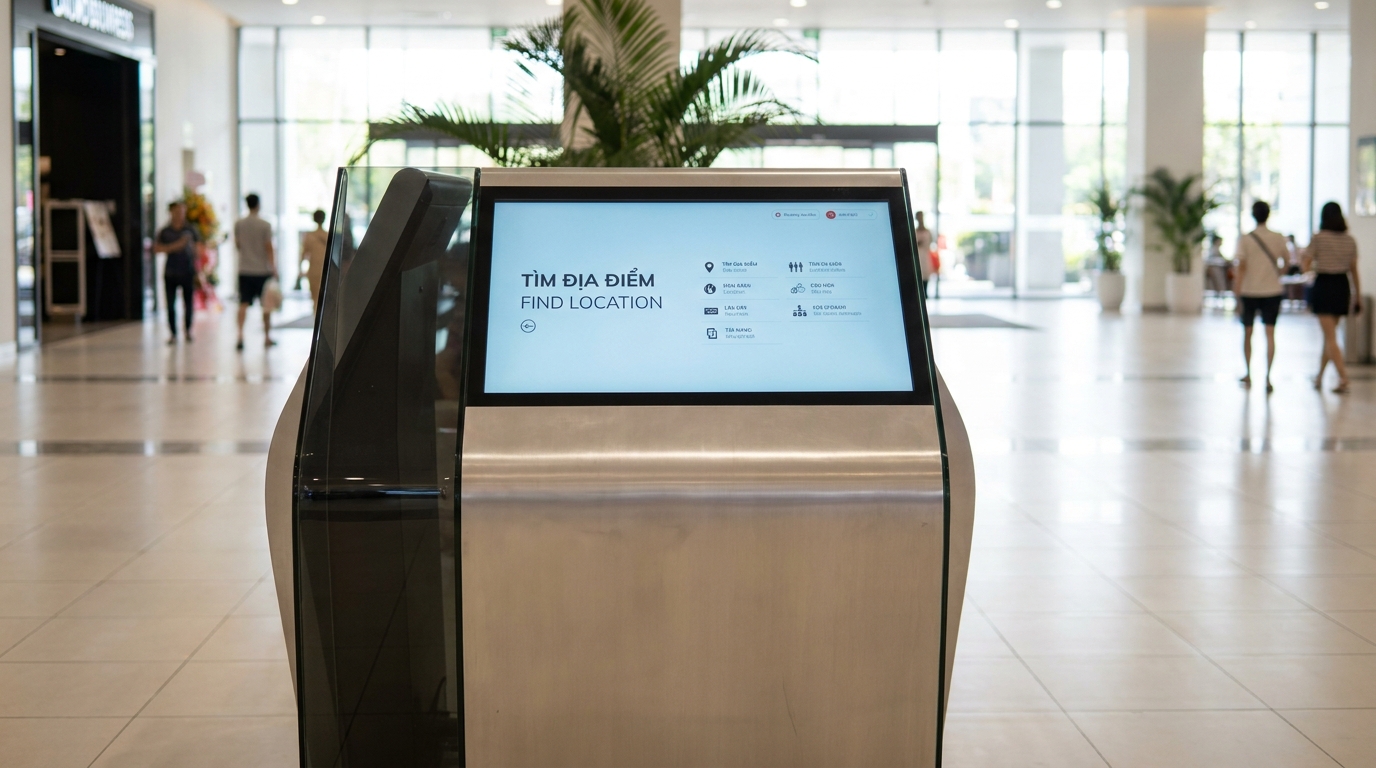
The installation location of wayfinding screens is the deciding factor in whether a wayfinding system delivers value or becomes a wasted investment. According to a survey by the Nielsen Norman Group (NN/g), 70% of building users ignore wayfinding screens if they are not within natural sight within the first 3 seconds. This article analyzes the 5 most common placement mistakes in Vietnamese buildings — from shopping malls to hospitals — and proposes specific solutions.
The 5 mistakes when placing wayfinding screens in buildings include: placing them next to elevators (users do not stop), viewing angles blocked by columns or obstacles, direct light causing glare, incorrect installation height (below 1.4m or above 1.6m), and lack of backup power/network infrastructure. Solutions: survey traffic flow, choose locations with a setback of 1.2-2m, install at a height of 1.4-1.6m, and use remote update software.
Table of Contents
- Why is the installation location of wayfinding screens more important than hardware configuration?
- Mistake 1: Placing wayfinding screens next to elevators or crowded areas
- Mistake 2: Placing screens where the viewing angle is blocked
- Mistake 3: Not accounting for lighting — screens are glary or too dark
- Mistake 4: Installing at the wrong height — too low or too high relative to eye level
- Mistake 5: Overlooking power, network infrastructure, and scalability
- Summary table: 5 mistakes and solutions
- Common mistakes when deploying wayfinding screen systems
- Standard 5-step survey and installation process for wayfinding screens
- Practical experience from projects deployed in Vietnam
- Frequently Asked Questions
Why is the installation location of wayfinding screens more important than hardware configuration?
Why is the installation location of wayfinding screens more important than hardware configuration?
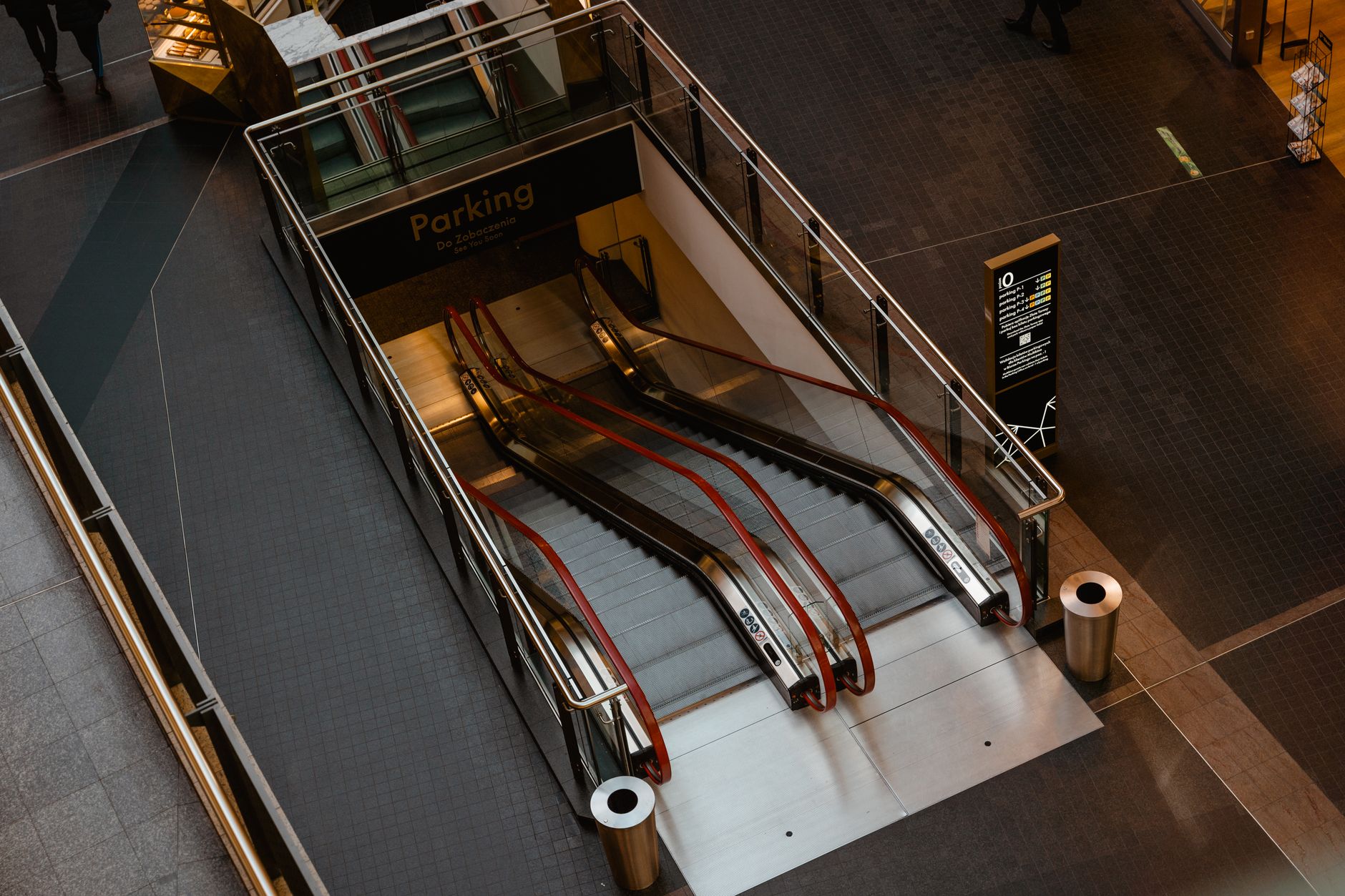
The installation location of wayfinding screens determines at least 70% of usage effectiveness, while hardware configuration (resolution, size) accounts for only 30%. A 55-inch screen placed incorrectly — behind a load-bearing column or next to an elevator — will be completely ignored, while a 43-inch screen placed correctly in the traffic flow can serve thousands of lookup requests per day.
Digital wayfinding systems operate on the principle of "catch the eye first, interact later." Users only interact with a kiosk when they see and recognize the device within the first 2-3 seconds of entering a space. If the screen is outside the natural viewing area (30-60 degree angle from the direction of travel), all the software, content, and design inside becomes meaningless.
In Vietnam, many grade A office buildings and shopping malls have invested 200-500 million VND in wayfinding screen systems but have not achieved the expected results. The main cause is not software or hardware, but the survey and placement stage — often overlooked or assigned to contractors without experience in user behavior.
This article is based on the experience of deploying more than 50 wayfinding systems for buildings, hospitals, and shopping malls in Vietnam by the Việt POS team, combined with data from international studies on wayfinding and spatial UX.
Mistake 1: Placing wayfinding screens next to elevators or crowded areas
Related Products
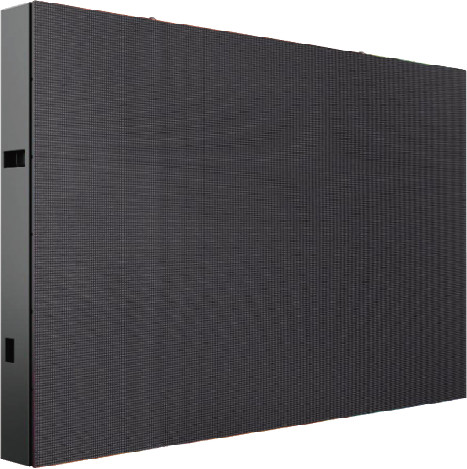
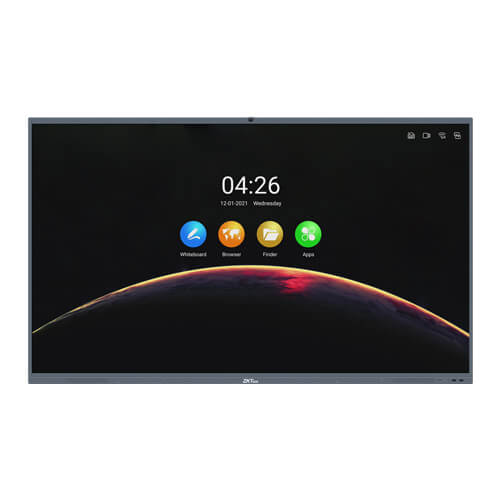
Mistake 1: Placing wayfinding screens next to elevators or crowded areas Placing wayfinding screens next to elevators or main walkways is the most common mistake.
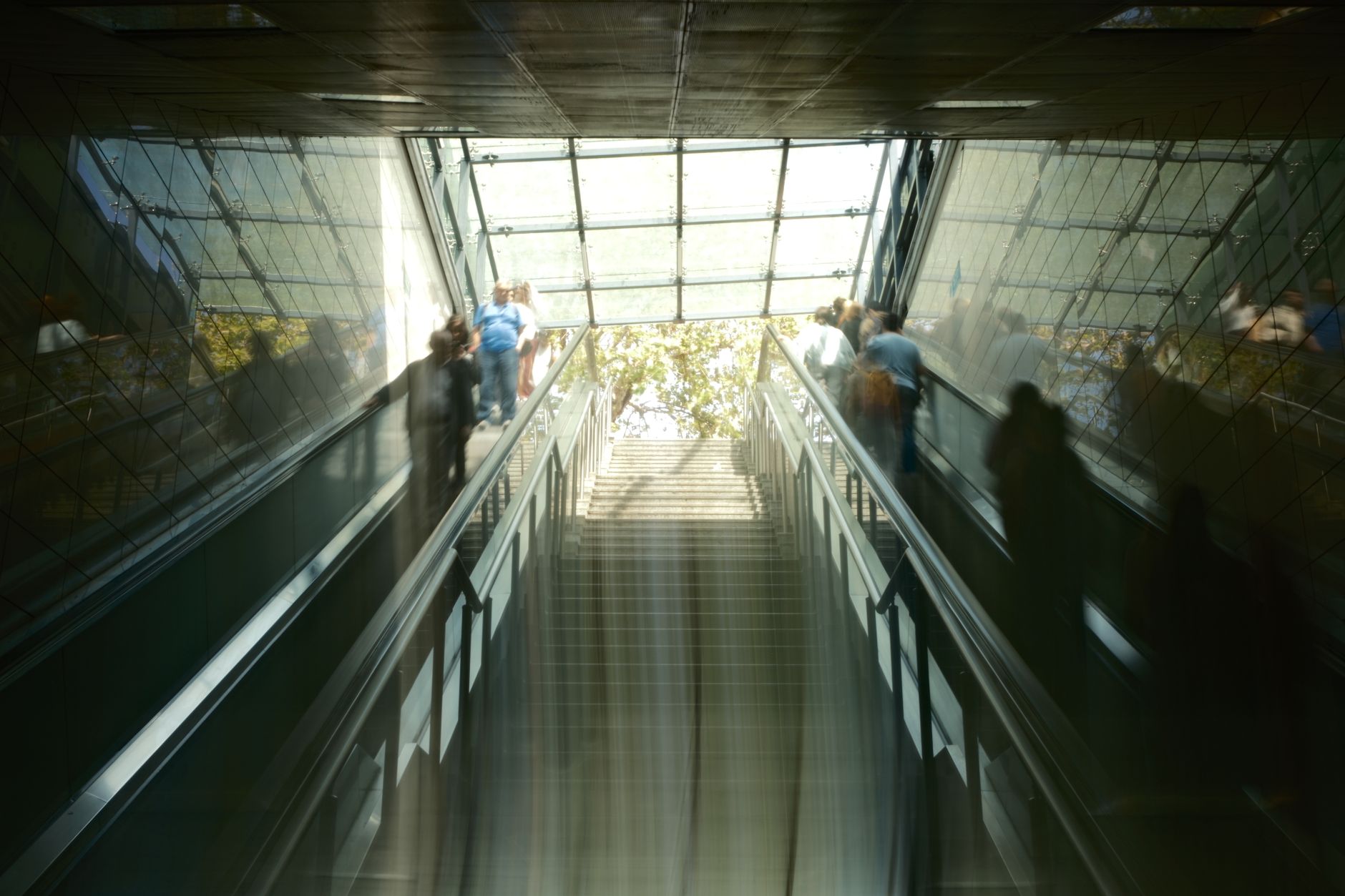
Placing wayfinding screens next to elevators or main walkways is the most common mistake. These areas have high foot traffic but fast movement speed, so users do not have time to stop and interact. As a result, the screen is completely ignored, or worse, it obstructs traffic flow and creates a cramped feeling.
Why is the elevator area unsuitable?
The elevator waiting area has the following characteristics: users stand and wait for 30-90 seconds, but their attention is focused on watching the floor indicator, not ready to interact with a touchscreen. According to a Cornell University study (2023), the interaction rate with kiosks placed next to elevators is only 4-7%, 5 times lower than kiosks placed at main hallway intersections.
In addition, the elevator area often has high crowd density during peak hours (8-9 AM, 5-6 PM). Wayfinding screens placed here are not only rarely used but also create bottlenecks, reducing traffic flow and causing annoyance to regular building users.
Solution: Survey traffic flow before finalizing the location
- Choose decision points: The ideal location is where users must choose a direction — intersections, hallway corners, or the top of staircases. This is when they have the highest need for lookup.
- Measure actual traffic: Use people-counting cameras or manual observation for 3-5 days (including peak and off-peak hours) to identify areas with stable traffic, not too crowded.
- Setback of 1.2-2m: Ensure enough empty space in front of the screen for 2-3 people to stand simultaneously without obstructing the main traffic flow.
Mistake 2: Placing screens where the viewing angle is blocked
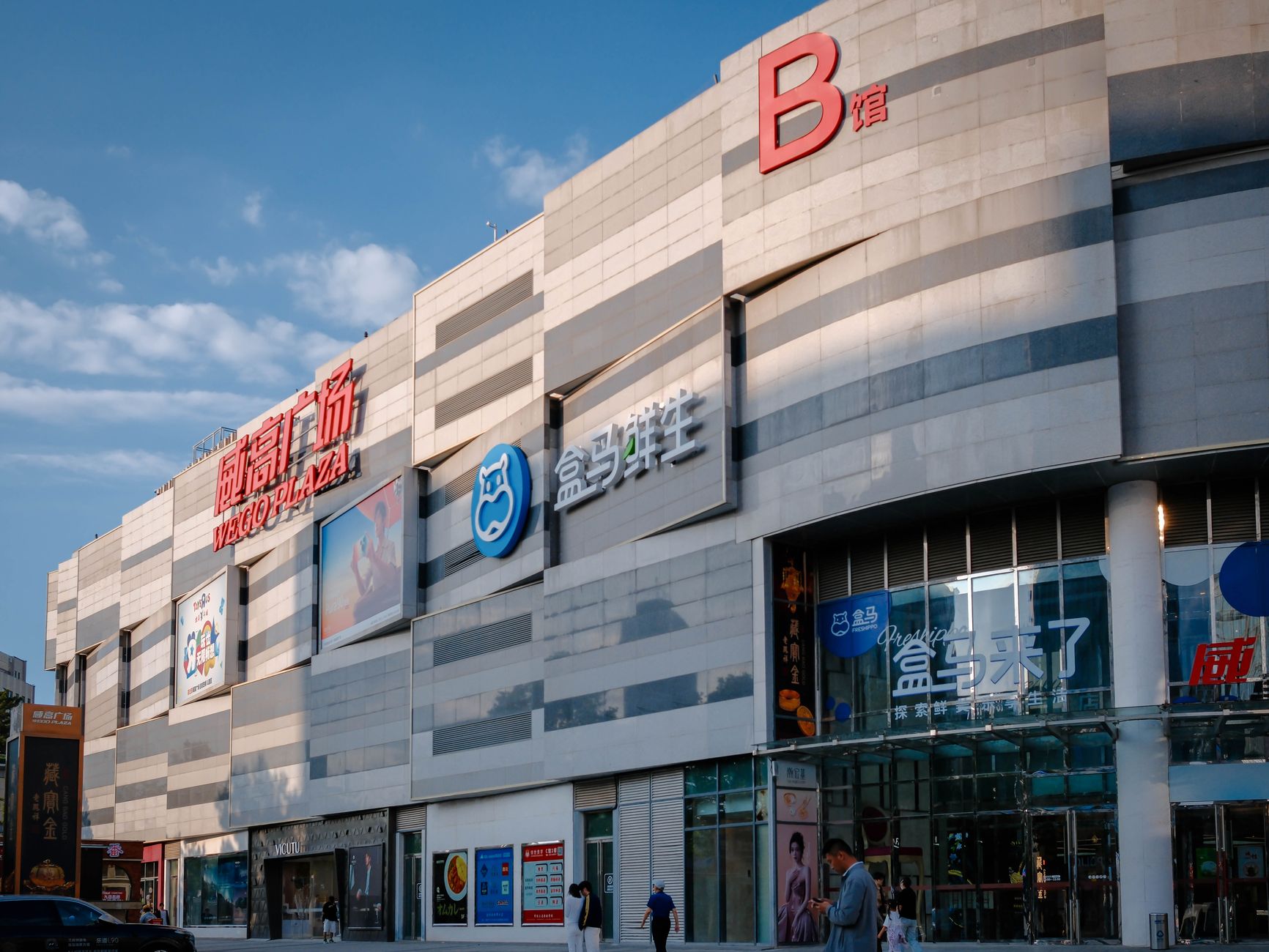
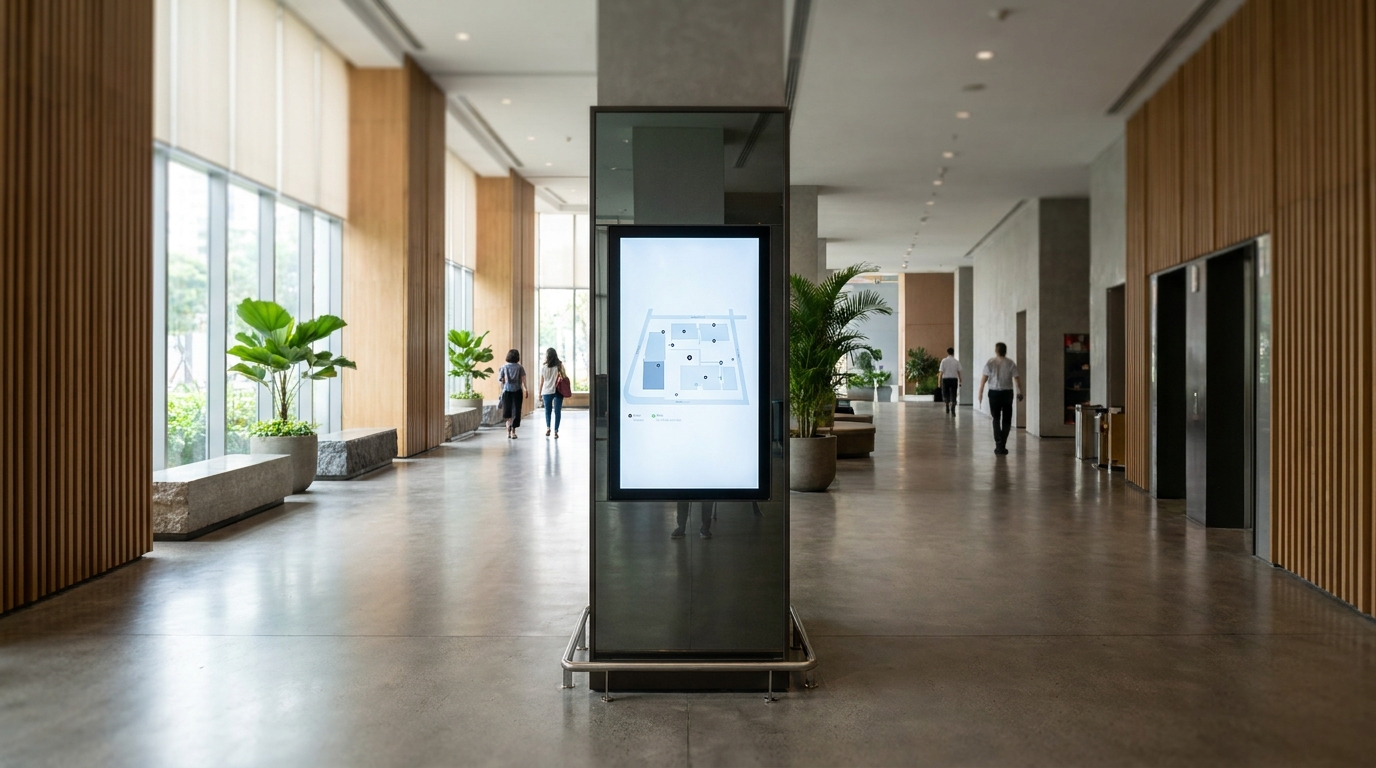
A viewing angle blocked by load-bearing columns, plants, or advertising signs is a placement error that makes wayfinding screens nearly invisible to users. A 40cm wide concrete column can block 100% of the view for pedestrians coming from the opposite direction, turning a multi-million VND investment into a useless decoration.
Common obstacles in Vietnamese buildings
During actual surveys at Vietnamese buildings, we recorded the most common obstacles:
- Load-bearing columns: Especially in buildings constructed before 2015, columns are often in the middle of the lobby or next to main walkways — a "good" position structurally but blocking the view.
- Decorative plants: Potted plants 1.5-2m tall placed next to the screen both block the view and pose a risk of watering water damaging electronic equipment.
- Advertising signs, standees: Temporary signs or event standees are often placed in front of the screen without control, completely covering the device.
- Reflective glass: Screens placed next to large glass doors reflect natural light, reducing contrast and making content hard to read.
Solution: The "observation triangle" rule
Before finalizing the installation location, perform an "observation triangle" check:
- Identify the 3 main travel directions leading to the planned installation area (from the main entrance, from the elevator, from the stairs).
- Stand at each point 5-10m away and observe
Cần tư vấn thiết bị/giải pháp cụ thể?
Việt POS phản hồi trong 30 phút · Hotline 4 vùng · Khảo sát miễn phí.
Bài viết cùng chủ đề