Mục lục bài viết (7)
- Criterion 1: Industrial Durability and Antimicrobial Capability
- Criterion 2: Hardware Configuration for Multitasking
- Criterion 3: API Integration Capability with HIS/EMR Systems
- Criterion 4: Patient Data Security According to Ministry of Health Standards
- Criterion 5: Warranty Policy and On-site Technical Support
- Quick Comparison Table of Kiosk Models Suitable for Hospitals
- Frequently Asked Questions
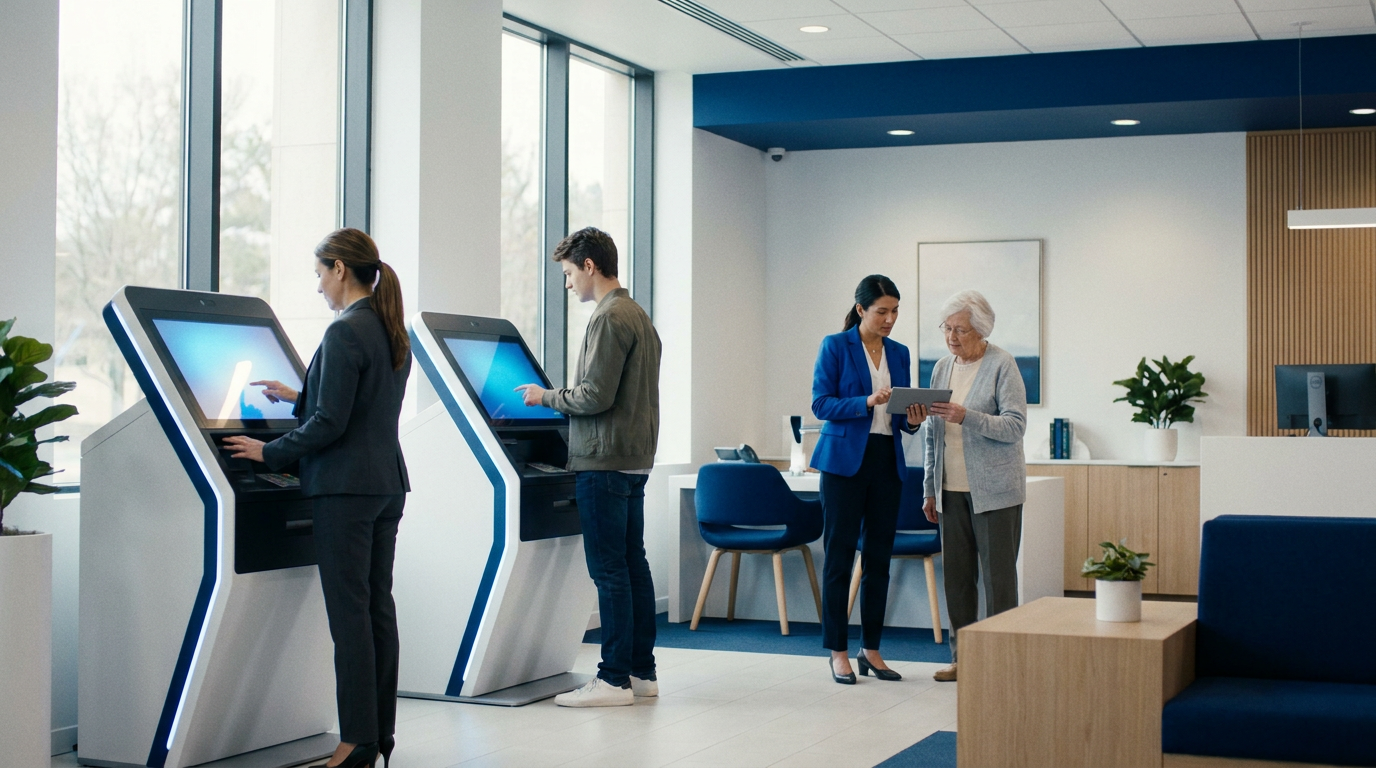
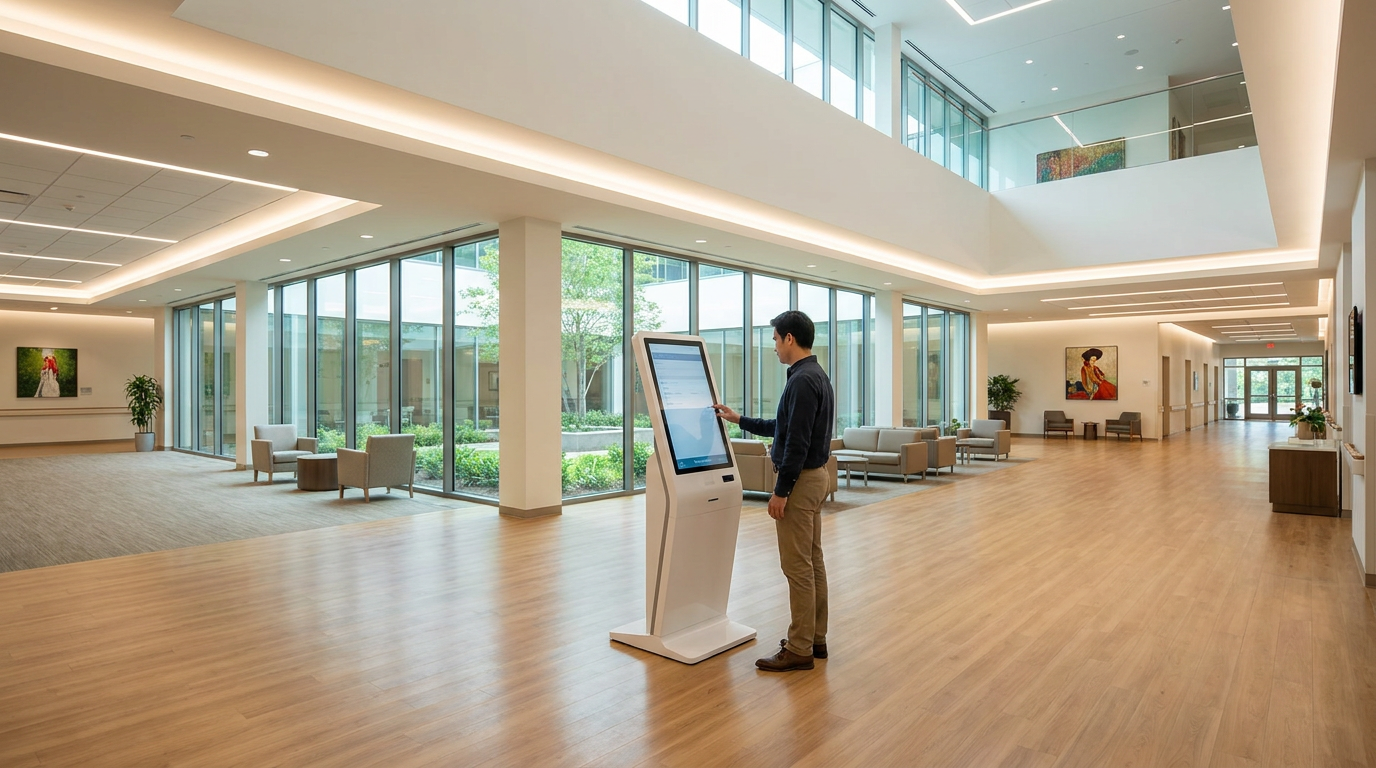
Medical information kiosks for hospitals are All-in-One interactive devices placed in lobbies, examination departments, or waiting rooms, allowing patients to independently perform information lookups, register for appointments, and pay hospital fees without requiring medical staff assistance. According to data from the Ministry of Health's Information Technology Department, by the end of 2025, over 40% of Grade I and II hospitals had deployed at least one self-service kiosk system. In 2026, this number is expected to reach 60-70% as district-level hospitals begin to invest heavily in digital transformation.
Criterion 1: Industrial Durability and Antimicrobial Capability
Kiosks in hospitals must operate continuously 12-16 hours/day, 7 days/week, in environments with high user density and strict hygiene requirements. Therefore, the outer casing needs to meet IP54 dust and water resistance standards or higher, and the touchscreen must be covered with scratch-resistant and antimicrobial tempered glass (according to ISO 22196 standard).
Some kiosk models, such as the 21.5-inch TouchWo KD215B Freestanding Touch Kiosk, use 6mm tempered glass with an antimicrobial coating, effectively meeting medical environment hygiene requirements. The kiosk surface should be designed with rounded edges and no gaps for easy daily cleaning with disinfectant solutions. Additionally, the cooling system must operate quietly (below 30dB) and without direct suction fans to prevent dust from being drawn into the device body.
Criterion 2: Hardware Configuration for Multitasking
Medical information kiosks often need to simultaneously run lookup applications, connect to ticket printers, chip-enabled CCCD card readers, and facial recognition cameras. Therefore, the minimum configuration is an ARM Cortex-A72 or Intel Celeron J4125 chip or higher, 4GB RAM, and 32GB (ARM) or 64GB (x86) internal storage.
Bạn đang tìm sản phẩm cho chủ đề này?
Việt POS phân phối chính hãng — bảo hành 24-36 tháng, hỗ trợ kỹ thuật 24/7.
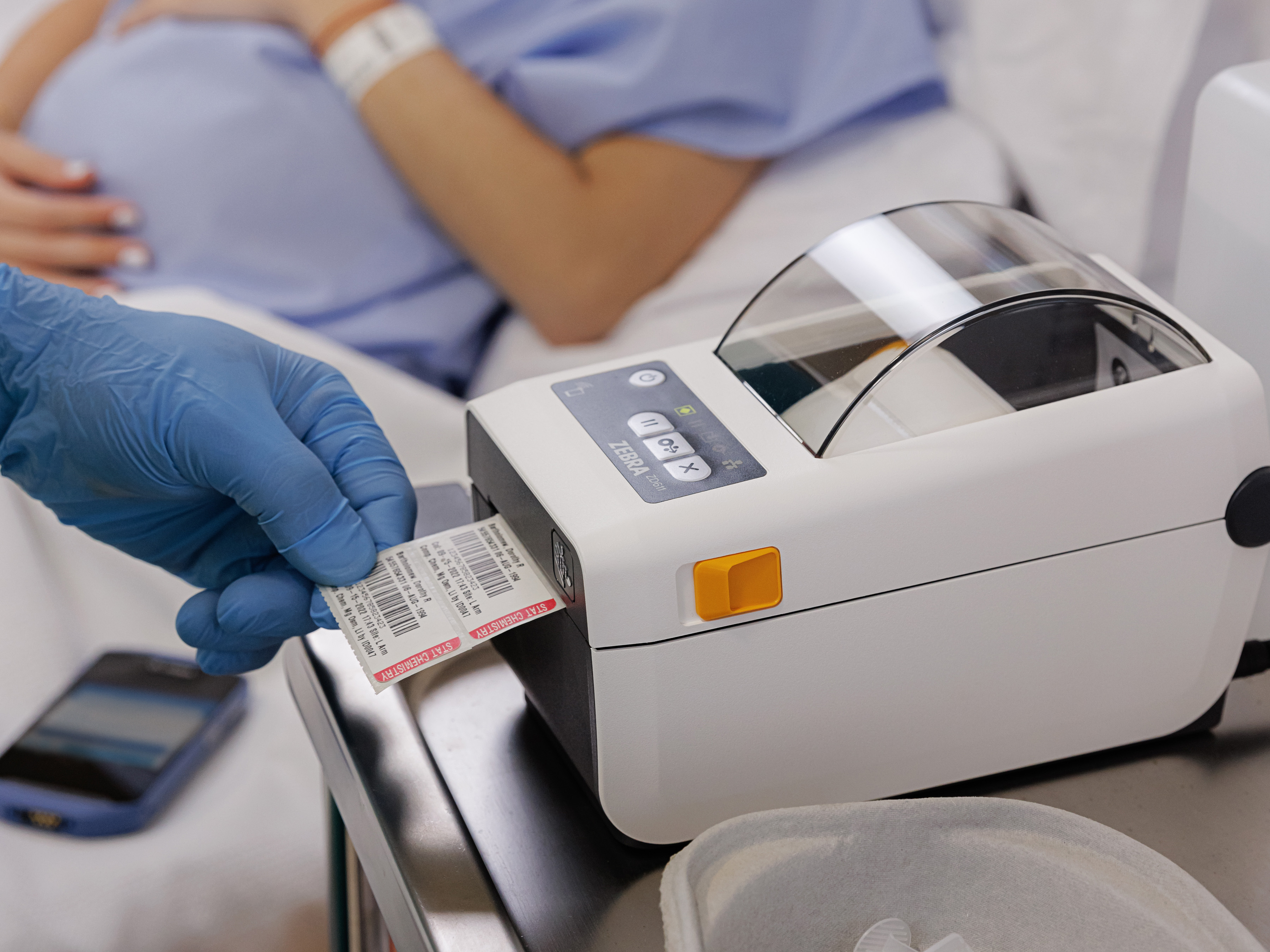
Zebra Printers for Healthcare — Specialized Printer Line for the Medical Industry

Magnetic strips for books – Magnetic tags for DVDs
NFC Epoxy PVC Card with QR Code Printing for Dogs — NFC Epoxy PVC Chip with QR Code Printing for Dogs

Barcode label paper for the medical industry
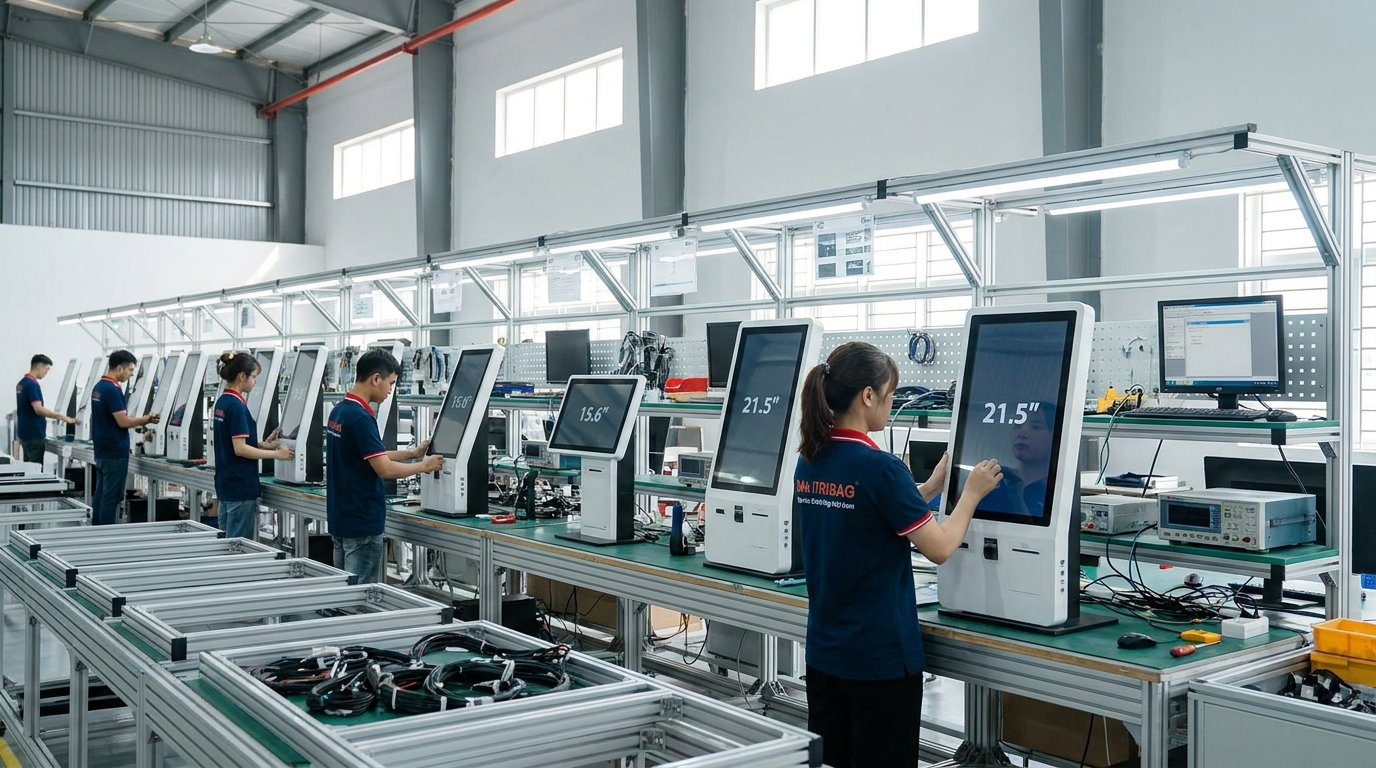
For hospitals requiring additional AI modules (facial recognition, behavior analysis), x86 chip-powered kiosks like the 15.6-inch (X86) GD156 Wall-mounted Touch Kiosk with 8GB RAM and 128GB SSD should be chosen. A multi-touch (10-point touch) screen with 350-400 nits brightness is mandatory for clear display under hospital lobby fluorescent lights. Common screen sizes for medical information kiosks are 21.5 inches (freestanding) and 15.6 inches (wall-mounted).
Criterion 3: API Integration Capability with HIS/EMR Systems
Kiosks do not operate independently but must connect directly with Hospital Information Systems (HIS) and Electronic Medical Records (EMR) to synchronize patient data, appointment schedules, test results, and payments. Distributors need to thoroughly check the kiosk manufacturer's ability to provide open APIs.
Kiosks need to support standard connection protocols: RESTful API, WebSocket, or HL7 FHIR. In actual deployment at Vietnamese hospitals, API integration typically takes 2-4 weeks, depending on the complexity of the existing HIS system. Some kiosk models, such as the 21.5-inch Android Freestanding Self-service Kiosk KD215B, come with an SDK to support quick integration with popular hospital management software. If a hospital does not yet have an HIS system, the kiosk can still operate in offline mode with an internal database and synchronize when a network connection is available.
Criterion 4: Patient Data Security According to Ministry of Health Standards
Medical data is sensitive information specially protected under the Cybersecurity Law and Decree 64/2020/ND-CP. Medical information kiosks must meet security requirements: end-to-end data encryption (TLS 1.2/1.3), multi-factor authentication (chip-enabled CCCD + OTP code or facial recognition), and no storage of sensitive information on the device.
The kiosk operating system should be customized (kiosk mode) to lock access to irrelevant applications, disable USB storage ports, and automatically clear session cache after 30 seconds of inactivity. Some Android-powered kiosks, such as the 15.6-inch GD156 Wall-mounted Touch Kiosk, allow kiosk mode configuration via MDM (Mobile Device Management). For Windows-powered kiosks, Group Policy settings are needed to restrict user permissions. Regular security audits every 6 months are an indispensable requirement.
Criterion 5: Warranty Policy and On-site Technical Support
A medical kiosk breakdown during peak hours (7 AM-9 AM) can cause severe congestion at the reception desk. Therefore, distributors need to choose a supplier partner with a 12-24 month warranty policy, offering on-site technical support within 4-8 business hours for major cities and a maximum of 24 hours for other areas.
Việt POS provides a 12-month warranty policy for all kiosk models, along with 24/7 remote support services and on-site technician dispatch within 8 business hours in Ho Chi Minh City and Hanoi. A readily available spare parts inventory for popular kiosk models like the 21.5-inch GD215C Wall-mounted Touch Kiosk and the 32-inch X86 KD32B Freestanding Touch Kiosk helps reduce repair time to under 48 hours. Distributors should request contracts with clear SLA (Service Level Agreement) clauses regarding response and resolution times.
Quick Comparison Table of Kiosk Models Suitable for Hospitals
| Model | Screen Size | CPU | RAM/Storage | Water/Dust Resistance | Reference Price (VNĐ) |
|---|---|---|---|---|---|
| KD215B (Android) | 21.5 inch | ARM Cortex-A72 | 4GB/32GB | IP54 | 16.000.000 - 20.000.000 |
| GD156 (X86) | 15.6 inch (wall-mounted) | Intel Celeron J4125 | 8GB/128GB | IP54 | 18.000.000 - 22.000.000 |
| KD32B (X86) | 32 inch | Intel Core i3 | 8GB/256GB | IP65 | 28.000.000 - 35.000.000 |
Frequently Asked Questions
Do medical information kiosks require an Internet connection?
Kiosks can operate in offline mode for internal information lookup (department directory, service prices). However, functions such as online appointment registration, hospital fee payment, and data synchronization with HIS require a stable Internet connection. It is advisable to equip a backup LAN connection parallel to WiFi.
Should district-level hospitals invest in medical information kiosks?
Yes. With an investment cost of 15-25 million VND for an Android-powered kiosk, district-level hospitals can fully deploy 2-3 devices in the main lobby and examination departments. The benefits include reducing registration waiting times by 30-50%, alleviating pressure on medical staff, and enhancing patient experience.
Can kiosks integrate with chip-enabled CCCD and VNeID?
Most new-generation kiosks support chip-enabled CCCD card readers (according to ICAO standards) and connect with the VNeID application via API. This integration helps automate patient information entry, reduce data entry errors, and increase appointment registration speed by 3-4 times compared to manual methods.
Does the kiosk management software support Vietnamese?
Yes. Both the kiosk interface and the backend management software fully support Vietnamese, including Unicode fonts and Vietnamese input methods. The system also supports English-Vietnamese language switching to serve foreign patients.
What is the delivery and installation time for kiosks?
Standard delivery time is 3-7 business days for kiosk models available in stock. Installation and configuration time at the hospital takes 1-2 days, including API integration with the HIS system. For large orders (over 10 devices), production time may extend to 15-20 days.
Can kiosks directly print medical examination slips?
Most kiosk models can integrate an 80mm thermal printer or a laser printer to print medical examination slips, re-examination appointment slips, and payment invoices. The printer is usually located inside the kiosk body, with a front paper access door for staff to easily replace paper rolls.
For detailed consultation on the kiosk model suitable for your hospital's scale and budget, contact Việt POS immediately via hotline 0935 498 384 or email info@vietpos.vn. Our technical team is ready to provide a free survey and offer the most optimal integration solution.
Cần tư vấn thiết bị/giải pháp cụ thể?
Việt POS phản hồi trong 30 phút · Hotline 4 vùng · Khảo sát miễn phí.
Bài viết cùng chủ đề