Mục lục bài viết (8)
- What special construction do UHF RFID laundry tags have to withstand chemicals and high temperatures?
- How is the process of attaching RFID tags to hospital linens carried out?
- How does the RFID reader system automate the linen inventory process?
- Specific benefits in reducing linen loss and controlling cross-contamination
- Cost and efficiency comparison between manual management and RFID
- Criteria for selecting UHF RFID tags for the hospital environment
- Case study: Tam Anh General Hospital reduces linen loss by 92% thanks to RFID
- Frequently Asked Questions
UHF RFID tags for hospital laundry management are a solution that integrates ultra-high frequency identification technology into each linen item (bed sheets, surgical gowns, surgical towels), enabling real-time automatic tracking through fixed readers at washing, drying, sterilization, and distribution areas. In Vietnam, central and private hospitals are deploying this system to reduce linen loss from 10-15% to below 1%, while strictly controlling the sterilization process.
What special construction do UHF RFID laundry tags have to withstand chemicals and high temperatures?
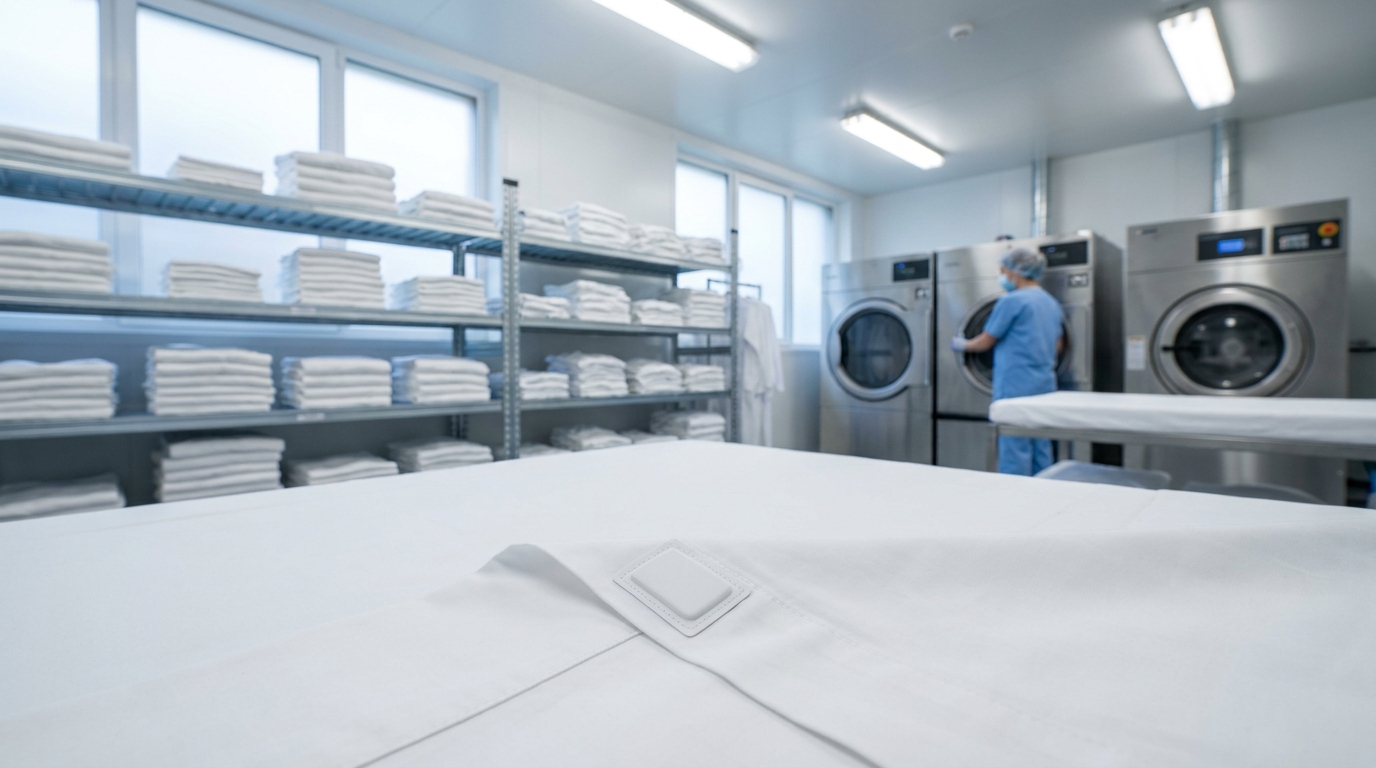
Unlike standard RFID tags, UHF RFID tags for hospital laundry are designed with a silicone or thermoplastic shell that withstands temperatures up to 200°C, high pressure, and strong cleaning chemicals such as chlorine and hydrogen peroxide. The RFID chip is completely sealed with waterproof epoxy glue, ensuring stable operation after 200-500 industrial wash cycles.
Tags typically measure 60×30×3mm or are round button types with a 20mm diameter, easily attached to the hem of bed sheets, pockets of gowns, or sewn directly into fabric. Models such as the UHF RFID Tag-10 or UHF RFID Cable Tie RCT-04 from Việt POS meet IP68 standards and are resistant to medical-grade chemicals.
How is the process of attaching RFID tags to hospital linens carried out?
The RFID tag attachment process consists of 4 steps: (1) selecting the appropriate tag type for the fabric material and washing frequency, (2) attaching the tag by sewing, heat pressing, or using a dedicated pouch, (3) programming a unique ID for each item, and (4) testing read/write at fixed readers.
Bạn đang tìm sản phẩm cho chủ đề này?
Việt POS phân phối chính hãng — bảo hành 24-36 tháng, hỗ trợ kỹ thuật 24/7.
RFID Wet Inlay / Dry Inlay UHF Tags for Asset Management in Apparel, Metal, Medical, and Plastics
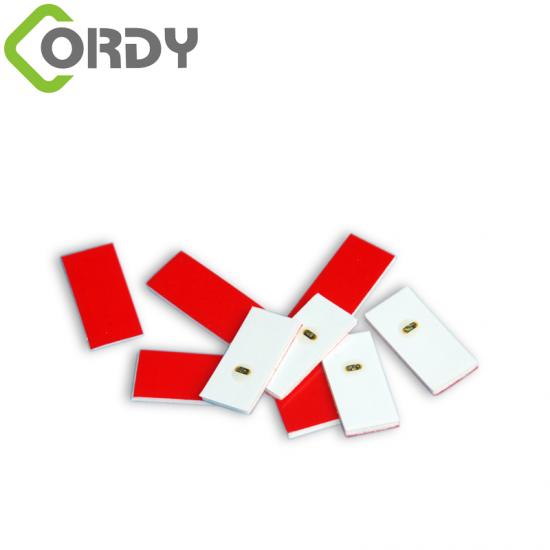
UHF RFID Plastic Jewelry Labels & Tags — Printed Jewelry Price Tags
UHF Windshield Tag for RFID Vehicle Management Systems
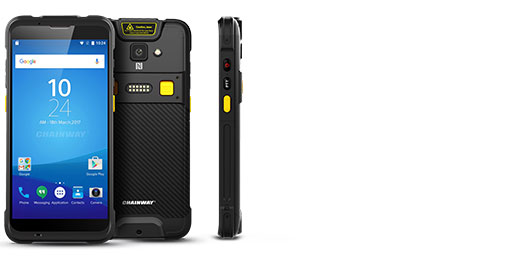
Chainway C5E UHF RFID Reader (Android 16) — Handheld RFID Reader
For bed sheets and towels, tags are usually sewn into the hem to avoid direct abrasion. For surgical gowns, tags are heat-pressed into the inner fabric layer of the collar. Each tag carries a unique EPC (Electronic Product Code), linked to information such as fabric type, date of introduction, number of washes, and distribution area.
How does the RFID reader system automate the linen inventory process?
Fixed UHF RFID readers are installed at 5-7 points in the process: the entrance to the soiled laundry area, washing machines, dryers, industrial ironers, sterilization area, clean storage, and the distribution exit. Each reader can scan 100-300 tags per second at a distance of 3-8 meters, automatically recording the time and status of each item.
When a batch of linens passes through the entrance to the soiled laundry area, the reader records the quantity and type of items. After washing, the data is updated automatically, allowing comparison of input and output quantities. If a shortage is detected, the system immediately alerts staff, enabling them to locate lost items within 15-30 minutes instead of 2-3 hours with manual methods.
Specific benefits in reducing linen loss and controlling cross-contamination
According to data from hospitals that have deployed the system, the linen loss rate decreased from 10-15% to 0.5-1.5% within the first 3-6 months. This equates to savings of 80-150 million VND per year for a 300-500 bed hospital. Regarding infection control, RFID allows for sorting linens by contamination level and tracking the sterilization process down to each individual item.
The system automatically alerts if an item that has not been sterilized is brought into a clean area, or if the sterilization time has not met standards. The wash history data for each item is stored for a minimum of 2 years, serving traceability checks during disease outbreaks. Compared to barcode methods, RFID reduces inventory time by 60-70% and completely eliminates human error.
Cost and efficiency comparison between manual management and RFID
| Criteria | Manual Management | UHF RFID Management |
|---|---|---|
| Linen loss rate | 10-15% | 0.5-1.5% |
| Inventory time for 500 items | 3-4 hours | 5-10 minutes |
| Monthly labor cost | 15-25 million VND (3-4 staff) | 8-12 million VND (1-2 staff) |
| Traceability capability | None or very limited | Full, automatic |
| Sterilization control | Based on visual inspection | Automatic, with alerts |
| Initial investment cost | 0 VND | 50-150 million VND (depending on scale) |
| Payback period | Not applicable | 8-14 months |
Criteria for selecting UHF RFID tags for the hospital environment
When selecting RFID tags for hospital laundry, 5 factors should be evaluated: (1) heat resistance (minimum 180°C for 30 minutes), (2) chemical resistance (chlorine, NaOH, H2O2), (3) mechanical durability (withstanding spin pressure of 800-1200 rpm), (4) IP68 waterproof standard, and (5) compatibility with UHF EPC Gen2 readers.
Models such as the UHF RFID Pallet Tag and UHF RFID Cable Tie RCT-07 from Việt POS meet all these standards, with an average lifespan of 300-500 wash cycles. For thin linens like face towels, soft label-type tags with a thickness of less than 1mm should be chosen to avoid discomfort during use.
Case study: Tam Anh General Hospital reduces linen loss by 92% thanks to RFID
Tam Anh General Hospital (Ho Chi Minh City) deployed a UHF RFID system for 15,000 linen items in 2024. Results after 6 months: the loss rate decreased from 12.3% to 0.9%, saving 187 million VND in costs for purchasing replacement linens, and inventory time was reduced from 4 hours per day to 25 minutes per day.
The system uses fixed readers at 6 points in the laundry process, combined with UHF RFID Tag-10 and UHF RFID Cable Tie RCT-02. Laundry staff was reduced from 8 people to 4 people, and 3 batches of linens that did not meet sterilization standards were promptly detected thanks to automatic alerts. See more about 5 steps to build a standard goods packaging system for e-commerce 2026 for similar automation solutions.
Frequently Asked Questions
Do UHF RFID tags affect the steam sterilization process?
What is the investment cost for an RFID system for hospital linen management?
How many times can an RFID tag be reused?
How to integrate the RFID system with existing hospital management software?
Can UHF RFID read through bags containing soiled linens?
For consultation on UHF RFID tag solutions for hospital laundry management suitable for your scale and budget, contact us immediately at hotline 0935 498 384 or email info@vietpos.vn. Việt POS provides a complete package from RFID tags, readers to management software, with installation support and a 12-month warranty.
Cần tư vấn thiết bị/giải pháp cụ thể?
Việt POS phản hồi trong 30 phút · Hotline 4 vùng · Khảo sát miễn phí.
Bài viết cùng chủ đề