Mục lục bài viết (5)
In the service and healthcare industries, managing thousands of linen items such as employee uniforms, hotel towels, or hospital bed sheets is always a major operational challenge. Ultra-High Frequency (UHF) RFID technology has become the modern infrastructure standard, allowing asset identification and tracking without direct contact or manual barcode scanning. In Vietnam, deploying this system requires an understanding of equipment, material characteristics, and radio frequency regulations to ensure stability and legality.
What is RFID for industrial laundry and why invest in it?
An RFID system for laundry uses tiny chip tags, capable of withstanding heat and chemicals, attached directly to fabrics. Through readers at warehouse doors or handheld devices, businesses can automatically control inbound/outbound quantities, wash cycles, and product lifecycle, thereby making data transparent between the laundry unit and customers.
Traditional linen management often faces unexplained losses, errors in counting, and difficulties in controlling fabric lifespan. When applying laundry & uniform management with RFID technology, each product is assigned a unique identifier (Unique ID). This not only helps track location but also stores chemical treatment and temperature history, thereby optimizing procurement plans.
Basic structure of an RFID system in linen management
A complete RFID system for industrial laundry environments typically includes four main components:
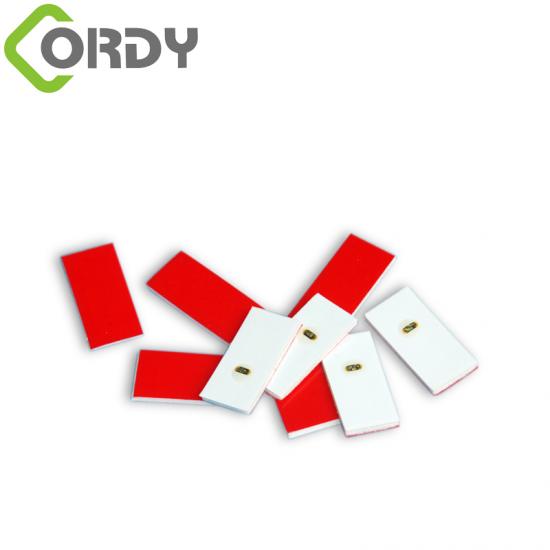
- RFID Laundry Tags: These are specialized tags, encased in PPS or silicone layers that withstand high pressure, drying temperatures up to over 180°C, and strong cleaning chemicals.
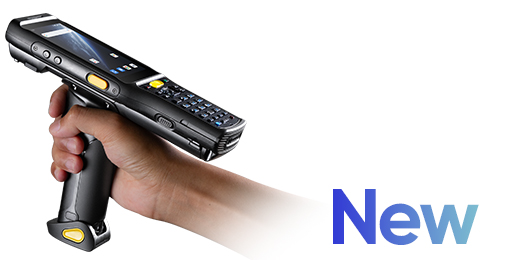
- Readers: Includes fixed readers installed at warehouse doors or conveyor belts, and handheld readers for flexible inventory checks.
- Antenna: Accessories that transmit and receive radio signals, configured according to the desired read zone area.
- Management Software: The platform that receives, processes, and stores data from hardware to generate operational reports.
What factors does the cost of deploying an RFID system depend on?
RFID investment costs are not fixed but vary based on three main pillars: the number and type of chip tags (consumables), the scale of read points (hardware infrastructure), and the complexity of software integration. Additionally, the actual installation environment also influences the selection of equipment with appropriate protection ratings (IP).
Bạn đang tìm sản phẩm cho chủ đề này?
Việt POS phân phối chính hãng — bảo hành 24-36 tháng, hỗ trợ kỹ thuật 24/7.
Chainway CM710-8 UHF RFID Module (8-Port) — Impinj E710, 93.0 x 79.8 x 8.9mm
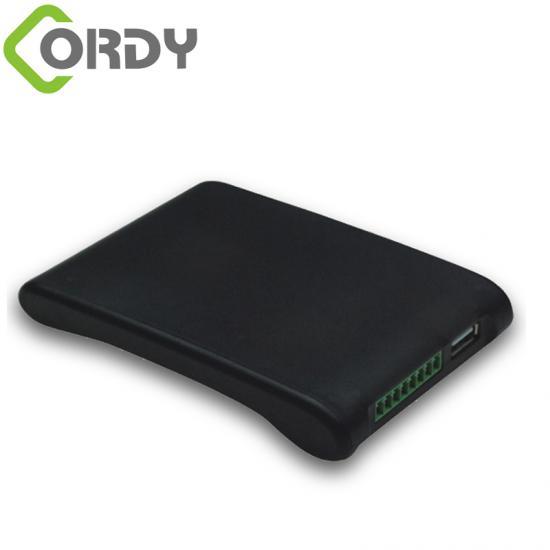
DH9809USB-L - UHF RFID Desktop Reader/Writer 920-925MHz, USB, ISO18000-6C/6B, SDK
UHF Windshield Tag for RFID Vehicle Management Systems
RFID A4 Inlay Sheet / Mifare A3 Inlay Sheet for Card Production
Tag type and quantity of consumables
RFID tags for laundry are significantly more expensive than standard adhesive tags due to stringent durability requirements. This cost is directly proportional to the number of linens to be managed. Businesses need to determine the number of wash cycles (e.g., 200 washes) to select tags with corresponding durability. Purchasing in bulk often helps optimize the unit price per tag.
Number of read points and hardware infrastructure
A small hotel might only need one handheld reader for periodic inventory, but a large-scale industrial laundry will require RFID portal systems at goods inbound/outbound doors. The number of readers, antennas, and auxiliary devices such as indicator lights and sensors will determine most of the initial investment budget. Industrial-grade equipment capable of 24/7 operation in humid environments will have a different investment level compared to consumer-grade devices.
Software requirements and system integration
If a business only needs basic quantity management, software costs will be moderate. However, if deep integration into existing asset management systems or advanced analytical reporting features is required, deployment costs will increase. VietPOS recommends that businesses conduct a site survey to accurately determine needs, avoiding waste on unnecessary features.
Investment cost range and practical deployment roadmap
The investment level for an RFID laundry system is typically divided by scale: from basic (tens of millions VND for handheld devices) to professional (hundreds of millions VND or more for automated portal systems). This is a long-term investment, with costs distributed over the number of linens and equipment depreciation time.
Below is a qualitative cost breakdown table for businesses to reference:
| Item | Characteristics affecting cost | Qualitative investment level |
|---|---|---|
| RFID Laundry Tags | Number of tags, heat resistance, mechanical durability. | Low to Medium (per unit) |
| Handheld Readers | Transmission power, operating system, impact resistance. | Medium |
| Portal Systems | Number of antennas, mechanical frame, controllers. | High |
| Software & Integration | Process complexity, API connection requirements. | Customized per requirements |
Note: All specific pricing figures are only valid at the time of quotation after a site survey. Businesses should contact VietPOS's technical team directly for the most accurate cost estimate based on actual needs.
Technical limitations and legal regulations in Vietnam
RFID technology is not absolute. Read performance can be affected by metal (carts, hangers) or liquids (wet fabrics). Additionally, equipment must comply with the frequency band 918.4–923 MHz according to Circular 08/2021/TT-BTTTT to avoid interference and ensure stable operation.
In Vietnam, the use of UHF RFID equipment requires strict compliance with frequency and transmission power regulations. Specifically, equipment must operate in the 918.4–923 MHz band with transmission power not exceeding 500 mW ERP. Using equipment without compliance records or on incorrect frequencies can lead to legal risks and interference with other radio communication systems. For more details, please refer to the article on RFID frequency and compliance in Vietnam.
Physical limitations of radio waves
Although UHF RFID has a long read range, in laundry environments, the following factors need attention:
- Liquids and moisture: Fabrics that are still wet after washing absorb UHF waves, significantly reducing read distance.
- Metal: Stainless steel carts or iron frames can reflect waves, causing 'blind spots' or misreading tags in nearby areas.
- Dense stacking: When thousands of towels are tightly compressed in large bales, tags at the core may not receive enough energy to respond.
For these reasons, VietPOS always recommends that operators have a process for visual confirmation or probability checks to ensure the highest accuracy. RFID is a powerful support tool but cannot fully replace human control in specific technical situations.
Conclusion and investment recommendations
Investing in RFID for industrial laundry is a strategic decision aimed at transparency and process professionalization. However, instead of chasing promised ROI figures or 100% read rates under all conditions, businesses should focus on building a standardized equipment infrastructure that suits their specific goods characteristics.
To optimize budget, the deployment roadmap should start with a site survey, pilot testing (POC) on a small scale before scaling up the entire system. VietPOS is committed to providing genuine UHF RFID equipment with full compliance documentation, supporting businesses in building a sustainable and effective asset management foundation.
Cần tư vấn thiết bị/giải pháp cụ thể?
Việt POS phản hồi trong 30 phút · Hotline 4 vùng · Khảo sát miễn phí.
