Mục lục bài viết (6)
- What is a Digital Product Passport (DPP) and why is RFID the top choice?
- Factors Affecting RFID Implementation Costs for DPP
- Qualitative Cost Range and Survey Recommendations
- Technical Limitations and Important Notes
- Compliance with RFID Frequency Regulations in Vietnam
- DPP Implementation Roadmap for Export Businesses
The Digital Product Passport (DPP) is a core component of the European Union's (EU) Ecodesign for Sustainable Products Regulation (ESPR). According to guidelines from the European Commission, DPP requires each product circulating in this market to have a unique digital identifier, allowing for traceability of origin, material composition, repairability, and recycling methods. For Vietnamese businesses in the textile, footwear, and wood industries, preparing the technical infrastructure to meet DPP requirements is urgent to maintain global supply chains. Among data storage technologies, RFID (Radio Frequency Identification) emerges as an optimal infrastructure solution due to its high automation capabilities and flexible data integration.
What is a Digital Product Passport (DPP) and why is RFID the top choice?
A Digital Product Passport (DPP) is an electronic record that stores comprehensive data about a product's lifecycle. RFID is preferred due to its ability to read items in bulk without direct line-of-sight, allowing textile and footwear businesses to manage thousands of Stock Keeping Units (SKUs) in seconds, while also meeting the EU's stringent unique identification standards.
Implementing the EU Digital Product Passport (DPP) goes beyond simply applying a conventional label. It is a system connecting physical objects with a digital database. UHF RFID (ultra-high frequency) technology allows stakeholders in the value chain – from manufacturers and logistics providers to consumers and recycling entities – to access necessary information through specialized readers or NFC-integrated smartphones (in some DPP variations).
DPP Data Structure on an RFID Platform
Data within the DPP is typically divided into multiple layers. The basic identification layer includes a unique identifier (UID) written to the RFID chip. The dynamic data layer encompasses production history, sustainability certifications, and carbon footprint. RFID helps automate the recording of these data layers at each stage without interrupting the production line. However, businesses should note that RFID is merely a data-carrying tool; its effectiveness depends entirely on the underlying information management system (Backend).
Factors Affecting RFID Implementation Costs for DPP
The cost of implementing an RFID system for DPP depends on three main pillars: RFID tag type (material, chip), reader infrastructure (number of control points), and software integration level. Additionally, production scale and specific manufacturing environment characteristics (high metal content or humidity) also directly impact the total investment.
Bạn đang tìm sản phẩm cho chủ đề này?
Việt POS phân phối chính hãng — bảo hành 24-36 tháng, hỗ trợ kỹ thuật 24/7.

Chainway CM710-8 UHF RFID Module (8-Port) — Impinj E710, 93.0 x 79.8 x 8.9mm
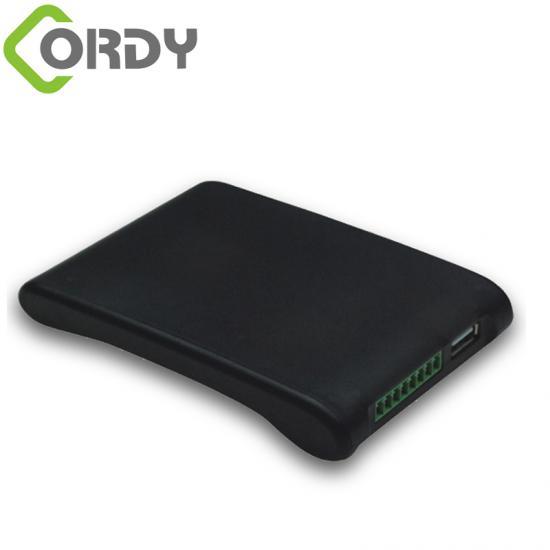
DH9809USB-L - UHF RFID Desktop Reader/Writer 920-925MHz, USB, ISO18000-6C/6B, SDK
UHF Windshield Tag for RFID Vehicle Management Systems
RFID A4 Inlay Sheet / Mifare A3 Inlay Sheet for Card Production
When considering investment, businesses should not only look at the price of a single tag but also evaluate the total cost of ownership (TCO). Below are the qualitative cost components that businesses need to consider:
- RFID Tags: This is the largest variable cost. Tags for textiles are often woven labels or hang tags, while wood products may require attached or embedded tags. Tag costs vary depending on chip memory capacity and physical durability.
- Readers: Includes fixed readers at warehouse doors, conveyor belts, and handheld readers for inventory staff. The more reading points, the higher the data accuracy, but hardware costs will increase accordingly.
- Middleware and Integration System: Intermediate software helps filter raw data from RFID before feeding it into the ERP/MES system. This cost depends on the complexity of existing processes at the factory.
- Survey and Installation Services: This is the most crucial step to ensure the system operates stably in a real-world environment.
Investment Level Classification by Business Scale
| Category | Basic Investment Level | Advanced Investment Level |
|---|---|---|
| Target Audience | SMEs, moderate production volume | Corporations, large production volume, high automation |
| Equipment | Handheld readers, RFID label printers | RFID Gates (Portal), conveyor belt reading systems |
| Tag Type | Standard paper/sticker tags | Heat-resistant woven tags, specialized tags for wood/leather |
| Software | Basic warehouse management, data file export | Real-time integration with ERP, Cloud DPP |
| Scalability | Limited, manual upgrades | Easy integration of AI and big data analytics |
Qualitative Cost Range and Survey Recommendations
Currently, there is no fixed figure for implementing RFID as DPP because each factory has a unique operational structure. Investment levels can range from the mainstream segment for simple production lines to the high-end segment for fully automated systems. Businesses should conduct a current state survey to obtain the most accurate quotation.
VietPOS recommends businesses follow a phased investment roadmap. Instead of simultaneous deployment, businesses can start by equipping RFID label printers and handheld inventory devices to familiarize themselves with the EU-standard data encoding process. Once the operational process is stable, upgrading to fixed reading stations or automatic RFID gates will help optimize labor and minimize human errors.
Why a Fixed Price Should Not Be Applied?
The value of an RFID solution lies in its compatibility. For example, a furniture export business will require an RFID tag capable of withstanding painting environments or heat treatment, which has a completely different cost compared to RFID labels used for T-shirts. Similarly, a reading distance requirement of 1 meter will necessitate a different device configuration than a requirement for 5–10 meters. Therefore, online quotations are often for reference only and can lead to discrepancies in financial planning if not based on an actual site survey.
Technical Limitations and Important Notes
RFID is not a perfect technology under all conditions. UHF waves are obstructed by metal and absorbed by liquids. In the textile and footwear industries, metal accessories or excessively dense stacking of goods can reduce read rates. Probabilistic checks by staff remain a necessary step to ensure accurate DPP data.
Businesses need to understand that RFID operates based on radio wave principles. When goods are packed in large cartons and stacked on pallets, tags located in the core might experience "shadowing," leading to readers not scanning 100% of the quantity in a single pass through a gate. To overcome this, in-depth consultation on goods arrangement and appropriate antenna selection is required. Human intervention at critical control points is mandatory to verify data before transmitting it to the EU's DPP system.
Compliance with RFID Frequency Regulations in Vietnam
All RFID devices deployed in Vietnam must comply with the frequency range from 918.4 MHz to 923 MHz, with a maximum transmission power not exceeding 500 mW ERP, as per Circular 08/2021/TT-BTTTT. Using devices with incorrect frequencies not only causes interference but also violates the law, affecting long-term production operations.
When selecting an RFID equipment supplier for a DPP project, businesses must request compliance documents and frequency certifications. This ensures that the system does not cause interference with mobile telecommunication networks in Vietnam. You can learn more about these technical standards in the article on RFID frequency and compliance in Vietnam to ensure the project is implemented according to the legal roadmap.
DPP Implementation Roadmap for Export Businesses
The DPP implementation roadmap in the EU is expected to take effect between 2026 and 2030, depending on specific product categories and detailed guidance documents from the European Council. However, these timelines may change based on negotiation progress and technical implementation. Vietnamese businesses should begin the preparation process immediately through the following steps:
- Step 1: Data Readiness Assessment. Check whether the current system can store the information fields required by the EU.
- Step 2: Infrastructure Current State Survey. Evaluate the factory environment, reader installation locations, and product material types to select appropriate RFID tags.
- Step 3: Pilot Implementation (PoC). Apply RFID to a specific product line or order to evaluate effectiveness and adjust processes.
- Step 4: Wide-scale Deployment and Integration. Connect RFID data to the general management system and prepare data connection gateways with the EU.
VietPOS, with its experience in barcode and RFID infrastructure, is ready to accompany businesses in equipment consultation and on-site surveys. We focus on providing sustainable technical infrastructure, helping businesses meet DPP's technical standards effectively and cost-optimally. Early preparation not only aids regulatory compliance but also offers an opportunity for businesses to digitize management processes and enhance international competitiveness.
Cần tư vấn thiết bị/giải pháp cụ thể?
Việt POS phản hồi trong 30 phút · Hotline 4 vùng · Khảo sát miễn phí.
