Mục lục bài viết (4)
In modern supply chains, managing Returnable Transport Items (RTI) such as pallets, plastic containers, gas cylinders, and mobile racks plays a crucial role in optimizing operational costs. According to logistics reports in the Vietnamese market, the loss rate of returnable assets not properly controlled can significantly impact a company's working capital. UHF RFID (Radio Frequency Identification) technology emerges as a key infrastructure solution, automating the identification and tracking process without excessive manual intervention.
Why should businesses apply RFID for returnable assets?
Applying RFID automates inventory counting, tracking the location and lifecycle of returnable assets such as pallets, gas cylinders, or plastic containers. Instead of scanning barcodes one by one, RFID allows bulk reading from a distance, reducing processing time and human errors, while optimizing asset circulation in the supply chain.
Challenges in traditional manual management
Managing assets with barcodes or manual record-keeping often faces obstacles when asset scale reaches thousands of units. Barcodes require direct line-of-sight interaction and are prone to fading or tearing in harsh industrial environments. For assets like gas cylinders or wooden/plastic pallets frequently exposed to impacts and dirt, maintaining traditional labels becomes inefficient, leading to asset loss or confusion during handovers between warehouses.
Superior advantages of UHF RFID technology
UHF RFID systems allow data reading at distances from a few meters to over ten meters depending on the device type. Bulk reading capability of dozens of tags simultaneously speeds up inbound and outbound processes. Especially, specialized RFID tags have high durability, withstand weather and chemical impacts, ensuring asset information is maintained throughout their lifecycle. This helps businesses accurately know where assets are, their usage status, and when maintenance is needed.
What factors does the investment cost of an RFID system depend on?
The cost of RFID deployment is not fixed but depends on three main pillars: the type of RFID tag (suitable for asset material), reader infrastructure (number of fixed read points and handheld devices), and the complexity of integration software. Each operational environment requires a different device configuration to ensure performance.
Bạn đang tìm sản phẩm cho chủ đề này?
Việt POS phân phối chính hãng — bảo hành 24-36 tháng, hỗ trợ kỹ thuật 24/7.
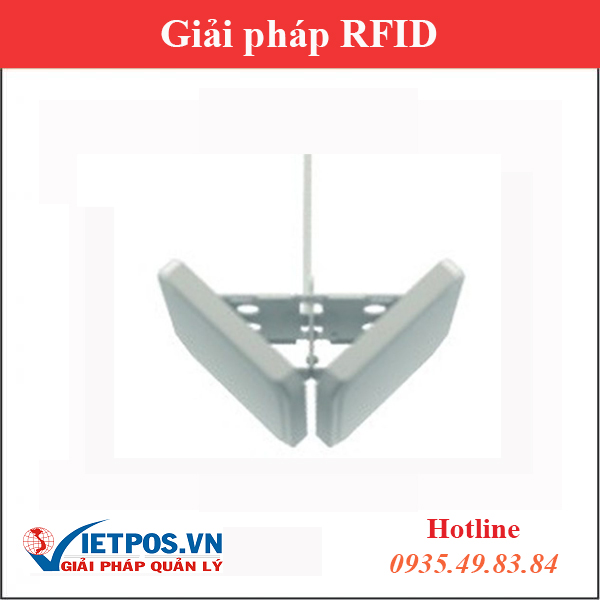
Zebra SR5502 RFID Antenna for Backroom and Warehouse
SKU: SR5502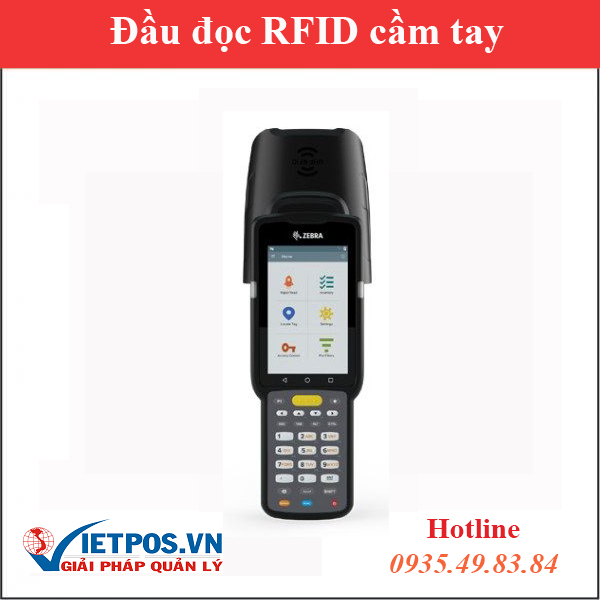
MC3300 Handheld RFID Reader
SKU: MC3300
Handheld RFID Reader RFD2000
SKU: RFD2000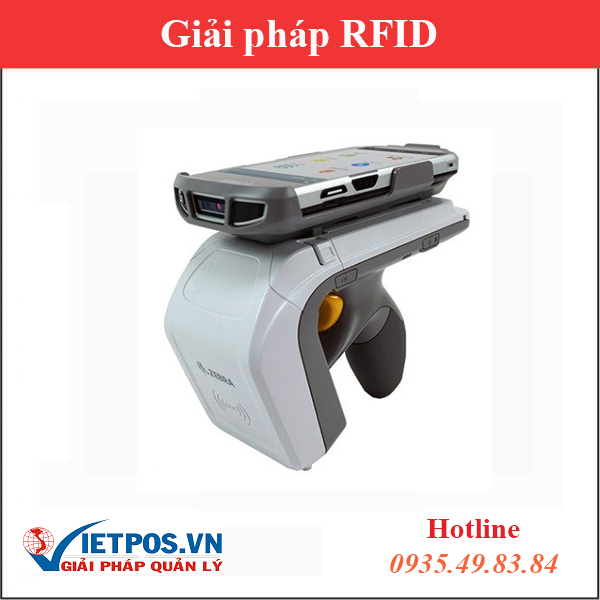
RFD8500 Handheld RFID/1D/2D SLED Reader
SKU: RFD8500RFID tag type and asset material
This is the first factor affecting the budget. For plastic containers or plastic pallets, businesses can use standard RFID tags at a low cost. However, for gas cylinders, iron racks, or metal pallets, it is mandatory to use On-metal tags. These tags have a special structure to prevent signal interference caused by metal surfaces, so their cost is typically 3 to 5 times higher than standard tags. Additionally, the mounting method (adhesive, screw, or embedded) also affects labor and auxiliary material costs.
Reader infrastructure (Readers & Antennas)
The number of checkpoints determines the number of fixed readers needed. A basic system may only require handheld readers for periodic inventory by staff. However, for full automation, businesses need to install RFID portals at warehouse doors. The cost of one read portal includes a multi-channel reader, antennas, controllers, and network infrastructure. Depending on the width of the warehouse door and the density of goods, the number of antennas needed will vary to ensure optimal coverage.
Software and system integration
Software plays a role in processing raw data from readers into meaningful information. This cost includes software license fees, customization fees for specific business processes, and integration fees with existing ERP or WMS systems. A simple solution that only tracks quantities will have a completely different investment level compared to a solution deeply integrated into production processes and asset lifecycle management.
What is the indicative cost range and deployment roadmap at VietPOS?
VietPOS provides solution packages from basic to advanced. Costs can range from small-scale trial investments to large-scale automation systems. We recommend that businesses conduct an on-site survey to accurately determine the number of devices and suitable tag types, avoiding waste in initial investment budgets.
Below is a reference table of solution components based on asset type:
| Asset type | Recommended tag type | Operating environment | Equipment requirements |
|---|---|---|---|
| Wooden pallets / Plastic containers | Standard UHF tags | Dry warehouses, outdoor yards | Handheld devices / Fixed read portals |
| Gas cylinders / Drums | Specialized On-metal tags | Flammable, explosive, metal environments | ATEX-certified handheld devices (if needed) |
| Mobile racks / Trolleys | Impact-resistant UHF tags | Factories, production workshops | Read portals at transfer stations |
Note: The actual investment level will be determined after VietPOS technical experts measure signal strength and assess actual materials at your warehouse.
What are the technical limitations and regulatory considerations in Vietnam?
RFID technology does not achieve 100% performance in all conditions, especially when encountering obstacles such as liquids or thick metal. Additionally, UHF RFID devices in Vietnam must strictly comply with frequency and emission power regulations according to Circular 08/2021/TT-BTTTT to avoid radio interference.
Physical limitations of RFID waves
Businesses need to understand that RFID is not magic. When goods are stacked too densely or contain many liquids, UHF waves can be absorbed or strongly reflected, leading to missed tags. In such cases, operational procedures must include staff confirmation steps or redesign the arrangement of goods to optimize antenna scanning angles. Expecting an absolute read rate in all circumstances without technical surveys is unrealistic.
Compliance with frequency regulations and certification
In Vietnam, UHF RFID devices must operate in the 918.4–923 MHz frequency band with emission power not exceeding 500 mW ERP. Using devices of unclear origin or with inappropriate frequency bands (such as US or European bands) not only violates the law but also causes interference to mobile communication systems. All devices provided by VietPOS ensure compliance documentation and adhere to RFID frequency and compliance in Vietnam according to regulations of the Ministry of Information and Communications.
Recommendations from VietPOS experts
To effectively implement a returnable asset management solution, businesses should start with a small-scale pilot project. This helps evaluate actual read rates, tag durability, and staff adaptability before expanding to the entire system. VietPOS not only provides equipment but also accompanies businesses in on-site surveys, advising on suitable frequency bands, and building a solid hardware infrastructure for digital transformation.
Cần tư vấn thiết bị/giải pháp cụ thể?
Việt POS phản hồi trong 30 phút · Hotline 4 vùng · Khảo sát miễn phí.
