Mục lục bài viết (9)
- What categories does school RFID library cost include?
- Reference pricing by school library scale 2026
- International-standard ILS software — why can't it be cut?
- RFID devices and self-checkout Kiosks for students
- Security gates — stopping book loss
- How to calculate school RFID library ROI in 18-30 months
- Comparing RFID and traditional barcodes for Vietnamese school libraries
- Deployment roadmap suited to Vietnamese schools
- Frequently asked questions
School RFID library cost is the total budget to integrate radio frequency identification technology into the book borrow-return-inventory process, gradually replacing manual operations with a self-service system and security gates. In Vietnam during 2025-2026, many K-12 schools and universities are moving from the traditional barcode model to RFID, but most school boards still lack a standard budget framework to submit to the finance department for approval.
School RFID library cost 2026 includes 4 main categories: international-standard ILS software (MARC21/SIP2), RFID tags applied to each book, self-checkout Kiosks for students, and security gates. For a library with 8,000-15,000 copies, total investment ranges from 180-420 million VND, with payback in 18-30 months thanks to reducing 1-2 librarians and cutting book loss by 60-80%.
Table of contents
- What categories does school RFID library cost include?
- Reference pricing by school library scale 2026
- International-standard ILS software — why can't it be cut?
- RFID devices and self-checkout Kiosks for students
- Security gates — stopping book loss
- How to calculate school RFID library ROI in 18-30 months
- Comparing RFID and traditional barcodes for Vietnamese school libraries
- Deployment roadmap suited to Vietnamese schools
- Frequently asked questions
What categories does school RFID library cost include?
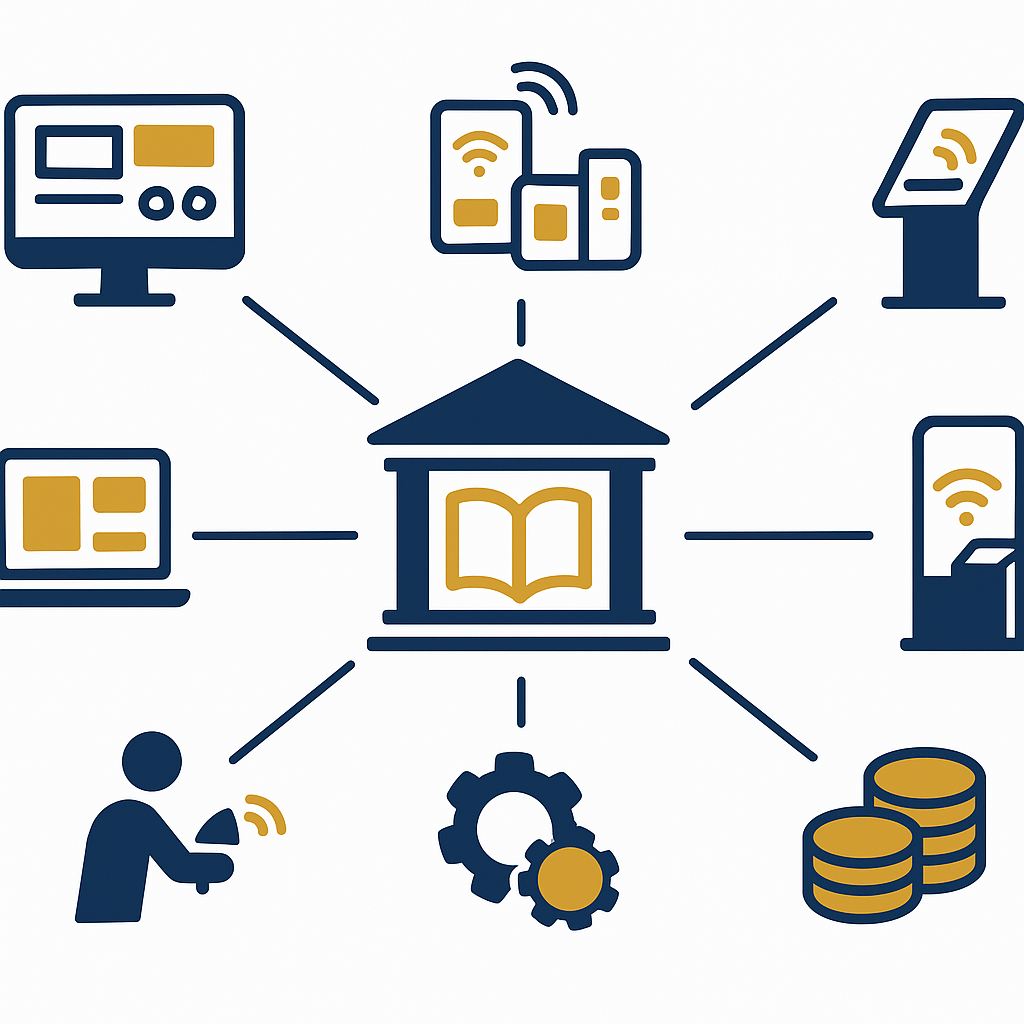
A complete school RFID library project has 5 cost categories: integrated library system (ILS) software meeting international standards, RFID tags applied to each book, self-checkout Kiosks for students, security gates at entrances and exits, and labor for initial tag application and data entry. Software and device costs account for 75-85% of the total budget, with the remainder being deployment and first-year operations.
When preparing a budget, school boards need to clearly distinguish one-time costs (CAPEX) and recurring costs (OPEX). CAPEX includes software, Kiosks, security gates, handheld readers and initial tags. OPEX includes additional tags for new books, software maintenance fees, and training costs for rotating new staff. Many schools only calculate CAPEX and then blow their plan in the second year because they forget OPEX.
- International-standard ILS software: MARC21 cataloging per AACR2, ISO 2709 record exchange, Z39.50 record retrieval, SIP2 protocol to connect RFID devices.
- RFID tags: applied to each book, patron cards for students and teachers.
- Self-checkout Kiosk: self-check station for students to scan books and cards themselves, without a librarian at the counter.
- Security gate: RFID antennas placed at the exit, detecting books not recorded as borrowed.
- Labor and training: tag application, initial data entry, training librarians and homeroom teachers.
Reference pricing by school library scale 2026
Related products






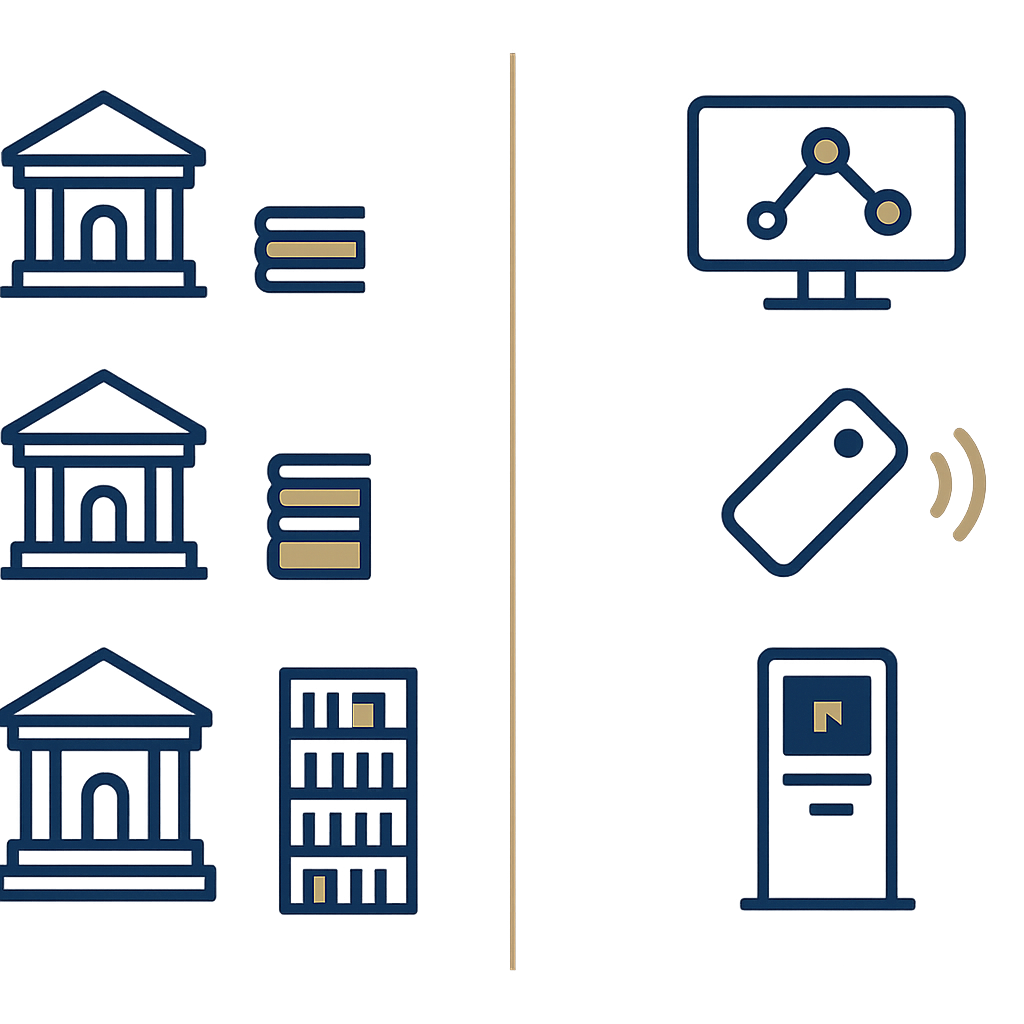
For a library with 5,000 copies, total investment ranges from 120-210 million VND. A 10,000-copy library needs 200-350 million. A library with 20,000 copies or more needs 380-650 million because the number of Kiosks and security gates increases with the number of service points. The price difference depends on whether the school chooses 1 or 2 self-checkout Kiosks, and uses HF or UHF tags.
| Category | 5,000-copy library | 10,000-copy library | 20,000-copy library |
|---|---|---|---|
| International-standard ILS software | 35-60 million | 55-90 million | 90-150 million |
| RFID tags for books | 20-35 million | 40-70 million | 80-140 million |
| Self-checkout Kiosk (1-2 stations) | 45-70 million | 70-120 million | 130-220 million |
| Security gate | 25-40 million | 35-55 million | 55-90 million |
| Tag application, data entry, training | 8-15 million | 12-20 million | 20-35 million |
This is a reference price range for preparing a proposal, not a fixed quotation. For the same scale, schools choosing a full-package integrated solution from a single supplier are usually 10-15% lower than combining multiple separate sources, due to savings on integration costs and unified warranty.
International-standard ILS software — why can't it be cut?
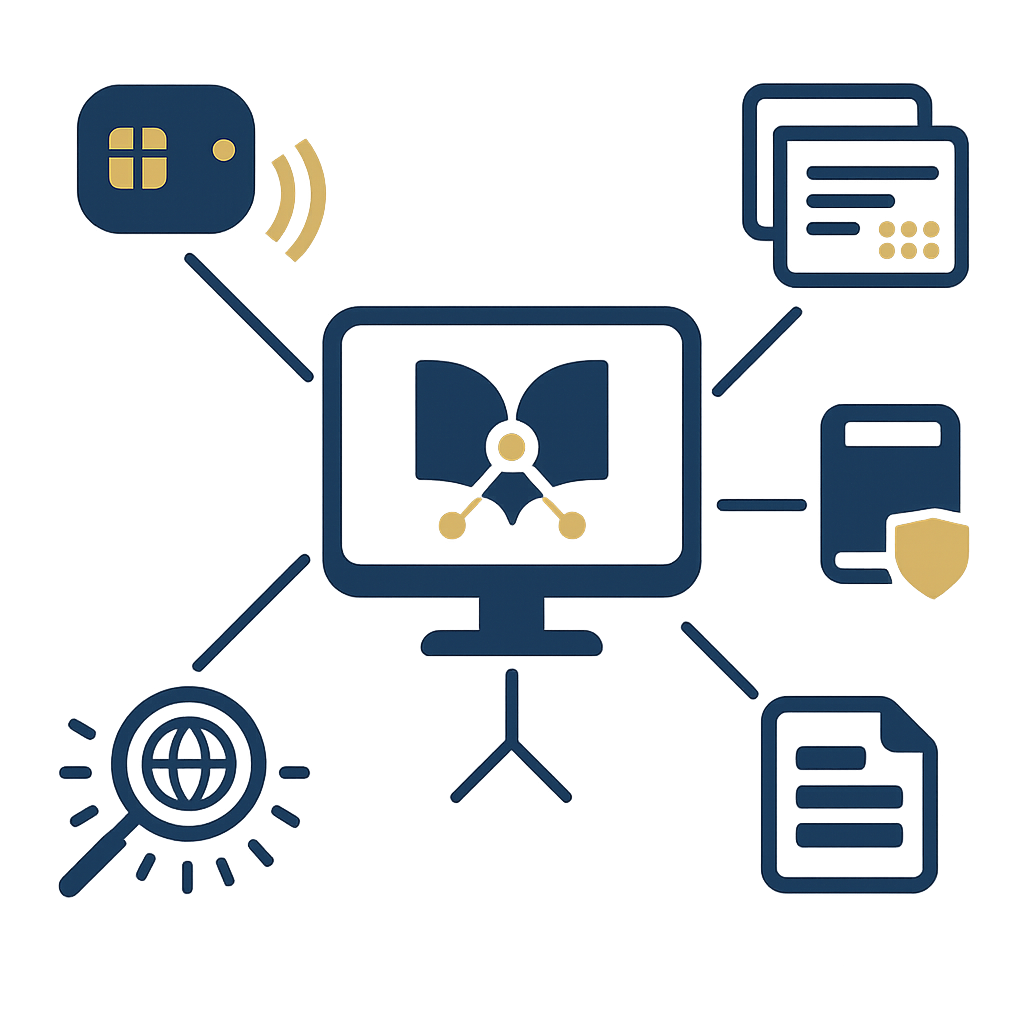
International-standard ILS software is the platform that determines whether the entire RFID system operates according to proper library operations. The MARC21 and AACR2 standards ensure records can be exchanged with other libraries via ISO 2709 and Z39.50. The SIP2 protocol is the mandatory bridge between the software and self-checkout Kiosks, RFID security gates — without SIP2, devices cannot read borrow-return data.
Three standards to check before signing a contract:
- MARC21 + AACR2: proper standard cataloging, with a cataloging queue, default values, ISO 2709 import and Z39.50 record retrieval from the national library or major university libraries.
- SIP2: connects self-checkout Kiosks, 24/7 book-drop, RFID security gates. This is an industry protocol, not a proprietary API.
- Full-text search OPAC: students search without diacritics, merging print and digital versions on the same MARC21 record.
Some schools want to save money by using ordinary book management software and then connecting RFID devices themselves. This approach usually fails at the expansion stage because records do not follow MARC21, cannot interoperate with provincial or university libraries when students advance to the next level. See more at Library Management Software Combined with RFID: 2026 Selection Guide to understand evaluation criteria.
RFID devices and self-checkout Kiosks for students
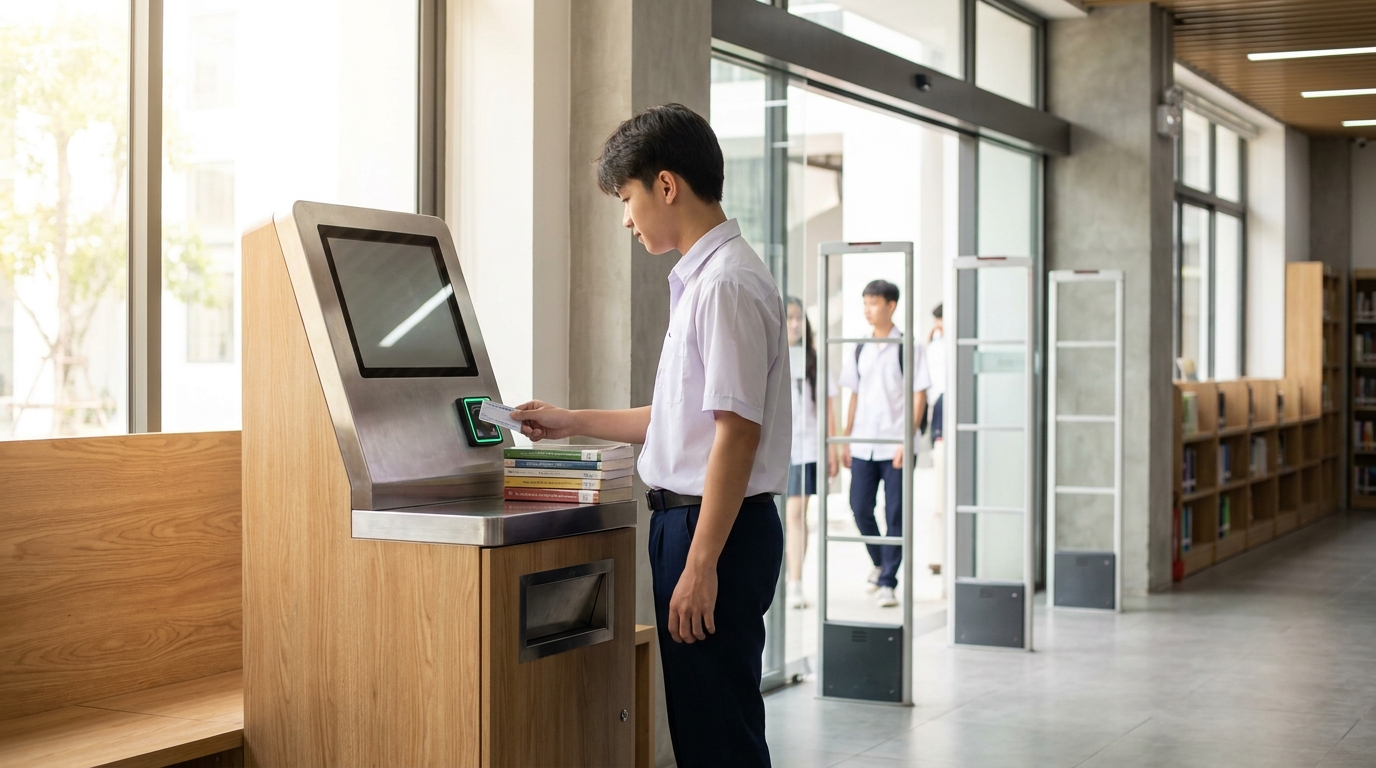
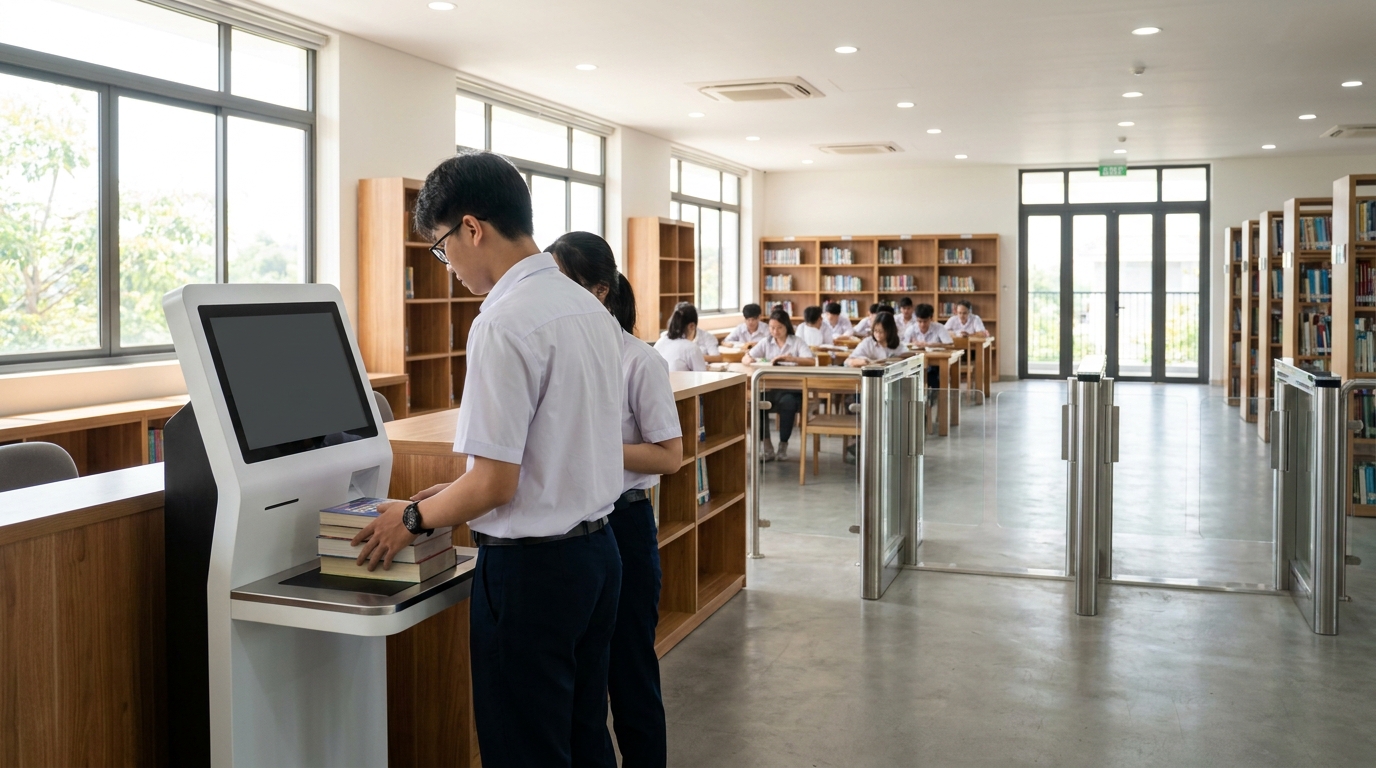
RFID devices in a school library include 4 groups: book tags, patron cards, self-checkout Kiosks and handheld inventory readers. The self-checkout Kiosk is the category students use directly every day — allowing them to scan student cards and a stack of books at the same time, updating borrow data to the software within 1-2 seconds, without a librarian at the counter.
For K-12 school libraries, self-checkout Kiosks should be placed right at the entrance so students can self-serve during recess — a peak period of only 10-15 minutes. One Kiosk can read 5-10 books at once, shortening each borrow transaction from 1-2 minutes when done manually to 15-25 seconds. Schools with 800-1,500 students usually need 1-2 Kiosks at the main service point, plus 1 Kiosk at a branch if the library has separate reading rooms.
If the school already has experience operating Kiosks in other areas, you can refer to how to arrange self-service devices at How to Set Up a Booth in a Shopping Mall to apply similar traffic flow principles to the self-checkout area.
Security gates — stopping book loss
A security gate is a pair of RFID antennas placed at the library entrance, automatically detecting a book not recorded as borrowed. When a student carries a book through the gate without going through the self-checkout Kiosk, the system emits an audible signal and warning light for the librarian to check. This is the category that directly cuts book loss — the biggest headache of Vietnamese school libraries.
A high school in central Vietnam with 12,000 book copies recorded 180-250 books lost each academic year before installing security gates, equivalent to 15-25 million VND in replacement value. After installing RFID gates, this number dropped to 20-40 books/year — mainly because students forget to record the borrow and voluntarily return to the self-check station when they hear the alert. Security gates need to be placed 2-3 meters from the self-checkout Kiosk to avoid signal interference between the two devices.
How to calculate school RFID library ROI in 18-30 months
School RFID library ROI comes from three sources: reducing librarian staff (1-2 people in a 10,000-copy library), cutting book loss (60-80%), and saving inventory time (from 2-3 weeks down to 1-2 days). For a 10,000-copy library, total savings are estimated at 90-160 million VND/year, paying back the 200-350 million investment within 18-30 months.
A simple formula for the finance department proposal:
- Staff savings: 1 part-time librarian at 6-8 million VND/month equals 72-96 million/year.
- Reduced loss: 150-250 books/year × 80,000-150,000 VND/book = 12-37 million/year.
- Inventory time savings: 2-3 weeks of labor × 2 people × daily wage = 8-15 million/year.
- Reduced card printing and manual processing costs: 3-8 million/year.
The break-even point is usually reached from month 18 for libraries with high patron traffic, and month 30 for small libraries under 5,000 copies. For areas with many automated service points, the method of calculating foot traffic and revenue at Smart People Counting Camera - Surveillance Solution 2024 can be referenced to measure the actual usage level of students.
Comparing RFID and traditional barcodes for Vietnamese school libraries
Traditional barcodes have an initial investment cost 60-70% lower than RFID, but require librarians to scan one book at a time, do not support multi-book self-checkout Kiosks, and have no effective security gate. RFID is suitable for schools with 5,000 copies or more and a patron base of over 500 regular students.
| Criterion | Traditional barcode | RFID |
|---|---|---|
| Initial investment cost | Low (30-60 million) | 3-5 times higher |
| Time per borrow transaction | 1-2 minutes/book | 15-25 seconds for 5-10 books |
| Full inventory count | 2-3 weeks | 1-2 days |
| Self-checkout Kiosk | No multi-book support | Standard support |
| Security gate | Low effectiveness | Blocks 60-80% of loss |
For schools under 3,000 copies with low patron traffic, barcodes remain a reasonable cost choice. But when the number of copies exceeds 5,000 and the school board sets a goal of reducing librarian staff, RFID is the break-even point within 2-3 academic years.
Deployment roadmap suited to Vietnamese schools
The school RFID library deployment roadmap usually includes 6 steps, lasting 6-10 weeks to avoid disrupting the academic year: current-state survey, MARC21 data standardization, tag application, device installation, training, and running in parallel with the old process for 2-4 weeks before fully switching over.
- Current-state survey: count copies, check the quality of existing records, identify the number of service points.
- Data standardization: convert records to MARC21, clean patron data, handle outdated books.
- RFID tag application: done in summer or low-patron periods, 2-3 people can apply 400-600 copies/day.
- Device installation: self-checkout Kiosks, security gates, handheld readers, SIP2 configuration with the ILS software.
- Training: train librarians, homeroom teachers and student support teams in 2-3 sessions.
- Parallel operation: run in parallel for 2-4 weeks so students get used to the process before completely abandoning paper borrow logs.
Schools with multiple branches or sub-campuses should refer to infrastructure preparation experience at Guide to Renting a Booth at Aeon Mall Hue — the principles of measuring floor space and traffic flow apply similarly to libraries with multiple reading rooms.
Frequently asked questions
How much does school RFID library cost 2026 roughly come to?
For a 5,000-copy library, total investment is 120-210 million VND. A 10,000-copy library needs 200-350 million. A library with 20,000 copies or more needs 380-650 million. This price range includes international-standard ILS software, RFID tags, self-checkout Kiosks, security gates and initial deployment costs.
Should small schools under 3,000 copies invest in RFID?
With under 3,000 copies and low patron traffic, traditional barcodes remain reasonable in terms of cost. You should only switch to RFID when the number of copies exceeds 5,000, or when the school board sets a goal of reducing librarian staff and extending self-service hours outside office hours.
How is international-standard ILS software different from ordinary book management software?
International-standard ILS supports MARC21, AACR2, ISO 2709, Z39.50 and the SIP2 protocol — allowing record interoperability with other libraries, connecting self-checkout Kiosks and RFID security gates. Ordinary book management software lacks these standards, making future scale expansion or interoperability difficult, requiring re-entering data from scratch.
Can self-checkout Kiosks completely replace librarians?
Self-checkout Kiosks reduce 70-80% of manual counter operations, but do not completely replace librarians. Librarians are still needed for MARC21 cataloging work, handling device issues, supporting younger students and managing the collection. The role shifts from manually scanning books to operating the system, advising patrons and controlling data quality.
Do security gates interfere with other devices?
RFID security gates can cause interference if placed too close to the self-checkout Kiosk. The safe distance is usually 2-3 meters. When surveying the floor plan, you need to measure the distance from the Kiosk to the gate, to the reading area and to the storage room to avoid overlapping signals that distort borrow-return data or trigger false alerts.
What is the actual payback period for a school RFID library?
The payback period ranges from 18-30 months depending on scale and usage level. Libraries with high patron traffic pay back around month 18 thanks to reducing 1-2 librarian staff and cutting 60-80% of book loss. Libraries under 5,000 copies usually need 24-30 months. The three main savings sources are staff, book loss and inventory time.
Cần tư vấn thiết bị/giải pháp cụ thể?
Việt POS phản hồi trong 30 phút · Hotline 4 vùng · Khảo sát miễn phí.
Bài viết cùng chủ đề