Mục lục bài viết (6)
- What is a handheld RFID reader – who should use it?
- What is a fixed mount RFID reader – when do you need automation?
- Detailed comparison: handheld vs fixed mount RFID readers
- Selection by use case: 5 real-world scenarios
- Advantages and disadvantages of each RFID reader type
- Real-world case studies from Vietnamese enterprises
Handheld RFID readers and fixed mount RFID readers are two foundational device categories in any enterprise RFID system. Each type features different hardware architecture, read range, processing speed, and automation level – suited to distinct operational requirements. This article compares both reader types across 7 technical and cost criteria, accompanied by 3 real-world case studies from Vietnam, helping you select the right device for your warehouse, retail chain, or manufacturing facility.
What is a handheld RFID reader – who should use it?
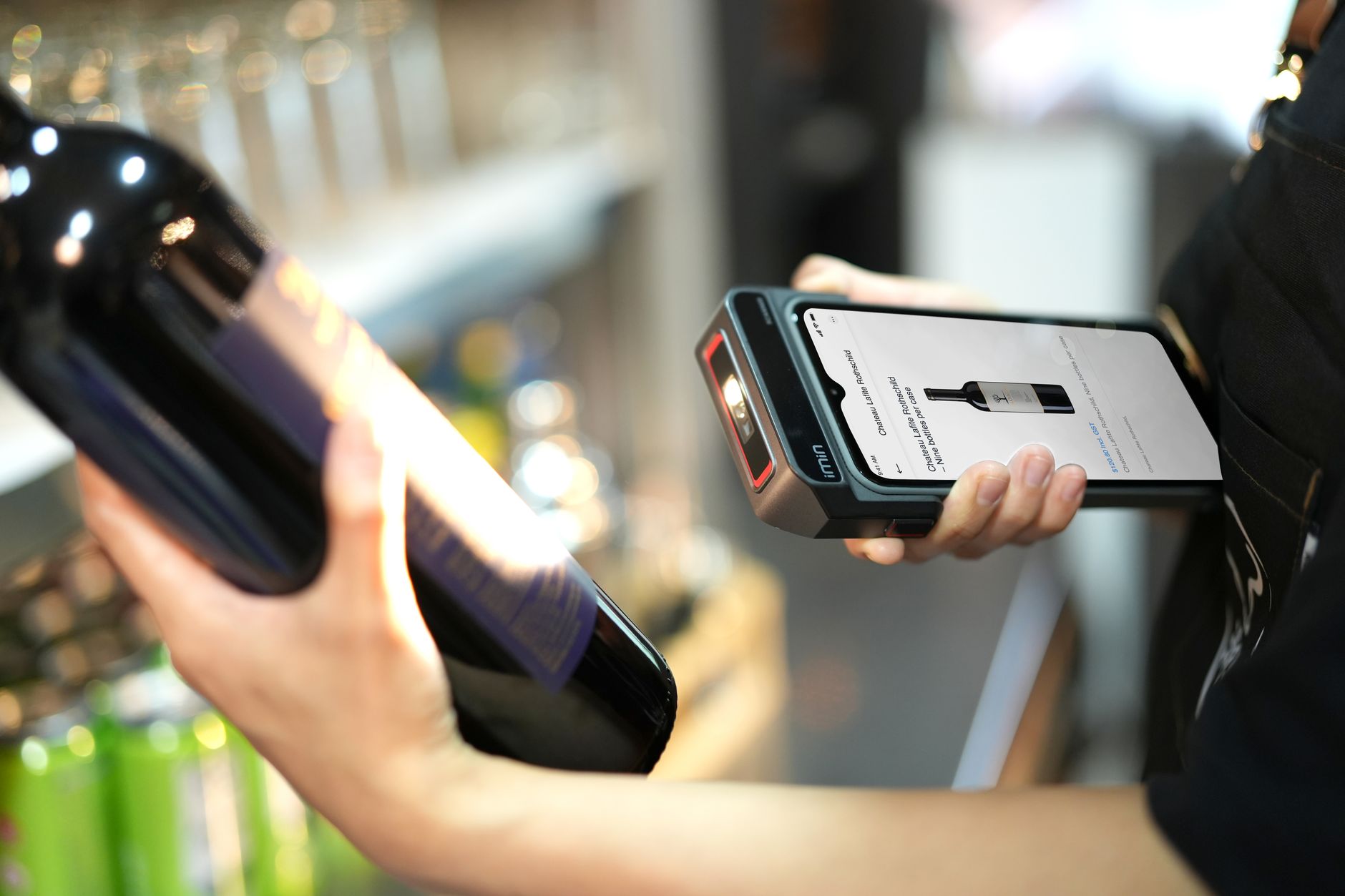
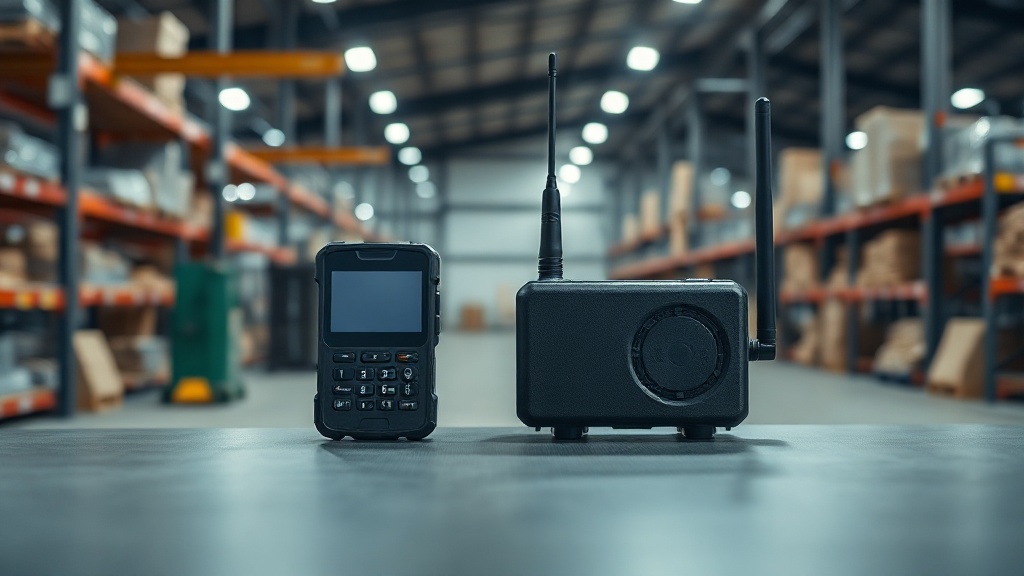
A handheld RFID reader is a mobile device integrating UHF antenna, battery, and typically running Android OS. Users hold the device and move through scanning areas, reading tags section by section across shelves or pallets. It suits applications requiring location flexibility, such as periodic inventory counting, locating misplaced stock, checking inbound/outbound at dock, and operations needing ad-hoc scan positioning.
Handheld RFID readers typically offer a read range of 3-10 meters depending on antenna power and environment. Common models include Chainway C66 (Android 11/13, reads 30m+ under ideal conditions), Zebra MC3300, or Honeywell CK65. Average read speed is 200-500 tags/second – sufficient for manual shelf inventory. Devices feature 5000-9000 mAh batteries enabling 8-12 hours continuous operation.
Ideal enterprises: warehouses of 500-3000m² requiring inventory checks 2-3 times monthly, retail chains needing stock verification at points of sale, manufacturing facilities requiring WIP (work-in-progress) component tracking. Initial investment is lower than fixed mount – ranging from 15-35 million VND per unit depending on brand and configuration. The main drawback is dependence on human operation, making complete automation difficult.
What is a fixed mount RFID reader – when do you need automation?

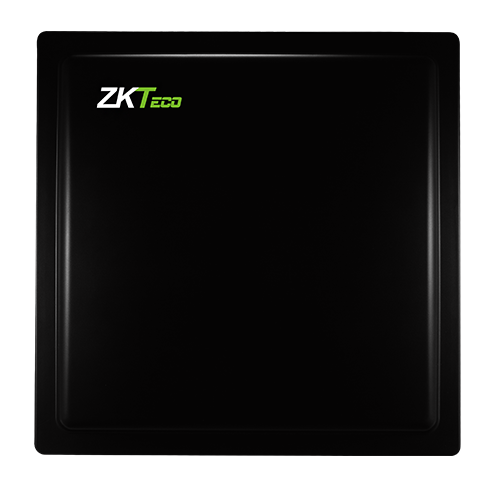
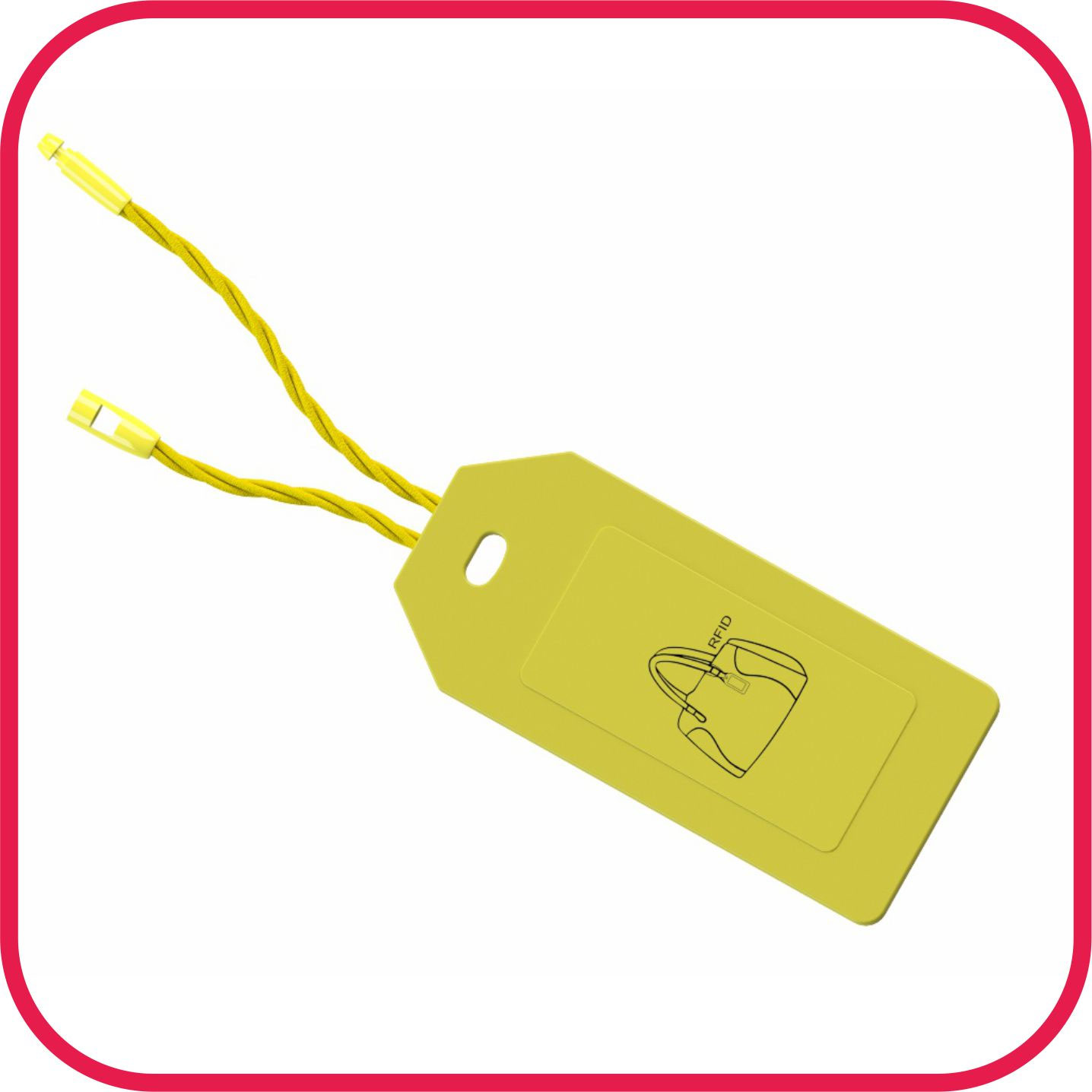
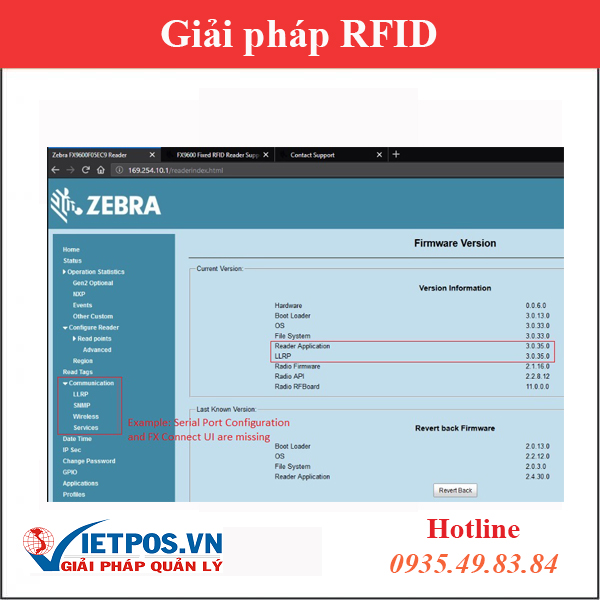
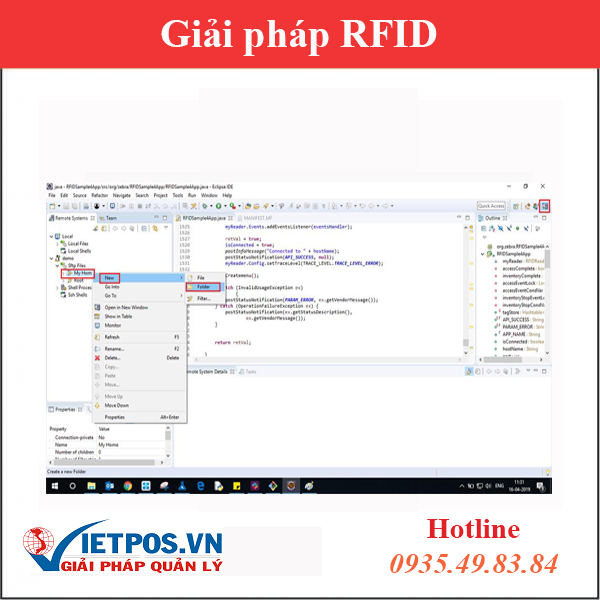
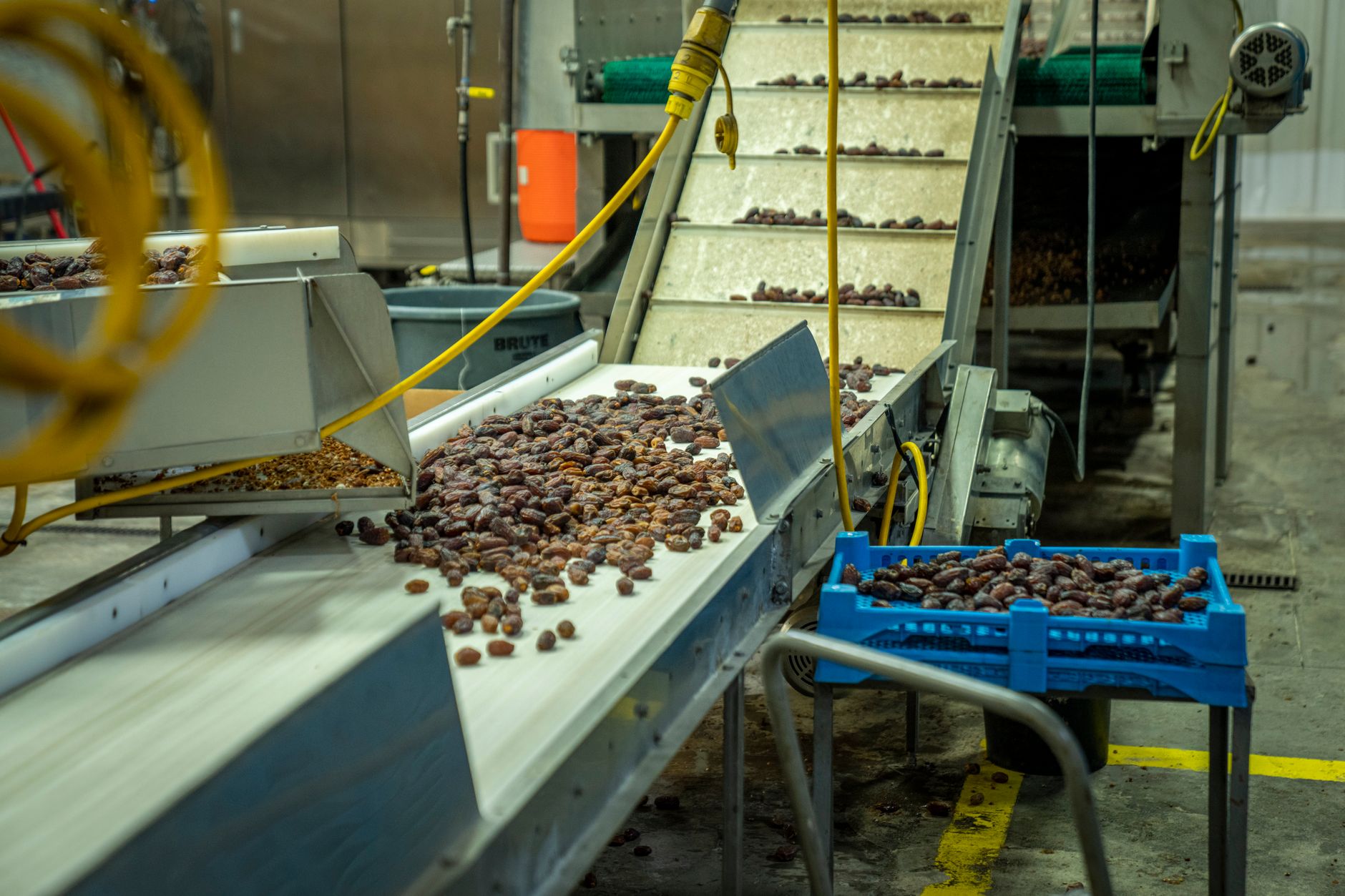
A fixed mount RFID reader is permanently installed at a gate, conveyor, or ceiling, connected continuously to power and network. The device operates 24/7, automatically reading tags as cargo passes through the scan zone. It suits applications requiring real-time monitoring, such as warehouse access control, conveyor automation, remote gate management, and continuous tracking scenarios.
Bạn đang tìm sản phẩm cho chủ đề này?
Việt POS phân phối chính hãng — bảo hành 24-36 tháng, hỗ trợ kỹ thuật 24/7.
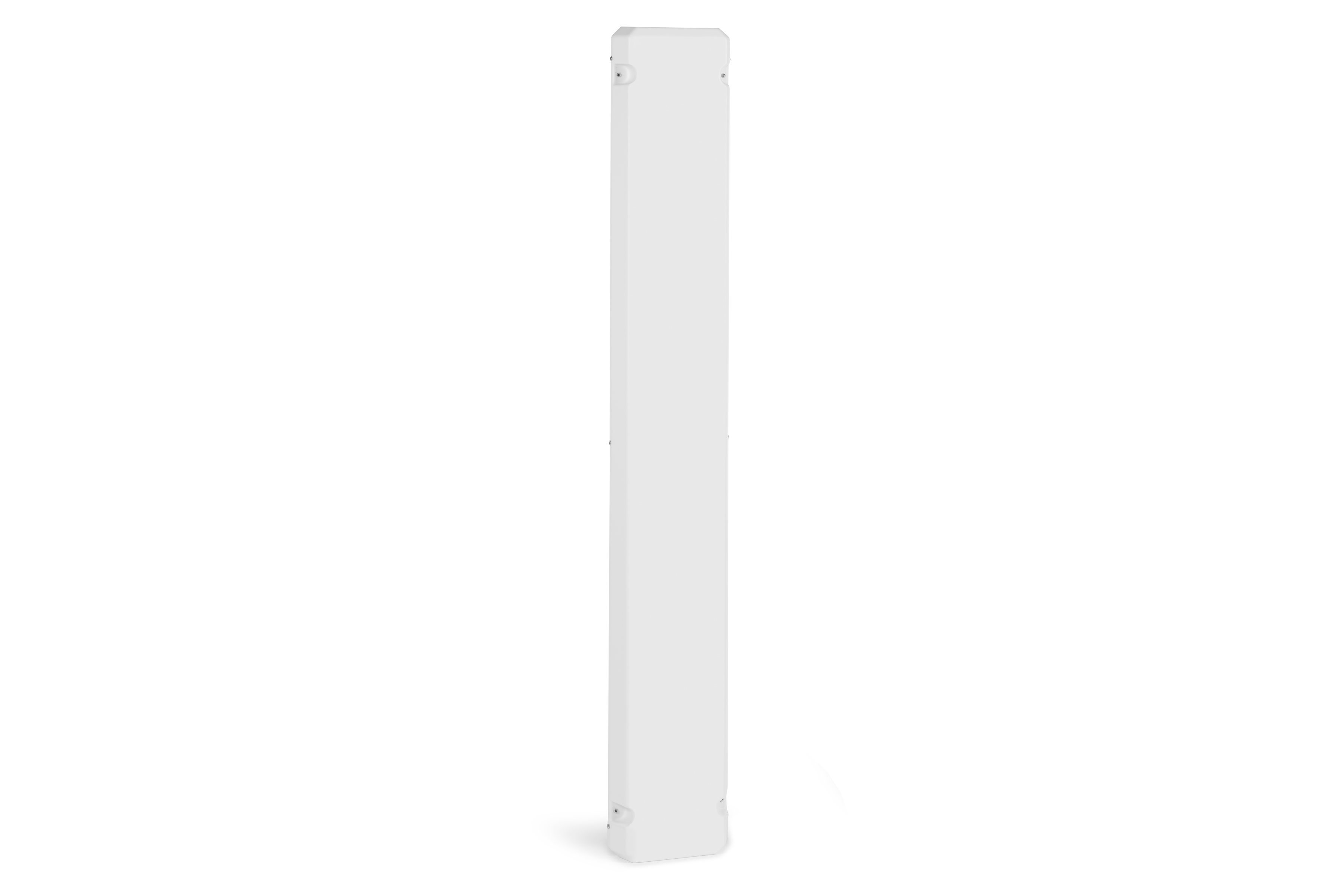
Zebra D100 Wall-Mount RFID Portal — Wall-Mounted RFID Portal
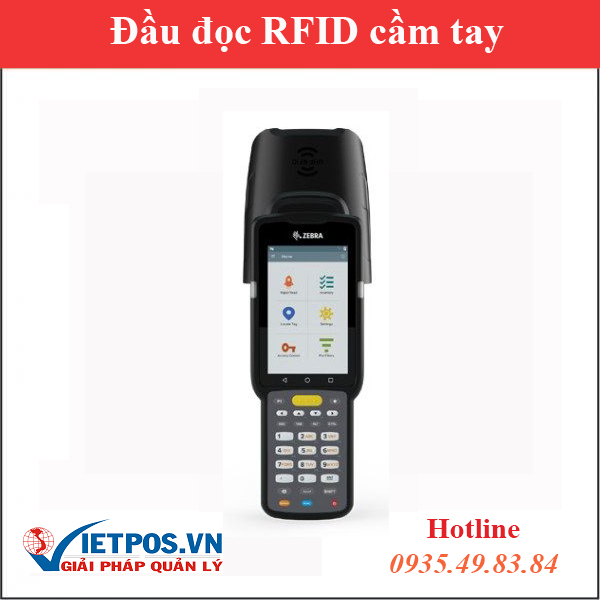
MC3300 Handheld RFID Reader
SKU: MC3300
Handheld RFID Reader RFD2000
SKU: RFD2000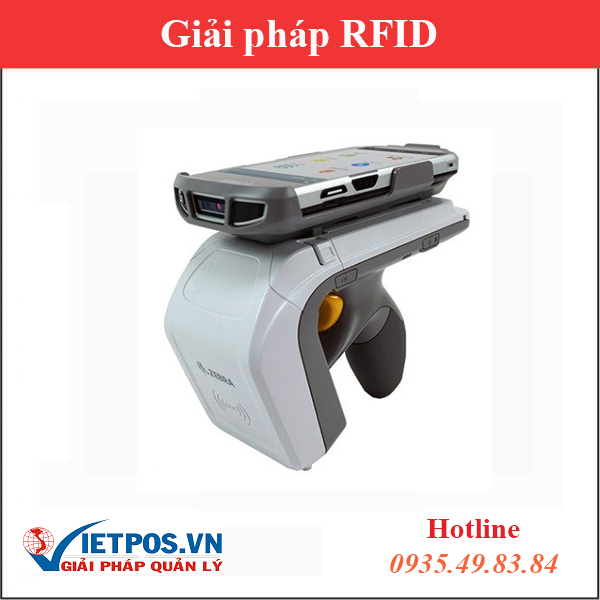
RFD8500 Handheld RFID/1D/2D SLED Reader
SKU: RFD8500Fixed mount readers deliver higher transmit power (up to 30 dBm) and external antennas (1-8 ports) enabling wide scan coverage of 3-12 meters. Common models include Chainway UR4 (4 ports, Impinj E710 chipset), Impinj xArray (64 read zones), Zebra FX9600. Read speed reaches 700-1300 tags/second – 2-3 times faster than handheld. Fixed mount systems can integrate directly with WMS/ERP via API or middleware like 123RFID Desktop.
Ideal enterprises: regional distribution warehouses of 5000-20,000m², manufacturing facilities with automated conveyors, retail chains requiring gate-level cargo tracking. Initial investment is higher: one fixed mount station (reader + 2-4 antennas + cabling) ranges from 40-120 million VND. In return, systems operate without labor, eliminate manual errors, and increase processing speed 5-10 times over manual operations.
Detailed comparison: handheld vs fixed mount RFID readers

The table below compares 7 critical criteria between handheld and fixed mount readers. Values represent real-world ranges measured in Vietnamese warehouse environments (temperature 30-40°C, humidity 70-85%). Use this table as a checklist when selecting equipment.
| Criterion | Handheld | Fixed Mount |
|---|---|---|
| Maximum read range | 3-10 meters (antenna dependent) | 3-12 meters (external antenna 6-9 dBi) |
| Read speed | 200-500 tags/second | Best-in-class: 700-1300 tags/second |
| Automation | Manual (requires operator) | Automatic 24/7 |
| Power / Source | Battery 5000-9000 mAh (8-12h) | AC 24V (continuous) |
| Maintenance | Low (antenna cleaning, battery replacement 2-3 years) | Moderate (cable/antenna inspection 6-12 months) |
| Initial investment cost | 15-35 million VND per unit | 40-120 million VND per station (reader + antennas) |
| Best suited for | Periodic inventory, item search, small warehouses | Access gates, conveyors, real-time tracking |
Note: Costs above exclude RFID tags (500-2000 VND per tag) and middleware software. For Vietnamese enterprises, select equipment supporting 920-925 MHz band (compliant with Ministry of Information & Communications frequency allocation).
Selection by use case: 5 real-world scenarios
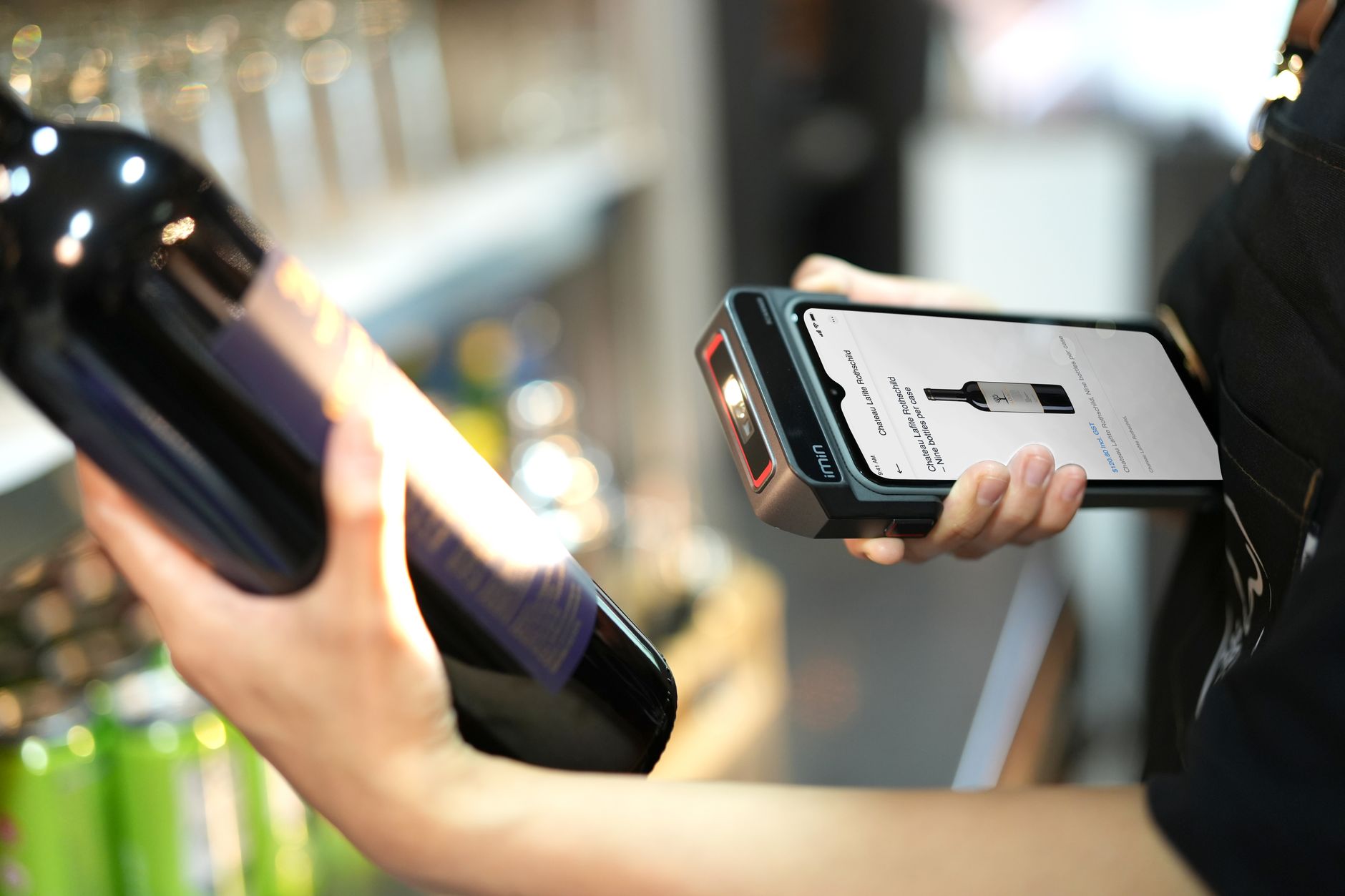
Each use case demands different RFID configurations. Below are 5 common scenarios from Vietnamese enterprises, with specific device recommendations and rationale.
Use case 1: Warehouse inventory 1000-3000m², 2-3 times monthly
Recommendation: Handheld (Chainway C66 or Zebra MC3300)
Rationale: Warehouse staff hold the device and walk aisles, scanning each shelf. Total inventory time drops from 2 days to 2-3 hours. Investing in 2-3 handheld units (~50-80 million VND) costs significantly less than fixed mount for equivalent coverage. No fixed antenna installation or wiring required.
Use case 2: Warehouse gate access control for large distribution center
Recommendation: Fixed mount (Chainway UR4 + 2 gate antennas)
Rationale: Cargo is read automatically 100% at the gate without stopping lift trucks. Each 8-hour shift processes 500-800 pallets. Fixed mount reads 200-300 tags simultaneously as a pallet passes through, recording real-time data to WMS. Station cost of 60-90 million VND achieves ROI in 12-18 months through labor reduction and reconciliation savings.
Use case 3: Fashion retail – 20 stores, weekly inventory
Recommendation: Handheld (Chainway C61 or Honeywell CK65)
Rationale: Each store is 200-500m²; staff hold handheld and scan each rack in 15-25 minutes. Data syncs to POS via WiFi. Fixed mount installation is impractical due to high cost and frequent layout changes. Investing in 20 handheld units (~400 million VND) across 20 stores cuts inventory time by 90% versus manual counting.
Use case 4: Electronics manufacturing – WIP tracking on conveyor
Recommendation: Fixed mount (Impinj xArray or Chainway UR8)
Rationale: Conveyor speed 0.5-1.5 m/s requires reading tags on products passing 3-5 inspection stations. Fixed mount reads 700-1300 tags/second, ensuring no misses. Direct integration with MES updates real-time status. 3-5 fixed mount stations (~200-400 million VND total) achieve ROI through reduced defects and 15-20% productivity gain.
Use case 5: Office IT asset management (laptops, printers, equipment)
Recommendation: Handheld (Chainway R2 Bluetooth RFID Reader + smartphone)
Rationale: IT staff move room-to-room scanning tags on fixed assets. Bluetooth handheld is lightweight, connects to smartphone, and costs low (5-10 million VND). Fixed mount is unnecessary since assets stay in place and are audited only 1-2 times yearly. 2-3 devices suffice for a 5-10 story building.
Advantages and disadvantages of each RFID reader type
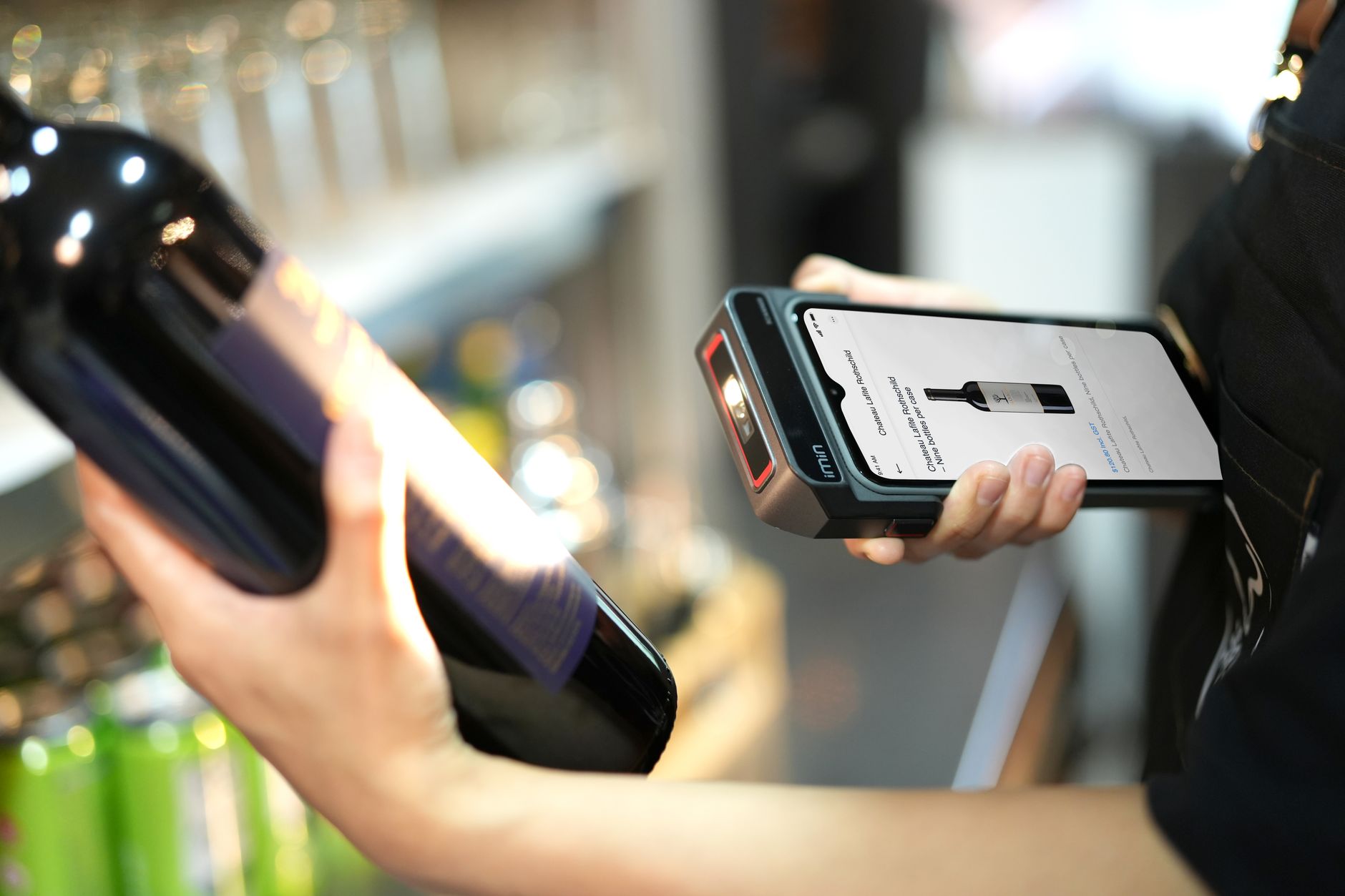
Both reader types have distinct strengths and limitations. The table below summarizes pros and cons across 4 dimensions: operations, cost, maintenance, and scalability.
Handheld RFID Reader
Advantages
- Flexibility: move anywhere in warehouse without fixed installation
- Low upfront cost: 15-35 million VND per unit, easy to expand quantity
- Simple maintenance: antenna cleaning, battery replacement every 2-3 years
- Integrated camera, barcode scanning, 4G/WiFi on single device
Disadvantages
- Human-dependent operation – difficult to fully automate
- Lower read speed than fixed mount: 200-500 tags/second
- Battery limited: requires charging after 8-12 continuous hours
- Cannot simultaneously read many tags over wide area in single pass
Fixed Mount RFID Reader
Advantages
- Full automation: no manual operation required
- High read speed: 700-1300 tags/second, processes large volumes
- 24/7 operation, direct WMS/ERP integration via API
- Wide read coverage: 3-12 meters with external antennas, covers gates and conveyors
Disadvantages
- High upfront cost: 40-120 million VND per station, requires antenna and cabling installation
- More complex maintenance: cable, antenna, firmware inspection 6-12 months
- Fixed location: difficult to relocate when warehouse layout changes
- Requires continuous power and network – dependent on infrastructure
Real-world case studies from Vietnamese enterprises
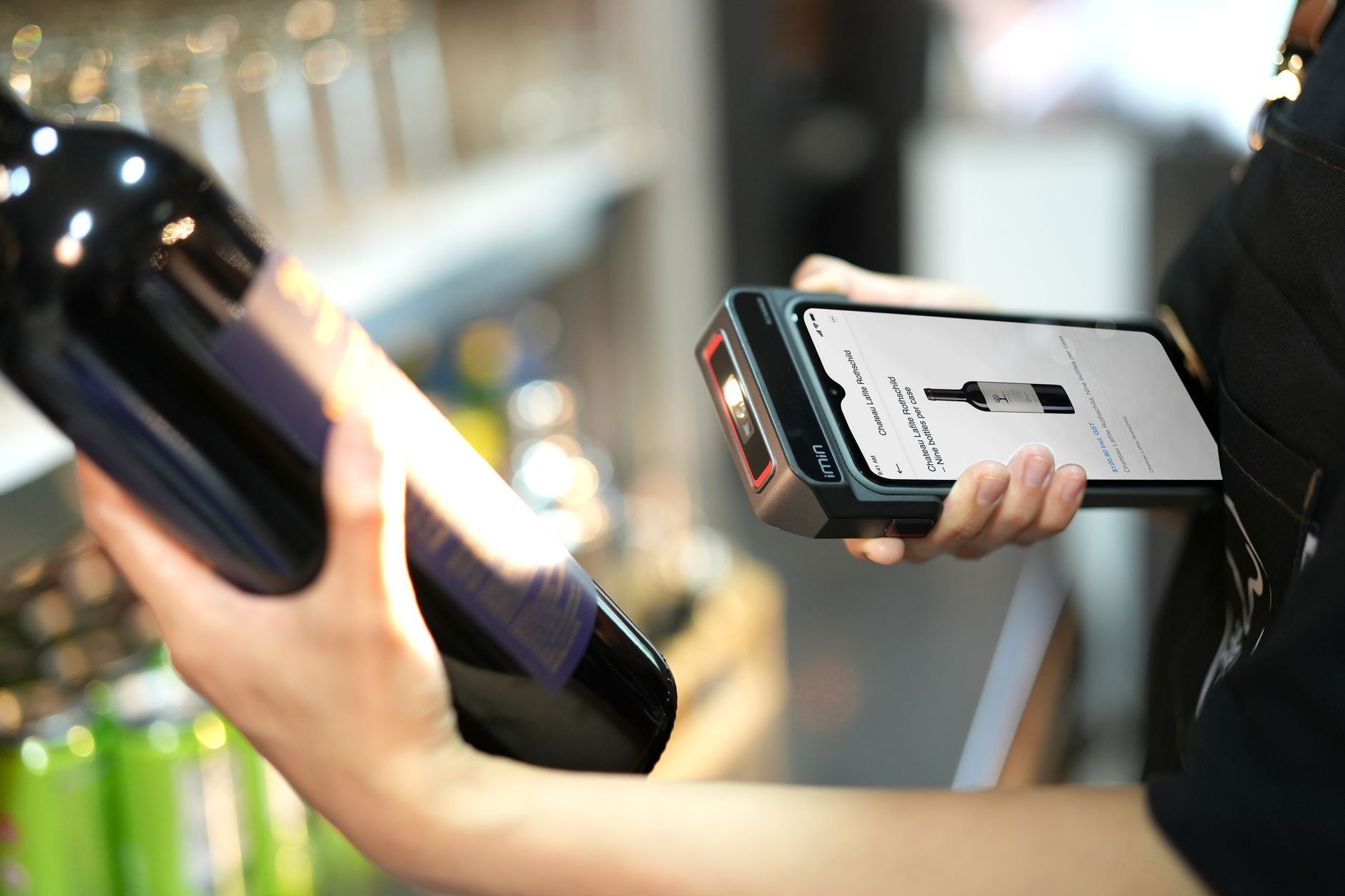
The three case studies below illustrate how Vietnamese enterprises selected appropriate RFID readers based on scale and industry. Data collected from deployments in 2024-2025.
Case 1: Distribution warehouse 5000m² in Binh Duong – fixed mount for access gates
An enterprise managing electronics and consumer goods operates a 5000m² distribution center with 15 inventory staff and 2 dock gates. Before RFID, manual counting took 3 days per cycle with 2-3% discrepancy. The company deployed 2 fixed mount readers (Chainway UR4) at gates plus 2 indoor antennas covering dock areas. Result: 100% of inbound/outbound cargo automatically recorded in WMS, inventory accuracy improved to 99.8%, dock throughput increased from 200 to 400 pallets/day. Initial investment: 150 million VND (2 readers + installation). ROI achieved in 14 months through labor savings (reduce 1 FTE) and reduced shrinkage (~2 million VND monthly).
Case 2: Fashion retail chain – 20 stores with handheld readers for weekly inventory
A fashion brand operates 20 retail stores across Ho Chi Minh City and Hanoi. Monthly inventory took 20 person-days across all locations. The company invested in 20 Chainway C66 handheld readers and trained staff to scan merchandise daily. Each store completes weekly inventory in 30 minutes (vs 3 hours manually). Stock-out detection improved from 2 weeks to 2 days. System integration: handhelds sync data via WiFi to centralized POS server. Initial investment: 400 million VND (20 units). Annual benefit: labor time savings (30 person-days), reduced stockouts (estimated 200 million VND in additional sales). Payback in 18 months.
Case 3: Electronics manufacturing – 5 fixed mount readers for WIP tracking on production line
A printed circuit board assembly factory operates a 3-stage production line with 0.8 m/s conveyor. Previously, staff manually counted output hourly from each stage, leading to 5-8% daily discrepancies. The company installed 5 fixed mount readers (Impinj xArray) at line entrance, after stage 1, after stage 2, before quality check, and at line exit. Each reader reads 800-1200 tags/second. Real-time data feeds into MES, enabling immediate defect detection and rework routing. Initial investment: 400 million VND (5 readers + integration). Result: production cycle time reduced 12%, defect detection time dropped from 24h to 1h, material tracking accuracy improved to 99.5%. Payback in 16 months.
Cần tư vấn thiết bị/giải pháp cụ thể?
Việt POS phản hồi trong 30 phút · Hotline 4 vùng · Khảo sát miễn phí.
Bài viết cùng chủ đề