Mục lục bài viết (7)
- What is an RFID ear tag for livestock? What types exist?
- What components make up an RFID system for livestock farms?
- What is the investment cost for an RFID livestock farm solution?
- Concrete benefits of implementing RFID for livestock farms
- RFID implementation procedure for livestock farms
- Case study: 2,000-pig farm in Dong Nai
- Frequently Asked Questions
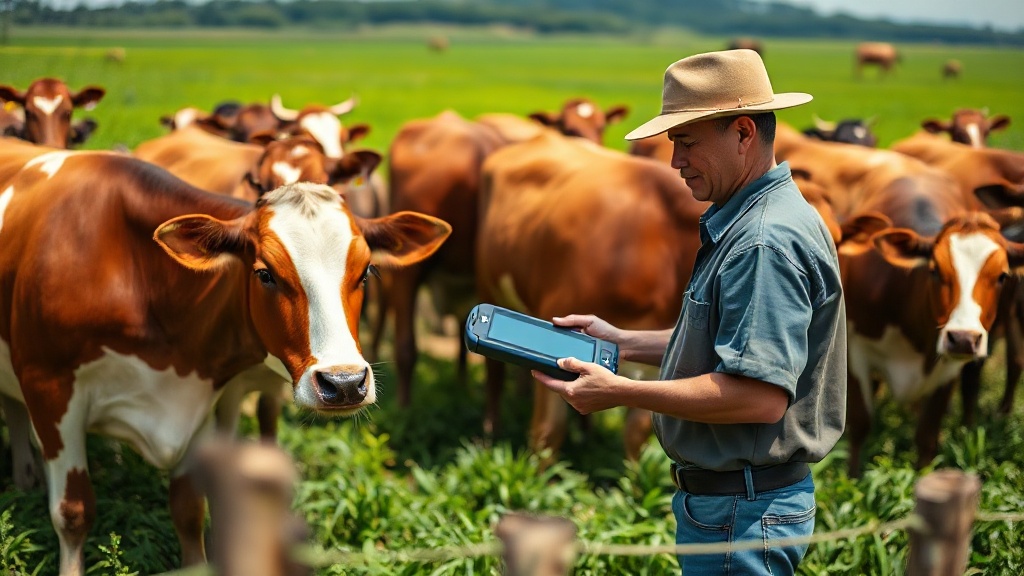
An RFID solution for livestock farms is an integrated system combining RFID ear tags attached to animals, mobile or fixed readers, and herd management software—enabling individual animal identification, vaccination history recording, and herd inventory in 15-30 minutes instead of 3-5 days of manual work. In Vietnam, farms managing 500-5,000 pigs or cattle are deploying this technology to reduce livestock loss, optimize labor costs, and meet traceability requirements for export markets.
What is an RFID ear tag for livestock? What types exist?
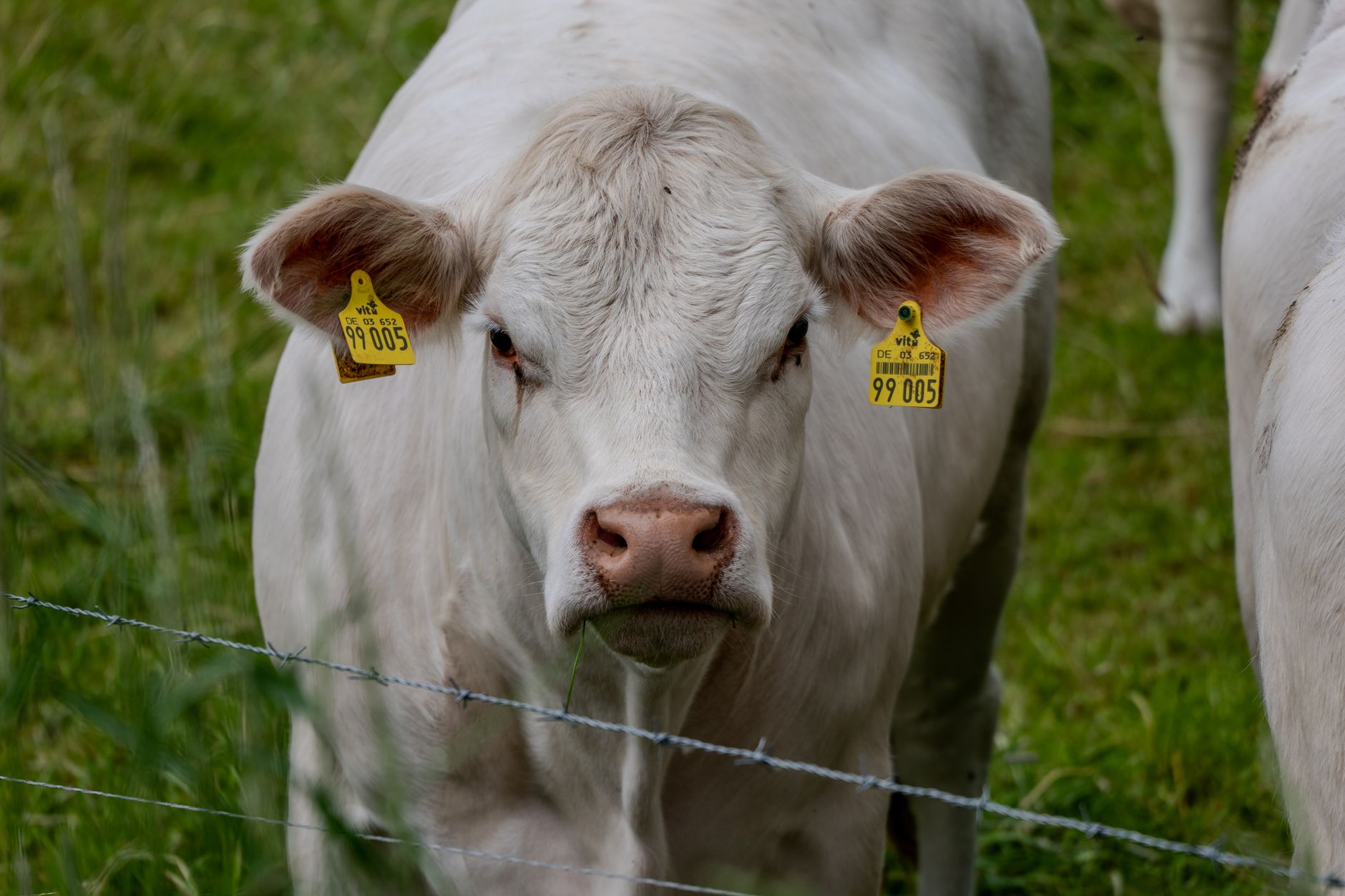
An RFID ear tag (RFID ear tag) is a small device attached to an animal's ear containing an RFID chip that stores a unique ID code for each animal. There are three main types: LF (125kHz) for basic identification, HF (13.56MHz) for short-range applications, and UHF (860-960MHz) for long-range reading up to 10-15 meters. In Vietnam, UHF ear tags dominate due to their ability to read large batches quickly.
RFID ear tags for livestock are designed to withstand harsh environments: IP67 waterproof, impact-resistant, temperature range -25°C to 70°C. For a dairy herd of 500 cattle, RFID ear tags give each animal a unique digital identifier linked to health records, birth date, and pedigree. Unlike conventional ear tags with printed numbers only, RFID tags allow automatic reading through readers without manual inspection of individual numbers.
Reference: RFID label classification and correct selection guide 2026 for deeper understanding of RFID chip lines suitable for livestock farming.
What components make up an RFID system for livestock farms?

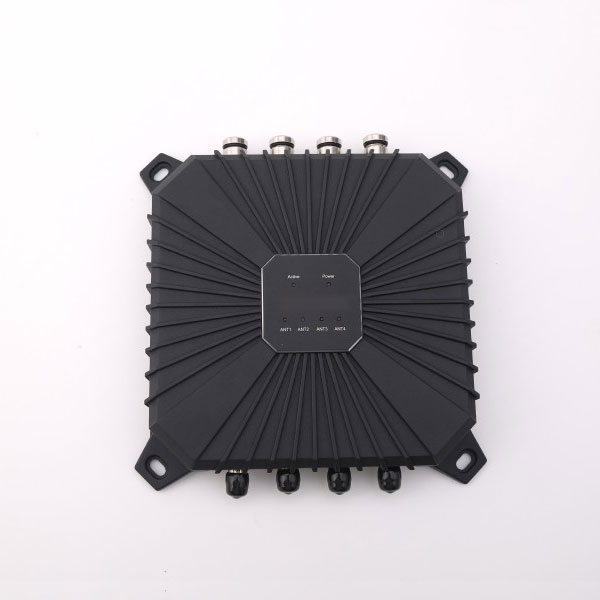
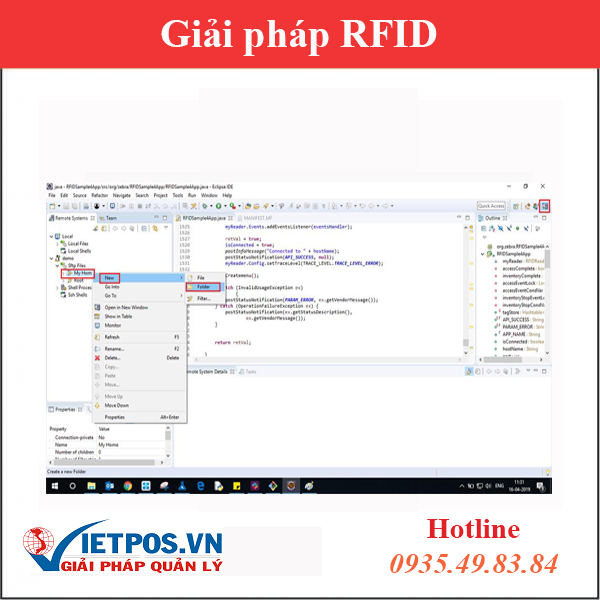
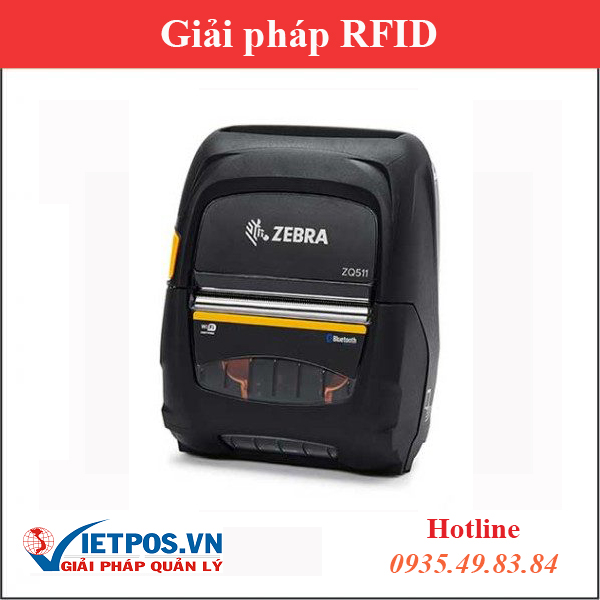
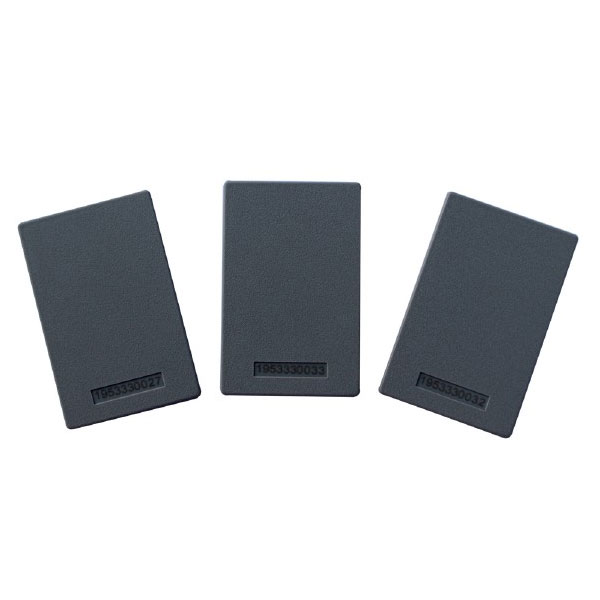
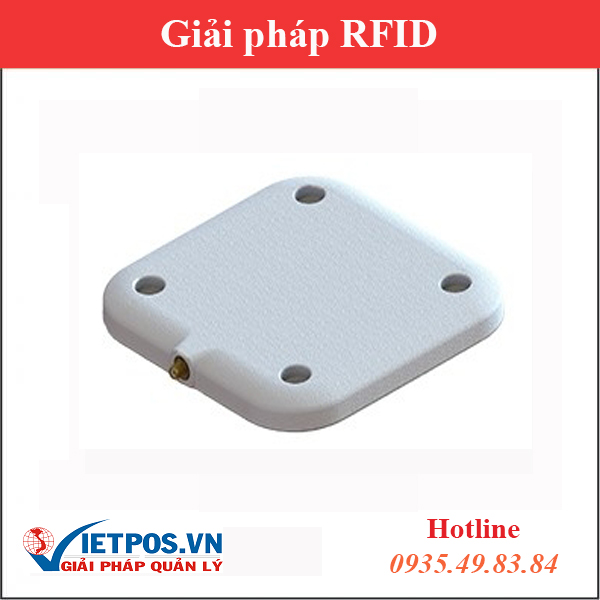

A complete RFID system for livestock farms includes: (1) RFID ear tags attached to animals, (2) Handheld or fixed RFID readers, (3) Industrial tablet or PDA for data processing, (4) Herd management software, (5) Network infrastructure and power supply. Each component plays a critical role in ensuring system accuracy and speed.
Bạn đang tìm sản phẩm cho chủ đề này?
Việt POS phân phối chính hãng — bảo hành 24-36 tháng, hỗ trợ kỹ thuật 24/7.
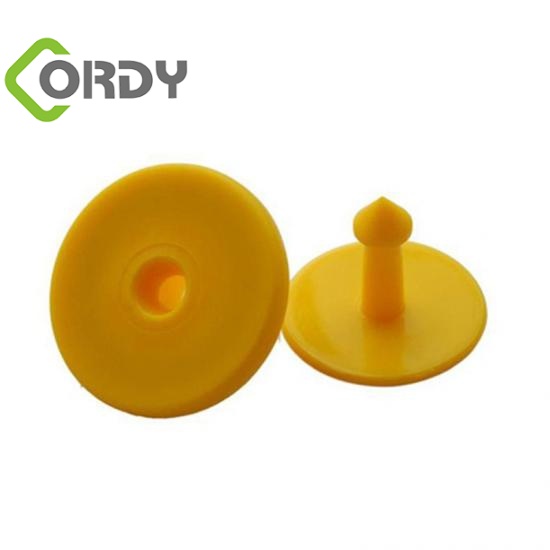
13.56MHz RFID Ear Tags for Livestock and Pets
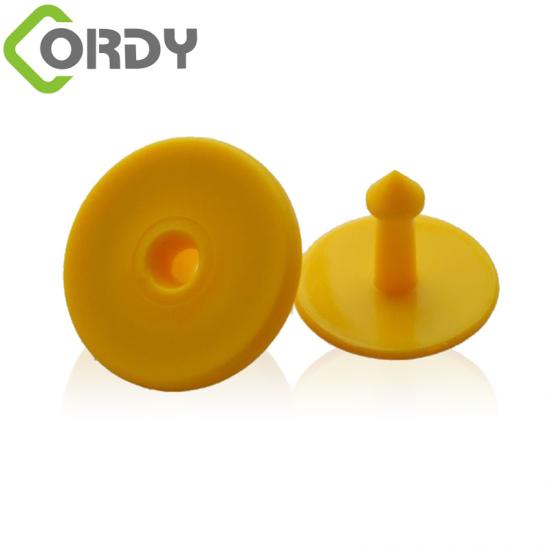
EM4100 RFID Ear Tag for Livestock Management
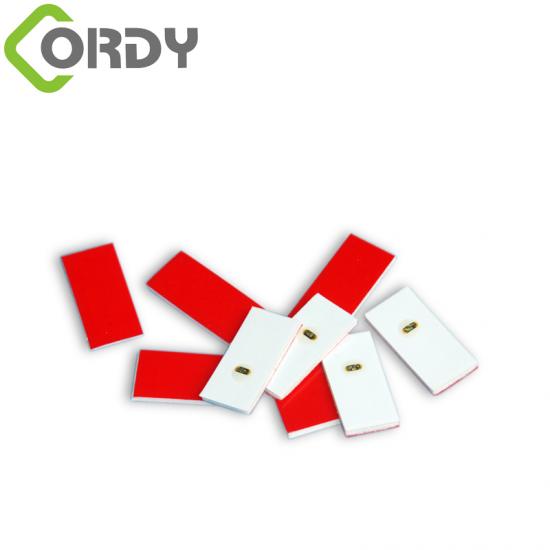
RFID NFC Dry Wet Inlay 13.56MHz — RFID Tags in Roll/Sheet Form
UHF RFID Plastic Jewelry Labels & Tags — Printed Jewelry Price Tags
RFID Ear Tags
RFID ear tags are the core component determining identification accuracy. Livestock UHF tags typically measure 30-40mm, weigh 5-8 grams, read at 3-8 meters with handheld readers, and up to 15 meters with high-power fixed readers. Common chips: Alien H3, Impinj Monza R6, NXP UCODE 8.
Handheld RFID Reader (PDA)
Handheld readers like Chainway C66 UHF RFID Reader or Chainway C71 allow farm workers to walk through barns, read tags from 5-10 meters away, and inventory 200-300 animals in 10-15 minutes. Devices run Android, include camera, 4G, GPS—ideal for field data collection.
Fixed RFID Reader (Gate Entry/Exit)
Fixed readers mounted at barn gates or collection areas automatically read tags as animals pass through. Models like Chainway UR4 (4-antenna ports) or UR8 (8-antenna ports) enable real-time entry/exit monitoring, instantly detecting theft or loss.
Herd Management Software
Software integrated with readers displays individual animal data: ID, age, breed, vaccination schedule, weight, disease history. Data syncs to cloud, enabling remote farm monitoring via mobile. Some software includes automated alerts for vaccination due dates or abnormal conditions.
What is the investment cost for an RFID livestock farm solution?
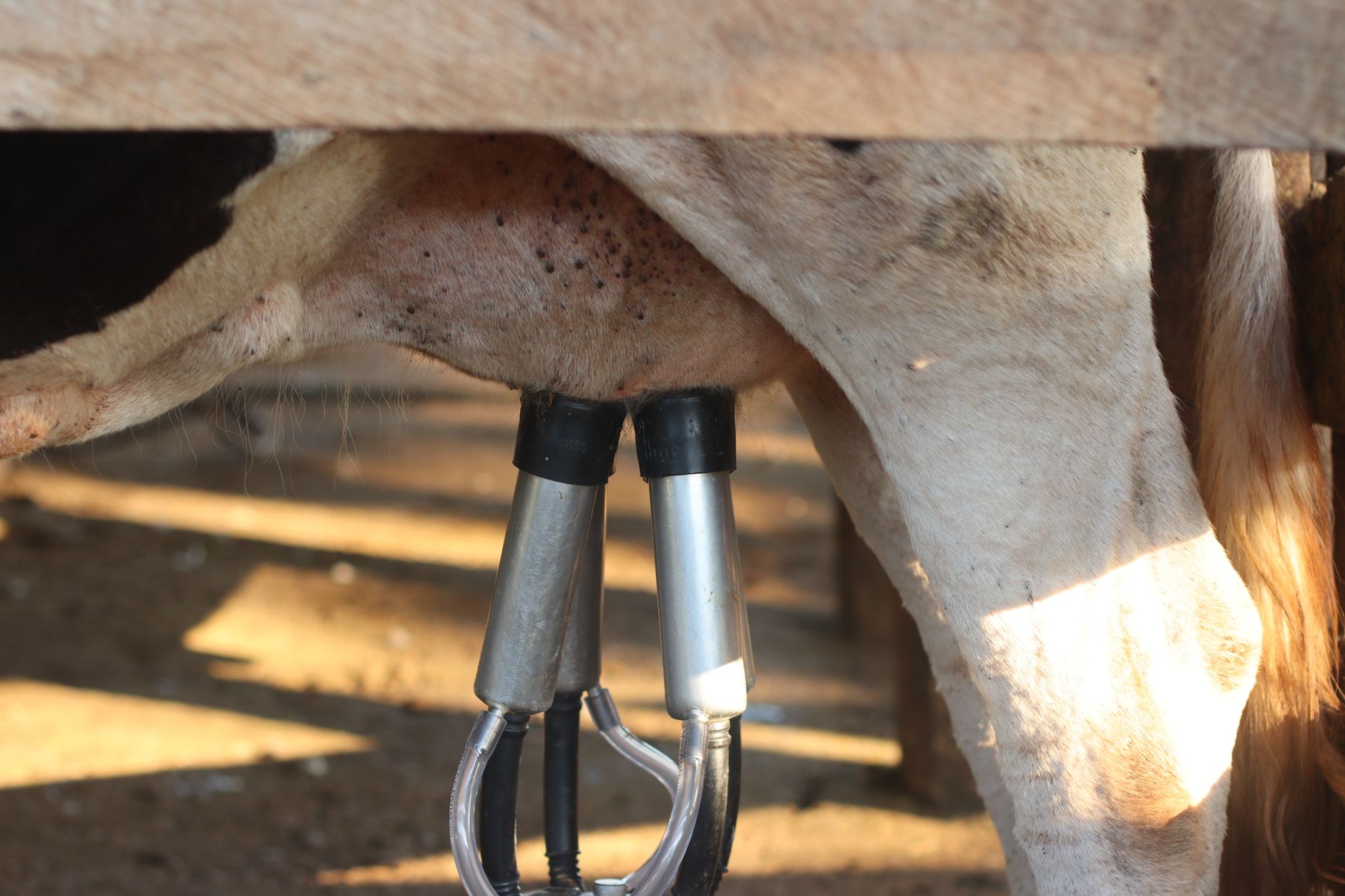
Investment cost depends on herd size and equipment type. For a 500-animal farm, total cost is approximately 35-55 million VND (including tags, handheld reader, software). For a 5,000-animal farm, costs rise to 250-400 million VND due to additional fixed readers and gate systems.
| Category | Small Farm (100-500 animals) | Medium Farm (500-2,000 animals) | Large Farm (2,000-10,000 animals) |
|---|---|---|---|
| UHF RFID Ear Tags | 100-500 tags × 12,000-18,000 VND | 500-2,000 tags × 10,000-15,000 VND | 2,000-10,000 tags × 8,000-12,000 VND |
| Handheld Reader | 1 device (12-18 million) | 2-3 devices (24-50 million) | 5-10 devices (60-150 million) |
| Fixed Gate Reader | Not required | 1-2 units (20-40 million) | 3-5 units (60-150 million) |
| Management Software | 5-10 million/year | 15-30 million/year | 30-60 million/year |
| Estimated Total Cost | 25-40 million | 70-150 million | 200-500 million |
Costs include basic installation. For farms with existing network infrastructure, costs drop 10-15%. Average payback period is 8-14 months through reduced manual labor, decreased livestock loss, and increased product value from traceability.
Concrete benefits of implementing RFID for livestock farms
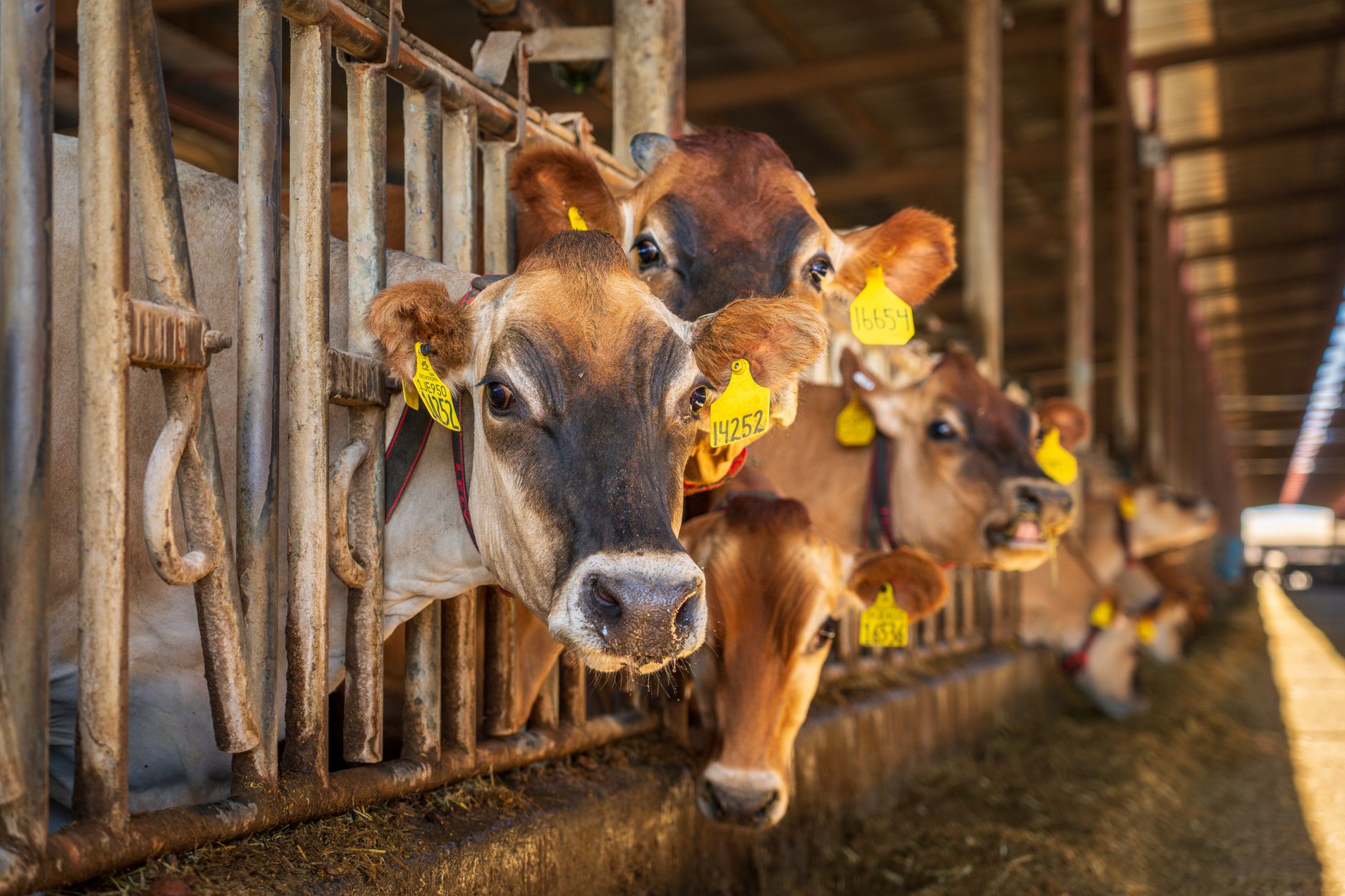
RFID implementation reduces inventory time by 50-70%, cuts management labor by 30%, and increases product price by 15-20% through traceability. These figures derive from actual surveys at medium-scale pig and dairy farms in Dong Nai and Binh Duong provinces.
- Inventory 20x faster: Count 500 animals in 15 minutes versus 5-6 hours manually.
- Reduce livestock loss: Detect theft or loss instantly via RFID gate monitoring.
- Precise health management: Record vaccination history, medical events, weight per animal—no mix-ups.
- Product traceability: Meet EU and Japan export standards—increase product value 15-20%.
- Labor savings: Cut 2-3 inventory staff for 1,000-animal farms, saving 120-180 million VND/year.
- Automated reporting: Software generates herd reports, growth rates, survival rates—no manual Excel work.
RFID implementation procedure for livestock farms
Việt POS provides a 5-step implementation process from site survey to handover and warranty. Average deployment time is 2-4 weeks for 500-2,000 animal farms.
- Farm survey: Technician measures barn area, count shelters, identifies gate placement, assesses network infrastructure.
- Configuration consultation: Recommend tag quantity, reader type (handheld/fixed), software matching budget and scale.
- Equipment installation: Attach tags to animals, install fixed readers at gates, configure software on PDA and servers.
- Staff training: Guide reader operation, software use, inventory procedures, data management. Training takes 1-2 days.
- Handover & warranty: System verification, documentation delivery, 12-month hardware warranty, lifetime technical support.
Spending 3-5 days monthly just on inventory? Let Việt POS automate that process for you.
Call 0935 498 384 now or submit a consultation request for detailed pricing on your farm. Free on-site survey within 48 hours.
Case study: 2,000-pig farm in Dong Nai
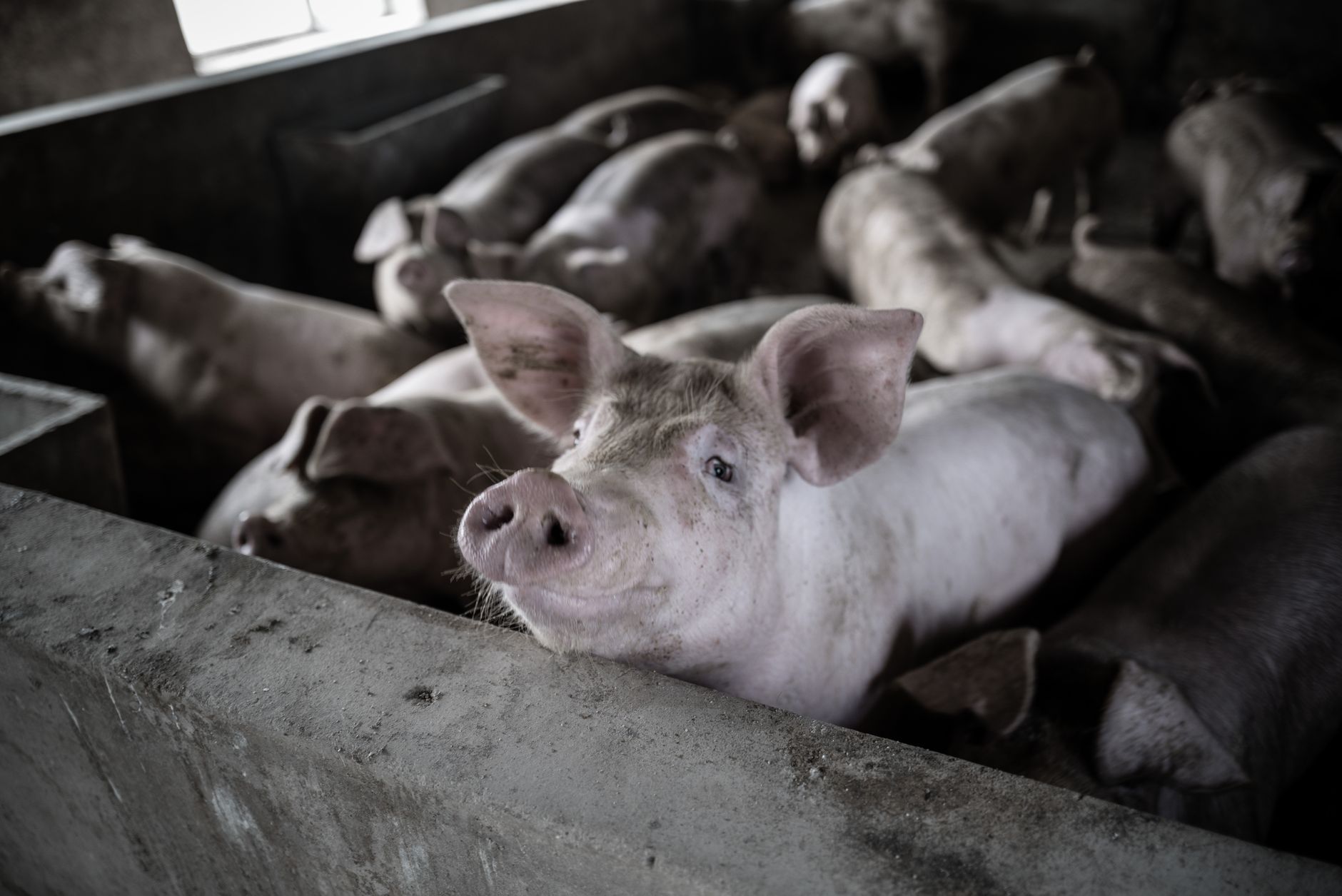
A breeding pig farm in Thong Nhat District, Dong Nai, deployed Việt POS's RFID solution from June 2025. After 6 months, inventory time fell from 8 hours to 25 minutes, livestock loss dropped from 3% to 0.3%, and labor savings reached 180 million VND/year. The farm owner recovered the 150 million VND investment in 10 months.
System includes: 2,000 UHF ear tags, 2 Chainway C66 handheld readers, 1 fixed UR4 reader at the gate, cloud-based herd management software. Staff walk through barns with PDAs, scan from 8 meters away, data auto-syncs to software. When pigs exit, the gate reader auto-confirms quantity and updates inventory.
Frequently Asked Questions
Do RFID ear tags fall off or get damaged?
Việt POS RFID tags meet IP67 standard, resist water, dust, and impact. Tag loss is under 0.5% over a 5-7 year lifespan. Any damage is covered by free replacement in the first 12 months.
What is the annual maintenance cost?
Maintenance costs approximately 5-10% of total investment yearly, including hardware checks, software updates, and wear-part replacement. Basic maintenance plans start at 5 million VND/year for small farms.
Does the RFID system work during power outages?
Handheld readers use rechargeable batteries lasting 8-12 hours, suitable for long work shifts. Fixed readers can connect to backup UPS. We recommend UPS installation for gate RFID systems to ensure continuous operation.
Is the software available in Vietnamese?
Yes. Việt POS herd management software features full Vietnamese interface with livestock-specific terminology. Staff can operate it after just 1-2 hours of training.
How do I import legacy herd data into the system?
We support data import from Excel or legacy management software. For herds without existing data, staff can tag animals and enter basic info (age, breed, weight) directly on the PDA. This takes about 2-3 days for 1,000-animal farms.
Can RFID integrate with electronic scales?
Yes. RFID readers connect to electronic scales via Bluetooth or RS232. When animals step on scales, the system automatically reads the tag and records weight, enabling individual growth tracking without manual data entry.
How long for delivery and installation?
Equipment delivery takes 3-7 business days. Installation and training complete within 1-2 weeks after delivery, depending on farm scale. We prioritize weekend installation schedules to minimize disruption to farm operations.
Do you offer installment payment?
Việt POS supports 0% installment through VISA/Mastercard/JCB for orders of 20 million VND and above. Installment terms range 3-12 months. Contact hotline 0935 498 384 for details.
Cần tư vấn thiết bị/giải pháp cụ thể?
Việt POS phản hồi trong 30 phút · Hotline 4 vùng · Khảo sát miễn phí.
Bài viết cùng chủ đề