Mục lục bài viết (9)
- #What is barcode printing paper and why is it important?
- #Common types of barcode printing paper for Vietnamese businesses?
- #Technical specifications of barcode printing paper to check?
- #Barcode printing paper for cold storage and harsh environments?
- #How to choose barcode printing paper suitable for production scale?
- #Barcode printing software and printing paper — how to optimize quality?
- #Next steps
- Related products
- Related articles
The quality of barcode printing paper is a key factor determining the performance of the entire goods identification system. Many Vietnamese businesses still carelessly choose cheap paper, leading to a 15-25% scanning error rate, disrupting warehouse and sales processes. According to Việt POS's experience implementing solutions for 200+ retail, manufacturing, logistics businesses, standard barcode printing paper reduces scanning errors to 2-5% and extends label lifespan by 3-5 times.
What is barcode printing paper and why is it important?
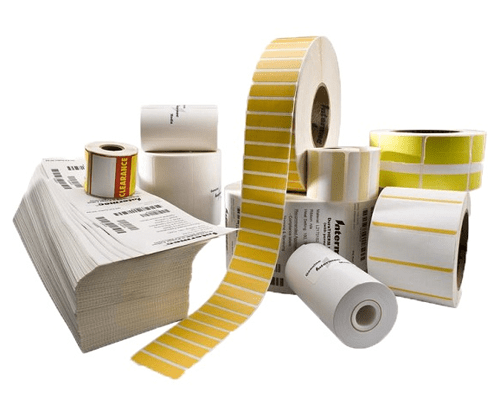
Barcode printing paper is specialized paper designed to optimize ink-background contrast, helping scanners read codes quickly and accurately. This type of paper has high whiteness (85-95%), a flat surface, and resists wrinkling and stretching — factors that determine long-term printing and scanning capabilities.
Unlike regular office printing paper, barcode printing paper must withstand harsh conditions: fluctuating temperatures, high humidity, chemical exposure, and friction in the warehouse. If low-quality paper is chosen, ink will penetrate deep into the paper fibers, blurring the barcode and causing scanning errors. Conversely, high-quality paper keeps ink on the surface, creating a sharp contrast of 95-98%.
Common types of barcode printing paper for Vietnamese businesses?
The Vietnamese market commonly uses 4 main types of barcode printing paper: standard paper (80-120 gsm), glossy paper (130-170 gsm), matte paper (100-150 gsm), and specialized paper (PET, PP) for harsh environments. Each type is suitable for different use cases depending on the industry, storage conditions, and durability requirements.
Bạn đang tìm sản phẩm cho chủ đề này?
Việt POS phân phối chính hãng — bảo hành 24-36 tháng, hỗ trợ kỹ thuật 24/7.

Thermal label printing paper roll, barcode (2 labels)

Barcode Label Printing Software - BarTender - Basic
SKU: BARTENDER BASIC
Barcode label paper 1 label

BarTender Enterprise Automation Barcode Label Printing Software
SKU: Enterprise AutomationAre you looking for products for this topic?
Việt POS officially distributes — 24-36 month warranty, 24/7 technical support.
| Paper type | Weight (gsm) | Main applications | Label lifespan | Estimated price/ream |
|---|---|---|---|---|
| Standard paper | 80–120 | Retail labels, consumer goods, office | 6–12 months | 50–80 thousand |
| Glossy paper | 130–170 | High-end glossy labels, high-value goods, fashion retail | 12–24 months | 100–150 thousand |
| Matte paper | 100–150 | Medium-grade labels, consumer goods, food | 9–18 months | 70–120 thousand |
| Specialized paper (PET/PP) | 120–180 | Cold storage, chemicals, outdoor, harsh environments | 24–60 months | 150–200 thousand |
Standard paper is the most popular choice for small and medium-sized businesses due to its low cost and easy availability. However, its lifespan is only 6-12 months, making it unsuitable for goods requiring long-term storage or harsh conditions. Glossy paper has a high gloss, creating a premium feel, suitable for fashion retail, cosmetics, but is prone to scratches. Matte paper is a balanced solution between cost and quality, suitable for food, beverages, and consumer goods.
Specialized paper (PET, Polypropylene) is the optimal choice for cold storage, chemicals, and outdoor environments — where standard paper would become damp, moldy, or fade. Logistics, frozen food, and industrial chemical businesses in Vietnam (such as factories in Binh Duong, Dong Nai, Can Tho) are increasingly switching to PET/PP paper to reduce scanning error rates and avoid re-printing labels.
Technical specifications of barcode printing paper to check?
When choosing barcode printing paper, 5 main criteria need to be checked: whiteness (85-95%), surface smoothness (100-200 ml/minute according to Bendtsen), stiffness (Shore A 60-80), ink absorption (2-5 seconds), and stretchability (<2%). These criteria determine print quality, scanning accuracy, and label lifespan.
High whiteness ensures ink-background contrast, helping scanners read codes quickly. Surface smoothness affects the evenness of the ink layer — a surface that is too rough will cause ink to penetrate deep, while a surface that is too smooth will prevent ink from adhering properly. Paper stiffness determines its ability to withstand friction in storage and transport. Ink absorption must be moderate — if absorbed too quickly, ink will penetrate deep; if absorbed too slowly, ink will accumulate on the surface.
Stretchability must be low (<2%) to avoid barcode distortion during printing, which is especially important for 2D codes (QR, DataMatrix) requiring high accuracy. According to international GS1 standards, barcodes must maintain an accuracy of ±0.5% of their size for scanners to read them.
Barcode printing paper for cold storage and harsh environments?
PET (Polyethylene Terephthalate) and PP (Polypropylene) paper are specialized solutions for cold storage, temperatures from -20°C to 5°C. This type of paper is moisture-proof, mold-proof, fade-resistant, with a lifespan of 24-60 months — 3-5 times longer than standard paper. It costs 50-100% more but saves on re-printing labels.
Frozen food, chemical, and pharmaceutical businesses in Vietnam (such as factories in Binh Duong, Dong Nai, Can Tho) have switched to PET/PP paper to comply with storage standards and reduce operating costs. PET paper has a high gloss, creating a premium feel; PP paper has a matte finish, suitable for goods requiring handwritten notes or re-labeling.
In addition, specialized outdoor label stock is also popular for construction, agriculture, and logistics businesses — where labels must withstand sun, rain, and dust. This type of paper often has a UV coating, is anti-ultraviolet, and has a lifespan of 12-36 months.
How to choose barcode printing paper suitable for production scale?
Choosing barcode printing paper depends on 3 main factors: production scale (number of labels/month), goods storage conditions (temperature, humidity, chemicals), and industry (retail, food, chemicals, logistics). Small businesses (1-10 million labels/month) can use standard paper; medium businesses (10-50 million) should use glossy or matte paper; large businesses (>50 million) or those with harsh requirements should use specialized paper.
Step 1: Determine the number of labels to print/month. If <5 million, standard paper is sufficient. If 5-20 million, glossy/matte paper is better as it reduces scanning errors. If >20 million, specialized paper should be used to optimize re-printing costs.
Step 2: Check goods storage conditions. If goods are stored at normal temperatures (15-25°C), 40-60% humidity, standard/glossy/matte paper is sufficient. If stored in cold storage (<5°C), outdoors, or exposed to chemicals, PET/PP paper is mandatory.
Step 3: Consider the industry. Fashion retail, cosmetics → glossy paper. Food, beverages → matte paper. Logistics, cold storage, chemicals → PET/PP paper. Office, consumer goods → standard paper.
Step 4: Calculate ROI. Specialized paper is 50-100% more expensive, but if it reduces scanning errors by 10-20% and avoids re-printing labels, it will save 30-50% of printing costs/month over 12 months.
Barcode printing software and printing paper — how to optimize quality?
Barcode printing software (such as BarTender, NiceLabel) allows adjusting ink density, barcode size, and font to optimize print quality on each type of paper. Combining high-quality paper + correctly configured software = 98-99% scanning accuracy.
BarTender Professional software supports Intelligent Darkness (automatically adjusts ink density according to paper type), helping to print evenly on standard, glossy, matte, and PET paper. The Print Optimization feature allows saving profiles for each type of paper, printer, and ink — saving setup time and reducing printing errors.
Vietnamese businesses using professional printing software often achieve a scanning error rate of <3%, compared to 15-25% when using the printer's default printing software. Việt POS provides consulting solutions for software configuration + choosing suitable paper for each business.
Next steps
Việt POS technical team provides free surveys and consultations on choosing the right barcode printing paper for your business's production scale, storage conditions, and industry. Contact hotline 0935 498 384 or refer to:
Need specific equipment/solution advice?
Việt POS responds within 30 minutes · 4 regional hotlines · Free survey.
Related products
Related articles

Cần tư vấn thiết bị/giải pháp cụ thể?
Việt POS phản hồi trong 30 phút · Hotline 4 vùng · Khảo sát miễn phí.
Bài viết cùng chủ đề