
Mục lục bài viết (10)
- Why do manufacturing factories need RFID to manage tools, molds, and fixtures?
- What are the steps in the RFID implementation process for managing tools, molds, and fixtures?
- Which frequency is permitted for RFID tool management in Vietnam?
- Which RFID tag should be chosen for metal tools, molds, and fixtures?
- Which RFID reader is suitable for manufacturing factories?
- How to integrate RFID with existing management software?
- Is the cost of implementing RFID for tool management expensive?
- What are common mistakes when implementing RFID for tools, molds, and fixtures?
- Phased RFID implementation roadmap for small and medium factories
- Frequently asked questions about implementing RFID for managing tools, molds, and fixtures
RFID for managing tools, molds, and fixtures is a solution that uses radio waves to automatically identify and track the location and status of each tool, mold, or fixture in a factory. In Vietnam, this technology is being widely deployed in mechanical factories, plastic manufacturing, electronic components, and assembly lines to reduce search time, prevent loss, and control asset lifecycle.
Implementing RFID for managing tools, molds, and fixtures in a factory requires 5 steps: site survey and determining tag placement locations, selecting UHF frequency 918.4-923 MHz compliant with Vietnam regulations (Circular 08/2021), choosing metal-resistant tags and suitable readers, integrating management software, and training staff. Note: metal blocks radio waves, so specialized tags are needed, and staff must confirm before logging transactions to ensure data accuracy.
Table of Contents
- Why do manufacturing factories need RFID to manage tools, molds, and fixtures?
- What are the steps in the RFID implementation process for managing tools, molds, and fixtures?
- Which frequency is permitted for RFID tool management in Vietnam?
- Which RFID tag should be chosen for metal tools, molds, and fixtures?
- Which RFID reader is suitable for manufacturing factories?
- How to integrate RFID with existing management software?
- Is the cost of implementing RFID for tool management expensive?
- What are common mistakes when implementing RFID for tools, molds, and fixtures?
- Phased RFID implementation roadmap for small and medium factories
- Frequently asked questions about implementing RFID for managing tools, molds, and fixtures
Why do manufacturing factories need RFID to manage tools, molds, and fixtures?

Manufacturing factories lose 5-15% of tools and molds each year due to lack of control over location and borrowers. RFID helps automatically identify each asset within a range of a few meters, reducing search time from 15-25 minutes to a few seconds, while creating digital data to trace usage and maintenance history.
- Tool loss: Mechanical factories often lose 5-10% of handheld tools each year due to borrowing without returning to the correct location.
- Expensive molds: Each plastic injection or metal stamping mold costs from 50 million to several billion VND, requiring strict control of lifecycle and usage count.
- Search time: Workers spend 15-25 minutes each time searching for molds or fixtures, causing production disruptions.
- Maintenance control: It is difficult to track usage history to plan periodic maintenance for each mold.
What are the steps in the RFID implementation process for managing tools, molds, and fixtures?
Related Products

What are the steps in the RFID implementation process for managing tools, molds, and fixtures?
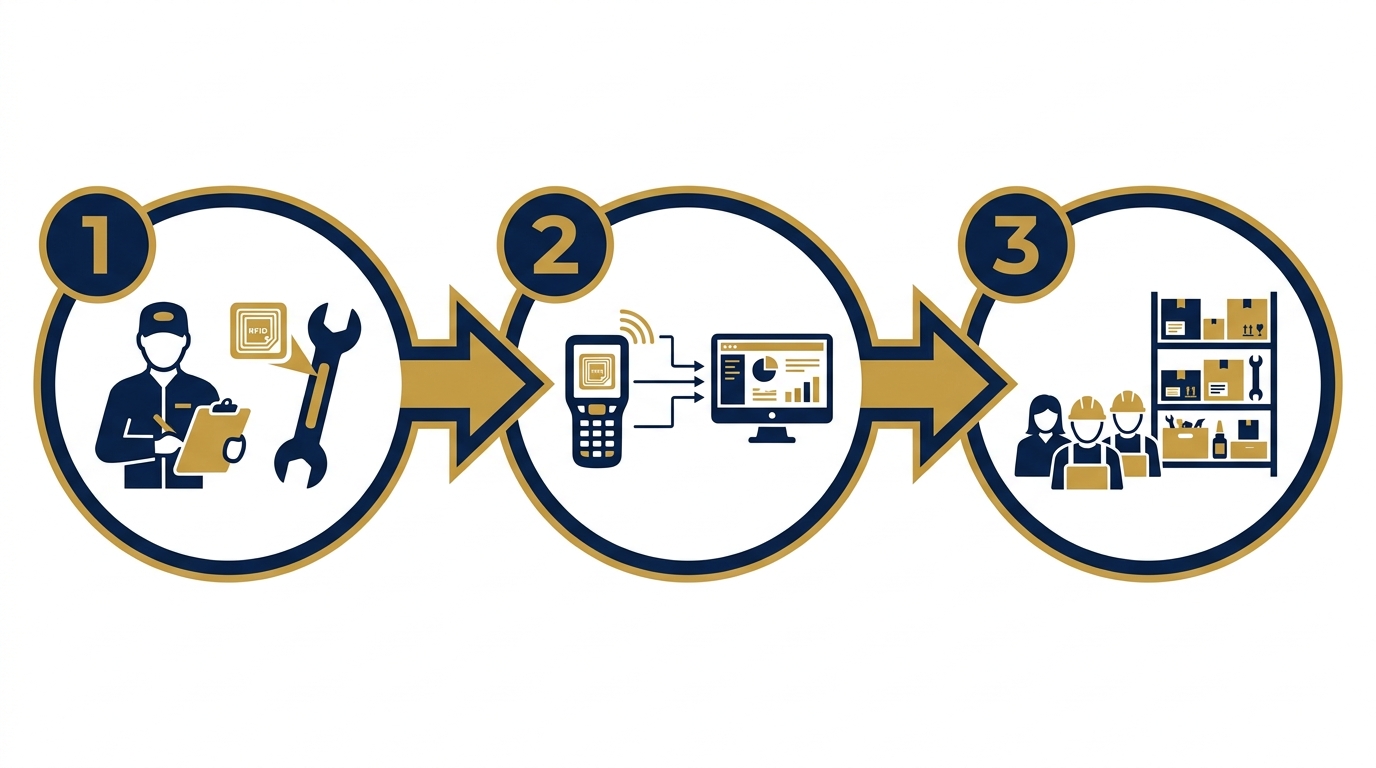
The RFID implementation process in a factory consists of 5 steps: site survey and determining tag placement locations, equipment selection (tags, readers, antennas), tag mounting and data configuration, management software integration, staff training and trial operation. Each step requires coordination between IT, production, and the solution provider.
- Site survey: Inventory all existing tools, molds, and fixtures; identify storage locations (shelves, tool cabinets, production areas); record environmental conditions (temperature, humidity, surrounding metal).
- Equipment selection: Choose tags suitable for metal surfaces, fixed or handheld readers, and antennas with coverage appropriate for the warehouse area.
- Tag mounting and configuration: Mount tags on each tool/mold at standard positions, write EPC codes, link to asset data in the software (asset code, name, manufacturing date, maximum usage count).
- Software integration: Connect readers to warehouse management software or ERP, set up check-out/check-in processes, and alert when assets leave permitted areas.
- Training and trial operation: Train workers on check-out/check-in operations, run a 2-4 week pilot, adjust read zone configurations and processes before official operation.
Which frequency is permitted for RFID tool management in Vietnam?
In Vietnam, UHF RFID devices operate in the 918.4-923 MHz frequency band with a maximum transmit power of 500 mW ERP, according to Circular 08/2021 of the Ministry of Information and Communications. Businesses need to choose compliant devices and can request the supplier to provide conformity certificates. Việt POS provides infrastructure and equipment, not legal advice.
Circular 08/2021/TT-BTTTT specifies the 918.4-923 MHz band for UHF RFID devices, with a maximum effective radiated power (ERP) of 500 mW. Businesses should request the supplier to present conformity certificates for each device. Other frequency bands such as 125 kHz (LF) or 13.56 MHz (HF) are not restricted by this regulation but have short read ranges (under 10 cm), making them more suitable for access control than warehouse management.
Which RFID tag should be chosen for metal tools, molds, and fixtures?

RFID tags mounted on metal surfaces need an anti-interference spacer or special on-metal design. Common tag types include impact-resistant hard tags, high-temperature resistant tags, and cable tie tags for handheld tools. Việt POS offers specialized tags for factory environments.
Metal reflects and absorbs radio waves, reducing tag read performance. Therefore, it is necessary to choose tags with an on-metal design that includes an isolation layer between the chip and the metal surface. Common options:
- Hard on-metal tags: Used for molds and large fixtures, resistant to impact and temperatures up to 80-100°C.
- Cable tie tags: Used for handheld tools such as drills, grinders, and wrenches — easy to attach and remove.
- High-temperature tags: For plastic injection molds operating at 150-200°C, requiring special heat-resistant tags.
- Chemical-resistant tags: For environments with grease, oil, or cleaning chemicals.
Which RFID reader is suitable for manufacturing factories?

Factories need a combination of fixed readers at warehouse doors or entry/exit points and handheld readers for inventory. Fixed readers provide automatic detection, while handheld readers offer flexibility for spot checks and inventory in hard-to-reach areas.
Common reader configurations for factories:
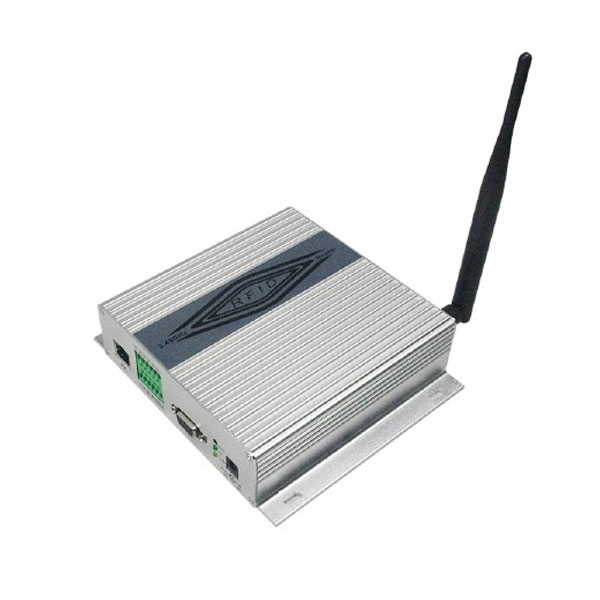
- Fixed readers at doors: Such as Zebra FX9600 or Chainway UR8, installed at warehouse entrances to automatically detect assets moving in and out.
- Handheld readers: Such as VP-RH272, used for periodic inventory and locating specific tools in large storage areas.
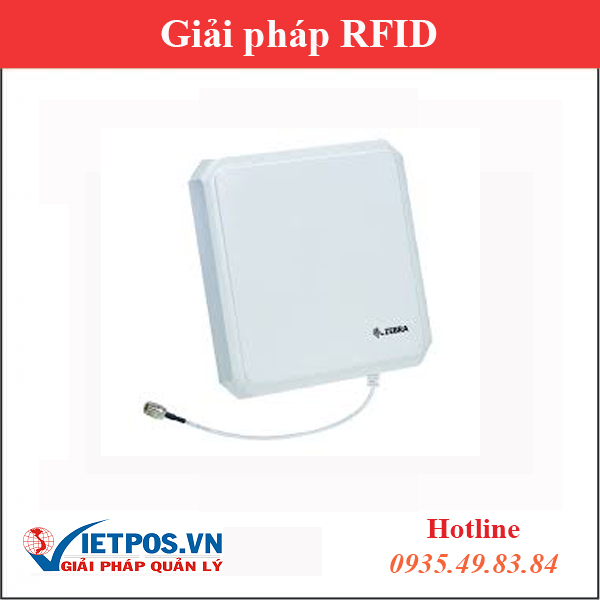
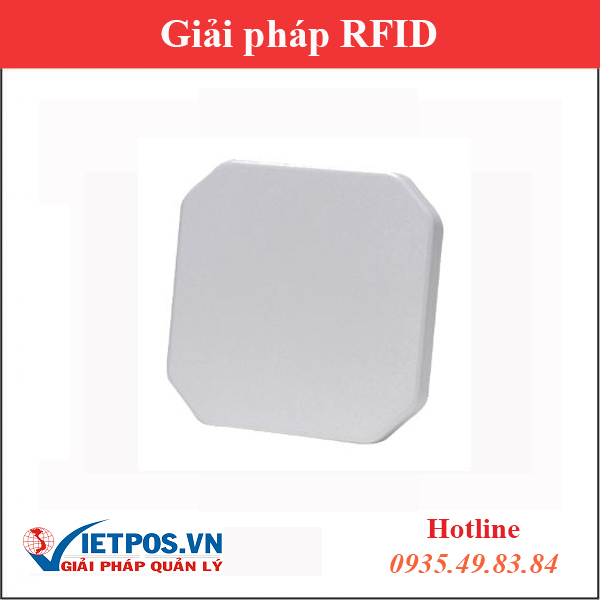
- Antennas: Such as Zebra AN480 or AN720, positioned to cover the required read zone without interference from metal structures.
How to integrate RFID with existing management software?

RFID integration with existing management software is done through middleware or APIs. The middleware (such as 123RFID Desktop) collects raw data from readers, filters and formats it, then sends it to the WMS or ERP system. This allows the software to automatically update asset status without manual entry.
Integration steps:
- Identify integration points: Determine which software (WMS, ERP, or custom system) will receive RFID data.
- Set up middleware: Install and configure middleware to connect readers and format data (EPC, timestamp, reader ID).
- Define business rules: Configure rules for check-in/check-out, alerts for unauthorized movement, and inventory counts.
- Test and validate: Run pilot tests to ensure data flows correctly and matches existing records.
- Go live: Deploy the integrated system and train staff on new workflows.
Is the cost of implementing RFID for tool management expensive?

The cost of implementing RFID for tool management depends on the number of assets, type of tags, and readers chosen. For a small factory with 200-500 assets, the initial investment can range from 50-200 million VND, including tags, readers, antennas, and software. Larger factories with over 1,000 assets may invest 500 million to 2 billion VND. However, the ROI is often realized within 12-18 months through reduced tool loss and increased productivity.
Cost breakdown:
- Tags: On-metal tags cost 20,000-150,000 VND each, depending on durability and temperature resistance.
- Readers: Handheld readers cost 15-40 million VND; fixed readers cost 30-100 million VND per unit.
- Antennas: Cost 5-20 million VND each, depending on range and durability.
- Software and integration: Middleware licenses and integration services can cost 20-100 million VND.
- Installation and training: Professional services for installation, configuration, and staff training typically add 10-30% to the hardware cost.
What are common mistakes when implementing RFID for tools, molds, and fixtures?

Common mistakes include choosing the wrong tag type for metal surfaces, ignoring environmental factors (temperature, chemicals), inadequate antenna placement, and lack of staff training. These lead to poor read rates, data errors, and low user adoption. Proper planning and testing can avoid these issues.
- Using standard tags on metal: Standard tags fail on metal surfaces; always use on-metal tags.
- Ignoring environmental conditions: High temperatures or chemical exposure can damage tags; select appropriate tags.
- Poor antenna placement: Metal racks and machinery can block signals; conduct a site survey to optimize placement.
- Insufficient training: Workers may bypass the system if they don't understand it; invest in comprehensive training.
- Lack of clear processes: Without defined check-in/out procedures, data becomes unreliable.
Phased RFID implementation roadmap for small and medium factories

For small and medium factories, a phased approach is recommended to manage costs and minimize disruption. Phase 1: Pilot with a limited set of assets (e.g., 50-100 tools) to validate the system. Phase 2: Expand to all critical assets. Phase 3: Integrate with ERP and automate workflows. This approach reduces risk and allows for adjustments.
Detailed roadmap:
- Phase 1 (1-2 months): Pilot with 50-100 high-value tools or molds. Install fixed readers at one door and use handheld readers for inventory. Validate read rates and process workflows.
- Phase 2 (2-4 months): Expand tagging to all tools, molds, and fixtures. Add more readers and antennas as needed. Train all relevant staff.
- Phase 3 (ongoing): Integrate with ERP or WMS for automatic updates. Implement advanced features like usage tracking and maintenance scheduling.
Frequently asked questions about implementing RFID for managing tools, molds, and fixtures

This section addresses common questions about RFID implementation, including compatibility with metal cabinets, implementation time, comparison with barcodes, data replacement, tag durability, and Việt POS's full-service offerings.
Can RFID read tools inside a metal cabinet?
Metal blocks radio waves, so RFID tags inside a closed metal cabinet are difficult to read. Solutions: install an antenna inside the cabinet, use cabinets with non-metal doors, or use a handheld reader with the cabinet door open for inventory. For standard tool cabinets, consider installing a small fixed reader (like Zebra SP5504) at the cabinet to automatically detect when the door is opened.
How long does RFID implementation take for a factory?
Implementation time depends on scale. Small and medium factories (200-500 assets) take 2-4 weeks for pilot and 1-2 months for full deployment. Large factories (over 1,000 assets) may take 3-6 months. Factors affecting duration: number of assets to tag, complexity of existing processes, and staff training time.
Can barcodes replace RFID for tool management?
Barcodes can only be read by scanning each item directly, taking 2-3 seconds per scan, which is not suitable for quick inventory of 500 tools. RFID reads 50-100 tags simultaneously in 3-5 seconds without line-of-sight. For small tools, barcodes are prone to scratches and peeling over time. RFID is suitable when rapid inventory, automatic entry/exit control, or harsh environments are required.
Can RFID data replace current paper records?
Yes, but a clear transition process is needed. In the first 1-2 months, run both paper records and the RFID system in parallel for reconciliation. Once data is stable (read rate above 98%, staff proficient), paper records can be eliminated. Note: RFID records asset presence, but check-out/check-in decisions still require staff confirmation in the software.
Are RFID tags resistant to grease and high temperatures in factories?
Yes, if the correct tag type is chosen. Standard tags withstand 60-80°C, suitable for normal warehouse environments. Special high-temperature tags withstand 150-200°C, used for plastic injection or casting molds. Chemical-resistant tags have special enclosures that withstand grease and solvents. Consult with the supplier about specific operating environments before selecting tags.
Does Việt POS provide a complete RFID implementation package?
Việt POS provides a full range of RFID equipment and infrastructure: on-metal tags, handheld readers (VP-RH272), fixed readers (Zebra FX9600), antennas (Zebra AN480, AN720), and middleware software (123RFID Desktop). The technical team supports site surveys, configuration consulting, and integration guidance. Contact hotline 0935 498 384 for consultation.
Cần tư vấn thiết bị/giải pháp cụ thể?
Việt POS phản hồi trong 30 phút · Hotline 4 vùng · Khảo sát miễn phí.
