Mục lục bài viết (4)
In the context of Vietnam's hospitality, healthcare, and industrial manufacturing sectors undergoing strong transformation, managing thousands of linen items daily has become a major operational challenge. RFID (Radio Frequency Identification) technology has emerged as a core infrastructure, replacing outdated manual counting methods. Applying RFID is not just about attaching tags to clothes; it is a system integration process that requires careful technical and practical process planning.
Why is RFID a core infrastructure for the industrial laundry industry today?
RFID (Radio Frequency Identification) is a wireless identification technology that allows controlling thousands of linen items in just a few seconds. In the laundry industry, RFID helps increase transparency in quantities between customers and laundry facilities, tracks wash cycles to alert for replacement, and minimizes manual sorting time, thereby optimizing operational costs for businesses.
RFID systems in the laundry & uniform sector operate on ultra-high frequency (UHF). In Vietnam, the use of RFID equipment must strictly comply with frequency and transmission power regulations. Specifically, according to Circular 08/2021/TT-BTTTT of the Ministry of Information and Communications, UHF RFID devices must operate in the 918.4–923 MHz frequency band with transmission power not exceeding 500 mW ERP and must have corresponding conformity records. Compliance with RFID frequency and conformity in Vietnam is a prerequisite to ensure stable system operation without interfering with other telecommunications infrastructure.
Benefits of digitizing linen with RFID tags
- Automated control: Instead of counting each towel or uniform set, the system can read batches as linen passes through RFID portals or using handheld devices.
- Lifecycle control: Each RFID tag stores a unique ID, helping record the number of wash-dry cycles. This is extremely important for hospital linen or protective workwear that has limits on chemical processing cycles.
- Loss reduction: Real-time data recording at entry and exit points helps accurately determine whether linen is at the customer's warehouse, on transport vehicles, or at the laundry facility.
Practical RFID implementation process for businesses
The standard RFID implementation process begins with a site survey to identify sources of signal interference. Next is the selection of tags suitable for fabric types and wash-dry processes. Finally, businesses need to conduct a small-scale pilot to measure actual read rates before deploying a synchronized system across the entire chain.
Bạn đang tìm sản phẩm cho chủ đề này?
Việt POS phân phối chính hãng — bảo hành 24-36 tháng, hỗ trợ kỹ thuật 24/7.
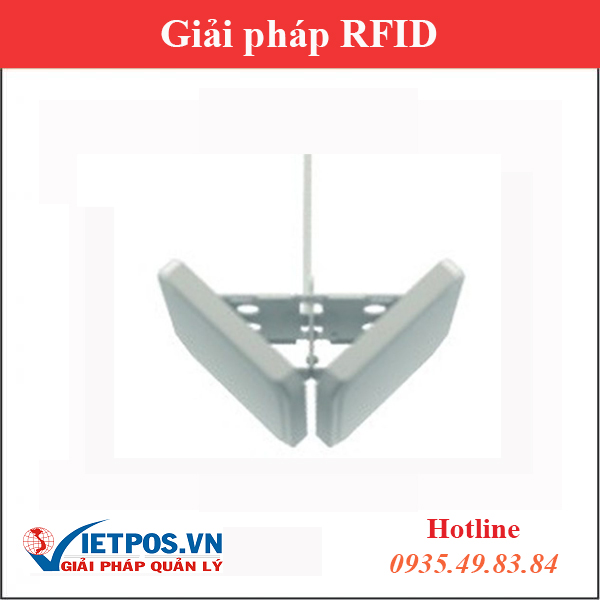
Zebra SR5502 RFID Antenna for Backroom and Warehouse
SKU: SR5502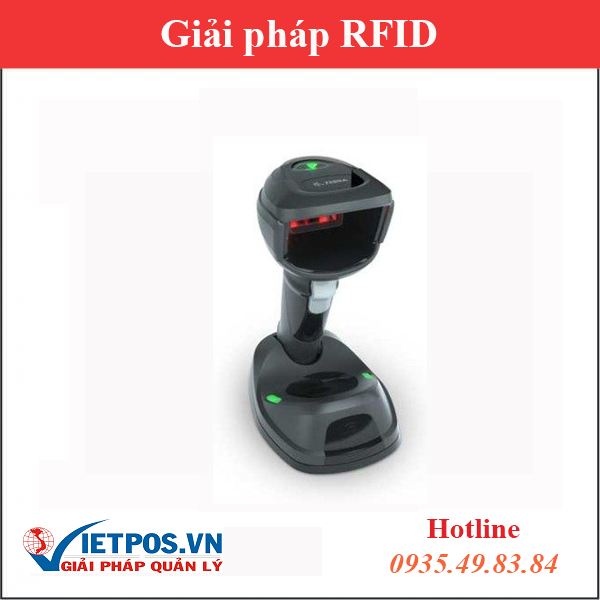
DS9900 handheld RFID reader for retail
SKU: DS9900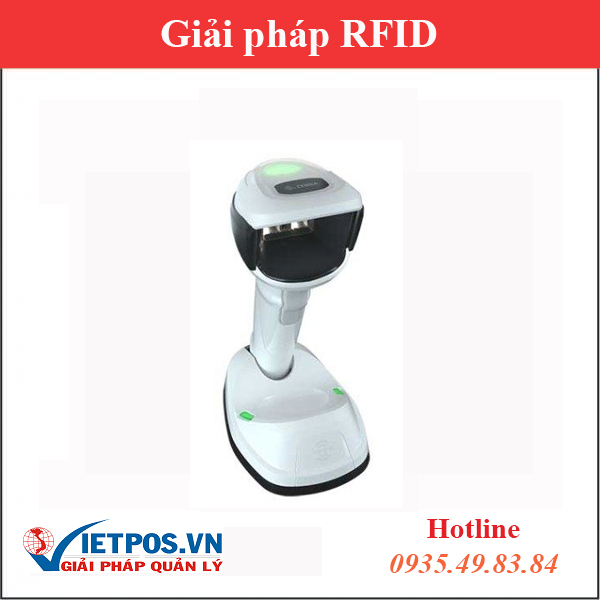
DS9900 Handheld RFID Reader for Laboratory
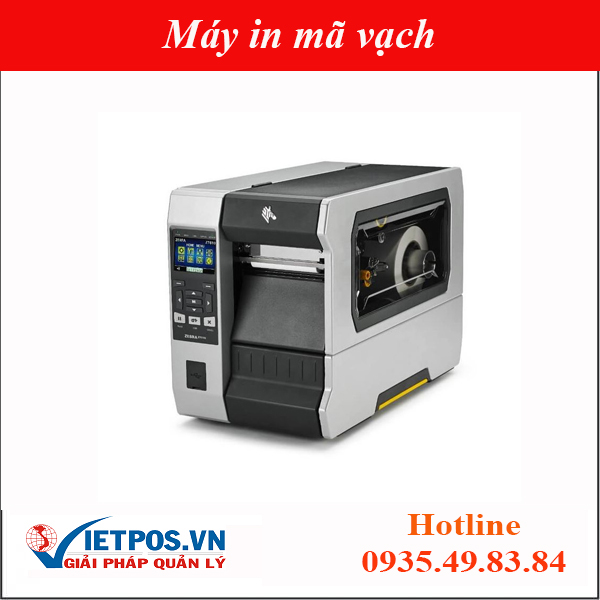
RFID Zebra ZT610 - Industrial Printer
SKU: ZT610Step 1: Site survey and practical measurement
This is the most important step but is often overlooked. Technical experts need to visit the laundry facility or linen warehouse to check for interference factors such as metal building structures and other wireless transmitting devices. Measurements help determine optimal antenna placement to achieve the best coverage.
Step 2: Selecting specialized RFID laundry tags
RFID tags used in laundry are not like ordinary adhesive labels. They must withstand high pressure from extractors, temperatures exceeding 200°C during ironing, and corrosion from detergents. Businesses need to test tag durability through at least 50-100 actual wash cycles before deciding on large-scale investment.
Step 3: Pilot project
Before tagging all 100,000 linen items, start with about 500-1,000 samples. This phase aims to measure read rates in real-world scenarios: wet linen, densely stacked linen in plastic bins, or carts moving quickly through read portals. Results from the pilot phase will serve as the basis for adjusting device and software configurations.
Technical limitations and important considerations
Despite its high efficiency, RFID is not a universal technology. UHF waves can be attenuated or reflected in environments with high metal or liquid content, or when linen is stacked too densely. Therefore, maintaining staff confirmation at key control points is necessary to ensure absolute data accuracy.
Effects of liquids and metals
UHF RFID waves are highly sensitive to water. Linen that is still wet after washing and tightly stacked will significantly reduce the penetration capability of radio waves. In such cases, read rates may not reach maximum levels as with dry linen. Similarly, if linen carts are made of closed metal, they will create a Faraday cage effect that prevents RFID waves from reaching tags inside.
The necessity of manual confirmation
VietPOS always recommends that customers do not rely 100% on automatic reading without supervision. Operating staff should be trained to recognize system warning signals (such as indicator lights, sounds) when the number read does not match expectations, allowing timely intervention.
Investment costs and efficiency considerations
The cost of implementing an RFID system has no fixed price; it depends on the number of chip tags, the type of reading equipment (fixed or handheld), and the complexity of the on-site network infrastructure. Businesses should view this as a long-term infrastructure investment that requires detailed surveying for accurate quotes based on actual operational needs.
In terms of costs, RFID investment includes three main parts: hardware equipment (antennas, readers), consumables (laundry RFID tags), and integrated software infrastructure. Instead of focusing on low prices, businesses should prioritize equipment with conformity records in Vietnam to avoid legal risks and ensure long-term stability.
Comparison table of linen management methods
| Criteria | Manual counting | Barcode | UHF RFID technology |
|---|---|---|---|
| Counting speed | Very slow, item by item | Slow, scanning each code | Very fast, batch reading |
| Accuracy | Low (due to human factors) | Medium | High (depending on environmental conditions) |
| Lifecycle tracking | Not feasible | Difficult | Automatic and detailed |
| Operational costs | High (labor-intensive) | Medium | Low (after optimization) |
| Automation capability | None | Low | Very high |
Regarding international regulations such as EU standards for medical linen management, application timelines may vary depending on each country's roadmap. Therefore, businesses exporting or serving international customers need to proactively update information from regulatory authorities to adjust their systems accordingly.
Implementing RFID is a true digital transformation journey. At VietPOS, we focus on providing compliant equipment infrastructure, supporting businesses with site surveys and thorough testing to find the most optimal solution for each specific laundry model. Start with small steps, measure carefully before scaling up to ensure sustainable project success.
Cần tư vấn thiết bị/giải pháp cụ thể?
Việt POS phản hồi trong 30 phút · Hotline 4 vùng · Khảo sát miễn phí.
