Mục lục bài viết (6)
- What is the Digital Product Passport (DPP) and why should export enterprises care?
- Selecting UHF RFID infrastructure compliant with regulations in Vietnam
- 5-step practical DPP implementation process in factories
- Comparison of common RFID tags for export goods
- Cost of implementing the Digital Product Passport (DPP)
- Conclusion and recommendations from VietPOS
In the context of the European Union (EU) promoting sustainability standards through the Ecodesign for Sustainable Products Regulation (ESPR), the concept of the Digital Product Passport (DPP) has become an urgent requirement for Vietnamese export enterprises. Particularly, key industries such as textiles, footwear, and wood products are under pressure to ensure full supply chain transparency. UHF RFID technology is considered a key infrastructure to realize DPP, enabling efficient storage and retrieval of product lifecycle data.
What is the Digital Product Passport (DPP) and why should export enterprises care?
DPP is a digital record storing detailed information about materials, production processes, recyclability, and environmental impact of a product. For enterprises exporting to the EU, adopting the EU Digital Product Passport (DPP) is not only a legal compliance requirement but also a key to maintaining competitiveness in the global value chain.
Implementing DPP is not simply about attaching a label to a product. It is a process of digitizing data from raw material intake, through processing stages, packaging, to final dispatch. The EU is expected to begin applying this roadmap to priority sectors such as textiles between 2026 and 2030 (timeline may vary depending on the approval progress of the European Commission). Therefore, preparing equipment infrastructure now is a strategic move.
Selecting UHF RFID infrastructure compliant with regulations in Vietnam
In Vietnam, the use of UHF RFID equipment must comply with frequency regulations to avoid interference. According to Circular 08/2021/TT-BTTTT of the Ministry of Information and Communications, the permitted frequency band is 918.4–923 MHz with a transmission power not exceeding 500 mW ERP, requiring equipment to have full conformity records.
Bạn đang tìm sản phẩm cho chủ đề này?
Việt POS phân phối chính hãng — bảo hành 24-36 tháng, hỗ trợ kỹ thuật 24/7.

Chainway CM710-8 UHF RFID Module (8-Port) — Impinj E710, 93.0 x 79.8 x 8.9mm
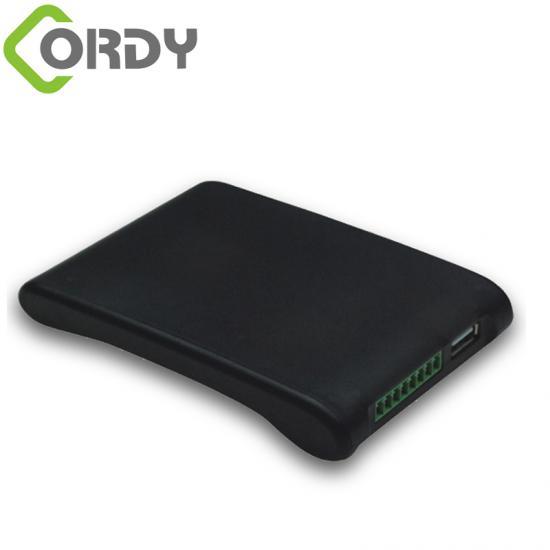
DH9809USB-L - UHF RFID Desktop Reader/Writer 920-925MHz, USB, ISO18000-6C/6B, SDK

UHF Windshield Tag for RFID Vehicle Management Systems

RFID A4 Inlay Sheet / Mifare A3 Inlay Sheet for Card Production
When deploying a system to meet EU standards, enterprises need to pay special attention to equipment compatibility. A compliant RFID system must ensure stable read/write performance in industrial environments. For deeper insights into technical standards, enterprises can refer to the article on RFID frequency and conformity in Vietnam to ensure the system operates legally.
Physical limitations of RFID technology
Despite its superior efficiency in inventory and traceability, RFID technology has certain physical limitations. UHF radio waves often struggle to penetrate materials containing metal or liquids. In the textile industry, accessories such as metal zippers, copper buttons, or overly dense stacked goods can significantly reduce read rates. Therefore, RFID systems should never be promised to achieve 100% read rates under all conditions; operational processes always require final confirmation and checks by staff to ensure the accuracy of DPP data.
5-step practical DPP implementation process in factories
Step 1: Survey current conditions and product characteristics
This is the most important step but often overlooked. The technical team needs to conduct on-site surveys of production lines, storage environments, and the physical and chemical properties of products. For example, moisture in wood or chemical components in shoe soles can affect the read range of RFID tags. The survey helps determine the most suitable chip and antenna types for each product category.
Step 2: Measure read rates on actual goods
Instead of relying on theoretical specifications, enterprises should measure actual read rates on fully packed cartons. This rate will vary depending on how products are arranged in cartons and the placement of reading devices (fixed readers at warehouse doors or handheld readers). This testing helps fine-tune device configurations and tag placement to achieve optimal performance under allowable conditions.
Step 3: Small-scale trial (Proof of Concept - POC)
Before large-scale deployment across the entire factory, enterprises should conduct trials on a specific product line or production line. This phase helps assess the compatibility between RFID hardware and DPP data management systems, while also identifying issues arising in worker operational processes.
Step 4: Data integration and unique identification
Each product will be assigned a unique identifier (UID) stored in the RFID chip. This ID will link to a cloud database containing DPP information as required by the EU. Data integration requires synchronization between existing ERP systems and RFID infrastructure to ensure real-time updates.
Step 5: Training and official operation
After successful trials, the process will be scaled up. Staff need training on using handheld readers, handling unreadable tags, and writing data to RFID tags at final quality control stages.
Comparison of common RFID tags for export goods
Depending on the industry, enterprises need to select appropriate tags to ensure durability and readability throughout the supply chain to the EU.
| Industry | Recommended Tag Type | Technical Characteristics | Implementation Notes |
|---|---|---|---|
| Textiles | Laundry Tag or Hang Tag | Resistant to temperature, humidity, and stretching | Avoid placing near large metal accessories |
| Footwear | Adhesive Tag or Insole Insert Tag | Small size, high pressure resistance | Check the impact of adhesives and moisture |
| Wooden Furniture | Surface Adhesive Tag or Drilled Hole Tag | Good adhesion on wood | High wood moisture may reduce read range |
Cost of implementing the Digital Product Passport (DPP)
The cost of implementing DPP with RFID has no fixed price; it depends on production scale, tag types used, and the complexity of integration infrastructure. Typically, the budget includes consumables (RFID tags), reading equipment, and system deployment fees. Enterprises should conduct a technical survey before preparing a detailed cost estimate.
Investment in DPP should be viewed as a long-term investment to maintain market share in the EU. Instead of choosing cheap solutions of unclear origin, enterprises should prioritize equipment with conformity certifications and local technical support to ensure stability for export lines.
Conclusion and recommendations from VietPOS
Implementing the Digital Product Passport (DPP) is a mandatory digital transformation journey for enterprises aiming to penetrate the EU market deeply. However, technology is only a supporting tool. The success of the project depends on thorough surveys, practical testing, and human process compliance. VietPOS recommends enterprises start with small steps, accurately measure read rates on actual goods, and always have backup plans for manual data confirmation when necessary. Compliance with frequency regulations in Vietnam is also a prerequisite to ensure the system operates sustainably and legally.
Cần tư vấn thiết bị/giải pháp cụ thể?
Việt POS phản hồi trong 30 phút · Hotline 4 vùng · Khảo sát miễn phí.
