Mục lục bài viết (6)
- Why is RFID-based returnable asset management becoming an inevitable trend?
- What are the steps in the RFID deployment process for returnable assets?
- What technical limitations should be considered when selecting RFID equipment?
- Comparison table of RFID tag types for returnable assets
- How is the cost of an RFID system deployment calculated?
- How to ensure a sustainable successful RFID project?
Why is RFID-based returnable asset management becoming an inevitable trend?
Managing Returnable Transport Items (RTIs) with RFID helps businesses automate the tracking of the lifecycle of pallets, plastic containers, and gas cylinders. Instead of error-prone manual counting, RFID enables bulk identification, reduces downtime at checkpoints, and provides real-time data on asset location and condition throughout the supply chain.
In modern logistics, returnable assets such as wooden/plastic pallets, plastic containers (IBCs, wire cages), gas cylinders, and mobile racks play a vital role as the lifeblood of transportation systems. However, asset loss or a lack of visibility into actual quantities at satellite warehouses often leads to significant working capital waste. UHF RFID (Radio Frequency Identification) technology has emerged as a key infrastructure solution due to its non-contact reading capability and lack of need for line-of-sight.
However, implementing RFID for RTIs is not simply about purchasing equipment and attaching it. It requires a rigorous survey process, selecting tags suitable for the material (metal, plastic) and environment (humidity, temperature). In Vietnam, compliance with radio frequency regulations is also a mandatory factor to ensure the system operates stably and legally.
What are the steps in the RFID deployment process for returnable assets?
The standard deployment process at VietPOS includes four core phases: On-site survey and asset classification; Selection of equipment and test tags; Running a small-scale pilot to measure actual read rates; and finally, system calibration before large-scale deployment across the entire supply chain.
Bạn đang tìm sản phẩm cho chủ đề này?
Việt POS phân phối chính hãng — bảo hành 24-36 tháng, hỗ trợ kỹ thuật 24/7.

Chainway CM710-8 UHF RFID Module (8-Port) — Impinj E710, 93.0 x 79.8 x 8.9mm
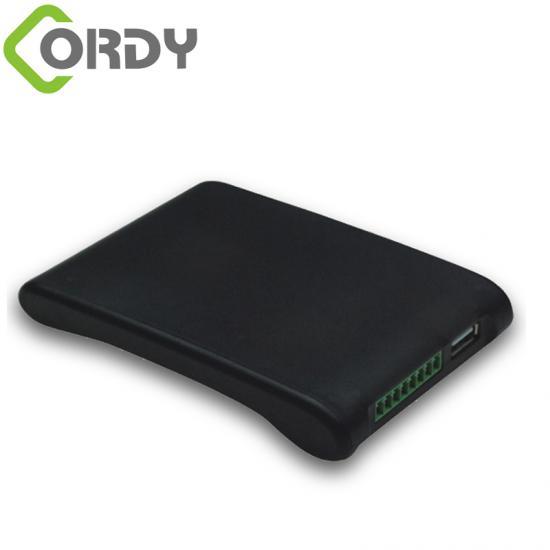
DH9809USB-L - UHF RFID Desktop Reader/Writer 920-925MHz, USB, ISO18000-6C/6B, SDK
UHF Windshield Tag for RFID Vehicle Management Systems
RFID A4 Inlay Sheet / Mifare A3 Inlay Sheet for Card Production
Step 1: On-site survey and classification of asset characteristics
This is the most critical step that determines the success or failure of the project. The technical team needs to clearly identify:
- Material composition: Are the assets plastic, wood, or metal? UHF RFID is typically reflected by metal and absorbed by liquids, so gas cylinders or wire cages will require specialized tags (On-metal tags).
- Operating environment: Are the assets exposed to sunlight, rain, or washed with high-pressure chemicals? This determines the IP (Ingress Protection) rating of the RFID tag.
- Stacking method: When pallets are densely stacked, tags in the middle may be obscured. Measuring the distance and density of goods is mandatory.
Step 2: Real-world testing to determine read rates
VietPOS always recommends that customers do not expect a 100% read rate under all conditions. In reality, the read rate depends on antenna configuration, reader power, and tag placement. Businesses need to conduct the following tests:
- Static reading: Assets stationary in front of the antenna.
- Dynamic reading: Assets moving through an RFID gate at different speeds.
- Bulk reading: Reading 50–100 plastic containers simultaneously on a forklift.
Note: Always have a process for staff to confirm with a handheld device if the gate system does not record the full quantity due to physical interference factors.
What technical limitations should be considered when selecting RFID equipment?
RFID equipment must meet physical and legal limitations. Physically, UHF RFID cannot penetrate metal completely and signal degradation is significant in liquid environments. Legally, equipment must comply with the 918.4–923 MHz frequency band and transmit power regulations set by Vietnam's Ministry of Information and Communications.
When choosing infrastructure, businesses need to understand the following limitations to set realistic expectations:
- Metal and liquids: For gas cylinders or liquid containers, standard RFID tags will not work. Tags with a spacer layer or specialized anti-interference design must be used.
- Density of goods: Overly dense stacking can create blind spots. Positioning antennas at multiple angles (above, on the sides) is a necessary solution but also increases investment costs.
- Regulatory frequency: In Vietnam, according to Circular 08/2021/TT-BTTTT, UHF RFID equipment must operate in the 918.4–923 MHz band with a transmit power not exceeding 500 mW ERP. Using non-compliant equipment (e.g., US frequency 902-928 MHz) can cause interference to mobile networks and result in administrative penalties. For a better understanding, please refer to RFID frequency and compliance in Vietnam before purchasing equipment.
Comparison table of RFID tag types for returnable assets
Below is a summary table to help businesses orient their choice of tag type based on the asset type (Information is for reference; a site survey is required):
| Asset Type | Recommended Tag Type | Technical Characteristics | Deployment Notes |
|---|---|---|---|
| Wooden / Plastic Pallets | Label or Hard Tag | Long read range, low to medium cost | Protect tag from forklift impacts |
| Gas Cylinders / Steel Containers | Specialized On-metal Tag | Metal interference resistant, high durability | Tag placement is extremely critical |
| Food-grade Plastic Containers | Embedded or Heat-resistant Tag | Withstands high-temperature washing processes | Check adhesive bond strength |
| Mobile Racks / Trolleys | High-power UHF Hard Tag | Resistant to strong mechanical impact | Usually mounted high to avoid obstructions |
How is the cost of an RFID system deployment calculated?
The deployment cost has no fixed price; it depends on the scale of assets, the number of control points (gates), and the type of tags used. The total investment includes hardware costs (readers, antennas, tags), management software, network infrastructure installation costs, and especially the initial survey and testing costs.
Businesses should view RFID costs in the following categories:
- Tag costs (Consumables): Tags for wooden pallets are generally cheaper than On-metal tags for gas cylinders. Depending on the number of assets (from a few thousand to hundreds of thousands), this cost will represent a significant proportion.
- Infrastructure costs (Fixed): Includes fixed readers at warehouse doors, antennas, and handheld devices for periodic inventory checks.
- Deployment and calibration costs: This is an investment in technical expertise to optimize antenna scan angles and ensure the system does not misread tags in adjacent areas (cross-reading).
For an accurate budget, VietPOS recommends starting with an on-site technical survey package. This helps avoid waste from purchasing equipment that is unsuitable for the actual environment.
How to ensure a sustainable successful RFID project?
For a successful project, businesses need to focus on three factors: Thorough testing on a small scale before scaling up; Training operations staff to understand the technology's limitations; and Always having a backup plan (such as barcodes or manual confirmation) for unavoidable physical issues.
RFID is a powerful enabling technology, but it is not a magic solution that can solve 100% of problems without human and process coordination. During the pilot phase, choose a specific warehouse or transport route to measure effectiveness. Track metrics such as: average counting time, tag failure rate after 6 months, and the discrepancy between system data and reality.
Finally, choose equipment suppliers with clear compliance records in the Vietnamese market. Adhering to the 918.4–923 MHz frequency band is not only a legal requirement but also protects your system from interference from other radio devices, ensuring long-term stability for your logistics infrastructure.
Cần tư vấn thiết bị/giải pháp cụ thể?
Việt POS phản hồi trong 30 phút · Hotline 4 vùng · Khảo sát miễn phí.
