Mục lục bài viết (4)
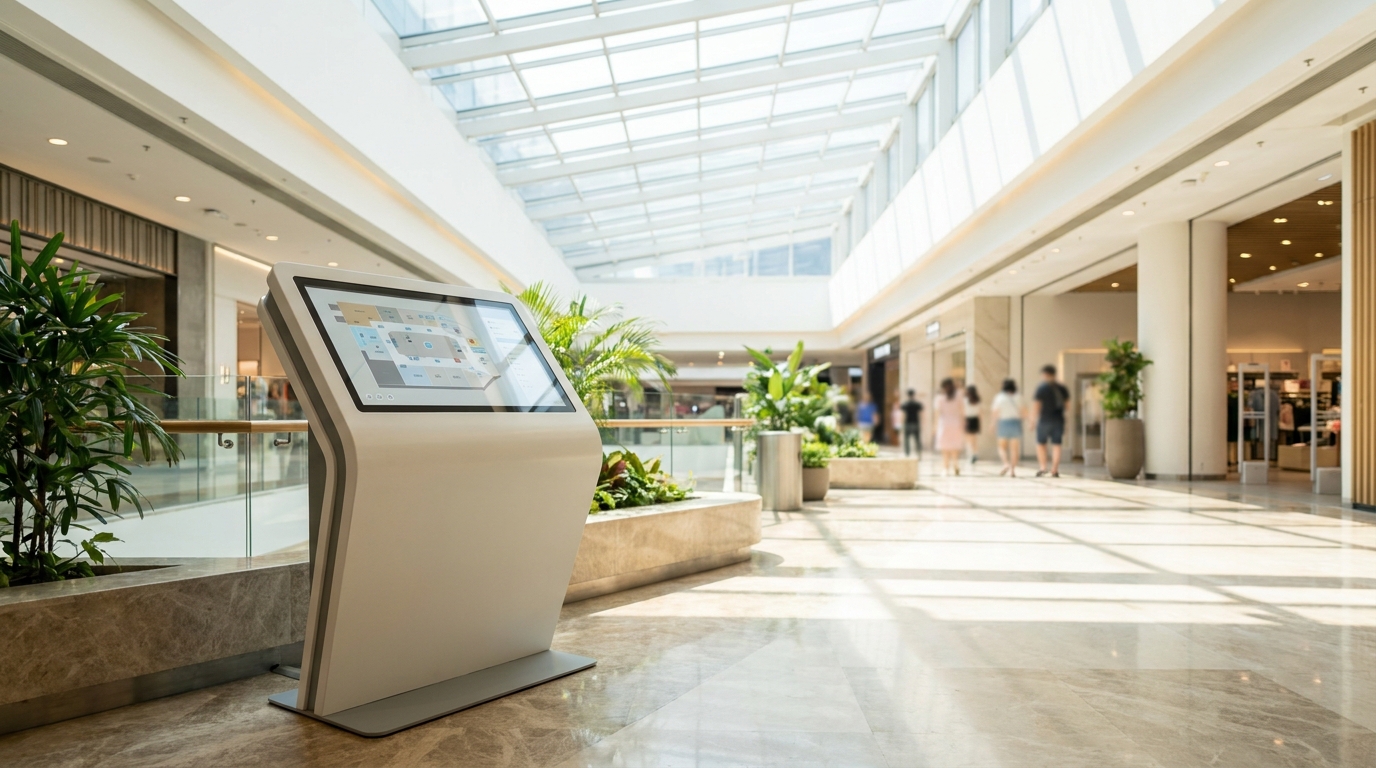
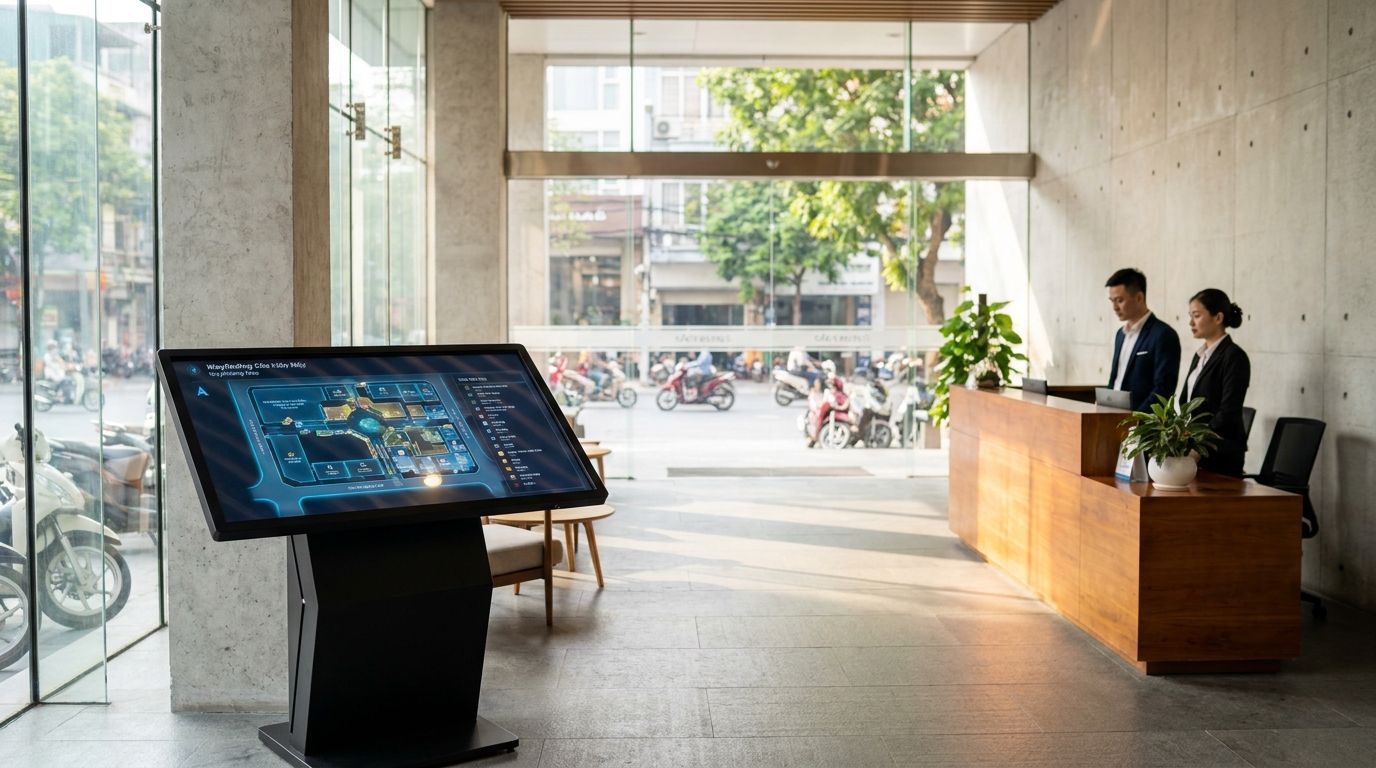
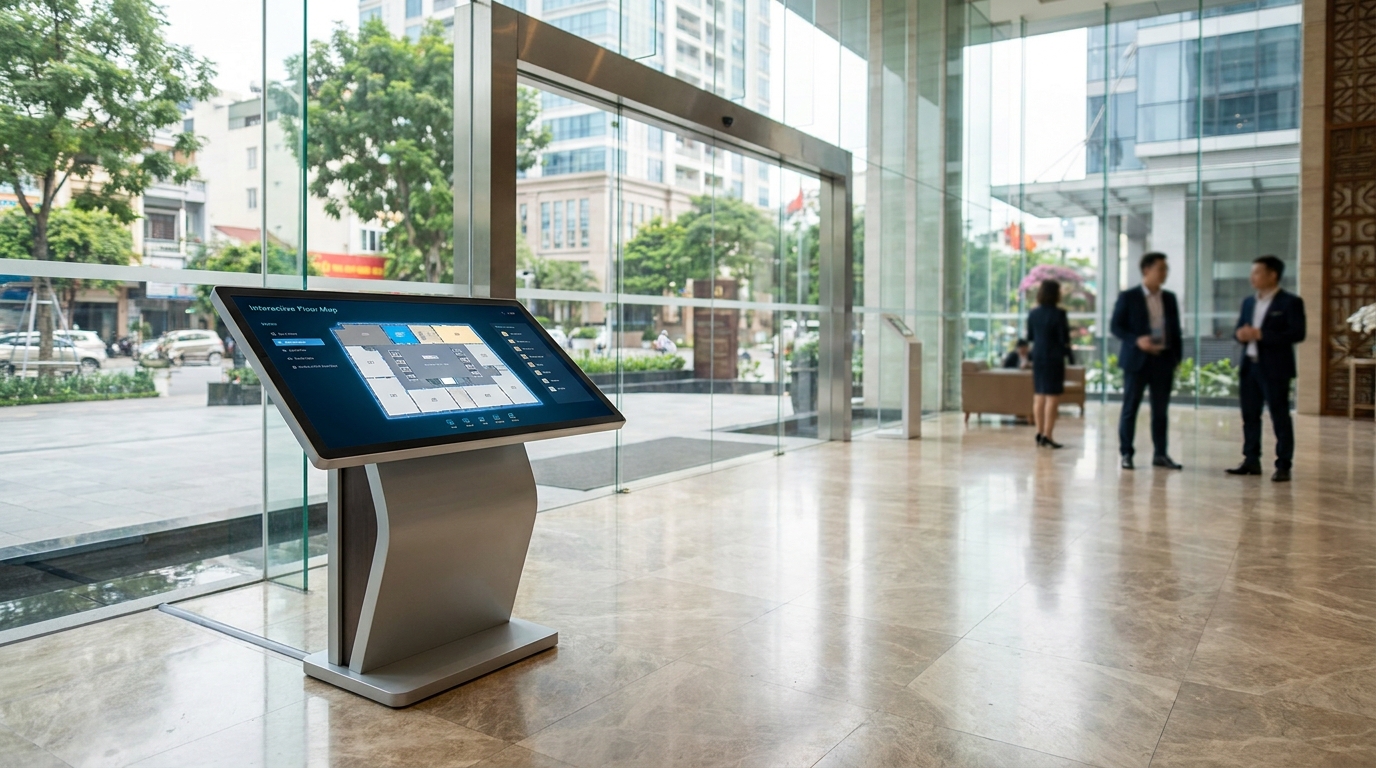
A wayfinding kiosk is a digital wayfinding solution that integrates a touchscreen and interactive map software, allowing visitors to find their way around a building on their own instead of asking the reception desk. In Vietnam, this technology is being widely deployed in shopping malls, hospitals, schools, and office buildings to reduce operational load and cut costs associated with periodic map printing.
You should invest in a wayfinding kiosk when your building has over 300 visitors per day, a floor area over 1,000m², map printing costs exceeding 5 million VND per quarter, or reception staff spending more than 2 hours per day giving directions. A digital wayfinding system helps reduce printing costs by 60-70% and pays for itself within 12-18 months. The kiosk runs offline when the network is down and updates maps remotely without reprinting.
Table of Contents
- What is a wayfinding kiosk and how does it work?
- What are the 7 signs that your building is ready to invest in a wayfinding kiosk?
- How much does a wayfinding kiosk cost and how long does it take to break even?
- How does a wayfinding kiosk compare to traditional static signage?
- What is the 3-step roadmap for implementing a wayfinding kiosk?
- Summary table of wayfinding terms you need to know
- What are common mistakes when investing in a wayfinding kiosk?
- Frequently Asked Questions
What is a wayfinding kiosk and how does it work?
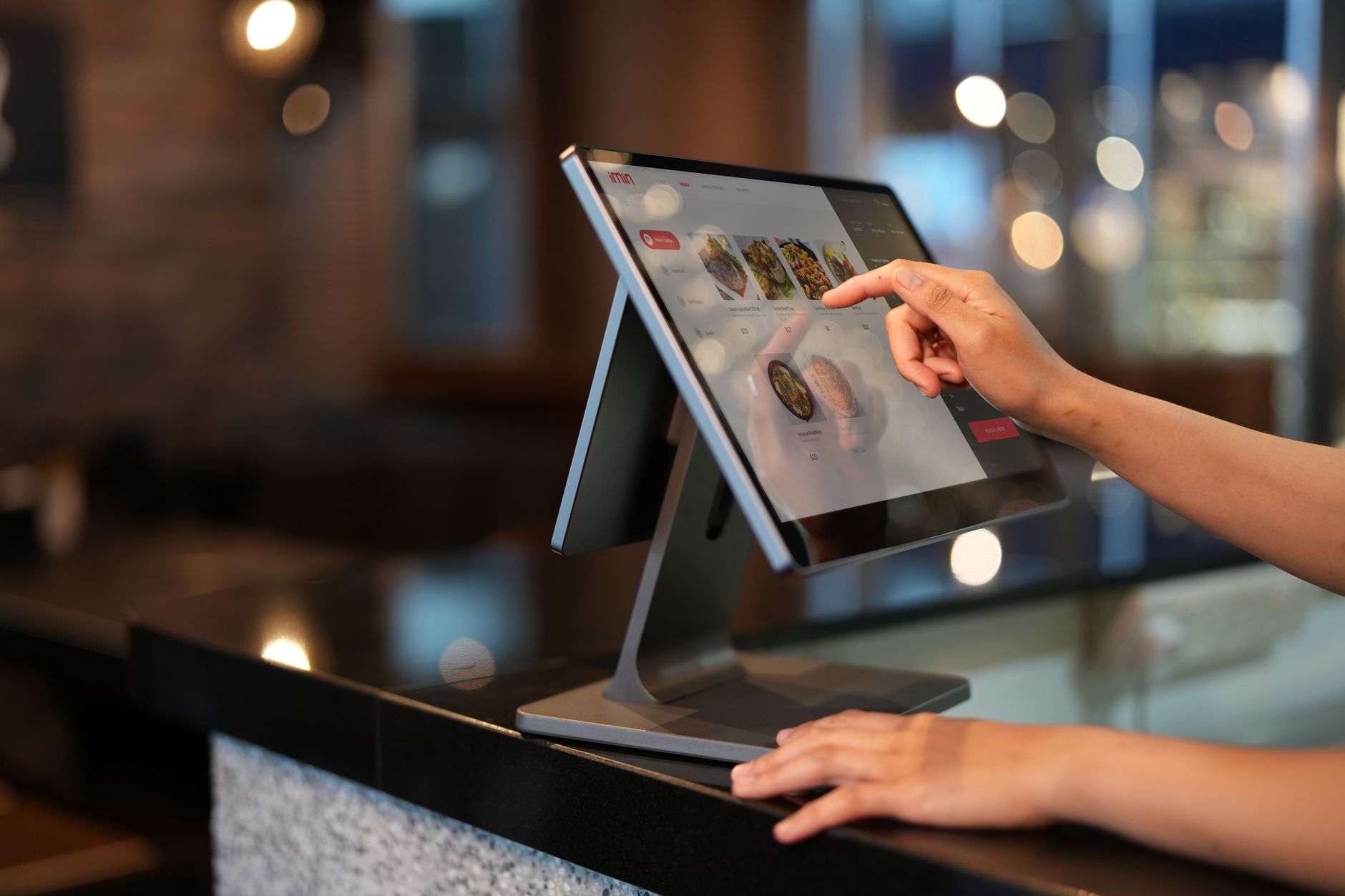
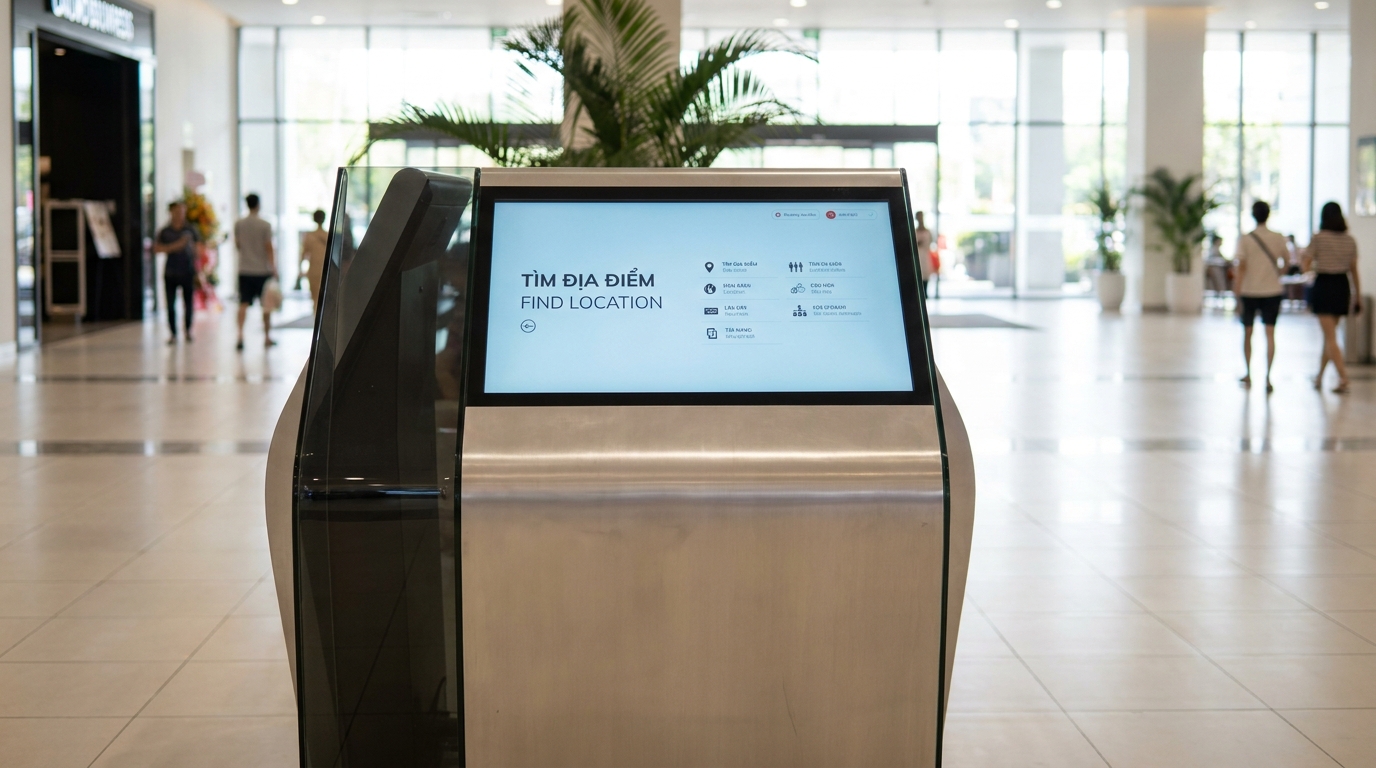
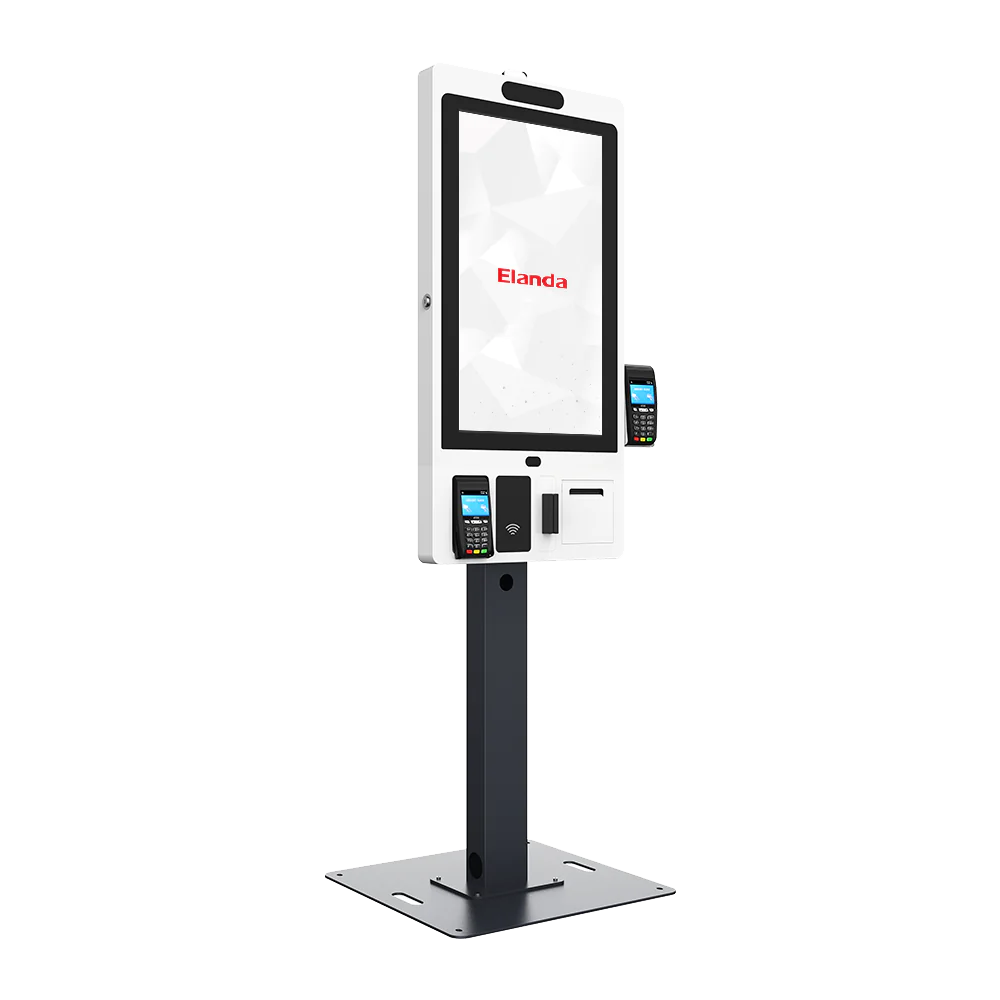
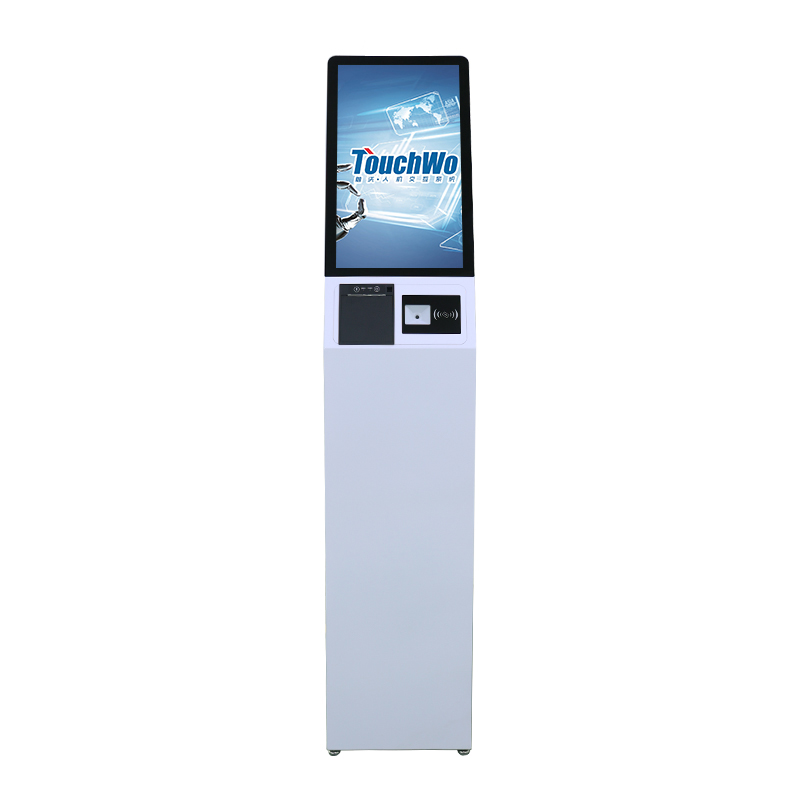
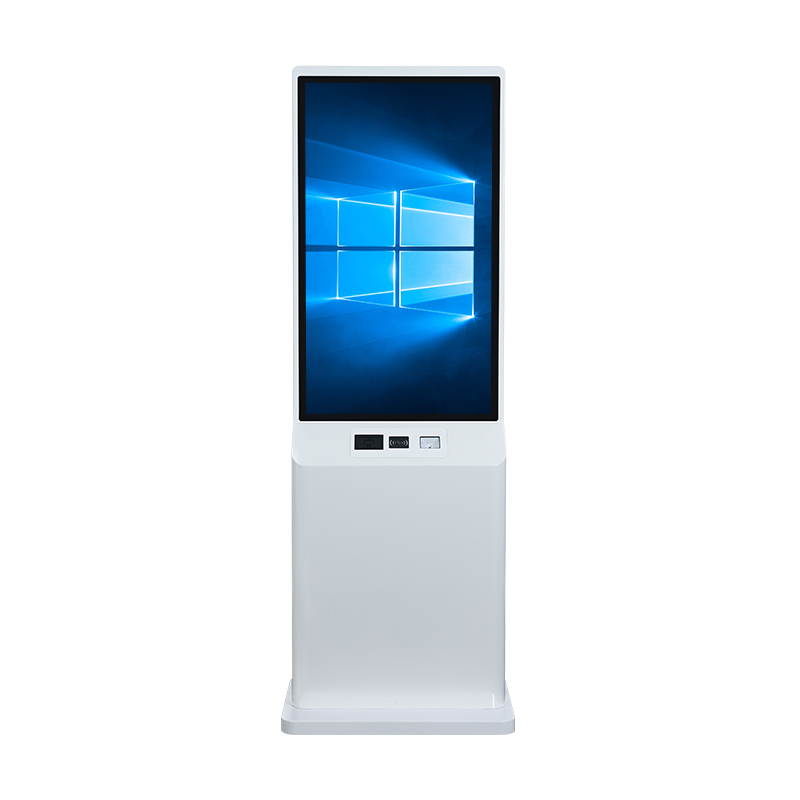
A wayfinding kiosk is a touchscreen device placed in lobbies or key intersections, integrated with software that digitizes the entire building floor plan. Users touch the screen to search for departments, stores, or amenities, and the system displays the optimal route with visual guidance.
What are the 7 signs that your building is ready to invest in a wayfinding kiosk?
Related Products
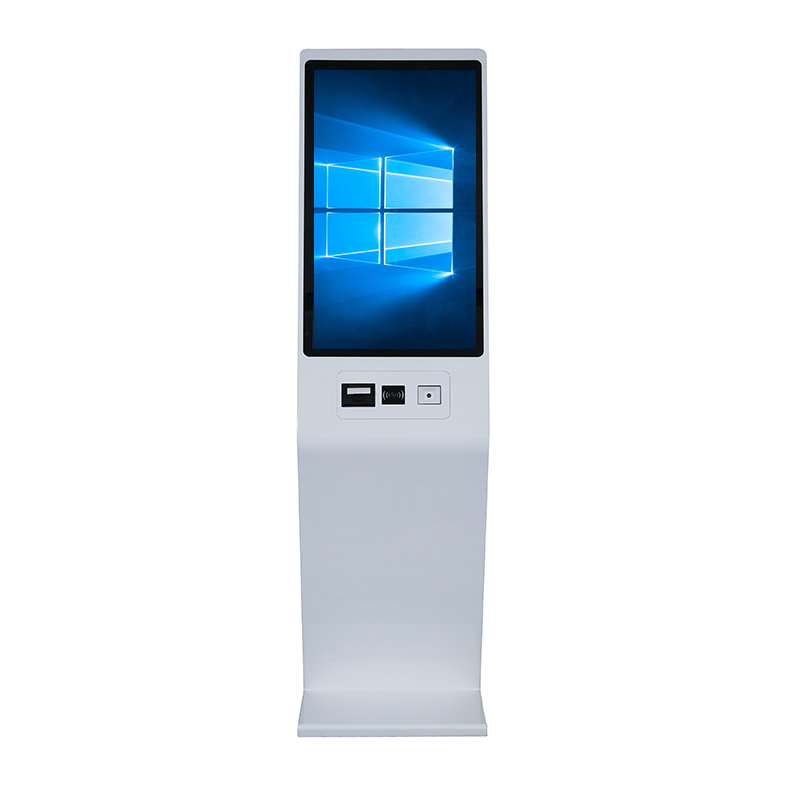
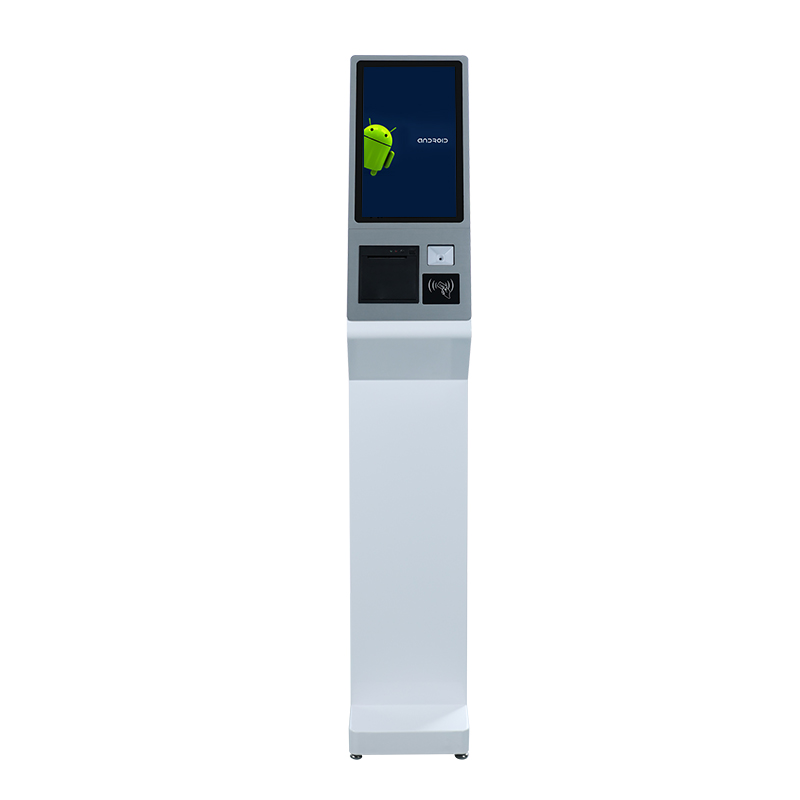
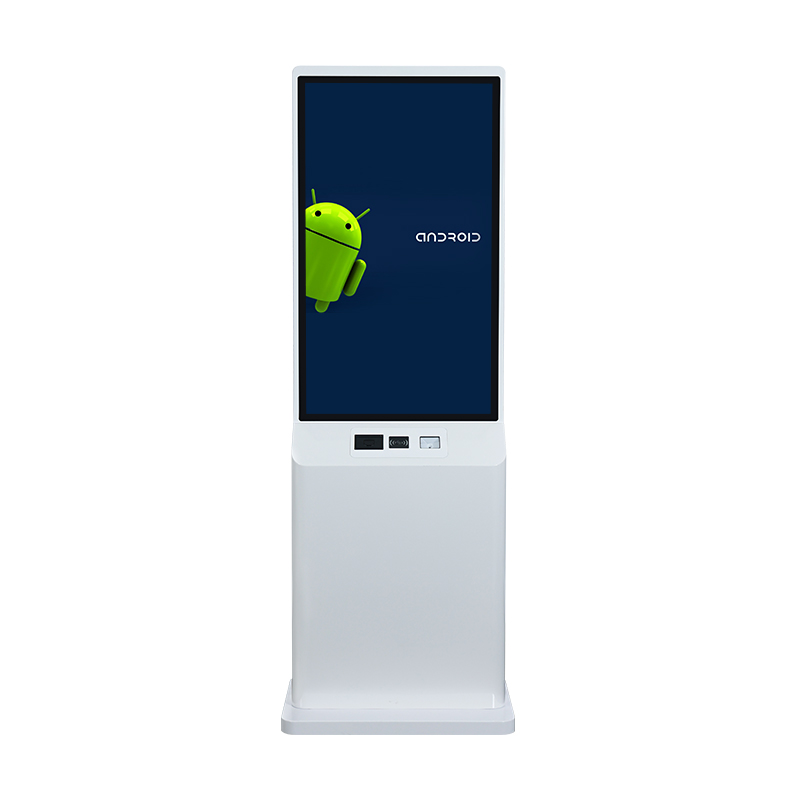
What are the 7 signs that your building is ready to invest in a wayfinding kiosk?
There are 7 quantitative signs that help you determine the right time to invest in a wayfinding kiosk: visitor traffic over 300 per day, floor area over 1,000m², map printing costs exceeding 5 million VND per quarter, reception staff spending more than 2 hours per day giving directions, visitor getting lost rate over 15%, need for multiple languages, and potential for in-house advertising.
- Sign 1 — Visitor traffic over 300 per day: When the number of people entering and leaving the building reaches this level, manual wayfinding becomes overwhelming. Each visitor asking for directions takes 2-3 minutes of staff time; with 100 visitors per day, that's equivalent to 3-5 hours of work being occupied.
- Sign 2 — Floor area over 1,000m²: Large spaces with multiple functional areas make it difficult for visitors to orient themselves. Above 1,000m², static signage is not enough; visitors need interactive maps to find their way independently.
- Sign 3 — Map printing costs exceeding 5 million VND per quarter: If you are reprinting maps every time there is a change — room changes, new stores, new areas opening — printing and installation labor costs will rise quickly. Electronic kiosks update remotely, no reprinting needed.
- Sign 4 — Reception staff spending more than 2 hours per day giving directions: Track the time reception staff spend answering direction questions. Over 2 hours per day means a staff position is being occupied by a task that can be automated.
- Sign 5 — Visitor getting lost rate over 15%: Quick survey or real observation: out of 100 visitors arriving at the building, how many have to ask for directions or go in circles? Over 15% is the threshold that requires intervention with a digital solution.
- Sign 6 — Need for multiple languages: Does the building have international visitors or a multi-ethnic community? The kiosk supports 3-5 languages simultaneously, while printed signs can only display a maximum of 2 languages.
- Sign 7 — Potential for in-house advertising: A kiosk placed in the lobby can display ads from stores within the building, creating an additional revenue stream. If the building has over 20 tenants, advertising revenue can offset 30-50% of the investment cost.
How much does a wayfinding kiosk cost and how long does it take to break even?
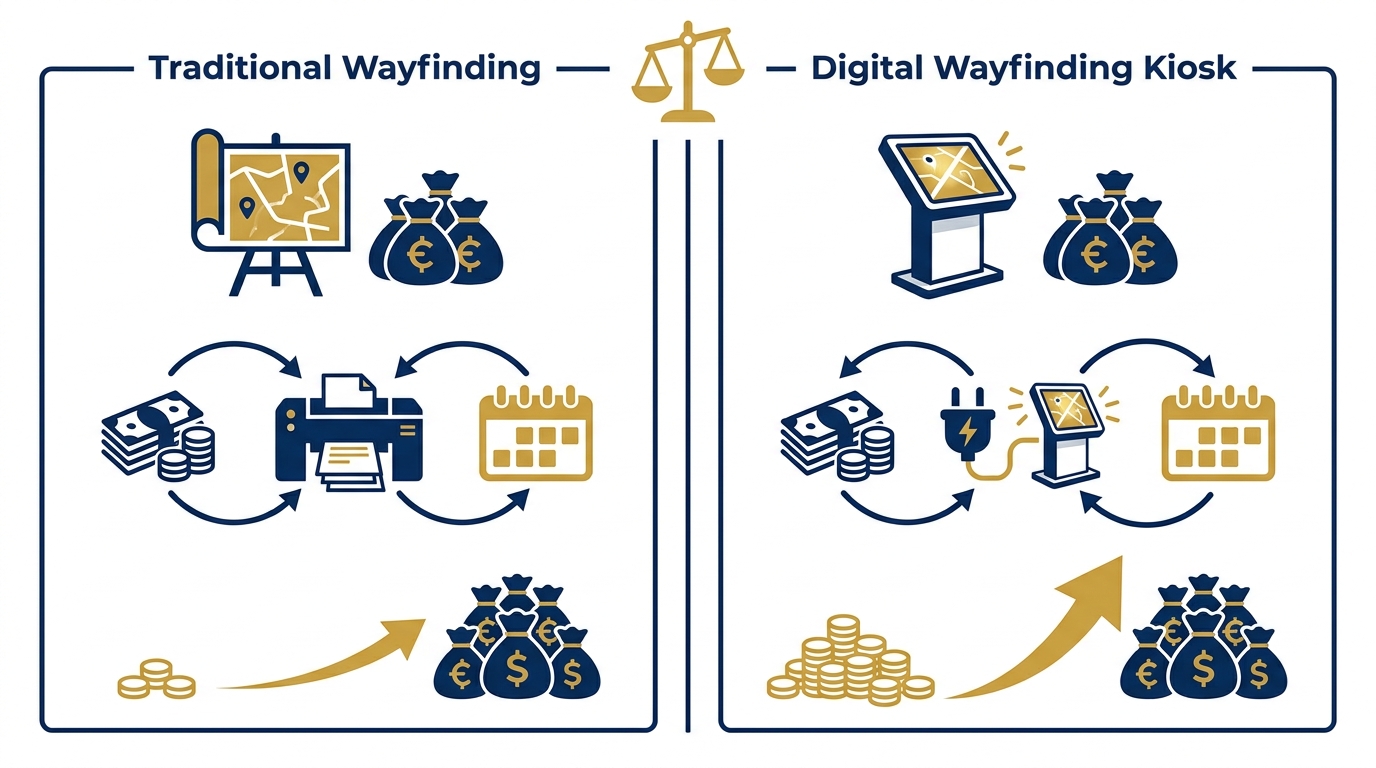
The investment cost for a wayfinding kiosk in Vietnam ranges from 25-60 million VND for a 43-55 inch station, depending on hardware configuration and software complexity. The average payback period is 12-18 months when accounting for saved printing costs and advertising revenue.
| Cost Item | Traditional Printing Option | Electronic Wayfinding Kiosk |
|---|---|---|
| Initial investment cost | 2-5 million VND (printed signs + frames) | 25-60 million VND per station |
| Quarterly operating cost | 5-8 million VND (reprinting + installation labor) | 0.5-1 million VND (electricity + maintenance) |
| Map update time | 3-7 days (design + print + install) | 15-30 minutes (remote update) |
| Multi-language capability | Maximum 2 languages | 3-5 customizable languages |
| Additional revenue streams | None | In-house advertising 3-8 million VND/month |
| Payback period | Not applicable | 12-18 months |
How does a wayfinding kiosk compare to traditional static signage?
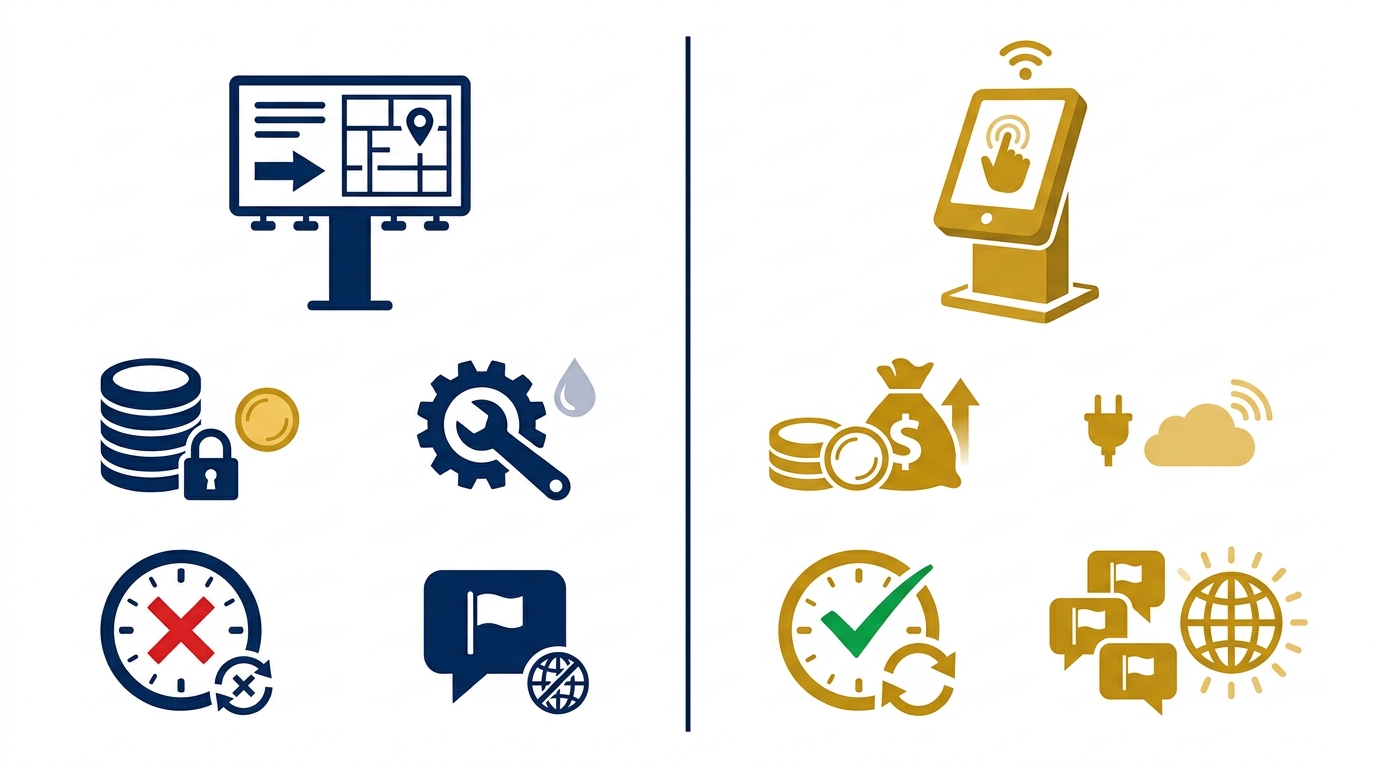
Static signage is suitable for buildings under 500m² with few destinations. Electronic kiosks are superior in update capability, multi-language support, and interactivity, but require a higher initial investment. The choice depends on the scale and actual needs of each building.
- Initial cost: Static signs cost 2-5 million VND, kiosks cost 25-60 million VND — a 10-20x difference.
- Operating cost: Static signs cost 5-8 million VND per quarter for reprinting; kiosks only cost 0.5-1 million VND for electricity and maintenance.
- Update speed: Static signs take 3-7 days for each change; kiosks update remotely in 15-30 minutes.
- User interaction: Static signs only display one
Cần tư vấn thiết bị/giải pháp cụ thể?
Việt POS phản hồi trong 30 phút · Hotline 4 vùng · Khảo sát miễn phí.
Bài viết cùng chủ đề