Mục lục bài viết (10)
- What is a warehouse RFID gate and how does it work?
- What signs indicate your warehouse is ready for RFID gate investment?
- Specific ROI calculation formula for warehouse RFID gates — apply now
- Cost comparison: manual reconciliation vs. automatic RFID gates
- Why is the late shipment penalty the fastest ROI determinant?
- Warehouse RFID gate technology limitations: metal, liquid, and staff operations
- Vietnam frequency compliance regulations: 918.4–923 MHz and Circular 08/2021
- Warehouse RFID gate deployment roadmap in 4 weeks
- Case study: Distribution warehouse in Long An breaks even after 7 months
- Frequently asked questions about warehouse RFID gate investment
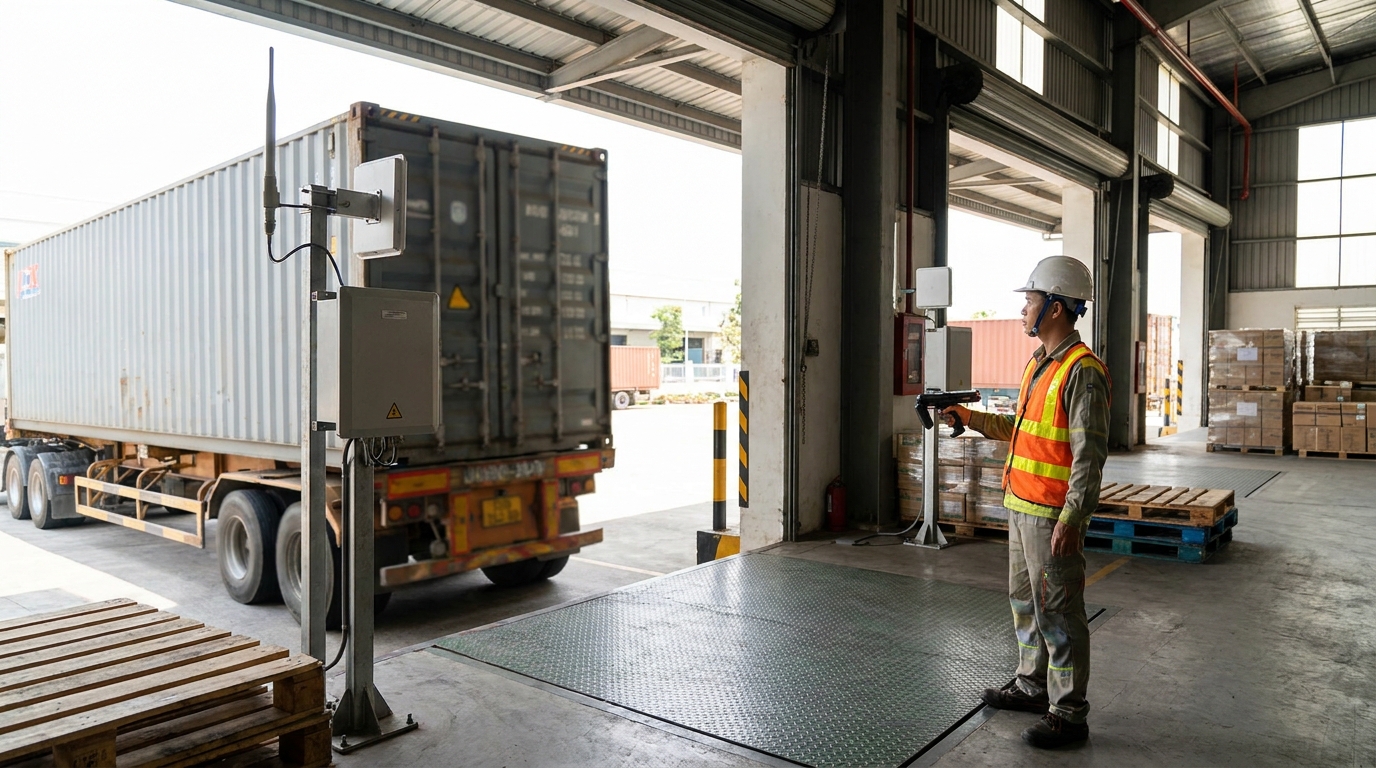
Warehouse RFID gates & automatic container truck systems use UHF waves (918.4–923 MHz) to automatically identify trucks and goods as they pass through the gate, without stopping the vehicle or manual barcode scanning. In Vietnam, this technology is being deployed at distribution centers, FMCG warehouses, and inland ports to reduce entry/exit processing time from 15-25 minutes per truck down to 2-5 minutes per truck, while eliminating document reconciliation errors.
Invest in warehouse RFID gates when the warehouse handles >15 trucks/day, and reconciliation labor costs + late shipment penalties exceed 40-60 million VND/month. ROI formula: (Labor savings + reduced late penalties + increased productivity) / Total investment cost. Break-even is typically reached in 6-8 months if truck frequency is high. Note: UHF RFID is limited by metal/liquid, and must comply with 918.4–923 MHz regulations.
Table of Contents
- What is a warehouse RFID gate and how does it work?
- What signs indicate your warehouse is ready for RFID gate investment?
- Specific ROI calculation formula for warehouse RFID gates — apply now
- Cost comparison: manual reconciliation vs. automatic RFID gates
- Why is the late shipment penalty the fastest ROI determinant?
- Warehouse RFID gate technology limitations: metal, liquid, and staff operations
- Vietnam frequency compliance regulations: 918.4–923 MHz and Circular 08/2021
- Warehouse RFID gate deployment roadmap in 4 weeks
- Case study: Distribution warehouse in Long An breaks even after 7 months
- Frequently asked questions about warehouse RFID gate investment
What is a warehouse RFID gate and how does it work?
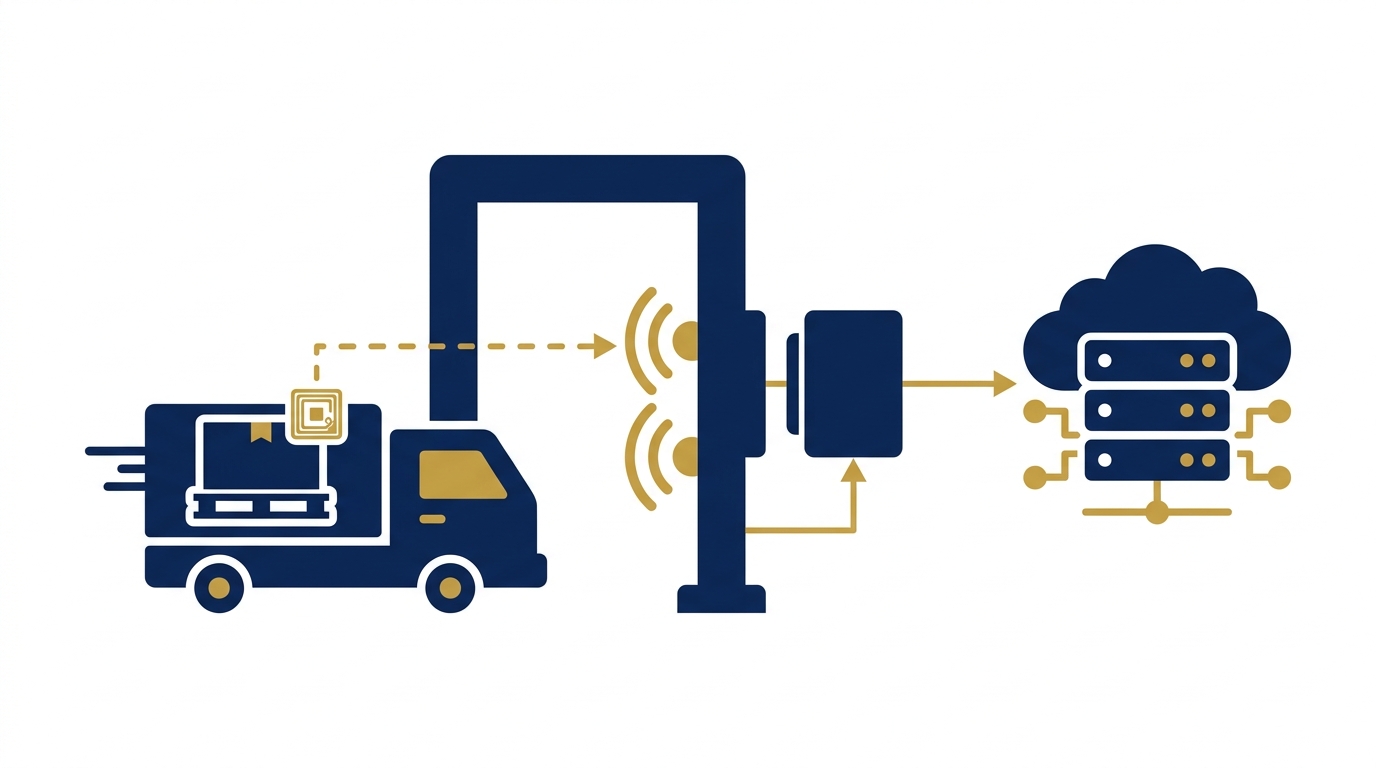
A warehouse RFID gate is a system consisting of a fixed reader, antennas installed at entry/exit gates, and RFID tags attached to trucks or pallets. When a truck passes through, the reader automatically captures the tag code, matches it against the inbound/outbound documents in the software, and records the time in real-time without stopping the vehicle. Data is transmitted to the warehouse management system (WMS) or ERP to update inventory instantly.
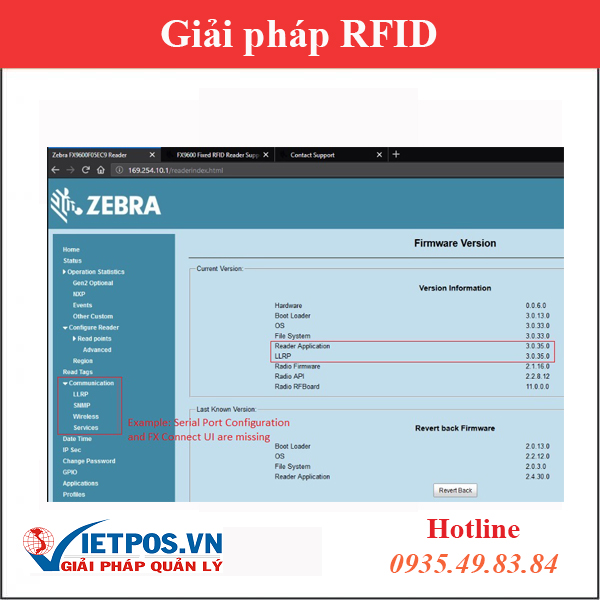
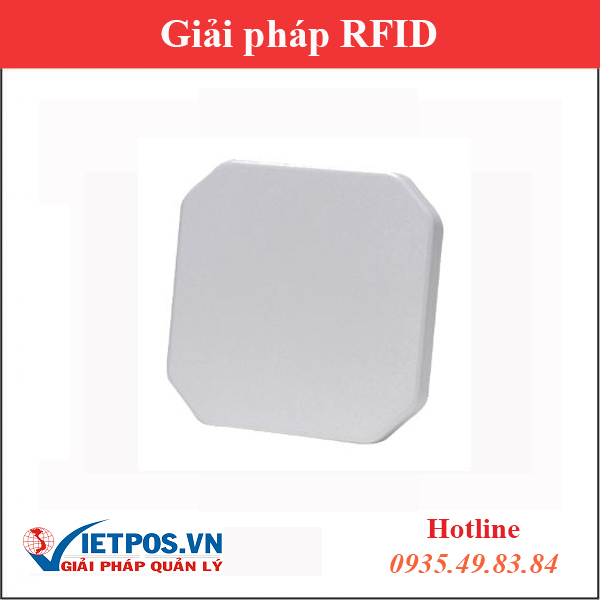
A basic warehouse RFID gate system includes: fixed reader (such as Zebra FX9600), antennas (Zebra AN480 or AN720), UHF RFID tags attached to trucks/racks, and software for data processing. These devices operate at 918.4–923 MHz frequency per Vietnam standards, with maximum power of 500 mW ERP, complying with Circular 08/2021 of the Ministry of Information and Communications.
What signs indicate your warehouse is ready for RFID gate investment?
Related Products
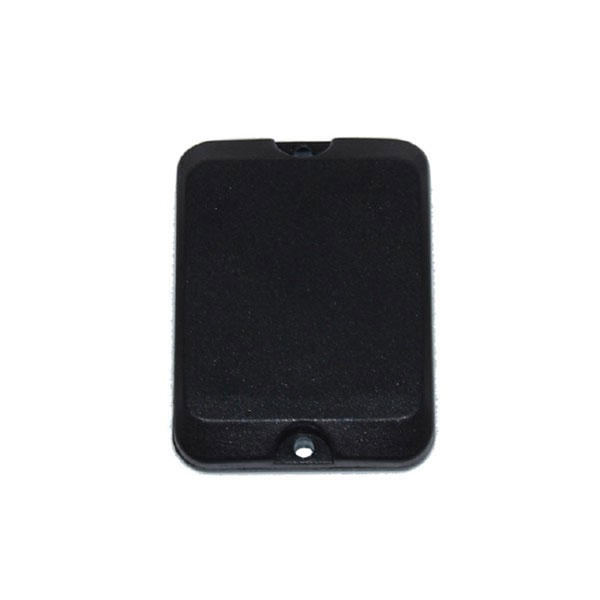
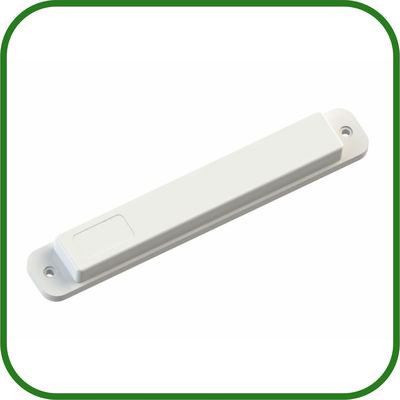


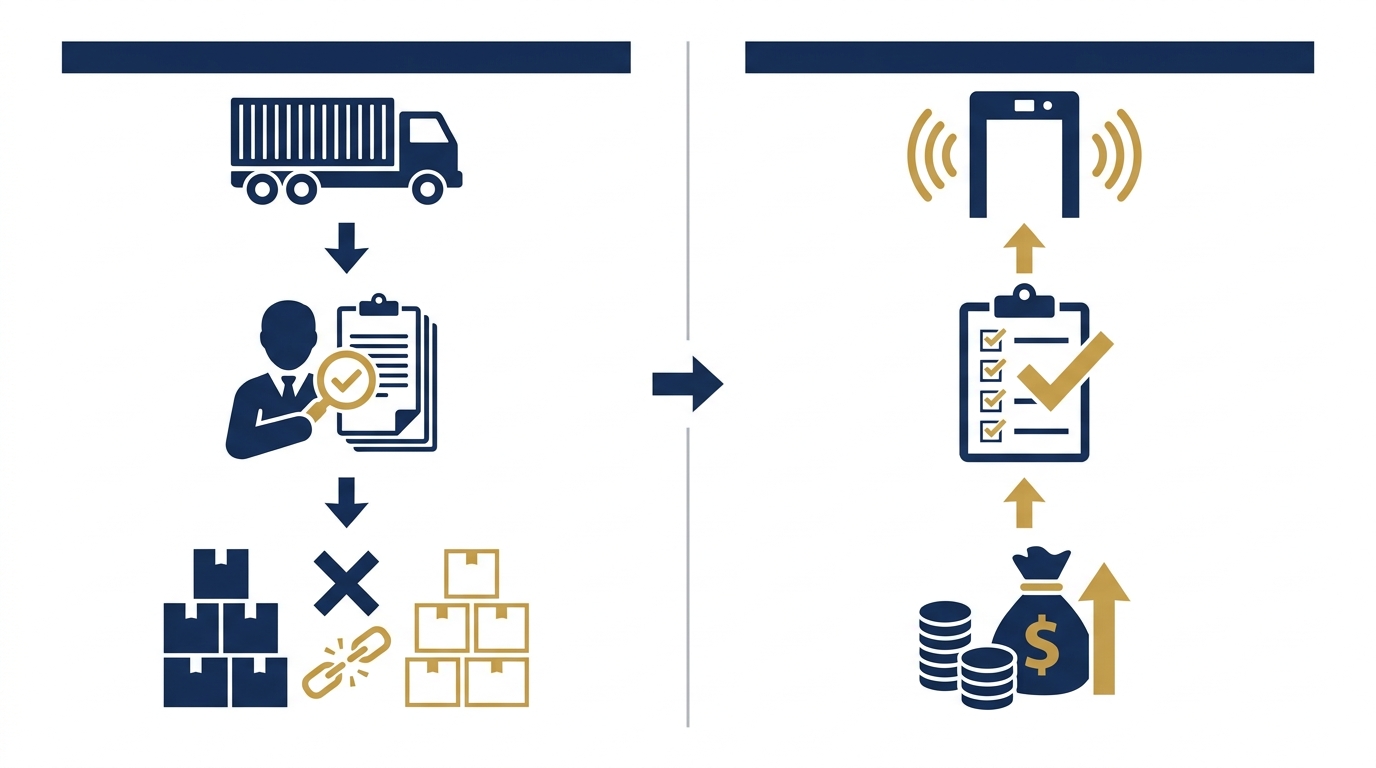
Three main signs: (1) the warehouse handles over 15-20 container trucks per day, (2) the manual document reconciliation team takes 30-45 minutes per truck, (3) inventory discrepancy rate exceeds 2-3%. If a business encounters 2 out of 3 of these signs simultaneously, the investment case for warehouse RFID gates becomes financially viable.
Below is a quick checklist for warehouse owners to self-assess:
- Average number of trucks entering/exiting per day: under 10 trucks (not needed) / 10-20 trucks (consider) / over 20 trucks (should invest)
- Manual document reconciliation time per truck: under 15 minutes (not needed) / 15-30 minutes (consider) / over 30 minutes (should invest)
- Monthly labor cost + late shipment penalties: under 20 million VND (not needed) / 20-50 million VND (consider) / over 50 million VND (should invest)
- Inventory discrepancy rate after stocktake: under 1% (not needed) / 1-3% (consider) / over 3% (should invest)
Specific ROI calculation formula for warehouse RFID gates — apply now
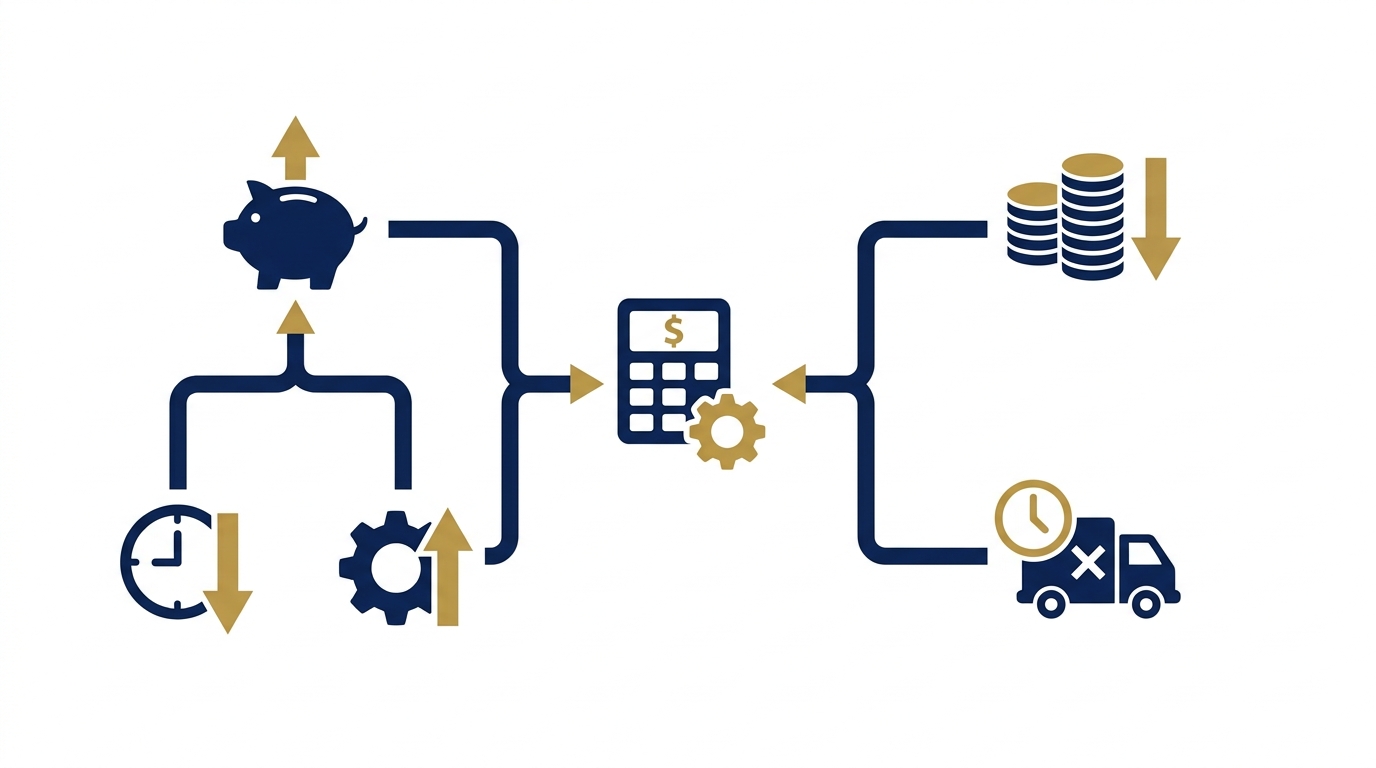
ROI formula = (Total monthly savings × 12) / Total investment cost. Total savings include: reconciliation labor costs reduced by 70-80%, late shipment penalty costs reduced by 90-100%, and increased entry/exit productivity. For a warehouse handling 20 trucks/day, ROI typically reaches 150-250% over 12 months, breaking even after 5-8 months.
Illustrative example with an average warehouse in Binh Duong:
| Item | Before investment (manual) | After RFID investment | Monthly savings |
|---|---|---|---|
| Reconciliation labor (2 people × 8 million VND) | 16 million VND | 4 million VND (1 part-time person) | 12 million VND |
| Late shipment penalties (average 3 shipments/month) | 9 million VND (3 million VND/shipment) | 0.5 million VND | 8.5 million VND |
| Document errors (complaint handling, compensation) | 5 million VND | 1 million VND | 4 million VND |
| Increased productivity (2-3 more trucks processed/day) | — | — | 6 million VND (estimated value) |
| Total savings | 30.5 million VND/month | ||
With a total investment cost of approximately 180-250 million VND (reader, 2-4 antennas, 500-1000 tags, software, installation), the break-even point is reached after 6-8 months. From month 7 onward, the 30 million VND/month savings converts into direct profit.
Cost comparison: manual reconciliation vs. automatic RFID gates

Manual costs include labor wages, processing time per truck, document printing costs, and most importantly, the opportunity cost when trucks have to wait. With 20 trucks/day, each waiting 30 minutes, total waiting time is 10 hours/day — equivalent to 1.25 full-time employees working continuously just on waiting.
The comparison table below is based on actual data from warehouses in Vietnam:
| Criteria | Manual (paper + barcode) | Automatic RFID gate |
|---|---|---|
| Processing time per truck | 15-30 minutes | 2-5 minutes |
| Data entry error rate | 2-5% | <0.5% |
| Reconciliation staff | 2-3 people/shift | 0.5-1 person/shift |
| Monthly operating cost | 25-40 million VND | 8-12 million VND (depreciation + maintenance) |
| Scalability | Difficult — requires more staff | Easy — add tags, add gates |
Why is the late shipment penalty the fastest ROI determinant?
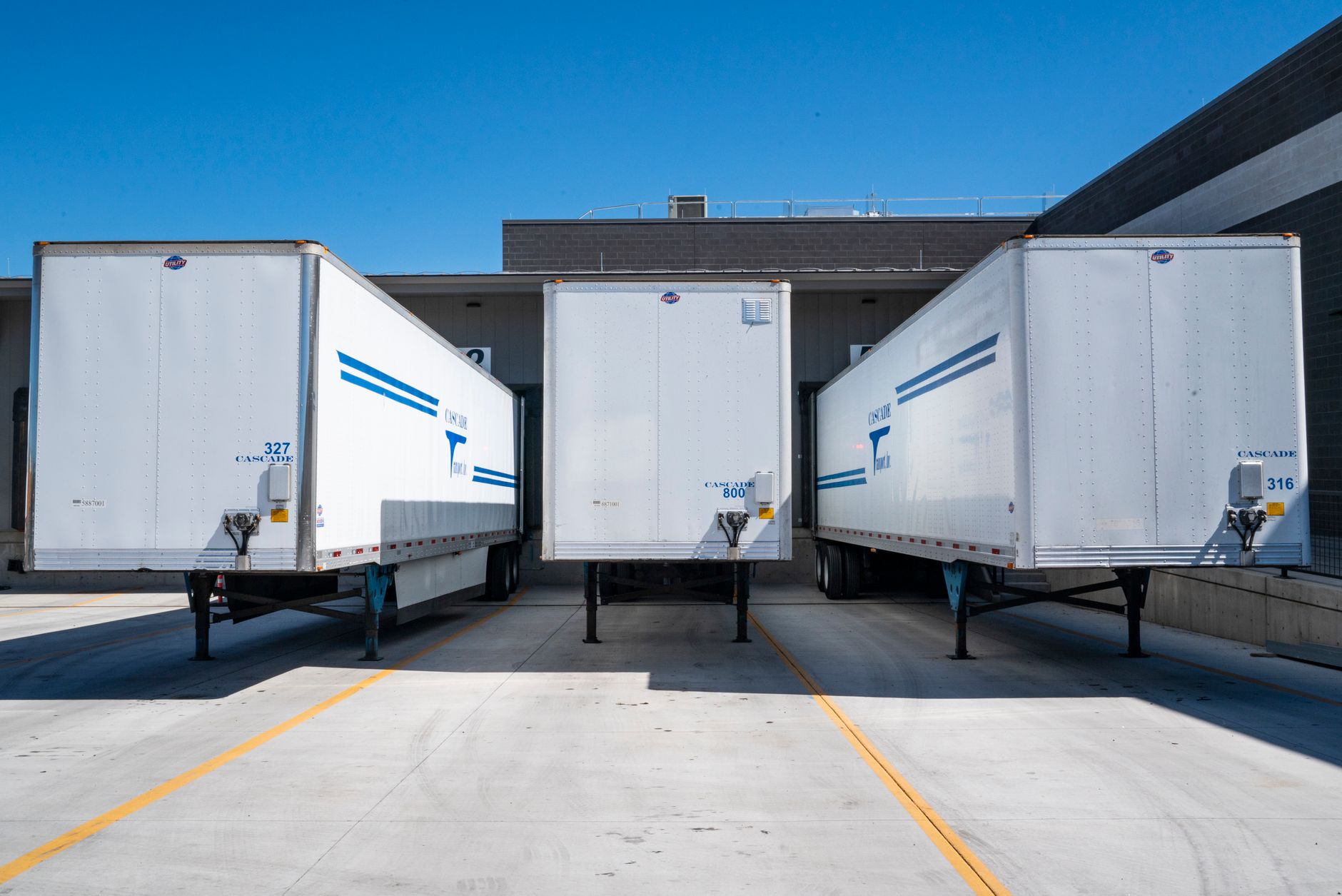
Late shipment penalties are often the largest hidden cost in warehouse operations. A single late shipment can incur penalties from 3-10 million VND, not including customer relationship damage. RFID gates reduce processing time from 30 minutes to 5 minutes per truck, directly minimizing the risk of missing delivery deadlines. This is the fastest ROI component because it converts immediately to bottom-line savings.
In practice, warehouses with frequent late shipments (over 3 times/month) see penalty costs drop by 90-100% after RFID deployment. For example, a warehouse in Long An reduced penalties from 27 million VND/month to 1 million VND/month within the first 2 months of operation.
Warehouse RFID gate technology limitations: metal, liquid, and staff operations

UHF RFID waves are affected by metal and liquid. Metal reflects radio waves, causing signal interference; liquid absorbs them, reducing read range. Solutions include using on-metal tags, adjusting antenna angles, and increasing reader power (within legal limits). Staff operations also matter: improper tag placement or blocked antennas can reduce read rates.
Key limitations and mitigation strategies:
- Metal surfaces: Use on-metal tags (e.g., VP-T902) with isolation layers; read rate 90-98% when installed correctly.
- Liquid containers: Place tags on dry areas, use specialized tags for liquid; test with PoC before full deployment.
- Antenna placement: Ensure antennas are positioned at correct angles (typically 45 degrees) and heights to cover the entire gate area.
- Staff training: Train staff on proper tag placement and system operation; assign a supervisor for quality control.
Vietnam frequency compliance regulations: 918.4–923 MHz and Circular 08/2021

In Vietnam, UHF RFID devices must operate within 918.4–923 MHz frequency band, with maximum power of 500 mW ERP, per Circular 08/2021/TT-BTTTT. Devices must have compliance certification from the manufacturer. Businesses should request a copy of the compliance certificate when purchasing equipment. Việt POS provides genuine imported devices with full documentation.
Key regulatory points:
- Frequency band: 918.4–923 MHz (UHF RFID)
- Maximum power: 500 mW ERP
- No license required for operation within these limits
- Equipment must have compliance certification (hợp quy)
- Violations can result in fines and equipment confiscation
Warehouse RFID gate deployment roadmap in 4 weeks

A typical deployment takes 4 weeks: Week 1 — site survey and design; Week 2 — hardware installation and configuration; Week 3 — software integration and testing; Week 4 — staff training and go-live. This timeline assumes standard conditions; complex sites may require 6-8 weeks.
- Week 1 — Site survey: Assess gate dimensions, truck flow, environmental factors; design antenna placement and tag selection.
- Week 2 — Installation: Mount readers and antennas, install tags on trucks/pallets, configure network connections.
- Week 3 — Integration: Connect to WMS/ERP via API or middleware; test read rates and data accuracy; adjust settings.
- Week 4 — Training & go-live: Train staff on system operation and troubleshooting; run parallel testing; officially launch.
Case study: Distribution warehouse in Long An breaks even after 7 months

A distribution warehouse in Long An, handling 22 trucks/day with 3 reconciliation staff, invested 220 million VND in an RFID gate system. Monthly savings reached 32 million VND (labor 14 million, penalties 12 million, error reduction 6 million). Break-even was achieved in 7 months, and the system has been operating for 18 months without major issues.
Frequently asked questions about warehouse RFID gate investment
Below are answers to common questions about warehouse RFID gate investment, covering costs, technical limitations, integration, break-even time, licensing, and tag management.
What is the average investment cost for a warehouse RFID gate?
The turnkey cost for 1 RFID gate (reader, 2 antennas, 200-500 tags, software, installation) ranges from 150-300 million VND depending on equipment brand and scale. A Zebra FX9600 reader costs about 40-60 million VND, Zebra AN480 antennas about 8-15 million VND each, UHF tags cost 3,000-8,000 VND per tag in bulk. Software integration with WMS/ERP costs 30-80 million VND depending on customization level.
Can the RFID gate read metal containers?
Yes, but you need specialized on-metal RFID tags and proper placement to avoid shielding. On-metal tags have an isolation layer that allows reliable reading when attached directly to metal surfaces. Read rates reach 90-98% if installed at the correct angle and distance. It is recommended to run a PoC at the site before full investment.
Can the RFID gate system integrate with existing warehouse management software?
Yes. The RFID gate system supports integration via API or data files with popular WMS and ERP software in Vietnam. Data read from the gate is processed through middleware, standardized, and pushed into the existing system. Integration time averages 3-7 working days. If the business does not have a WMS, Việt POS can provide a complete software + hardware solution.
What is the average break-even time for an RFID gate system?
For warehouses handling 15-20 trucks/day, the average break-even time is 6-8 months. Warehouses handling over 25 trucks/day can break even in 4-6 months. For warehouses under 10 trucks/day, break-even extends to 12-18 months — in this case, consider alternative solutions like barcode combined with manual checks. Ideal break-even threshold: total monthly savings ≥ 12-15% of total investment cost.
Does the warehouse RFID gate require a broadcast license?
UHF RFID devices operating in the 918.4–923 MHz band, with power ≤500 mW ERP, are permitted for use without a license under Circular 08/2021/TT-BTTTT. However, devices must have compliance certification from the manufacturer. Businesses should request a copy of the compliance certificate when purchasing equipment. Việt POS provides genuine imported devices with full documentation.
What if an RFID tag is damaged or lost?
Tag management procedures should be established from the start: each truck/pallet is fitted with 1 primary tag + 1 backup tag. When a tag is damaged, staff replace it with a new one and update the tag code in the system (takes 2-3 minutes). Periodically check 10-15% of tags each month. Replacement tag cost is about 3,000-8,000 VND per tag — negligible compared to the labor costs saved.
Cần tư vấn thiết bị/giải pháp cụ thể?
Việt POS phản hồi trong 30 phút · Hotline 4 vùng · Khảo sát miễn phí.
