
Mục lục bài viết (10)
- What signs indicate your fashion chain needs RFID?
- How is the RFID ROI formula for fashion calculated?
- What does RFID investment cost for a fashion chain include?
- Manual inventory vs. RFID: what's the difference?
- Decision threshold: When is ROI worth investing?
- 3-phase RFID implementation roadmap for fashion chains
- What UHF frequency regulations in Vietnam should you note?
- RFID limitations in fashion to know before investing
- Case study: An 8-store fashion chain in Ho Chi Minh City
- Frequently Asked Questions
RFID in fashion is a system that uses UHF radio waves to automatically read tags attached to products in bulk, enabling inventory counts 20-30 times faster than manual methods and improving inventory accuracy to 99%. In Vietnam, this technology is being deployed by retail chains to address shrinkage and inventory discrepancy issues.
Investing in RFID for a fashion chain is worth considering when: (1) SKU count > 5,000, (2) shrinkage rate > 2%, (3) inventory discrepancy > 15%, or (4) operating ≥ 3 stores. ROI formula: (Value of goods saved + Reduction in manual inventory costs) / Total investment cost. If the ratio is > 1.5 within 24 months, implementation is recommended.
Table of Contents
- What signs indicate your fashion chain needs RFID?
- How is the RFID ROI formula for fashion calculated?
- What does RFID investment cost for a fashion chain include?
- Manual inventory vs. RFID: what's the difference?
- Decision threshold: When is ROI worth investing?
- 3-phase RFID implementation roadmap for fashion chains
- What UHF frequency regulations in Vietnam should you note?
- RFID limitations in fashion to know before investing
- Case study: An 8-store fashion chain in Ho Chi Minh City
- Frequently Asked Questions
What signs indicate your fashion chain needs RFID?

Four main signs: (1) shrinkage rate over 2% of revenue, (2) inventory discrepancy over 15% between system and actual, (3) inventory count time for one store over 8 hours, (4) frequently losing online orders because you don't know exactly what's in stock at the store. If you encounter 2/4 signs, it's time to calculate the investment.
Shrinkage in the Vietnamese fashion industry ranges from 1.5-3.5% of revenue, higher than the global average of 1.4%. The main causes are high-value goods, small sizes that are easy to hide, and staff difficulty in control. For a 10-store chain with 50 billion VND annual revenue, a 2.5% shrinkage rate equals 1.25 billion VND lost each year — a figure large enough to justify RFID investment.
How is the RFID ROI formula for fashion calculated?
Related Products


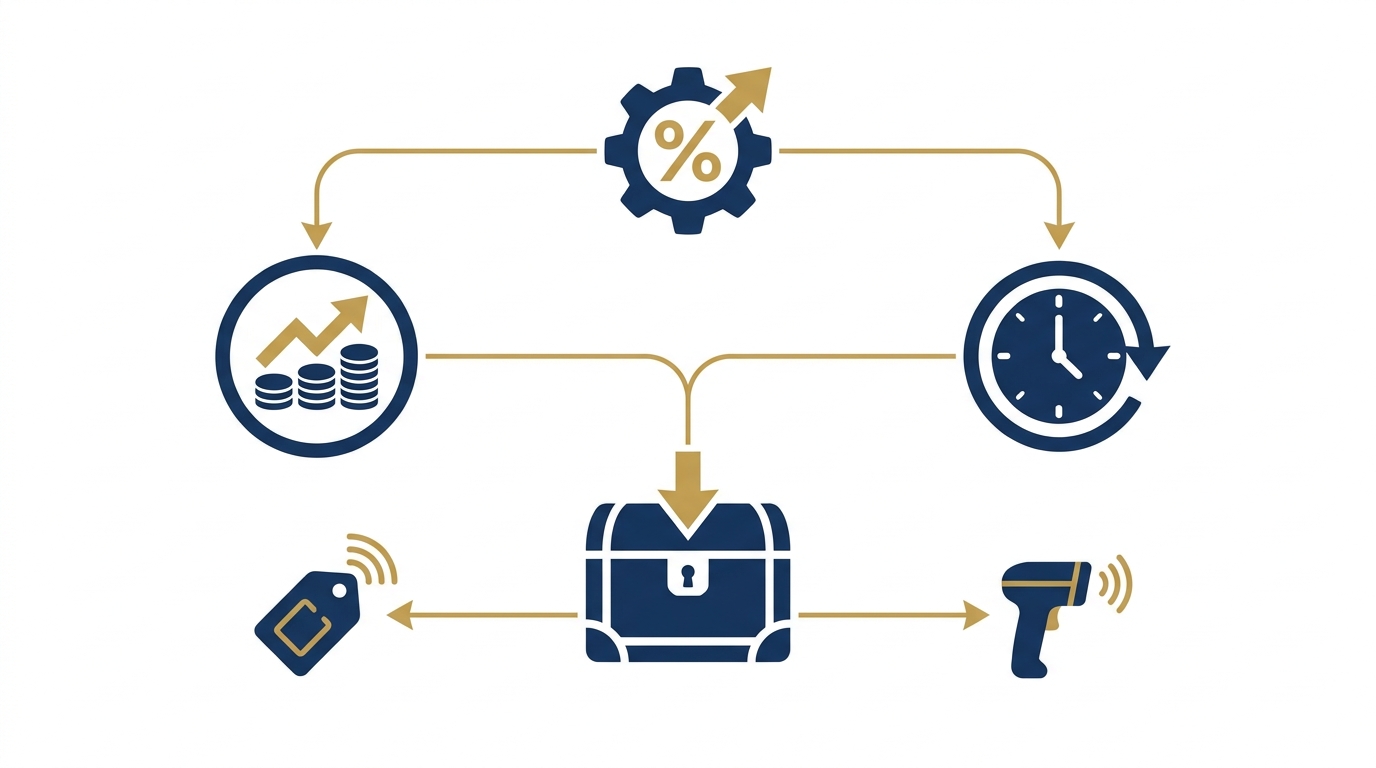
Basic formula: ROI = (Total annual benefits × Usage period) / Total investment cost. Benefits include: value of goods saved from reduced shrinkage, inventory labor costs, increased revenue from accurate inventory. Costs include: RFID tags, readers, software, implementation, training.
Example of a 5-store chain, 50,000 SKUs, 30 billion VND annual revenue:
• Shrinkage reduction benefit 2% → 600 million/year
• Inventory labor savings 200 hours/store/year → 100 million
• Revenue increase 3% from accurate inventory → 900 million
• Total benefits: 1.6 billion/year
• Initial investment cost: 800 million (tags, readers, software)
• ROI = 1.6 billion / 800 million = 2.0 → payback in 6 months
What does RFID investment cost for a fashion chain include?
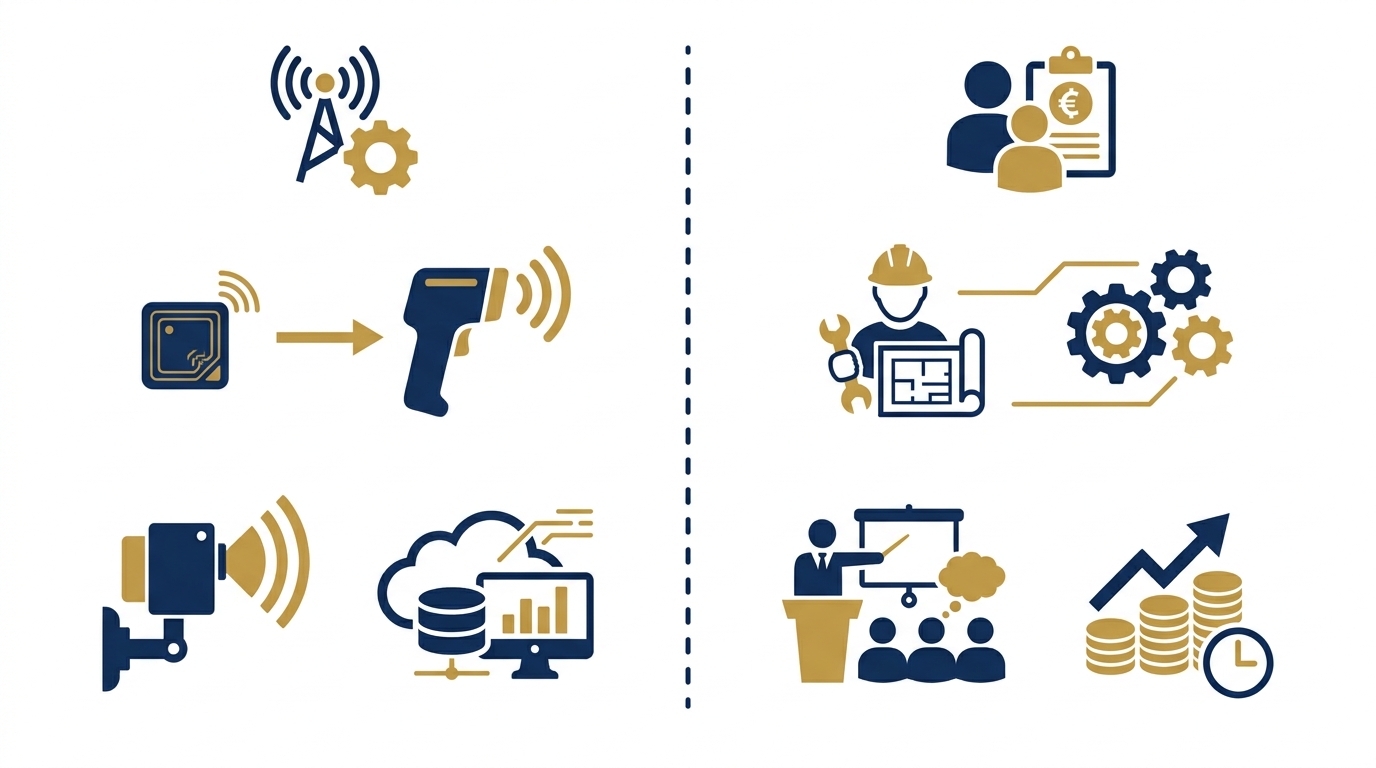
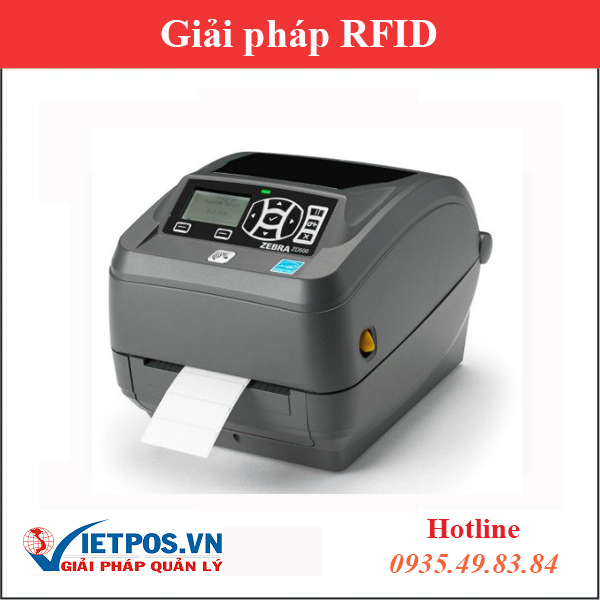
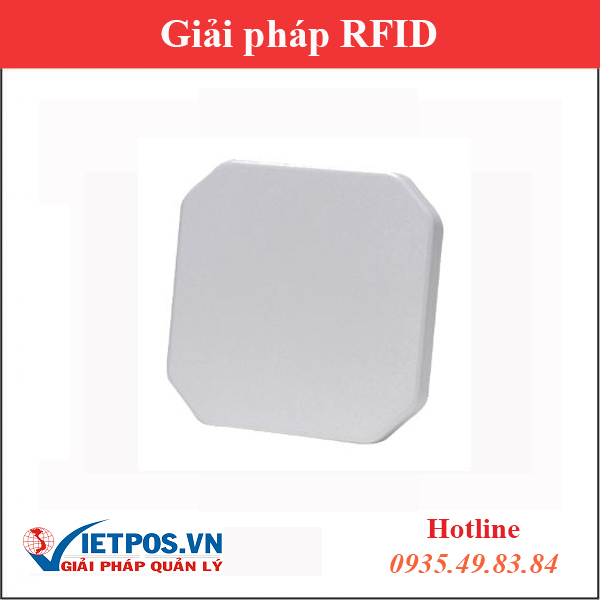
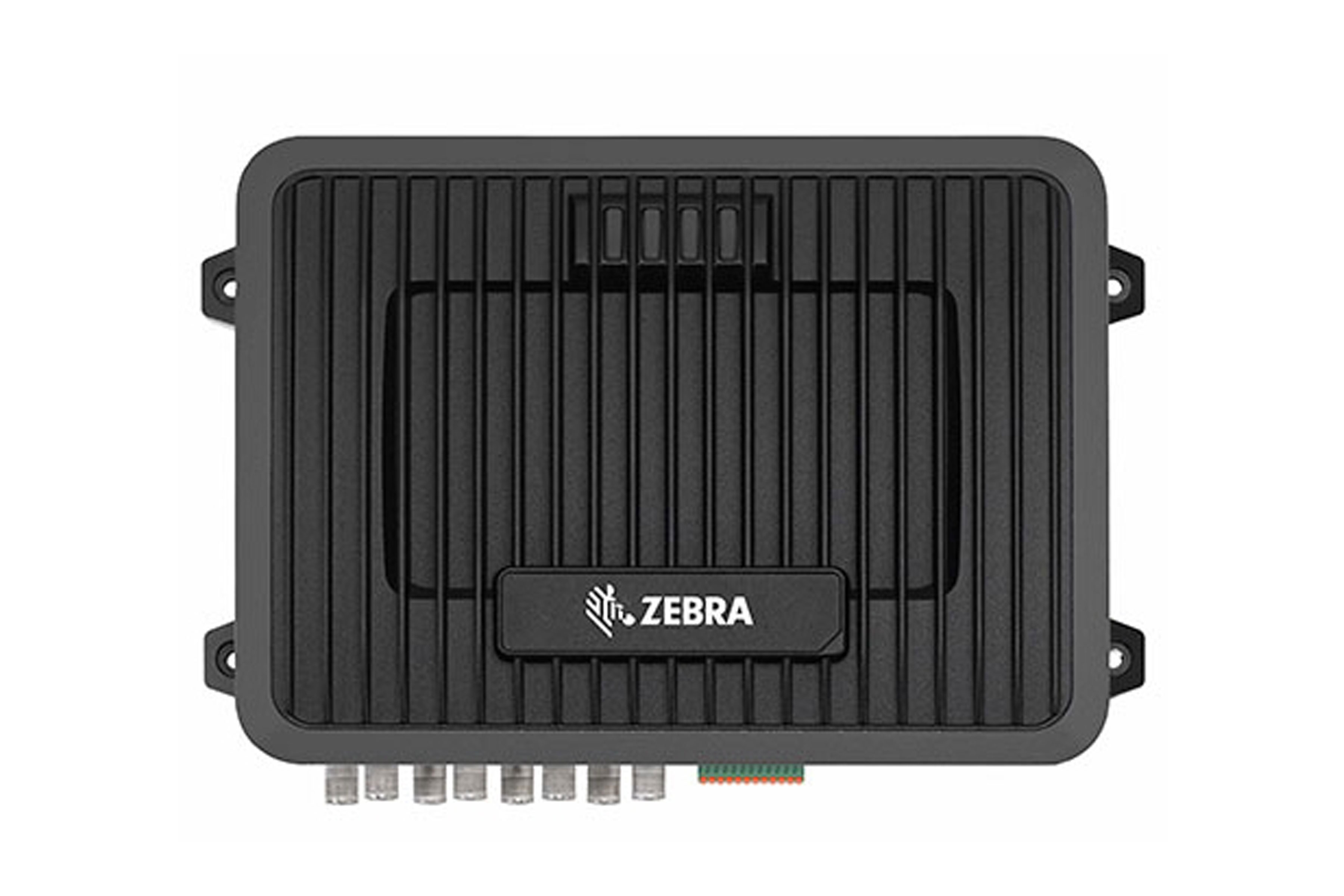
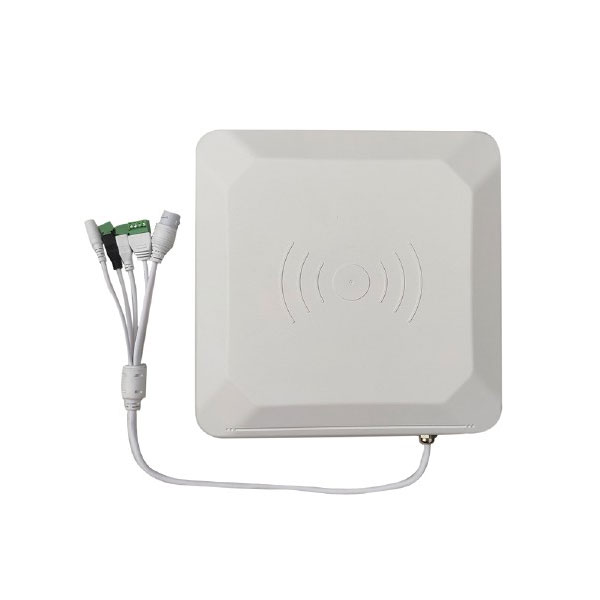
Costs include 4 groups: (1) UHF RFID tags 1,500-4,000 VND/tag depending on volume, (2) handheld readers 15-40 million/unit, fixed readers 40-120 million, (3) integrated management software 50-200 million, (4) implementation, training, system integration costs 30-100 million. For a 5-store chain, total investment is 500 million to 1.5 billion VND.
| Item | Cost (VND) | Notes |
|---|---|---|
| UHF RFID tags (10,000 tags) | 15-40 million | Price decreases with bulk purchase |
| Handheld readers (3-5 units) | 45-200 million | Brands: Zebra, Datalogic |
| Fixed portal readers (1-2 sets) | 40-240 million | For central warehouse or large stores |
| Integration software | 50-200 million | Depending on customization level |
| Implementation, training | 30-100 million | Includes integration with current POS |
Manual inventory vs. RFID: what's the difference?
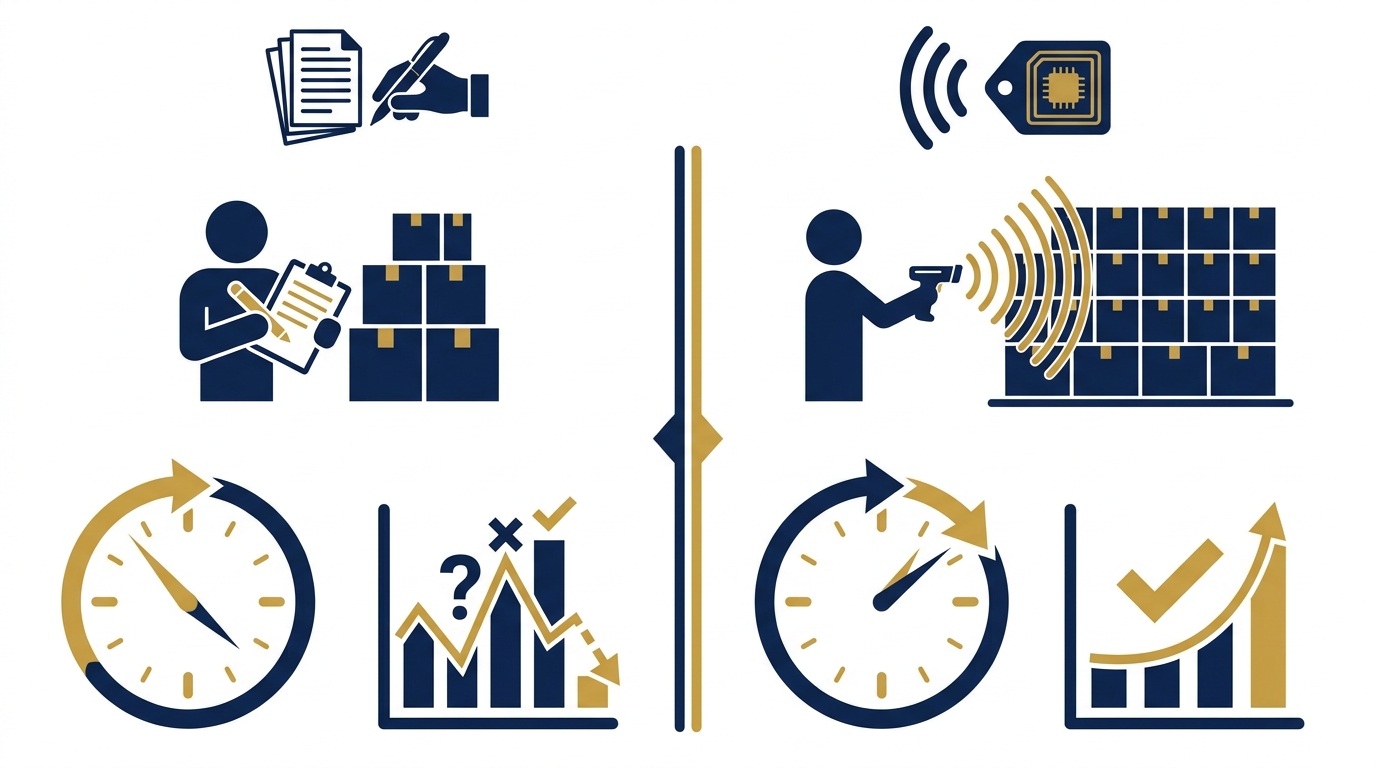
Manual inventory of 1,000 products takes 3-5 hours, accuracy 85-92%, requires closing the store or working after hours. RFID inventory of 1,000 products takes only 5-10 minutes, accuracy 99%, no need to close, staff just walk through the display area with a handheld reader.
- Time: Manual 3-5 hours/1,000 SKUs, RFID 5-10 minutes — 20-30 times faster
- Accuracy: Manual 85-92%, RFID 99%+
- Labor: Manual needs 3-5 people, RFID only 1 person
- Business disruption: Manual requires closing, RFID counts while customers still shop
- Cost per inventory count: Manual 5-10 million/store, RFID nearly zero after initial investment
Decision threshold: When is ROI worth investing?
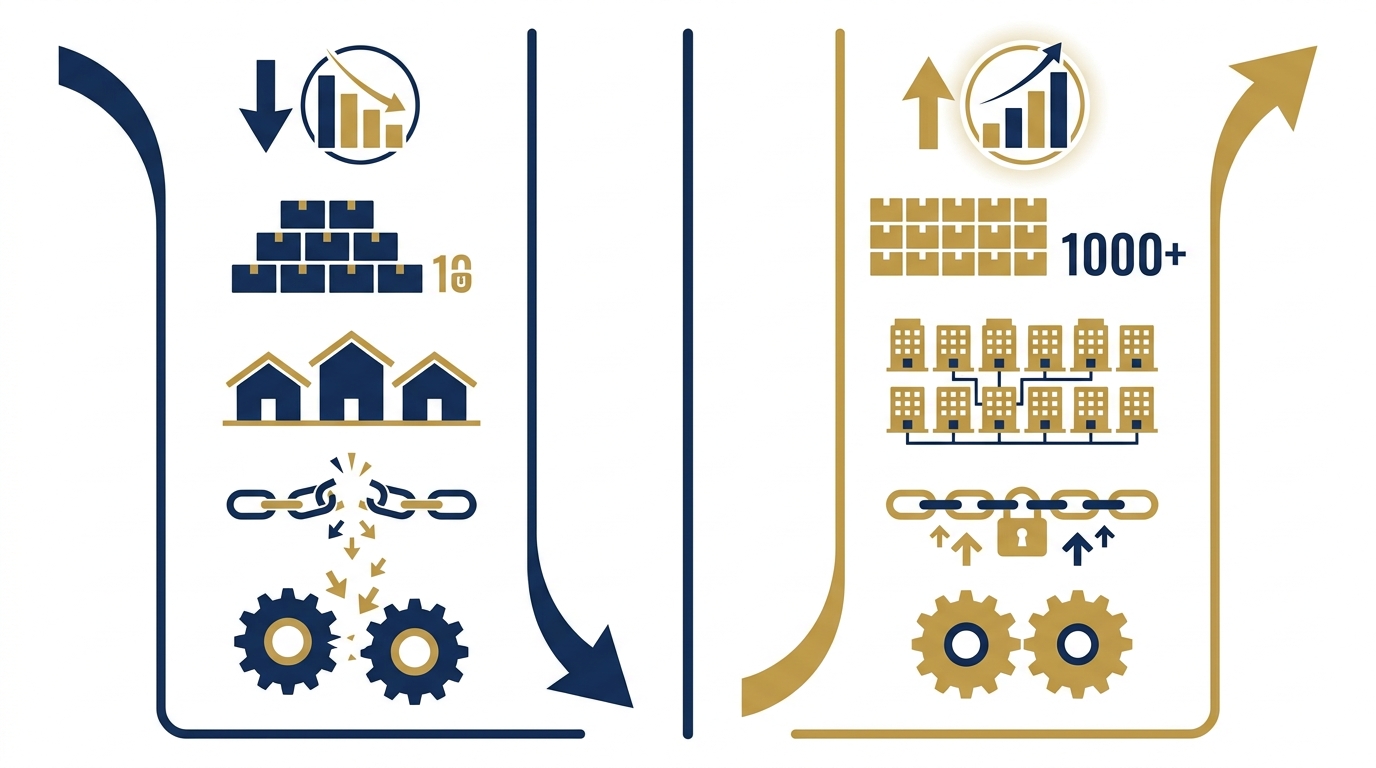
ROI is worth investing when the payback period is under 18 months, equivalent to an annual ROI above 0.67. For Vietnamese fashion chains, practical thresholds: SKU count over 5,000, shrinkage rate over 2%, inventory discrepancy over 15%, or operating 3 or more stores. Meeting 2 of 4 criteria is already worth calculating.
Quick decision threshold table:
| Criteria | Not yet worth investing | Should consider | Invest immediately |
|---|---|---|---|
| SKU count | Under 2,000 | 2,000-5,000 | Over 5,000 |
| Number of stores | 1-2 | 3-5 | Over 5 |
| Shrinkage rate | Under 1% | 1-2% | Over 2% |
| Inventory discrepancy | Under 8% | 8-15% | Over 15% |
3-phase RFID implementation roadmap for fashion chains
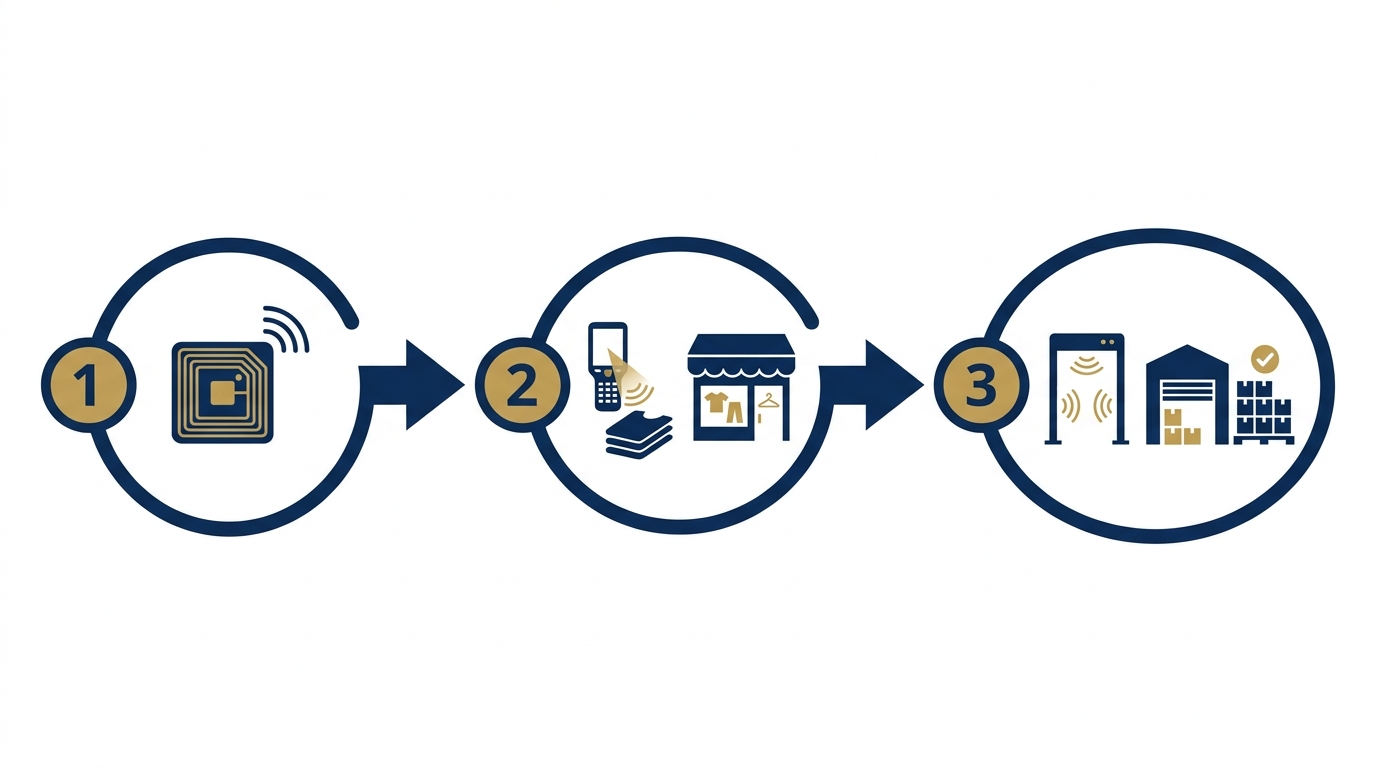
Phase 1 (months 1-2): tag at source for all new goods, equip handheld readers for 1-2 pilot stores. Phase 2 (months 3-6): expand to all stores, integrate daily quick inventory counts. Phase 3 (months 7-12): deploy RFID portals at the warehouse, automate receiving, reconcile inbound/outbound.
During the pilot phase, track two key metrics: inventory count time and accuracy. After 3 months of piloting, if inventory count time decreases by over 70% and accuracy exceeds 98%, proceed with expansion. If results are lower, review the process and adjust before scaling.
What UHF frequency regulations in Vietnam should you note?

UHF RFID equipment operates in the 918.4-923 MHz band, maximum transmit power 500 mW ERP, per Circular 08/2021/TT-BTTTT of the Ministry of Information and Communications. Imported equipment must have conformity certification before circulation. VietPOS provides certified equipment and supports conformity documentation, but this does not replace professional legal advice.
When selecting equipment, verify the frequency band and power output to ensure compliance. Equipment from major brands like Zebra, Honeywell, and Chainway typically supports the Vietnam band. VietPOS can assist with documentation and certification procedures.
RFID limitations in fashion to know before investing

Three main limitations: (1) metal and liquids block waves, products with metal accessories (buckles, chains) read poorly, requiring specialized anti-interference tags; (2) staff must confirm before writing to records to avoid errors; (3) tag costs on products under 100,000 VND may not be economically effective. Some chains only tag products above 200,000 VND.
Additionally, RFID does not eliminate the need for periodic manual checks. The technology reduces frequency and time but does not replace the final verification step. Plan for a hybrid approach during the transition period.
Case study: An 8-store fashion chain in Ho Chi Minh City

An 8-store fashion chain in Ho Chi Minh City with 12,000 SKUs, revenue 80 billion VND/year, shrinkage 2.8%, inventory discrepancy 18%. After RFID implementation: shrinkage reduced to 1.2%, saving 1.28 billion/year; inventory count time reduced from 12 hours to 30 minutes per store; revenue increased 5% from accurate stock. Payback period: 9 months.
Key lessons: (1) tag at source to avoid in-store tagging bottlenecks, (2) train staff thoroughly before rollout, (3) integrate with POS for real-time updates. The chain plans to expand RFID to its online fulfillment center next year.
Frequently Asked Questions
What signs indicate a fashion chain needs RFID investment immediately?
Four main signs: (1) shrinkage rate over 2% of revenue, (2) inventory discrepancy over 15% between system and actual, (3) inventory count time for one store over 8 hours, (4) frequently losing online orders because you don't know exactly what's in stock at the store. If you encounter 2/4 signs, consider calculating the investment. For a 10-store chain with 50 billion VND revenue, 2.5% shrinkage equals 1.25 billion VND lost each year.
What is the exact RFID ROI formula for fashion?
ROI = (Total annual benefits × Usage period) / Total investment cost. Benefits include: value of goods saved from reduced shrinkage, inventory labor costs, increased revenue from accurate inventory. Costs include: RFID tags, readers, software, implementation, training. Example: a 5-store chain with 30 billion VND revenue, benefits 1.6 billion/year, costs 800 million, ROI = 2.0, payback in 6 months.
How much does RFID investment cost for a 5-store fashion chain?
Total investment is 500 million to 1.5 billion VND. Details: 10,000 UHF RFID tags cost 15-40 million, 3-5 handheld readers cost 45-200 million, 1-2 fixed readers cost 40-240 million, integration software 50-200 million, implementation and training 30-100 million. Annual maintenance costs 5-10% of equipment value, which should be included in the total cost when calculating ROI.
How do manual inventory and RFID differ?
Manual inventory of 1,000 products takes 3-5 hours, accuracy 85-92%, needs 3-5 people, requires closing the store, costs 5-10 million per count. RFID inventory of 1,000 products takes only 5-10 minutes, accuracy 99%, only 1 person, no need to close, cost nearly zero after initial investment. RFID is 20-30 times faster and significantly more accurate.
What threshold determines if RFID investment is worthwhile?
Investment is worthwhile when payback is under 18 months, equivalent to an annual ROI above 0.67. Practical thresholds for Vietnamese fashion chains: SKU count over 5,000, shrinkage rate over 2%, inventory discrepancy over 15%, or operating 3 or more stores. Meeting 2 of 4 criteria is already worth calculating the investment.
What are the UHF RFID frequency regulations in Vietnam?
UHF RFID equipment operates in the 918.4-923 MHz band, maximum transmit power 500 mW ERP, per Circular 08/2021/TT-BTTTT of the Ministry of Information and Communications. Imported equipment must have conformity certification before circulation. VietPOS provides certified equipment and supports conformity documentation, but this does not replace professional legal advice.
Are there any limitations of RFID in the fashion industry?
Three main limitations: (1) metal and liquids block waves, products with metal accessories (buckles, chains) read poorly, requiring specialized anti-interference tags; (2) staff must confirm before writing to records to avoid errors; (3) tag costs on products under 100,000 VND may not be economically effective. Some chains only tag products above 200,000 VND.
How many phases are in the RFID implementation roadmap for fashion chains?
3 phases. Phase 1 (months 1-2): tag at source for new goods, equip handheld readers for 1-2 pilot stores. Phase 2 (months 3-6): expand to all stores, daily quick inventory counts. Phase 3 (months 7-12): deploy RFID portals at the warehouse, automate receiving. After 3 months of piloting, if inventory count time decreases by over 70% and accuracy exceeds 98%, proceed with expansion.
Cần tư vấn thiết bị/giải pháp cụ thể?
Việt POS phản hồi trong 30 phút · Hotline 4 vùng · Khảo sát miễn phí.
