Mục lục bài viết (7)
- What is RFID Warehouse Inventory?
- Standard 5-Step RFID Warehouse Inventory Process
- RFID Handheld Devices Suitable for Warehouse Inventory
- RFID Handheld Device Comparison Table for Warehouse Inventory
- Common Mistakes in RFID Warehouse Inventory Deployment
- Benefits of RFID Warehouse Inventory
- Frequently Asked Questions
RFID warehouse inventory is a process that uses UHF radio waves to automatically identify and count items tagged with RFID tags, completely replacing barcode scanning of individual products or manual counting. In Vietnam, retail chains, distribution warehouses, and manufacturing facilities are transitioning to RFID to reduce inventory time from 3-5 days to 15-30 minutes, while increasing accuracy to 99.5%+.
What is RFID Warehouse Inventory?

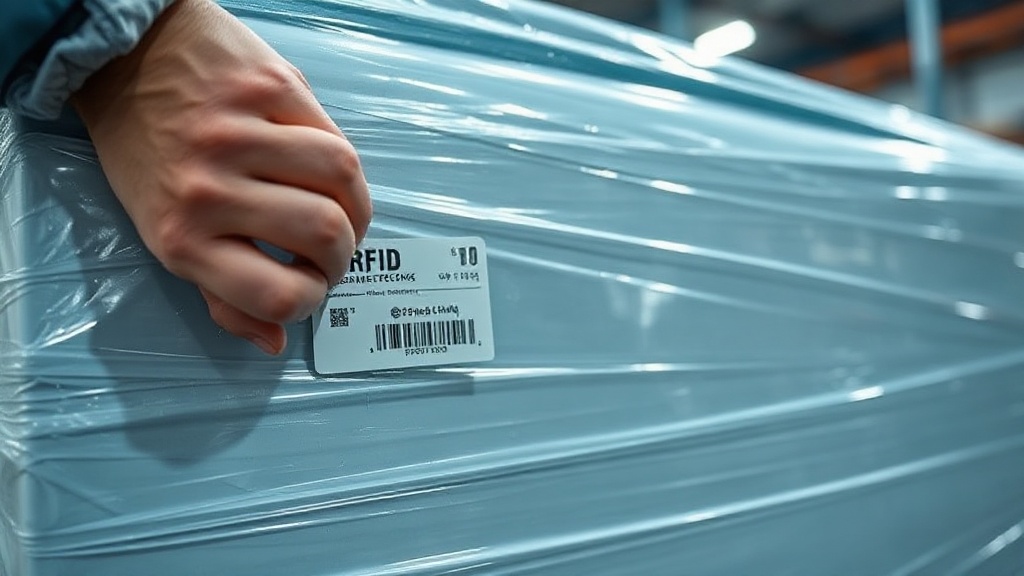
RFID warehouse inventory (Radio Frequency Identification) uses electronic tags attached to pallets, cartons, or individual items, combined with handheld or fixed readers to read multiple tags within 3-30 meters without direct contact. Data automatically synchronizes to warehouse management systems (WMS) or POS, enabling real-time inventory reconciliation.
Unlike barcodes that require individual scanning of each product, RFID can read 200-500 tags per second even when tags are sealed inside cartons. This completely solves the problem of inventory counting for large volumes of goods in a short timeframe.
Standard 5-Step RFID Warehouse Inventory Process

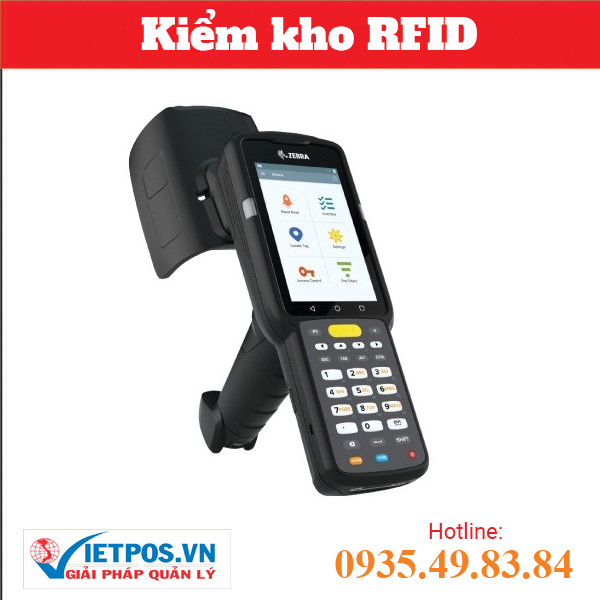
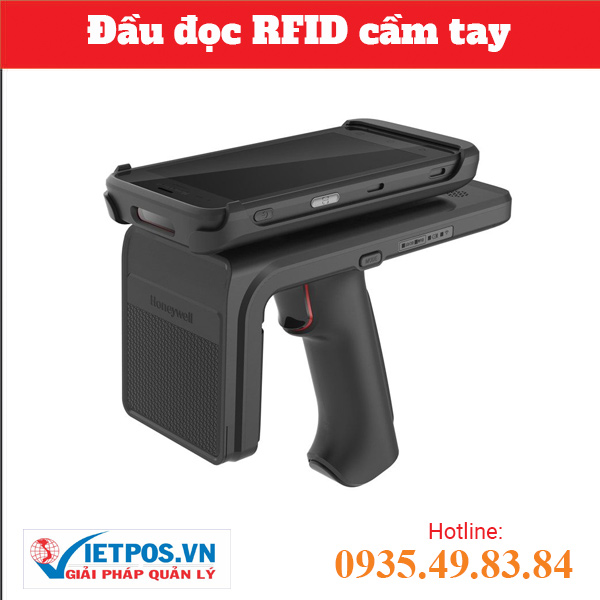
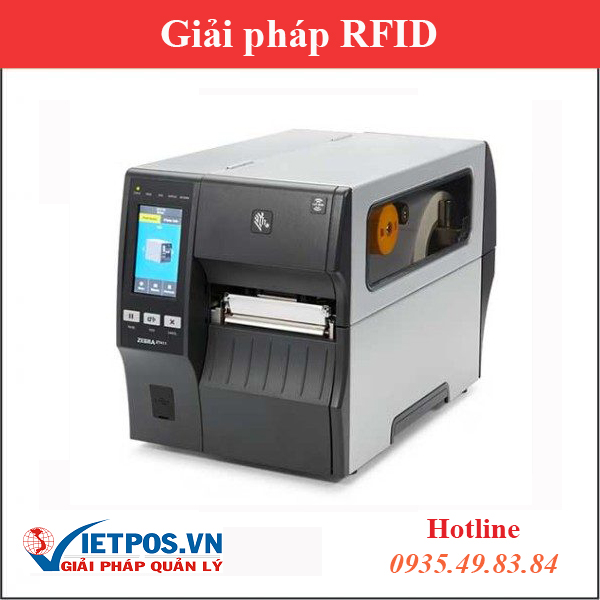

The RFID inventory process comprises 5 steps: tag application, data synchronization, physical count, variance reconciliation, and reporting. Each step takes 10-60 minutes depending on warehouse scale, instead of 1-2 days with manual methods.
Bạn đang tìm sản phẩm cho chủ đề này?
Việt POS phân phối chính hãng — bảo hành 24-36 tháng, hỗ trợ kỹ thuật 24/7.

Step 1: Attach RFID Tags to Goods
Each pallet, carton, or item receives an RFID UHF tag with a unique EPC (Electronic Product Code). For a warehouse with 1,000-3,000 pallets, initial tagging takes approximately 2-4 hours. New batches receive tags immediately upon warehouse intake.
Step 2: Synchronize RFID Tags with Management System
Use handheld or fixed RFID readers to record product information (SKU, quantity, location) on tags and synchronize to WMS/POS. This step takes 15-30 minutes for 1,000 tags.
Step 3: Perform Physical Inventory Count with Handheld Device
Warehouse staff carry RFID handheld devices through warehouse aisles. In a 500-2,000 m² warehouse, the device automatically reads all tags within 5-15 meters range. Total warehouse inventory time: 15-45 minutes (compared to 1-3 days previously).
Step 4: Data Reconciliation
Software automatically compares actual count versus system inventory data. Any discrepancies are isolated by area, enabling quick verification within 5-10 minutes.
Step 5: Generate Reports and Adjust Inventory
The system generates inventory reports in graph format with item-level and location details. Data automatically synchronizes to POS or WMS, updating inventory in real time.
RFID Handheld Devices Suitable for Warehouse Inventory
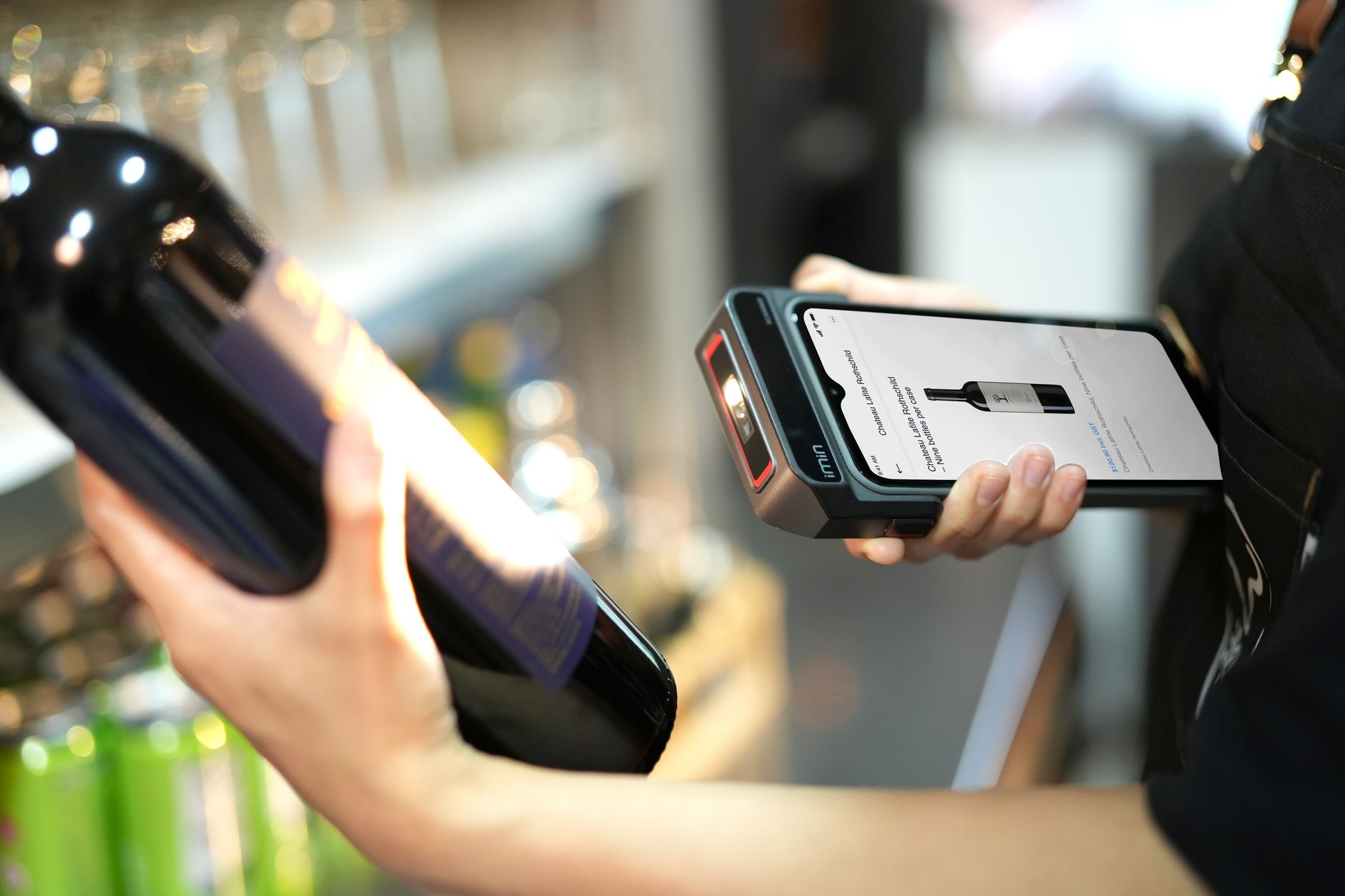
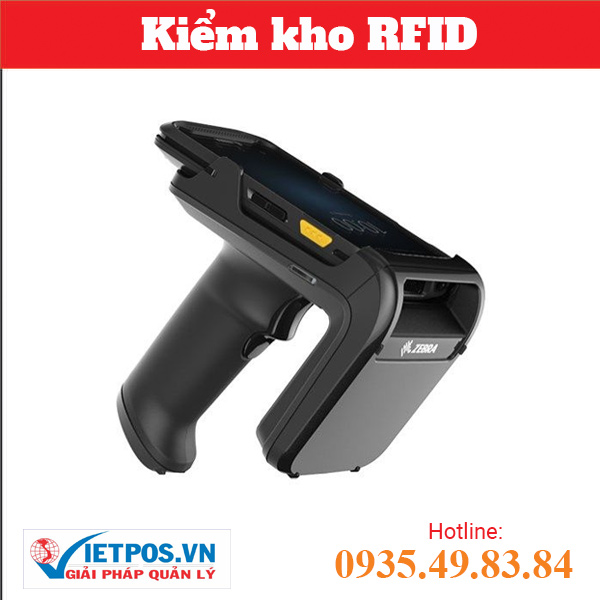
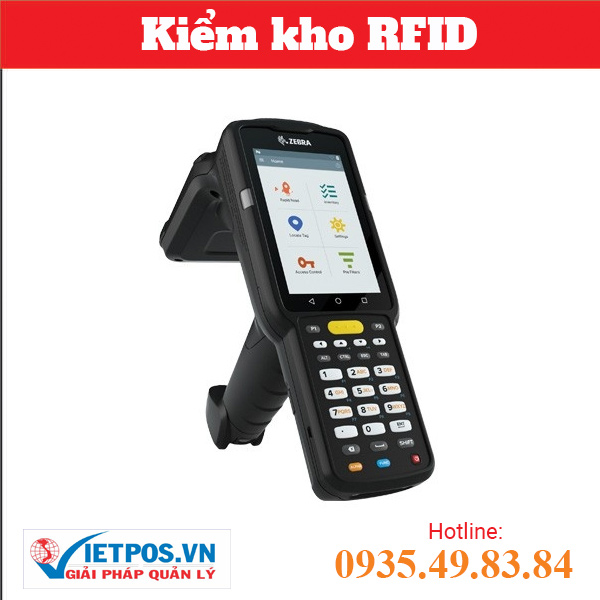
Selecting RFID handheld devices requires consideration of read range, battery capacity, operating system, and POS integration capability. The three most common categories today are dedicated RFID PDAs, Bluetooth sled-style readers, and industrial tablets with integrated RFID.
Dedicated RFID PDA (Chainway C66, C71)
Product line with integrated UHF readers, running Android 11/13, 10-30 meter read range, 5,000-8,700 mAh battery. Suitable for 1,000-10,000 m² warehouses. Chainway C66 UHF RFID Handheld Reader reads 500 tags per second with continuous operation for 8-12 hours.
Bluetooth RFID Sled-Style Reader (Chainway R2, R5)
Clips onto existing smartphone or tablet, converting consumer devices into RFID readers. 3-10 meter read range, 30-50% lower cost than dedicated PDAs. Suitable for warehouses under 500 m² or retail locations.
Industrial Tablet with Integrated RFID (Chainway P80, P100)
8-10 inch display, runs Android, integrated UHF reader and camera. Suitable for warehouses that need concurrent inventory counting and data entry/imaging. Chainway P80 Android 13 RFID Tablet features 8,700 mAh battery with 6-8 hour continuous operation.
RFID Handheld Device Comparison Table for Warehouse Inventory
| Device | Maximum Read Range | Read Speed | Battery | Reference Price (VNĐ) |
|---|---|---|---|---|
| Chainway C66 | 30 meters | 500 tags/second | 5,000 mAh | 18-25 million |
| Chainway C71 | 25 meters | 400 tags/second | 8,700 mAh | 22-30 million |
| Chainway R2 (sled) | 10 meters | 200 tags/second | 3,000 mAh | 8-12 million |
| Chainway P80 (tablet) | 20 meters | 400 tags/second | 8,700 mAh | 25-35 million |
Common Mistakes in RFID Warehouse Inventory Deployment
- Selecting Wrong RFID Tag Type: HF tags (13.56 MHz) read only one tag at a time, unsuitable for batch inventory counting. UHF tags (860-960 MHz) are required for extended read range and high speed.
- Overlooking Radio Frequency Interference Survey: Warehouses with abundant metal, liquids, or thick concrete walls reduce read range by 30-50%. Site survey before antenna placement selection is critical.
- Neglecting POS/WMS Integration: RFID inventory only becomes effective when data automatically synchronizes to management systems. Without integration, staff must enter data manually, losing time and introducing errors.
- Insufficient Staff Training: RFID handheld devices feature Android interfaces, but without proper guidance on handling, scan angles, and error resolution, efficiency drops 20-30%.
Benefits of RFID Warehouse Inventory

RFID inventory saves businesses 80-90% of time, increases accuracy to 99.5%+, reduces hidden inventory and shrinkage. Initial capital investment is typically recovered within 6-12 months through labor reduction and error elimination.
- Inventory time: from 3-5 days down to 15-45 minutes for 1,000-5,000 m² warehouses
- Accuracy: from 85-95% (manual) to 99.5-99.9%
- Reduce inventory counting staff: from 3-5 people down to 1 person
- Hidden inventory: detect and resolve within 1-2 days instead of 1-2 months
- POS/WMS synchronization: real-time inventory updates with no manual data entry
Frequently Asked Questions
Does RFID warehouse inventory require complete process overhaul?
What is the investment cost for an RFID inventory system?
Which RFID handheld device is suitable for cold storage?
How to integrate RFID inventory data into current POS software?
Can RFID tags be reused?
Ready to implement RFID warehouse inventory for your business? Việt POS provides complete solutions from site survey, consultation, device installation (Chainway, Zebra, Honeywell), POS/WMS integration to training and warranty. Contact hotline 0935 498 384 or email info@vietpos.vn for detailed pricing within 24 hours.
Cần tư vấn thiết bị/giải pháp cụ thể?
Việt POS phản hồi trong 30 phút · Hotline 4 vùng · Khảo sát miễn phí.
Bài viết cùng chủ đề