Mục lục bài viết (7)
- What is a hospital information kiosk?
- Benefits of deploying medical kiosks at clinics
- 4 core features of a hospital information kiosk
- Criteria for selecting a hospital information kiosk for clinics in 2026
- Case study: Lá Me General Clinic — 60% reduction in reception workload
- Comparison of hospital information kiosk vs. manual solution
- Frequently asked questions about hospital information kiosks
A hospital information kiosk is a self-service device integrating a touchscreen, queue number dispensing module (queue management), and data connection ports to the clinic management system (HIS/POS). In Vietnam in 2026, private healthcare facilities are transitioning from manual reception models to kiosk stations to handle 40-60% of registration and lookup transactions without requiring staff.
What is a hospital information kiosk?
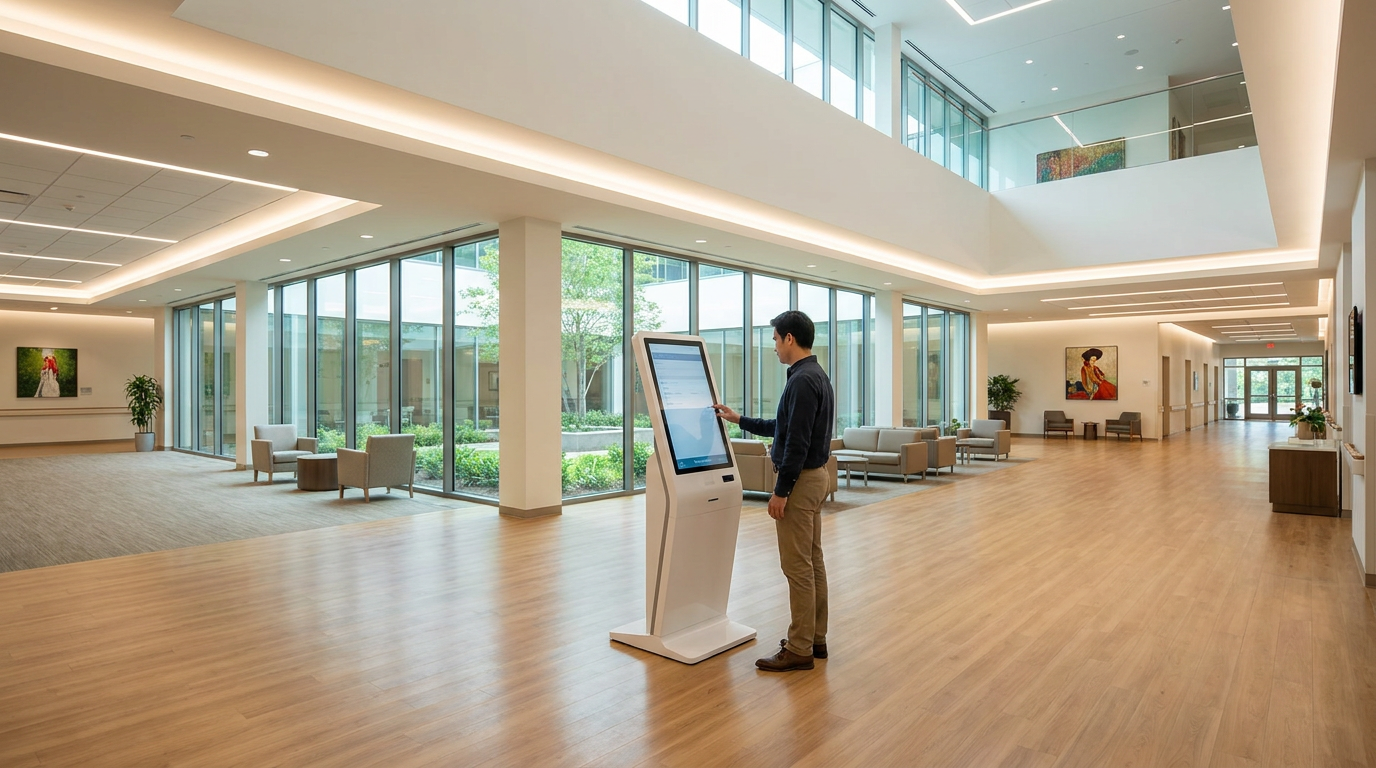
A hospital information kiosk is a self-service station in the form of a standing or desktop cabinet, integrating a 21-32 inch touchscreen, chip-based ID card/health insurance QR code reader, queue number ticket printer, and wireless connectivity. This device allows patients to self-register for appointments, look up medical history, take a queue number, and pay hospital fees without going through the reception counter.
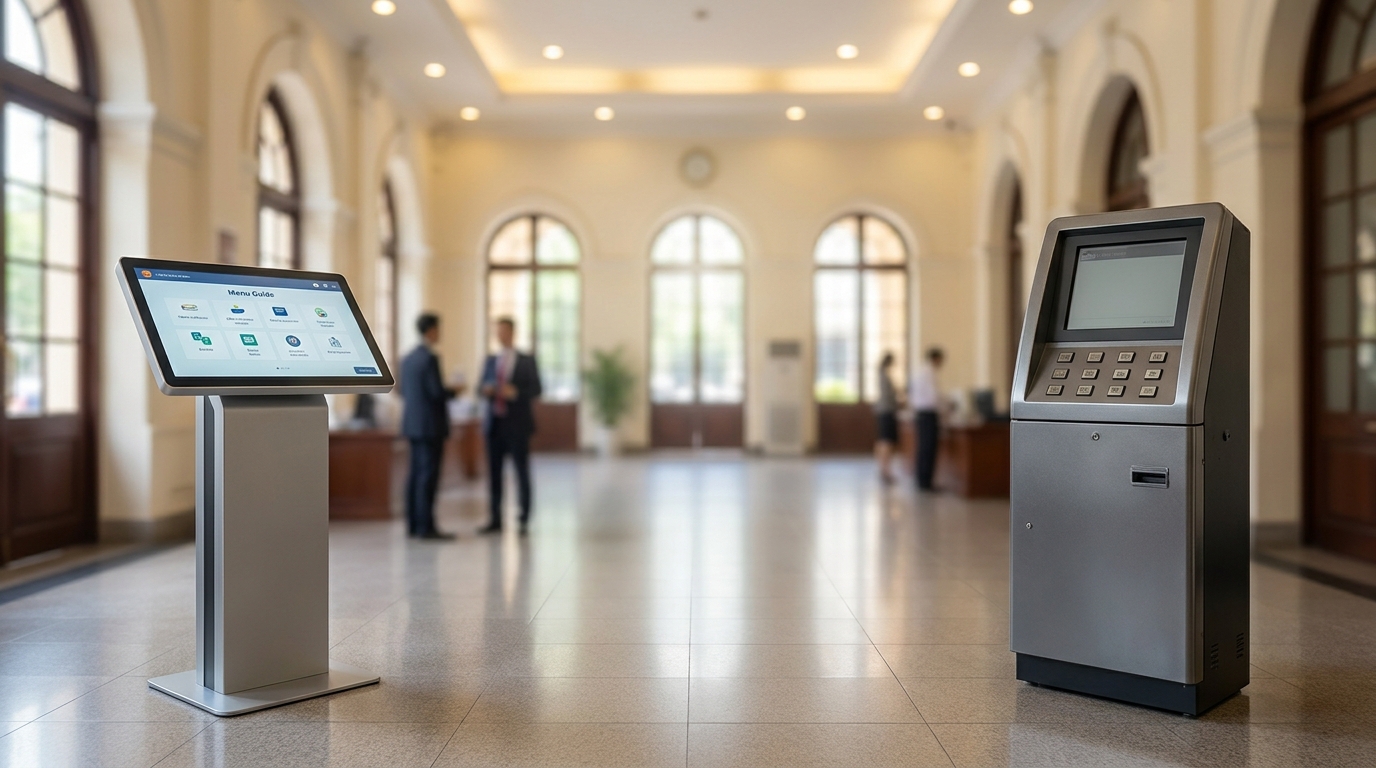
Unlike standard advertising kiosks, medical kiosks must meet personal information security standards (Decree 13/2023) and be compatible with hospital management software (HIS) or the PDA Healthcare Chainway being deployed at Vietnamese clinics. This device acts as the first information intake point, helping reduce waiting times by 50-70% compared to manual processes.
Benefits of deploying medical kiosks at clinics
Hospital information kiosks deliver 4 main benefits: reducing reception workload by 30-50%, increasing patient information accuracy to 99%, shortening average waiting time from 15-25 minutes to 3-5 minutes, and optimizing operational staffing costs.
Bạn đang tìm sản phẩm cho chủ đề này?
Việt POS phân phối chính hãng — bảo hành 24-36 tháng, hỗ trợ kỹ thuật 24/7.
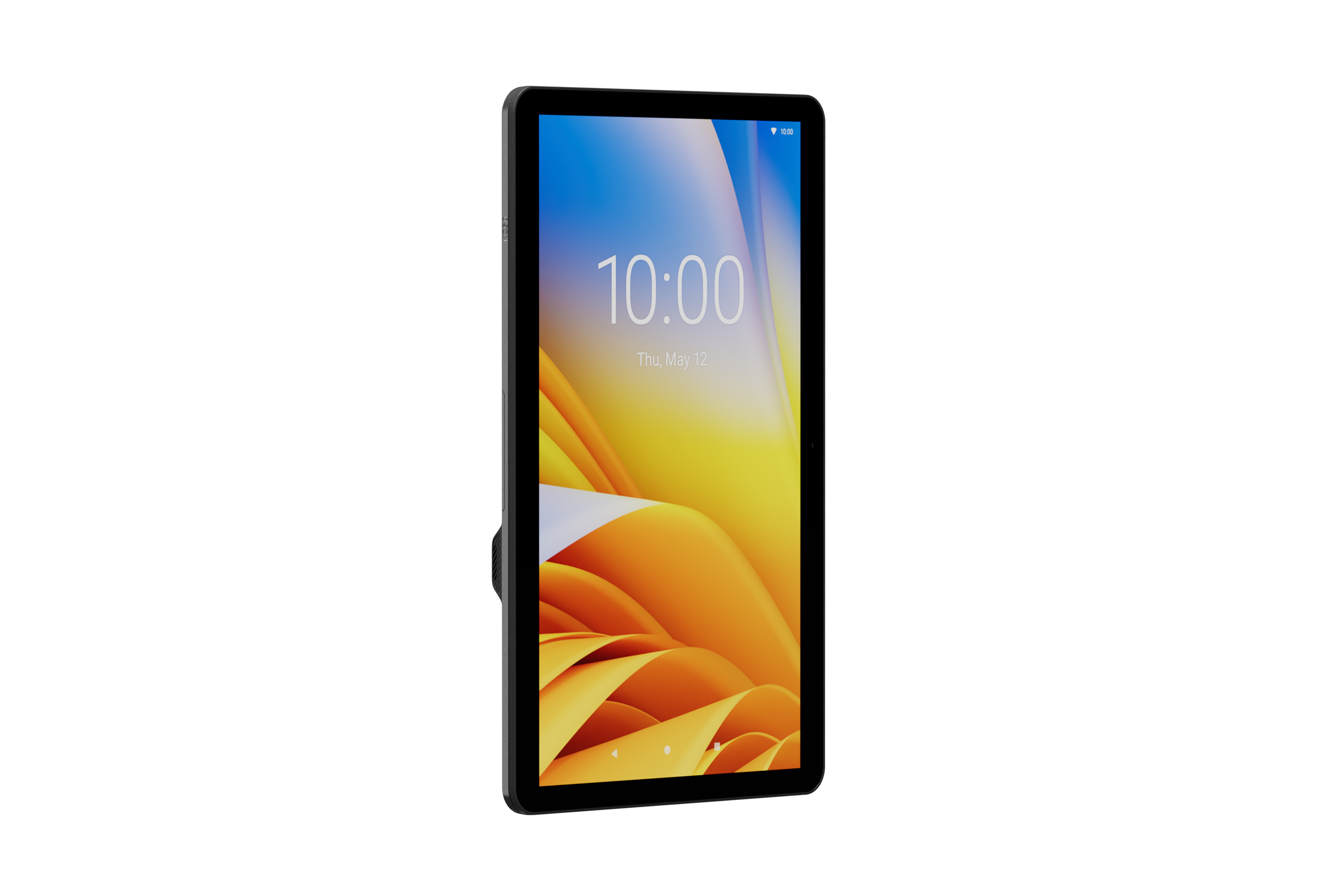
Zebra KC50 Kiosk Computer — Self-Service Kiosk with 15" or 22" Display
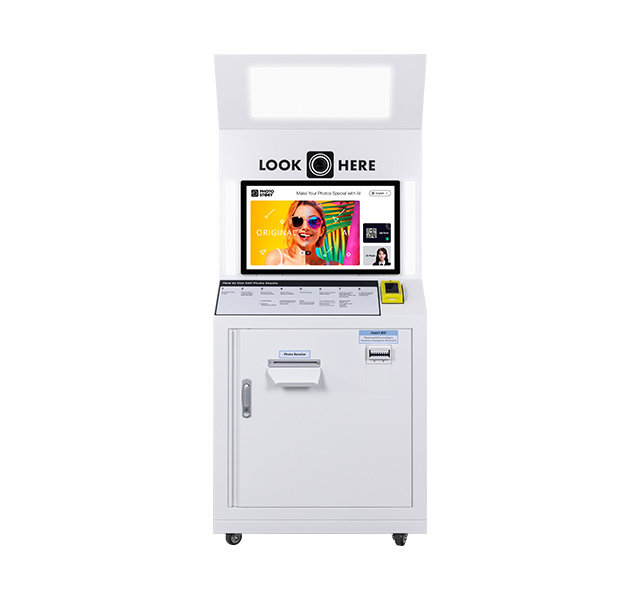
Photo Kiosk Hanasis — AI-Integrated Photo Kiosk
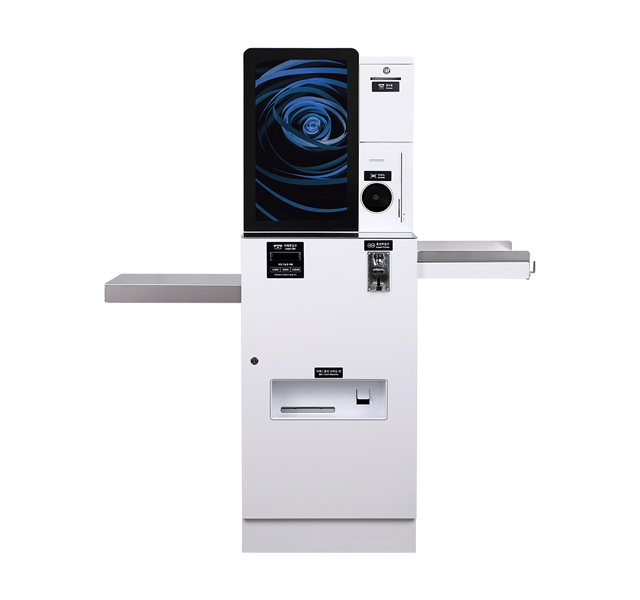
Hanasis Kiosk Machines - POS Kiosk & Vending Machine Devices
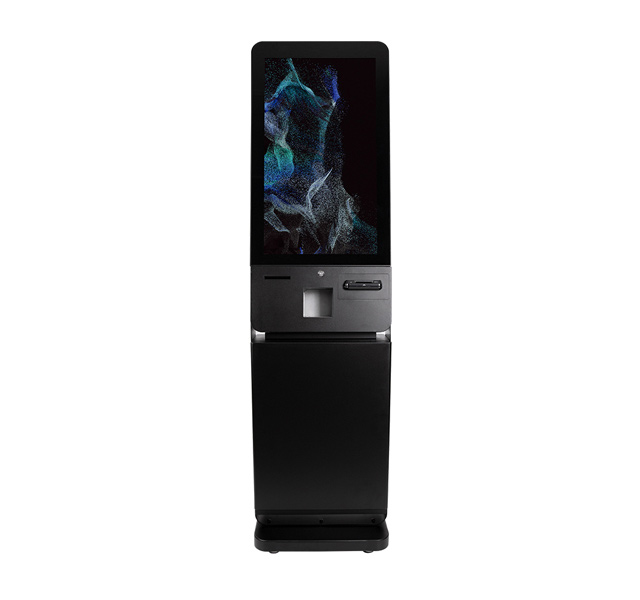
HANASIS K-320PC Kiosk — Modern Interactive Kiosk Design
Reducing reception pressure
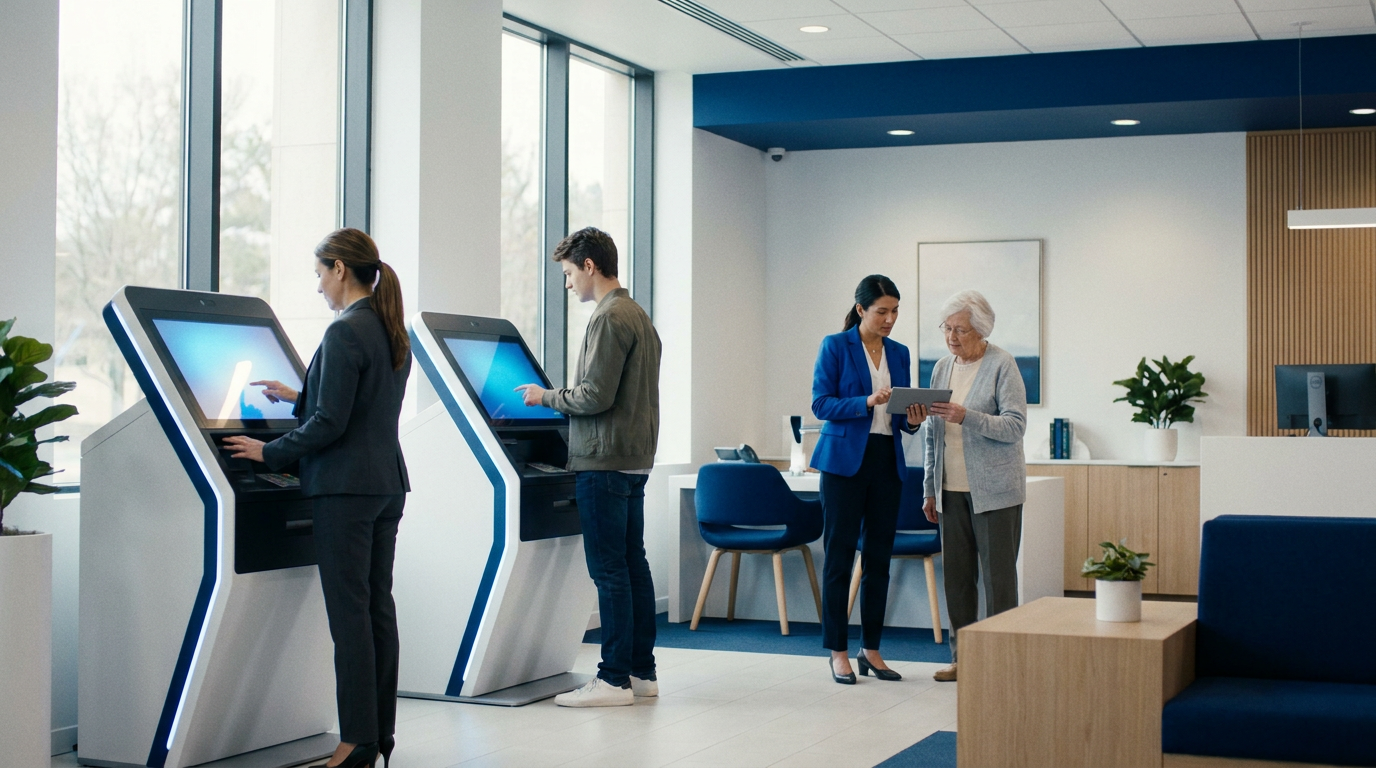
A clinic with 300-500 patient visits per day requires receptionists to simultaneously handle registration, consultation, and payment. The kiosk handles 40-60% of initial registration transactions, allowing staff to focus on more complex tasks such as consulting on examination packages or processing insurance payments.
Increasing patient data accuracy
Manual data entry has an error rate of 3-5% (incorrect name, date of birth, health insurance code). The kiosk integrates a chip-based ID card reader and health insurance QR code reader to automatically fill in information, reducing errors to below 0.5%. This is especially important when synchronizing data to the hospital management system and the health insurance assessment portal.
Shortening waiting times
According to a survey of 5 private clinics in Ho Chi Minh City (2025), average waiting time decreased from 22 minutes to 6 minutes after deploying hospital information kiosks. Patients can self-take a queue number, look up their examination room, and receive an appointment slip within 2-3 minutes.
4 core features of a hospital information kiosk
Specialized medical kiosks integrate 4 main features: queue number dispensing (queue management), patient record lookup via chip-based ID card/health insurance, appointment slip printing, and hospital fee payment. Some high-end models additionally support epidemiological declaration kiosks and test result lookup.
| Feature | Description | Benefit |
|---|---|---|
| Queue number dispensing | Integrated QMS module, prints queue number tickets via thermal printer | Reduces lobby congestion, routes patients by specialty |
| Chip-based ID card/QR code lookup | Integrated 2D barcode reader, scans chip-based ID cards or health insurance QR codes | Auto-fills personal information, reduces data entry errors |
| POS payment | Integrated card/QR reader, connects to POS machine and management software | Patients self-pay hospital fees without needing a counter |
| Appointment slip printing | 80mm thermal printer prints follow-up appointment slips with QR code for result lookup | Reduces manual paperwork, increases on-time follow-up appointment rate |
Criteria for selecting a hospital information kiosk for clinics in 2026
When selecting a medical kiosk, clinics need to evaluate 4 criteria: screen size (21-32 inches), operating system (Android 11+ or Windows 10 IoT), connectivity ports (LAN, 4G, Bluetooth), and compatibility with the existing HIS/POS software.
Size and design
Clinics with a lobby area under 50m² should choose a standing cabinet kiosk with a 21.5-inch screen (space-saving). For large-scale hospitals (500+ patient visits/day), a 32-inch multi-touch screen kiosk allows simultaneous display of instructions and the registration interface.
Operating system and software compatibility
Kiosks running Android 11-14 account for approximately 70% of the market in 2026 due to low cost and ease of integration. Windows 10 IoT is suitable for legacy HIS systems requiring high security. PDA Healthcare solutions from Chainway can function as mobile kiosks, offering flexibility for multi-location clinics.
Expandability
The kiosk should support at least 2 USB ports (for ID card reader, printer), 1 LAN port, and 1 backup 4G SIM slot. Some high-end models include an RFID module for patient identification via magnetic cards.
Case study: Lá Me General Clinic — 60% reduction in reception workload
Lá Me General Clinic (scale: 400-500 patient visits/day) deployed 3 hospital information kiosks in June 2025. Results after 6 months: average waiting time decreased from 25 minutes to 7 minutes, reception staff reduced from 4 to 2 people per shift, patient satisfaction rate increased from 72% to 91%.
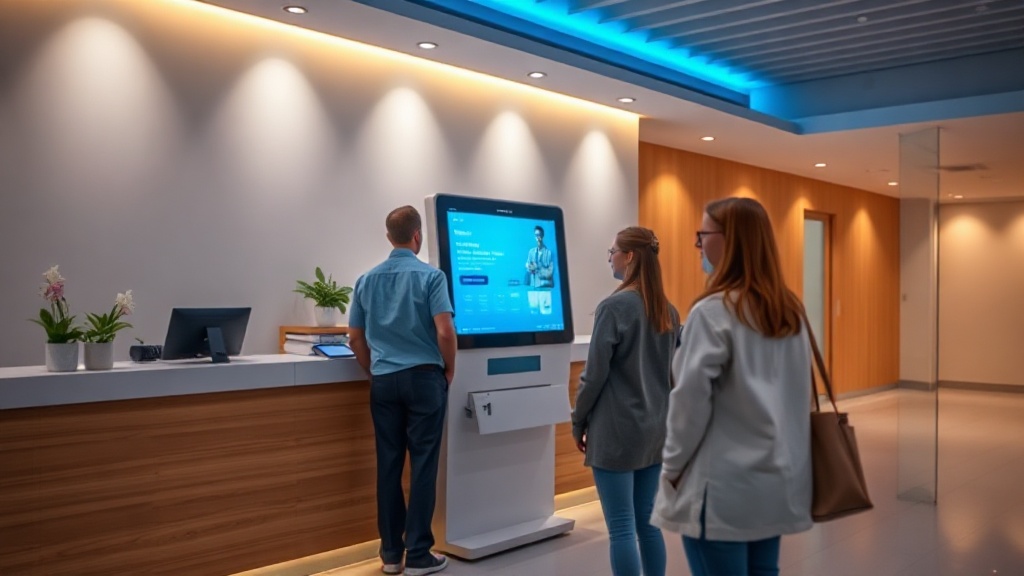
Deployment solution: 2 kiosks placed in the ground floor lobby (21-inch screen, integrated chip-based ID card reader + queue number ticket printer), 1 kiosk placed in the payment area (integrated POS machine and receipt printer). All data synchronized in real-time via API with the existing HIS software. Initial investment cost for 3 kiosks and integration was 120-150 million VND, with payback in 10 months due to staff savings.
Comparison of hospital information kiosk vs. manual solution
Compared to the manual reception process, the hospital information kiosk excels in processing speed (3 minutes vs 15 minutes), accuracy (99.5% vs 95%), and long-term operational cost (saving 30-50% on reception staff after 12 months).
| Criteria | Manual Reception | Information Kiosk |
|---|---|---|
| Registration processing time | 10-15 minutes | 2-3 minutes |
| Data entry error rate | 3-5% | <0.5% |
| Monthly staffing cost (3 shifts) | 30-45 million VND | 15-20 million VND (maintenance + 1 supervisor) |
| Expandability | Difficult — must hire more staff | Easy — install additional kiosks |
| Operating hours | 8-10 hours/day | 24/7 (no breaks required) |
Frequently asked questions about hospital information kiosks
Below are 5 common questions from clinic owners researching medical kiosks in 2026.
Can a hospital information kiosk integrate with POS software?
Yes. Modern kiosks support open APIs and can connect to most hospital management software (HIS) and payment POS systems. Việt POS provides kiosk integration solutions with sales management systems, enabling real-time synchronization of hospital fee data, drug inventory, and medical history.
What is the investment cost for one medical kiosk?
The price of a hospital information kiosk ranges from 40-80 million VND per device (depending on screen configuration, chip-based ID card reader module, printer). Software integration and staff training costs are approximately 15-30 million VND. Total investment for a medium-sized clinic (2-3 kiosks) is around 100-200 million VND, with a payback period of 8-12 months.
Does the kiosk support health insurance and chip-based ID card lookup?
Yes. The kiosk integrates a 2D barcode reader (compatible with Zebra, Honeywell, Datalogic) to scan health insurance QR codes and an NFC reader to read chip-based ID cards. Patient information is automatically filled into the registration form, reducing manual data entry steps.
How is patient information secured on the kiosk?
The kiosk complies with Decree 13/2023 on personal data protection. Data is end-to-end encrypted, not stored locally on the kiosk, and sessions are automatically deleted after 5 minutes of inactivity. The management system has access control and detailed audit logs.
Should a small clinic (under 100 visits/day) invest in a kiosk?
Consider a desktop kiosk priced at 25-40 million VND, or a mobile PDA Healthcare solution for reception staff. For small-scale operations, a kiosk helps standardize the registration process and create a professional experience, but the payback period may extend to 14-18 months.
Consult on hospital information kiosk solutions for your clinic — call now 0935 498 384 or email info@vietpos.vn. Việt POS supports survey, design, and turnkey integration.
Cần tư vấn thiết bị/giải pháp cụ thể?
Việt POS phản hồi trong 30 phút · Hotline 4 vùng · Khảo sát miễn phí.
Bài viết cùng chủ đề