Mục lục bài viết (9)
- What is RFID-integrated library management software and how does it differ from regular software?
- Library RFID system architecture: 3 operational tiers
- How does RFID differ from traditional barcodes?
- 7 criteria for selecting RFID-integrated library management software
- Library RFID system deployment costs in Vietnam 2026
- 5-step deployment process from digitization to operation
- Case study: a university library with 32,000 volumes cuts inventory from 6 days to 7 hours
- Common mistakes when deploying library RFID
- Frequently asked questions

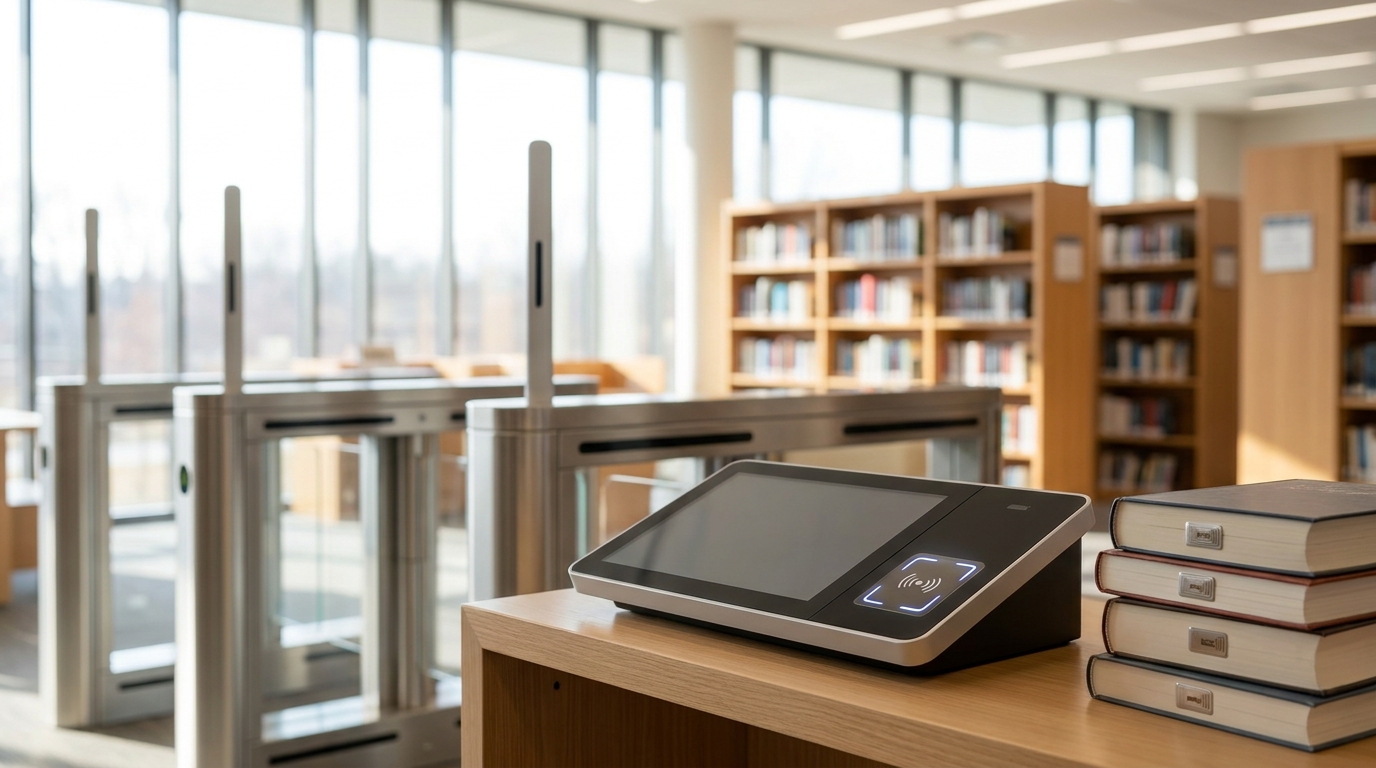
RFID-integrated library management software is a system that integrates radio frequency identification technology (RFID HF 13.56MHz per ISO 15693/28560) into a library management platform — MARC21 cataloging, circulation check-in/check-out, batch inventory, security gates, and OPAC discovery. In Vietnam, this solution is being deployed at university libraries, provincial libraries, and corporate resource centers with the goal of shortening inventory time and reducing the material loss rate to under 0.5%/year.
RFID-integrated library management software is a system that integrates HF 13.56MHz RFID tags (ISO 15693/28560) with a library management platform: MARC21 cataloging, circulation check-in/check-out via SIP2, batch inventory, security gates that prevent book loss, and OPAC discovery. For a library with 10,000-20,000 volumes, inventory drops from 5-7 days to 4-8 hours, and the loss rate falls from 2-4%/year to under 0.5%. Reference deployment cost: 80-450 million VND depending on scale.
Table of contents
- What is RFID-integrated library management software and how does it differ from regular software?
- Library RFID system architecture: 3 operational tiers
- How does RFID differ from traditional barcodes?
- 7 criteria for selecting RFID-integrated library management software
- Library RFID system deployment costs in Vietnam 2026
- 5-step deployment process from digitization to operation
- Case study: a university library with 32,000 volumes cuts inventory from 6 days to 7 hours
- Common mistakes when deploying library RFID
- Frequently asked questions
What is RFID-integrated library management software and how does it differ from regular software?
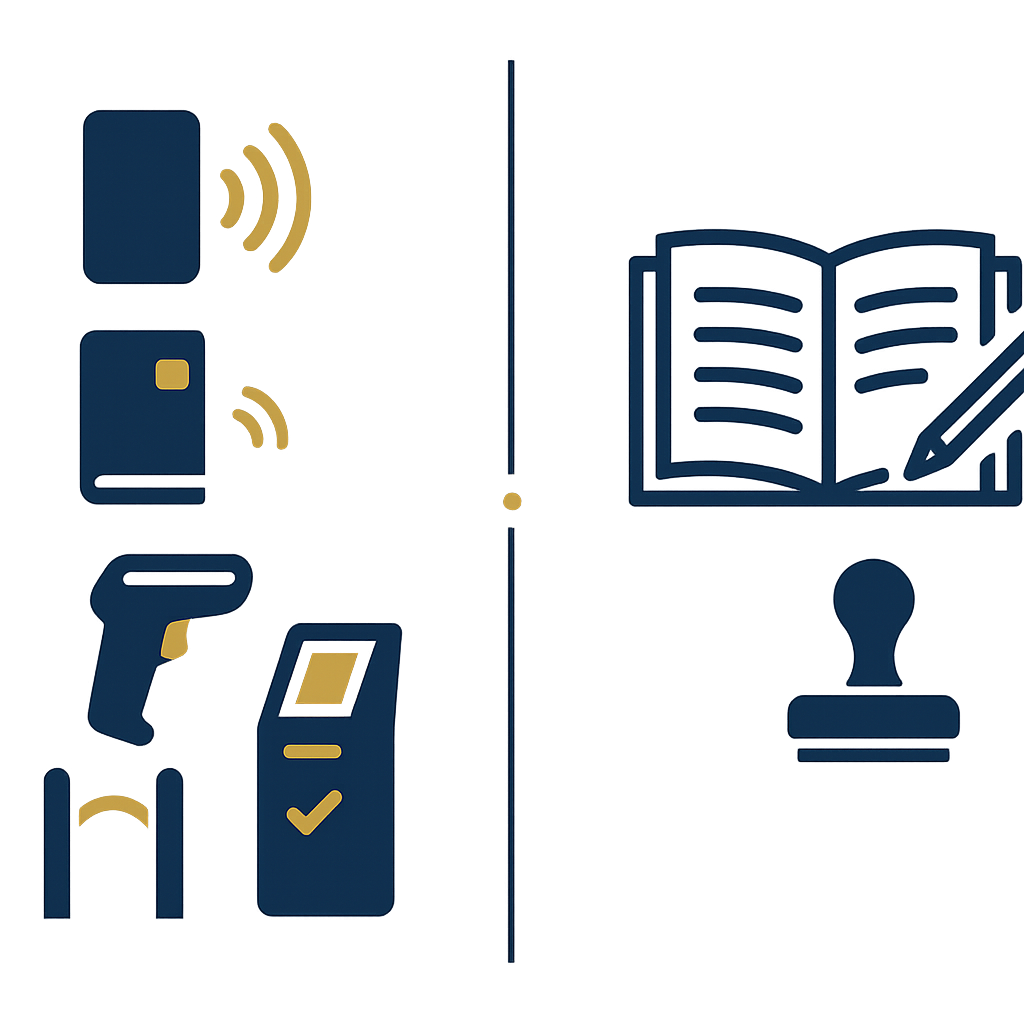
RFID-integrated library management software is a library management system that integrates an RFID hardware layer: spine-mounted tags, handheld readers, security gates, and self-service kiosks. It differs from ordinary book management software in that data is synchronized bidirectionally between the software and devices via the SIP2 protocol, enabling check-in/check-out without a librarian and inventory of hundreds of volumes in minutes.
An ordinary book management software only meets the needs of recording check-in/check-out and basic discovery. When the collection size exceeds 5,000 volumes, three problems emerge:
- Manual inventory: reading each barcode takes 5-7 person-days for 10,000 volumes, is error-prone, and misses materials placed on the wrong shelf.
- Material loss: without a security gate, books are taken out without check-out — a rate of 2-4%/year in libraries without controls.
- Check-in/check-out counter overload: during peak hours, 30-50 students queue up, and one librarian processing 8-12 transactions/minute is the limit.
The RFID-integrated system solves all three by automating touchpoints. See also Smart People Counting Camera - Surveillance Solution 2024 to learn more about measuring traffic in public spaces.
Library RFID system architecture: 3 operational tiers
Related products



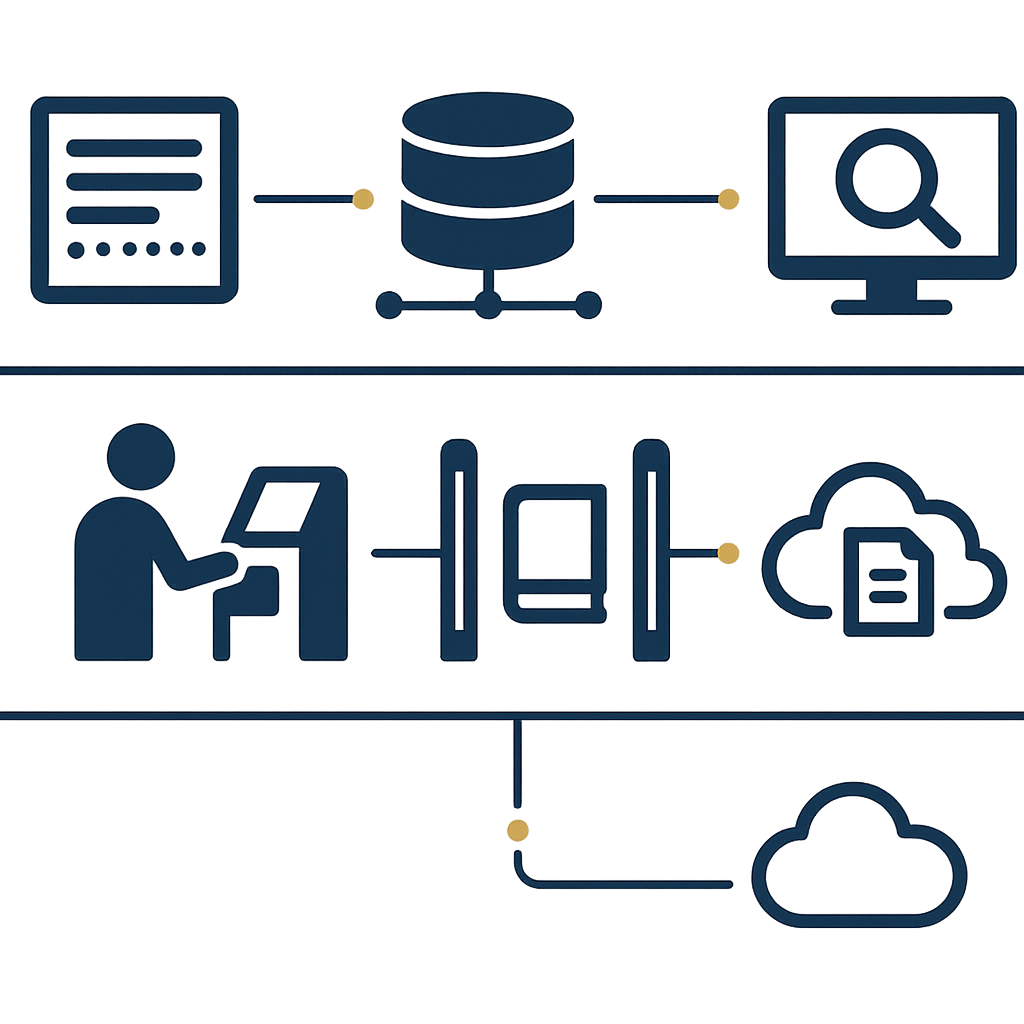
A standard library RFID system is organized into 3 tiers: the acquisition & cataloging tier (MARC21, Z39.50, accession number generation, spine label printing), the circulation tier (check-in/check-out/renewal, SIP2 self-service, security gates), and the discovery tier (full-text OPAC, digital documents, LGSP/SSO interconnection). Each tier can be enabled or disabled based on the unit's scale, but for RFID to work, tiers 1 and 2 must be present.
Tier 1 — Acquisition & Cataloging
This is the data foundation. MARC21 records follow AACR2 rules, support ISO 2709 import, and retrieve records via Z39.50 (just an ISBN is enough to pull metadata from major libraries). Accession numbers (ĐKCB) are generated for each copy, and spine labels with RFID tags are printed in batches. The key point: one MARC21 record is shared for both print and digital copies — no data duplication, no discrepancies during inventory.
Tier 2 — Circulation & Self-Service
Loan policies follow the matrix Who — Borrows What — Where (patron group × material type × collection). Self-service stations connect via SIP2: login, patron status, checkout, checkin, item info, fee paid. Book-drops operate 24/7 outside business hours. RFID security gates are placed at exits, automatically detecting un-checked-out tags.
Tier 3 — Discovery & Integration
Web + mobile OPAC, accent-insensitive and full-text search, merging print + digital results in a single interface. Digital documents apply DRM policies by IP/concurrent copies/% of content. Interconnection via the LGSP axis, SSO SAML/OAuth single sign-on, XML/XSD data exchange per Circular 13/2017.
How does RFID differ from traditional barcodes?
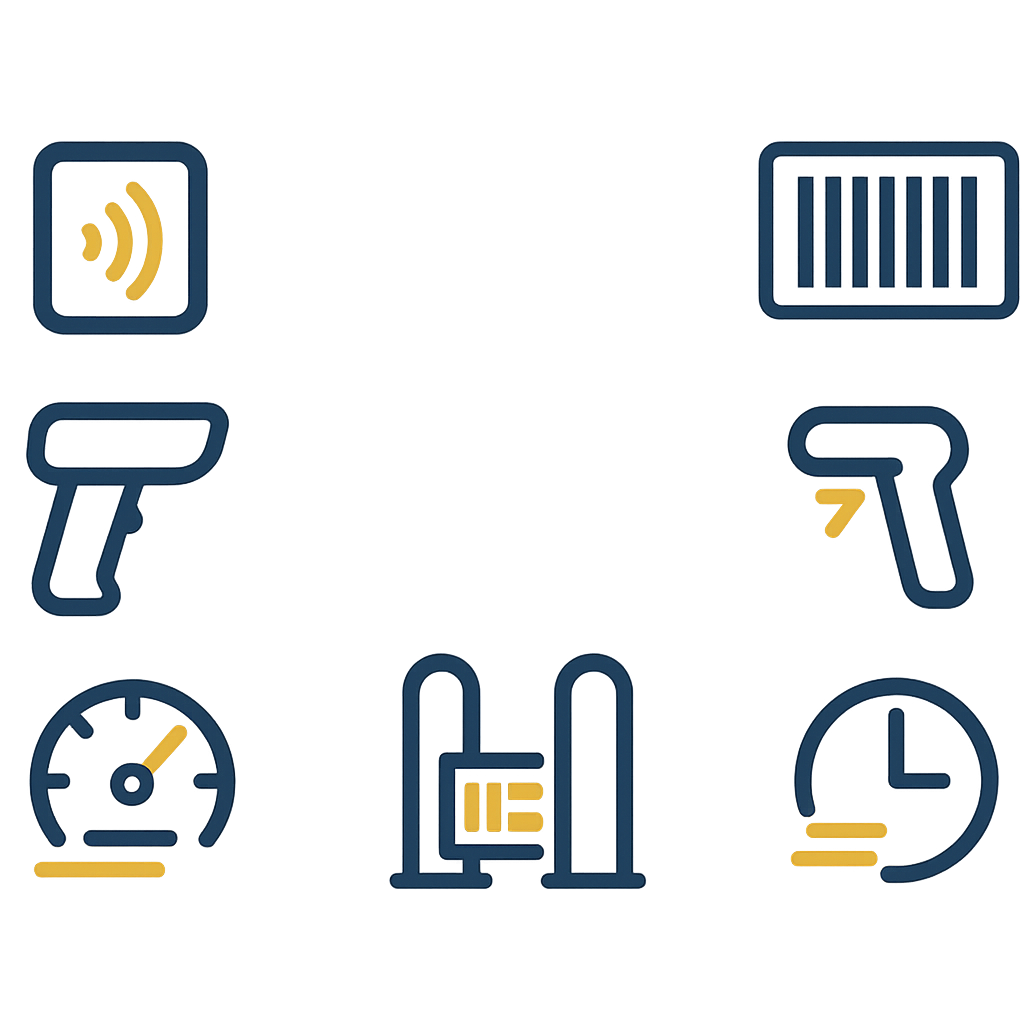
RFID reads without contact and reads multiple tags at once — a handheld reader scans 30-60 tags/second within a 30-60cm radius, while a barcode scanner must read each label one at a time. This is why RFID inventory is 20-50 times faster than barcodes, and RFID security gates do not require staff standing by to check.
| Criterion | Traditional barcode | RFID HF 13.56MHz |
|---|---|---|
| Reading method | Contact, one label at a time | Contactless, multiple tags |
| Inventory speed for 10,000 volumes | 5-7 person-days | 4-8 hours |
| Security gate | Requires staff on duty | Automatic, instant alert |
| Self-service check-in/check-out | Limited, must scan each book | Stack 5-10 books, read once |
| Tag/equipment cost | Low (500-2,000 VND/label) | Higher (8,000-25,000 VND/tag) |
| Tag lifespan | 2-4 years (easily scratched) | 8-12 years (embedded in spine) |
7 criteria for selecting RFID-integrated library management software
The most important criteria are operational standards (MARC21, AACR2, ISO 2709, Z39.50), the ability to integrate SIP2 with self-service devices, multi-library/multi-tenant support, and readiness for LGSP/SSO interconnection. The remaining four criteria are: digital document DRM, level-2 information security, module scalability, and technical support in Vietnam.
- International operational standards: MARC21 cataloging per AACR2, ISO 2709 import/export, Z39.50 record retrieval, DDC classification. Without these standards, data cannot be interconnected with other libraries.
- SIP2 integration: the mandatory protocol for self-service kiosks and 24/7 book-drops to operate. Check the list of supported SIP2 commands: login, patron status, checkout, checkin, item info, fee paid.
- Multi-tenant architecture: a single point of management for multiple branches, sharing common records while isolating each unit's patron data.
- LGSP / SSO interconnection: mandatory for provincial-level public libraries — requires an access token via the LGSP consumer/secret key, SSO SAML/OAuth single sign-on.
- Digital document DRM: reading policies by IP, concurrent copy count, % of content — preventing digital document leakage.
- Level-2 information security: documentation per Decree 85/2016 & Circular 12/2022, HTTPS encryption, IPv6 readiness.
- Technical support in Vietnam: SLA response under 4 hours, on-site technicians in major provinces, experience deploying RFID equipment for similar libraries.
For units considering expansion into digital experience spaces, see Virtual Reality Store for VR Pharmacy Counter Model — the same principle of combining identification hardware with centralized management software.
Library RFID system deployment costs in Vietnam 2026
The cost of deploying RFID-integrated library management software in Vietnam ranges from 80-450 million VND, depending on the collection size and number of self-service points. A school library with 5,000-10,000 volumes typically falls in the 80-180 million range; a university library with 20,000-50,000 volumes requires 250-450 million. Costs include software licenses, RFID tags, handheld readers, security gates, and self-service kiosks.
| Item | Reference unit price | Notes |
|---|---|---|
| Software license (server) | 30-120 million | Based on patron count and multi-tenant |
| RFID HF 13.56MHz tag | 8,000-25,000 VND/tag | ISO 15693/28560, embedded in spine |
| Handheld reader | 25-60 million/device | Reading radius 30-60cm |
| RFID security gate | 60-150 million/gate | 2-3 gates per exit |
| Self-service kiosk | 80-200 million/kiosk | Touchscreen + SIP2 |
| Card/spine label printing | 15-40 million | Dedicated card printer |
For units wanting to reference a kiosk-type self-service device model, see also Hospital Wayfinding Kiosk: Reducing Exam Wait Time by 40% — the same hardware architecture but a different software layer.
5-step deployment process from digitization to operation
The standard deployment process consists of 5 steps: survey and data cleansing (2-4 weeks), MARC21 cataloging of the entire collection (4-12 weeks depending on scale), RFID tag application and spine label printing (1-3 weeks), hardware configuration and SIP2 integration (1-2 weeks), training and parallel run (2-4 weeks). The typical total time is 3-6 months for a library with 20,000-50,000 volumes.
- Survey & data cleansing: check old records, remove duplicates, standardize per MARC21. This is the most easily overlooked step but has the greatest impact on later timelines.
- Catalog the entire collection: leverage Z39.50 to retrieve records from major libraries via ISBN, reducing manual entry time by 60-70%.
- Apply RFID tags and print spine labels: tags embedded in book spines, cross-checking accession numbers against records. Apply in batches of 500-1,000 volumes/day.
- Configure hardware & SIP2: install security gates at exits, connect self-service kiosks, test all SIP2 commands before going live.
- Training & parallel run: run the old and new systems in parallel for 2-4 weeks to catch errors, then fully switch over.
Case study: a university library with 32,000 volumes cuts inventory from 6 days to 7 hours
A university library in the Central region with 32,000 books and 8,000 patrons deployed an integrated RFID system in 4 months. Results: inventory dropped from 6 person-days of 4 librarians to 7 hours of 2 people; the loss rate fell from 2.8%/year to 0.4%; peak-hour check-in/check-out time dropped from 4-6 minutes to 40-70 seconds/transaction via self-service kiosks.
The key point in deployment: the library chose to apply tags in batches of 800 volumes/day and leveraged Z39.50 to retrieve existing records, reducing cataloging time from an estimated 10 weeks to 6 weeks. Security gates were installed with 2 lanes at the main exit and 1 lane at the secondary exit, connected via SIP2 to 2 self-service kiosks placed on floors 1 and 2.
For units operating multi-zone service spaces, the RFID Wristband All-in-One Ticket Combo: Multi-Zone Resort Management model shares many similar principles for managing subjects moving across multiple zones.
Common mistakes when deploying library RFID
The three most common mistakes: (1) skipping the data cleansing step before cataloging — leading to duplicate records and inventory discrepancies; (2) choosing RFID hardware before choosing software — leading to SIP2 incompatibility; (3) not testing the security gate with all types of materials (metal, bags with magnets) — causing false alarms in 5-15% of transactions.
- Not cleansing data first: duplicate old records will multiply on import, taking 2-4 weeks to fix afterward.
- Choosing hardware before software: many cheap readers do not support enough SIP2 commands and cannot integrate with self-service kiosks.
- Not testing the security gate: high false alarms alienate patrons, librarians turn off the gate — losing the anti-theft effect.
- Not training patrons: self-service kiosks go unused because students do not know how to operate them — self-service usage rate falls below 20%.
- Ignoring interconnection: not configuring LGSP/SSO from the start means redoing it when provincial interconnection is required.
See also Building Directories: Designing for a 10,000m² Building Where No One Gets Lost to learn more about designing wayfinding systems in large spaces — the same principle of reducing the load on operations staff.
Frequently asked questions
How much does RFID-integrated library management software cost?
Deployment costs in Vietnam in 2026 range from 80-450 million VND, depending on the collection size. A school library with 5,000-10,000 volumes costs about 80-180 million; a university library with 20,000-50,000 volumes requires 250-450 million. Costs include software licenses (30-120 million), RFID tags (8,000-25,000 VND/tag), handheld readers (25-60 million/device), security gates (60-150 million/gate), and self-service kiosks (80-200 million/kiosk).
Cần tư vấn thiết bị/giải pháp cụ thể?
Việt POS phản hồi trong 30 phút · Hotline 4 vùng · Khảo sát miễn phí.
Bài viết cùng chủ đề