Mục lục bài viết (10)
- How is UHF RFID different from other RFID frequency bands in retail?
- What are the differences in UHF RFID frequency regulations between Vietnam and Singapore?
- UHF RFID deployment costs for retail in Vietnam vs. Singapore
- Which UHF RFID devices are suitable for retail in Vietnam and Singapore?
- Integrating UHF RFID with omnichannel POS systems: Benefits and challenges
- ROI of UHF RFID deployment for retail chains: Real-world data
- UHF RFID solutions for the Vietnam-Singapore cross-border supply chain
- Case study: A Vietnamese fashion chain deploys UHF RFID for the Singapore market
- UHF RFID trends in ASEAN retail 2026: Opportunities for Vietnamese businesses
- Frequently Asked Questions
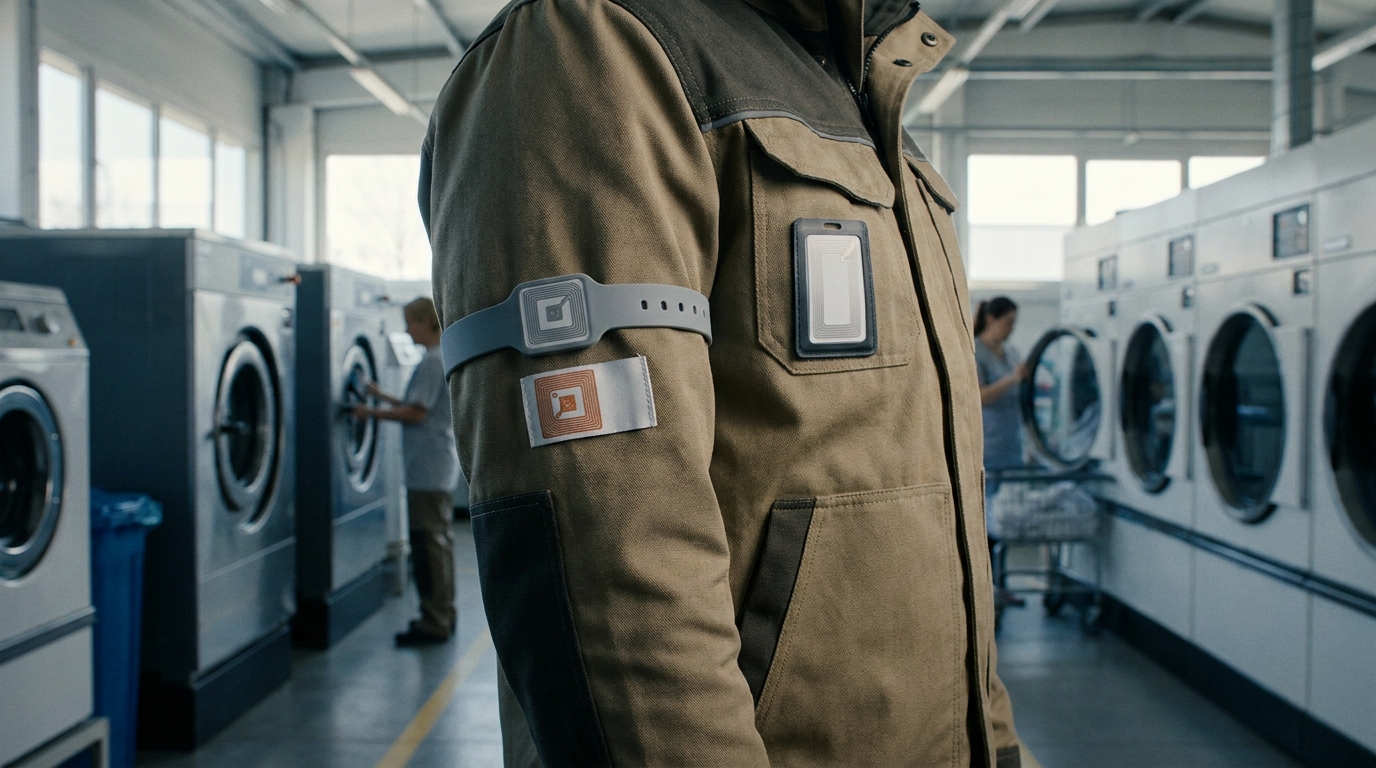
UHF RFID is a radio frequency identification technology operating in the 860-960 MHz band, enabling simultaneous reading of hundreds of tags within a 3-15 meter range. In the retail markets of Vietnam and Singapore, UHF RFID is being widely deployed for real-time inventory management, automated stocktaking, and integration with omnichannel POS systems, especially in the context of rapidly growing cross-border trade in ASEAN following the VSFTA.
How is UHF RFID different from other RFID frequency bands in retail?
UHF RFID (860-960 MHz) differs from LF (125-134 kHz) and HF (13.56 MHz) in its longer read range (3-15 meters), faster read speed (hundreds of tags per second), and bulk reading capability. In retail, UHF is suitable for warehouse inventory, shelf-level stock management, and access control, while HF is commonly used for contactless payments and single-item identification.
In a retail environment, UHF RFID excels due to its ability to read multiple tags simultaneously without requiring line-of-sight alignment. A single staff member can inventory an entire 500m² warehouse in 15-25 minutes, compared to 3-5 hours with traditional barcodes. In contrast, HF RFID (13.56 MHz) can only read one tag at a time at a distance of under 10 cm, making it suitable for payment applications or high-end product authentication. In Singapore, retail chains like Uniqlo and Decathlon have adopted UHF since 2018, while in Vietnam, deployment speed has been increasing by 35-40% annually since 2022.
What are the differences in UHF RFID frequency regulations between Vietnam and Singapore?
Vietnam permits the 920-925 MHz band for UHF RFID (under Circular 46/2016/TT-BTTTT), while Singapore uses the 866-869 MHz band (under IMDA). This difference directly impacts device and RFID chip selection for cross-border deployments. Most modern readers from Chainway, Zebra, and Honeywell support multi-region capabilities, allowing software configuration to switch between the two frequency bands.
Bạn đang tìm sản phẩm cho chủ đề này?
Việt POS phân phối chính hãng — bảo hành 24-36 tháng, hỗ trợ kỹ thuật 24/7.
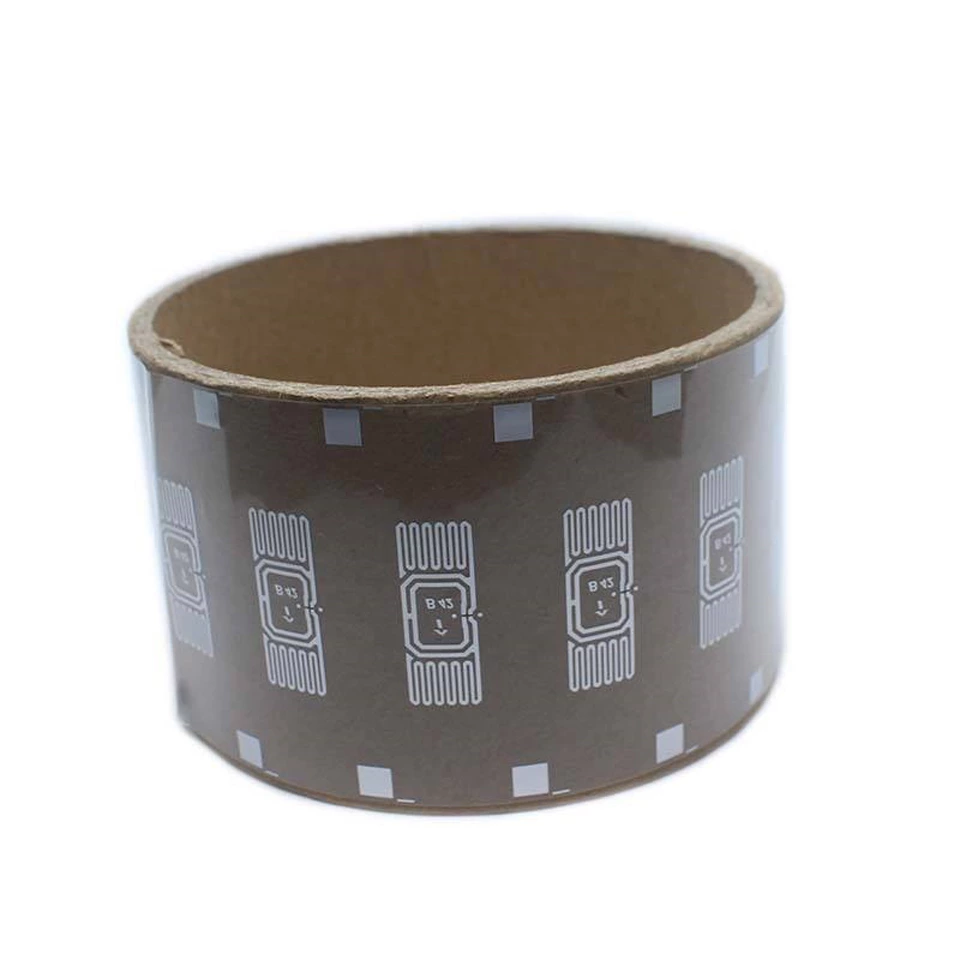
RFID Wet Inlay / Dry Inlay UHF Tags for Asset Management in Apparel, Metal, Medical, and Plastics
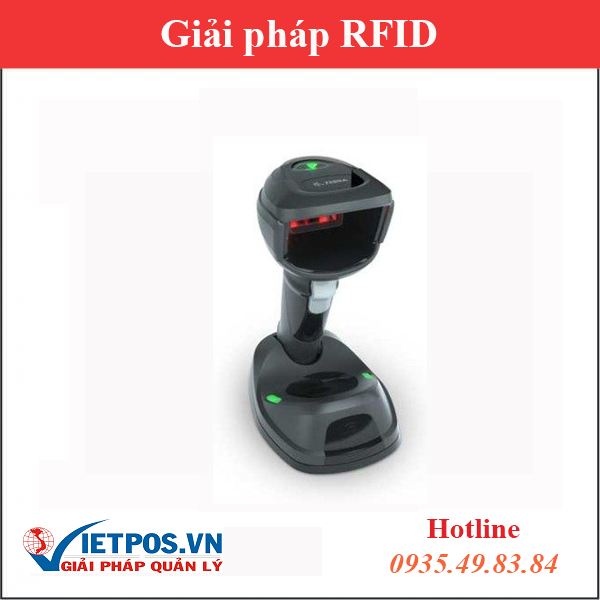
DS9900 handheld RFID reader for retail
SKU: DS9900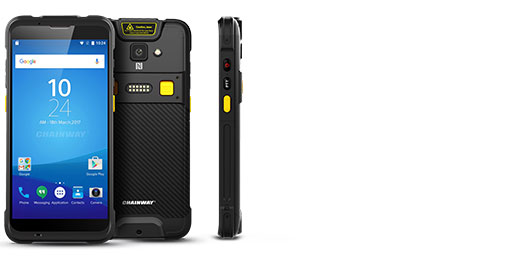
Chainway C5E UHF RFID Reader (Android 16) — Handheld RFID Reader
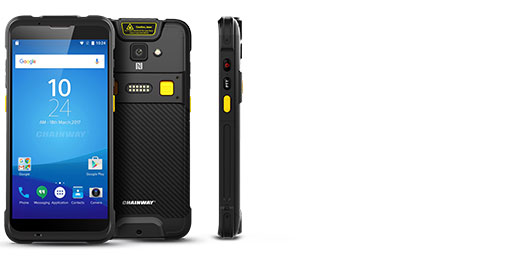
Chainway MC51S UHF RFID Reader (Android 16) — Handheld RFID Reader
The frequency difference not only affects devices but also read performance. The lower frequency band (866-869 MHz in Singapore) offers a 10-15% longer read range compared to the 920-925 MHz band, but is more susceptible to interference from metal and liquids. When deploying RFID solutions for the Vietnam-Singapore supply chain, businesses need to select RFID tags compatible with both bands. Popular chip series such as Impinj Monza R6-P and NXP UCODE 8 operate well across the entire 860-960 MHz range, minimizing compatibility risks. Việt POS offers multi-band UHF RFID readers suitable for both markets.
UHF RFID deployment costs for retail in Vietnam vs. Singapore
UHF RFID deployment costs in Vietnam are 30-40% lower than in Singapore, primarily due to lower installation labor and integration costs. Specifically, a basic UHF RFID system for a 200m² store (including 2 fixed readers, 5 handheld PDAs, and 10,000 tags) costs 180-250 million VND in Vietnam, compared to 12,000-18,000 SGD (230-340 million VND) in Singapore.
| Item | Vietnam (VND) | Singapore (SGD) | Difference |
|---|---|---|---|
| Fixed reader (2-port) | 25-40 million | 2,000-3,000 SGD | +30-40% |
| UHF RFID PDA (Chainway C66) | 18-25 million/unit | 1,500-2,000 SGD/unit | +25-35% |
| UHF RFID tag (bulk 10k+) | 1,500-2,500 VND/tag | 0.15-0.25 SGD/tag | +20-30% |
| POS integration software | 50-80 million | 5,000-8,000 SGD | +40-50% |
| Installation & training | 15-25 million | 2,000-3,000 SGD | +50-60% |
The table above shows that labor and software integration costs in Singapore are significantly higher. However, Vietnamese businesses can leverage this advantage to deploy RFID systems at a lower cost, then expand to the Singapore market as needed. A detailed comparison between handheld PDAs and fixed readers helps businesses choose a configuration that fits their budget.
Which UHF RFID devices are suitable for retail in Vietnam and Singapore?
UHF RFID devices from Chainway, Zebra, and Honeywell all have multi-band versions suitable for both Vietnam and Singapore. The Chainway C66 and MC50 5G are optimal choices for handheld PDAs due to their competitive pricing and Android integration. The Zebra FX9600 and Honeywell IF61 are suitable for fixed readers in warehouses.
When selecting devices for the cross-border market, the top priority is multi-band support (860-960 MHz) and certification from local regulatory bodies (IMDA for Singapore, Ministry of Information and Communications for Vietnam). PDA models such as the Chainway C66 and MC50 5G come with certifications for both markets, saving businesses time on approvals. For fixed readers, the Chainway UR4 and UR8 support 4-8 antenna ports, suitable for access control gates in large-scale warehouses. The Zebra FX9600 has the advantage of centralized management software, while the Honeywell IF61 excels in interference resistance in metal-rich environments.
Integrating UHF RFID with omnichannel POS systems: Benefits and challenges
Integrating UHF RFID with an omnichannel POS enables real-time inventory synchronization between online and offline stores, automatically updating when goods are received, sold, or returned. Key benefits include reducing inventory discrepancies from 15-20% to under 2%, increasing online order processing speed by 3-5 times, and improving customer experience through accurate stock information.
However, the biggest challenge is integrating RFID data into existing POS systems. Many traditional POS systems do not support the EPCIS (Electronic Product Code Information Services) protocol, the data standard for RFID. The solution is to use RFID middleware (such as Impinj ItemSense or Chainway RFID Manager) to convert tag data into a format that the POS can understand. In Vietnam, Việt POS provides ready-made RFID-POS integration solutions for retail chains, with open APIs supporting connectivity to popular e-commerce platforms. In Singapore, chains like NTUC FairPrice have integrated RFID with POS since 2020, reducing inventory time by 70% and increasing online channel revenue by 25% due to accurate stock levels.
ROI of UHF RFID deployment for retail chains: Real-world data
The ROI for UHF RFID in retail typically reaches breakeven within 8-14 months, with key savings sources: reduced shrinkage (3-7%), increased inventory efficiency (5-10 times), lower labor costs (15-25%), and increased revenue from accurate inventory (2-5%).
Below is a reference ROI table for a 5-store retail chain (each store 300m²) in Vietnam:
| Metric | Before RFID | After RFID | Annual Savings |
|---|---|---|---|
| Shrinkage | 4-6% | 1-2% | 120-240 million VND |
| Monthly inventory time | 40-60 hours | 4-8 hours | 60-100 million VND |
| Inventory discrepancy | 15-20% | 1-3% | 80-150 million VND |
| Online order processing time | 30-45 minutes | 5-10 minutes | 40-80 million VND |
Total deployment cost for 5 stores is approximately 800 million - 1.2 billion VND, with ROI achieved within 10-14 months. In Singapore, ROI is typically faster (6-10 months) due to higher labor costs, but initial deployment costs are also 30-40% higher. A case study from the fashion industry shows that UHF RFID increased inventory accuracy from 70% to 99% in just 3 months.
UHF RFID solutions for the Vietnam-Singapore cross-border supply chain
UHF RFID solutions for the cross-border supply chain between Vietnam and Singapore need to address three main challenges: frequency differences, cross-border data synchronization, and logistics costs. Using multi-band RFID tags and readers with regional configuration support is mandatory. RFID data must be synchronized via a cloud platform with a standardized EPCIS interface.
A common deployment model for the Vietnam-Singapore supply chain includes: (1) Attaching UHF RFID tags at the factory/warehouse in Vietnam before shipment; (2) Reading tags at the Singapore warehouse gate for automatic receipt confirmation; (3) Synchronizing data to a cloud platform (AWS/Azure Singapore region) with latency under 2 seconds; (4) Integrating with Warehouse Management Systems (WMS) and POS systems in both countries. Fixed readers like the Chainway UR4 or Zebra FX9600 are installed at warehouse gates, while PDAs like the Chainway C66 or MC50 5G are used for mobile inventory. Benefits: reducing inbound processing time from 3-5 hours to 15-30 minutes, and reducing order errors from 5-8% to under 0.5%.
Case study: A Vietnamese fashion chain deploys UHF RFID for the Singapore market
The Vietnamese fashion chain "Lụa Việt Fashion" (fictional name) deployed UHF RFID across 15 stores in Vietnam and 3 stores in Singapore starting in 2024. Results: shrinkage reduced from 6% to 1.8%, inventory speed increased 8 times, and cross-border online revenue grew by 35% due to accurate inventory.
The deployment process consisted of 4 phases: (1) Months 1-2: Survey and solution design, selecting Chainway C66 for PDAs and UR4 for warehouse gates; (2) Months 3-4: Pilot deployment at 5 stores in Hanoi and Ho Chi Minh City; (3) Months 5-6: Expansion to the remaining 10 stores in Vietnam, integration with POS; (4) Months 7-8: Deployment at 3 Singapore stores, frequency reconfiguration and customs system integration. Total cost: 2.8 billion VND (for 18 stores), ROI achieved after 11 months. Key lessons: staff training requires 2-3 days, and high-quality RFID tags (Impinj M730) are essential for stable reading in environments with metal and liquids.
UHF RFID trends in ASEAN retail 2026: Opportunities for Vietnamese businesses
According to an IDTechEx 2025 report, the global UHF RFID market will reach USD 12.8 billion in 2026, with the ASEAN region growing at 28% YoY. Vietnam and Singapore are the leading markets due to rapid retail digitization and the VSFTA trade agreement boosting cross-border trade. Key trends: AI-integrated RFID, RFID for omnichannel, and RFID combined with IoT for smart supply chains.
Vietnamese businesses have a significant advantage in deploying UHF RFID due to low labor costs and a strong manufacturing supply chain. However, to compete with Singapore in service quality, investment in cloud infrastructure and operational staff training is necessary. New technologies such as RFID combined with computer vision (people counting, behavior recognition) and RFID integrated with blockchain for traceability are being tested in Singapore and will soon be adopted in Vietnam. Việt POS is developing an RFID-POS integration solution with AI analytics, expected to launch in late 2026, helping Vietnamese retail businesses catch up with regional trends.
Frequently Asked Questions
Can UHF RFID read through walls?
UHF RFID can read through drywall or thin wood (thickness under 10 cm) but is significantly attenuated through concrete or metal walls. In a retail environment, readers should be installed at doorways or areas without metal obstructions. Actual read range in a store typically reaches 3-8 meters depending on antenna configuration and surrounding environment.
What is the cost of UHF RFID tags for large volumes (100,000+)?
For quantities of 100,000 tags or more, UHF RFID tag prices in Vietnam range from 800-1,500 VND/tag (depending on chip type and material), and in Singapore from 0.08-0.15 SGD/tag. Tags with Impinj M730 or NXP UCODE 8 chips cost 20-30% more but offer better read performance in challenging environments. Ordering in lots of 500,000+ can reduce the price by an additional 10-15%.
How to integrate UHF RFID with an existing POS system?
There are two methods: (1) Use RFID middleware (such as Impinj ItemSense, Chainway RFID Manager) to convert tag data into an API that the POS can understand; (2) Integrate directly via SDK if the POS supports it. Most modern POS systems (including Việt POS) have open APIs for RFID. Average integration time is 2-4 weeks for a pilot store.
Does UHF RFID affect health?
UHF RFID operates at very low power levels (under 1 Watt for handheld readers, under 4 Watts for fixed readers), much lower than mobile phones. The World Health Organization (WHO) confirms that UHF RFID does not have adverse health effects on humans. However, a minimum safe distance of 20 cm should be maintained as recommended by manufacturers.
What permits are needed to deploy UHF RFID in Singapore?
In Singapore, UHF RFID equipment must be certified by the IMDA (Infocomm Media Development Authority) before use. Most devices from Chainway, Zebra, and Honeywell come with this certification. No separate license is required for end users, but businesses must ensure the equipment operates within the permitted frequency band (866-869 MHz) and at a power level below 0.5 Watt ERP.
Can UHF RFID be used for frozen goods management?
Yes, but specialized RFID tags for low-temperature environments are required. Standard UHF RFID tags operate well from -20°C to +65°C, but read performance decreases by 15-25% in freezing environments (below -10°C) due to condensation. Tags like the Confidex Survivor or Xerafy Xplorer are designed for cold storage, with stable reading at -40°C. The Chainway C63 is a PDA specialized for cold storage with a touchscreen that works with gloves.
Cost comparison between UHF RFID and barcodes for a 10-store retail chain?
The initial cost for UHF RFID is 3-5 times higher than barcodes (approximately 800 million - 1.5 billion VND vs. 200-400 million VND for barcodes). However, RFID offers significant operational cost savings: 60-80% reduction in inventory time, 50-70% reduction in labor costs for inventory management, and 3-5% reduction in shrinkage. RFID ROI is typically achieved within 8-14 months, while barcodes have no clear ROI beyond lower printing costs. For a 10-store chain, RFID saves 400-700 million VND per year compared to barcodes due to reduced inventory discrepancies and increased revenue.
How to choose a reputable UHF RFID supplier for the cross-border market?
Criteria for selecting a supplier: (1) Product certifications for both Vietnam and Singapore; (2) On-site or remote 24/7 technical support team; (3) Experience deploying for retail chains of similar scale; (4) Provides POS and WMS integration solutions; (5) Clear warranty policy (minimum 12 months). Việt POS meets all these criteria, with over 6 years of experience providing RFID and POS solutions for the Vietnam and Southeast Asian markets.
For consultation on UHF RFID solutions for the Vietnam-Singapore cross-border retail chain, contact us immediately at hotline 0935 498 384 or email info@vietpos.vn. Việt POS provides genuine Chainway equipment, 12-24 month warranty, and on-site technical support in all 63 provinces.
Cần tư vấn thiết bị/giải pháp cụ thể?
Việt POS phản hồi trong 30 phút · Hotline 4 vùng · Khảo sát miễn phí.
Bài viết cùng chủ đề