
Mục lục bài viết (10)
- What is manual gold jewelry inventory and who uses it?
- What is RFID gold jewelry inventory and who should use it?
- Detailed comparison: Manual vs. RFID gold jewelry inventory
- Inventory time: Manual takes hours, RFID just minutes — how big is the difference?
- Discrepancy rate: Why does manual inventory always have 2-5% variance?
- Hidden costs: Why is manual inventory more expensive than you think?
- When to choose manual inventory, when to invest in RFID?
- Pros and cons of each method
- RFID deployment roadmap for gold jewelry stores in 4 steps
- Frequently Asked Questions
Gold jewelry inventory is a critical challenge for every store owner: ensuring absolute accuracy while not disrupting business. This article directly compares two methods — traditional manual inventory and RFID technology — based on three core criteria: execution time, discrepancy rate, and hidden costs, helping you choose the right approach for your store's scale.
RFID gold jewelry inventory is 10-20 times faster than manual (minutes vs. 4-6 hours), reducing discrepancies from 2-5% to below 0.5%. Initial investment for a store is about 40-80 million VND, with a payback period of 6-12 months if inventory is conducted regularly. However, RFID has limitations with metal and requires staff visual confirmation before final recording.
Table of Contents
- What is manual gold jewelry inventory and who uses it?
- What is RFID gold jewelry inventory and who should use it?
- Detailed comparison: Manual vs. RFID gold jewelry inventory
- Inventory time: Manual takes hours, RFID just minutes — how big is the difference?
- Discrepancy rate: Why does manual inventory always have 2-5% variance?
- Hidden costs: Why is manual inventory more expensive than you think?
- When to choose manual inventory, when to invest in RFID?
- Pros and cons of each method
- RFID deployment roadmap for gold jewelry stores in 4 steps
- Frequently Asked Questions
What is manual gold jewelry inventory and who uses it?

Manual inventory is the process of counting, weighing, and reconciling each gold and jewelry product by eye, using ledgers or Excel spreadsheets. This method suits stores with fewer than 500 products, low inventory frequency (1-2 times/month), and no budget for technology investment.
A typical manual process starts with stopping sales, removing all products from display cases to a table, then staff sequentially count, weigh each item, and record in a ledger or enter into Excel. Each gold product typically has its own weight, gold purity (24K, 18K, 14K), and code — manual reconciliation is prone to errors when volumes are large.
According to surveys from members of the Vietnam Gold Business Association, mid-sized stores (1,000-2,000 products) typically take 4-6 hours for a full inventory, requiring 3-5 staff and forcing them to close or reduce service hours on inventory day.
The advantage of this method is near-zero investment cost and no technology training needed. The drawbacks are clear: time-consuming, labor-intensive, and discrepancy rates accumulate over multiple counts if recording processes are not standardized. Late-detected discrepancies often lead to internal disputes and difficulty in assigning responsibility.
What is RFID gold jewelry inventory and who should use it?
Related Products
![SpeedFace V5L [TD] Time Attendance & Access Control](https://vietpos.sgp1.digitaloceanspaces.com/cms/vietpos-vn/2026/05/2bc87f95-speedface-v5l-td-cham-cong-kiem-soat-truy-cap-1.png)


RFID (Radio Frequency Identification) inventory uses radio waves to read electronic tags attached to each gold and jewelry product simultaneously. This method suits stores with over 500 products, frequent inventory (weekly or daily), and a need for real-time data.
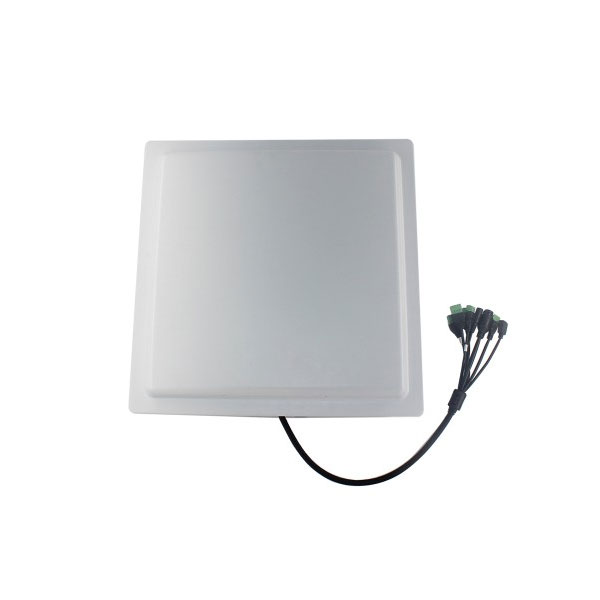
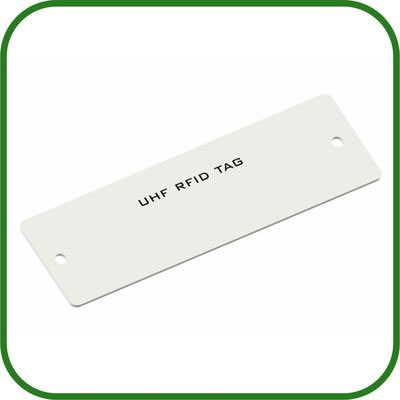
An RFID system for gold jewelry stores consists of three main components: UHF RFID tags attached to product tags/hang tags, handheld or fixed readers, and data management software. When staff pass the reader over product trays, radio waves activate and read codes from hundreds of tags at once without needing to align scan angles like barcodes.
In Vietnam, UHF RFID equipment operates on the 918.4-923 MHz band per national technical regulations, with maximum transmit power of 500 mW ERP (Circular 08/2021/TT-BTTTT). Việt POS provides compliant infrastructure and equipment; however, businesses must review their legal obligations under current regulations.
The biggest difference: a handheld reader can scan 200-300 products in 3-5 minutes, while manual takes 1-2 hours for the same quantity. Data automatically syncs to software, eliminating manual entry and reducing human error.
Detailed comparison: Manual vs. RFID gold jewelry inventory
The comparison table below summarizes differences between the two methods based on the 6 most important operational criteria. RFID excels in speed and accuracy, while manual wins on initial cost.
| Criteria | Manual Inventory | RFID Inventory |
|---|---|---|
| Time for 1,000 products | 4-6 hours | 10-20 minutes (Best) |
| Staff required | 3-5 people | 1 person |
| Average discrepancy rate | 2-5% | Below 0.5% (Best) |
| Sales downtime | 4-6 hours (store closed) | 15-30 minutes (on-site check) |
| Initial investment cost | Near zero | 40-80 million VND |
| Product history traceability | Manual ledger lookup, slow | Real-time software lookup (Best) |
Important note: RFID uses radio waves, so it is affected by metal and liquids. Solid gold or jewelry in metal trays can degrade read signals. Therefore, standard operating procedures still require staff visual confirmation before final inventory results are recorded.
Inventory time: Manual takes hours, RFID just minutes — how big is the difference?
Inventory time: Manual takes hours, RFID just minutes — how big is the difference?

Time is the most obvious difference. A 1,000-product store takes 4-6 hours with 3-5 staff for manual inventory; the same volume with RFID drops to 10-20 minutes with one person operating a handheld reader.
A real-world comparison at a mid-sized jewelry store (1,500 products) showed:
- Manual: 2 staff remove products from cases (45 minutes), 3 staff count + weigh + record (2.5 hours), 1 staff enter Excel and reconcile (1.5 hours). Total ~5 hours, store must close.
- RFID: 1 staff scans trays with reader (12 minutes), system automatically reconciles with software data (2 minutes). Total ~15 minutes, store continues serving customers normally.
For stores doing inventory twice a month, time saved is up to 9-10 operational hours per month — equivalent to one labor day. These hours can be spent on customer service, display case maintenance, or staff training.
Discrepancy rate: Why does manual inventory always have 2-5% variance?
Manual inventory always has 2-5% variance due to human errors: miscounting, misreading product codes, recording errors, and fatigue during long counting sessions. These errors accumulate and become harder to trace over time.
Common error sources in manual processes include:
- Counting errors: When handling hundreds of similar-looking rings or earrings, staff may skip or double-count items.
- Weighing errors: Precision scales require calibration; slight variations in placement or environmental factors can cause weight discrepancies.
- Recording errors: Handwritten entries or Excel typos lead to mismatches between physical stock and records.
- Fatigue: After 2-3 hours of continuous counting, concentration drops, increasing error rates.
RFID eliminates these human factors by automating identification and data capture. Each tag has a unique ID, and the reader captures all tags in range simultaneously, reducing the chance of missing or duplicating items. Discrepancy rates drop to below 0.5%, and any remaining variance is typically due to unreadable tags (e.g., damaged or shielded) rather than human error.
Hidden costs: Why is manual inventory more expensive than you think?
Manual inventory has hidden costs that often outweigh its apparent savings: labor hours, sales downtime, error correction, and opportunity costs. These can add up to more than the investment in RFID over time.
Let's break down the hidden costs for a mid-sized store:
- Labor costs: 3-5 staff × 4-6 hours per inventory × 2 times/month = 24-60 labor hours/month. At an average wage of 50,000 VND/hour, this is 1.2-3 million VND/month.
- Sales downtime: Closing the store for 4-6 hours means lost revenue. For a store with average daily sales of 50 million VND, this is 8-12 million VND per inventory day.
- Error correction: Investigating and correcting discrepancies takes additional time and may require re-counts, adding 1-2 hours per error.
- Opportunity cost: Time spent on manual counting could be used for customer service, merchandising, or staff training.
In contrast, RFID's initial investment of 40-80 million VND is a one-time cost. With monthly savings of 10-15 million VND (labor + downtime), payback occurs in 6-12 months. After that, the savings become direct profit.
When to choose manual inventory, when to invest in RFID?
Choose manual inventory if your store has under 500 products, low inventory frequency (monthly or less), and limited budget. Choose RFID if you have over 500 products, frequent inventory needs (weekly or daily), or high-value items requiring tight control.
Here's a decision guide:
- Choose manual if:
- Store has fewer than 500 products
- Inventory is done less than once a month
- Budget for technology is not available
- Staff are already familiar with manual processes
- Choose RFID if:
- Store has over 500 products
- Inventory is done weekly or daily
- High-value items require real-time tracking
- You want to reduce labor costs and errors
- You plan to scale operations
For stores in transition, a hybrid approach is possible: start with RFID for high-value items (e.g., gold bars) and manual for lower-value accessories. This allows gradual adoption and cost control.
Pros and cons of each method
Both methods have distinct advantages and disadvantages. Manual is low-cost and simple but slow and error-prone. RFID is fast and accurate but requires investment and has metal interference issues.
Manual Pros
Low initial cost; no technology training; works without power or connectivity; familiar to staff.
Manual Cons
Time-consuming; labor-intensive; high error rate; no real-time data; difficult to trace history.
RFID Pros
Fast (10-20x); accurate (<0.5% error); real-time data; reduces labor; improves traceability.
RFID Cons
Initial investment 40-80M VND; affected by metal/liquids; requires training; tag cost per item.
RFID deployment roadmap for gold jewelry stores in 4 steps
Deploying RFID for a gold jewelry store can be done in 4 steps: assessment, pilot, full rollout, and optimization. Each step has clear objectives and deliverables.
- Step 1: Assessment (1-2 weeks) — Evaluate current inventory process, product volume, and store layout. Identify high-value items and bottlenecks. Define success metrics (e.g., time reduction, error rate).
- Step 2: Pilot (2-4 weeks) — Select a small product category (e.g., rings) and tag 100-200 items. Test handheld reader and software integration. Train 2-3 staff. Measure time and error improvements.
- Step 3: Full rollout (4-8 weeks) — Tag all products, install fixed readers if needed, and integrate with existing POS/ERP. Train all staff. Run parallel manual and RFID counts for validation.
- Step 4: Optimization (ongoing) — Monitor performance, adjust tag placement for metal items, refine workflows, and expand to other use cases (e.g., anti-theft, customer experience).
Frequently Asked Questions
Cần tư vấn thiết bị/giải pháp cụ thể?
Việt POS phản hồi trong 30 phút · Hotline 4 vùng · Khảo sát miễn phí.
