
Mục lục bài viết (5)
Fixed asset inventory is a mandatory periodic operation, but traditional manual methods are revealing significant limitations in time, cost, and accuracy. This article provides a quantitative comparison between manual inventory and RFID technology-based inventory based on real data from Vietnamese enterprises, helping you determine the most suitable approach for your scale and inventory frequency.
Manual asset inventory of 500 assets requires 2 days with 2 staff, with a 2-5% error rate. UHF RFID completes the task in 30 minutes with 99%+ accuracy. RFID investment costs range from 50-150 million VND, suitable for enterprises with over 500 assets or those conducting monthly/quarterly inventory cycles.
Table of Contents
- What is manual inventory and what are its actual costs?
- What is RFID inventory and how does it work?
- Detailed comparison: Manual inventory vs RFID across 5 criteria
- When should you choose manual inventory?
- When should you switch to RFID inventory?
- Pros and cons of each inventory method
- Hidden costs of manual inventory that businesses often overlook
- Technical limitations of RFID in asset inventory to consider
- Frequently asked questions about manual inventory and RFID
What is manual inventory and what are its actual costs?

Manual inventory is the process of reviewing assets using paper documents or Excel spreadsheets, where staff must physically visit each location, record asset codes, and manually reconcile. For 500 assets, 2 staff members need an average of 1.5-2 full working days, not including time for data entry and discrepancy resolution afterward.
The manual inventory process in Vietnamese enterprises typically follows 4 steps: (1) print the asset list from accounting software, (2) assign staff to each department/area for physical verification, (3) note discrepancies on paper or in Excel, and (4) re-enter data and make adjustments in the system. Each step carries inherent risks of human error.
The actual cost of manual inventory extends beyond staff salaries. With an average salary of 8-10 million VND/month, 2 staff spending 2 days on inventory equates to 1.2-1.5 million VND in direct labor costs. This does not include downtime for departments using the assets, printing costs, and most importantly, the opportunity cost of inaccurate data leading to poor investment decisions.
What is RFID inventory and how does it work?
Related Products
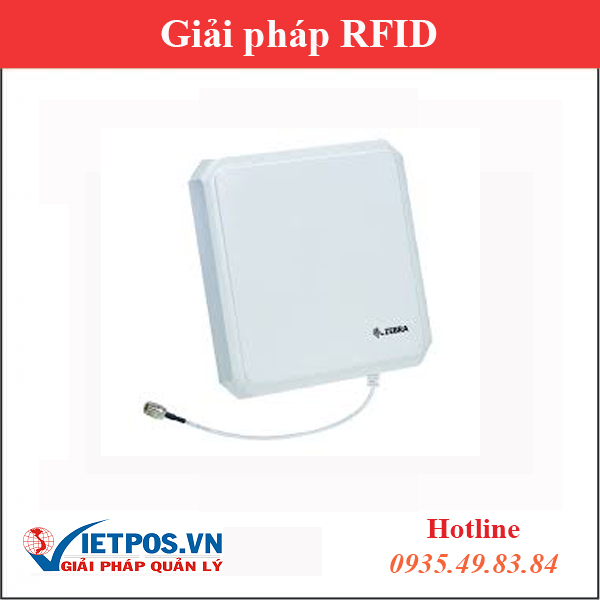
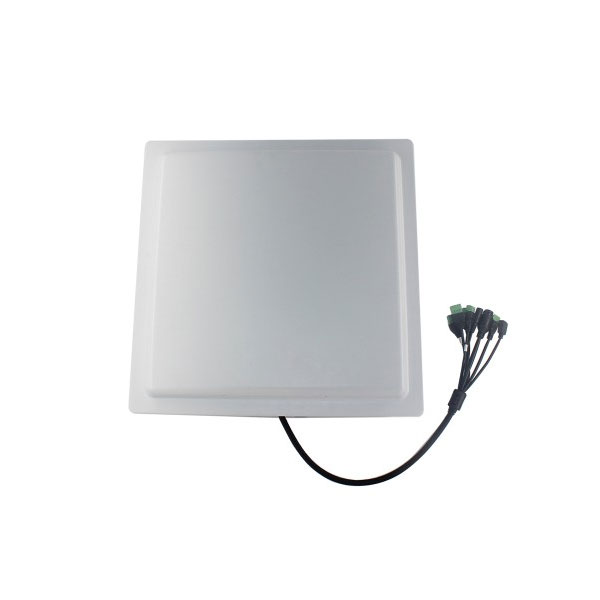
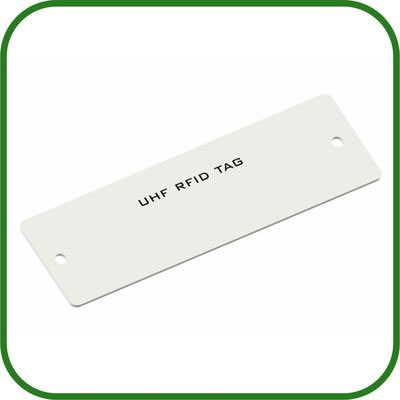
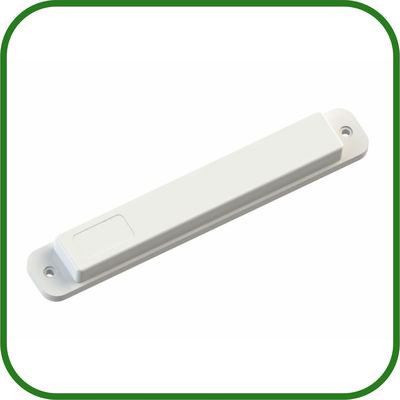


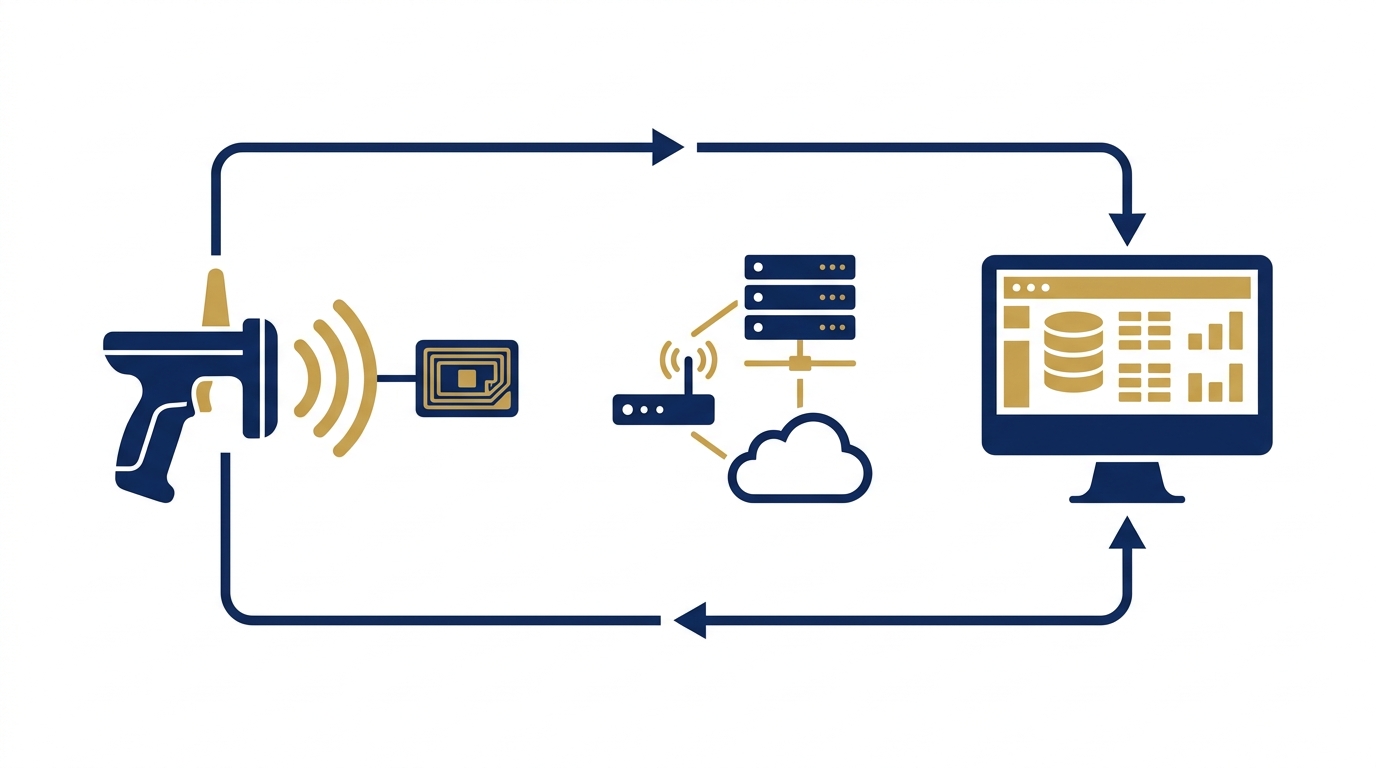
RFID inventory uses UHF radio waves to automatically read batches of tags attached to assets within a 3-10 meter range. Staff simply walk through an area with a handheld reader, and the system automatically collects asset codes and reconciles them against the software list, completing an inventory of 500 assets in 30 minutes with over 99% accuracy.
An RFID inventory system consists of 4 components: UHF RFID tags attached to assets (each tag has a unique ID), handheld or fixed readers, asset management software, and network infrastructure for data synchronization. In an office environment, a handheld reader can scan 200-300 tags per second, allowing a full inventory of assets in a room with just one sweep.
Unlike manual inventory which requires visiting each location and reading each code individually, RFID can read through cardboard boxes, plastic bags, and certain non-metal materials. This is particularly useful when inventorying assets in warehouses, stacked office equipment, or assets being transported between branches. Details on UHF RFID frequency and compliance in Vietnam (918.4-923 MHz) are regulated under Circular 08/2021 of the Ministry of Information and Communications.
Detailed comparison: Manual inventory vs RFID across 5 criteria
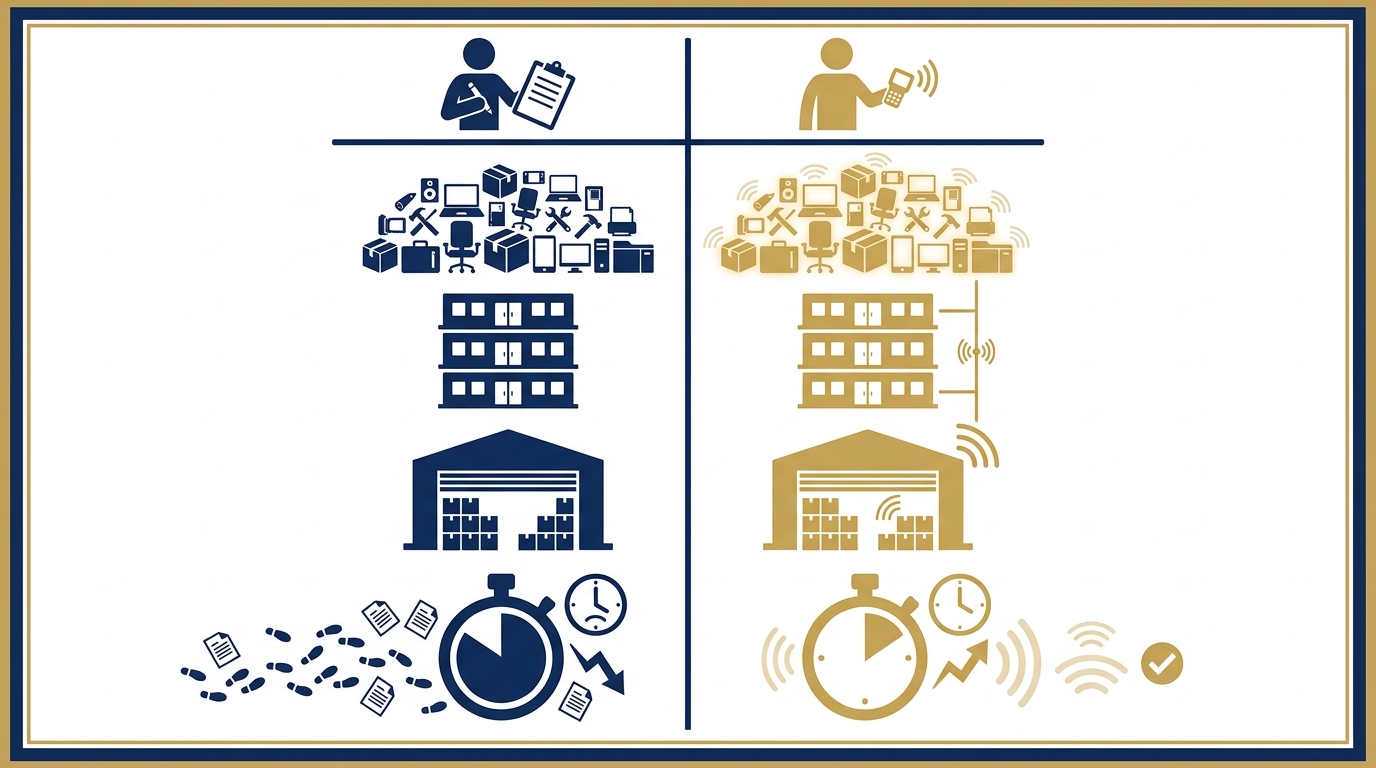
The comparison table below summarizes quantitative data from real-world deployment projects, based on a scenario of an enterprise with 500 fixed assets spread across 3 office floors and 1 storage warehouse. Time and error data are measured from multiple inventory cycles to ensure reliability.
| Criteria | Manual Inventory | RFID Inventory |
|---|---|---|
| Time to inventory 500 assets | 1.5-2 days (2 staff) | Best: 30-45 minutes (1 staff) |
| Accuracy | 95-98% (2-5% error rate) | Best: 99%+ |
| Labor cost per inventory cycle | 1.2-1.5 million VND | 100-200 thousand VND |
| Initial investment cost | 0 VND | 50-150 million VND (tags + reader + software) |
| Post-inventory data entry time | 3-4 hours | Best: Automatic, 0 hours |
| Ability to conduct unscheduled inventory | Limited, time-consuming | Best: Can be done anytime |
| Human error rate | High (misread codes, omissions, entry errors) | Best: Very low |
The most significant difference lies in the hidden costs of manual inventory. When an enterprise has 500 assets, a 2-5% error rate per inventory cycle means 10-25 assets are not accurately reconciled. These assets may have been lost, damaged, or are no longer in use but still being depreciated, leading to inaccurate financial reports and incorrect investment decisions.
When should you choose manual inventory?

Manual inventory remains suitable when an enterprise has fewer than 200 assets, inventory frequency is only 1-2 times per year as required by accounting regulations, and the budget for technology investment is limited. With a small scale, the 50-150 million VND RFID investment is difficult to recoup in the short term.
Use case 1: Enterprise with fewer than 200 assets, inventory once per year
→ Choose manual inventory. Each inventory cycle costs only 500-700 thousand VND in labor, while RFID requires an investment of 50 million VND or more. The payback period extends to 5-7 years, making it inefficient.
Use case 2: Enterprise with assets concentrated in 1-2 locations
→ Consider manual inventory if assets are neatly organized with clear labels. However, if inventory is conducted 2 or more times per year, RFID begins to offer time advantages.
When should you switch to RFID inventory?
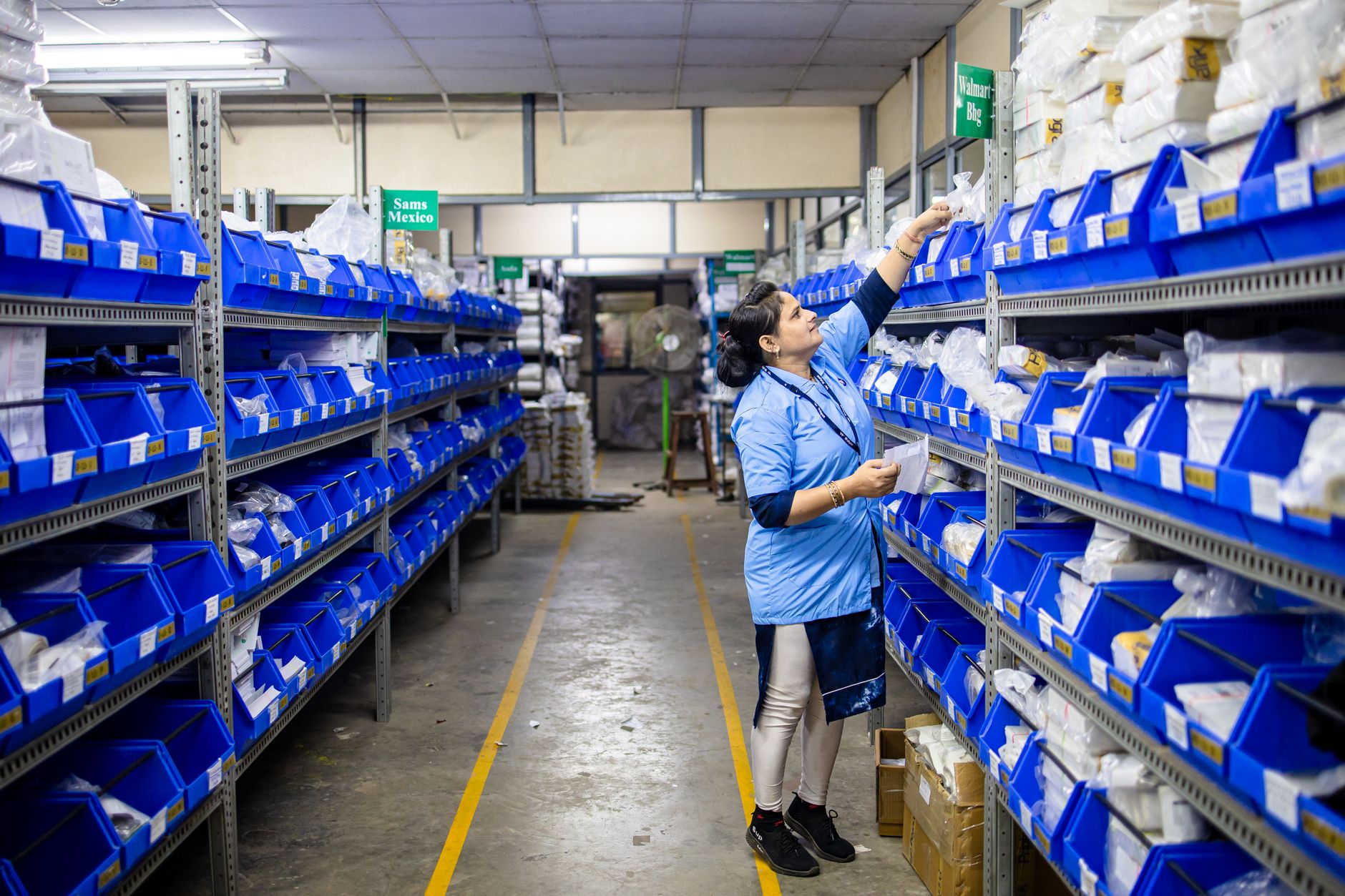
RFID becomes cost-effective when an enterprise has 500 or more assets, conducts quarterly or monthly inventory cycles, or has assets distributed across multiple locations. With an inventory frequency of 4 times per year, the payback period for RFID investment is approximately 2-3 years.
Cần tư vấn thiết bị/giải pháp cụ thể?
Việt POS phản hồi trong 30 phút · Hotline 4 vùng · Khảo sát miễn phí.
