Mục lục bài viết (7)
- How do UHF RFID fabric labels differ from regular paper labels in construction?
- Comparison of durability and resistance to heat and laundry chemicals
- Initial investment cost and long-term ROI between the two label types
- Scan speed and bulk reading capability: UHF vs HF on paper labels
- Resistance to ironing, drying, and mechanical impact during the wash cycle
- Practical applications: When to choose fabric labels, when to choose paper labels?
- Frequently Asked Questions
Comparing UHF RFID fabric labels and regular paper labels in industrial laundry management is a cost-durability-operational efficiency equation. Paper labels are cheap (300-600 VND/piece) suitable for low-cycle washing, while UHF RFID fabric labels (1,500-3,000 VND/piece) withstand 200+ wash cycles at high temperatures and strong chemicals. The article below analyzes 5 key criteria: mechanical durability, heat/chemical resistance, long-term cost, scan speed, and system integration capability.
How do UHF RFID fabric labels differ from regular paper labels in construction?
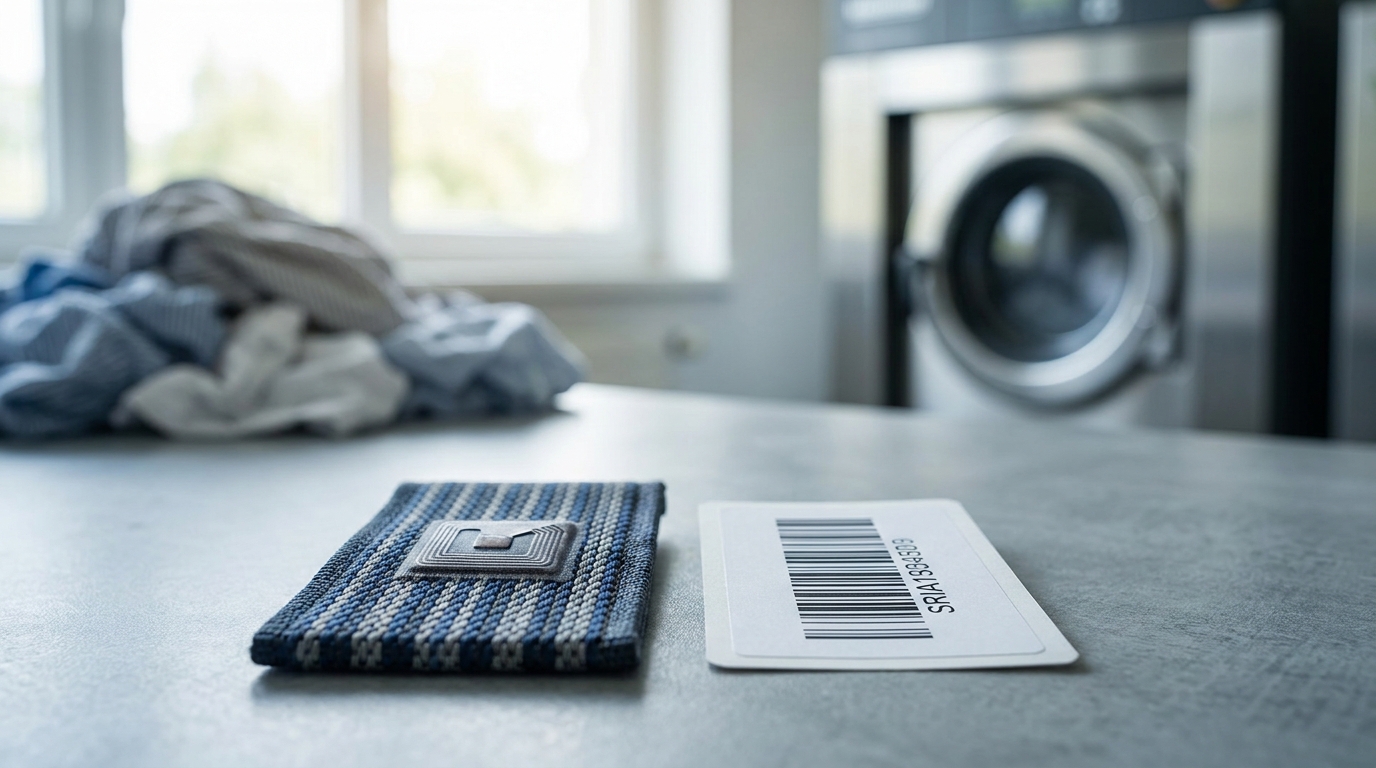
UHF RFID fabric labels are woven from polyester or nylon fibers, integrating a UHF RFID chip (860-960 MHz) and an antenna woven directly into the fabric. Regular paper labels are paper or thermal decals, which can be printed with barcodes or contain HF/UHF RFID chips but cannot withstand water and heat. Construction determines survival in laundry environments.
UHF RFID fabric labels have a chip protection layer made of epoxy or silicone glue, capable of withstanding mechanical pressure from industrial washing machines (spin cycle 800-1,200 rpm). In contrast, paper labels are only suitable for dry environments, easily torn, wrinkled, or peeled after 5-10 washes. For industrial laundry (hotels, hospitals), fabric labels are the optimal choice due to 20-30 times longer lifespan.
Comparison of durability and resistance to heat and laundry chemicals
UHF RFID fabric labels withstand temperatures up to 200°C (ironing, drying) and strong detergents such as chlorine, alkali, and enzymes. Regular paper labels only withstand 60-80°C, ink easily fades, and chips fail upon contact with solvents. The comparison table below clearly shows the differences.
Bạn đang tìm sản phẩm cho chủ đề này?
Việt POS phân phối chính hãng — bảo hành 24-36 tháng, hỗ trợ kỹ thuật 24/7.

Roll of Decal paper for labels, barcodes (3 labels)
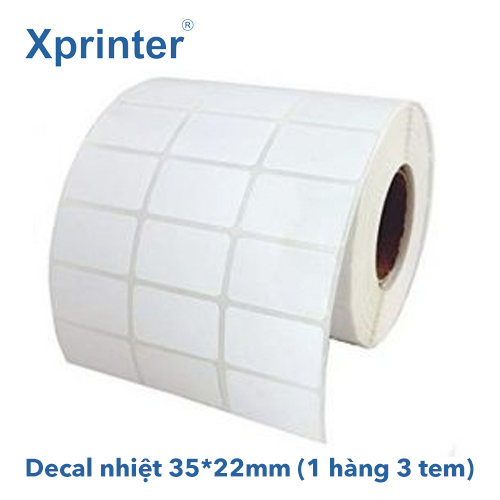
Thermal Paper Label 3-Up 35x22mm - 6,000 Labels/Roll, 1 Row of 3 Labels

Thermal transfer decal for barcode labels, 3 labels 35x22mm x 50m
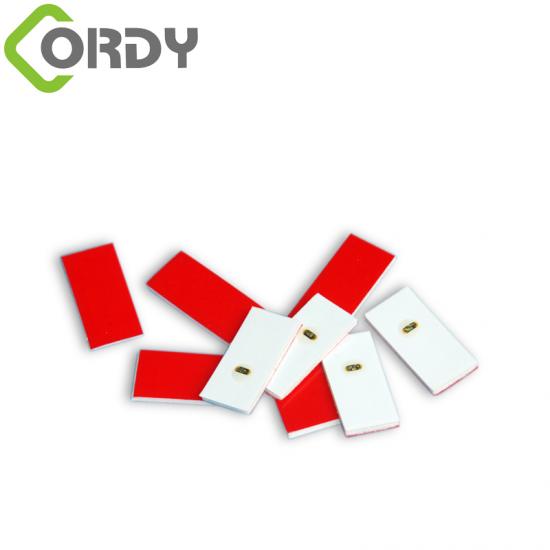
NFC RFID Labels NTAG213/215/216 in PET/PVC/Paper, Custom Printing
| Criterion | UHF RFID Fabric Label | Regular Paper Label |
|---|---|---|
| Maximum heat resistance | 200°C (industrial ironing, drying) | 60-80°C (household drying) |
| Chemical resistance | Chlorine, alkali, enzymes (pH 3-11) | Cannot withstand strong solvents |
| Number of wash cycles | 200+ times (≥95% chips still readable) | 10-15 times (ink/chip failure) |
| Mechanical durability | Withstands spin at 1,200 rpm, no tearing | Easily torn, wrinkled after 5 washes |
| Water resistance | IP67 (submerged in water for 30 minutes) | Not water-resistant |
Initial investment cost and long-term ROI between the two label types
Paper labels are 3-5 times cheaper per unit (300-600 VND/piece), but must be replaced after 10-15 wash cycles. UHF RFID fabric labels cost 1,500-3,000 VND/piece but last 200+ cycles, saving 40-60% in long-term costs for large-scale laundry businesses.
Example: A 200-room hotel manages 5,000 laundry sets per year. Using paper labels: label cost + replacement labor = 15-20 million VND/year. Using UHF RFID fabric labels: investment of 25-30 million VND, lifespan 3-5 years, average cost 6-10 million VND/year. Savings of 50-60% after 3 years. Additionally, fabric labels reduce inventory time from 2-3 hours to 15-25 minutes thanks to bulk scanning with UHF readers. Criteria for selecting industrial barcode decal paper also apply similarly when choosing durable materials for harsh environments.
Scan speed and bulk reading capability: UHF vs HF on paper labels
UHF RFID fabric labels scan 50-200 tags/second at a distance of 3-5 meters, suitable for batch inventory of laundry. Regular paper labels typically use HF frequency (13.56 MHz), scanning only 1-5 tags/second at a distance under 10 cm, taking much more time.
In a laundry environment, UHF fabric labels allow reading all 100-200 sets on a shelf in just 3-5 seconds, without needing to pick up each item. HF paper labels require scanning each item, taking 15-30 minutes for the same quantity. For hospitals or large hotels (1,000+ sets/day), the productivity difference is enormous. UHF RFID systems can also integrate with bulk packaging software to automate inbound and outbound processes.
Resistance to ironing, drying, and mechanical impact during the wash cycle
UHF RFID fabric labels are designed to withstand ironing at 180-200°C, industrial drying at 80-120°C for 30-60 minutes without deformation. Paper labels burn, blister, or lose data when exposed to an iron above 100°C.
In practice, hotel uniforms are often ironed flat at high temperatures. Fabric labels can be placed on collars, hems without affecting the chip. Paper labels should only be used for non-ironed items (towels, bed sheets that are rarely ironed). Some fabric labels also have an anti-static coating, reducing dust adhesion in drying environments.
Practical applications: When to choose fabric labels, when to choose paper labels?
UHF RFID fabric labels are suitable for industrial laundry (4-5 star hotels, hospitals, large laundries) requiring high durability and bulk scanning. Regular paper labels are used for household laundry, small laundromats, or temporary purposes (events, short-term uniform rental).
- UHF RFID fabric labels: Hotels with 200+ rooms, hospitals with 300+ beds, laundries processing 5,000+ sets/day. Higher initial investment but ROI in 2-3 years due to reduced loss and increased productivity.
- Regular paper labels: Small laundromats (under 500 sets/day), seasonal uniform rental, short-term events. Low cost, easy to replace but not durable.
Businesses need to consider scale and wash frequency to choose the appropriate label type. Refer to comparison of wax resin and resin decal paper to better understand durable materials in harsh environments.
Frequently Asked Questions
Can UHF RFID fabric labels be washed in industrial washing machines?
Yes. UHF RFID fabric labels are designed to withstand 200+ wash cycles in industrial washing machines, including spin cycles at 800-1,200 rpm, drying temperatures up to 200°C, and strong detergents (chlorine, alkali, enzymes). The RFID chip is protected by epoxy or silicone glue, ensuring at least 95% readability after 200 washes.
Can regular paper labels be used for hotel laundry?
Only suitable for low-cycle laundry (under 15 cycles) or environments without ironing or high-temperature drying. For 4-5 star hotels, where laundry is ironed and dried industrially, paper labels will fail after 5-10 cycles, causing costly replacement labor and loss of management data. UHF RFID fabric labels are the more optimal choice.
Is the investment cost of UHF RFID fabric labels much higher than paper labels?
The price of UHF RFID fabric labels is 3-5 times higher (1,500-3,000 VND/piece compared to 300-600 VND/piece). However, considering long-term costs, fabric labels save 40-60% thanks to 20-30 times longer lifespan, reduced replacement labor, and increased inventory productivity. For large-scale laundry businesses, ROI is typically achieved after 2-3 years.
Can UHF RFID fabric labels be read through thick fabric layers?
Yes, if using a UHF reader with appropriate power (25-30 dBm). UHF fabric labels can be read through 2-3 layers of thick fabric (jackets, blankets) at a distance of 1-3 meters. For thin laundry items like bed sheets, towels, read distance can reach 3-5 meters. However, actual testing with specific fabric types and readers is necessary.
How to attach UHF RFID fabric labels to laundry items?
UHF RFID fabric labels are typically sewn or heat-pressed onto the fabric. Sewing is the most common method: the label is sewn into the collar seam, hem, or inside pocket. Heat pressing uses heat-resistant adhesive, suitable for fabrics that cannot be sewn. Both methods ensure the label stays firmly attached through 200+ wash cycles. Proper placement optimizes readability and durability.
Need advice on choosing the right UHF RFID fabric label for your laundry system? Contact Việt POS immediately via hotline 0935 498 384 or email info@vietpos.vn for comprehensive solution support.
Cần tư vấn thiết bị/giải pháp cụ thể?
Việt POS phản hồi trong 30 phút · Hotline 4 vùng · Khảo sát miễn phí.
Bài viết cùng chủ đề