Mục lục bài viết (5)
- Why do businesses need to transition to RFID for returnable assets?
- Real-world comparison: Barcode vs RFID in asset management?
- What are the challenges and physical limitations of RFID?
- What are the frequency regulations and RFID equipment requirements in Vietnam?
- How much does an RFID system investment for returnable assets cost?
In modern supply chains, managing Returnable Transport Items (RTI) such as pallets, plastic crates, gas cylinders, and mobile racks plays a vital role in operational efficiency. These assets frequently move between warehouses, factories, and partners, leading to high loss risks and difficulties in lifecycle control. Radio Frequency Identification (RFID) technology has emerged as a key infrastructure solution, gradually replacing traditional management methods to provide transparency and speed in data processing.
Why do businesses need to transition to RFID for returnable assets?
Transitioning to RFID for returnable assets helps businesses automate the tracking of location, condition, and quantity of pallets, gas cylinders, or plastic crates. Instead of manual recording prone to errors, RFID provides real-time data, supports rational asset allocation, minimizes loss, and optimizes annual equipment reinvestment costs through tight control.
Managing returnable assets manually or with barcodes often faces speed barriers. When a truck carrying hundreds of pallets or plastic crates passes through a warehouse gate, scanning each barcode is nearly impossible to do quickly. This creates bottlenecks in logistics, wasting time and labor.
Limitations of manual methods and barcodes
Traditional methods based on bookkeeping or scanning 1D/2D barcodes require direct human interaction. Barcodes require line-of-sight, meaning staff must locate the label and bring the scanner close to the surface. In industrial environments, barcode labels are prone to scratches, peeling, or being covered by dust, making data reading difficult. Furthermore, periodic inventory of thousands of returnable assets using barcodes can take days, disrupting production and business operations.
Superior advantages of UHF RFID
UHF (Ultra High Frequency) RFID technology allows batch reading of tags from long distances (from a few meters to over ten meters depending on antenna type) without direct line-of-sight. RFID tags can be embedded inside wooden pallets or molded into plastic crates, protecting the chip from physical impacts. The ability to simultaneously capture data from hundreds of assets in seconds makes warehouse inbound and outbound processes nearly instantaneous, minimizing human intervention and data entry errors.
Real-world comparison: Barcode vs RFID in asset management?
The comparison between barcode and RFID is based on criteria such as processing speed, non-contact reading capability, and durability in harsh environments. While barcodes require labor to scan each label individually, RFID allows batch reading of returnable assets in seconds, optimizing warehouse inbound/outbound processes and lifecycle control of equipment more effectively.
Bạn đang tìm sản phẩm cho chủ đề này?
Việt POS phân phối chính hãng — bảo hành 24-36 tháng, hỗ trợ kỹ thuật 24/7.

Chainway CM710-8 UHF RFID Module (8-Port) — Impinj E710, 93.0 x 79.8 x 8.9mm
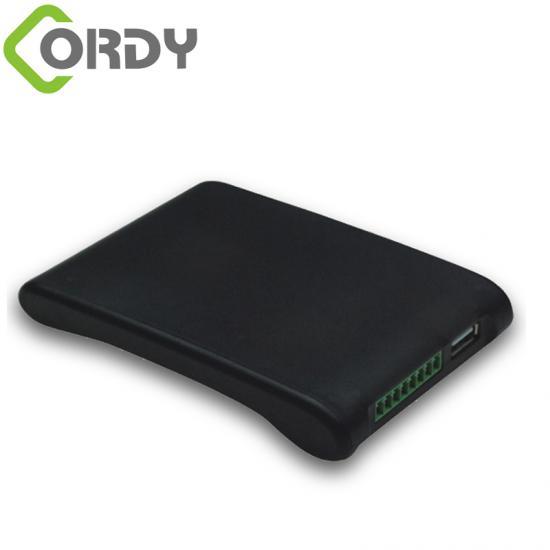
DH9809USB-L - UHF RFID Desktop Reader/Writer 920-925MHz, USB, ISO18000-6C/6B, SDK
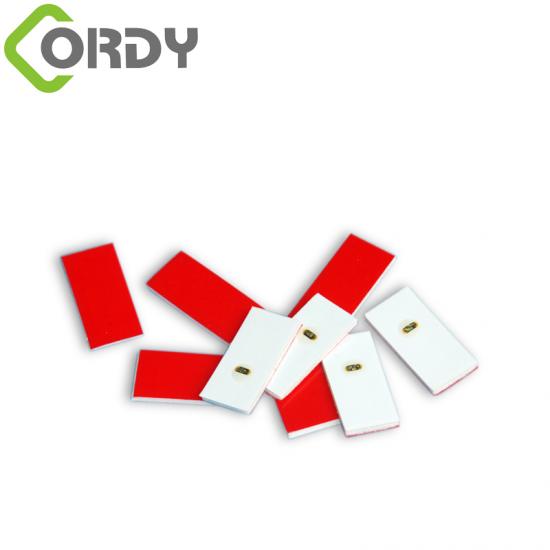
UHF Windshield Tag for RFID Vehicle Management Systems
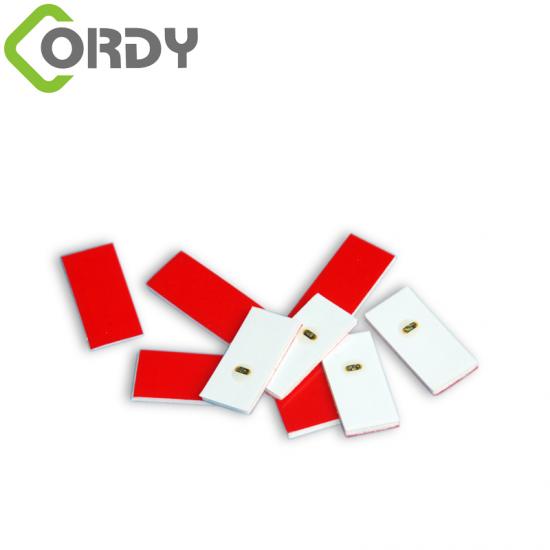
RFID A4 Inlay Sheet / Mifare A3 Inlay Sheet for Card Production
Below is a detailed comparison table between the two most common management methods based on real operational criteria in Vietnam:
| Criteria | Manual/Barcode | RFID Technology |
|---|---|---|
| Inventory speed | Slow, scanning each unit | Very fast, batch reading |
| Physical interaction | Requires direct line-of-sight to label | No line-of-sight needed (penetrates materials) |
| Label durability | Easily torn, faded, or peeled | Very durable, can be molded into plastic/metal |
| Data writing capability | Read-only | Read and write information (Read/Write) |
| Labor cost | High due to multiple operators | Low due to automated processes |
| Accuracy | Depends on staff concentration | Very high, but requires proper configuration |
Although RFID has higher initial infrastructure investment costs, in the long term, tag reusability and superior processing speed help businesses optimize working capital tied up in returnable assets.
What are the challenges and physical limitations of RFID?
Despite being powerful, RFID still faces physical limitations in environments with high metal or liquid content, which cause interference or absorption of UHF waves. Additionally, overly dense stacking of goods can lead to signal shadowing. Therefore, businesses need support from staff to confirm results and conduct technical surveys before deployment.
One common mistake is expecting RFID to work perfectly 100% in all conditions. In reality, UHF electromagnetic waves are reflected by metal and absorbed by liquids. For example, when managing gas cylinders or plastic crates containing water, using standard RFID tags will not be effective. In such cases, businesses must use specialized tags (On-metal tags) and position antennas at appropriate angles.
Additionally, signal 'dead zones' can occur when assets are stacked too densely in containers or deep storage areas. RFID waves may not penetrate overly thick material layers in between. Therefore, operational processes should always include a final confirmation step by staff or design RFID Portals with multi-directional coverage to minimize errors.
What are the frequency regulations and RFID equipment requirements in Vietnam?
In Vietnam, UHF RFID devices must comply with Circular 08/2021/TT-BTTTT of the Ministry of Information and Communications. Accordingly, the permitted frequency range is from 918.4 MHz to 923 MHz with a maximum transmission power of no more than 500 mW ERP. Using equipment with conformity certificates is mandatory to ensure no interference with other radio systems.
Understanding the regulations on RFID frequency and conformity in Vietnam is extremely important for B2B businesses. If using equipment with non-compliant frequency ranges or exceeding allowed power levels, businesses may face legal risks and cause interference to national telecommunications infrastructure. VietPOS always recommends customers carefully check the Certificate of Conformity of readers and antennas before putting them into actual operation.
How much does an RFID system investment for returnable assets cost?
The investment cost for an RFID system has no fixed price but depends on the number of assets, type of tags (standard or metal-mount), reader configuration, and installation infrastructure complexity. Businesses should consider this a long-term investment and conduct a site survey to receive the most suitable quote for their specific operational needs.
A basic RFID system includes: RFID tags, readers, antennas, and management software. Tags for plastic pallets are typically cheaper than tags for metal gas cylinders. Fixed readers installed at warehouse gates have different costs compared to handheld readers. Instead of searching for a fixed price number, businesses should focus on defining the problem to solve: reducing asset loss rates or increasing warehouse throughput? From there, infrastructure providers like VietPOS will advise on the optimal device configuration within the unit's expected budget.
Implementation recommendations for Vietnamese businesses
For successful deployment, businesses should not apply it broadly immediately. The ideal process usually starts with a site survey of the warehouse, then a proof-of-concept (POC) with a small number of assets to evaluate actual read rates in the specific environment. Choosing RFID tags suitable for the material surface and environment (temperature, humidity, impact) determines up to 70% of project success. Finally, training staff to understand the technology's limitations and how to handle false alerts is key to maintaining a stable system.
RFID is not a magic wand that can solve all problems fully automatically, but it is the most powerful tool today for digitizing returnable assets. With thorough preparation of technical infrastructure and compliance with frequency regulations, businesses can tightly control assets, optimize turnover, and enhance competitiveness in the global supply chain.
Cần tư vấn thiết bị/giải pháp cụ thể?
Việt POS phản hồi trong 30 phút · Hotline 4 vùng · Khảo sát miễn phí.
