Mục lục bài viết (6)
- What is a Digital Product Passport (DPP) and why should exporters care?
- Why is UHF RFID the optimal choice for DPP data infrastructure?
- Technical challenges and limitations of RFID technology
- Comparison table of UHF RFID standards across regions
- Investment costs and implementation roadmap for RFID systems for DPP
- Conclusion
What is a Digital Product Passport (DPP) and why should exporters care?
The Digital Product Passport (DPP) is a regulatory framework under the EU's Ecodesign for Sustainable Products Regulation (ESPR). It is a digital identifier that stores comprehensive product lifecycle data, from raw material origin and production processes to recyclability, enhancing transparency and supporting the circular economy.
As the European Union (EU) tightens environmental and sustainability standards, the EU Digital Product Passport (DPP) becomes a mandatory entry ticket for Vietnam's key industries such as textiles, footwear, and wood products. According to current drafts, the implementation roadmap may begin around August 2026 for specific product groups, though these timelines could change based on the European Commission's final decisions. Preparing data infrastructure now is not just about meeting technical barriers but also a way for businesses to enhance their competitiveness in the international market.
DPP requires an efficient data carrier for each product unit. Among existing technologies, RFID (Radio Frequency Identification) emerges as a key infrastructure solution due to its ability to uniquely identify at the item level and read data in bulk without direct contact.
Why is UHF RFID the optimal choice for DPP data infrastructure?
UHF RFID (Ultra High Frequency) provides long-range reading capability, fast data processing, and the ability to store unique identifiers for each product. This enables businesses to automate data collection across the supply chain, from production and packaging to dispatch, ensuring the integrity of DPP data.
Bạn đang tìm sản phẩm cho chủ đề này?
Việt POS phân phối chính hãng — bảo hành 24-36 tháng, hỗ trợ kỹ thuật 24/7.

Chainway CM710-8 UHF RFID Module (8-Port) — Impinj E710, 93.0 x 79.8 x 8.9mm
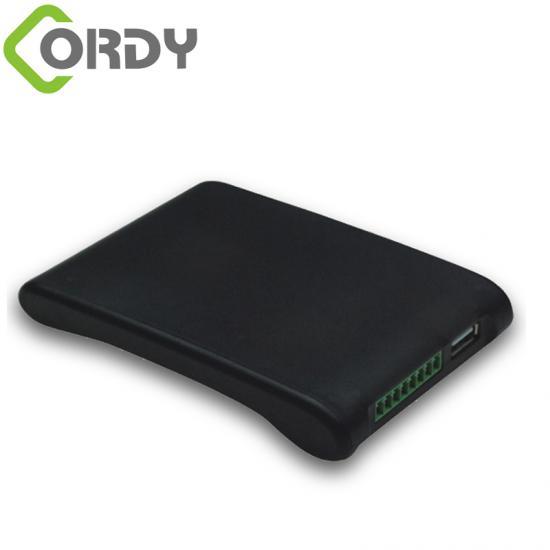
DH9809USB-L - UHF RFID Desktop Reader/Writer 920-925MHz, USB, ISO18000-6C/6B, SDK
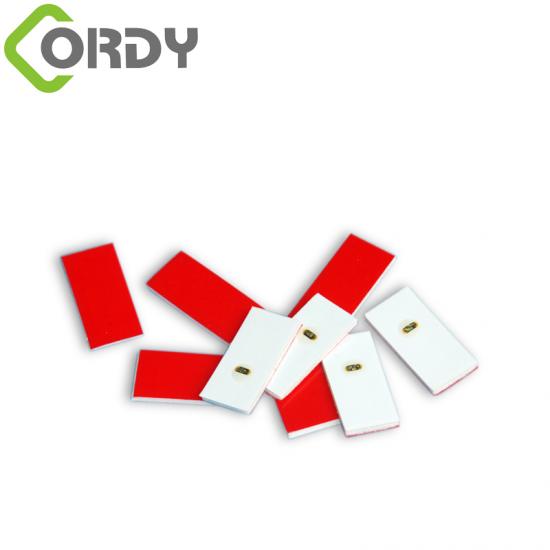
UHF Windshield Tag for RFID Vehicle Management Systems
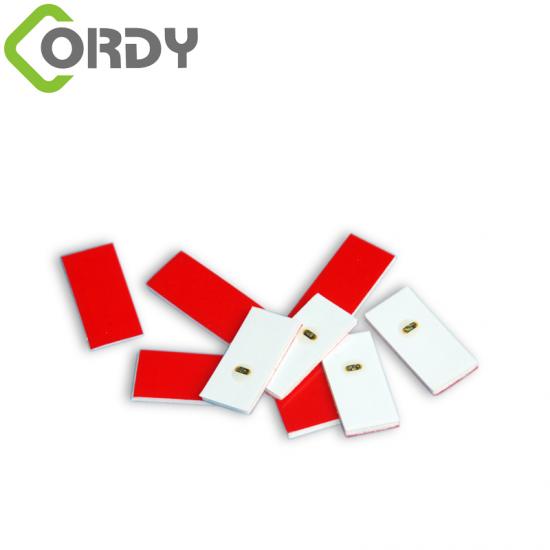
RFID A4 Inlay Sheet / Mifare A3 Inlay Sheet for Card Production
Unlike traditional QR codes that require manual scanning one by one, RFID can capture information from hundreds of products in just seconds. For high-volume industries like textiles or footwear, this optimizes inventory and packaging processes. However, the actual effectiveness of an RFID system heavily depends on the operating environment, device configuration, and product material types. Businesses should note that RFID cannot fully replace human roles; verification and cross-checking by staff remain mandatory to ensure data accuracy before uploading to the DPP system.
Frequency and compliance regulations for RFID in Vietnam: Critical considerations
A common mistake among Vietnamese businesses deploying RFID is importing devices configured to EU or US standards without checking compatibility with domestic regulations. In Vietnam, the use of radio equipment, including UHF RFID readers, must strictly comply with frequency regulations to avoid interference with other radio communication systems.
According to Circular 08/2021/TT-BTTTT of the Ministry of Information and Communications, UHF RFID devices operating in Vietnam must meet the following technical specifications:
- Frequency range: 918.4 MHz to 923 MHz.
- Transmit power: Not exceeding 500 mW ERP.
- Compliance documentation: Devices must have a certificate of conformity and a conformity mark (ICT) before being circulated and used in the market.
Using devices with EU frequency bands (typically 865-868 MHz) or US bands (902-928 MHz) that exceed the allowed thresholds in Vietnam not only violates the law but also risks penalties and device confiscation by authorities. Therefore, when building infrastructure for RFID frequency and compliance in Vietnam, businesses must require suppliers to provide full conformity certificates for each device model.
Technical challenges and limitations of RFID technology
Although powerful, RFID is not a one-size-fits-all technology. UHF waves are highly sensitive to the surrounding environment, especially metals and liquids. Additionally, overly dense product stacking can reduce the penetration of radio waves, leading to missed tags during bulk reading.
In the wood industry, moisture in wood can absorb RFID waves, reducing read range. In textiles, metal accessories like zippers, copper buttons, or packaging with metallic coatings reflect waves, making tag detection difficult. Businesses need to understand these limitations:
- Metals and liquids: Cause interference and wave absorption; use specialized tags (on-metal tags) or optimize tag placement.
- Product density: Overly dense stacking on pallets can prevent tags in the middle from receiving enough energy to respond.
- Read rate: Do not expect 100% in all real-world conditions. This rate typically varies based on antenna configuration, reader power, and warehouse layout.
To overcome these, VietPOS recommends businesses conduct detailed site surveys and real-world testing (PoC) before large-scale deployment. Fine-tuning antenna angles and selecting RFID chips suitable for product materials are crucial steps.
Comparison table of UHF RFID standards across regions
| Parameter | Vietnam Standard | EU Standard | US Standard (FCC) |
|---|---|---|---|
| Frequency range | 918.4 – 923 MHz | 865 – 868 MHz | 902 – 928 MHz |
| Maximum power | ≤ 500 mW ERP | ≤ 2W ERP | ≤ 4W EIRP |
| Regulatory framework | Circular 08/2021/TT-BTTTT | ETSI EN 302 208 | FCC Part 15.247 |
| Compatibility | ICT conformity mandatory | Not suitable in Vietnam | Requires frequency reconfiguration |
Investment costs and implementation roadmap for RFID systems for DPP
The cost of deploying an RFID system for a Digital Product Passport has no fixed price; it depends on the scale of the production line, the number of read points, and the type of tags used. Businesses should view this as a long-term investment in digital infrastructure rather than just a compliance cost.
Qualitatively, investment costs include three main parts: hardware (fixed readers, handheld readers, antennas), consumables (RFID tags, printing ink), and integration software. For textile exporters, the cost per product unit for RFID tags can range from a few cents, depending on order volume and chip features. However, the real value lies in traceability and reducing errors in DPP data.
Recommended implementation roadmap:
- Phase 1: Infrastructure survey and data readiness assessment.
- Phase 2: Pilot testing on a product line or an export chain to the EU.
- Phase 3: Adjust device configuration based on actual conditions in Vietnam (ensuring correct frequency band 918.4–923 MHz).
- Phase 4: Full-scale deployment and data integration into the EU DPP management system.
VietPOS acts as a provider of compliant RFID infrastructure and equipment, supporting businesses in building a solid technical foundation. We do not provide legal advisory services on EU law, but we are committed to accompanying businesses in optimizing read performance and ensuring stable device operation within Vietnam's frequency legal framework.
Conclusion
The Digital Product Passport (DPP) is both a challenge and an opportunity for Vietnamese businesses to standardize production processes according to global standards. Choosing UHF RFID technology with the correct frequency band and understanding technical limitations will help businesses avoid unnecessary waste and ensure sustainable export operations in the future. Note that EU and Vietnamese regulations may be updated; businesses should regularly monitor the latest announcements from authorities.
Cần tư vấn thiết bị/giải pháp cụ thể?
Việt POS phản hồi trong 30 phút · Hotline 4 vùng · Khảo sát miễn phí.
