Mục lục bài viết (5)
- Why does returnable asset management need to comply with RFID frequencies in Vietnam?
- Common types of returnable assets and RFID tagging methods
- Physical limitations and operational considerations for RFID systems
- Investment costs and implementation roadmap for asset management systems
- Conclusion on RFID solutions for returnable assets
In modern logistics and supply chain systems, managing returnable assets (Returnable Transport Items - RTI) such as pallets, plastic crates, gas cylinders, and mobile racks plays a key role in optimizing operational costs. Radio frequency identification (RFID) technology in the UHF band has become an industry standard due to its ability to identify items in bulk without requiring direct line-of-sight. However, deploying this technology in the Vietnamese market requires a deep understanding of specific technical regulations and physical limitations of the equipment.
Why does returnable asset management need to comply with RFID frequencies in Vietnam?
The use of UHF RFID devices in Vietnam must be configured to the correct frequency range of 918.4–923 MHz with a transmission power of ≤500 mW ERP according to Circular 08/2021/TT-BTTTT of the Ministry of Information and Communications. Compliance not only ensures stable device operation, avoiding interference with other radio systems, but also ensures certification records for businesses during specialized inspections.
In Vietnam, UHF RFID devices operate in the frequency range from 918.4 MHz to 923 MHz. This is an extremely important point that operations managers need to consider when selecting equipment. Many devices imported from the US market (902–928 MHz band) or Europe (865–868 MHz band), if not reconfigured or not supporting the Vietnamese frequency range, will lead to violations of radio frequency laws. According to current regulations, these devices must have a certificate of conformity and a declaration of conformity to be legally circulated.
It should be noted that the regulations on RFID frequency and certification in Vietnam may change according to the update roadmap of the management agency, with new adjustments expected around August 2026. Therefore, choosing an infrastructure provider like VietPOS helps businesses ensure that equipment always meets the latest technical standards, avoiding the risk of having to replace the entire system due to legal incompatibility.
Common types of returnable assets and RFID tagging methods
Each type of asset such as plastic pallets, wooden crates, gas cylinders, or mobile racks requires a specialized RFID tag. Tags need to be selected based on the material surface (metal or non-metal), usage environment (outdoor, cold storage), and desired read range. Proper tagging ensures accurate identification during inbound/outbound processes and circulation between agents.
Bạn đang tìm sản phẩm cho chủ đề này?
Việt POS phân phối chính hãng — bảo hành 24-36 tháng, hỗ trợ kỹ thuật 24/7.

Chainway CM710-8 UHF RFID Module (8-Port) — Impinj E710, 93.0 x 79.8 x 8.9mm
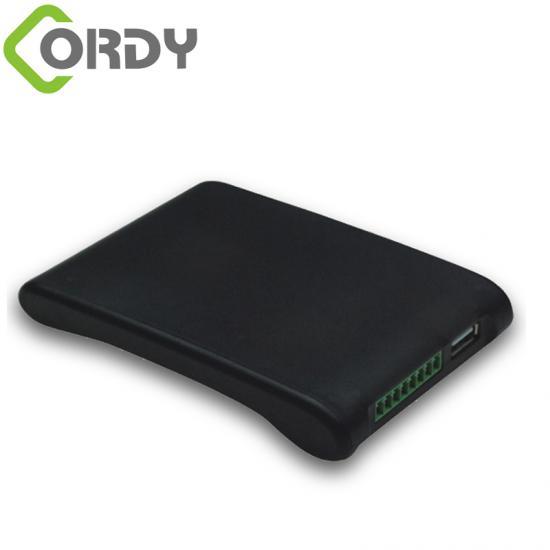
DH9809USB-L - UHF RFID Desktop Reader/Writer 920-925MHz, USB, ISO18000-6C/6B, SDK
UHF Windshield Tag for RFID Vehicle Management Systems
RFID A4 Inlay Sheet / Mifare A3 Inlay Sheet for Card Production
RFID-based returnable asset management focuses on the following main groups:
- Plastic pallets and plastic crates: RFID tags are often molded directly into the plastic body or attached to protective recesses to avoid impact during forklift operations. Tags use UHF chips with high impact resistance and water resistance.
- Gas cylinders and metal tanks: These are the most challenging objects due to the metal surface causing radio wave reflection. Businesses must use specialized 'On-metal' tags. These tags have a special isolation layer to ensure the tag antenna can still transmit and receive signals when attached directly to the gas cylinder body.
- Mobile racks and trolleys: Tags are usually attached to the frame area. Due to continuous movement, tags need high mechanical durability and the ability to be read from multiple directions when passing through control portals (RFID Portal).
Comparison table of RFID tag characteristics for each asset type
| Asset type | Surface material | Recommended tag type | Usage environment |
|---|---|---|---|
| Plastic pallet | Non-metal (Plastic) | Standard UHF tag/Molded tag | Warehouse, manufacturing |
| Gas cylinder | Metal | Specialized On-metal tag | Outdoor, pressure-resistant |
| Food plastic crate | Plastic | UHF tag resistant to heat/chemicals | Cold storage, washing line |
| Mobile rack/Trolley | Metal/Alloy | Rigid On-metal tag | Factory, warehouse |
Physical limitations and operational considerations for RFID systems
UHF RFID technology cannot completely penetrate metal and high-concentration liquids. When goods are stacked too densely or contain many conductive impurities, the read rate may degrade. Therefore, businesses need to arrange antennas appropriately and always maintain manual confirmation procedures from staff to ensure absolute data accuracy in all situations.
Although RFID offers superior performance compared to traditional barcodes, managers need to honestly acknowledge its physical limitations. UHF waves are absorbed by liquids and reflected by metal. In scenarios where pallets containing gas cylinders or plastic crates filled with liquid solutions are stacked tightly together, tags in the core may be 'hidden' from the antenna's scan range. This means the system cannot guarantee a 100% read rate in all real-world operating conditions.
To overcome this, operational procedures should include cross-checking steps. For example, when a forklift passes through an RFID portal, if the number of tags read does not match the expected number on the outbound order, the system should trigger an alert for warehouse staff to re-check using a handheld reader. The combination of automated infrastructure and human oversight is key to maintaining the integrity of supply chain data.
Investment costs and implementation roadmap for asset management systems
The cost of implementing an RFID system depends on warehouse scale, number of assets, and complexity of the operating environment. Instead of applying a fixed price, businesses should conduct a site survey to determine the optimal number of readers and tag types. The investment roadmap is usually phased to balance budget and operational manpower.
In terms of cost, an RFID project for returnable assets typically includes three main components: tag costs (per asset unit), infrastructure costs (fixed readers, antennas, handheld devices), and software integration costs. On-metal tags for gas cylinders are always significantly more expensive than standard adhesive tags for plastic pallets. Therefore, total capital investment will vary depending on the specific assets of the business.
VietPOS recommends businesses conduct a technical site survey before approving the project. The survey process will measure signal interference levels, determine optimal antenna placement, and conduct a proof of concept (PoC) with real asset samples. ROI calculations should be based on estimates of reduced inventory time, reduced asset loss rates, and increased turnover speed of pallets/crates, rather than on unsubstantiated promises.
Conclusion on RFID solutions for returnable assets
Deploying UHF RFID to manage returnable assets is a strategic step that helps businesses bring transparency to the physical flow within the supply chain. However, project success lies not only in technology but also in strict compliance with frequency regulations in Vietnam (Circular 08/2021/TT-BTTTT) and understanding the physical limitations of the transmission environment. Choosing equipment with full certification records and configuring the correct frequency range of 918.4–923 MHz is a prerequisite for sustainable and lawful system operation.
Businesses should note that all information regarding legal regulations is for reference at the time of writing and may change according to decisions of state authorities. VietPOS acts as an infrastructure and equipment provider, supporting businesses in building a solid technical foundation to automate asset management processes in the most professional and honest manner.
Cần tư vấn thiết bị/giải pháp cụ thể?
Việt POS phản hồi trong 30 phút · Hotline 4 vùng · Khảo sát miễn phí.
