Mục lục bài viết (10)
- What are RFID labels? Construction and operating principles
- RFID tag classification by operating frequency: LF, HF, UHF
- RFID tag classification by power source: Passive, Active, Semi-passive
- On-metal RFID tags: What are they? Why use them?
- Summary table: Common RFID tag types
- How to choose the right RFID tag for your business
- Comparison: Standard RFID tag vs. on-metal RFID tag
- Common mistakes in selecting RFID tags
- Real-world RFID applications in Vietnam
- Frequently asked questions about RFID labels
RFID labels are automatic identification devices using radio waves to store and transmit data, consisting of an RFID chip and antenna printed on a substrate. In Vietnam, the RFID market is projected to grow 25–30% annually due to applications in warehouse management, retail and manufacturing. However, selecting the correct tag type – especially on-metal tags – determines 80% of implementation success.
What are RFID labels? Construction and operating principles

RFID labels (Radio Frequency Identification) are smart cards consisting of a microchip and antenna mounted on a substrate (paper, PET, PVC). When a reader transmits radio waves, the antenna receives energy and activates the chip to transmit data to the reader – a process taking 0.1–0.5 seconds.
Basic construction comprises three layers: face layer (printed information, logo), chip-antenna layer (IC + copper or aluminum antenna), and adhesive layer. Passive RFID tags require no battery – they draw power from reader waves. Common reading distances range from 1–12 meters depending on frequency and reader power.
RFID tag classification by operating frequency: LF, HF, UHF


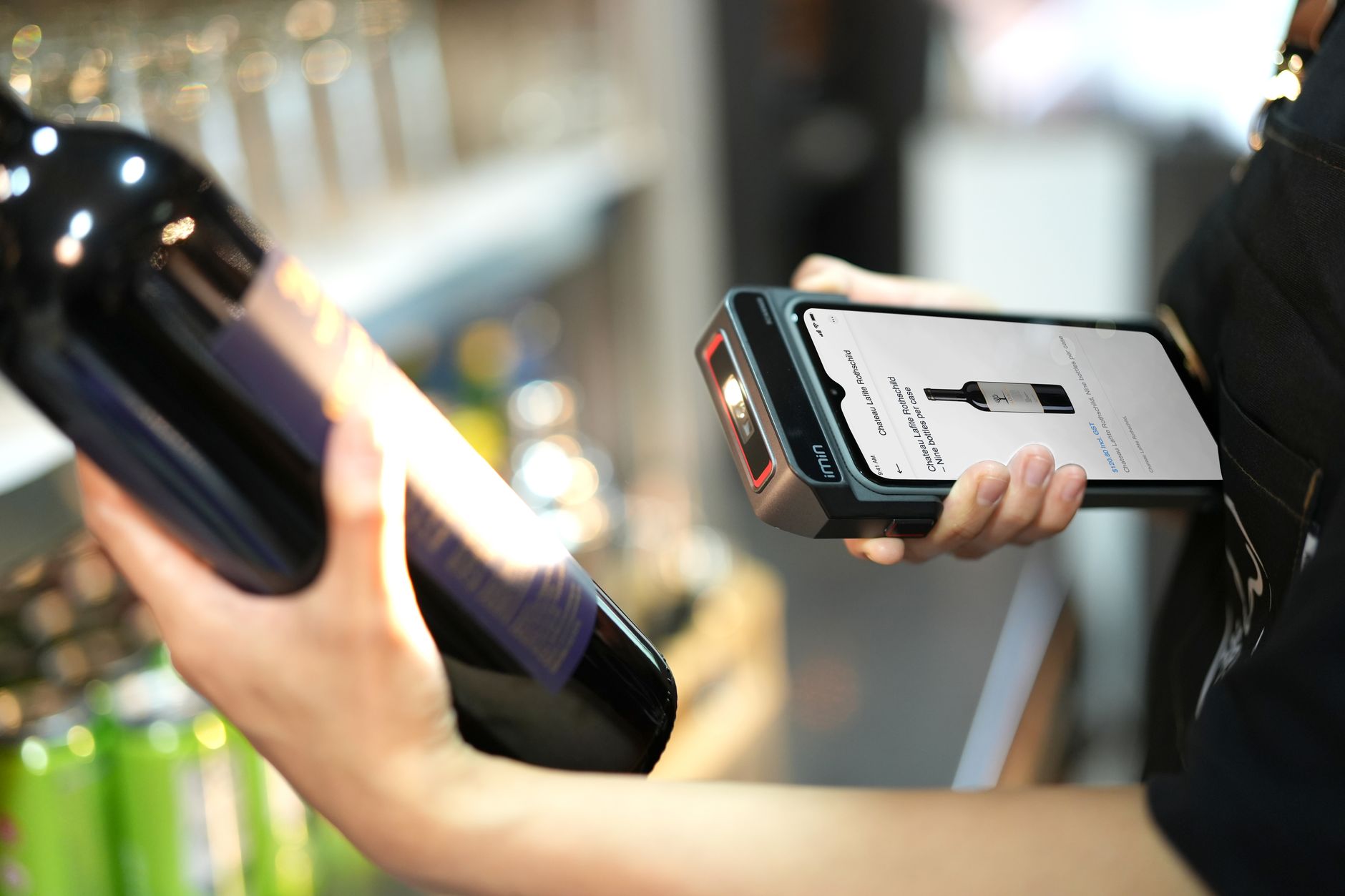
Three main frequency bands: LF (125–134 kHz) – reads at 1–10 cm, resists metal/liquid interference well; HF (13.56 MHz) – reads at 1–10 cm, common in card and NFC applications; UHF (860–960 MHz) – reads far at 3–12 meters, high speed, used in warehouses and retail.
Bạn đang tìm sản phẩm cho chủ đề này?
Việt POS phân phối chính hãng — bảo hành 24-36 tháng, hỗ trợ kỹ thuật 24/7.
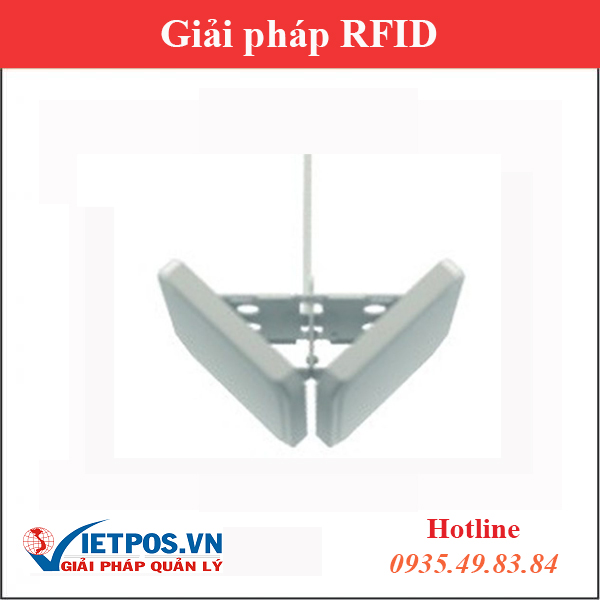
Zebra SR5502 RFID Antenna for Backroom and Warehouse
SKU: SR5502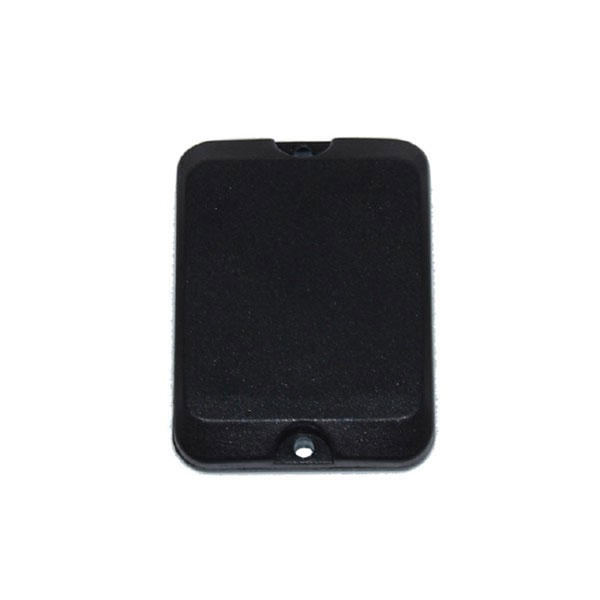
VP-T902 Metal Mount Passive RFID Tag
SKU: VP-T902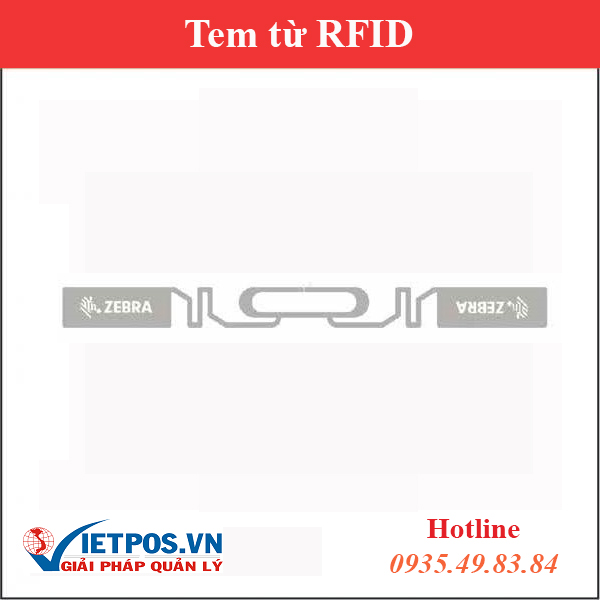
Zebra ZBR2000 RFID Tag
SKU: ZBR2000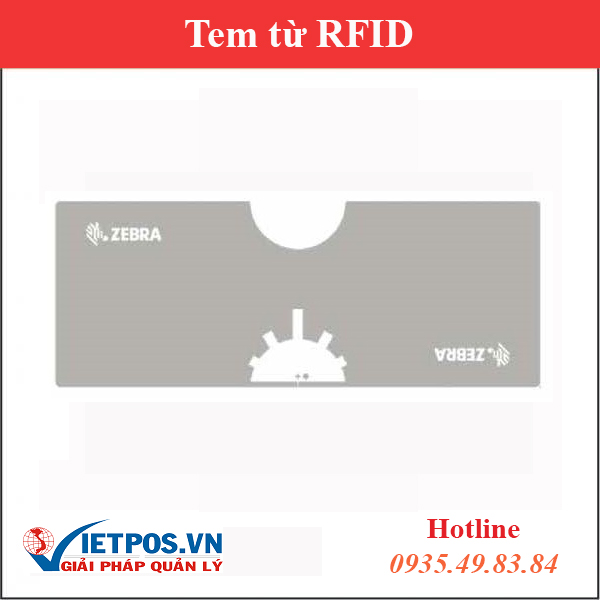
Zebra RFID Label ZBR4000
SKU: ZBR4000- LF (Low Frequency): Low frequency, penetrates water and metal well, slow read speed, higher cost. Application: animal identification, vehicle access control.
- HF (High Frequency): Mid frequency, integrated NFC standard on smartphones, high security. Application: membership cards, e-tickets, pharmaceutical traceability.
- UHF (Ultra High Frequency): High frequency, batch reads 100–200 tags/second, long distance. Application: warehouse management, retail inventory, logistics.
RFID tag classification by power source: Passive, Active, Semi-passive

Passive tags have no battery, draw power from reader waves – account for 90% of market, priced 500–3,000 VND/tag. Active tags have integrated battery, read 30–100 meters away, priced 50,000–200,000 VND. Semi-passive uses battery for chip but passive antenna.
| Type | Power source | Reading distance | Price (VND/tag) | Primary application |
|---|---|---|---|---|
| Passive | Reader wave | 1–12 meters | 500–3,000 | Warehouse, retail, inventory |
| Active | Integrated battery | 30–100 meters | 50,000–200,000 | Container, high-value assets |
| Semi-passive | Battery for chip | 10–30 meters | 15,000–50,000 | Environmental monitoring (temperature, humidity) |
On-metal RFID tags: What are they? Why use them?
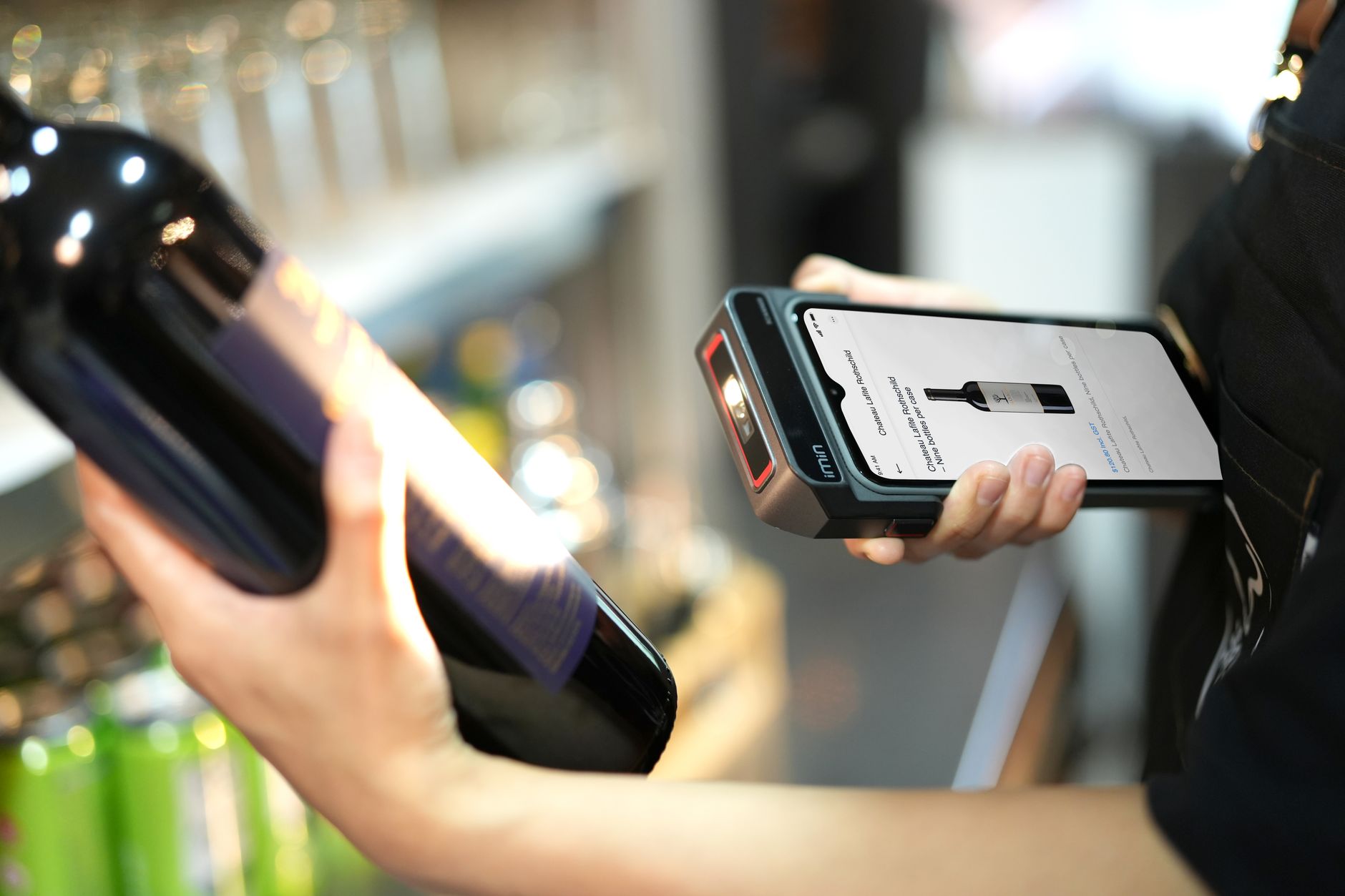
On-metal RFID tags are designed with an isolating buffer layer (ferrite or foam) between chip and metal surface, reducing noise and wave reflection. Reading distance on metal reaches 3–8 meters, equivalent to standard tags on plastic.
When mounting a standard RFID tag on metal, waves are absorbed or reflected, reducing reading distance 70–90%, even causing total loss of signal. On-metal tags solve this problem, applied to manage metal containers, iron pallets, machinery and manufacturing equipment. Some on-metal tag lines achieve 10–12 meter read distance with high-power UHF readers.
Summary table: Common RFID tag types
| Term | Definition | Example |
|---|---|---|
| Wet Inlay | RFID tag with adhesive pre-applied, roll form, used with RFID printers | UHF Inlay Alien Higgs-9 for warehouse |
| Dry Inlay | RFID tag without adhesive, laminated onto plastic or paper card | HF Inlay NXP for membership card |
| On-metal Tag | Metal-resistant tag with isolation layer | UHF tag for iron pallet, container |
| Hard Tag | Rigid plastic shell tag, impact and high-temperature resistant | Active tag for maritime container |
| Washable Tag | Laundry-resistant tag for uniforms, towels | HF tag industrial wash/iron |
How to choose the right RFID tag for your business
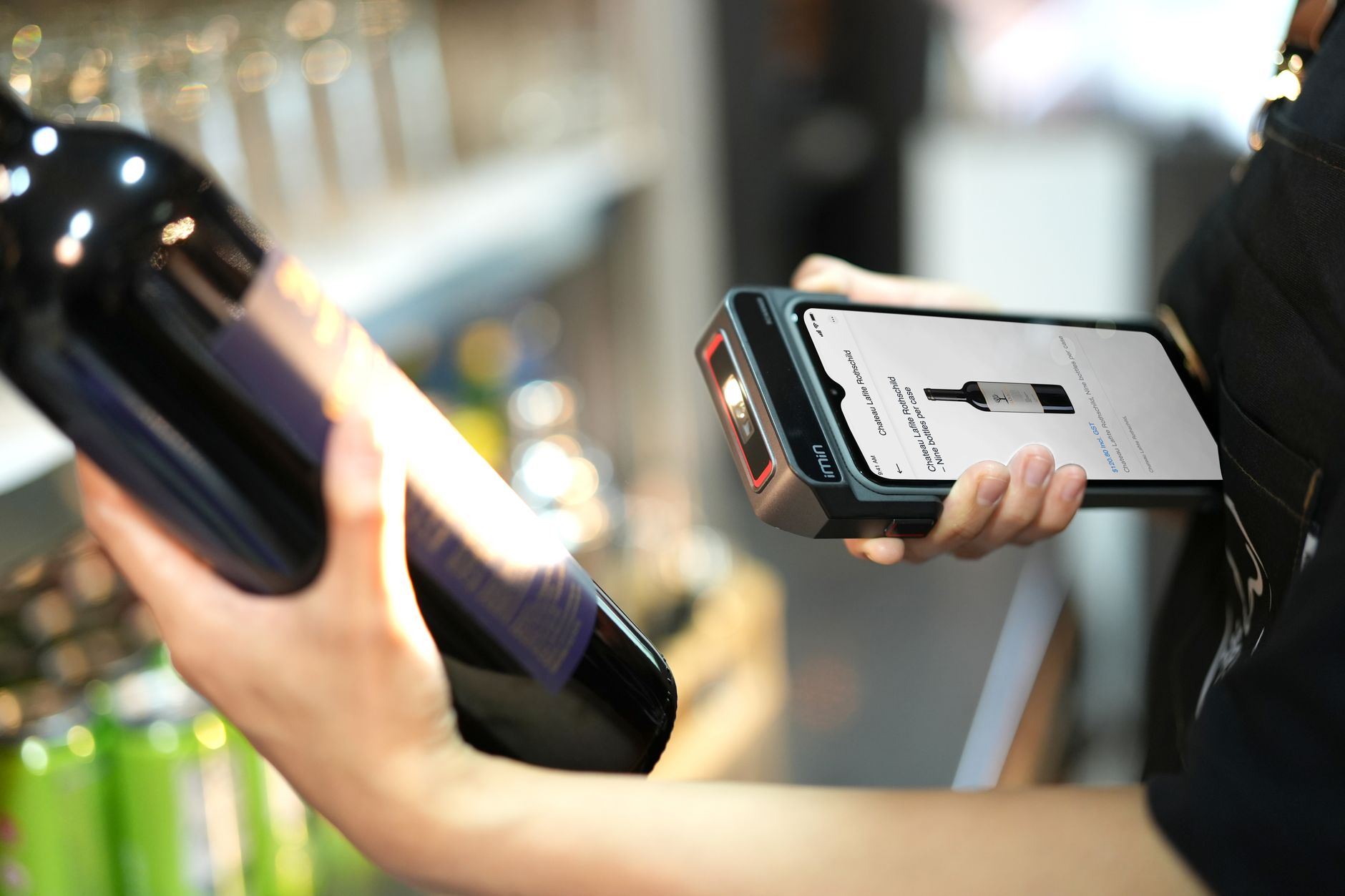
Choose RFID tags based on five factors: mounting surface (metal, plastic, wood), environment (temperature, humidity, chemicals), required reading distance (1–3 meters or 5–10 meters), tag quantity (100–10,000 tags/batch) and budget (500–3,000 VND/tag for Passive).
- Identify mounting surface: For metal surfaces, choose on-metal tags. For plastic/wood surfaces, standard UHF tags work well.
- Assess environment: Cold storage (-20°C) needs frost-resistant tags, chemical plant needs IP68 moisture-resistant tags.
- Define reading distance: Warehouse inventory needs 3–5 meters, entry gate needs 5–10 meters.
- Select appropriate chip: Impinj M700 series for high read speed, NXP UCODE for security.
- Check reader compatibility: Chainway C66, Zebra FX9600, Honeywell CK65 all support UHF EPC Gen2 tags.
Comparison: Standard RFID tag vs. on-metal RFID tag
| Criterion | Standard RFID tag | On-metal RFID tag |
|---|---|---|
| Reading distance on metal | 0–0.5 meters | 3–8 meters |
| Reading distance on plastic | 5–10 meters | 5–8 meters |
| Price (VND/tag) | 500–1,500 | 2,000–8,000 |
| Thickness | 0.3–0.8 mm | 1.5–3.0 mm |
| Typical application | Clothing, food, cardboard box | Iron pallet, machinery, container |
Common mistakes in selecting RFID tags
- Using standard tags on metal surfaces: Reading distance drops 70–90%, causing data loss.
- Not checking environment: Paper tags cannot withstand moisture and chemicals – choose PET or PVC.
- Selecting wrong frequency: Using LF/HF for warehouse (needs long-distance read) slows operations.
- Buying incompatible tags: UHF EPC Class 1 Gen2 is the only standard for most readers.
- Skipping field testing: Tags work in lab but fail in the field.
Real-world RFID applications in Vietnam
RFID tags have been deployed in 60–70% of major retail chains and 30–40% of manufacturing plants in Vietnam in 2026. Common applications: inventory management (8–10x speed increase), asset management (15–25% loss reduction), food traceability.
- Fashion retail: Apply UHF tag to each product, inventory 1,000 items in 3–5 minutes instead of 2–3 hours.
- Warehouse pallet management: On-metal tag on iron pallet, read through gate at 5–8 meters, auto-update inventory.
- Pharmaceutical industry: HF/NFC tag for drug traceability, anti-counterfeiting.
- Container management: Active tag on container, locate in yard with under 2-meter error.
Frequently asked questions about RFID labels
How does RFID tag differ from barcode?
RFID reads in batches (100–200 tags/second) without line-of-sight requirement, while barcode reads one at a time and needs direct scan. RFID can be rewritten, resists dirt better than barcode.
Can RFID tags be reused?
Passive Wet Inlay tags typically single-use as adhesive loses grip. Active and Hard tags can be reused 3–5 years if removed carefully and chip unbroken.
How to check if RFID tag still works?
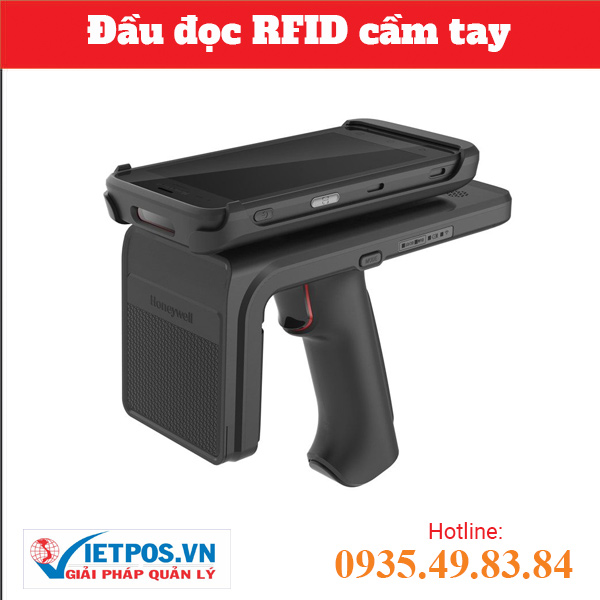
Use a handheld RFID reader (Chainway C66, Zebra RFD8500) to read tag at 1–3 meters distance. If reader reports EPC and RSSI > -60 dBm, tag functions properly.
Are on-metal RFID tags expensive?
On-metal UHF tags cost 2,000–8,000 VND/tag (retail 100 units) and 1,500–4,000 VND/tag (bulk 10,000 units). 2–3 times higher than standard tags but ensures metal surface performance.
Can information be printed on RFID tags?
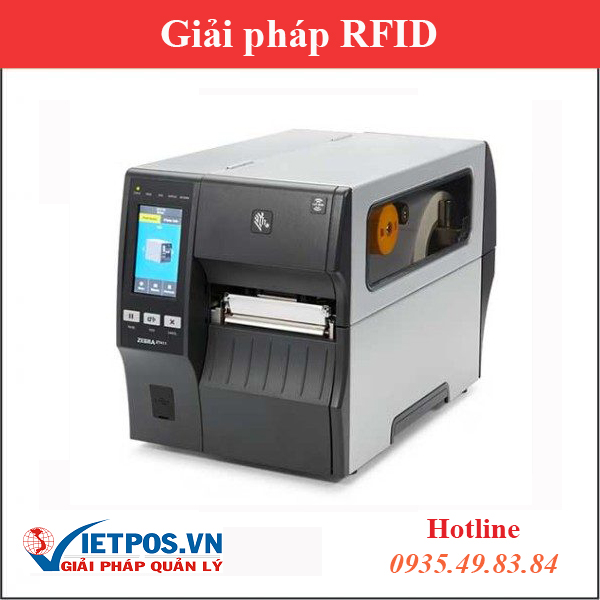
Yes, use RFID printers like Zebra ZT411, Chainway CP30, Honeywell PX940. Print direct thermal or thermal transfer on tag face while encoding chip simultaneously.
Do RFID tags suffer interference from surrounding metal?
Yes, if tag placed near metal (under 1 cm). On-metal tags reduce interference via buffer layer. Safe distance between tag and metal should be minimum 5 mm.
What is RFID tag lifespan?
Passive UHF tag lasts 5–10 years if not physically damaged. Active tag (with battery) operates 3–5 years depending on read frequency.
Which RFID reader is compatible with UHF tags?
Most UHF readers meet EPC Gen2 standard – Chainway C66, C61, Zebra FX9600, Honeywell CK65, Impinj Speedway – all read Passive UHF tags. Check regional frequency (920–925 MHz for Vietnam).
Need advice selecting RFID tags for warehouse, retail or manufacturing? Contact Việt POS at hotline 0935 498 384 or email info@vietpos.vn for complete RFID solution support – from tags and readers to management software.
Cần tư vấn thiết bị/giải pháp cụ thể?
Việt POS phản hồi trong 30 phút · Hotline 4 vùng · Khảo sát miễn phí.
Bài viết cùng chủ đề